-
-
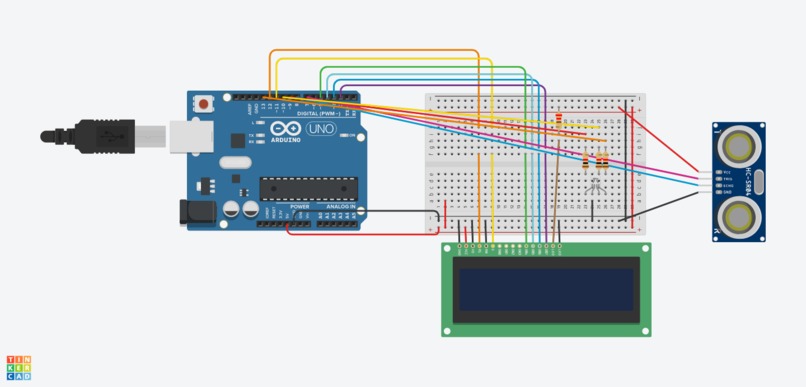
Bumper Circuit
-
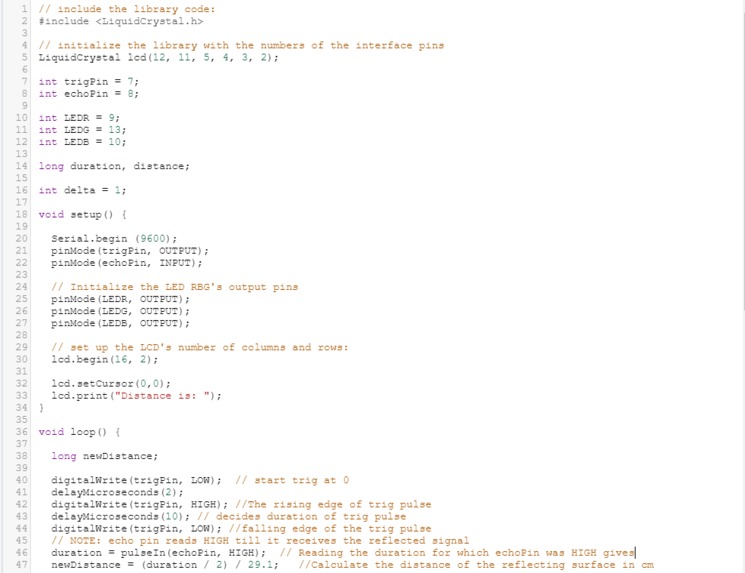
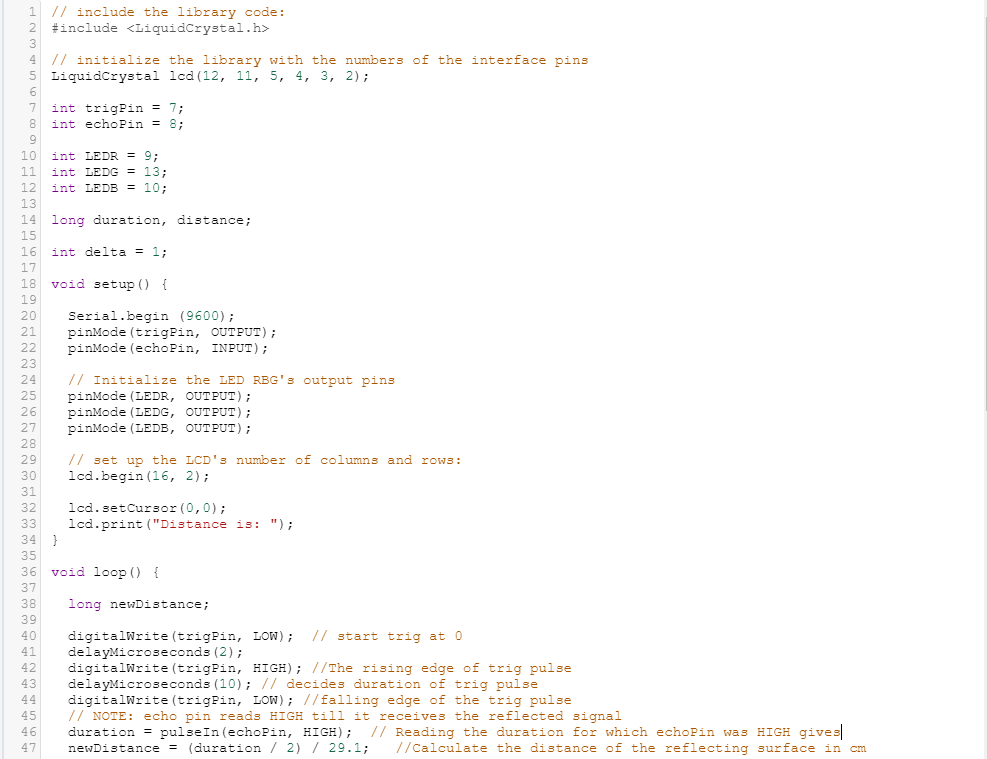
Bumper Code (part 1)
-
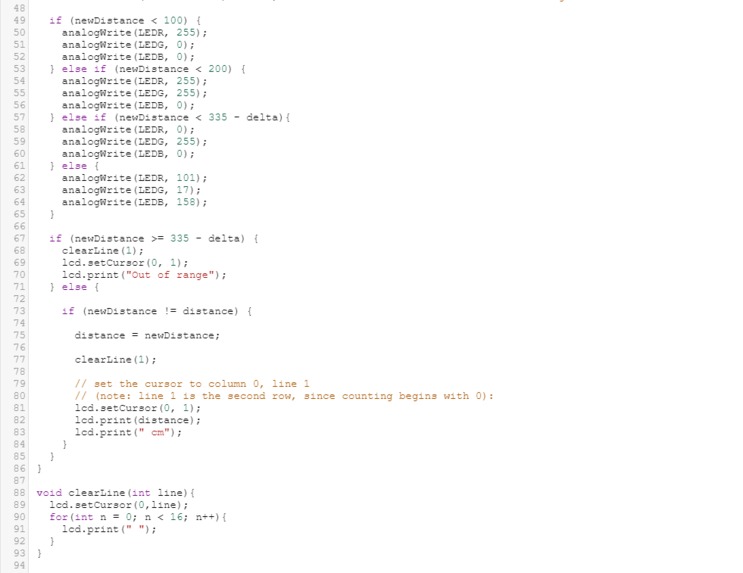
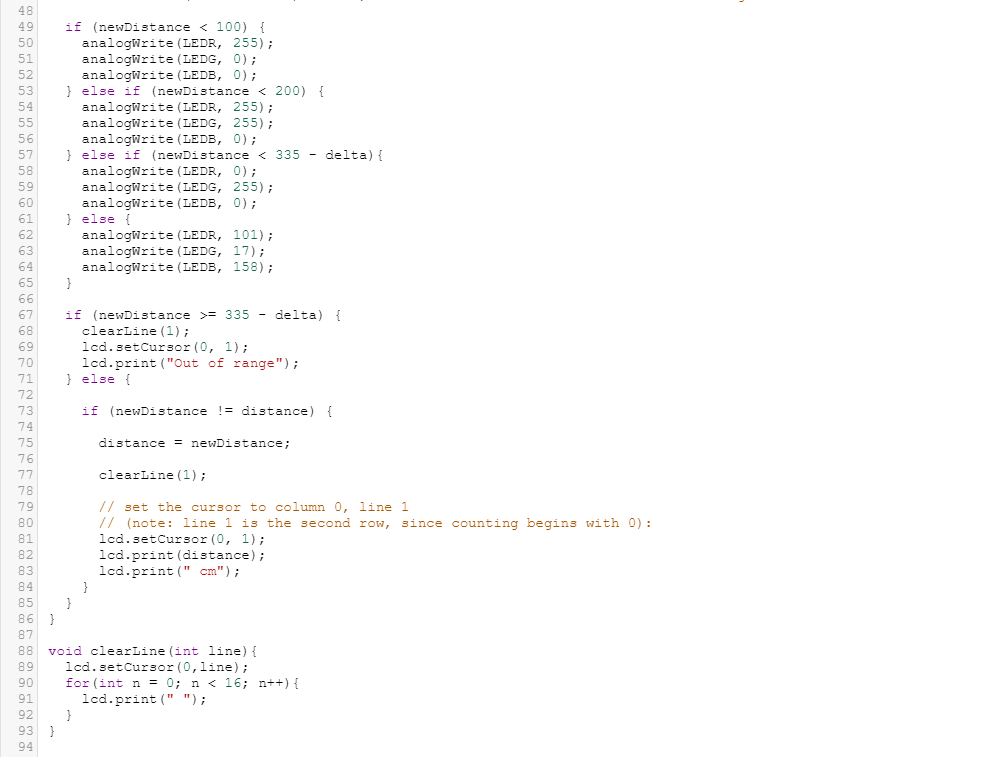
Bumper code (part 2)
Inspiration
After watching and experiencing the struggles of parallel parking for many years, we decided to think up a possible solution. While many newer cars come with built in backup assistance, there are still countless vehicles in the world with nothing to help besides a rearview mirror. As a remedy, we came up with a car backup sensor - a device that displays how far away objects behind your vehicle are. We hope that with this device, drivers of older cars will have a way to back up with less stress and a lower risk of accident.
What it does
Our device uses an ultrasonic HC-SR04 sensor to detect the distance from an object, much like conventional backup sensors detect the distance of a car’s rear end to nearby objects. We have an LCD display that depicts the distance measured by this sensor. This sensor can detect objects from as close as 4cm to as far as 335cm. If the object is between 200-335cm away, then we have an RGB LED that turns green. If the object is between 100-200cm away, then the LED turns yellow. And, finally, if the object is under 100cm away, then the LED turns red. While these distances clearly do not match that of conventional backup sensors, we are trying to mimic the light signals given by conventional backup sensors to indicate varying levels of danger. In our case, green means that the object is still relatively far away (but within detectable range), so this is simply to bring awareness of the object without indicating any imminent danger. Yellow means that the object is approaching a dangerous proximity, and red means that the object is within impact range.
In the real world, our ultrasonic sensors can be embedded into the license plate of a car to act as a backup sensor. Instead of an LCD display, we could create an app that uses bluetooth signal to receive the sensors’ readings. Based on the sensors’ readings, our app could light up in different colors and output different warning messages. For example, if the license plate sensors detect that an object is within 4-100cm from the rear end of the car, then our app could flash a red light and output a pulsing alarm sound that would prompt the driver to slam the brakes.
Taken a step further, we could embed ultrasonic sensors into the bottom of the side windows of a car to serve as a blindspot sensor. The app can then differentiate between blindspot dangers and backup ones to provide more comprehensive safety measures for the driver. Ultimately, the motivation of this project was to serve as a low-cost retrofit for older cars that do not have backup sensors. All of the parts used in this project are very affordable and could thus serve as a cost-effective, wireless device to enhance the safety of older cars.
How we built it
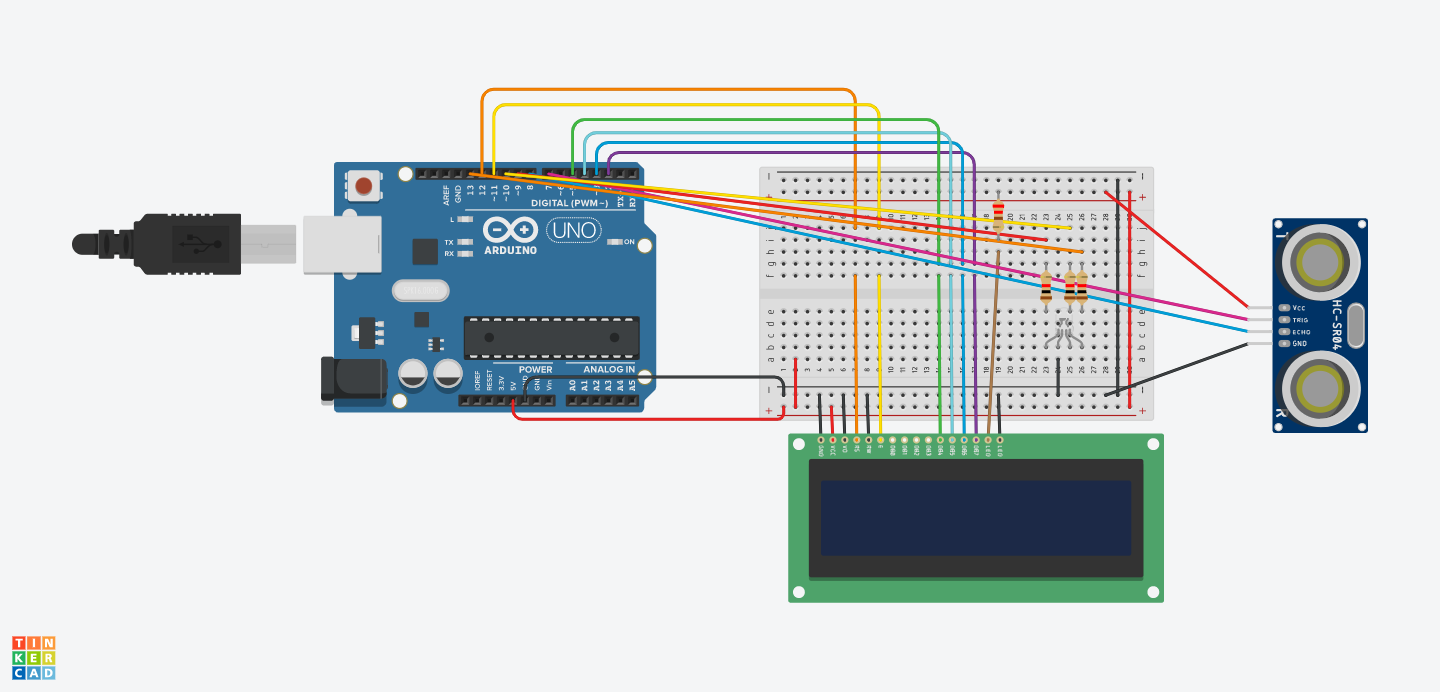
We built the device using an Arduino Uno R3 board, a 16x2 LCD display, an ultrasonic distance sensor, and an LED RGB. To start, we used the LCD display Starter Project that TinkerCAD provided to understand how to use the LCD display. Once we did so, we modified the circuit to no longer depend on the default Potentiometer included in the Starter Project. Afterwards, we connected the ultrasonic distance sensor and modified the code so that the LCD screen could display the current distance read in by the ultrasonic distance sensor. Finally, we added the LED RGB into the circuit, adding conditional statements into our code to change the color of the RGB depending on the distance read by the ultrasonic sensor.
If TinkerCAD had access to a Bluetooth Module, we would replace the LCD screen and the RGB LED with Bluetooth. If so, we would have the Bluetooth Module read in the distance from the ultrasonic sensor and send it to a Bluetooth using device, ideally a phone. Through an app, the phone would display to the driver the information that the LCD screen and RGB currently display.
Built With
- arduino
- liquidcrystal




Log in or sign up for Devpost to join the conversation.