-

-
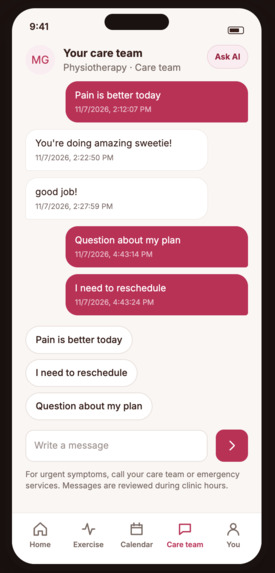
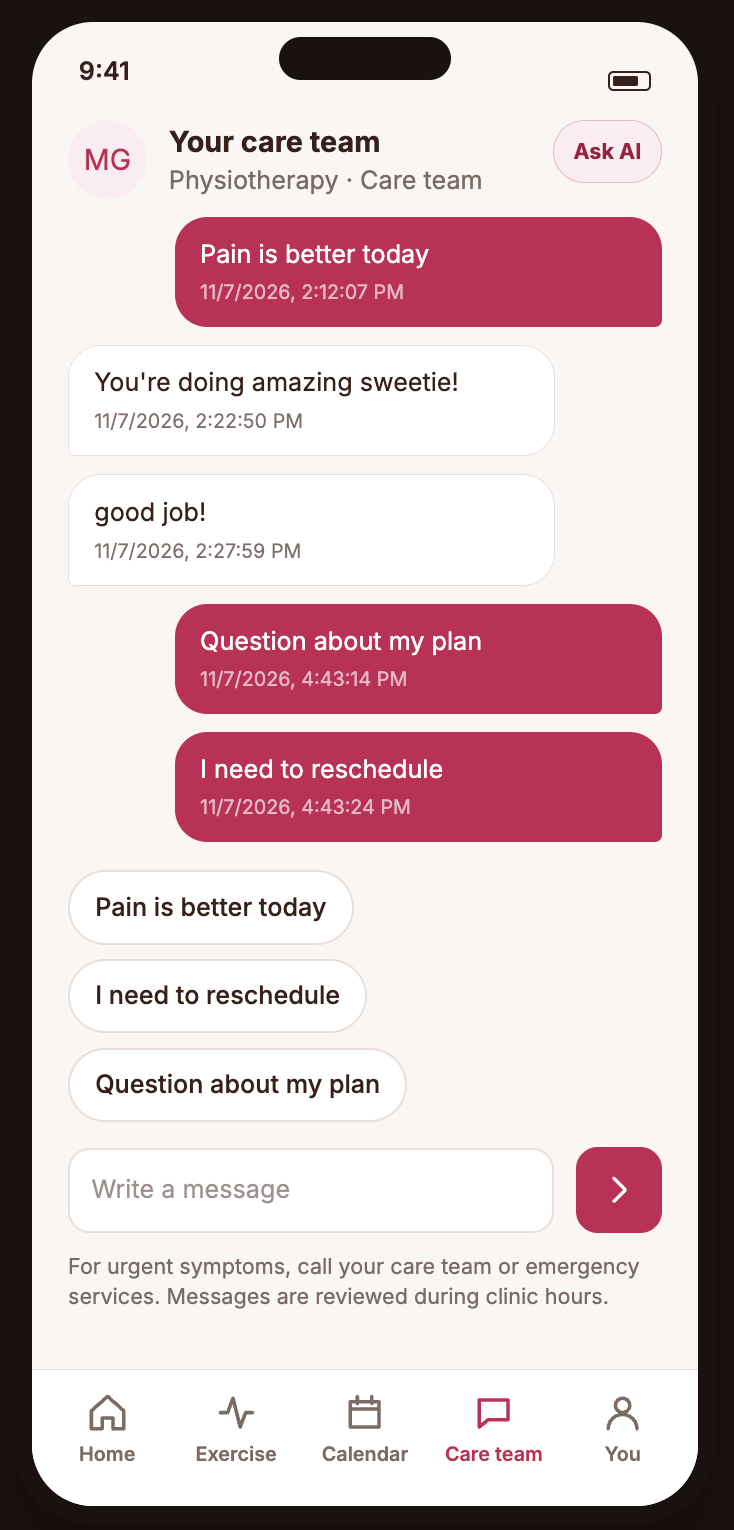
Integrated OpenAI chatbot to automate question-answering (redirecting to healthcare practitioner when AI is unsure & recognizing AI limits)
-
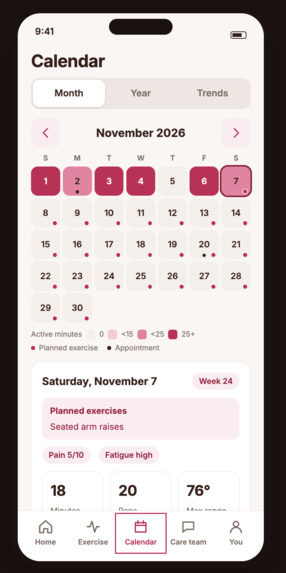
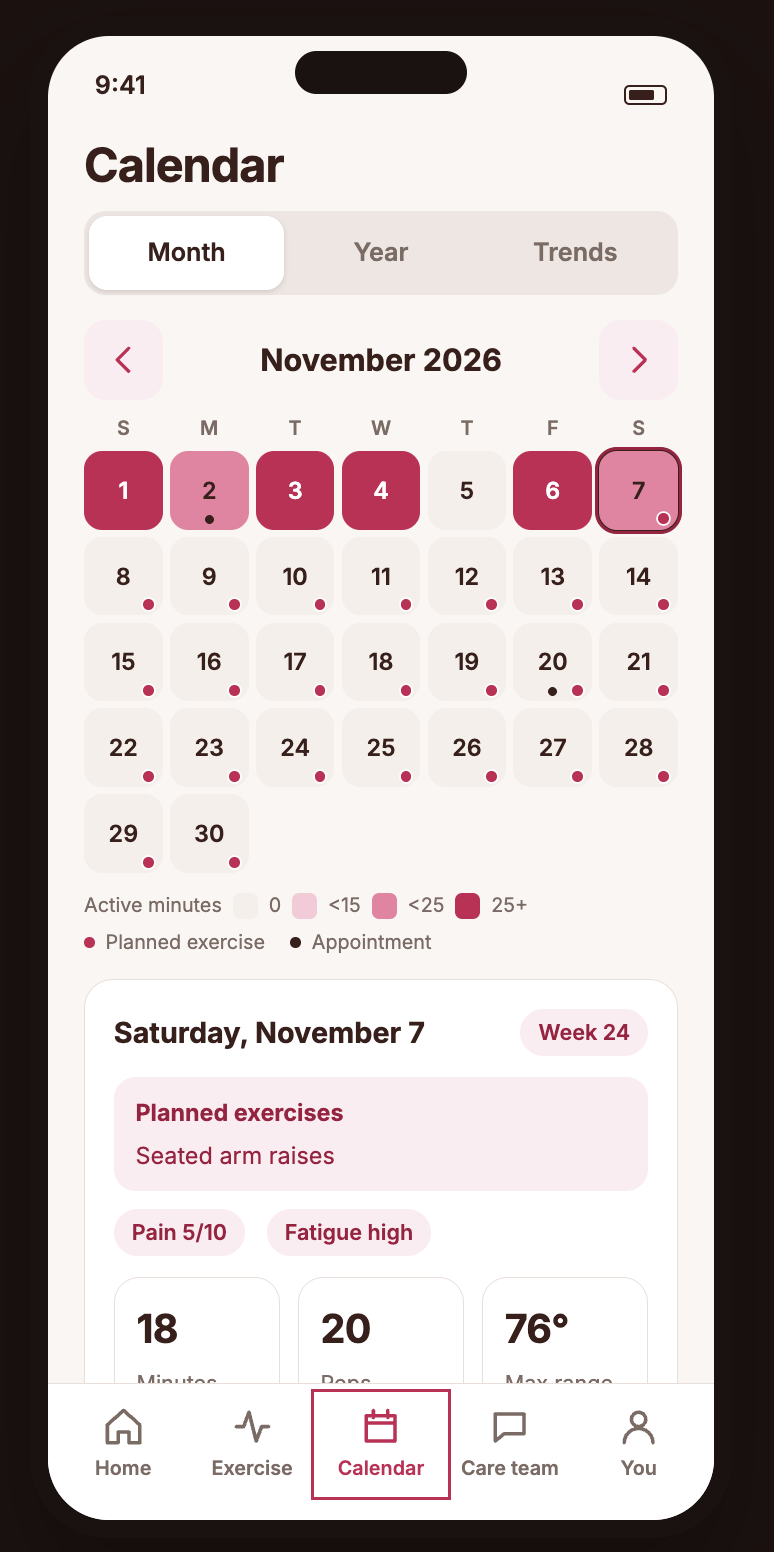
Calendar view for progress-tracking over trimesters
-
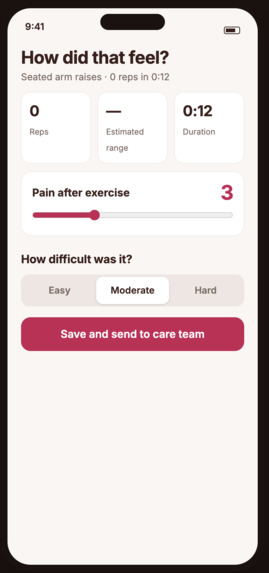
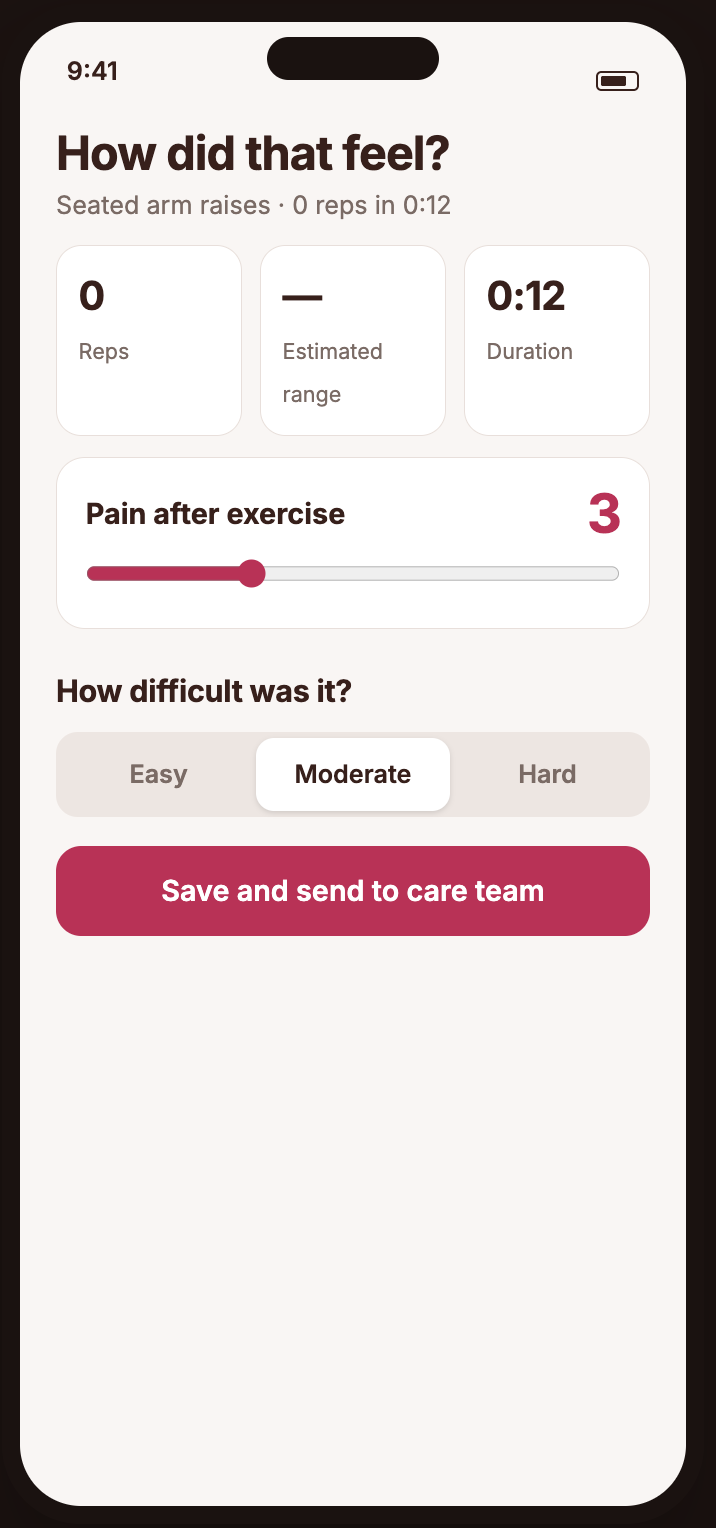
Surveys kept short to motivate quick responses - collecting information over time to analyze trends and patterns
-
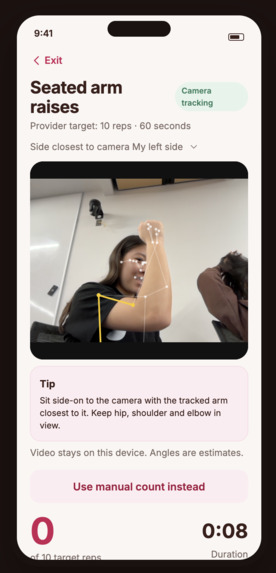
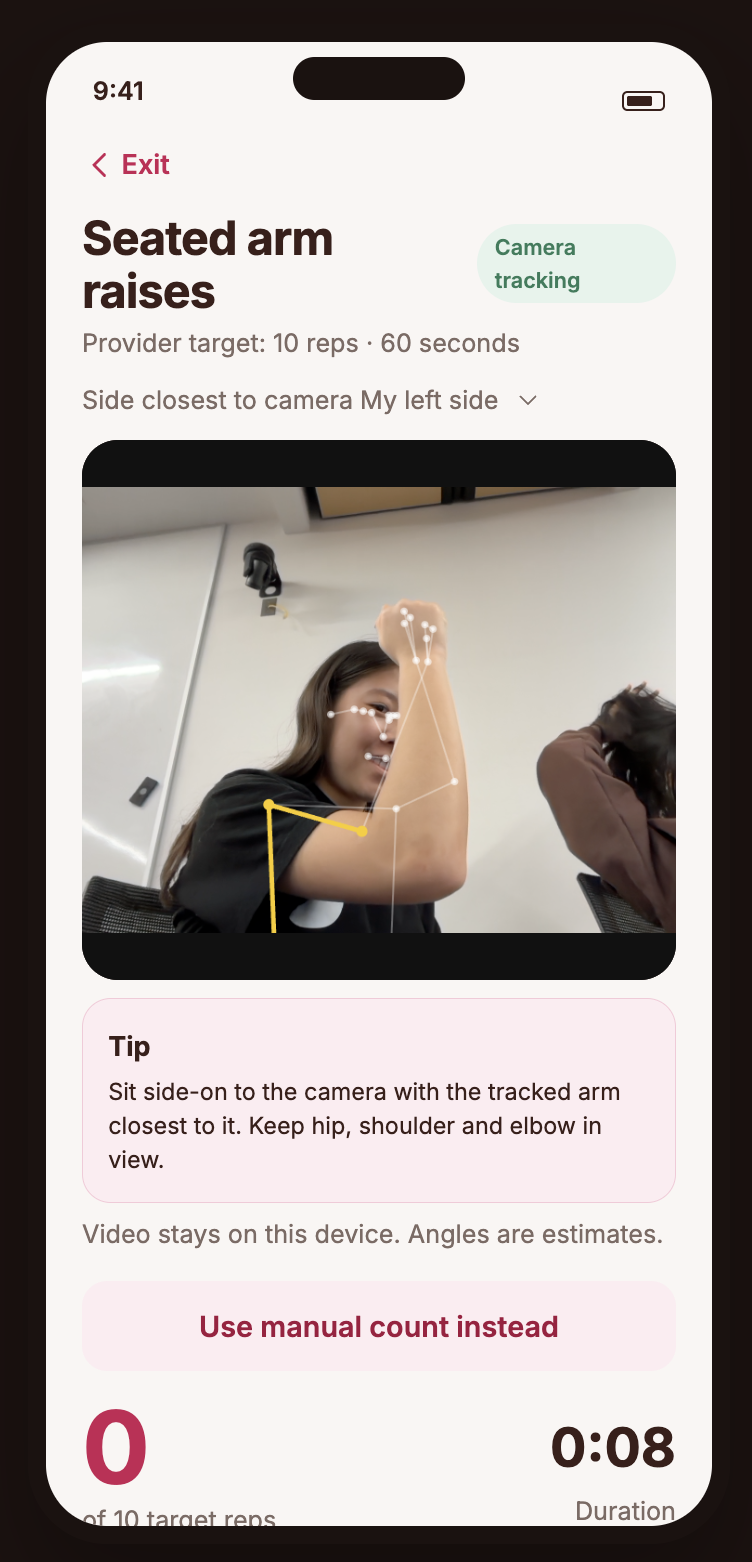
Mediapipe to track and assess bodily movements against rule-based systems
-
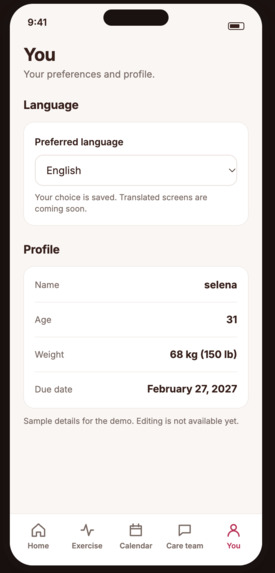
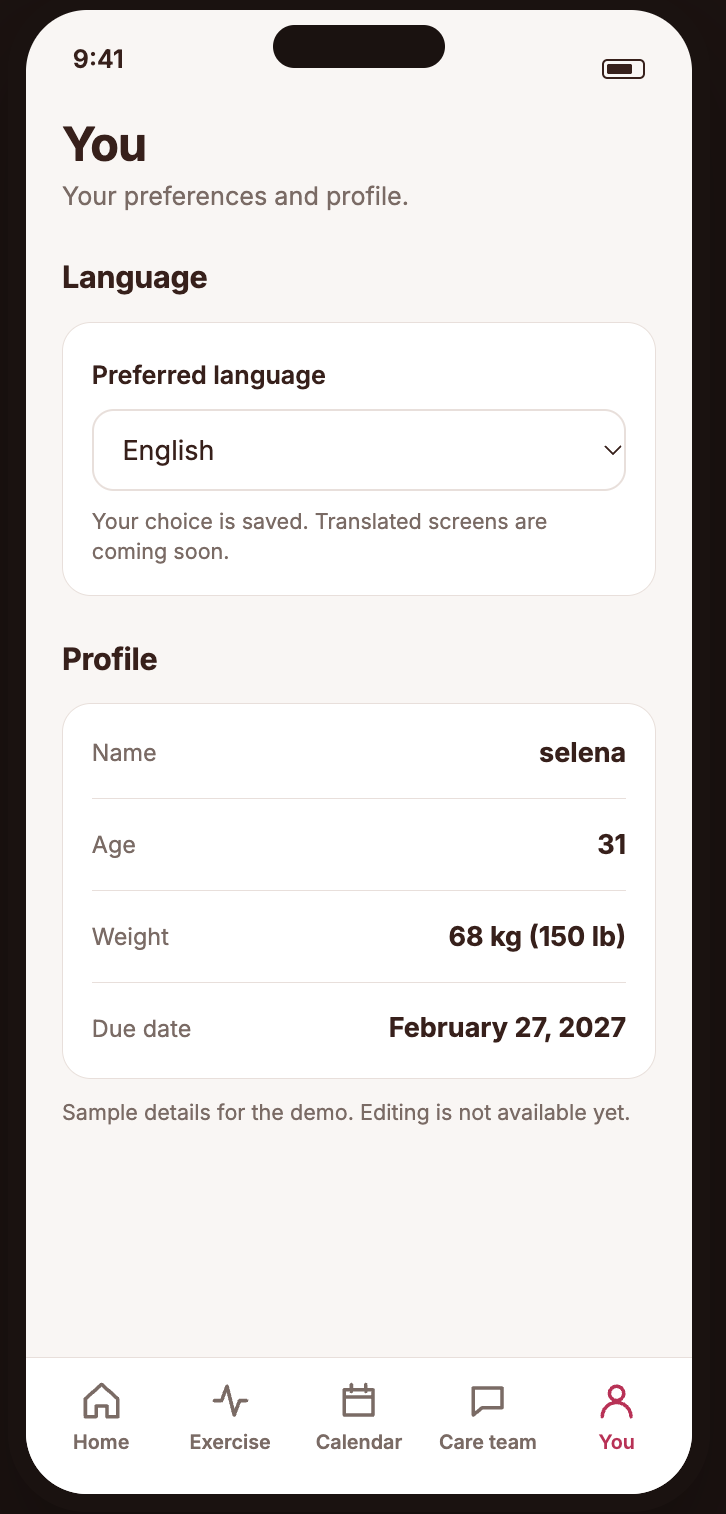
Settings - Includes changing language for greater accessibility and effective communication
-
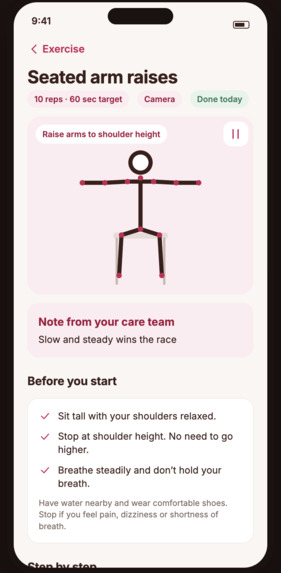
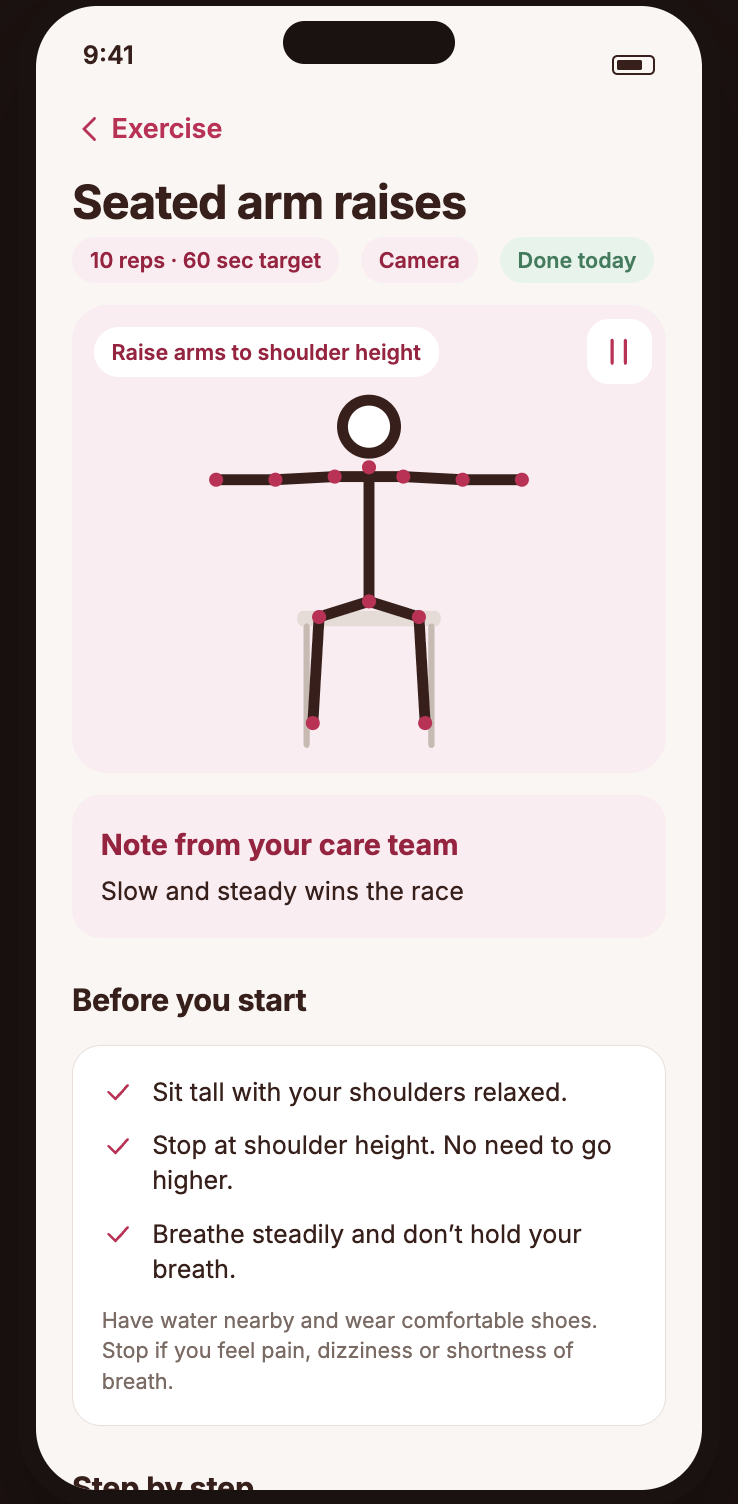
Animated stickfigure to demonstrate exercises in-app
-
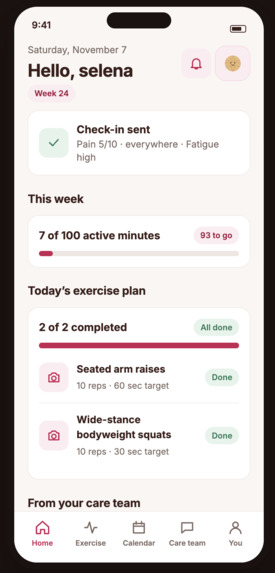
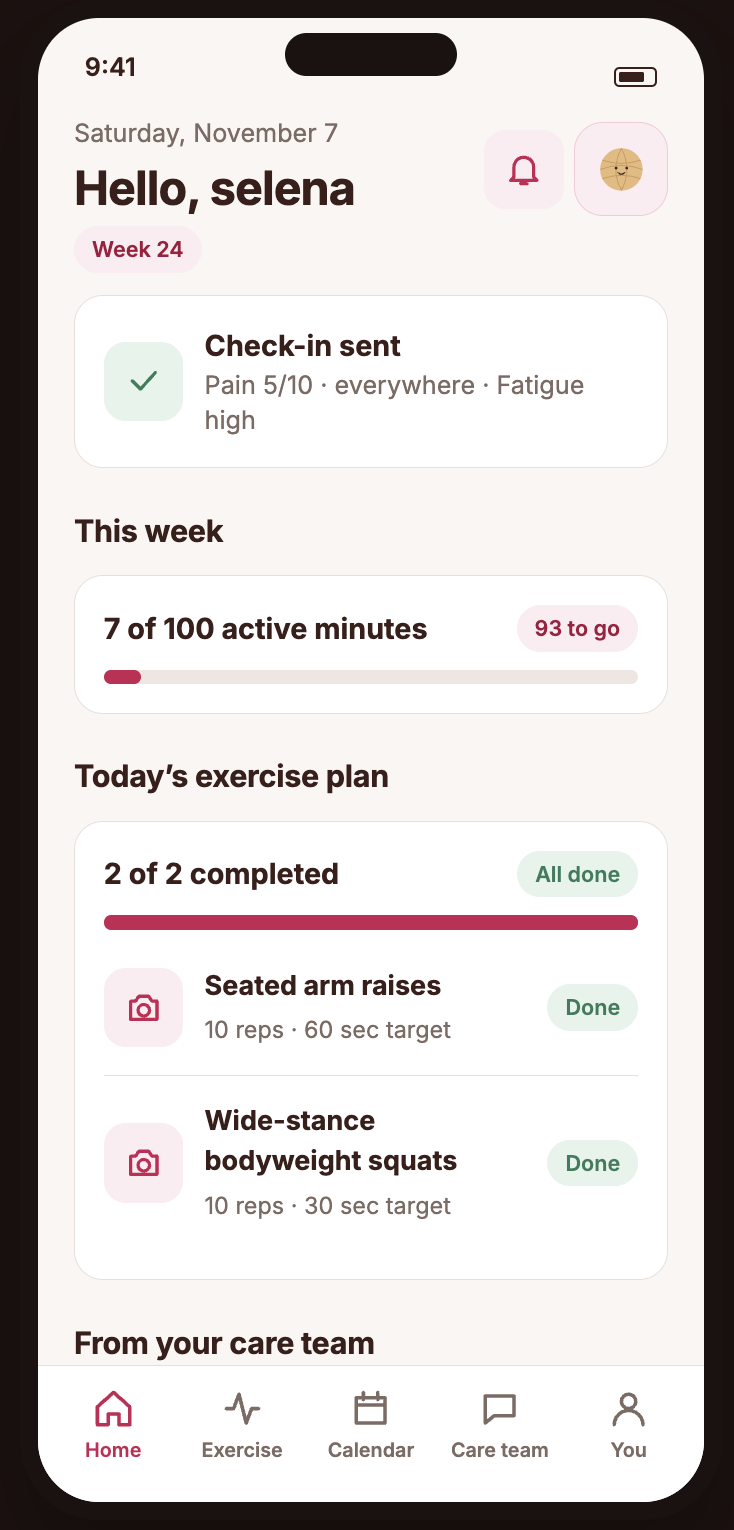
Welcoming dashboard, including tips on how exercise improves both mother and baby health to increase motivation
-
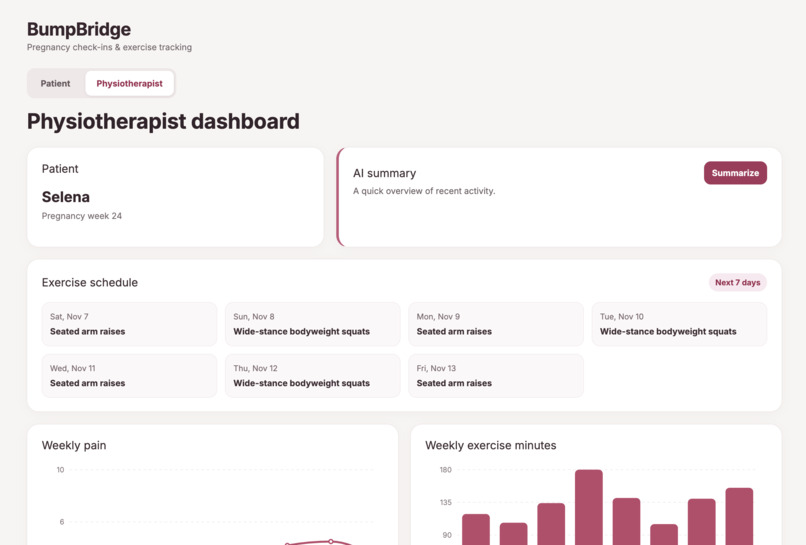
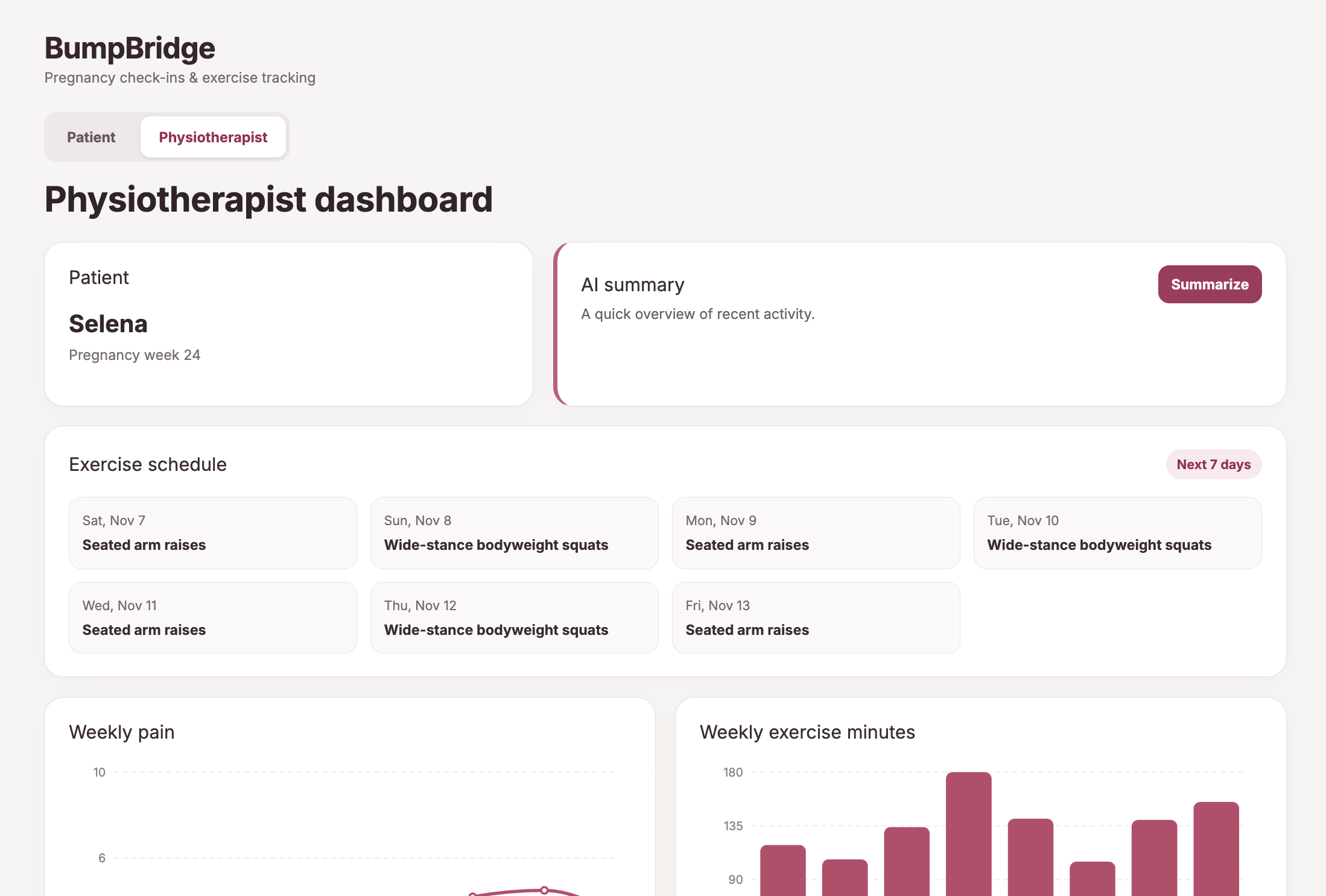
Automatic AI summary to reduce clinical workload and help practitioners make effective decisions quicker
-
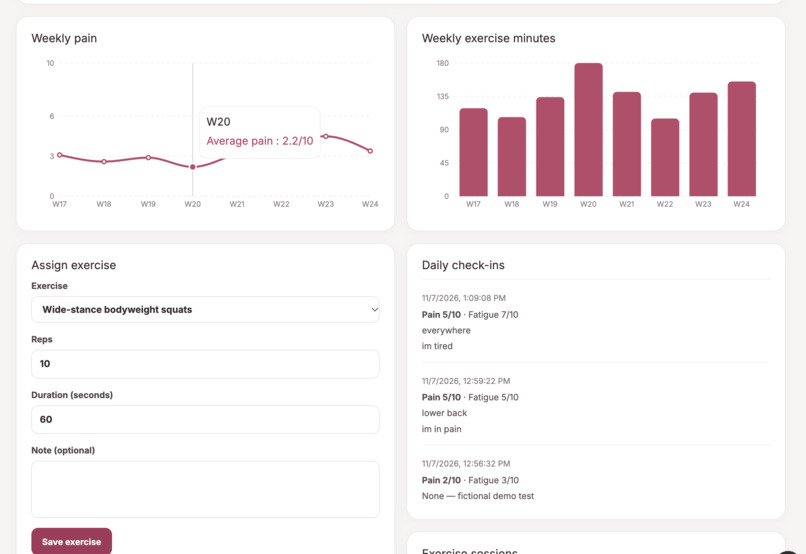
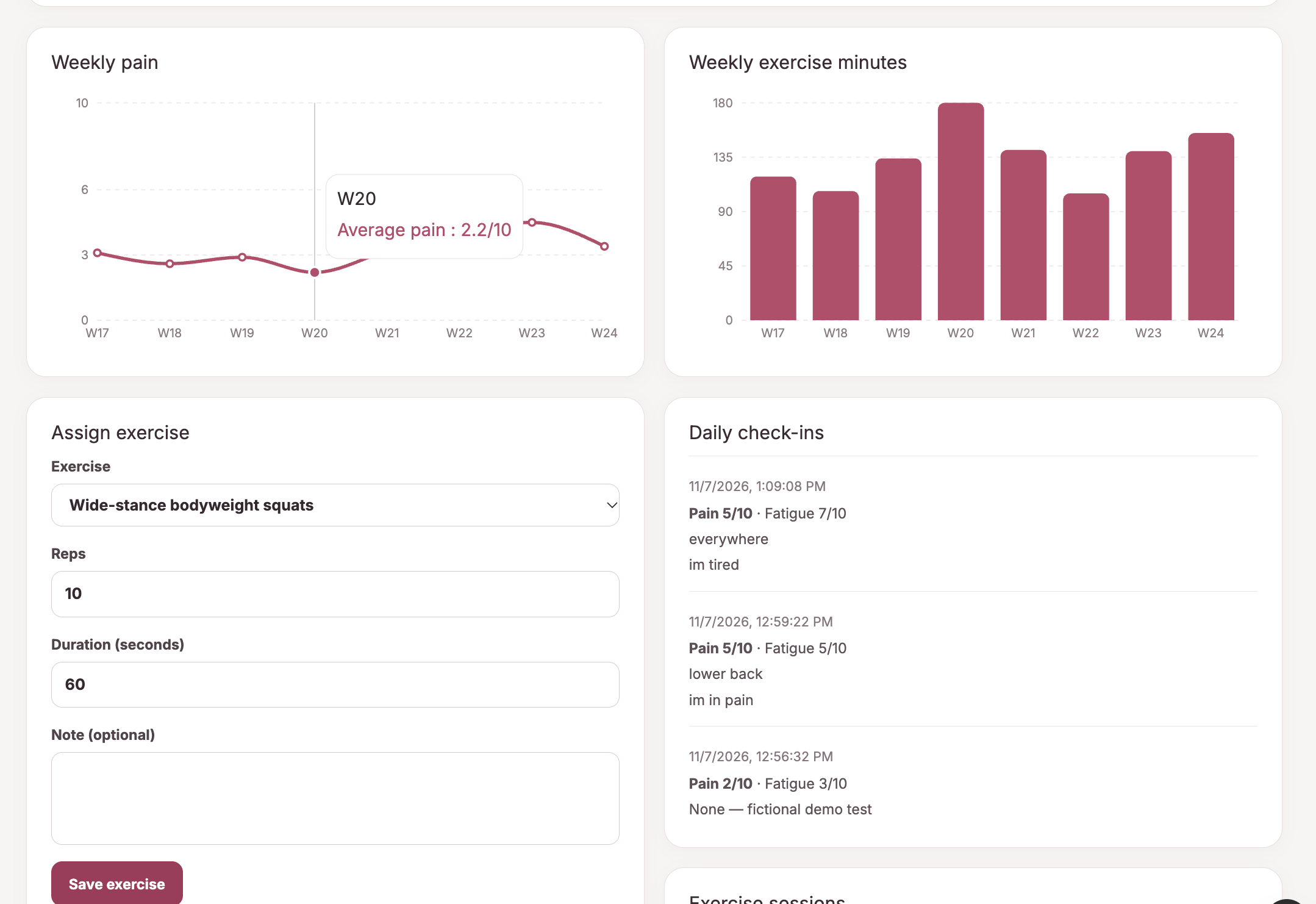
Used Rechart to make accurate graphs based on patient data to improve clinical workload
-
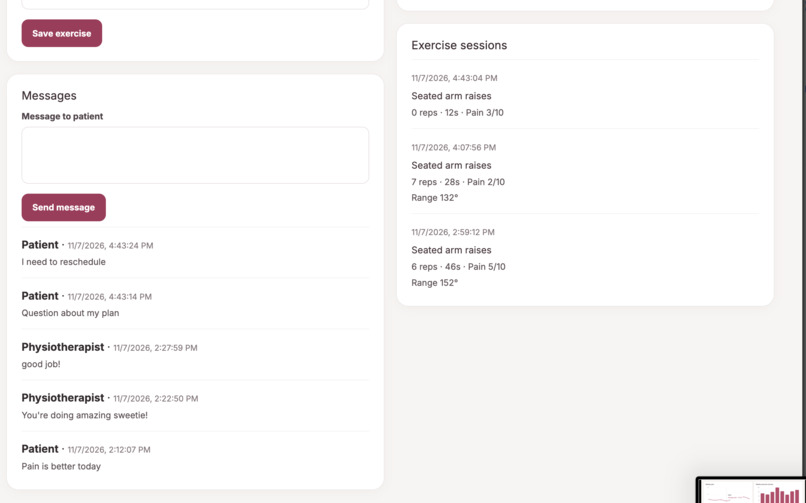
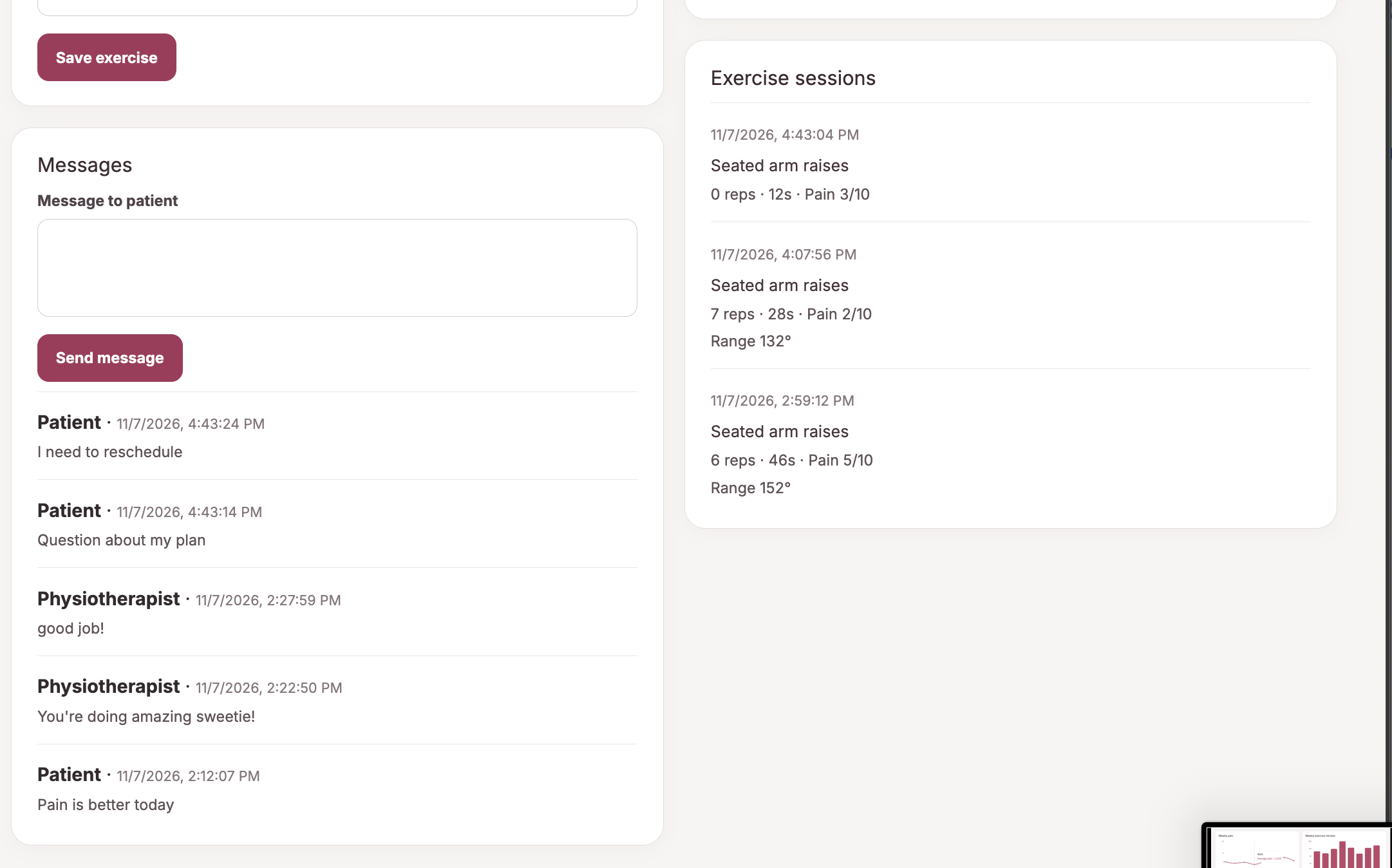
Sync between patient data and physiotherapist/practitioner information - instantaneous information exchange

Inspiration
Although doctors frequently verbally encourage exercise, they rarely provide a specific prescription. Research published on PubMed Central found that while 58% of postpartum women recalled their provider recommending exercise, over 91% did not receive specific information regarding frequency, intensity, type or time.
Standard prenatal appointments are often short, with clinical screenings taking priority over lifestyle counseling. As a result, expectant mothers may be left without the structured guidance and ongoing support they need to exercise safely and confidently.
We wanted to address this gap by creating BUMPitup, a wearable- and computer-based platform that bridges maternal healthcare and physiotherapy through personalized, trackable prenatal and postpartum exercise guidance. Our goal is to make exercise recommendations more actionable while helping patients monitor their progress and stay connected to their healthcare journey.
What it does
BUMPitup is a pregnancy wellness and physiotherapy platform designed to help expectant mothers stay active through personalized, trimester-conscious exercise guidance and progress tracking.
Our platform provides a centralized experience where patients can:
- Access care-team-assigned routines with prescribed repetitions, sets, step-by-step instructions, safety tips and animated exercise demonstrations.
- Record pain levels, discomfort locations, fatigue and other symptoms to monitor how they feel throughout their pregnancy.
- Track completed exercises, repetitions, range of motion, pain levels and activity over time through interactive calendars and visualizations.
- Ask our integrated AI assistant questions about prenatal wellness, mobility and general pregnancy education. Built-in safety instructions encourage users to seek professional medical attention for potentially urgent symptoms.
Meanwhile, healthcare providers can:
- Receive instant AI summaries of patient success, pain, and symptoms after their exercise
- Assign exercises on a case-by-case need or implement scheduled exercises for the patients
- Generate detailed graphs with statistics from heart rate to accuracy level of patient exercise completion to evaluate how successful patients were with the assigned exercise levels, making it easier to modify them for the future
BUMPitup also introduces two exercise-tracking modes: camera-based movement tracking and wearable wristband tracking, designed to support different physiotherapy exercises.
By bringing exercise guidance, symptom monitoring and educational resources together, BUMPitup aims to make prenatal and postpartum rehabilitation more accessible, understandable and engaging.
How we built it
We built BUMPitup as an interactive, mobile-first web application using React 19, TypeScript and Vite, with Tailwind CSS for styling.
Our frontend is organized into individual screens and reusable components, creating a cohesive experience across the dashboard, daily check-ins, exercise plans, progress tracking, pregnancy calendar and educational assistant.
Some of our key technical implementations include:
- Created reusable exercise components with animated stick-figure demonstrations, detailed movement instructions, safety tips and personalized repetitions and sets.
- Built custom Rechart-based charts and interactive calendar views to visualize exercise history, pain levels, activity and rehabilitation trends.
- Implemented rule-based checks that flag selected concerning symptoms and high pain reports, directing users to seek medical attention before continuing exercise.
- *Developed a Node.js backend that connects our application to the OpenAI API using GPT-4.1 mini. We designed a pregnancy-specific system prompt with clear medical safety boundaries to provide concise, accessible educational responses.
- Created custom fruit illustrations and interactive pregnancy-week information to make fetal development easier to understand.
Our prototype also includes camera-based and wearable exercise-tracking interfaces. These currently use simulated movement and sensor data, with the architecture intended to support future MediaPipe pose estimation and Pulse Oximeter MAX 30102 hardware integration.
Challenges we ran into
One of our biggest challenges was designing a platform that balances accessibility and personalization with the safety considerations of pregnancy.
Unlike conventional fitness applications, pregnancy physiotherapy cannot simply focus on completing repetitions or reaching activity goals. We needed to consider pain, fatigue, trimester-specific needs and potentially concerning symptoms throughout the experience.
Another challenge was deciding how to make exercise progress meaningful. Rather than displaying exercise counts alone, we wanted to connect activity with patient-reported pain levels and range-of-motion measurements to help users better understand their rehabilitation journey.
We also faced challenges integrating AI into a healthcare-related application. We wanted our assistant to be genuinely useful without presenting itself as a medical professional or providing potentially unsafe individualized recommendations. We addressed this by developing a specialized system prompt with explicit restrictions around diagnosis, prescriptions and urgent symptoms.
Accomplishments that we're proud of
We're particularly proud of creating a cohesive pregnancy wellness experience that brings together several aspects of prenatal physiotherapy in one platform.
Some highlights include:
- Building an interactive exercise experience with detailed instructions, animated demonstrations and two distinct tracking modes.
- Developing an AI-powered educational assistant with pregnancy-specific context and safety guardrails.
- Creating custom visualizations that turn exercise history and symptom reports into accessible progress summaries.
- Designing an intuitive, cohesive interface with a consistent visual identity across the entire application.
- Integrating pregnancy development information into a physiotherapy-focused platform, making the experience feel more personal and relevant to expectant mothers.
Most importantly, we're proud to have explored how technology can help bridge the gap between general exercise recommendations and more structured, trackable pregnancy rehabilitation.
What we learned
Throughout this project, we learned that building healthcare technology requires much more than implementing features that work technically.
We gained experience integrating an external AI API into a full-stack application, designing backend endpoints, structuring reusable React and TypeScript components, and developing custom data visualizations.
We also learned the importance of responsible AI design, particularly in healthcare contexts where inaccurate or overly confident responses can have serious consequences.
Beyond the technical aspects, we developed a greater appreciation for the importance of designing around real patient needs. Accessibility, clear communication and safety considerations need to be incorporated from the beginning rather than treated as afterthoughts.
Finally, we learned how important it is to distinguish between collecting information and making that information useful. The real potential of a platform like BUMPitup lies in helping patients and healthcare professionals understand changes over time.
What's next for BUMPitup?
We envision expanding BUMPitup into a more complete patient-clinician rehabilitation platform.
Some of our next steps include:
- Reducing clinical workload by having AI analyze patient data and automatically suggesting potential exercises to improve mobility and health
- Integrate a database to securely store patient check-ins, exercise history and progress over time.
- Introduce voice-to-text symptom reporting and other streamlined input methods to make daily reporting easier and reduce manual data entry.
Ultimately, we hope to make BUMPitup a bridge between patients and their healthcare teams, helping transform pregnancy exercise recommendations into safer, more personalized and measurable rehabilitation experiences.
Built With
- css
- html
- javascript
- node.js
- openai
- react.js
- rechart
- restapi
- tailwindcss
- typescript
- vapi
- vite