-
-
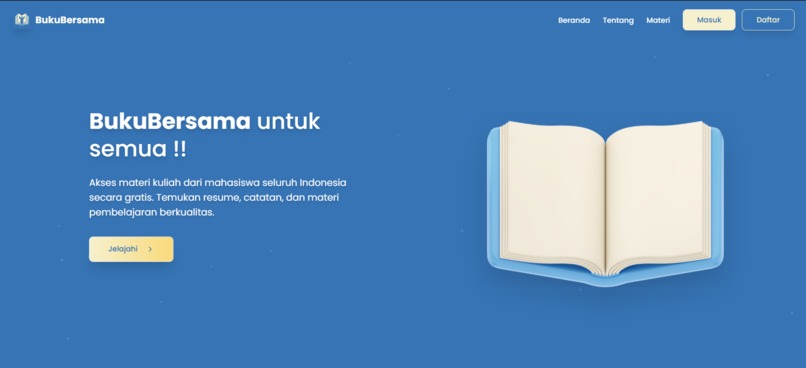
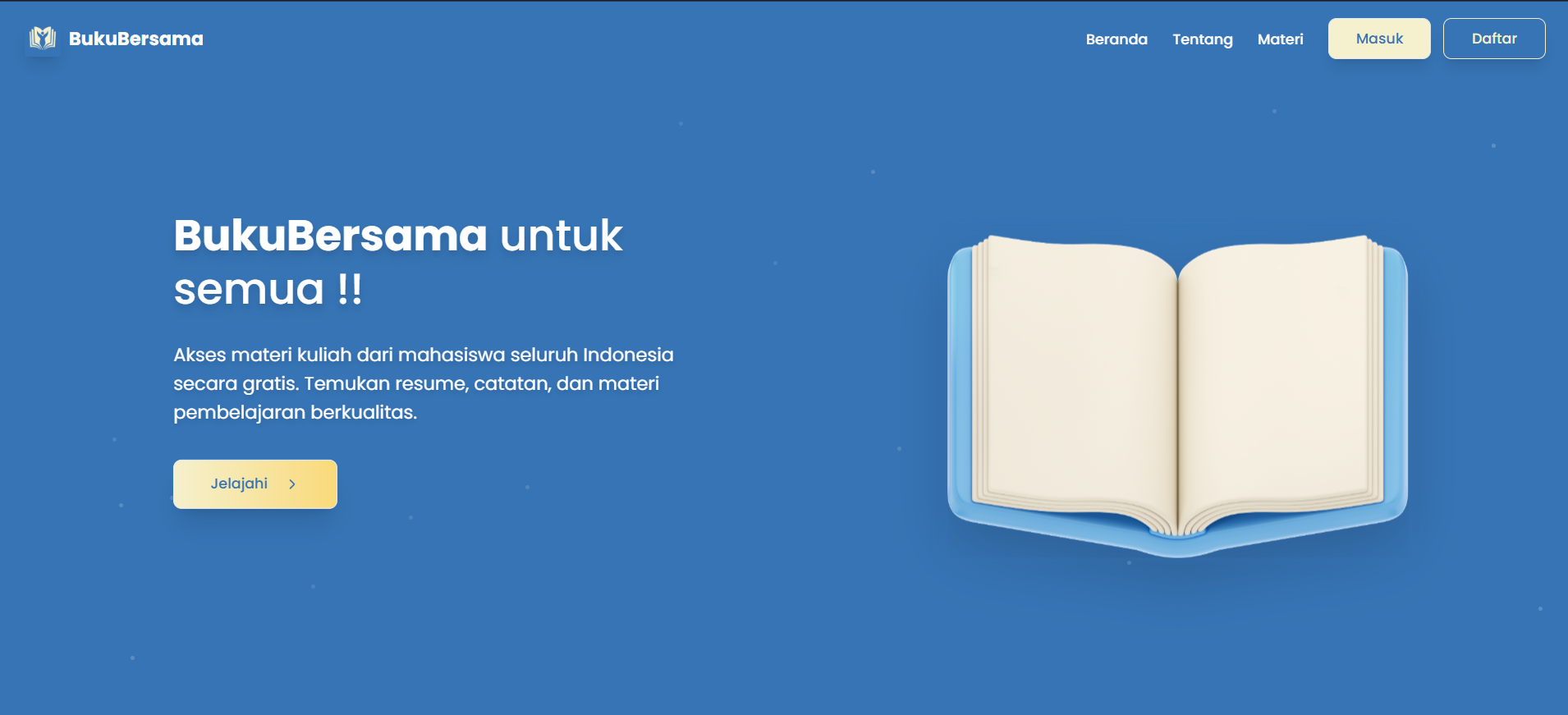
Beranda BukuBersama
-
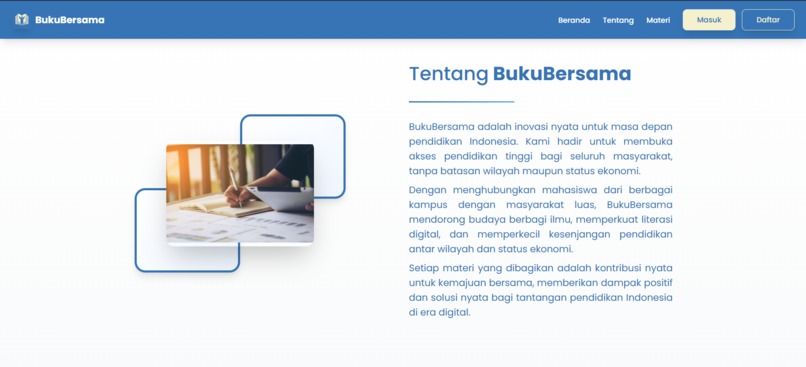
Tentang BukuBersama
-
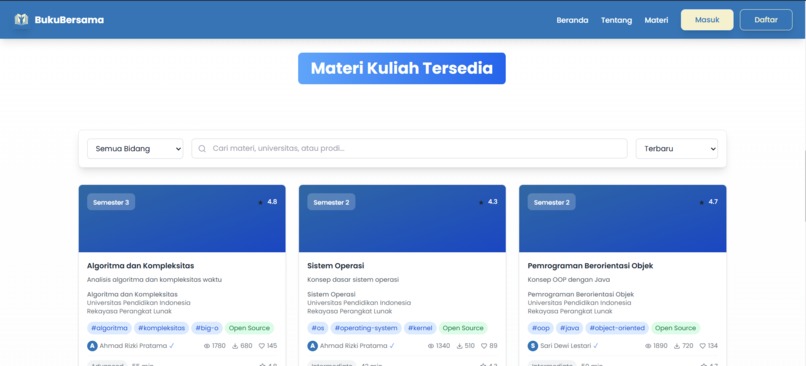
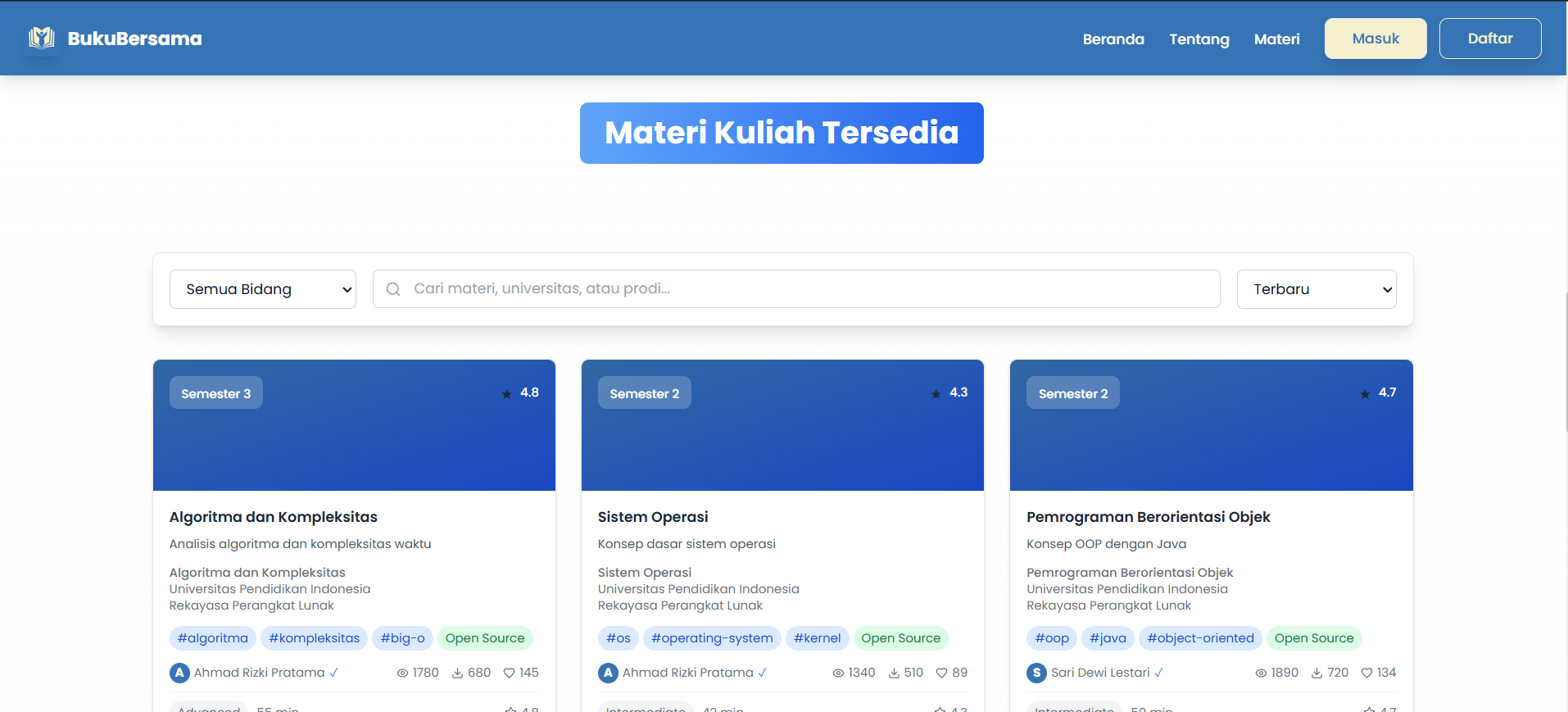
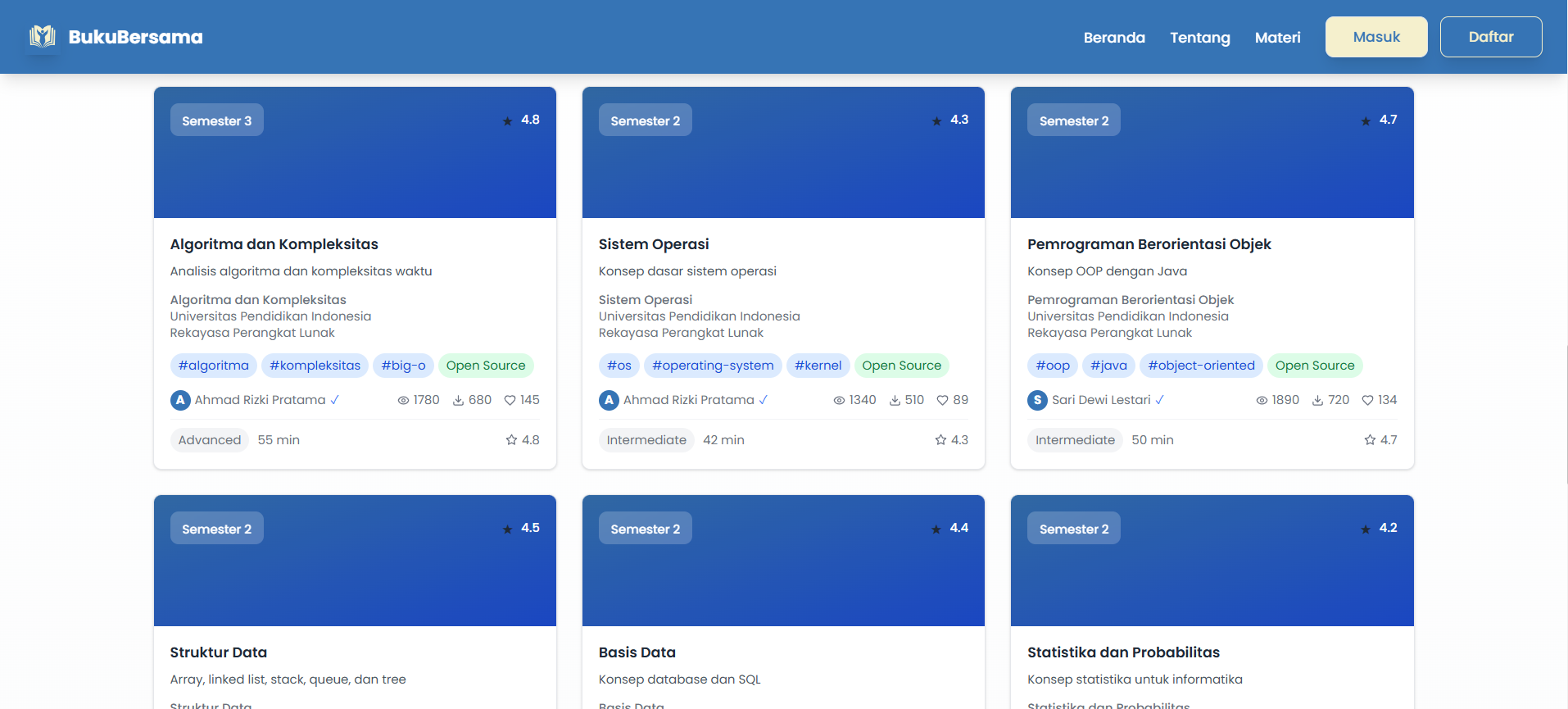
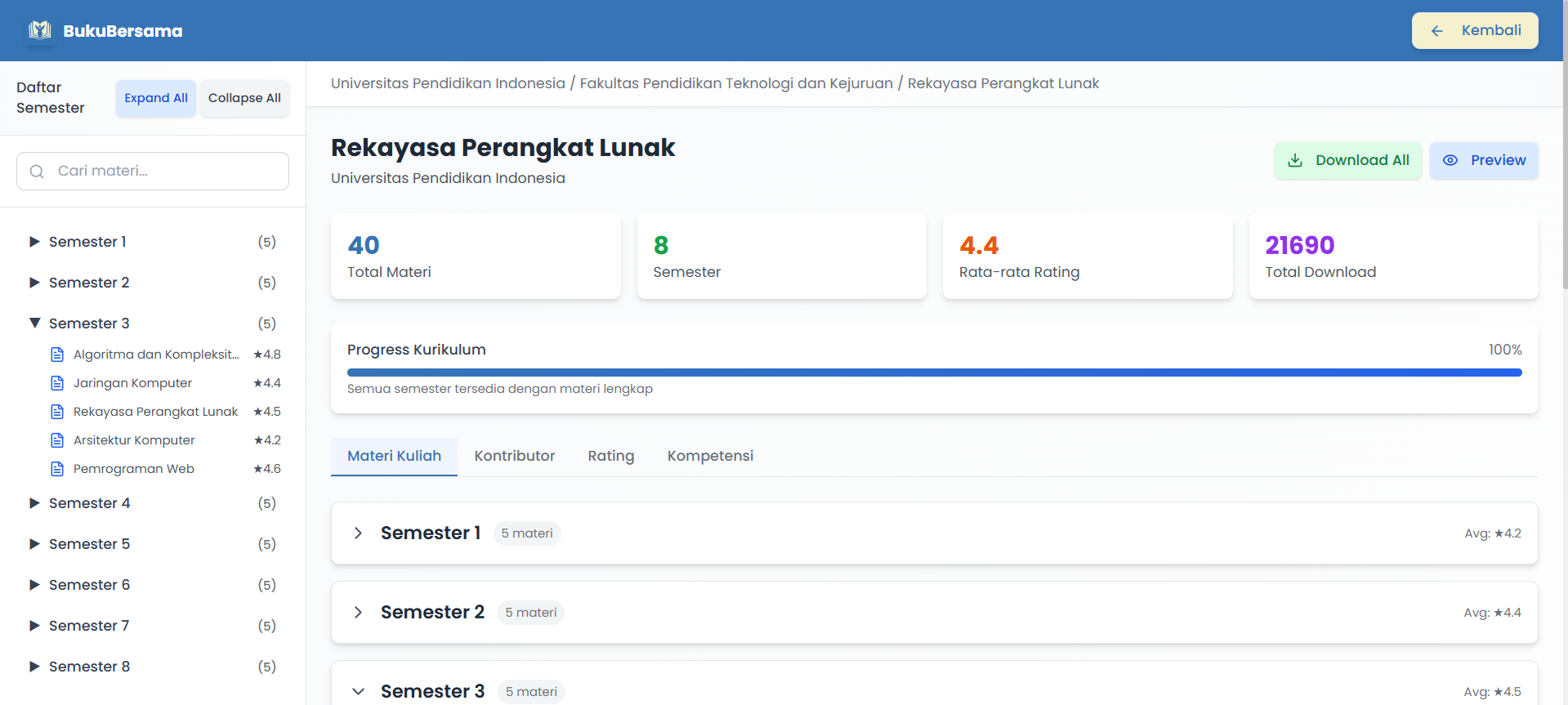
Halaman Materi Kuliah Tersedia
-
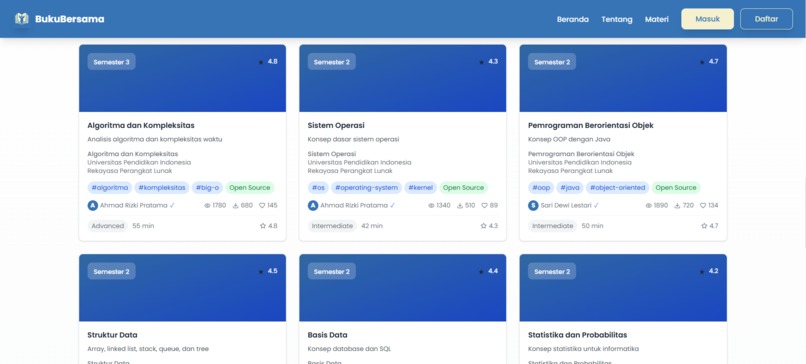
Detail Materi Kuliah
-
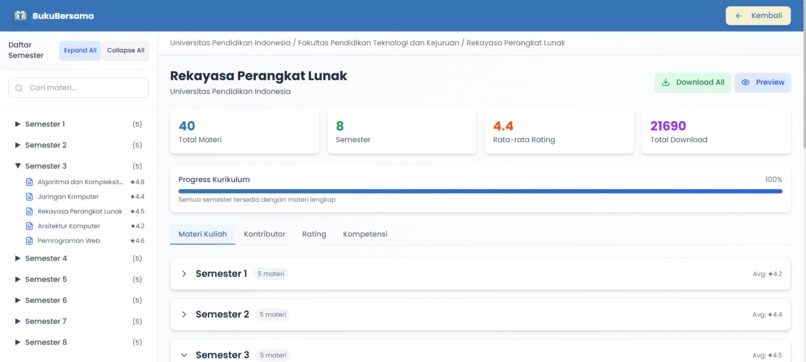
daftar resume per semester

Inspiration
The inspiration for BUKU BERSAMA came from witnessing the harsh reality of educational inequality around us. We've seen talented friends who couldn't afford university fees, watched classmates struggle because professors didn't provide proper study materials, and realized how much valuable knowledge gets trapped within campus walls while millions of Indonesians hunger for learning opportunities. The open-source movement in tech showed us that sharing resources freely can level the playing field - if developers can build amazing software by collaborating and sharing code, why can't students do the same with knowledge? We were also inspired by the peer-to-peer learning we experience daily - sometimes a friend's explanation clicks better than a professor's lecture, and those casual study group discussions often teach us more than formal classes. The idea that "knowledge belongs to everyone" really resonated with us, especially knowing that in Indonesia, your postal code and family income shouldn't determine your access to quality education. We wanted to create something where a brilliant student from a small town could access the same materials as someone studying in Jakarta's top universities, and where every student contribution could have real social impact beyond just getting good grades.
What it does
BUKU BERSAMA is an educational platform prototype that we built during this 30-hour hackathon to address educational inequality in Indonesia. The platform allows university students to upload and share their course notes and summaries, making higher education content accessible to the general public who cannot afford formal university education. Our working prototype includes:
- Basic file upload system for students to share their course materials
- Simple content browsing where users can search and view uploaded study materials
- User registration system with separate roles for students and general users 4 Basic point reward system that gives students incentives for contributing content
- Content tagging by university, major, and course for easy organization PDF viewer integration so users can read materials directly in the platform The core idea is "dari mahasiswa untuk Indonesia" - democratizing access to university-level education through peer-to-peer knowledge sharing.
How we built it
Frontend (FE) We built the frontend using React + TypeScript, with HTML and CSS for layout and styling. Our design process started in Figma, where we crafted the UI components. Once finalized, we exported the components and generated code into Bolt for integration. Backend (BE) The backend was developed entirely in PHP, connected to a MySQL database managed via SQL Workbench for structured data storage. To boost productivity, we use using AI to accelerate and debug our website development.
Challenges we ran into
We didn’t just face “challenges”, we were hit by the walls. From the start, we knew this project would be ambitious, but reality pushed us further than expected. Our biggest technical hurdle was integrating the AI pretrained models into our web platform. Starting from setting up the virtual environment (venv), using inferential APIs, and the fact that our backend is built on PHP, which isn’t natively compatible with most AI model APIs led to constant roadblocks and workarounds that slowed us down. We also dreamed of building an Android app to enable push notifications, but that dream had to be parked for now. And beyond the code... Communication. This was our real bottleneck. From ideation to development, we faced consistent misalignment different visions, missed handovers, and at times, just not being on the same page. It wasn’t just frustrating, it was draining. But through all that, we’re learning how much communication is a part of tech. This project may not be perfect, but it’s real and it’s ours.
Accomplishments that we're proud of
Despite having very little time, we're really proud of what we built and proved with our working prototype. In just 30 hours, we created an MVP that shows how our idea of making education available to everyone can actually work. We successfully built a login system that works for both students and regular users, made a browsing feature that lets people access real educational content, and created a simple point system to encourage students to participate more. We also designed a clean and easy-to-use interface that works well for everyone, whether they're students or just people who want to learn. On top of that, we built a strong technical base that can grow into a bigger educational platform later. Most importantly, we proved our idea works by actually building it, and we learned exactly what technical things we need to focus on next to make it even better.
What we learned
Through this intense hackathon experience, we gained invaluable insights that will shape our future development approach. We learned that MVP thinking is absolutely crucial for identifying the core features needed to validate our concept, while effective time management under pressure taught us how to prioritize features and make rapid technical decisions when every hour matters. Even during rapid development, maintaining a user-centered design approach helped us make better feature choices that actually serve our target audience. We also experienced firsthand how technical debt accumulates when quick solutions work for demos but require significant refactoring for production-ready systems. Working as a team under such intense time pressure significantly improved our coordination and communication skills, showing us how effective collaboration can make or break a project. Most importantly, we realized that creating meaningful social impact requires not just good intentions but also solid technical execution to transform ideas into real, lasting change.
What's next for BUKU BERSAMA
- AI-Powered Smart Review Reminder Notes are analyzed by AI and converted into quiz cards. If untouched for 6 months, the platform sends an automatic reminder to review.
- Voice Quiz + Speech Recognition Quiz questions can be read out loud using text-to-speech. Users can respond hands-free using voice input.
- Visually Impaired Support An audio reader helps blind or low-vision users access and understand academic content.


Log in or sign up for Devpost to join the conversation.