Inspiration
Imagine trying to visit a complex Chinese, Hindi, or even English website that’s difficult to understand for a person like me. For millions of people with reading disabilities, ADHD, and dyslexia, this isn’t just an inconvenience — it’s a daily challenge. Current accessibility tools either strip away content through summarization or offer basic font changes that barely address deeper cognitive accessibility needs.
Enter Bujji — a cute Telugu name often used for something adorable. Just like our Bujji makes our work easier, this Chrome extension uses built-in AI to make web content more accessible for everyone — even for people who may not be educated — while preserving its full meaning and value.
What it does
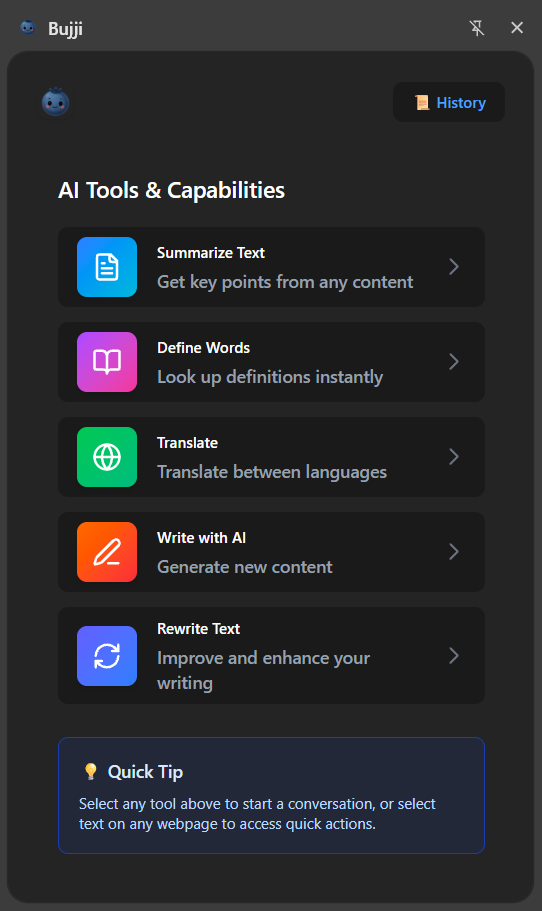
Bujji revolutionizes cognitive accessibility by bringing AI-powered text adaptation directly into your browser. Unlike traditional tools that simplify or summarize by removing content, Bujji keeps the complete reading experience while reducing cognitive load.
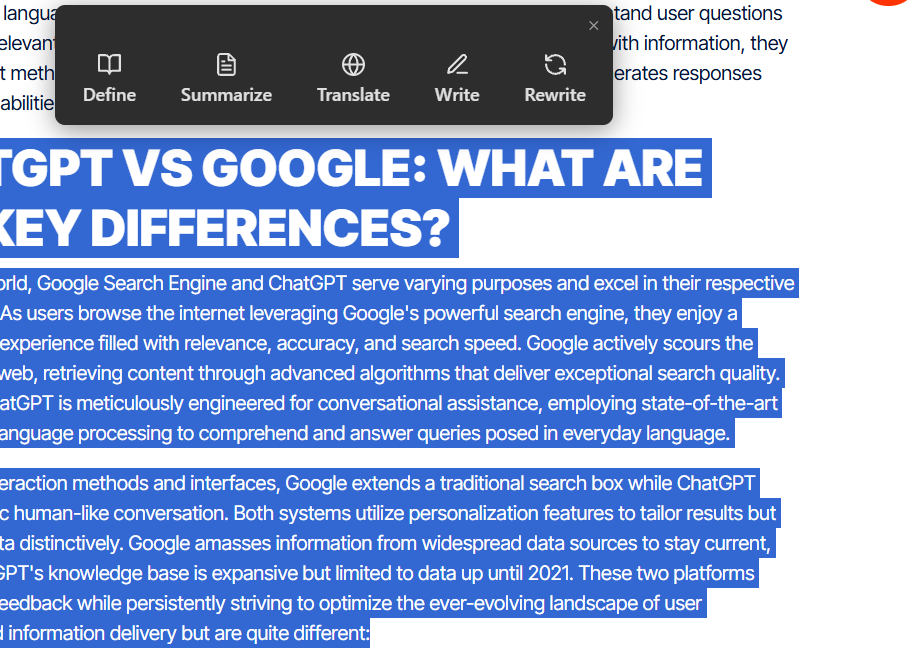
At its core, Bujji uses Chrome’s built-in Gemini Nano AI to transform text in three thoughtfully designed ways:
- “Simplify Complex Ideas” mode breaks down difficult concepts without losing depth.
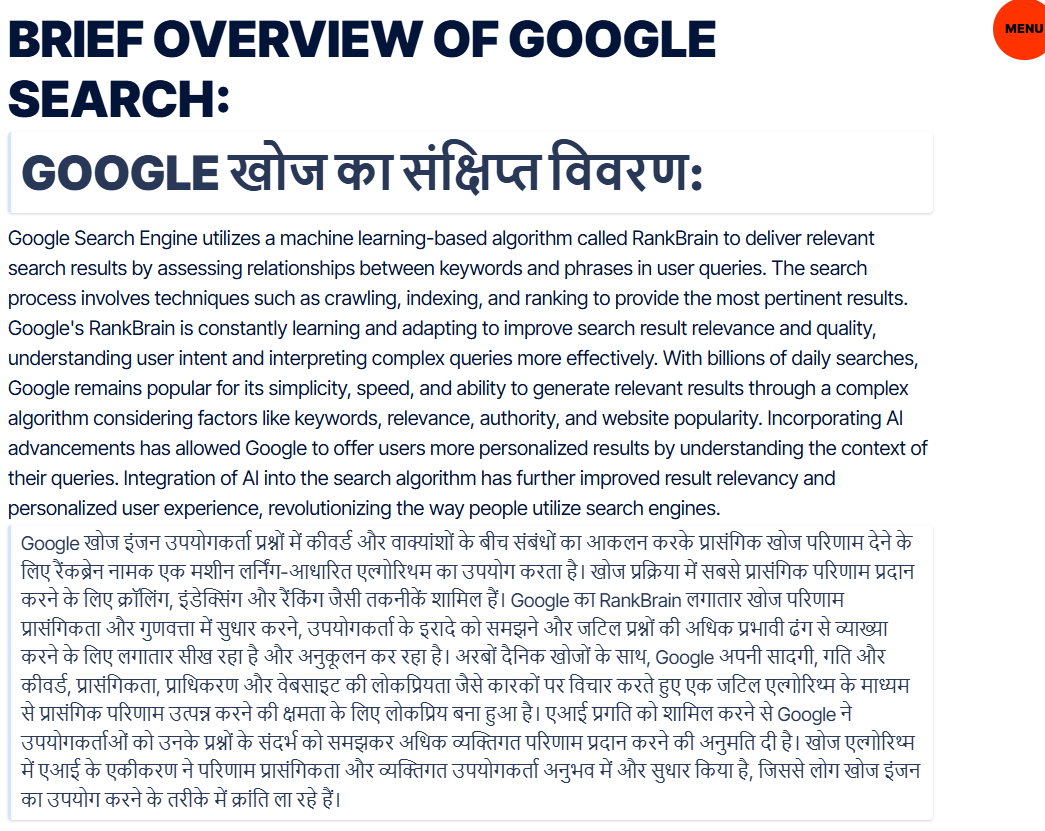
- “Better Visual Translation” mode helps non-English users learn topics while maintaining focus and attention.
- “Helper on Writing” mode assists in writing LinkedIn posts, X (Twitter) posts, or other social media content more appropriately for the platform.
Note: While these modes were designed for specific cognitive needs, we’ve intentionally avoided labels in the interface to prevent stigmatization.
Most importantly, because Bujji uses Chrome’s built-in AI, everything happens offline, right in your browser — ensuring both privacy and performance.
How we built it
I used Vite (React) due to its flexibility and performance. Using plain HTML and JavaScript, it’s difficult to build such a complex app, and React has great community support.
Challenges we ran into
The main challenge was ensuring that translations and rewrites didn’t break the website’s original design. In the beginning, these features often disrupted the website’s UI because we were adding additional text inside existing components.
Another challenge was creating agentic workflows that function privately. Today, most agent workflows are built for the cloud, which is great for speed and model access — but not for privacy.
Accomplishments that we’re proud of
We’re proud of turning Bujji into a fully private helper agent that truly respects user privacy while maintaining functionality.
We learned that building accessible tools that respect privacy requires thoughtful design — balancing AI power, user control, and simplicity.
What’s next for Bujji
Next, we plan to add more agentic workflows like automation without a user interface, and implement memorization features that help Bujji adapt to each user’s preferences over time.


Log in or sign up for Devpost to join the conversation.