-
-
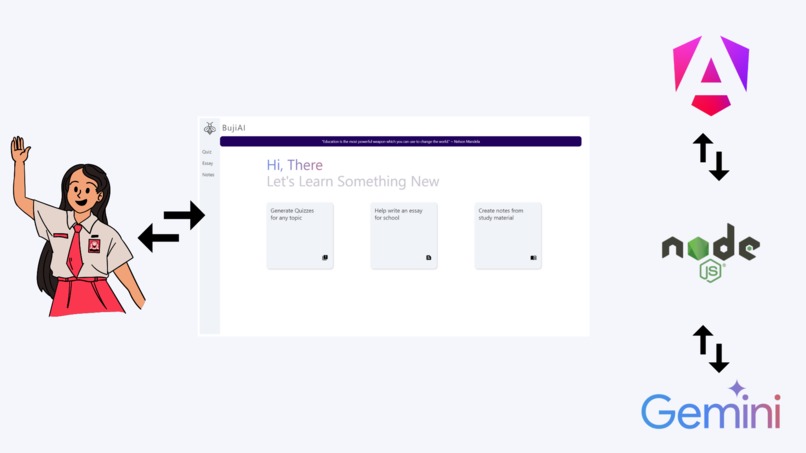
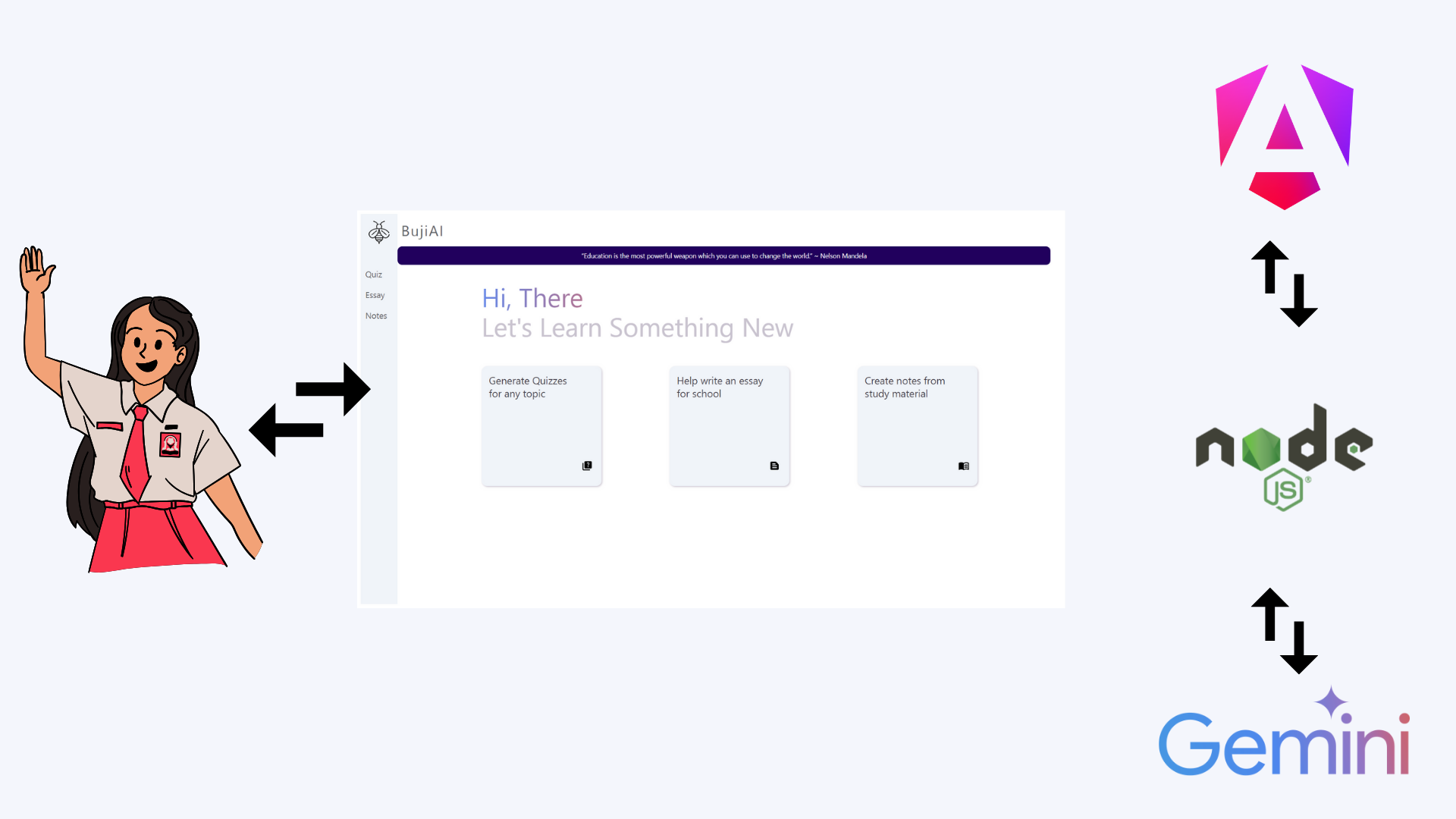
BujiAI Flow Diagram
-
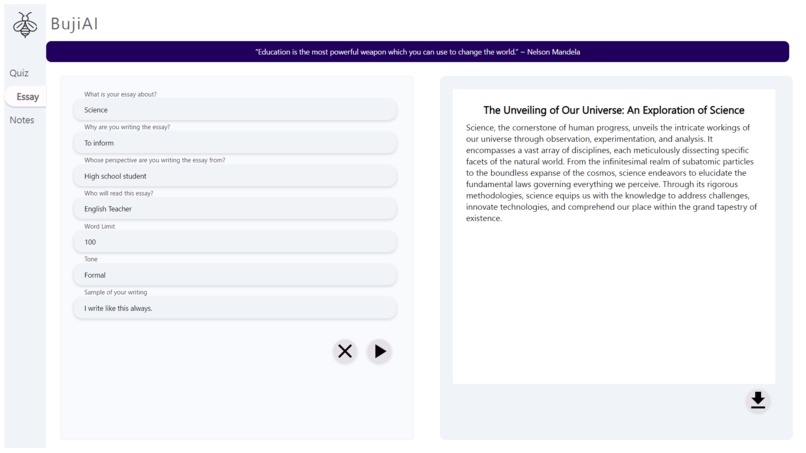
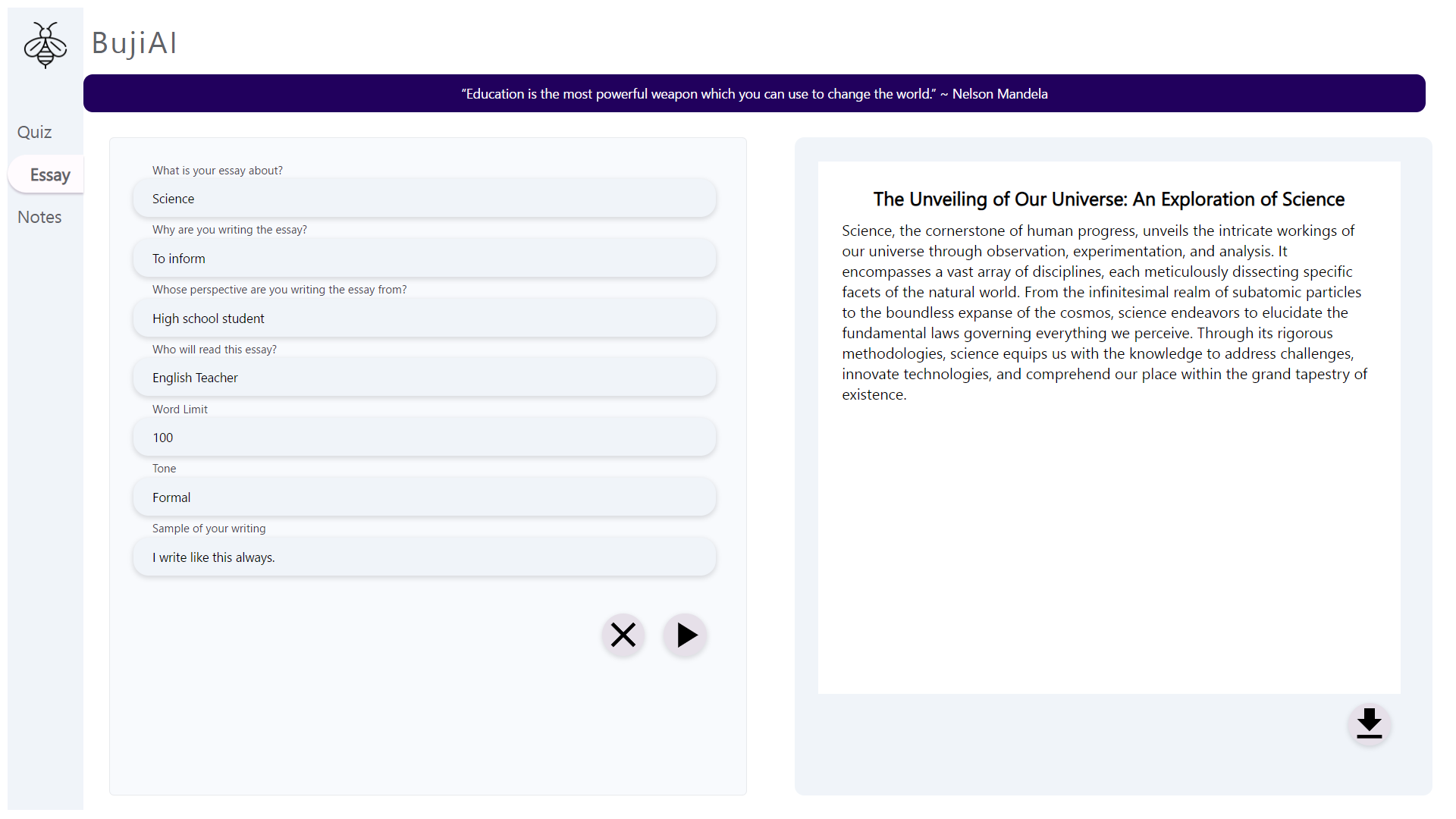
Essay Screen
-
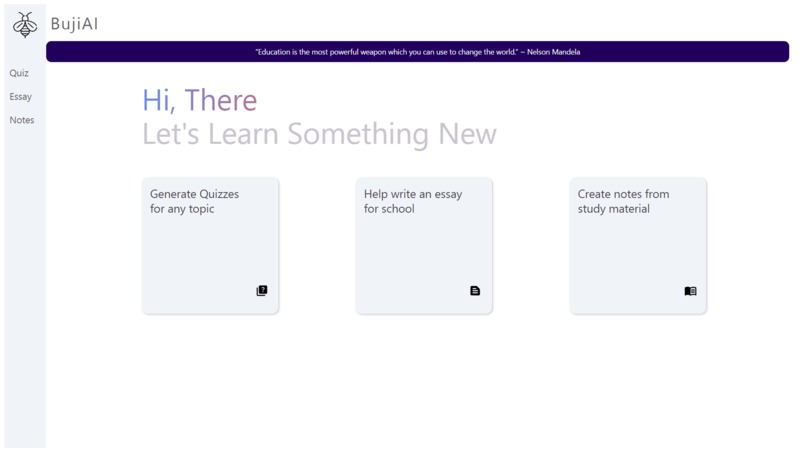
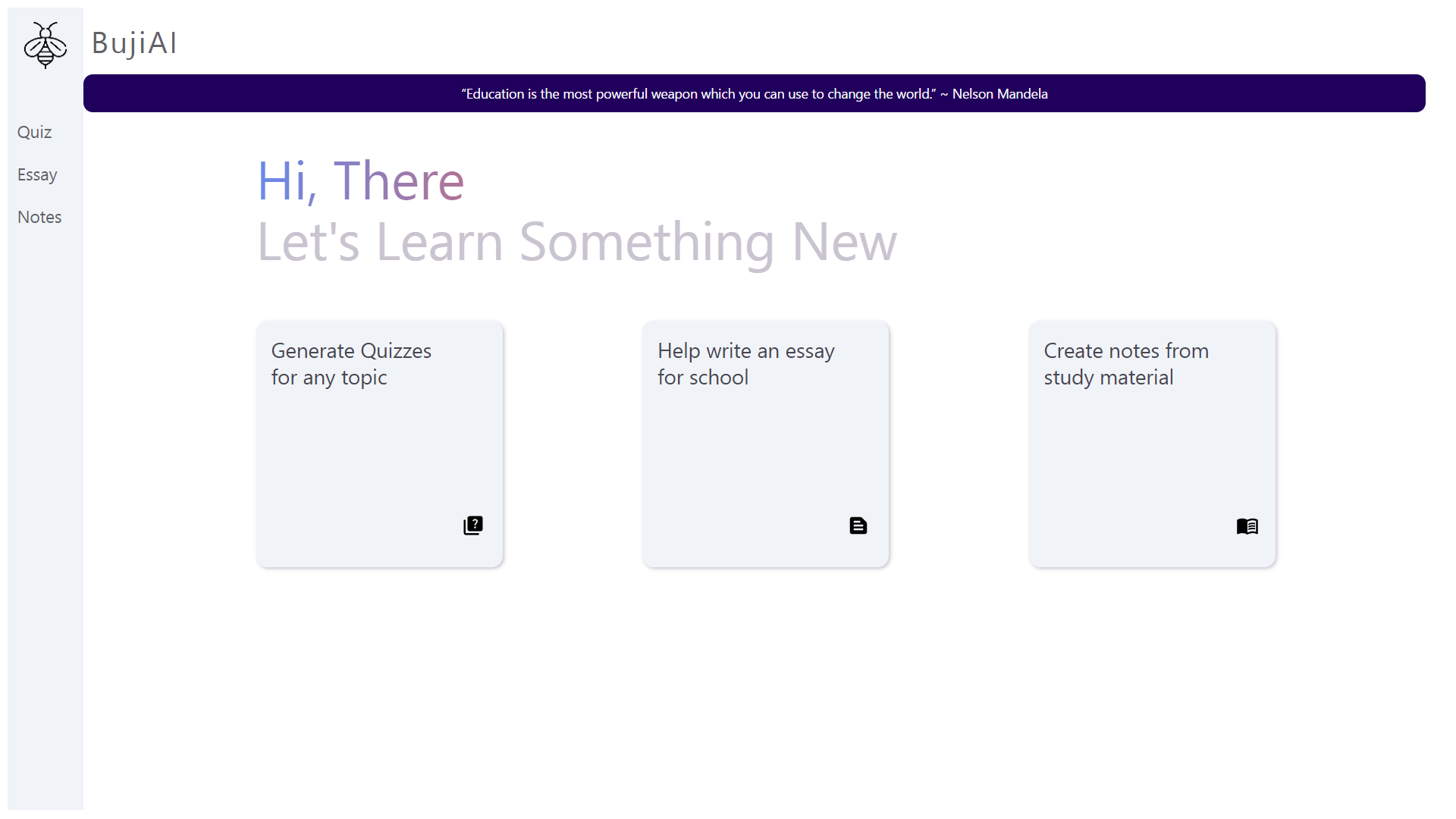
Home Screen
-
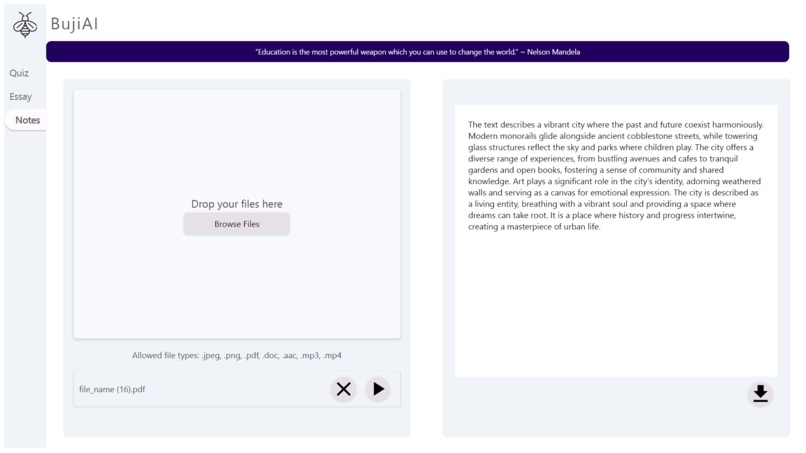
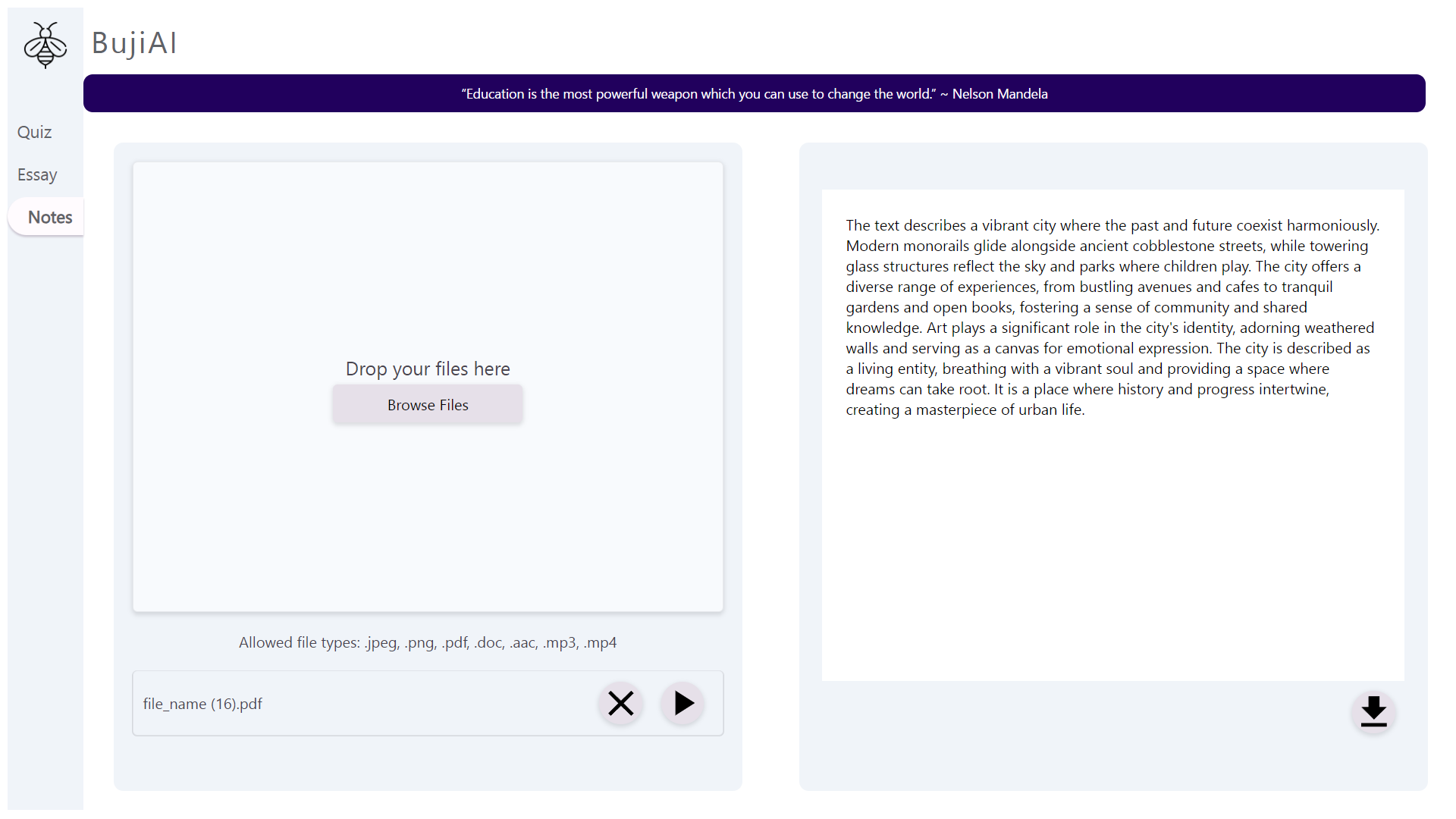
Notes Screen
-
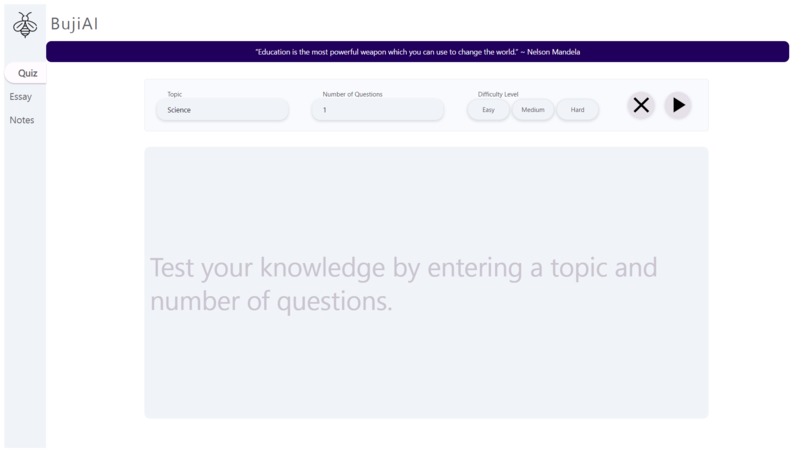
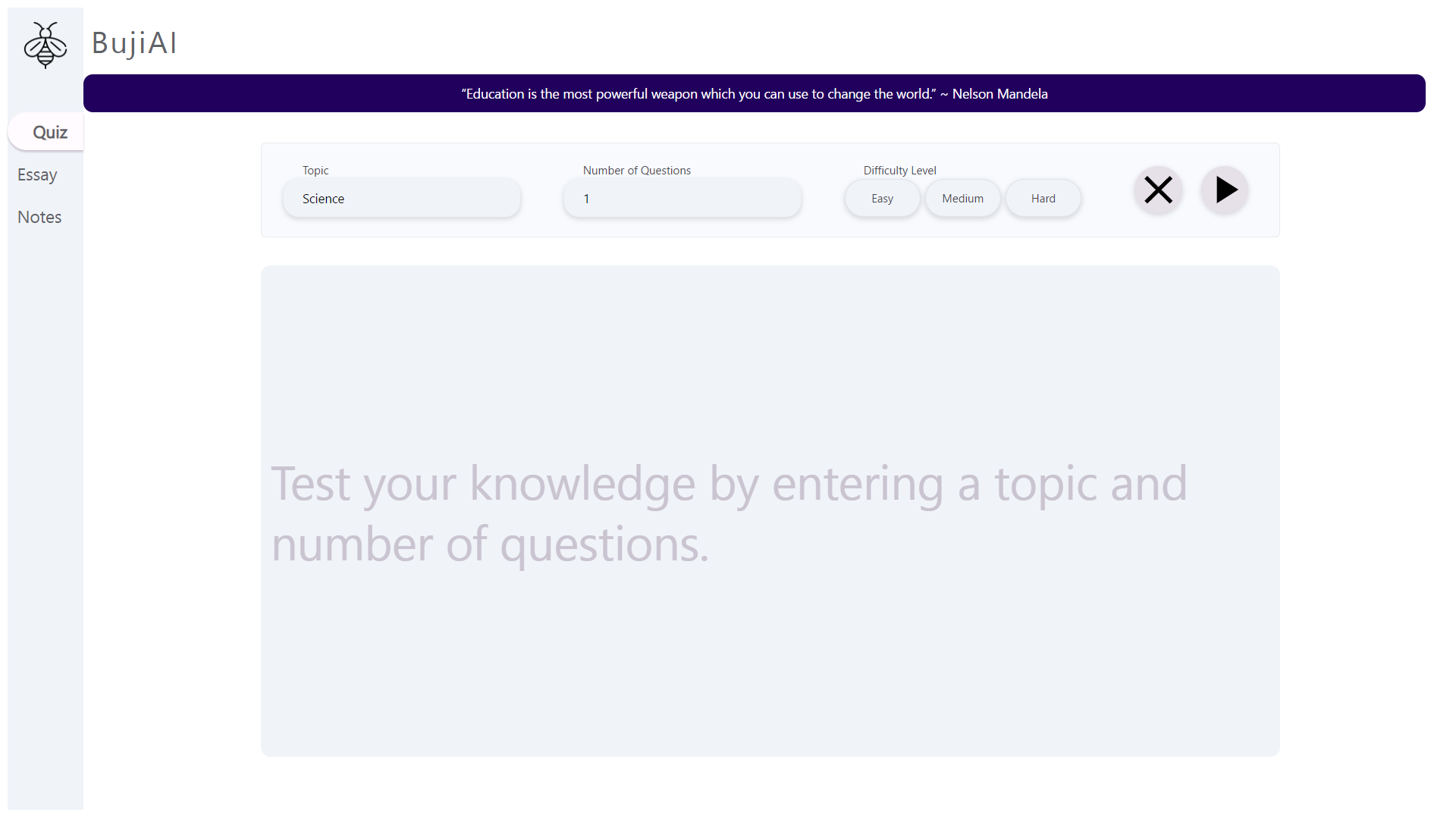
Quiz Screen
Inspiration
“Education is the most powerful weapon which you can use to change the world.” ~ Nelson Mandela
The difference between being better and the best is often due to the inaccessibility and unaffordability of resources. Not all students have access to private tutoring or resources tailored to their needs. This inequity sparked the idea for BujiAI—a solution to bridge the gap by leveraging technology to provide personalized learning aids to students of all levels. BujiAI is envisioned to democratize education, making self-study more accessible and effective.
What it does
BujiAI was designed keeping two ideas in mind:
- Repetition is reinforcement
- Gamification helps in retention
It offers three key features:
- Quiz Generation: Users can generate quizzes on specific topics, customizing the number of questions and difficulty level. This feature aids in topic revision and comprehension through gamification.
- Essay Writing Assistance: With BujiAI, users can generate essays tailored to their requirements by specifying parameters such as author's perspective, reader type, purpose, word count, and tone, and even provide a sample of writing. This feature lightens academic workload and ensures essays meet submission criteria.
- Study Notes Generation: By uploading various types of course materials—images, documents, audio, or videos—users can generate concise study notes. These notes, synthesized by the app, facilitate comprehension of complex topics and aid retention.
Further, parents of the app's younger students need not worry; the app filters out graphic and explicit content.
How I built it
BujiAI was built using Angular for the front end, Node.js for the back end, and Gemini for the generative AI capabilities. The front end was crafted to provide a user-friendly interface, facilitating seamless interaction. The UI is intuitive, especially considering that users of all age groups can navigate the app easily.
Node.js powered the back end, managing data processing and interactions with the AI model. Gemini, with its generative AI capabilities, formed the app's backbone, enabling the generation of quizzes, essays, and study notes based on user inputs and uploaded content.
Challenges I ran into
Striking a balance between offering a comprehensive range of user inputs for customization and maintaining a user-friendly interface was crucial. I had to find a way to balance the complexity of user inputs with the app's usability without compromising performance.
The app needed to efficiently process the diverse user inputs across various features (quiz parameters, essay specifications, file uploads for notes generation) without impacting performance or response times.
I overcame these challenges by testing the app as I was building it. I asked my peers about their experience using this app's dev version and implemented feature enhancements based on their suggestions.
Accomplishments that I'm proud of
I'm proud to have successfully brought BujiAI to life—a comprehensive learning aid that addresses real-world educational inequities and has the potential to impact students' learning experiences positively.
What I learned
The development of BujiAI provided valuable insights into the intersection of technology and education. I learned the importance of balancing innovation with usability, ensuring that advanced features remain accessible to users of all levels. Additionally, navigating the complexities of AI integration taught me the significance of robust testing and iterative refinement in product development.
What's next for BujiAI
Looking ahead, the roadmap for BujiAI includes further refinement and expansion of its features.
Planned features include:
- Generation of mnemonics, mind-maps, and index cards from study notes
- User login and organization clusters
- Parental control for younger users' accounts
Exploring partnerships with educational institutions and organizations to reach a wider audience and maximize community impact is also on the agenda.

Log in or sign up for Devpost to join the conversation.