-
-
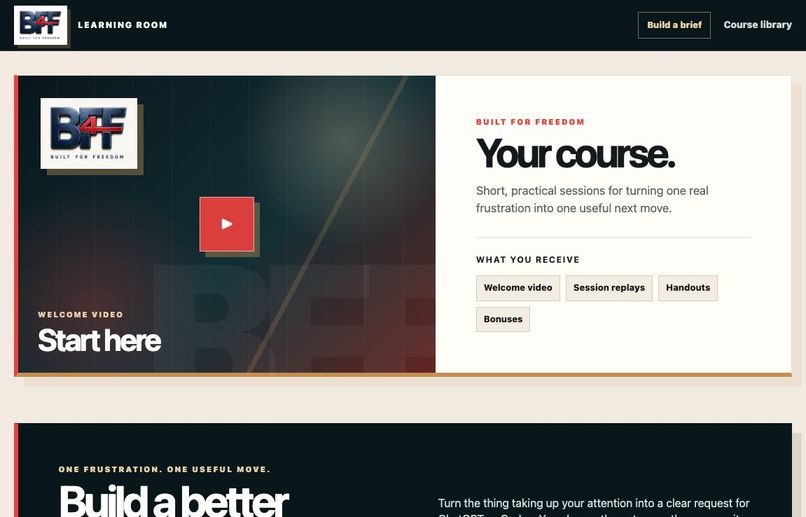
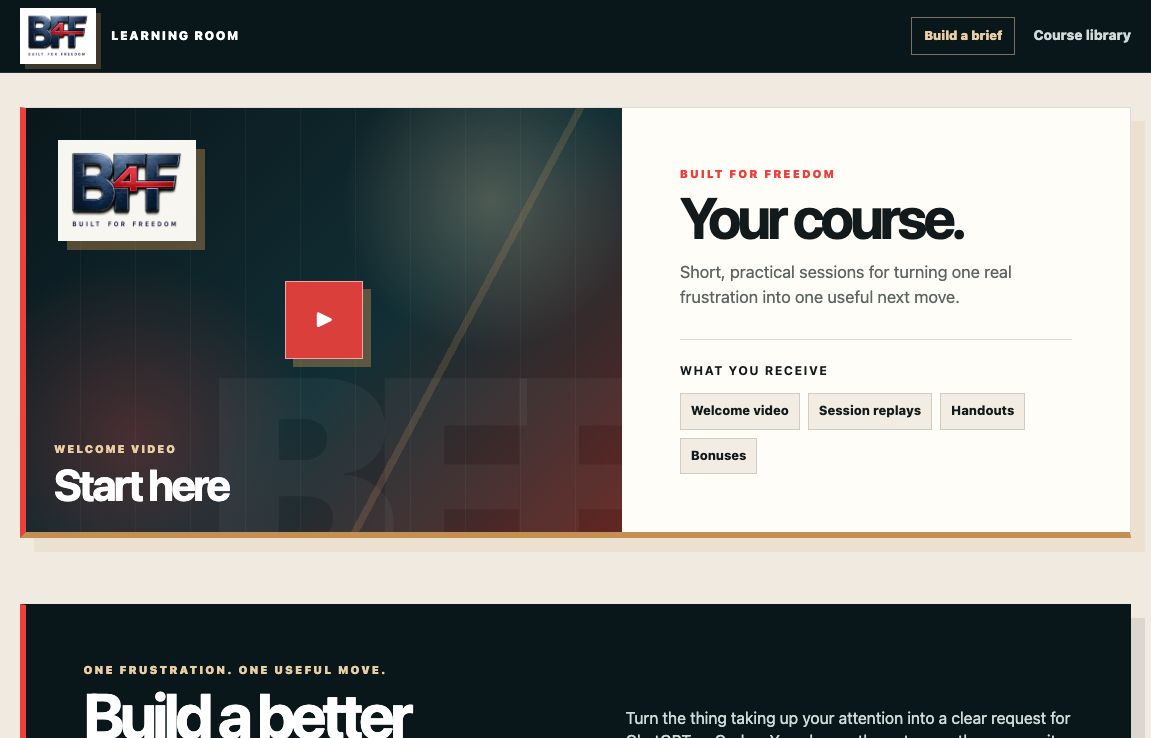
The Learning Room turns one real frustration into one useful next move.
-
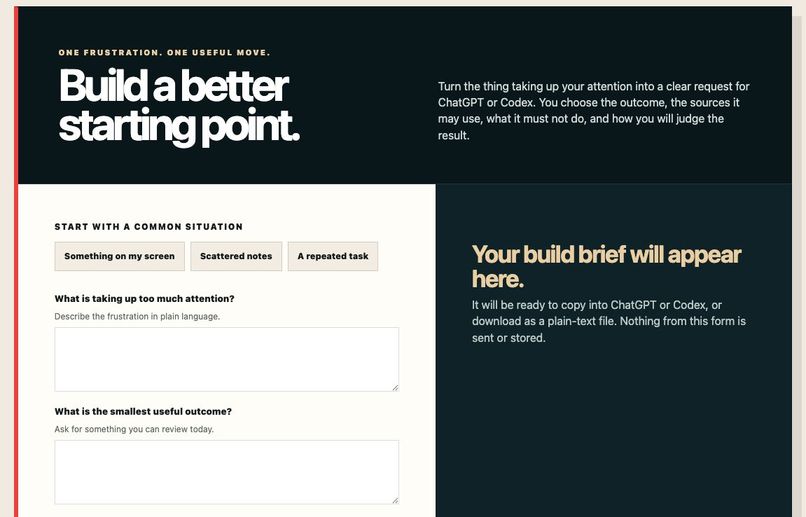
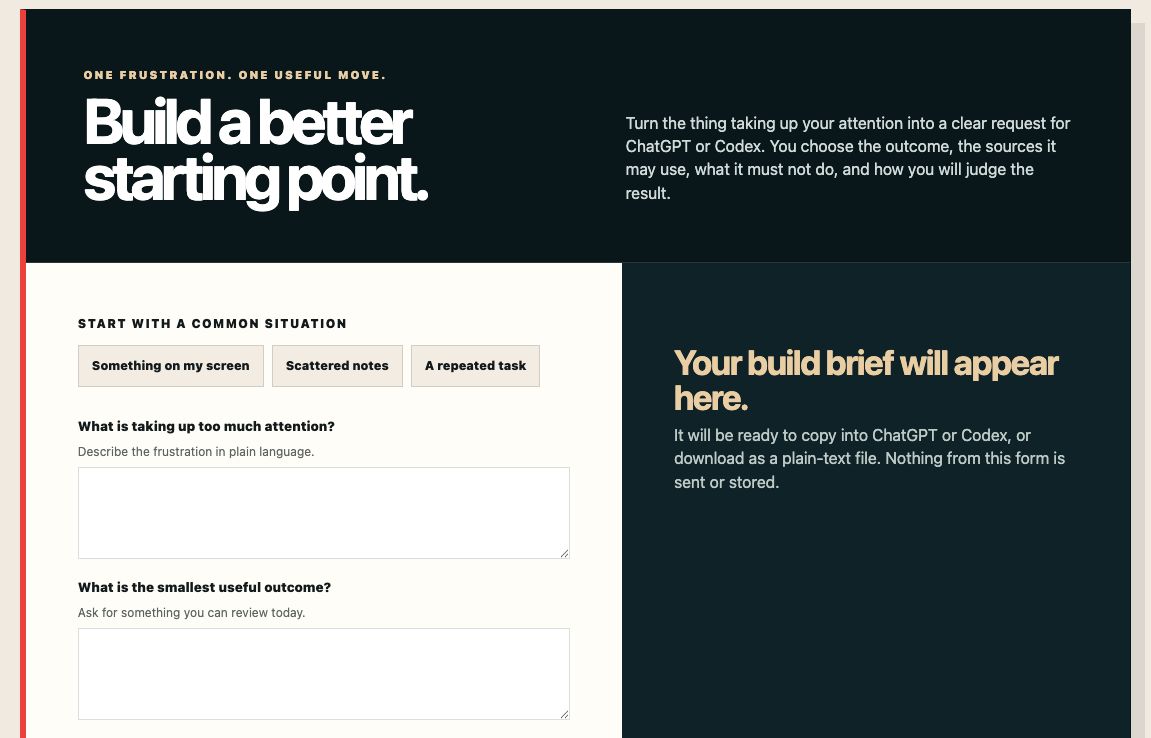
Freedom Builder guides learners to create a clear, bounded ChatGPT or Codex brief.
-
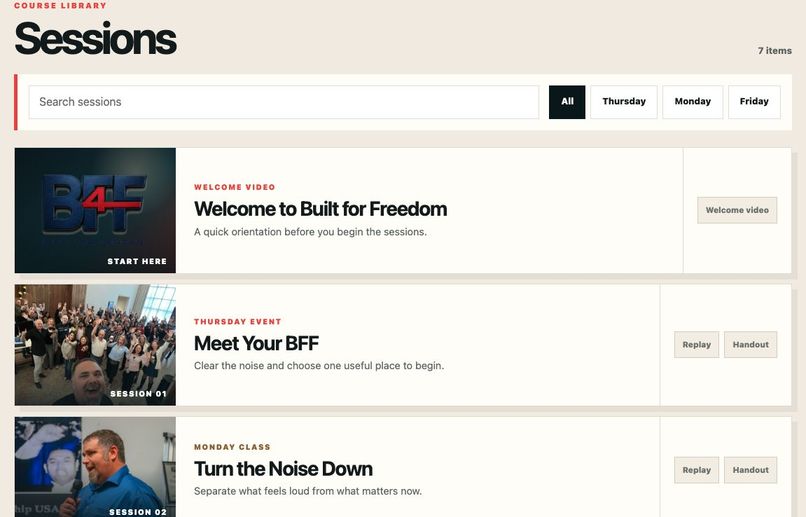
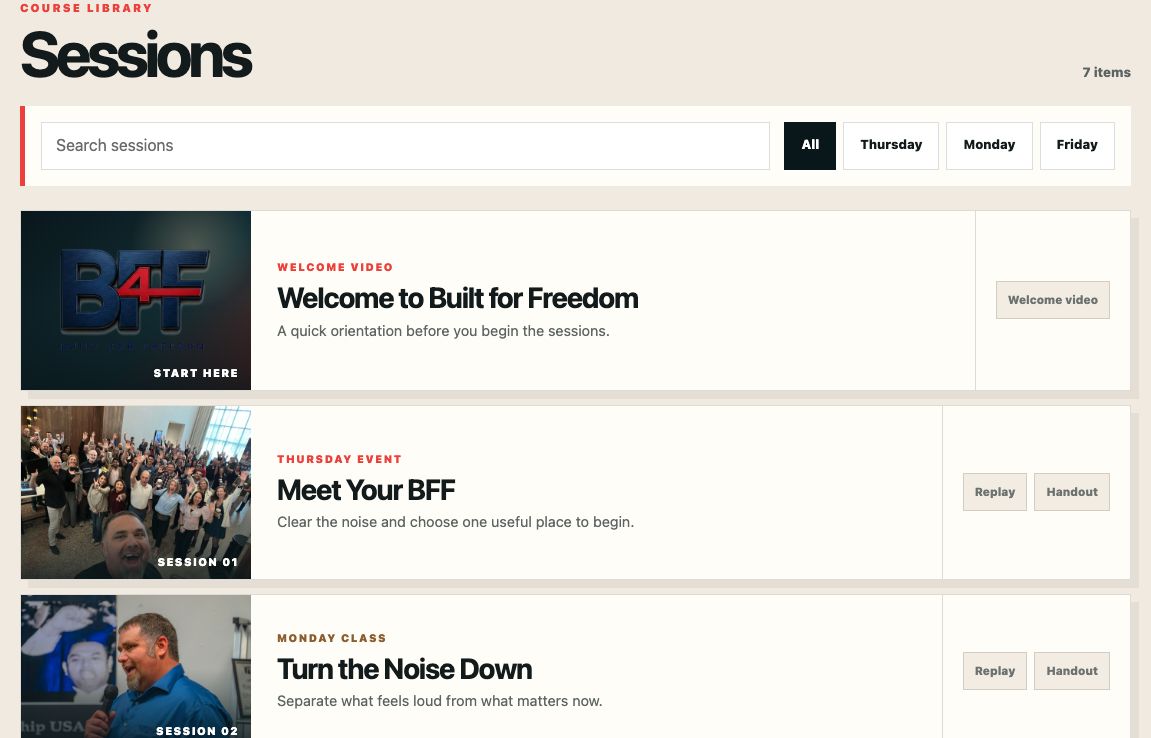
The course library organizes practical sessions, replays, handouts, and bonuses.
-
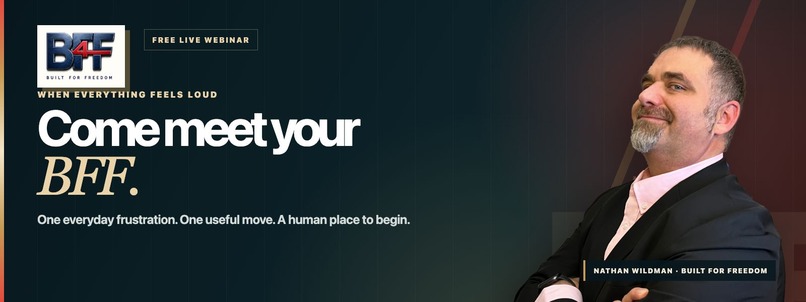
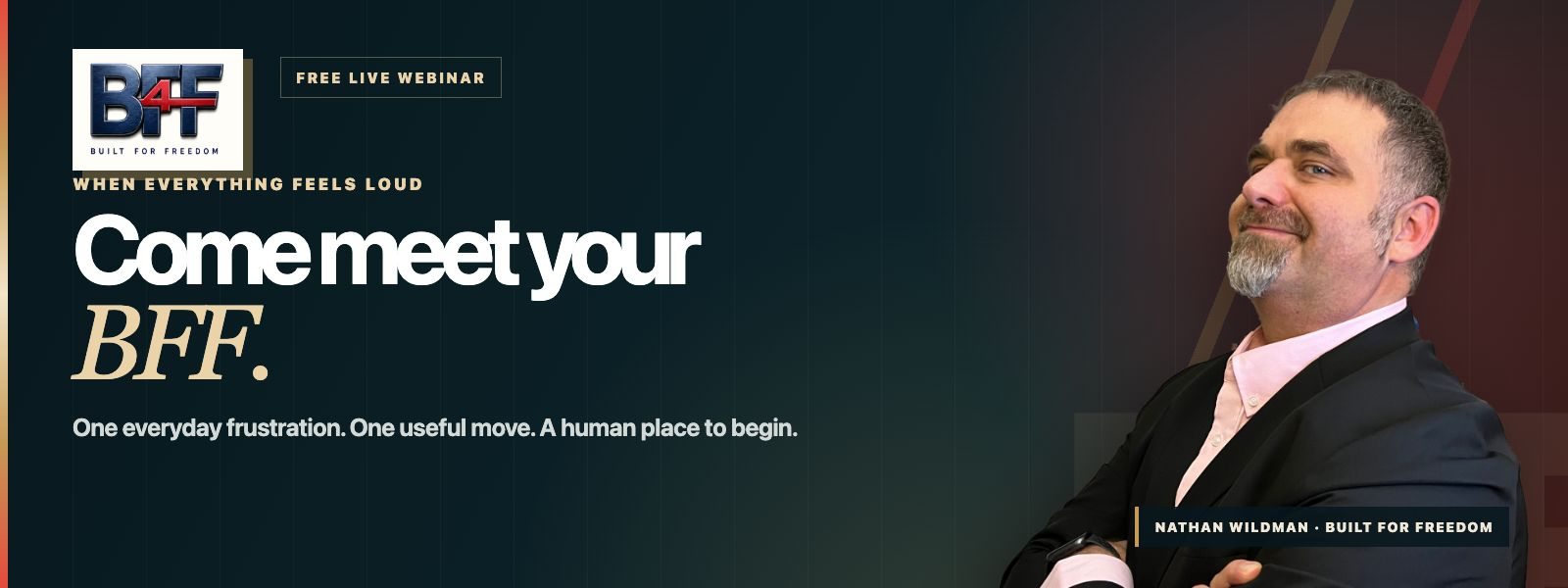
Built for Freedom live webinar: a human place to begin when AI feels loud.
Inspiration
I keep meeting smart, capable business owners who feel like they are already behind with AI. There is another tool, another model, another prompt pack, and another person telling them they should be moving faster.
The honest part is that I understand that feeling because I feel it too.
Years ago, I said yes to a casino DJ job before I felt qualified. I did not wait until I felt confident. I took useful action, learned while doing it, and the identity caught up. I believe the same thing can happen with AI.
You do not need to understand every tool before you begin. Start with one frustration. Build the smallest thing that gives you some relief. Review it. Then save what worked.
That is where Built for Freedom came from.
What it does
The Built for Freedom Learning Room helps a nontechnical business owner turn one messy frustration into a clear, bounded ChatGPT or Codex build brief.
The working Freedom Builder asks the learner to name:
- the burden they want to reduce;
- the smallest useful result;
- what information the AI may use;
- what it must not change or do;
- what the result has to pass before it is trusted.
It then creates a brief the learner can review, copy, or download.
One of the examples starts with something on the learner's screen. It shows them how to remove private information from a screenshot and create a better technical-support prompt without pretending the system can see or control their account.
The current tool sends and stores no learner input.
How we built it
I brought the lived experience, teaching method, stories, audience judgment, brand direction, safety boundaries, and final decisions.
I worked with Codex and GPT-5.6 Sol to inspect the material I already had, find the real teaching sequence inside it, build the Learning Room and Freedom Builder, test it, correct it, and document what was actually ready.
The course teaches the same method we used to build the course:
- Name the pressure.
- Clear the noise.
- Choose one useful result.
- Give the right context.
- Set the boundaries.
- Inspect and build.
- Review the real artifact.
- Save the successful process so it can be used again.
The submitted app uses responsive HTML, CSS, and JavaScript, a small ES module for the guided flow, Node's built-in test runner, a dependency-free local server, and Cloudflare Pages for the live demo.
The clean repository passes five Freedom Builder tests plus static-integrity, asset, learner-language, and local-first privacy checks. The source application also passes 49 tests and current desktop and mobile browser QA.
Challenges we ran into
The biggest challenge was scope.
I have a much larger vision for the LMS: private lessons, a live calendar, an assistant that helps learners ask better questions, a place to share builds, and a What Changed / What Matters section that keeps up with OpenAI.
It would have been easy to write about all of that as if it already existed.
We did not do that.
We kept the judged product focused on the part that is working, testable, and useful right now. Authentication, private video, stored progress, live calendar data, model-backed support, and community posting remain clearly labeled roadmap work.
Accomplishments that we're proud of
I am proud that this does not ask a beginner to pretend they are technical.
The learner can arrive overwhelmed, choose one familiar situation, and leave with a useful brief that includes source boundaries, prohibited actions, acceptance checks, screenshot privacy guidance, and a review step.
During Build Week, we also turned the larger course direction into an auditable Course Brain, a six-week learning sequence, a progressive safety ladder, an official OpenAI update lane, creator-research boundaries, tests, browser QA, and a clean private repository that distinguishes earlier ideas from the work added with Codex and GPT-5.6.
What we learned
More software does not automatically create more relief.
The strongest AI education begins with a smaller outcome, the right context, explicit boundaries, and a real review of the result.
I also learned that showing the mistakes, corrections, and unfinished pieces builds more trust than pretending the first version was perfect.
It does not have to be perfect to become useful.
What's next for Built for Freedom Learning Room
We will keep building in the same private repository while preserving the Build Week baseline.
Next comes the learner dashboard, one complete private lesson, a timezone-aware calendar, the Ask BFF support guide, a moderated build-sharing community, and the member-facing What Changed / What Matters desk.
The current submission is a working education-product prototype prepared for a founding cohort. It is not represented as sold, enrolled, or outcome-validated.
Freedom does not happen by accident. You build it, one useful system at a time.


Log in or sign up for Devpost to join the conversation.