

Inspiration
Construction planning in real life is still heavily dependent on manual estimation, experience-based assumptions, and rough calculations. Small mistakes in area calculation, labor estimation, or material planning can lead to huge financial losses and project delays.
We were inspired to build Buildwise to make construction planning smarter, data-driven, and AI-assisted. Instead of spreadsheets and guesswork, we wanted to create a system where users can enter basic project details and instantly receive structured insights like cost breakdown, workforce requirements, and construction schedules.
Our goal was to bridge traditional construction planning with modern intelligent systems.
What it does
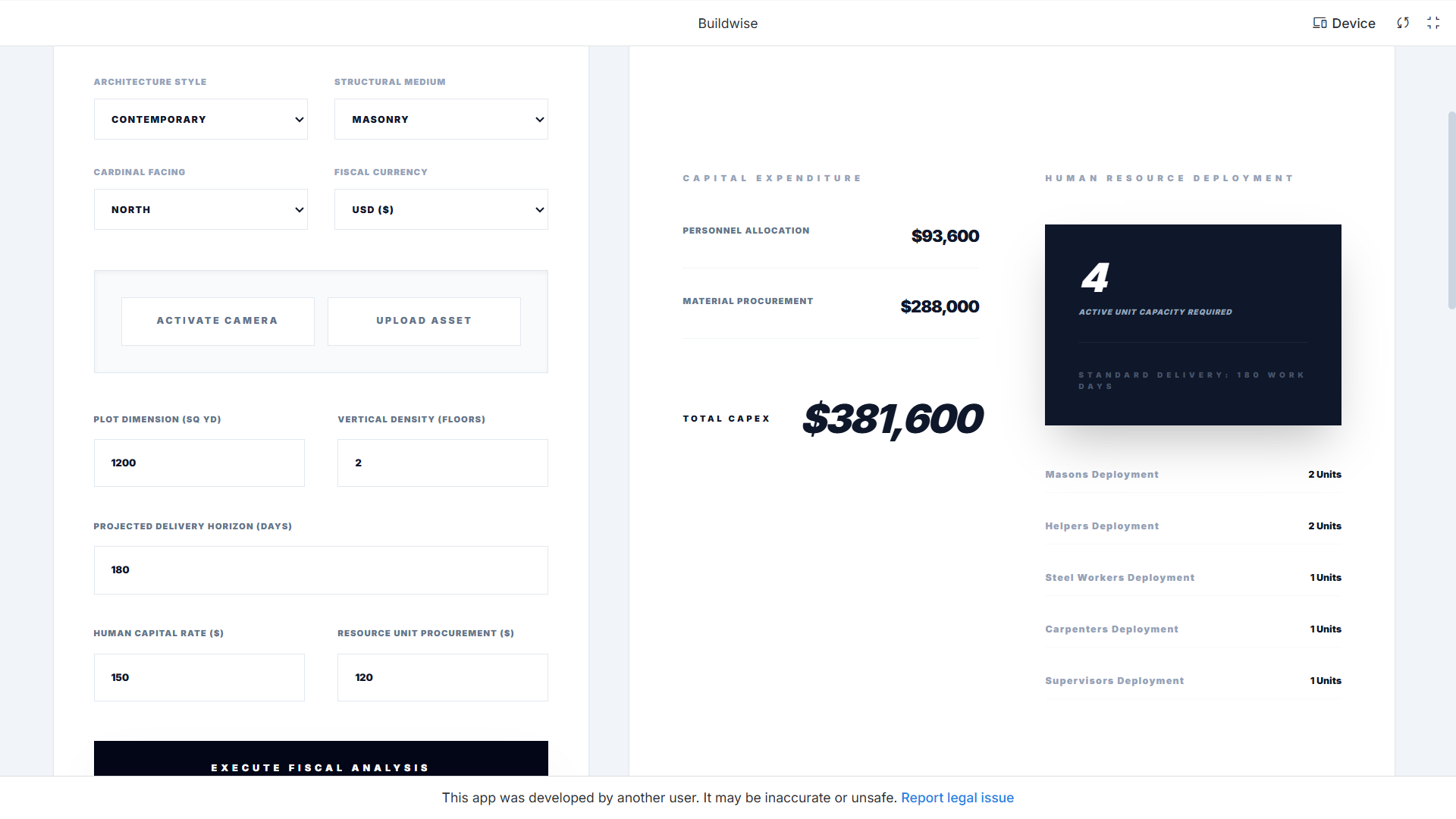
Buildwise is an AI-powered construction planning assistant that:
Calculates total built-up area based on floors
Estimates worker requirements (masons, helpers, supervisors, etc.)
Generates labor cost breakdown
Estimates material quantities
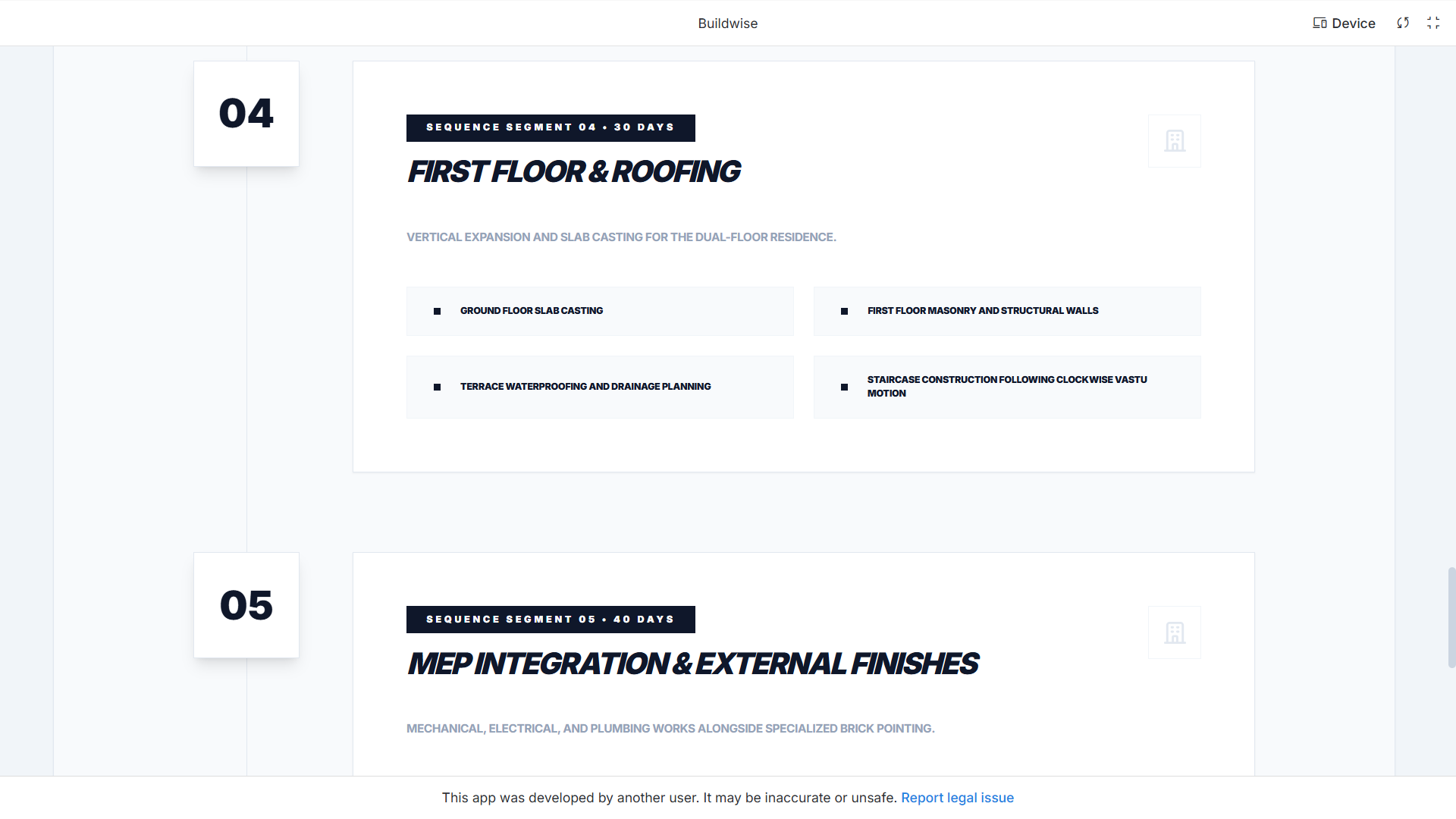
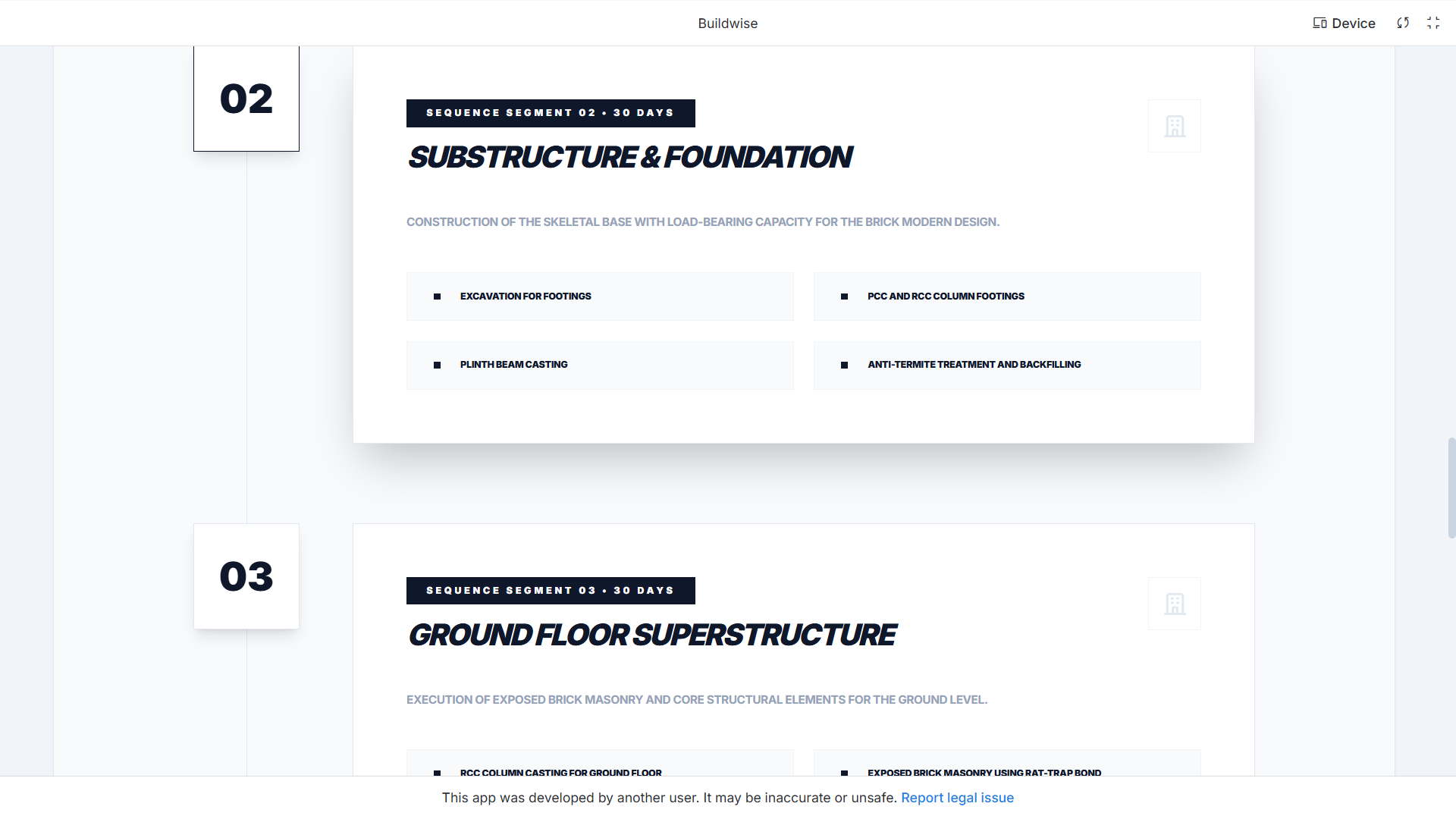
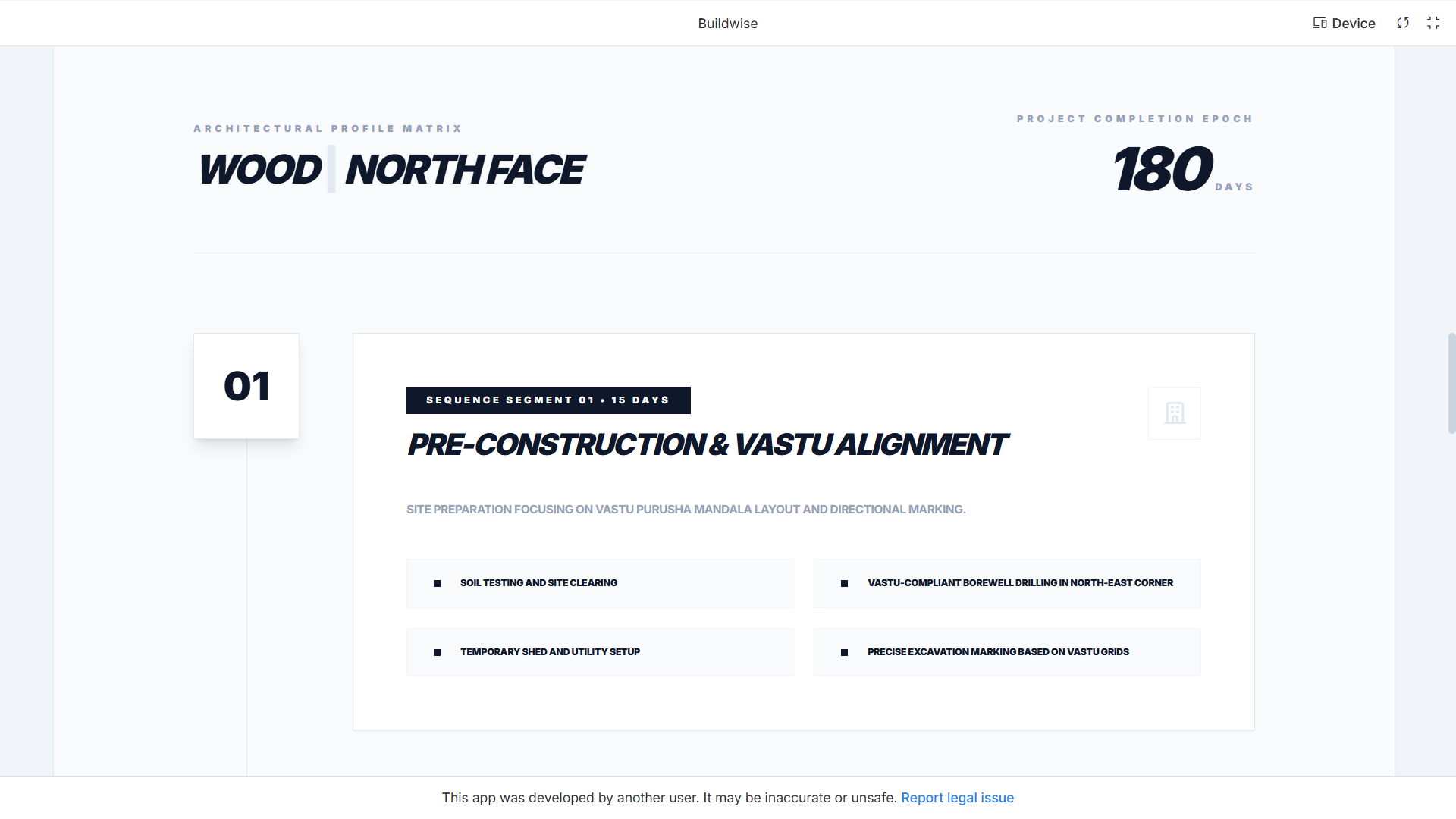
Provides a structured construction timeline
Displays organized project details in a clean UI
It transforms basic project inputs into a comprehensive construction analysis dashboard.
For example:
If
Total Area
Built-up Area × Number of Floors Total Area=Built-up Area×Number of Floors
Then labor cost is calculated as:
Labor Cost
Workers × Daily Wage × Duration Labor Cost=Workers×Daily Wage×Duration
These structured calculations power the planning engine of Buildwise.
How we built it
We built Buildwise using a full-stack approach:
Frontend
Designed a responsive UI using HTML, CSS, and JavaScript
Created dynamic forms to collect project parameters
Used Fetch API to connect frontend with backend
Rendered results in structured sections (cost, labor, materials, schedule)
Backend
Built API endpoints to process project inputs
Implemented construction calculation algorithms
Structured estimation logic for labor, cost, and timeline
Returned JSON responses to the frontend
Logic Layer
Designed formulas for area, cost, workforce, and scheduling
Scaled material and labor requirements proportionally to project size
Structured weekly phase-based execution logic
We followed a modular architecture so that each part (calculation, scheduling, UI rendering) can be extended independently.
Challenges we ran into
Designing realistic estimation logic Construction estimation cannot be random. We had to carefully design proportional formulas that scale correctly with area and floors.
Balancing simplicity with accuracy If the system is too complex, it becomes hard to use. If too simple, it becomes unrealistic. We had to find the right balance.
Backend–Frontend integration Handling API calls, managing errors, and ensuring proper data flow required debugging and structured testing.
Dynamic result rendering Displaying structured breakdowns like worker distribution and schedules dynamically required careful DOM manipulation.
Accomplishments that we're proud of
Built a fully functional end-to-end planning system
Implemented structured mathematical estimation logic
Designed a clean and modern UI
Created dynamic workforce and cost breakdown
Generated phase-wise construction schedule
Successfully connected frontend and backend seamlessly
Most importantly, we built a system that solves a real-world engineering problem, not just a demo project.
What we learned
Through Buildwise, we learned:
Full-stack system design
Backend API structuring
Mathematical modeling for real-world problems
Data flow handling between frontend and backend
Debugging integration issues
Designing user-friendly dashboards
We also learned that real-world problem solving requires combining logic, design, and practical assumptions — not just code.
What's next for Buildwise
Future enhancements include:
Location-based cost customization
Save & export project reports (PDF)
User authentication and project history
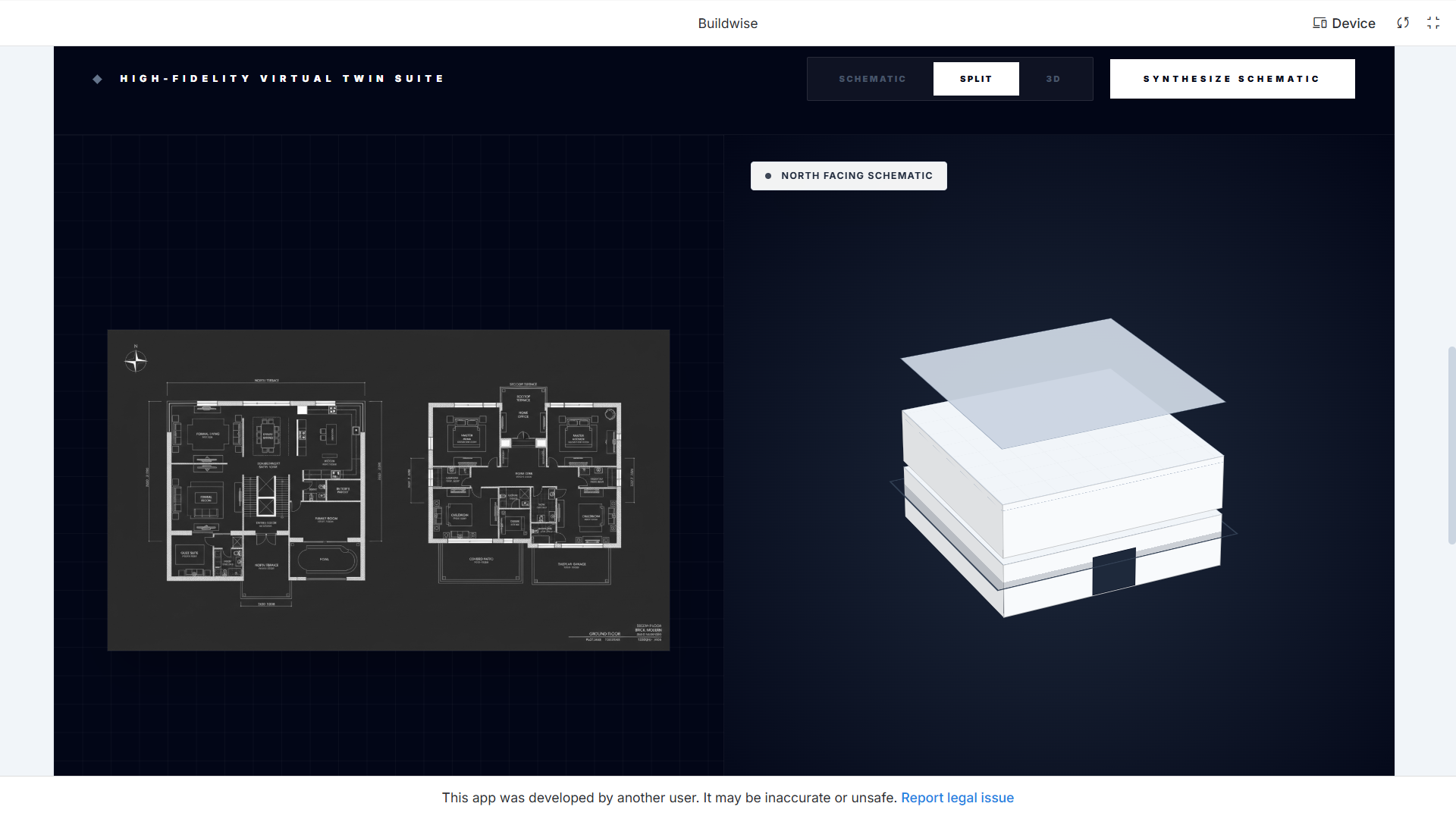
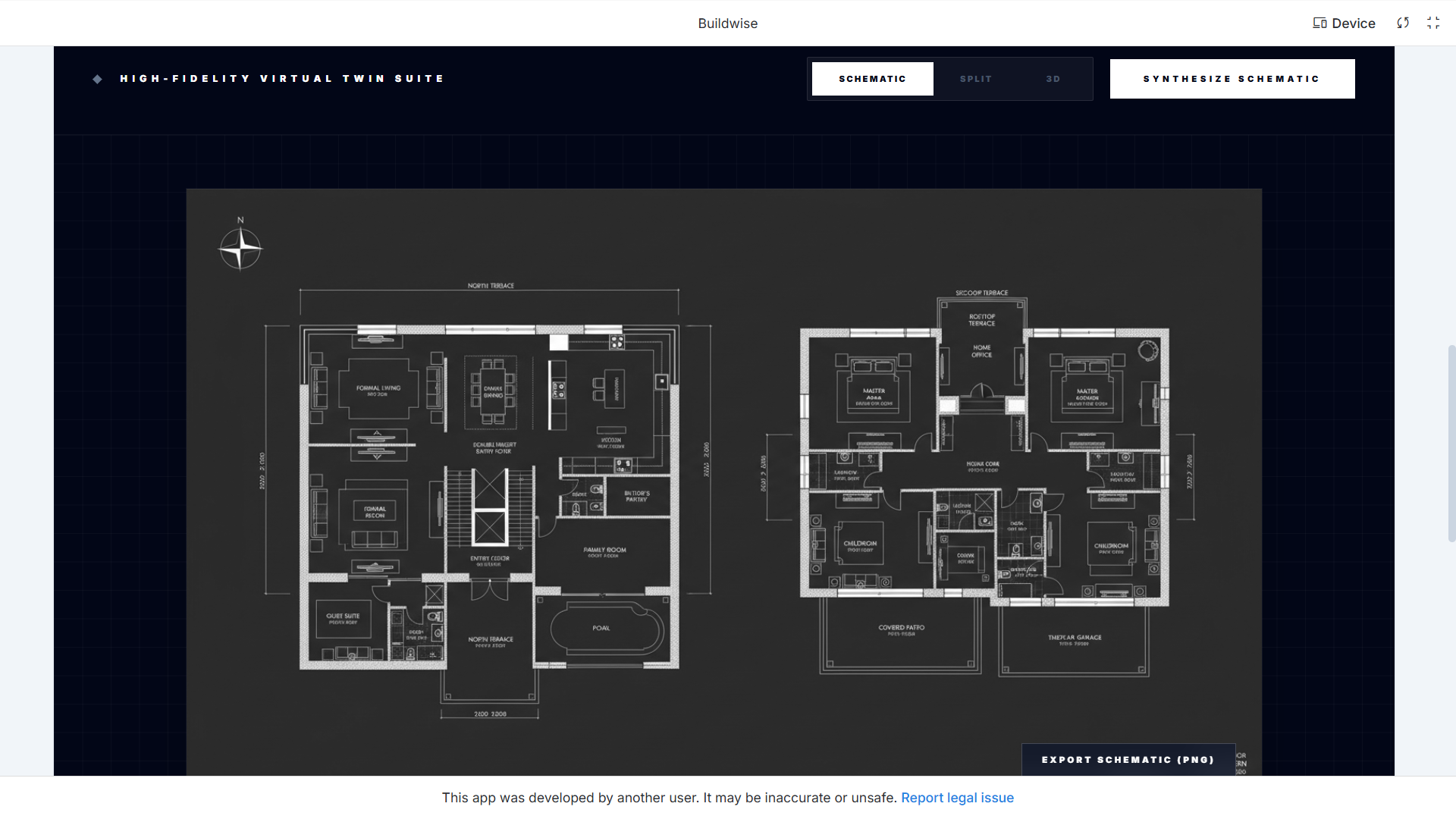
More detailed architectural layout visualization
Role-based dashboards (Contractor / Developer / Engineer)
Real-time material price updates
Our vision is to transform Buildwise into a smart construction intelligence platform that supports professionals in making data-driven decisions.

Log in or sign up for Devpost to join the conversation.