-
-
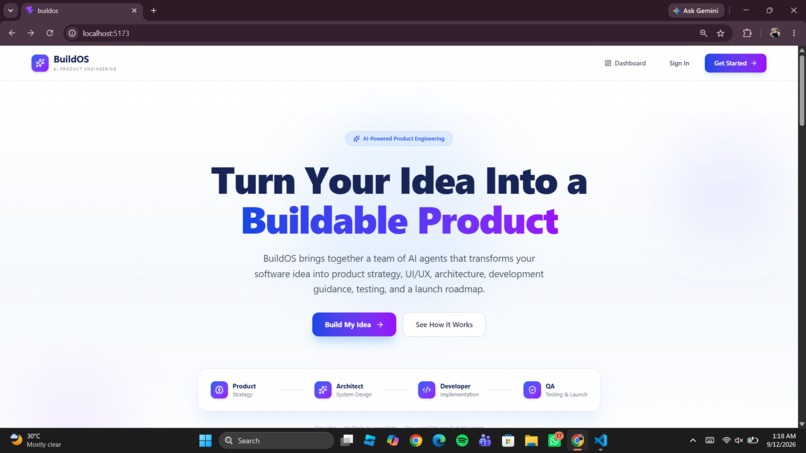
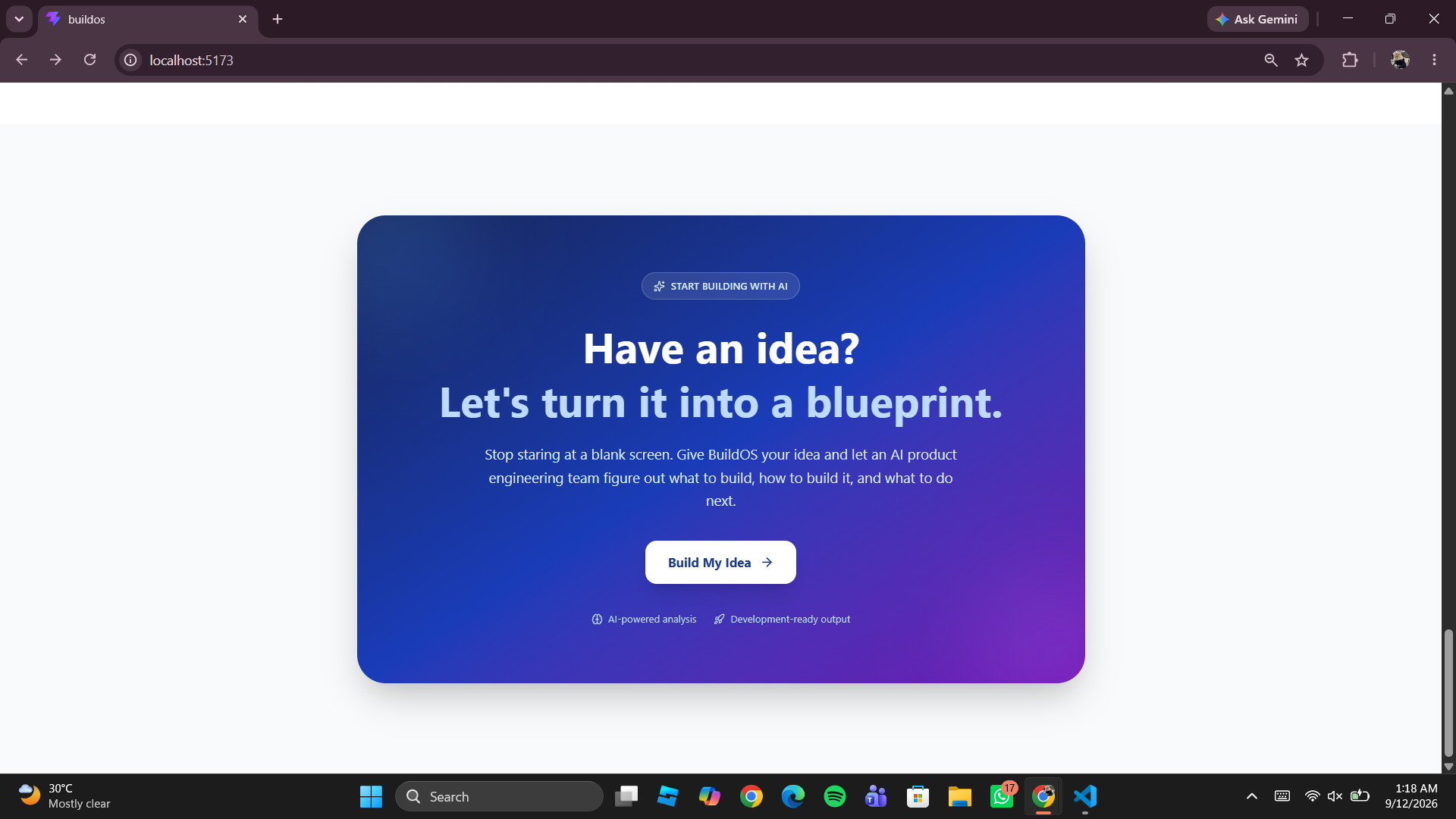
Home Page
-
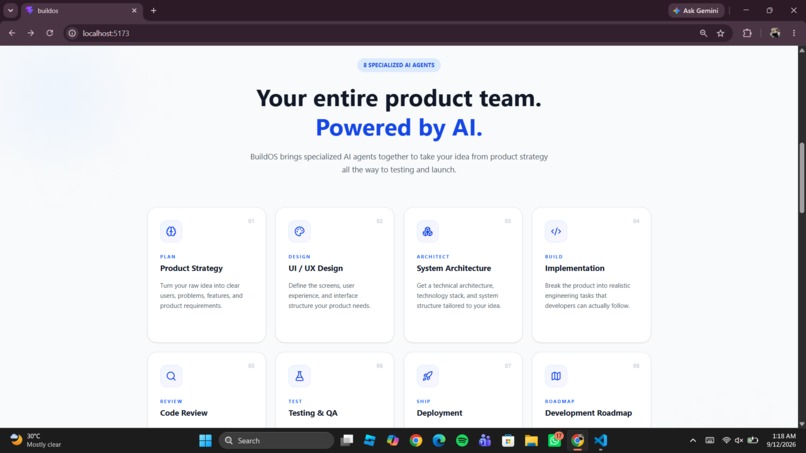
Home Page
-
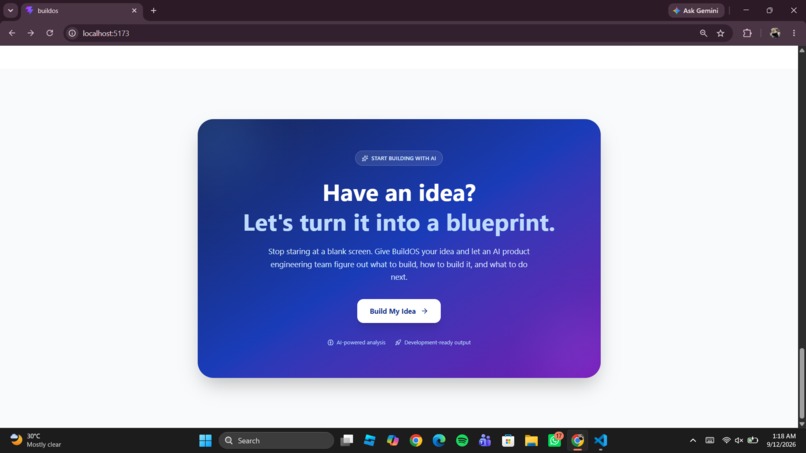
Home page
-
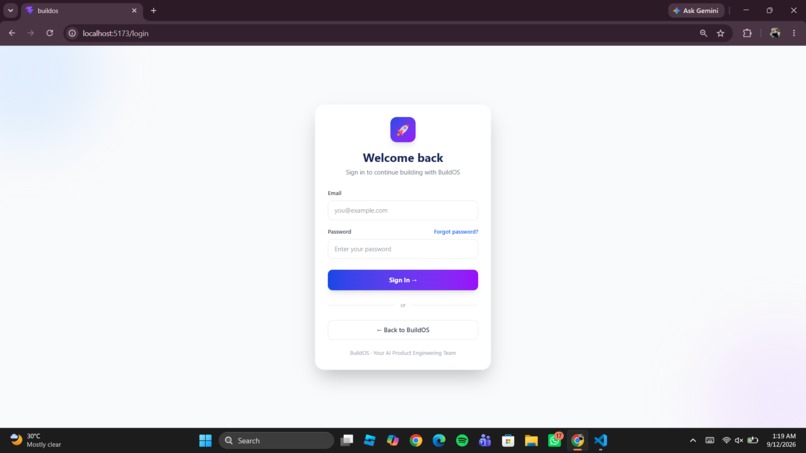
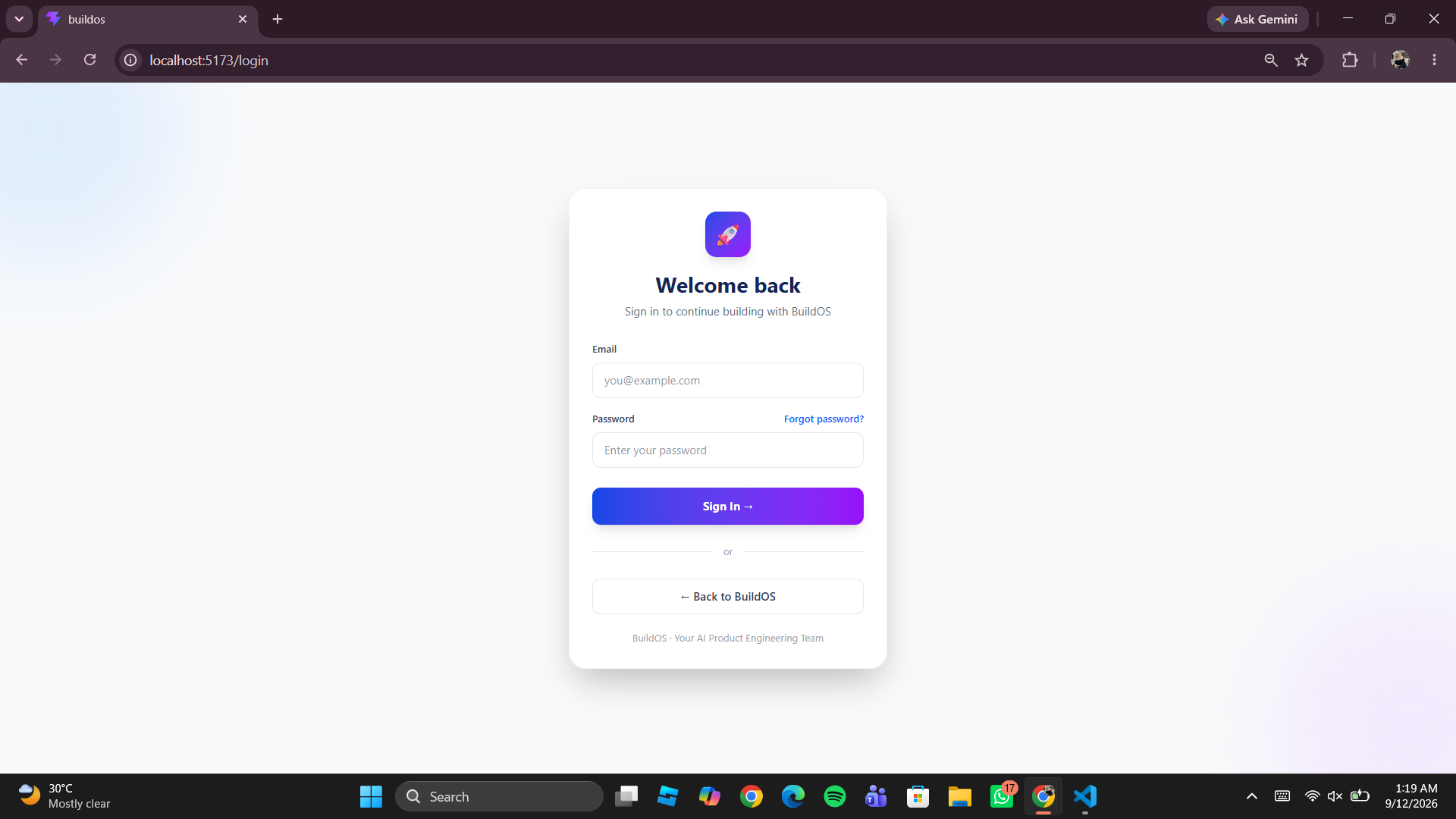
Sign in page
-
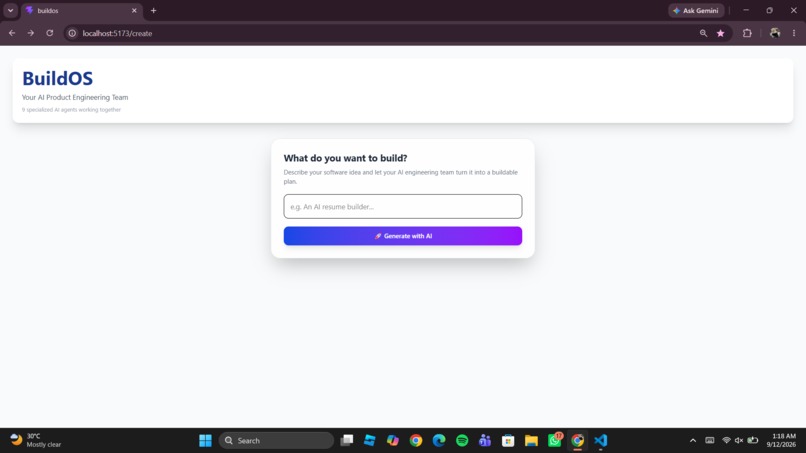
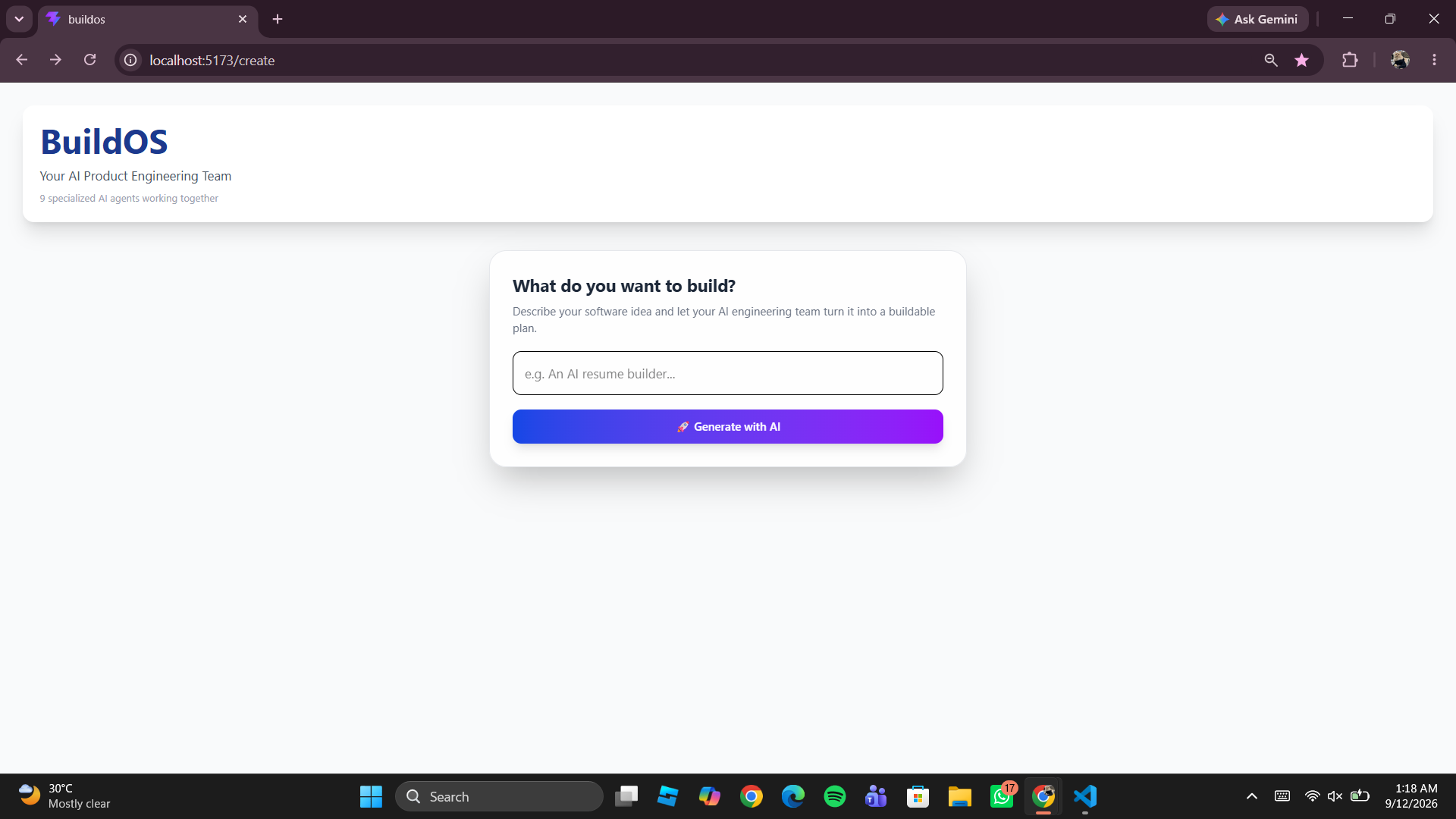
Create Page
-
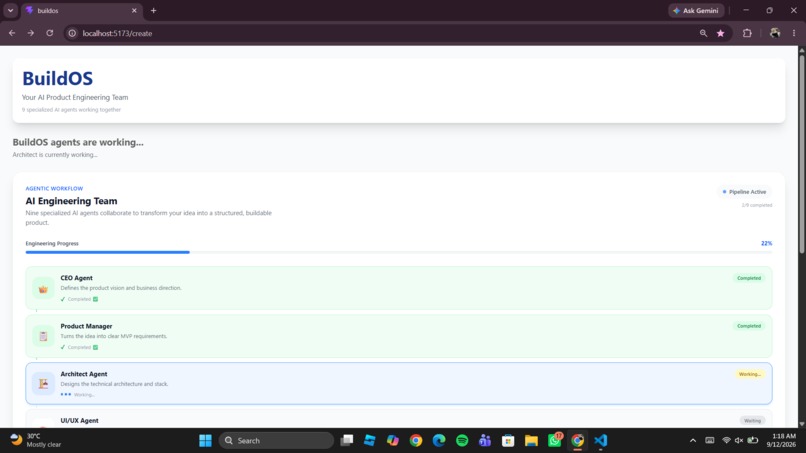
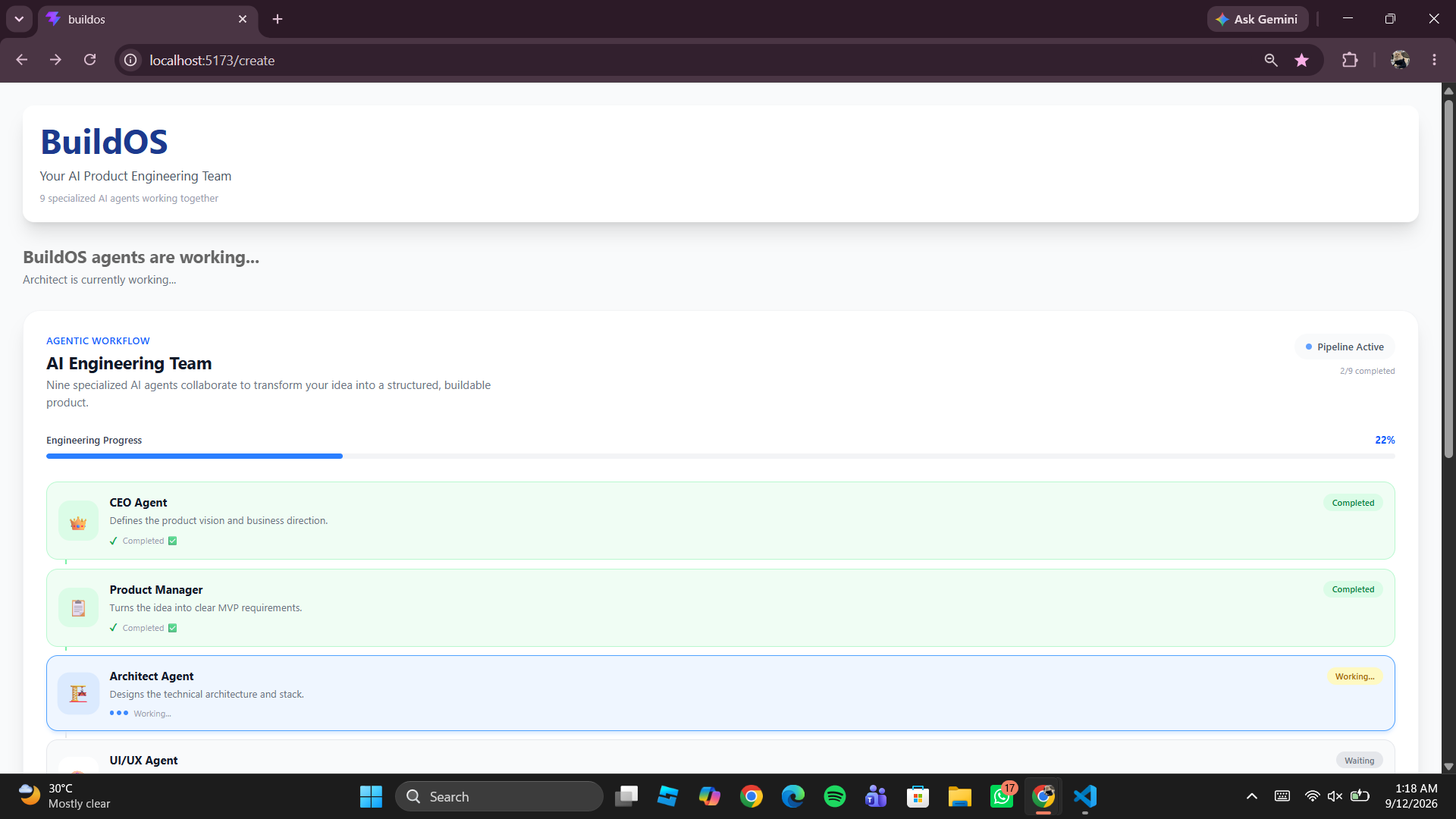
AgentPipline
-
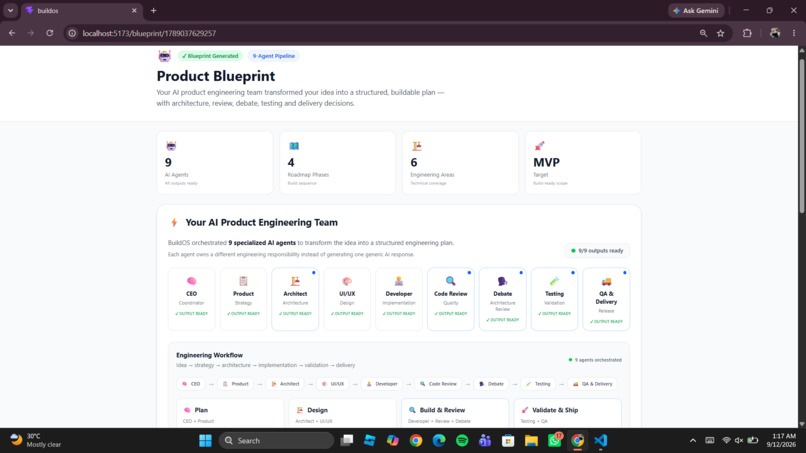
Blueprint Page
-
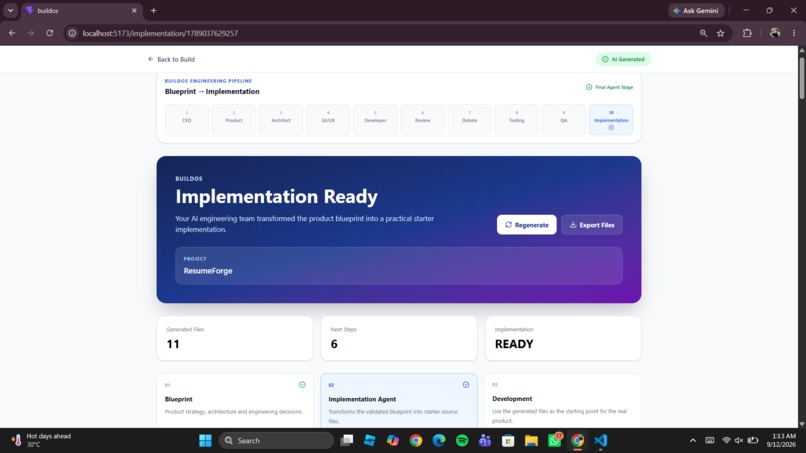
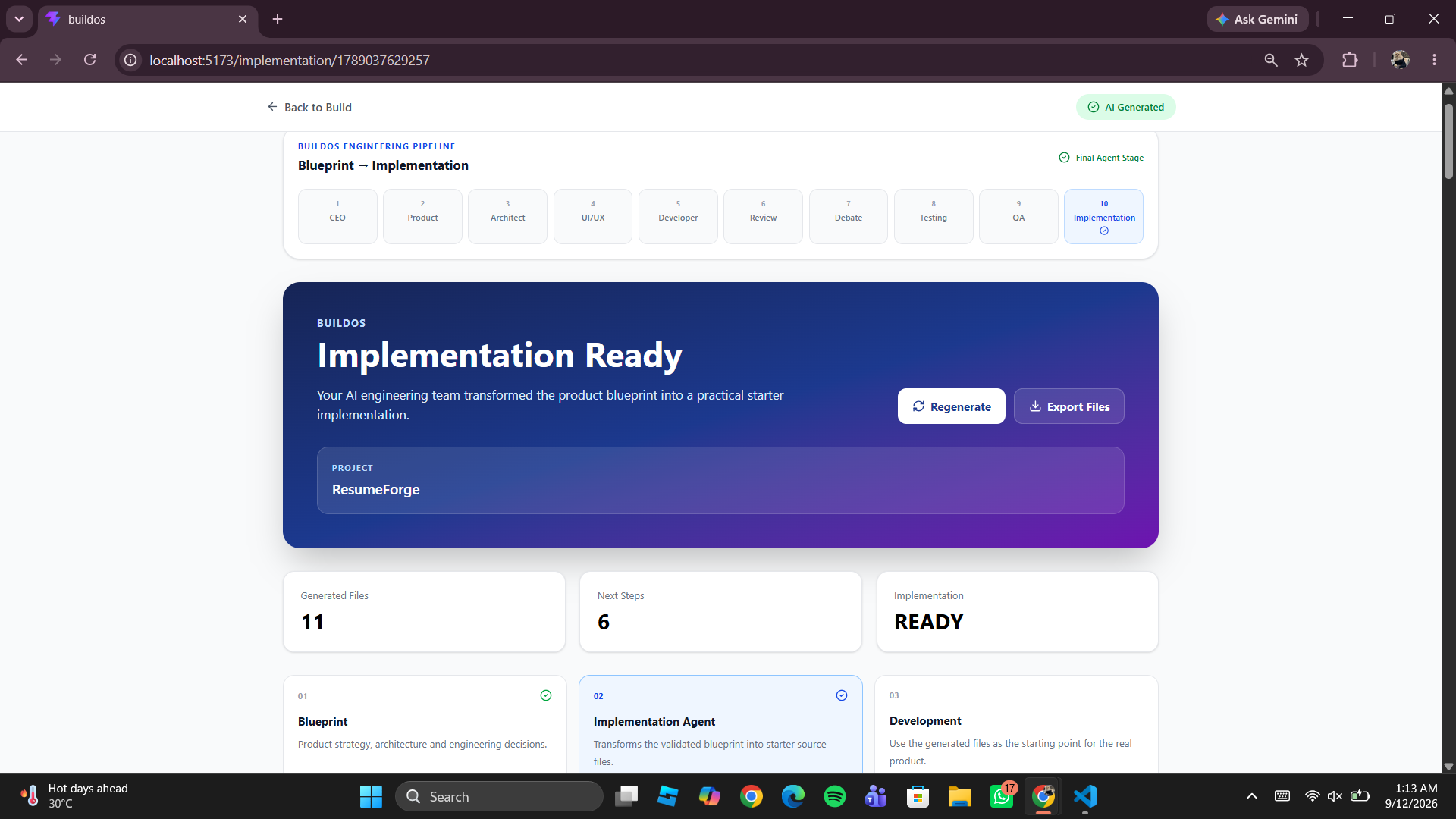
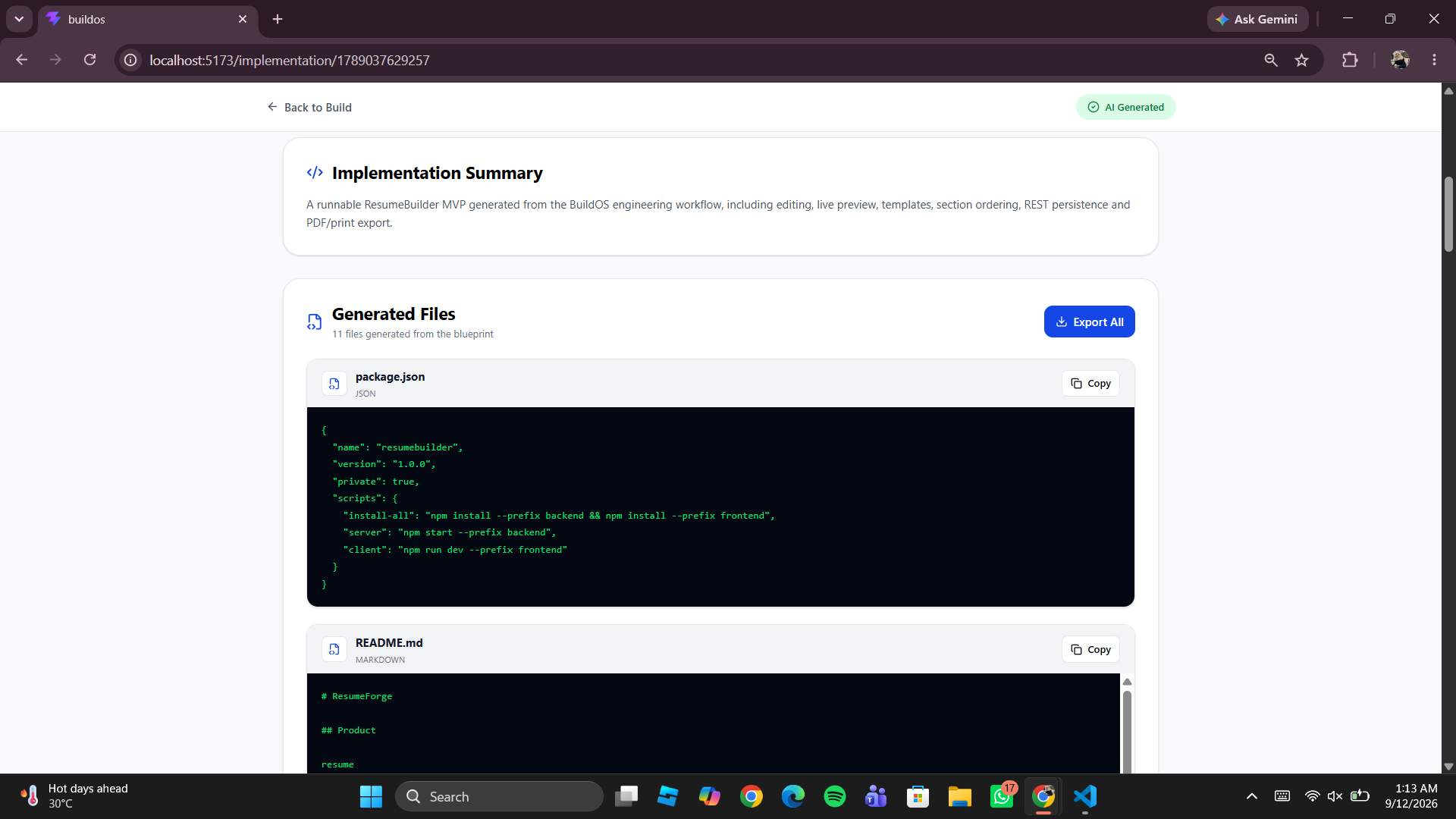
Implementation Page
-
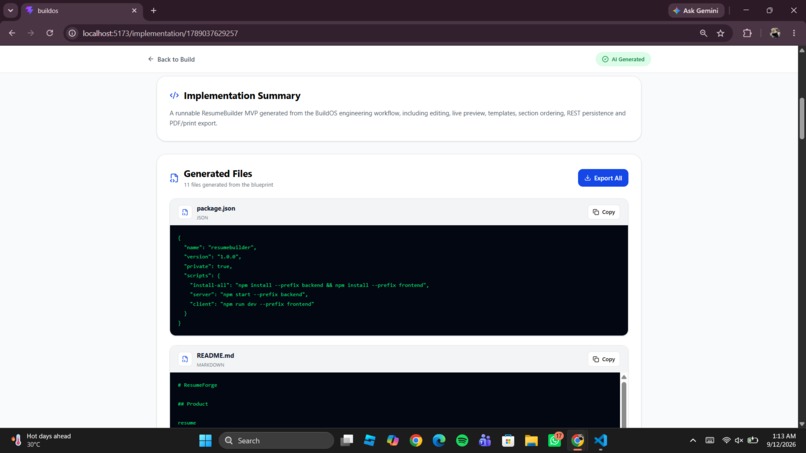
Implementation Page
-
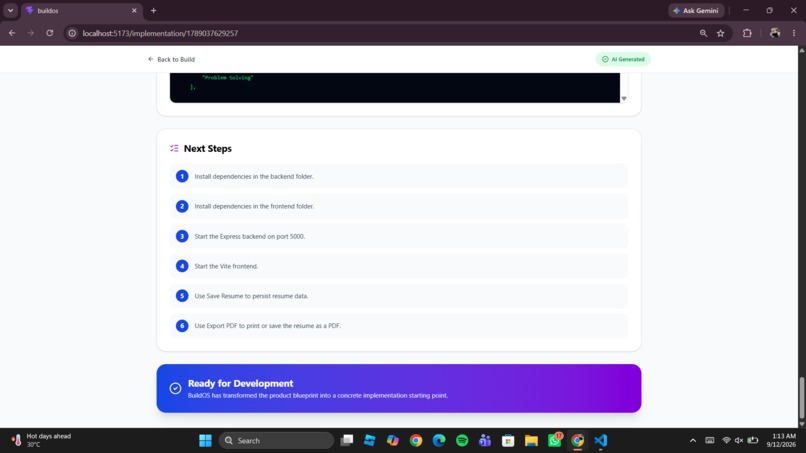
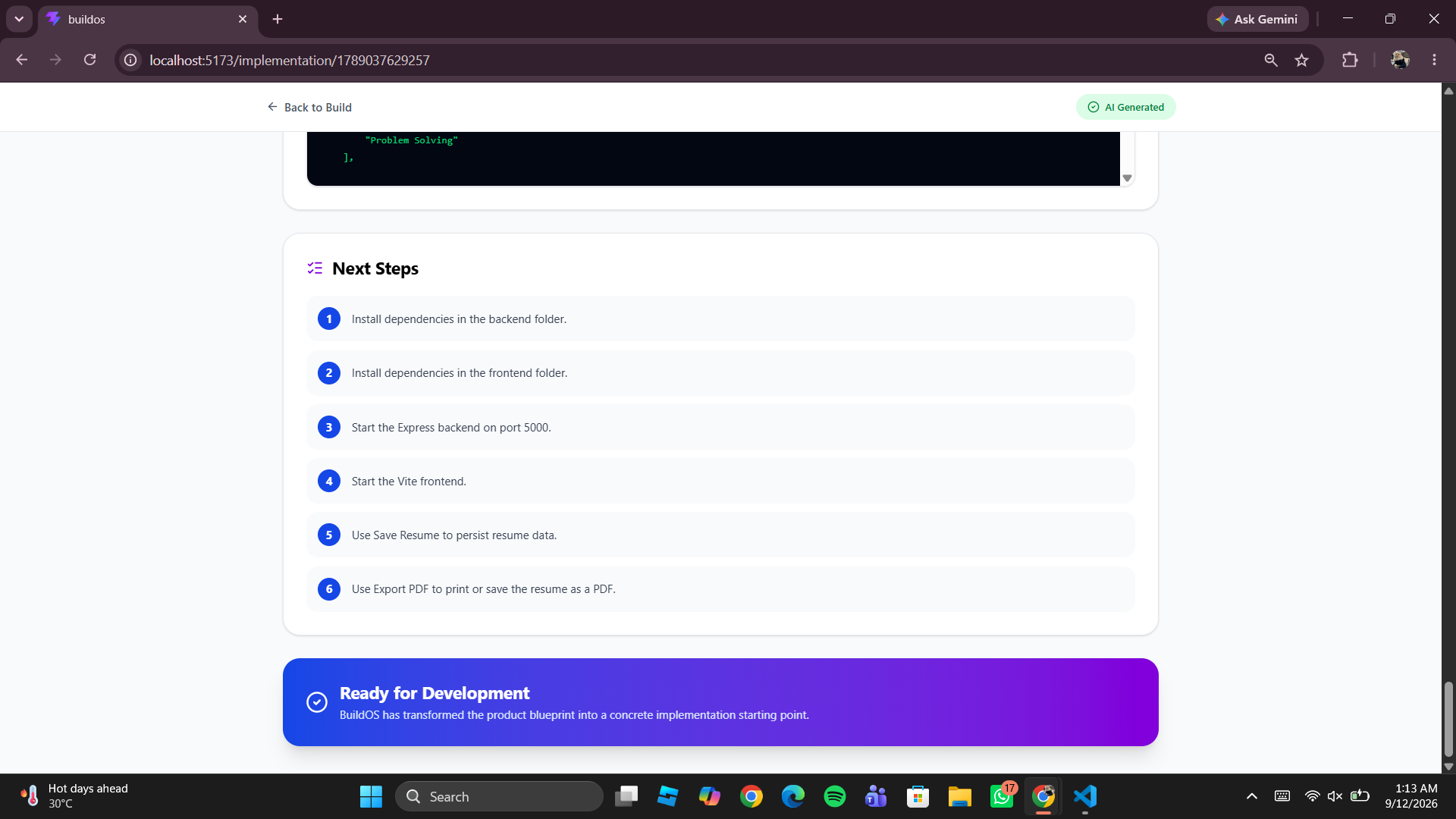
Final Page
Inspiration
Building a software project can be overwhelming, especially for beginners. You may have an idea, but then immediately face questions like: What features should I build? What technology should I use? How should the system be structured? How do I test and deploy it?
I wanted to create something that could make this process easier without simply giving users another chatbot.
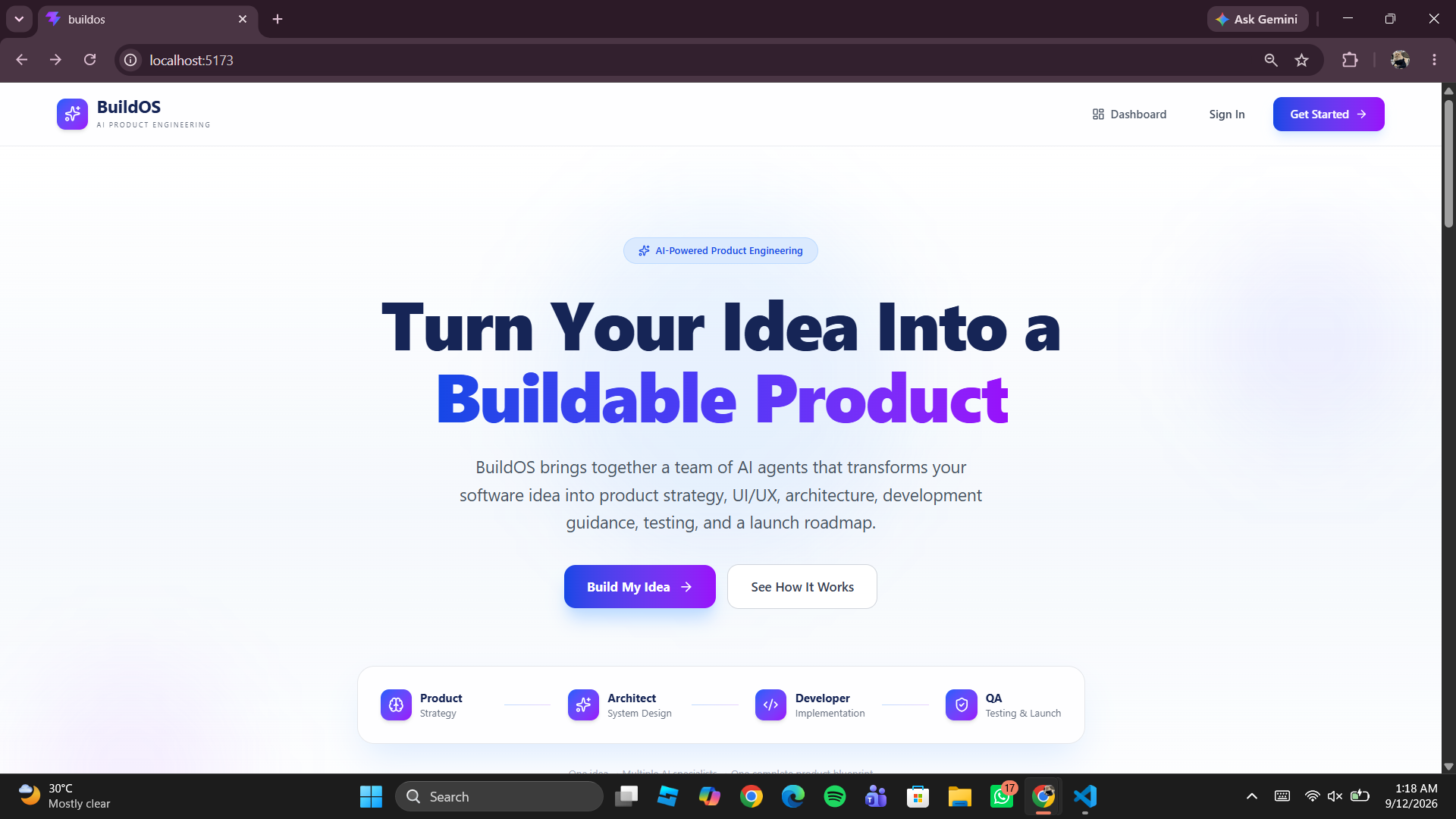
That led to BuildOS — Your AI Product Engineering Team. The idea was to create a team of specialized AI agents that collaborate like a real product engineering team, helping turn an idea into a structured product blueprint.
What it does
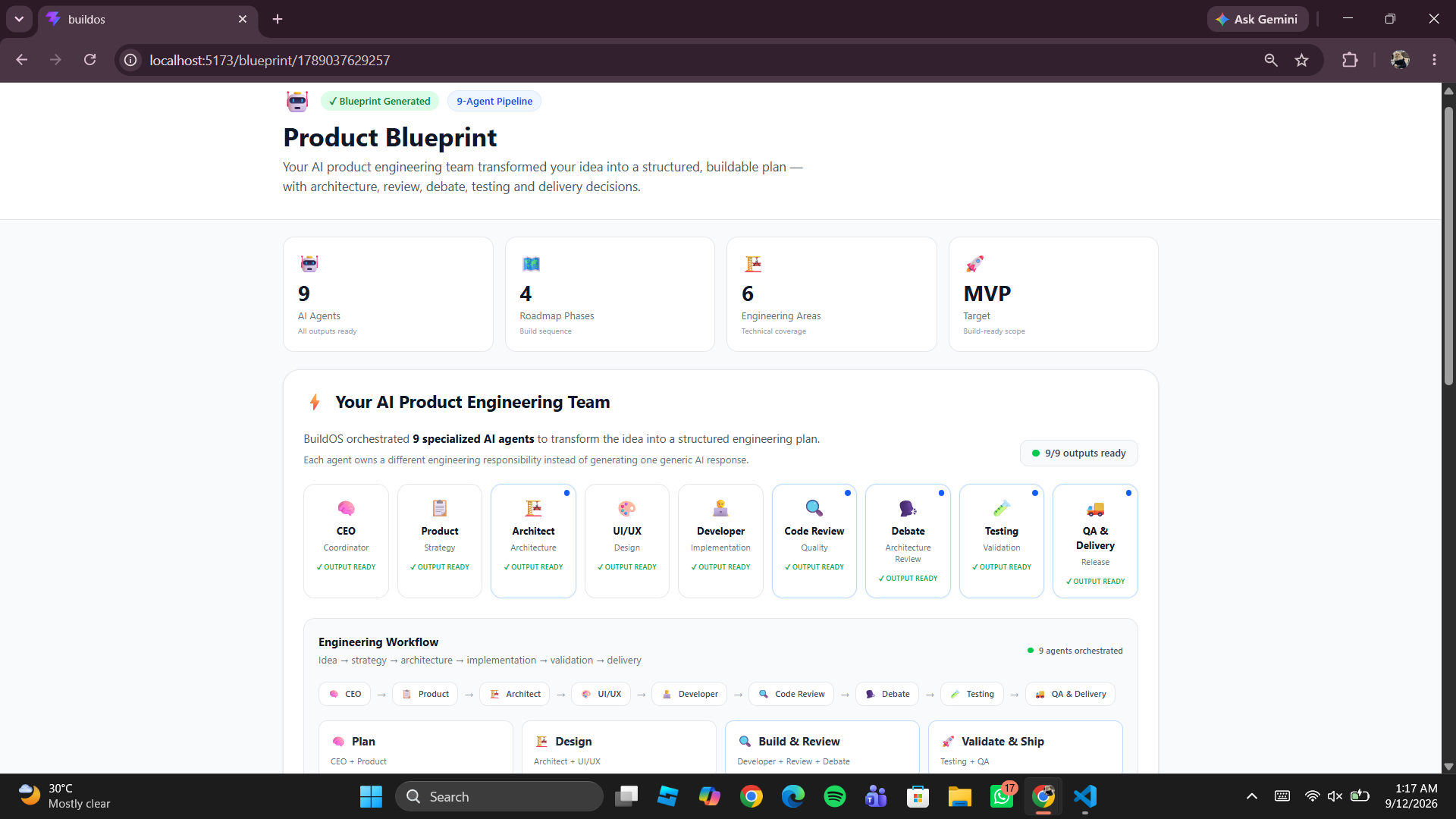
BuildOS takes a user's product idea and runs it through a team of specialized AI agents.
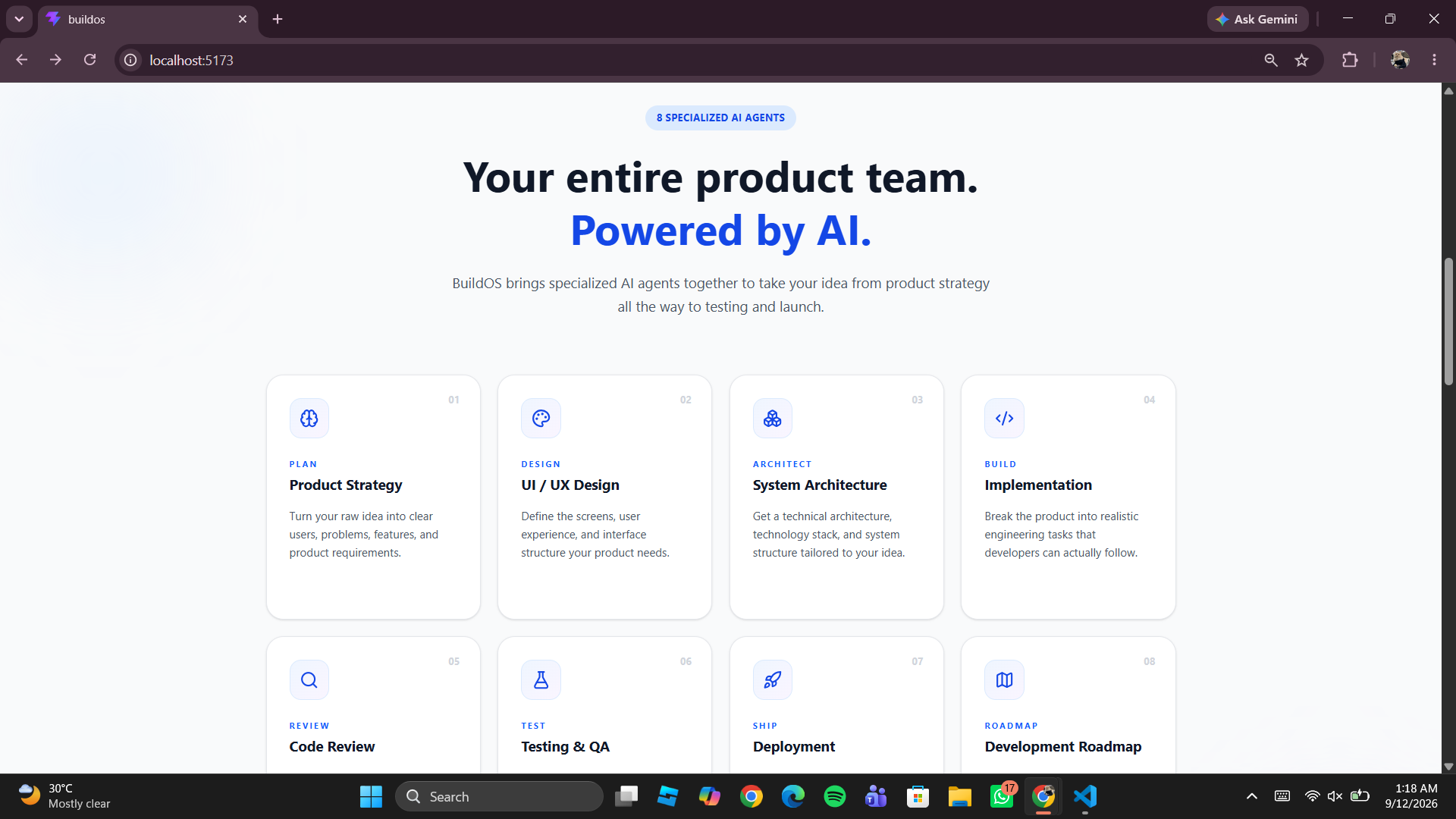
Each agent focuses on a different part of the product-building process:
CEO Agent — defines the overall product vision and strategy Product Manager Agent — identifies users, features, and requirements Architect Agent — plans the technical architecture and technology stack UI/UX Agent — designs the user experience, pages, and components Developer Agent — translates the plan into implementation guidance Code Review Agent — reviews the technical approach Testing Agent — identifies testing requirements and potential issues
The result is a structured Product Blueprint covering areas such as the problem, target users, features, user stories, UI/UX, technology stack, architecture, implementation, and testing.
The goal is to help students, beginner developers, hackathon participants, and non-technical founders move from "I have an idea" to "I know how to build it."
How we built it
BuildOS was built as a full-stack web application using:
React + TypeScript + Vite for the frontend Node.js + Express for the backend Groq API for the AI agents Tailwind CSS for the interface GitHub for version control Vercel for deployment
The backend orchestrates the different AI agents and passes the relevant outputs between them. To make the workflow more efficient, independent agents such as the Architect and UI/UX agents can run in parallel.
The project was developed iteratively over the 8-day challenge — starting with the idea and architecture, then building the agents, connecting the APIs, creating the frontend, integrating everything, debugging, optimizing the workflow, and finally deploying the application.
Challenges we ran into
One of the biggest challenges was getting multiple AI agents to work together reliably.
AI responses are not always predictable, so we had to work on structured outputs, validation, error handling, and making sure information generated by one stage could be used correctly by the next.
Another challenge was performance. Since BuildOS uses multiple AI calls, generating a complete blueprint could take time. We optimized the workflow by reducing unnecessary processing, lowering token usage where possible, and running independent agents in parallel.
We also faced the usual challenges of full-stack development — connecting the frontend and backend, debugging API routes, handling deployment issues, and making sure the final application worked outside the local development environment.
Accomplishments that we're proud of
We're proud that we turned the original idea into a working, deployed AI application within the challenge timeline.
We're especially proud of:
Building a multi-agent AI workflow rather than a single chatbot Creating specialized agents with different product-development responsibilities Generating a structured product blueprint from a simple idea Connecting the frontend, backend, and AI services into one workflow Optimizing the agent pipeline for better performance Successfully deploying the application Taking the project from an initial concept on Day 1 to a working product on Day 8
What we learned
This challenge taught us that building an AI application involves much more than simply connecting an LLM to a frontend.
We learned about LLM/API integration, agent orchestration, structured AI outputs, backend development, frontend integration, debugging, deployment, and performance optimization.
We also learned how important it is to test continuously instead of waiting until the end. Some of the biggest improvements to BuildOS came from identifying bottlenecks and iterating on the workflow.
Most importantly, we learned how to take an idea from concept → architecture → implementation → testing → deployment.
What's next for BuildOS — Your AI Product Engineering Team
BuildOS is only the beginning.
Next, we want to make the AI team more collaborative and capable of taking users further than just generating a blueprint.
Future improvements could include:
More specialized AI agents Real-time agent collaboration and progress updates Direct code generation and project scaffolding GitHub integration Automated testing and code review Deployment assistance Persistent project workspaces A stronger mentor agent for guiding beginners More personalized recommendations based on the user's technical level
The long-term vision is for BuildOS to become an AI product engineering team that helps users go from an idea all the way to a working, deployed product.
Built With
- agents
- ai
- api
- css
- express.js
- generative
- github
- groq
- javascript
- node.js
- react
- rest
- tailwind
- typescript
- vite

Log in or sign up for Devpost to join the conversation.