-
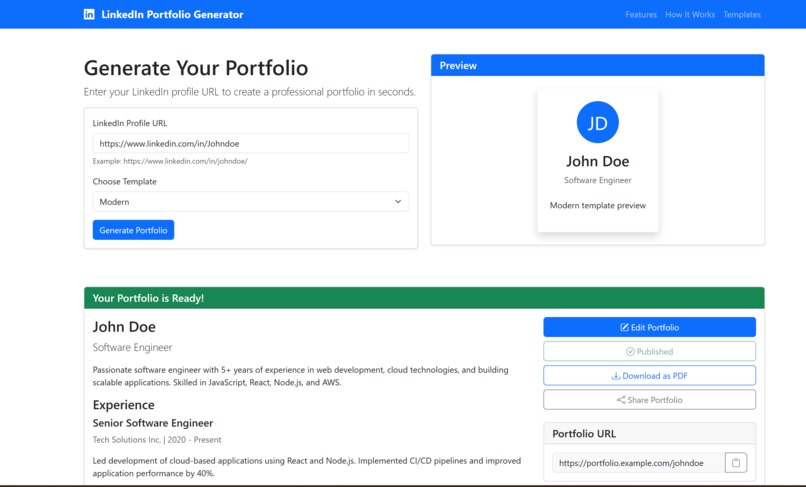
Landing Page
🌟 Inspiration The standard LinkedIn profile, while useful, often lacks the personal branding and customization that professionals need to truly stand out. We wanted to create a tool that transforms the structured data on a LinkedIn profile into a fully customizable, secure, and responsive personal portfolio site—empowering users to showcase their work and personality in a more engaging way.
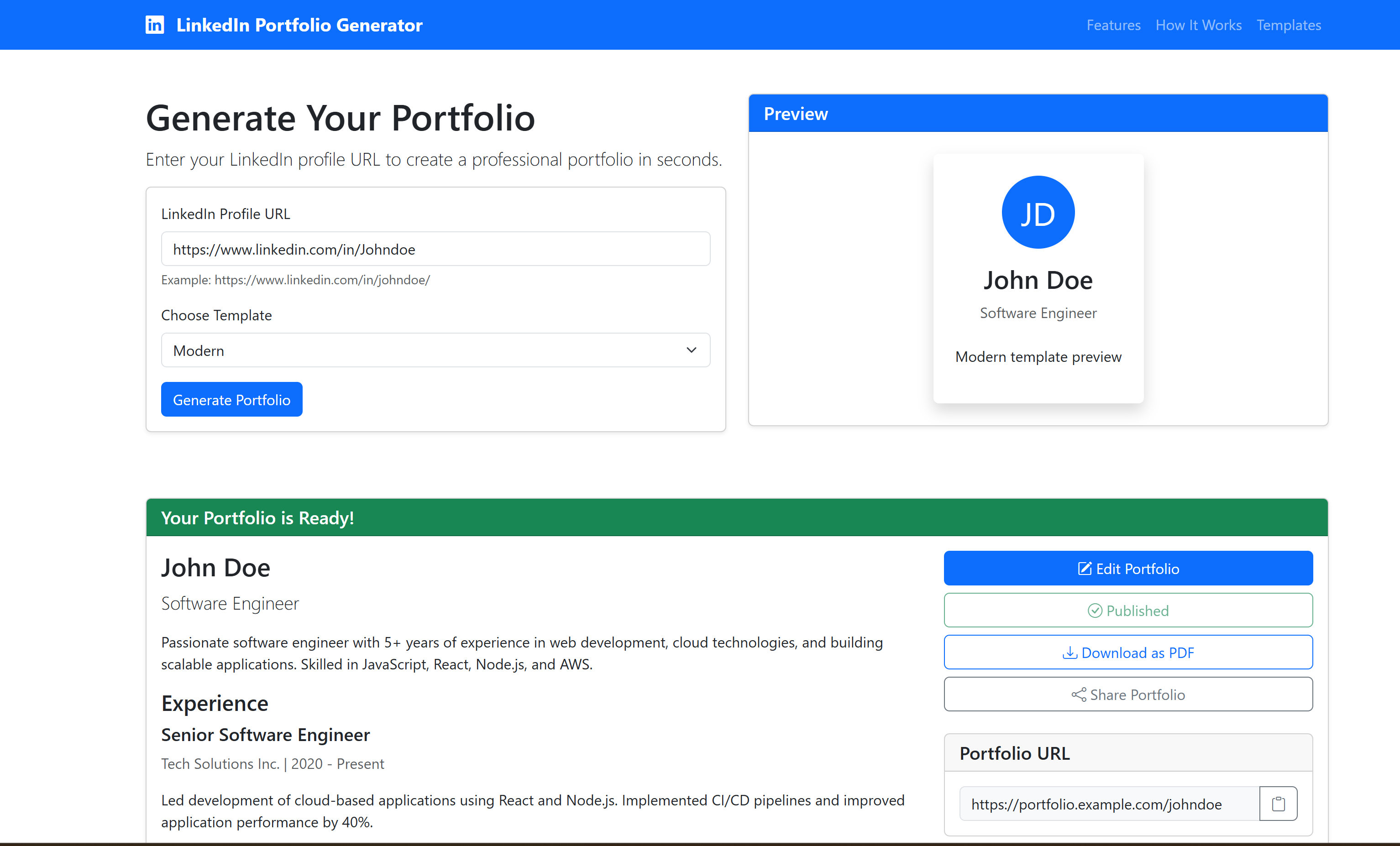
💡 What it does The LinkedIn Portfolio Generator automatically extracts professional data from a user's LinkedIn profile and turns it into a live, customizable personal portfolio website. Users can:
Connect their LinkedIn profile securely
Choose from multiple elegant templates
Customize colors, sections, and layout
Preview and publish their personalized portfolio
(In future versions) Link a custom domain, view analytics, and export to PDF
All while ensuring data protection and adhering to web scraping ethics.
🛠️ How we built it We designed and built the app with a secure and modular architecture:
Frontend: HTML, CSS, and JS with responsive design using Bootstrap
Backend (In Progress): Node.js/Express.js for handling authentication, API requests, and secure data handling
Scraping Module: Puppeteer/Cheerio (planned) with rate limiting and IP rotation
Database: MongoDB for storing user preferences and portfolio data
Security: HTTPS, CSP, input sanitization, and secure HTTP headers
DevOps: Setup and deployment scripts, environment variable management, and planned CI/CD pipeline
🚧 Challenges we ran into Ensuring secure scraping from LinkedIn without violating terms or triggering bot detection mechanisms
Balancing customization with simplicity in template design
Implementing robust form validation and error handling across platforms
Planning scalable authentication and database integration while keeping it modular for future enterprise features
🏆 Accomplishments that we're proud of Built a fully responsive, customizable portfolio generator with clean UI
Implemented foundational security features like CSP, secure headers, HTTPS, and sanitization
Created a scalable project structure ready for production-grade development
Designed ethical scraping and compliance-ready practices from the ground up
Published a working live demo to showcase the MVP
📚 What we learned The importance of combining UX design principles with security best practices in web development
Real-world constraints of web scraping, especially for sites like LinkedIn
How to modularize code for scalability while keeping the onboarding experience smooth for new contributors
How to structure a project for community collaboration and open-source growth
🚀 What’s next for LinkedIn Portfolio Generator ✅ Backend API and LinkedIn scraping module integration
✅ Full authentication system with session management
⏳ Custom domain support and PDF/HTML export
⏳ Analytics dashboard for portfolio visits
⏳ White-label enterprise version
⏳ Launch a template marketplace for designers
⏳ Build and release a public API for integrations
Built With
- aiintegration
- aiwebapp
- amazon-web-services
- bootstrap
- cheerio
- csp
- css3
- cybersecurity
- deployment
- devops
- devportfolio
- express.js
- gdprcompliance
- geminiapi
- githubactions
- helmetjs
- heroku
- html5
- https
- javascript
- linkedinportfolio
- liveportfolio
- mongodb
- mongoose
- netlify
- node.js
- nosql
- openai
- personalbranding
- portfoliogenerator
- puppeteer
- ratelimiting
- render
- responsivedesign
- smartcontent
- vercel
- webapp
- webscraping
- websecurity


Log in or sign up for Devpost to join the conversation.