-
-
Overview
-
Agent workflow
-
Service evidence
-
Safety approval
-
Architecture
Inspiration
Residential receptionists and concierges handle a constant stream of questions, service complaints, safety reports, technician coordination, and follow-ups. Much of this work requires repeatedly searching documentation, checking building systems, updating tickets, and chasing resolutions.
We built BuildingOps Autopilot to give residents 24/7 support while allowing staff to focus only on decisions that genuinely require a person.
What it does
BuildingOps Autopilot manages resident requests from intake to verified resolution.
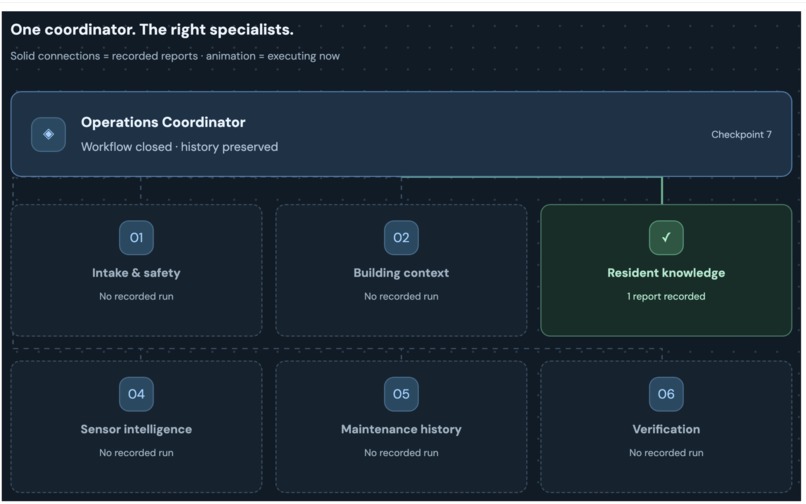
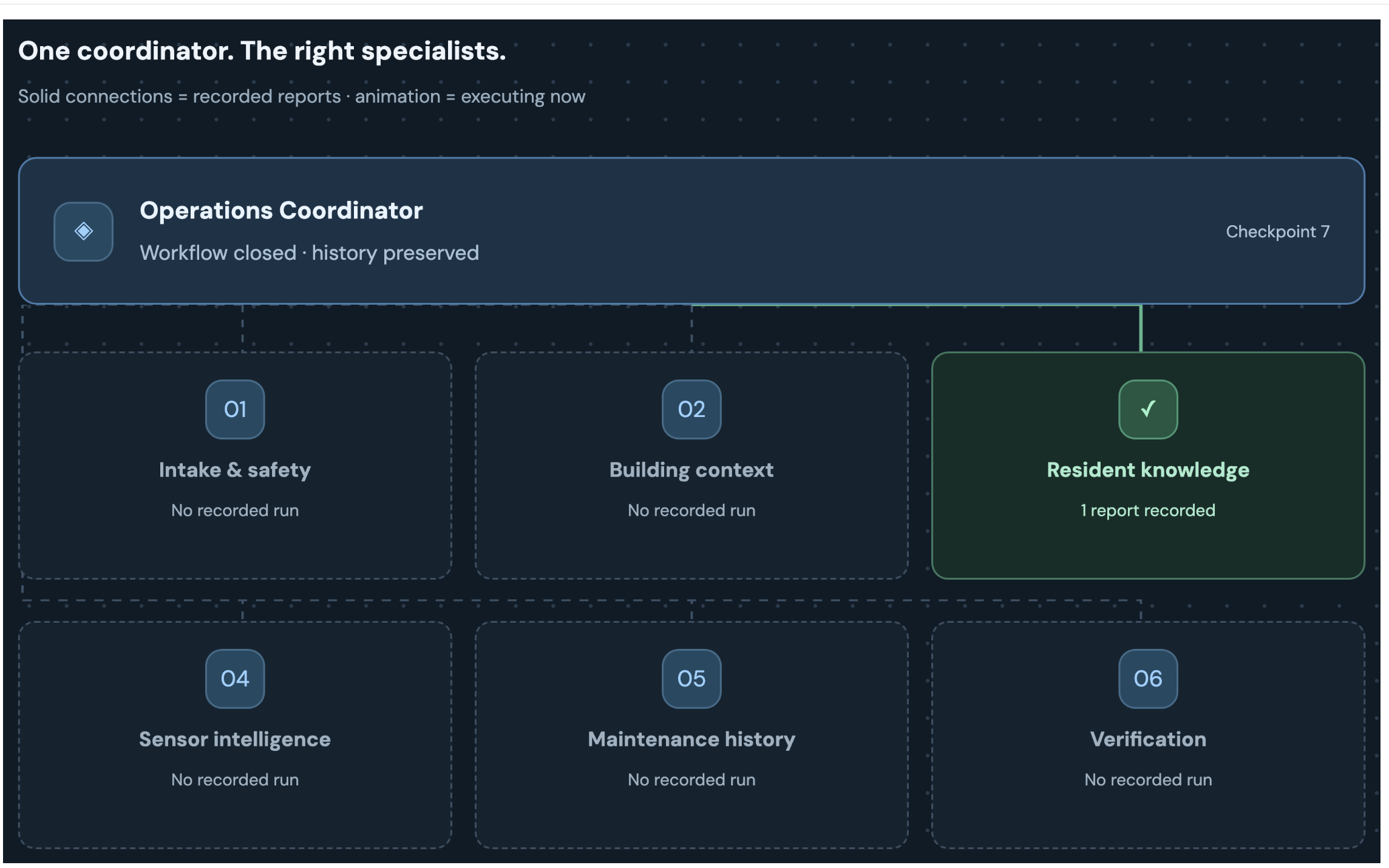
A durable coordinator first determines whether each request is a knowledge question, service issue, or safety incident. It then calls the appropriate specialist agents to examine resident context, building documentation, sensor telemetry, maintenance history, and operational policies.
The system can:
- Answer grounded resident questions automatically.
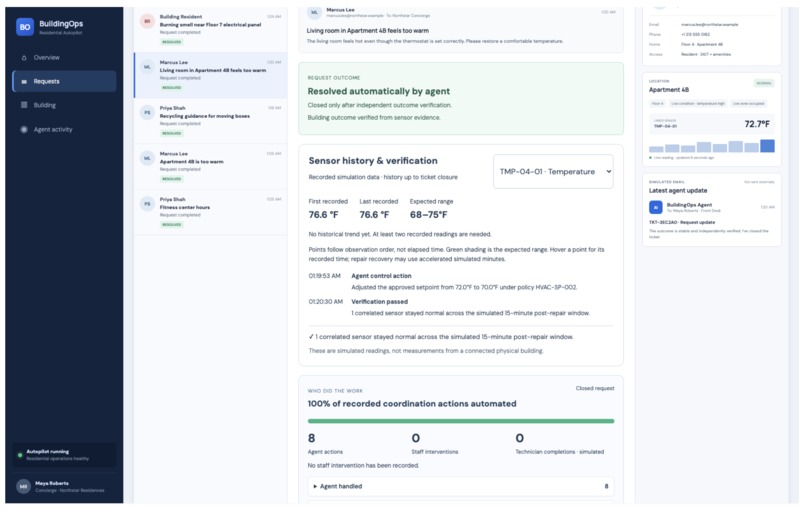
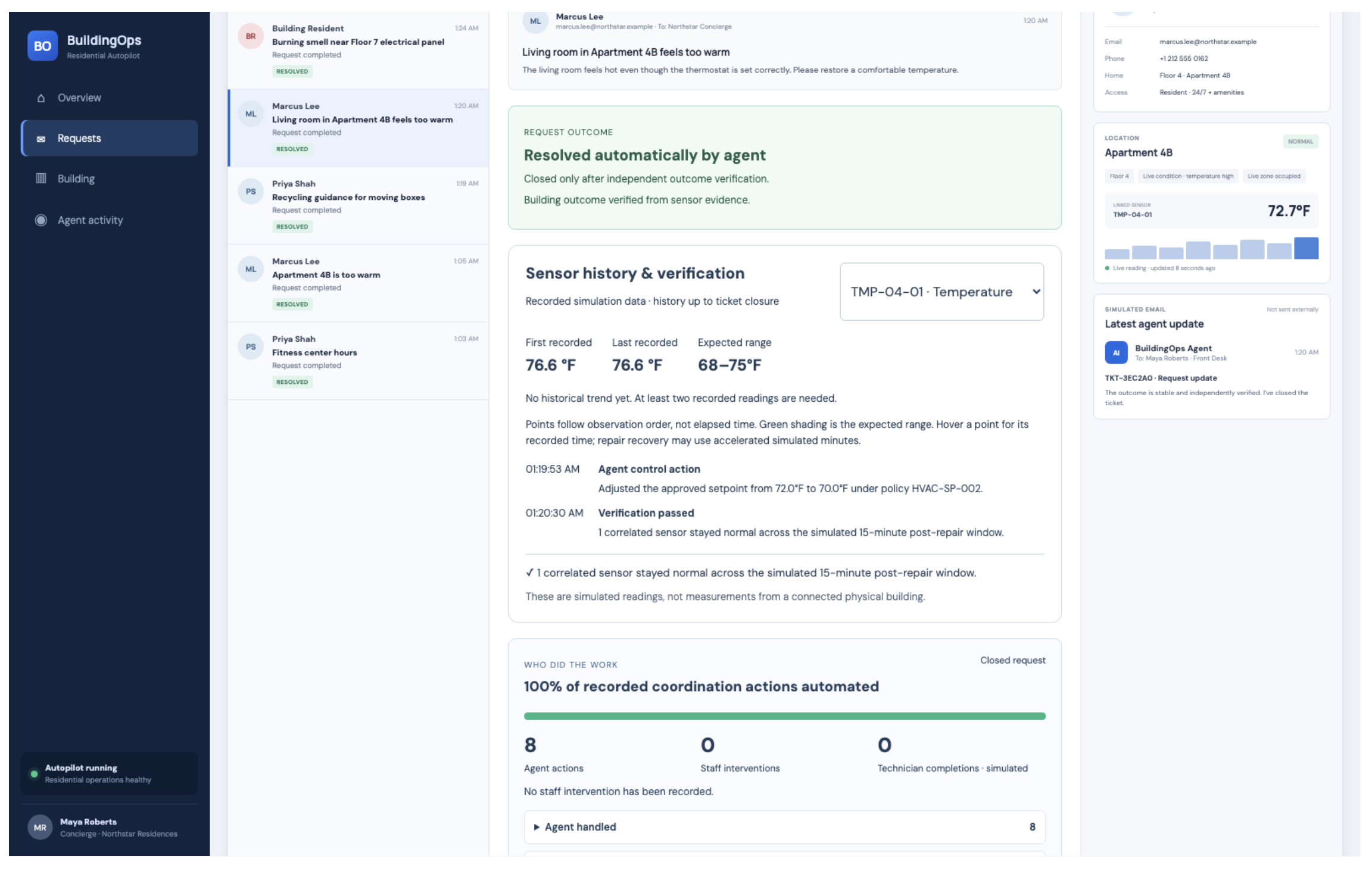
- Investigate complaints using live and historical sensor evidence.
- Apply permitted simulated building-control adjustments.
- Create detailed technician work orders.
- Track work while technicians complete repairs.
- Verify that sensor readings return to normal before closing a request.
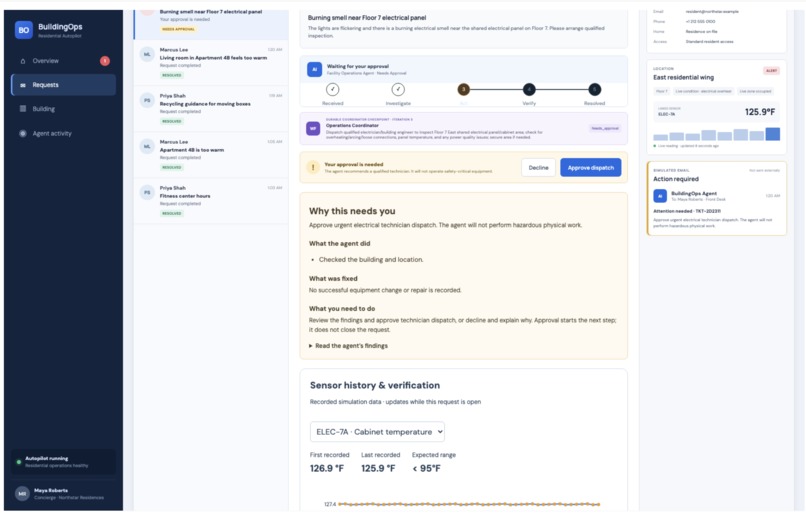
- Escalate only consequential decisions or genuinely stuck requests to staff.
- Process multiple independent ticket workflows concurrently.
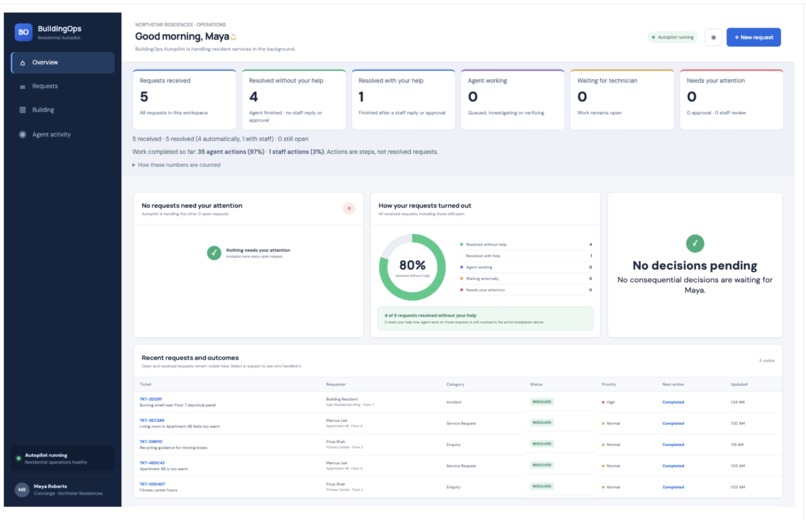
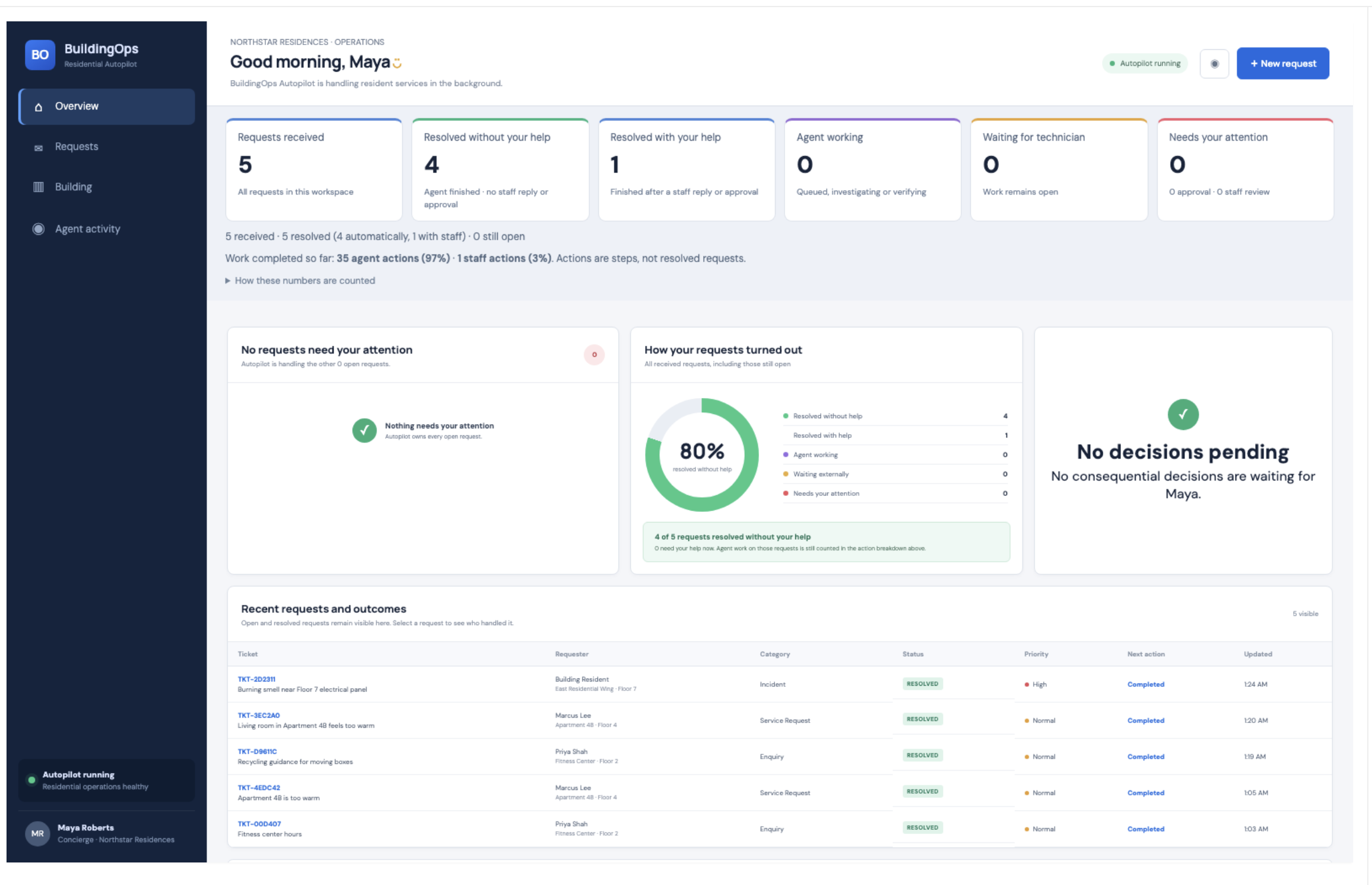
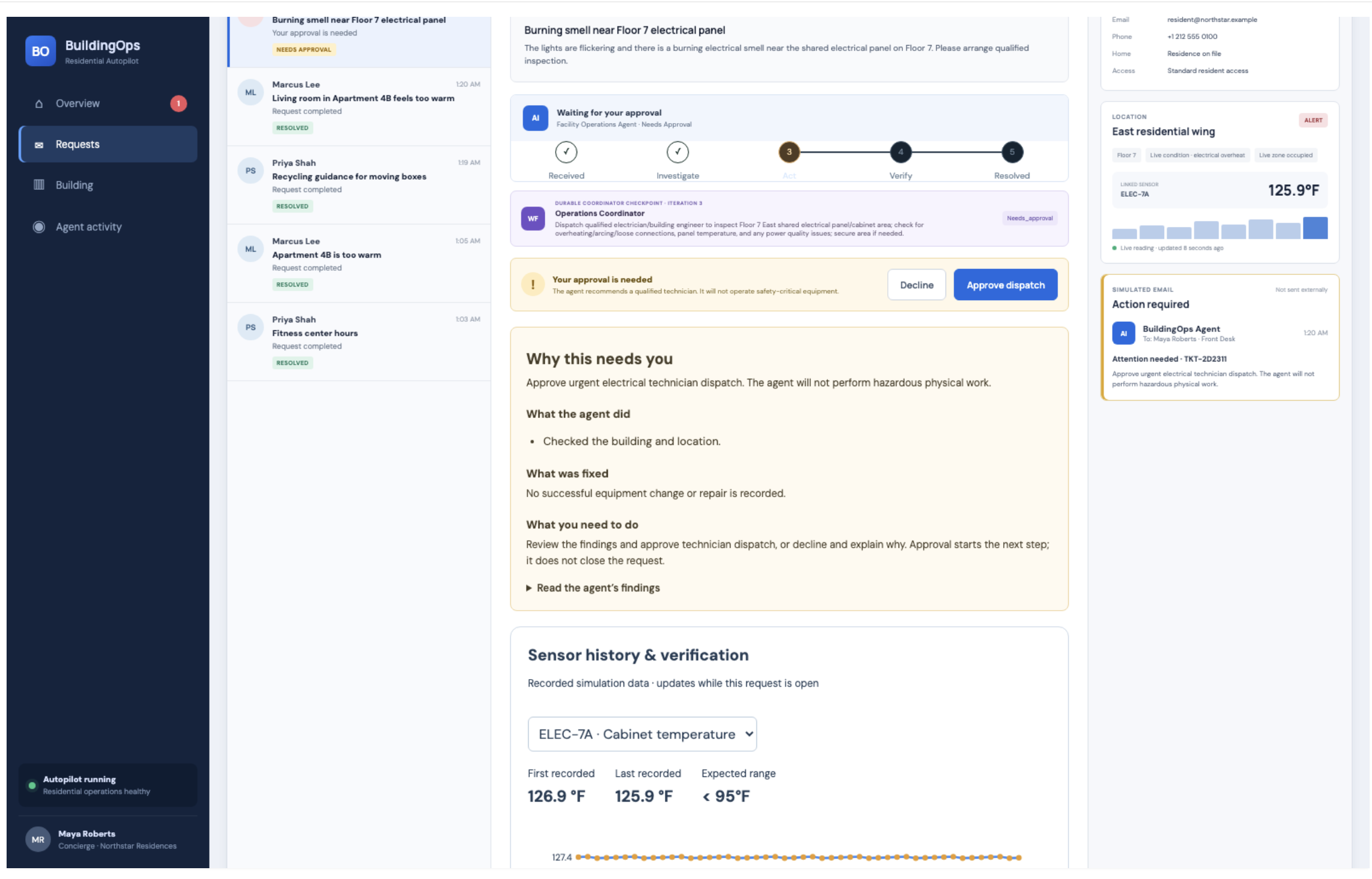
Every ticket displays its workflow, evidence, agent actions, staff actions, maintenance activity, and final outcome.
How we built it
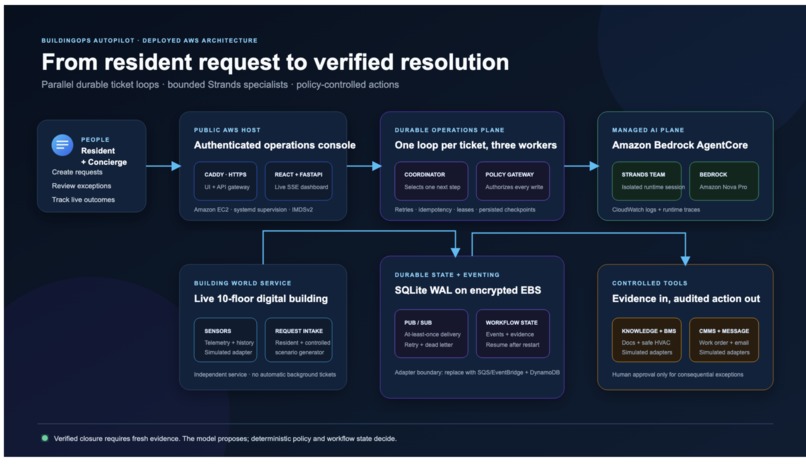
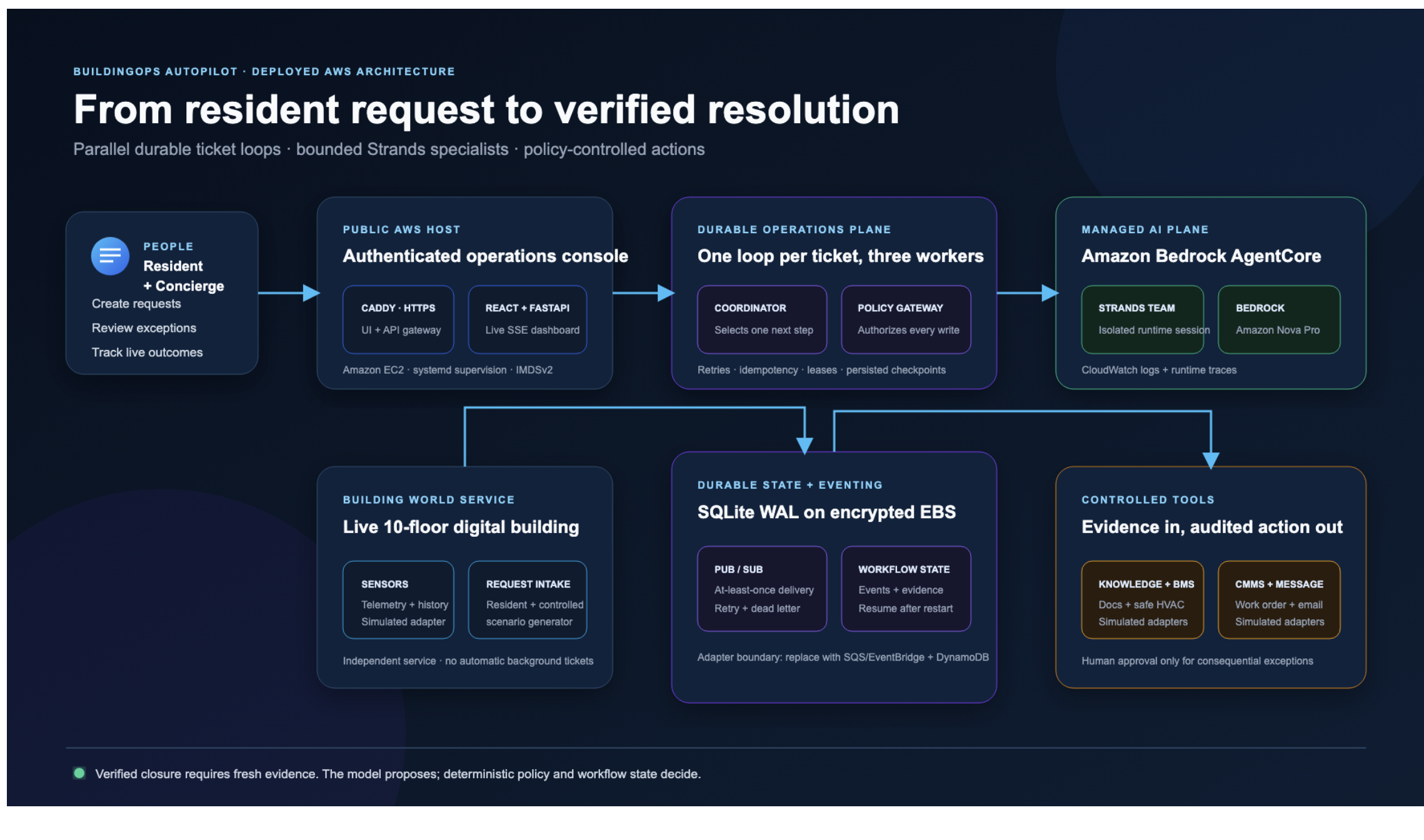
We used the Strands Agents SDK with Amazon Nova Pro on Amazon Bedrock. The agents run through Amazon Bedrock AgentCore Runtime.
Each request receives its own durable coordinator workflow. The coordinator selects one bounded specialist at a time, saves the result and workflow checkpoint, and decides the next step. Persisted state, idempotent actions, retries, and durable pub/sub allow workflows to resume safely after interruptions.
The application uses FastAPI for backend services and React with TypeScript for the operations dashboard. It is deployed on AWS with authenticated HTTPS access.
Challenges we ran into
The biggest challenge was preventing agents from collecting irrelevant evidence. An early version allowed nearby sensor alarms to influence an unrelated knowledge question. We redesigned the coordinator to classify resident intent first and request only relevant specialists and tools.
We also had to make long-running automation understandable. The final interface shows the agent workflow, evidence, action ownership, maintenance state, sensor history, and human intervention for every request.
Accomplishments that we're proud of
- Durable, resumable workflows rather than a single chat interaction.
- Concurrent processing of multiple resident requests.
- Clear separation between AI reasoning and deterministic safety policies.
- Evidence-backed resolution with post-action verification.
- Minimal human intervention with transparent action attribution.
- A working AWS deployment using Bedrock AgentCore, Strands, and Nova Pro.
What we learned
Reliable professional agents need more than an LLM. They need bounded tools, persisted workflow state, idempotency, retries, policy gates, evidence, and clear ownership. We also learned that staff trust depends on showing why an action occurred and what the agent verified.
What's next
Next, BuildingOps Autopilot can connect to production CMMS, BMS, email, and technician-dispatch systems. The modular interfaces also allow the durable event bus and data store to move to fully managed AWS services as deployment scale increases.
Built With
- amazon-bedrock
- amazon-nova-pro
- amazon-web-services
- bedrock-agentcore
- ec2
- fastapi
- iam
- python
- react
- sqlite
- strands-agents-sdk
- systems-manager
- typescript
- vite

Log in or sign up for Devpost to join the conversation.