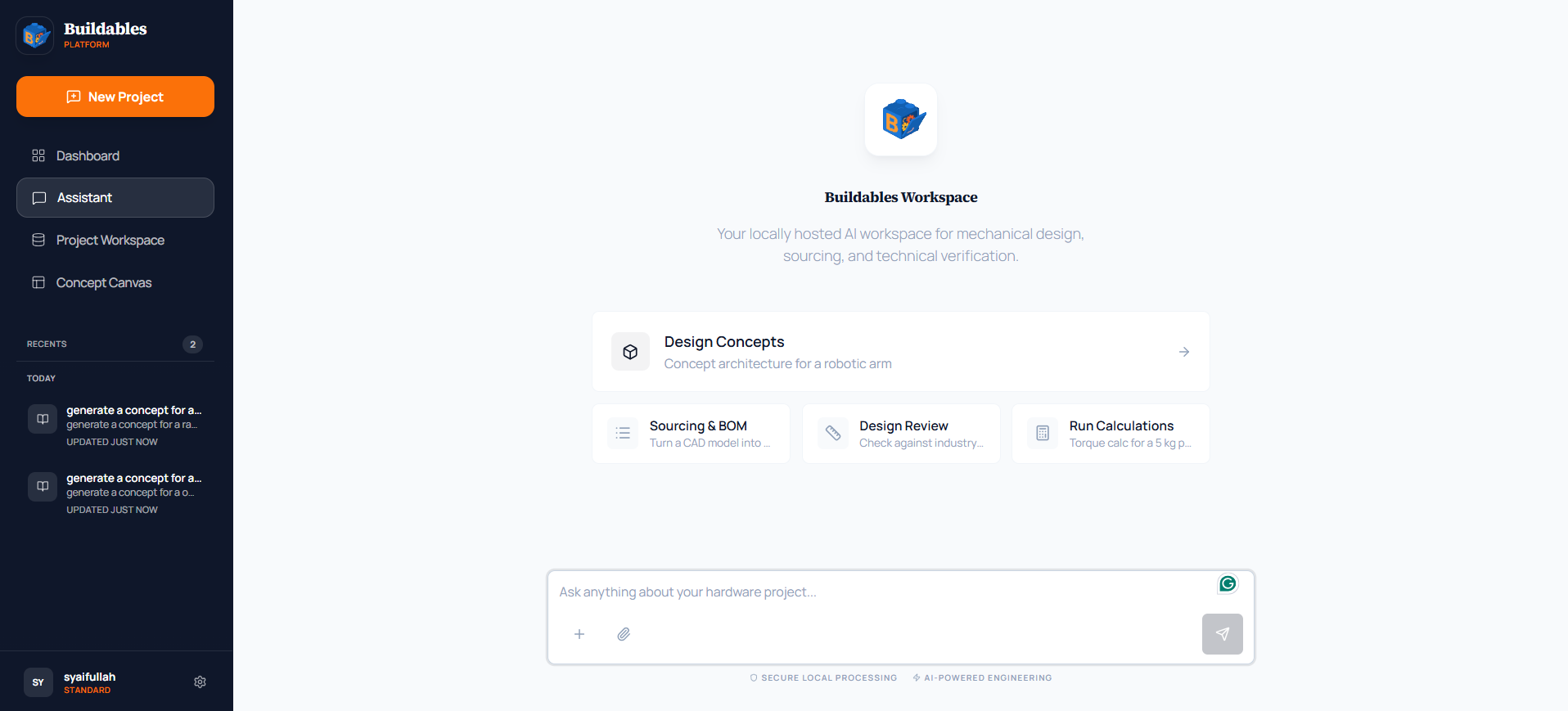
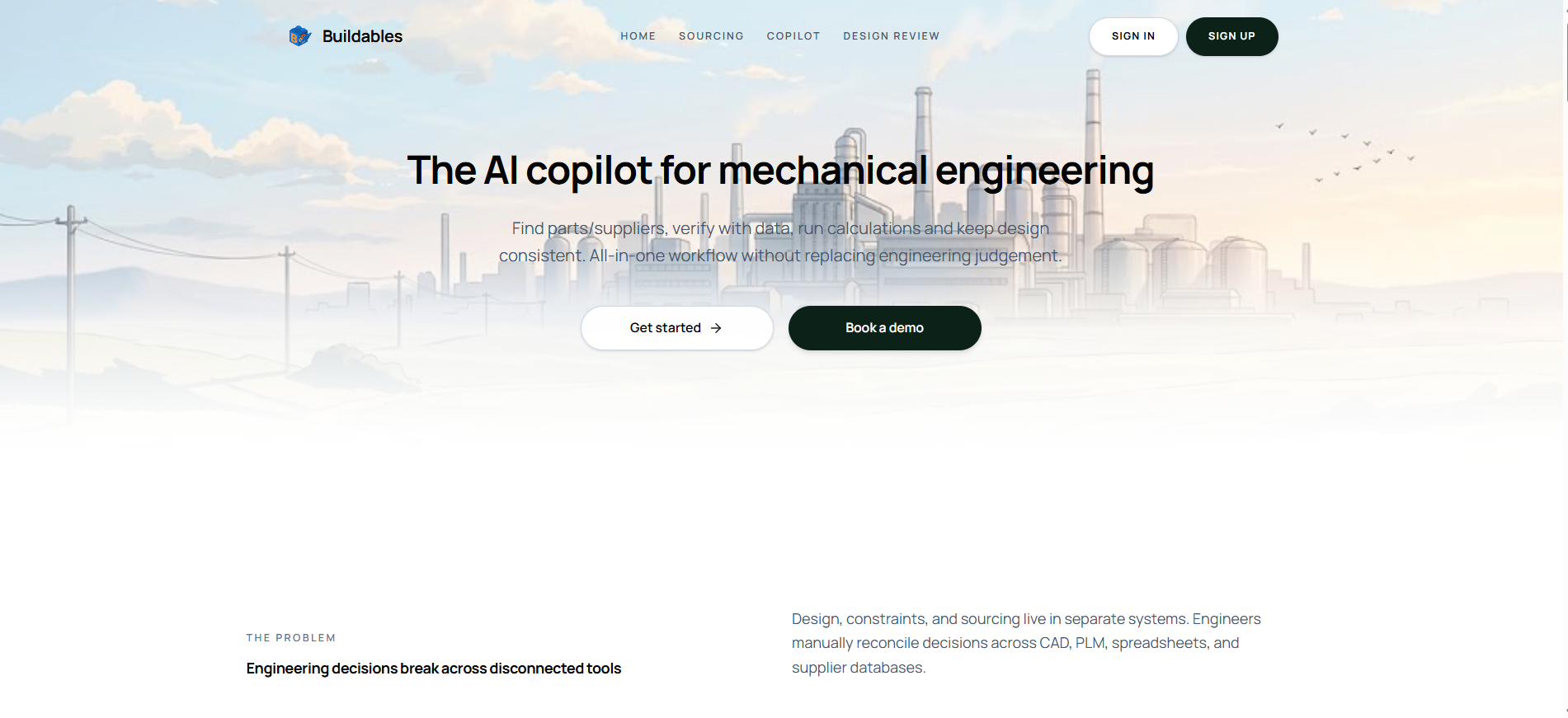
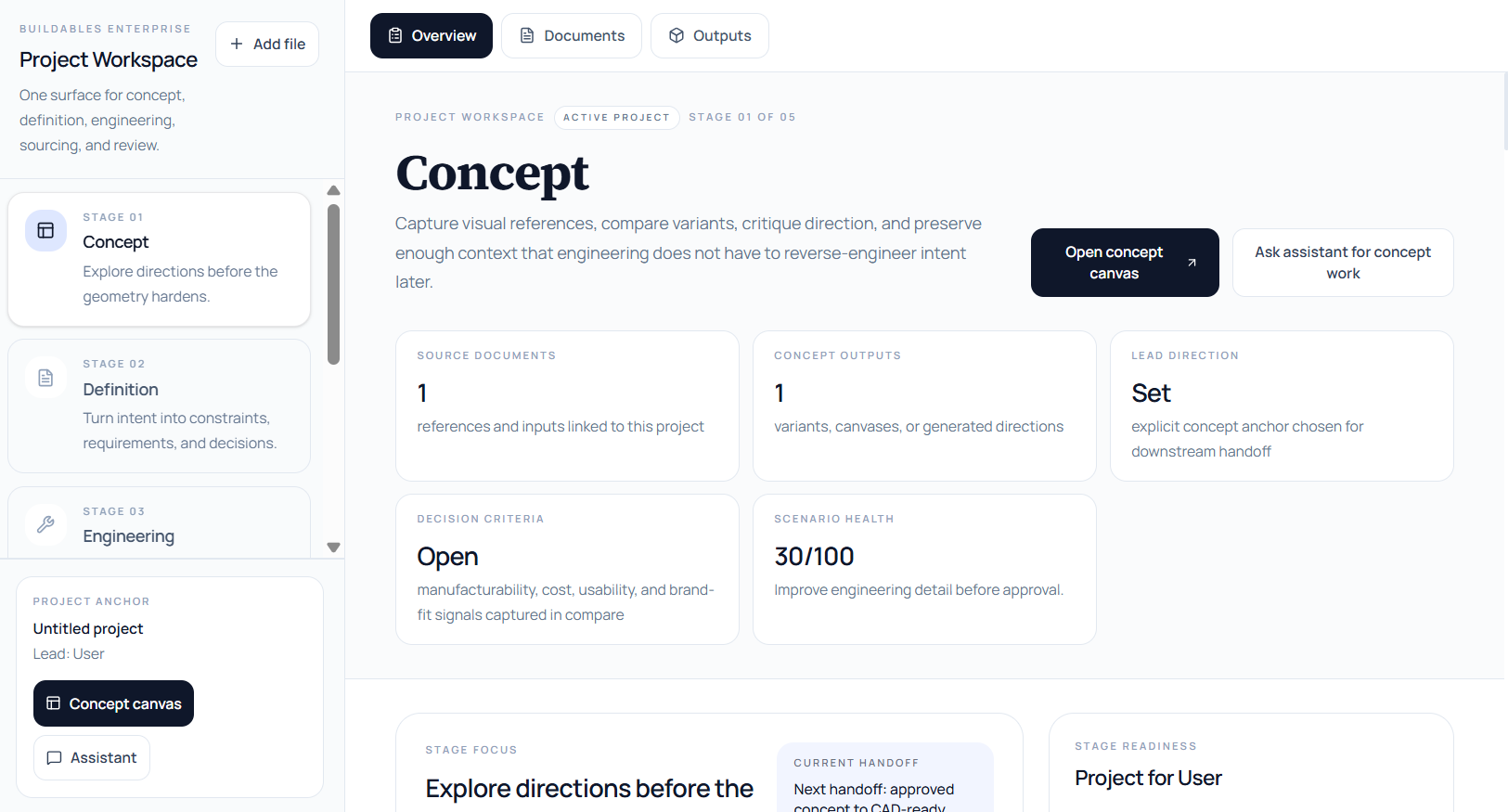
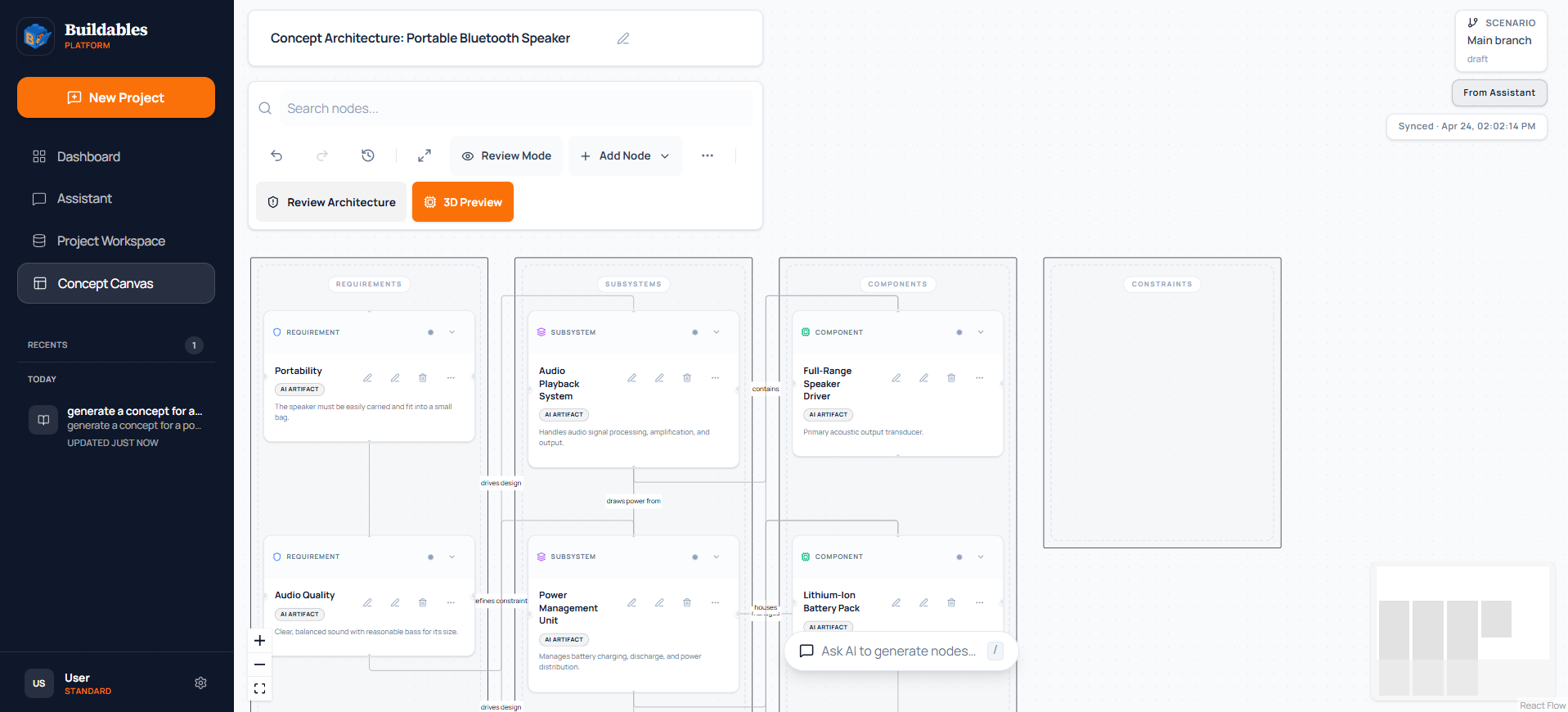
Welcome to the Enterprise repository for Buildables.app. We are a text-to-hardware software company dedicated to building a seamless workflow automation platform tailored specifically for mechanical engineers and product designers.
Our mission is to streamline the transition from raw concept to physical product, emphasizing a utilitarian, adaptable, and highly modular approach to hardware design.
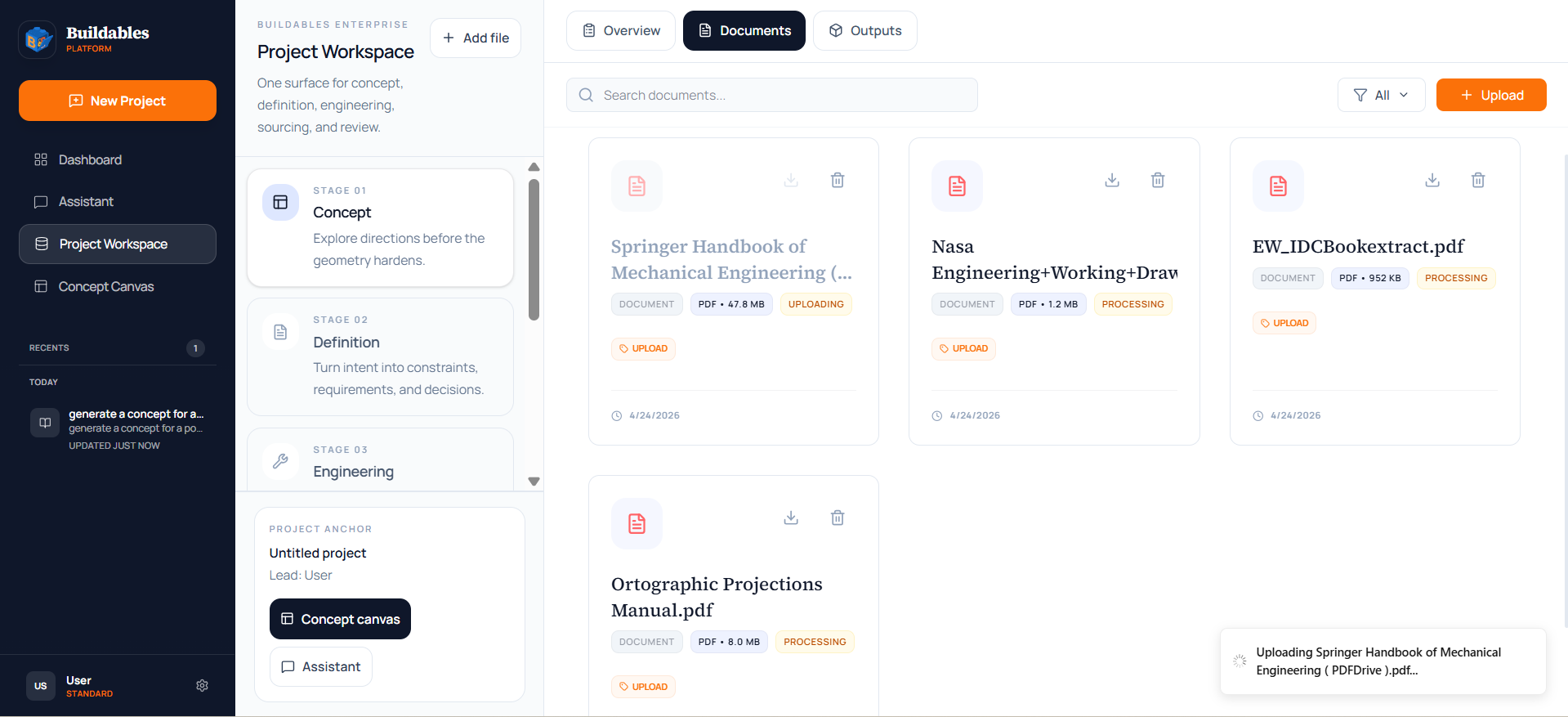
Overview This repository houses the core enterprise workflows that power the Buildables.app ecosystem. It is designed to support lean, efficient, and structured hardware development processes, allowing teams to focus on building without unnecessary friction or digital clutter.
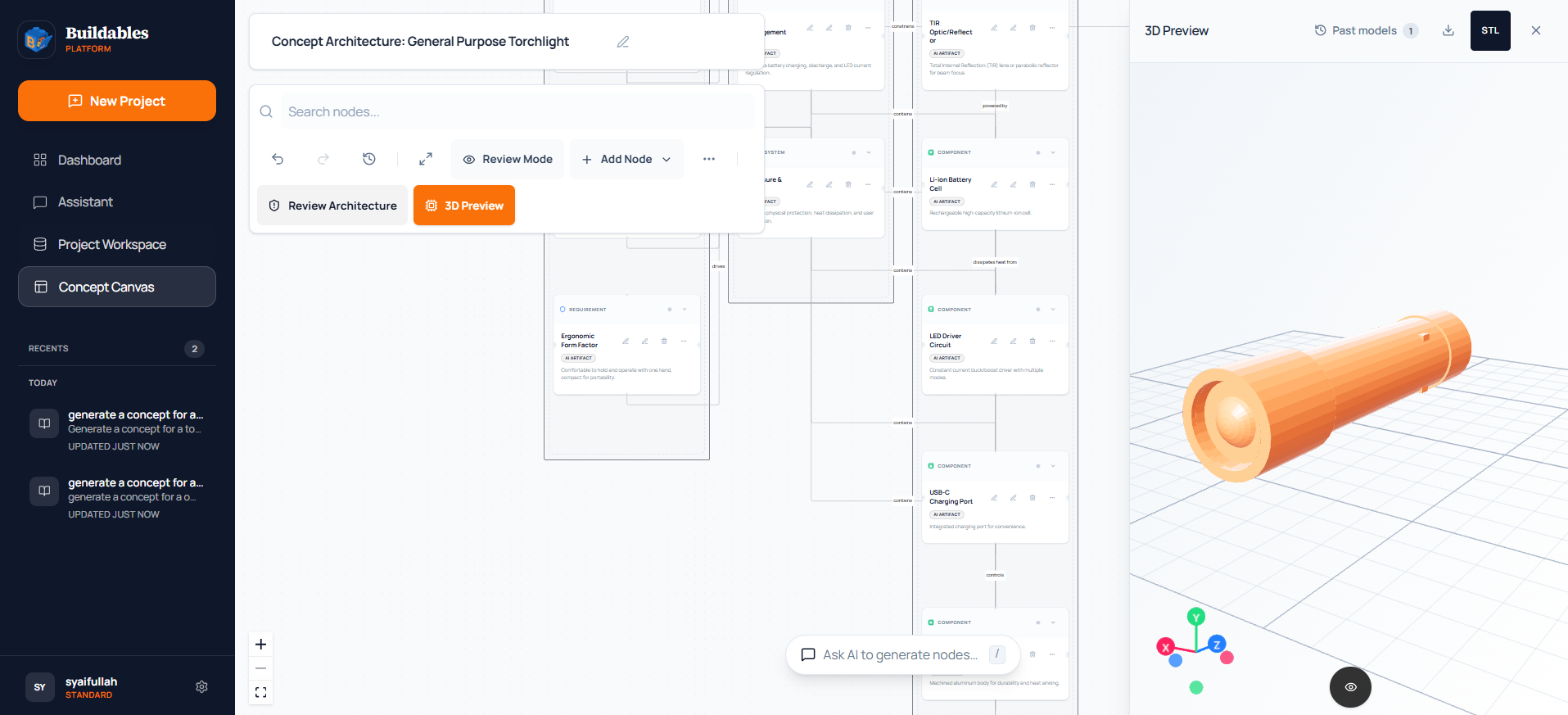
Key Capabilities Engineering Copilot: An intelligent assistant designed to accelerate your design iterations and help navigate complex mechanical engineering challenges. Concept Formation: Tools that rapidly translate your text, ideas, and parameters into actionable hardware blueprints. Sourcing Intelligence: Smart, automated procurement workflows to help you identify and source the right materials and physical components efficiently.
Philosophy Buildables.app is built on the core belief that hardware development should be as accessible, iterative, and responsive as software. By embracing modularity and practical design principles, this platform equips creators with the essential tools needed to bring physical products to life.
The Spark Every maker has been there. You have a vision for a physical product something tangible, real, something you could hold in your hands and then reality hits. Where do you even start? CAD files, material specs, manufacturing constraints, tolerance calculations... the gap between idea and prototype is a brutal one.
That frustration became our founding question: What if AI could bridge that gap? Buildables is an AI-powered tool that turns natural-language descriptions into actionable physical product blueprints. Describe what you want to make. We handle the rest geometry, materials, constraints, and step-by-step build guidance so you can spend less time decoding datasheets and more time actually making things.
How We Built It We had one week. Seven people. Zero sleep budget. Maximum ambition.
The Architecture Challenge This is where things got real fast.
Generating instructions for software is relatively forgiving if the AI hallucinates a function name, you get an error message. Generating guidance for physical products is a different beast entirely. A bad material suggestion doesn't throw an exception. It fails in the real world, potentially dangerously. We needed a system that could reason about physical constraints not just language. That meant layering structured domain knowledge on top of the language model: material databases, manufacturing tolerances, and geometric feasibility checks that could validate AI outputs before they reached the user.
The core pipeline we settled on: User Input (natural language) ↓ Intent Parser → Constraint Extractor ↓ Physics-aware Generation Layer ↓ Feasibility Validator ↓ Structured Blueprint Output
What We Learned
Grounding is everything. Language models are fluent. They are not engineers. The magic and the hard work was in building the scaffolding that kept outputs physically grounded.
Constraints are a feature, not a bug. Early on, we tried to make the system as open-ended as possible. Every time we added a constraint "this material can't be used for load-bearing components at this thickness" the output quality jumped. Constraints are how you get precision.
Seven people in a room can move fast. When you cut scope ruthlessly and trust your teammates, a week is a surprisingly long time. We shipped. That's what mattered.
The Challenges We Faced Building a validation layer for physical correctness not just syntactic correctness was the hardest technical problem we've ever tackled in a sprint format. We had to make real-time decisions about how much to trust the model versus how hard to constrain it.
We got it wrong a few times. We over-constrained early prototypes into uselessness. We under-constrained later ones into chaos. Finding the right balance useful enough to be creative, constrained enough to be safe was an iterative process that ate most of our Thursday.
We also underestimated how hard the output format problem would be. A blueprint has to be readable by a human, parseable by downstream tooling, and structured enough to be acted on. Three different goals. One output. That's a hard design problem, and we're still refining it.
What's Next Buildables is live. The foundations are real. And the problem we're solving the gap between imagination and physical creation isn't going anywhere. We're just getting started.
Built With
- ai
- inggest
- nextjs
- openscad
- pincecone
- postgresql
- react
- redis
- supabase
- tailwind
- three.js

Log in or sign up for Devpost to join the conversation.