Inspiration
As a builder frustrated by fragmented access to sustainable building resources, I wanted to create a single hub for architects, contractors, and homeowners across the US and EU. Watching peers struggle to navigate conflicting green codes and verify eco-material data sparked the idea to centralize critical tools—from carbon calculators to certification trackers—into one intuitive platform.
What it does
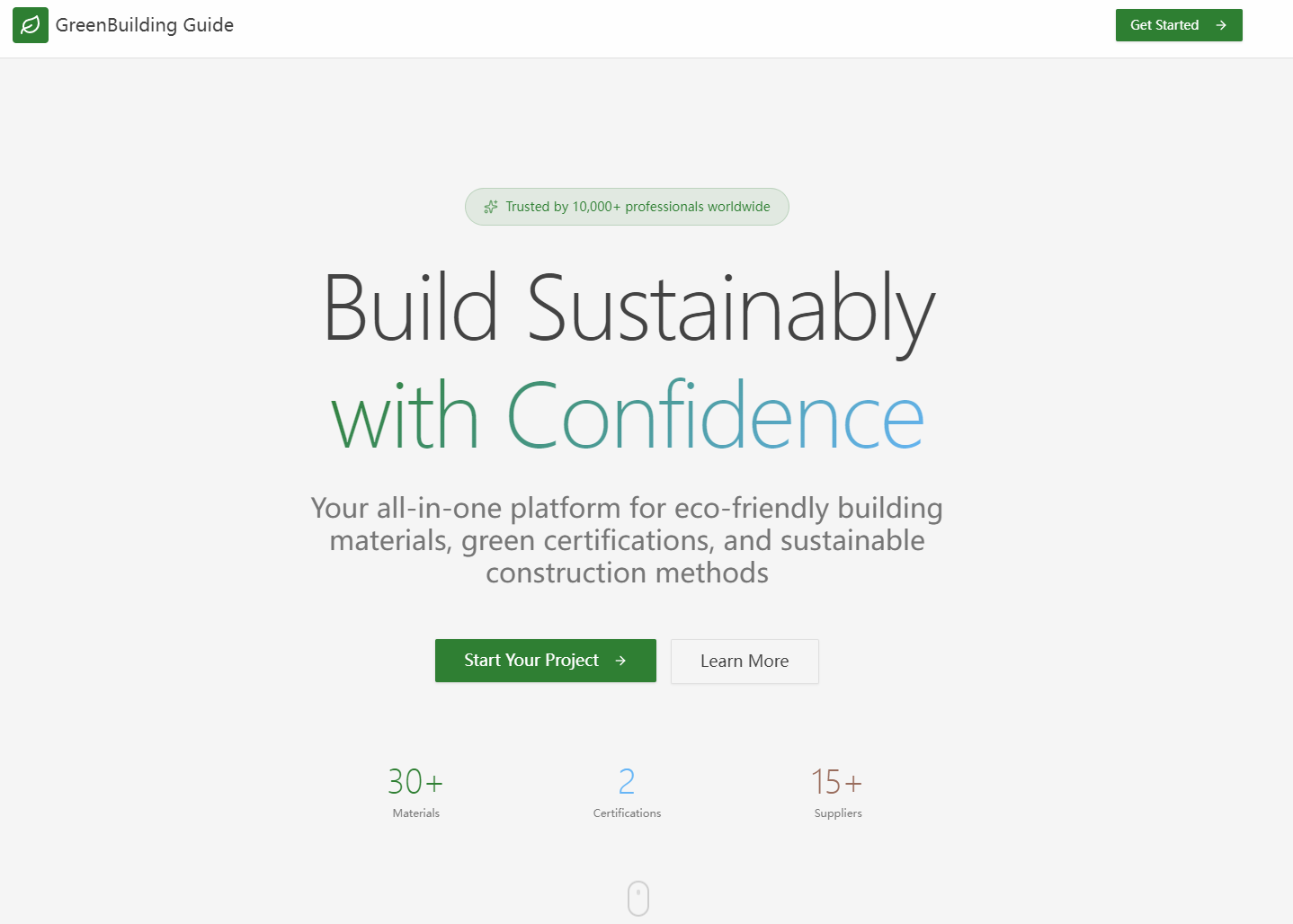
GreenBuilding Guide delivers end-to-end support for sustainable construction: a filterable eco-material database, LEED/BREEAM certification trackers, carbon emission calculators, local supplier locators, and region-specific building code compliance tools. It caters to professionals and DIY builders alike, with tiered access to match different project needs.
How we built it
We started by mapping user workflows for architects, contractors, and homeowners to prioritize core features. Using React for the frontend, we built a responsive dashboard with modular components (material database, calculator, mapping tool). Node.js/Express powered backend logic for carbon calculations and compliance checks, with MongoDB storing regional code data and supplier details. Google Maps API was integrated for location-based supplier search, and Chart.js for visualizing carbon metrics.
Challenges we ran into
The biggest hurdle was aligning US (LEED) and EU (BREEAM) certification frameworks—their differing credit structures required a flexible checklist system. We also faced challenges normalizing carbon footprint data across diverse building materials, and ensuring the map tool performed seamlessly across US/EU regions with varying address formats.
Accomplishments that we're proud of
We created a unified platform that works for both commercial professionals and residential DIYers, with accurate carbon calculation models that reflect real-world material impacts. The region-specific code database now covers 20+ US states and EU countries, and the supplier locator features verified, local eco-material vendors across key markets.
What we learned
We deepened our understanding of regional green building regulations and the nuances of carbon accounting for construction. We also learned to balance depth (professional-grade data) with usability (intuitive DIY interfaces), and the importance of iterative user testing with architects and contractors to refine workflows.
What's next for this project
We plan to expand the material database to include emerging eco-materials, add real-time updates for building code changes, and integrate a collaborative project tool for teams. We’re also exploring partnerships with green building certifiers to streamline documentation submission and validation for users.

Log in or sign up for Devpost to join the conversation.