Inspiration
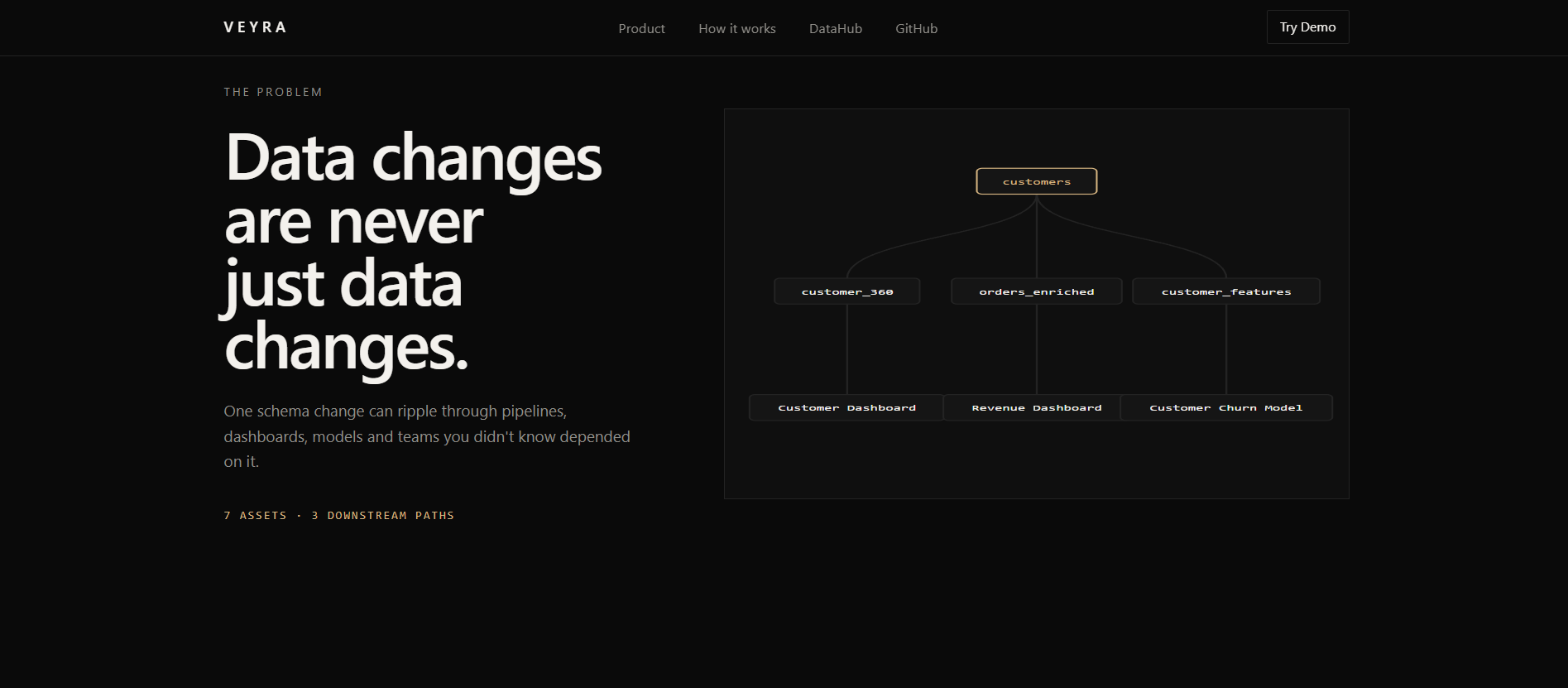
Data changes rarely stay isolated. A single schema change can silently affect downstream datasets, dashboards, pipelines, and ML models. We built Veyra to solve this real-world problem by giving AI agents the context they need to understand the blast radius of a change before it reaches production.
What it does
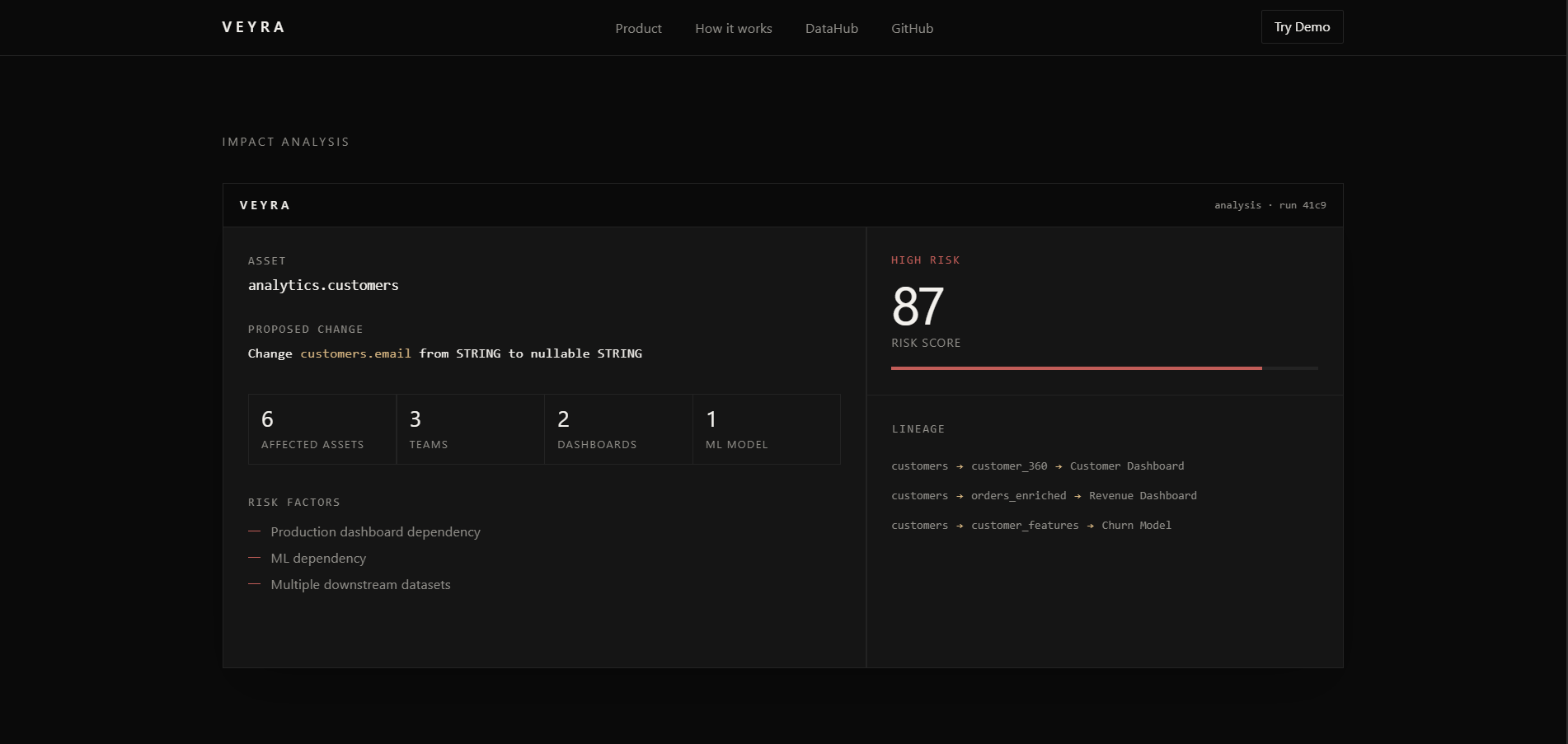
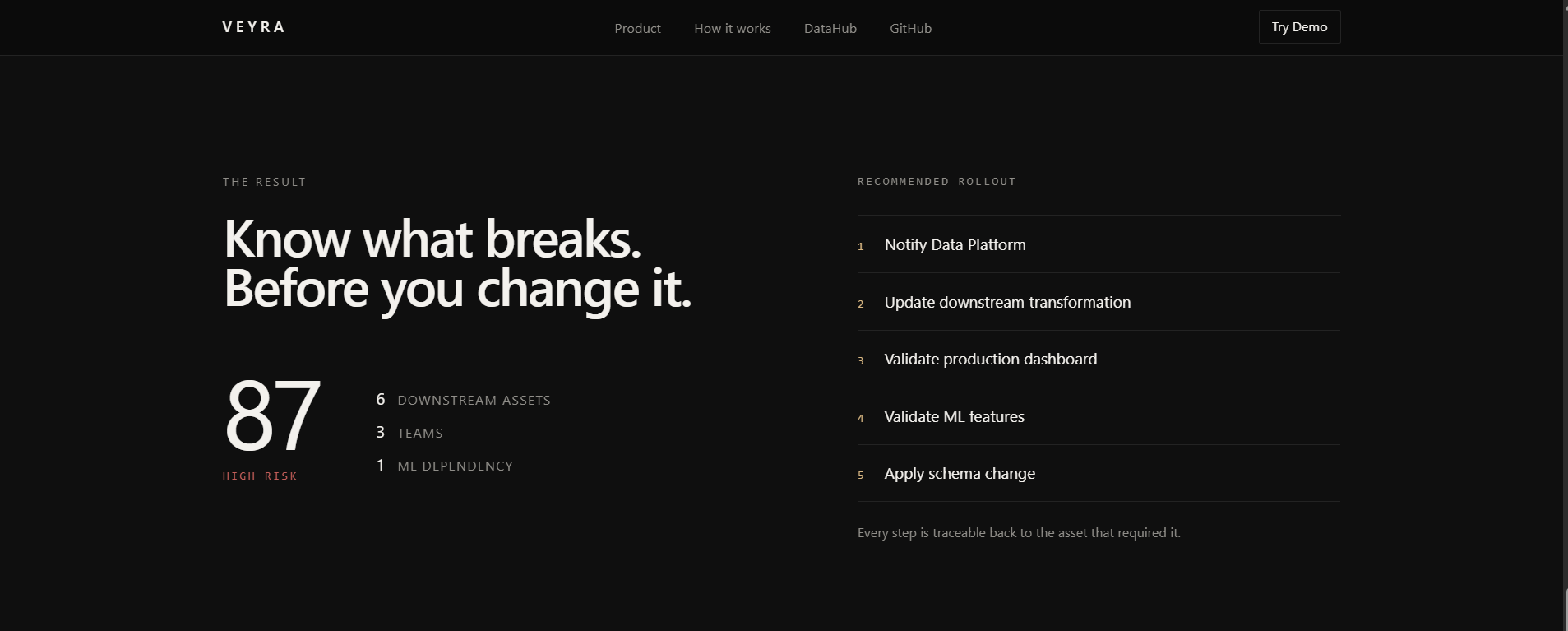
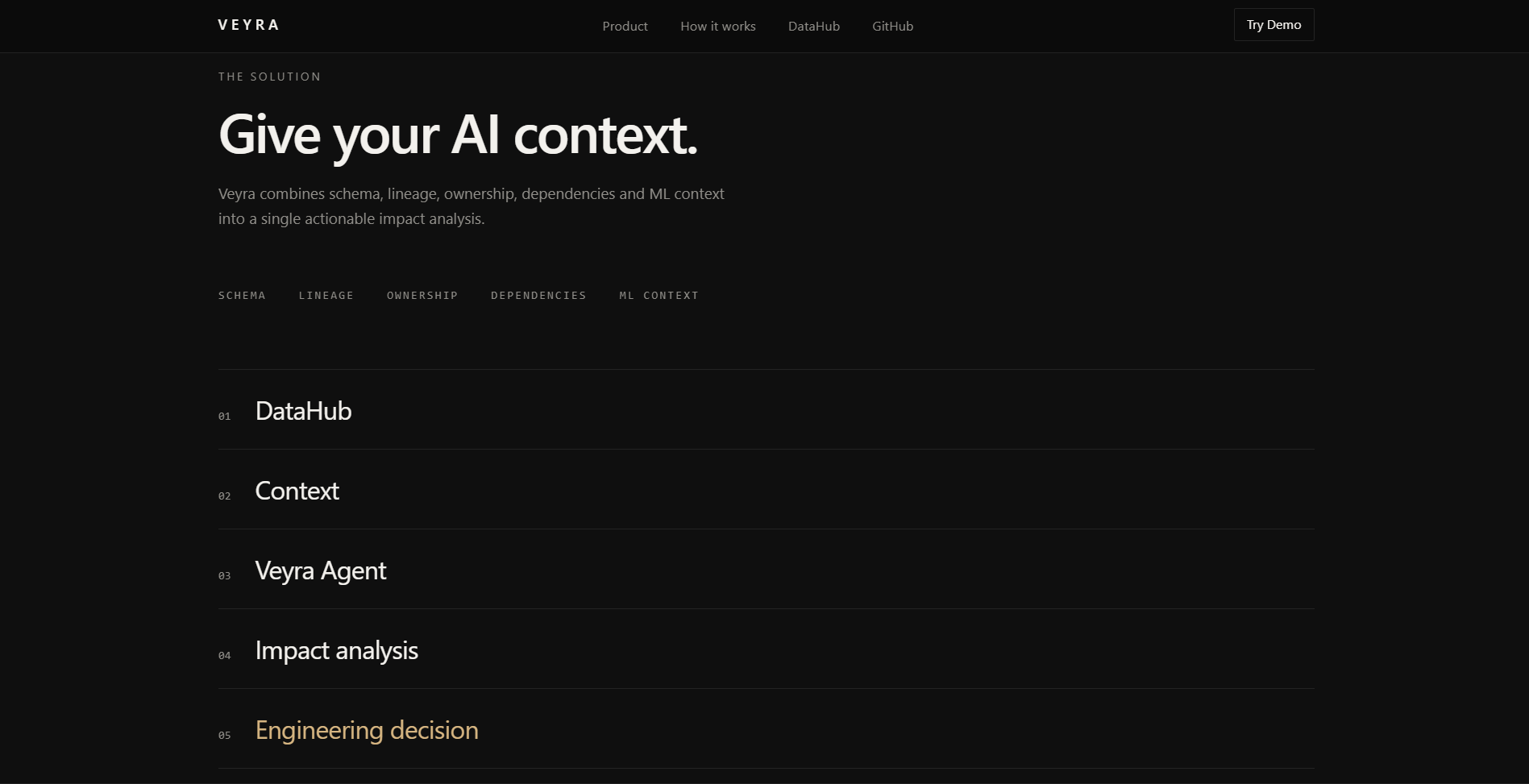
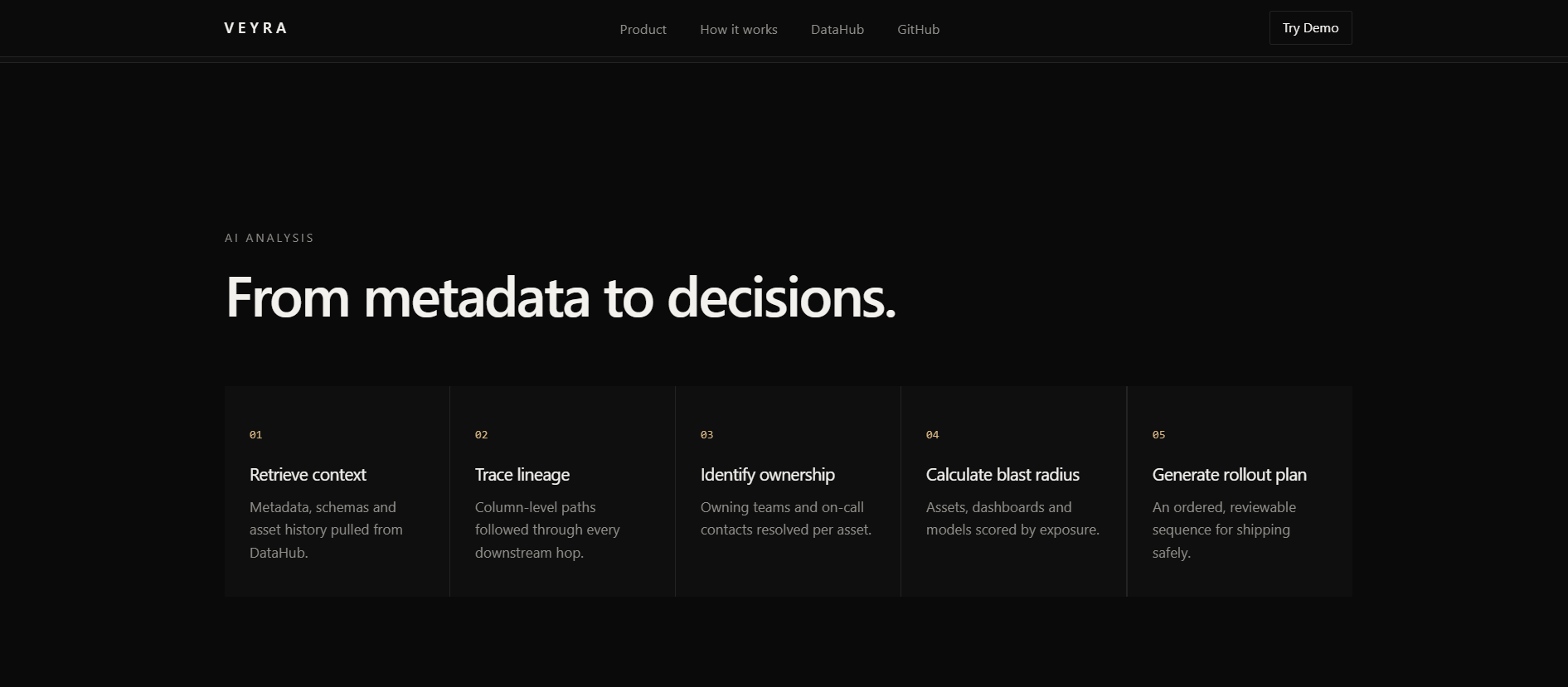
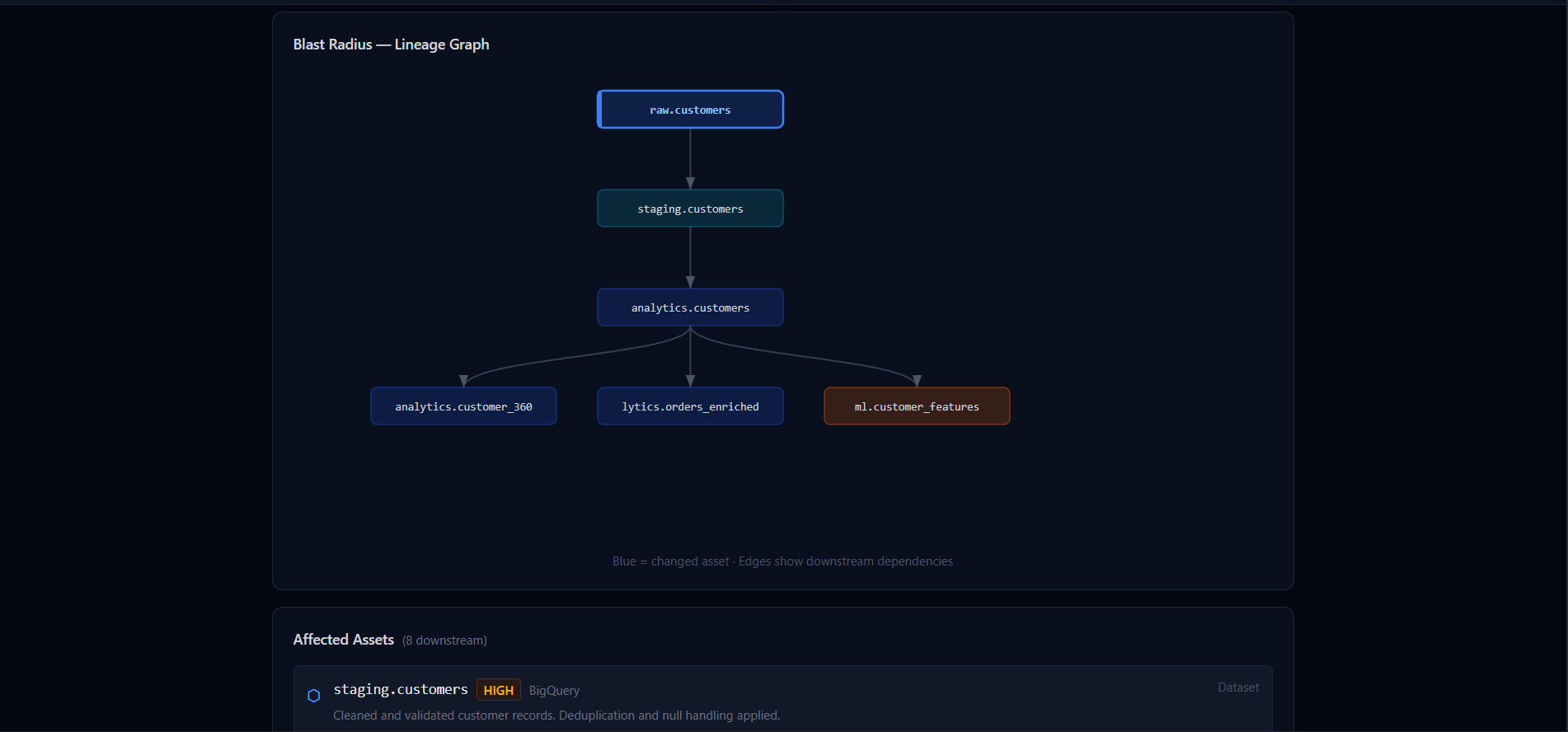
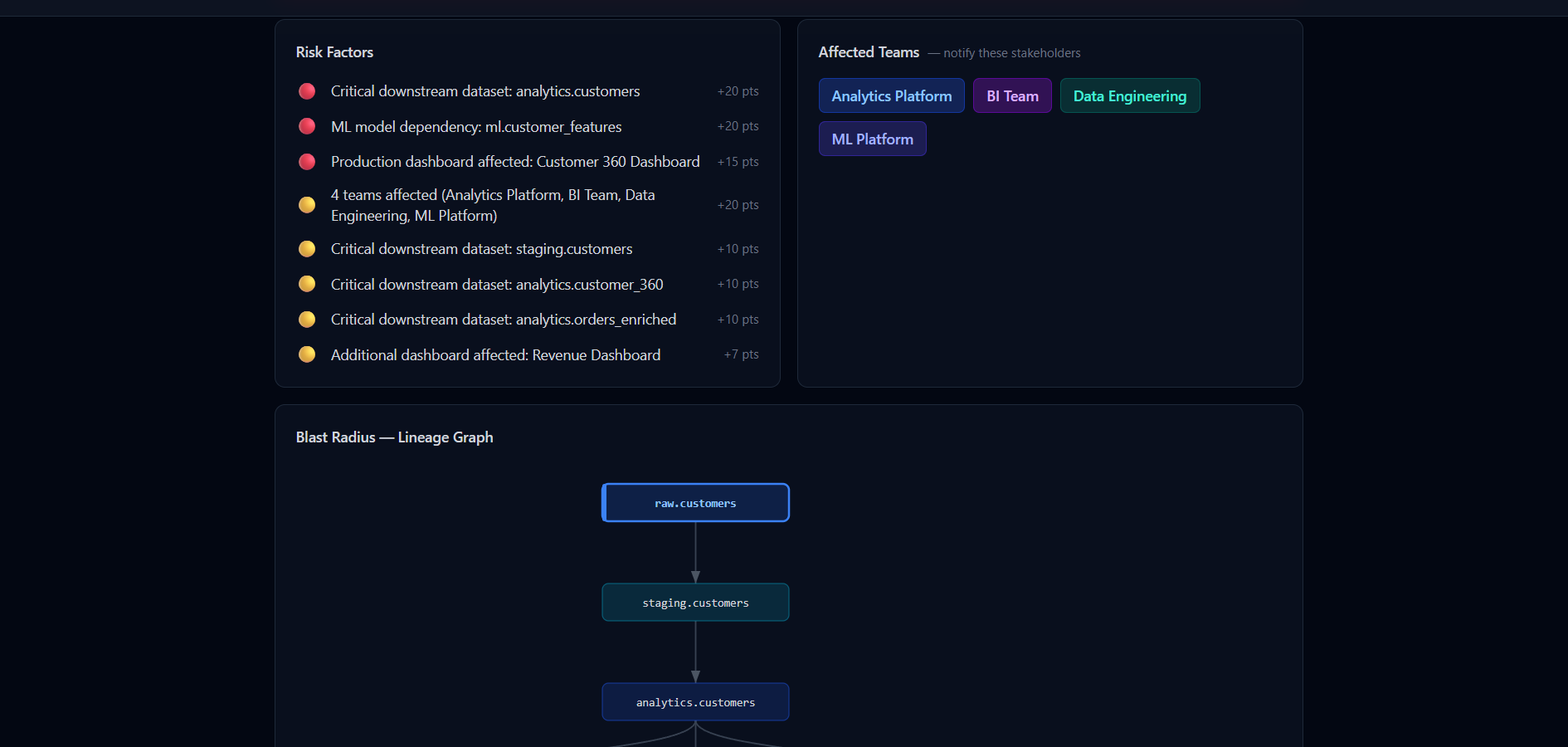
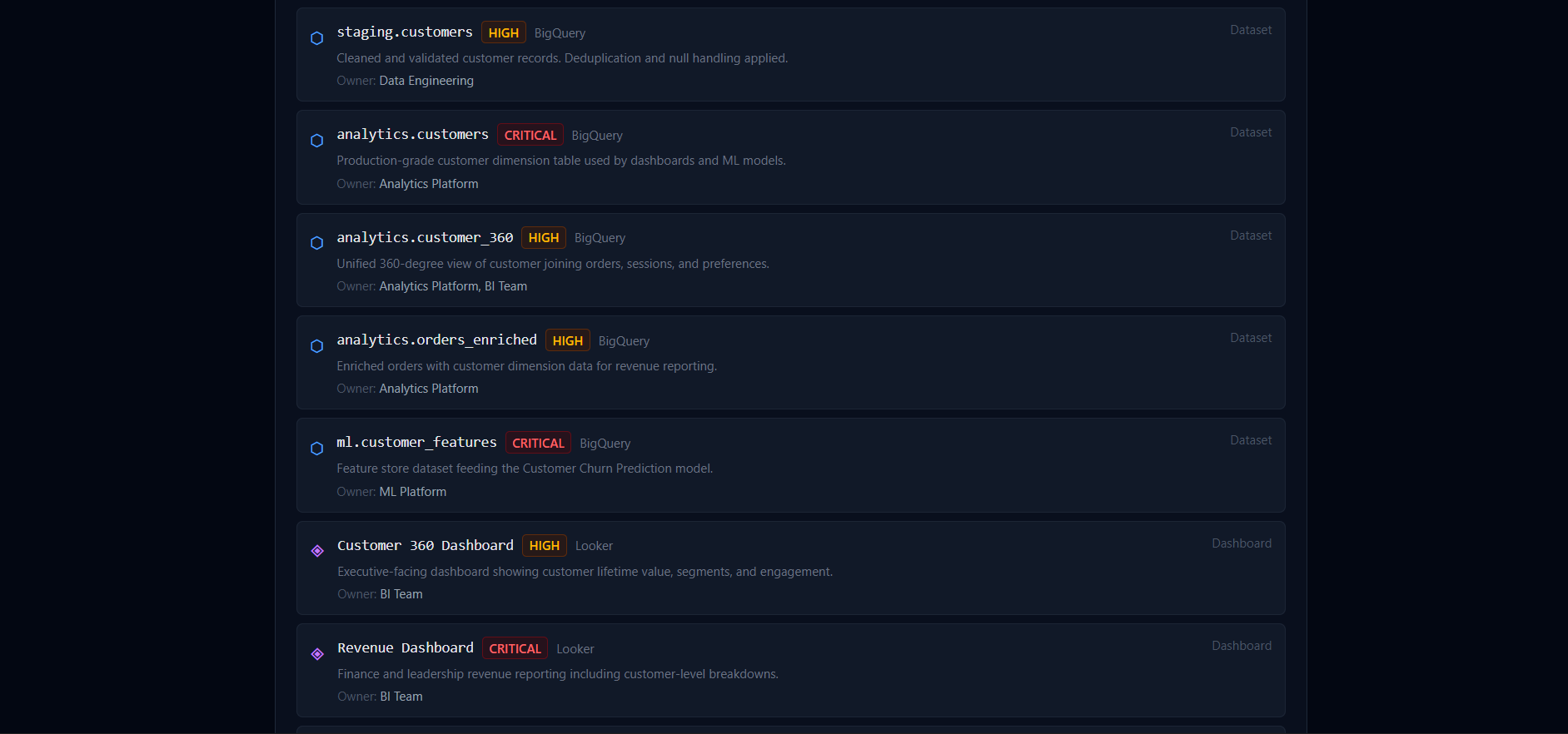
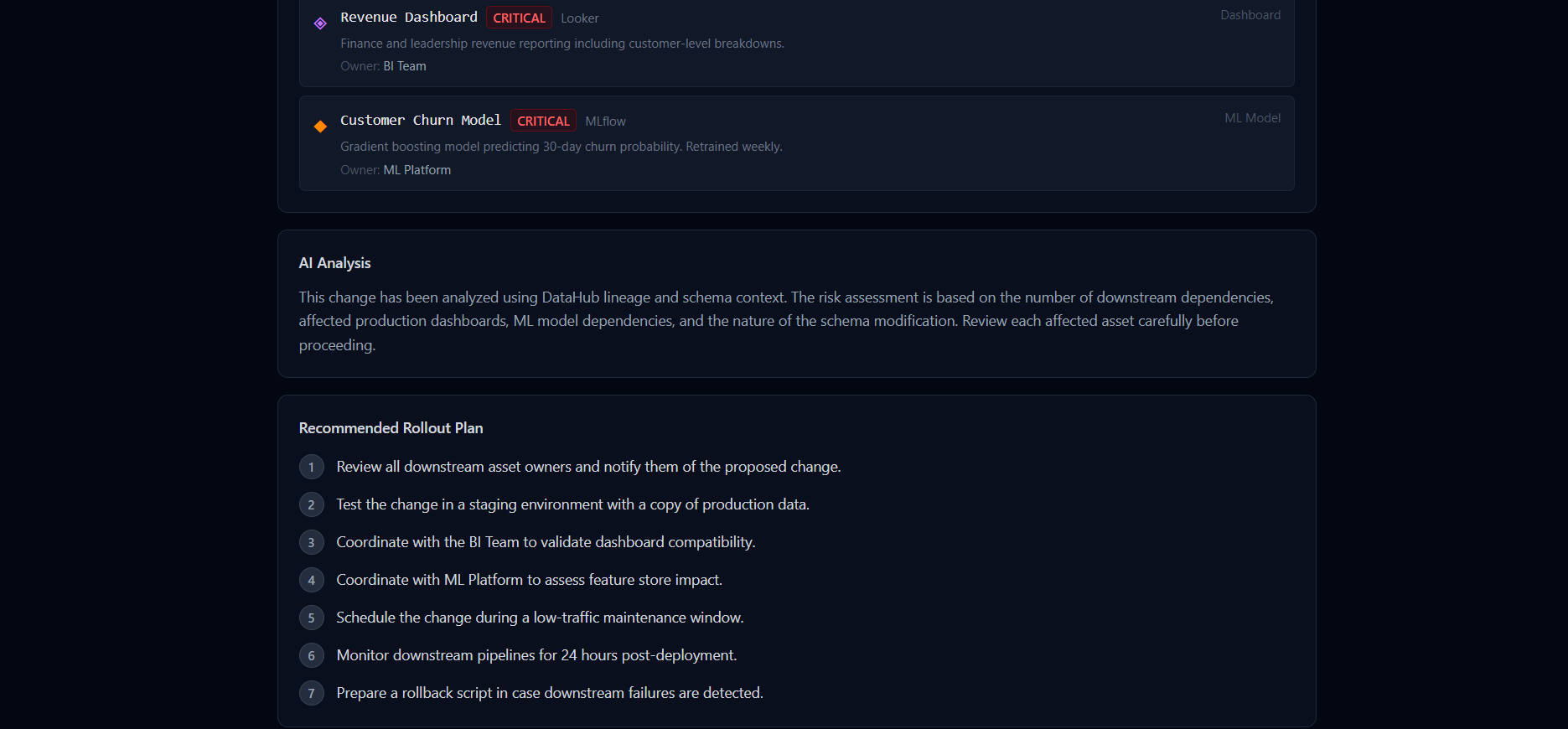
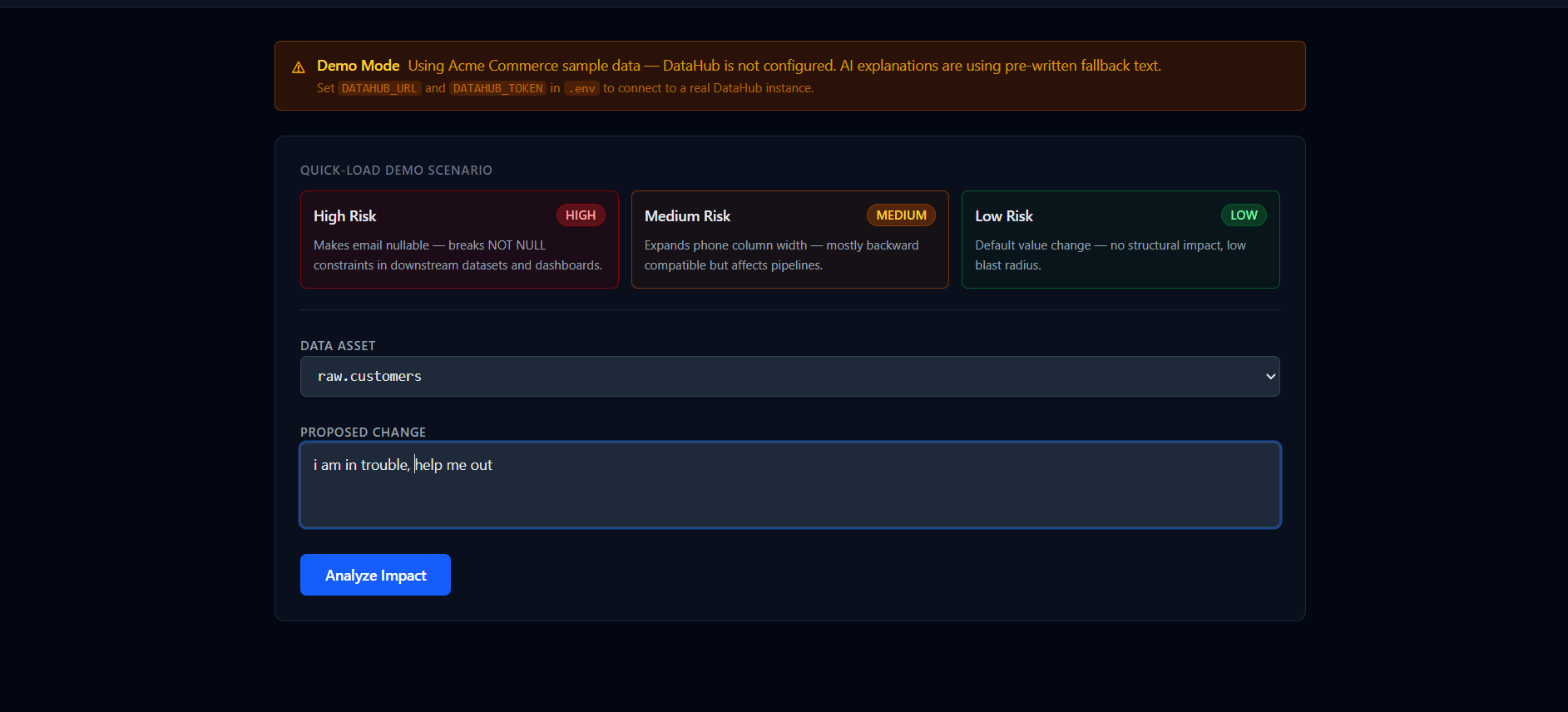
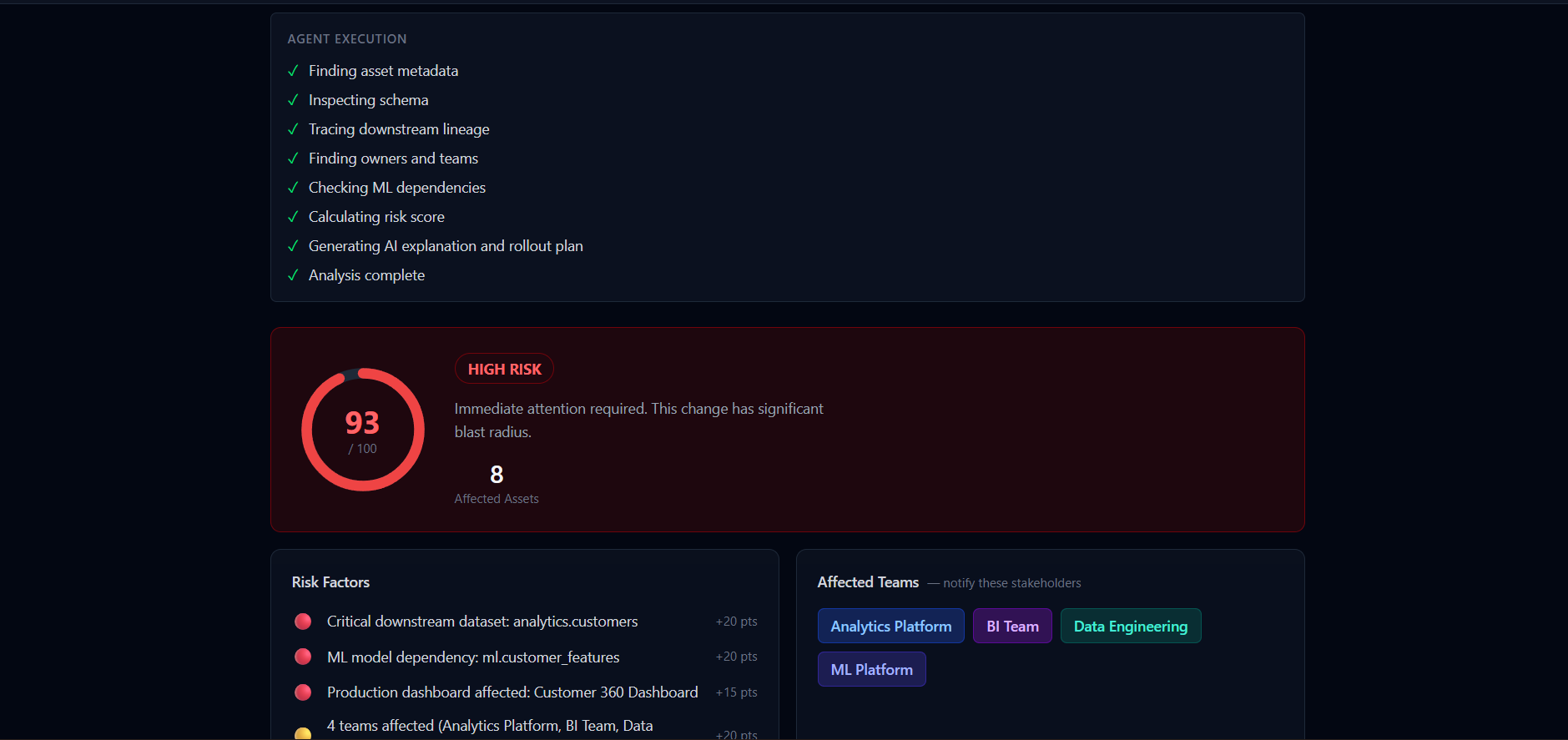
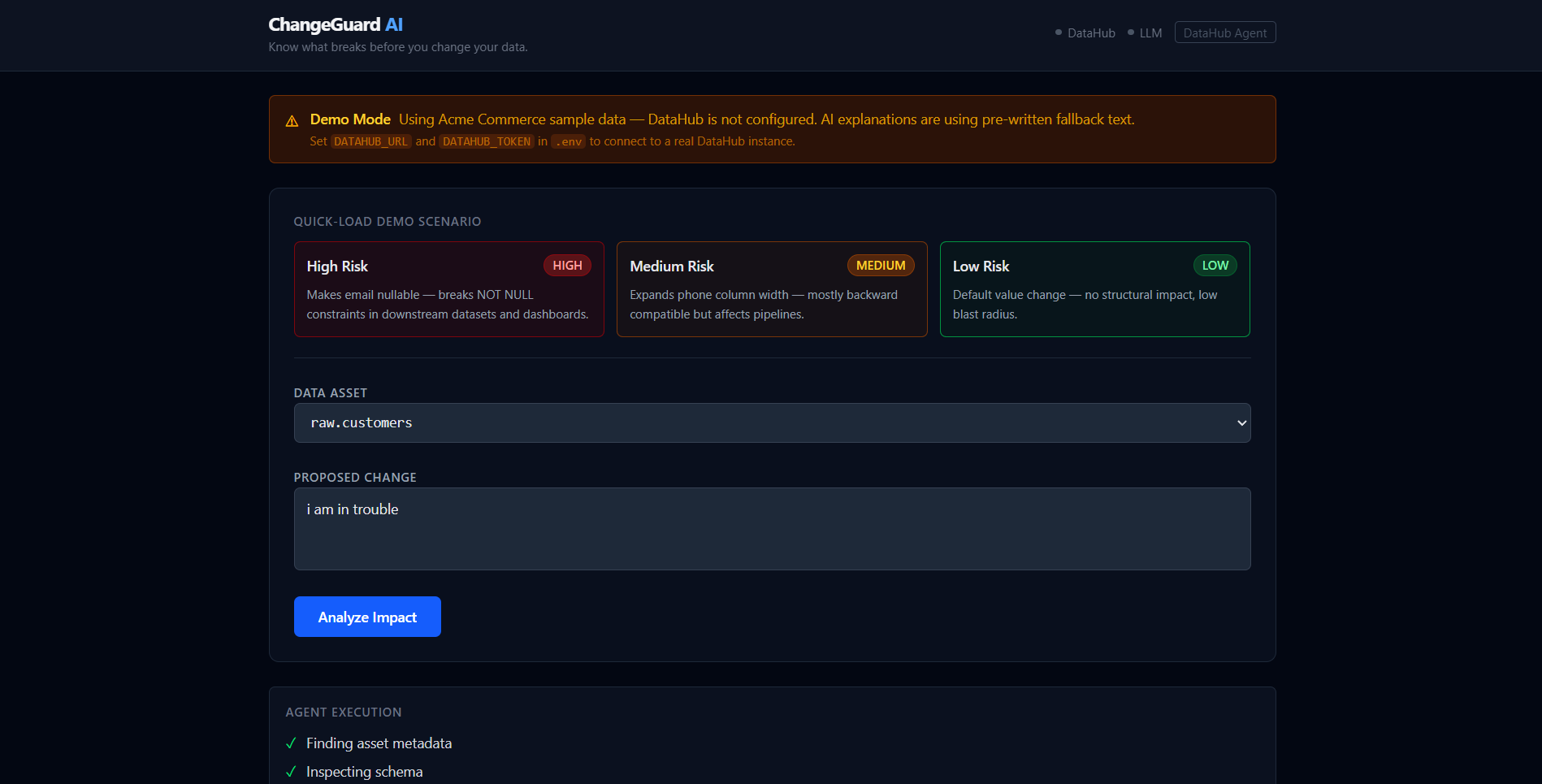
Veyra analyzes a proposed data change and identifies its potential impact across the data stack. It uses metadata, lineage, ownership, downstream dependencies, and ML context to provide a risk score, affected assets and teams, an explanation of the impact, and a recommended rollout plan.
How we built it
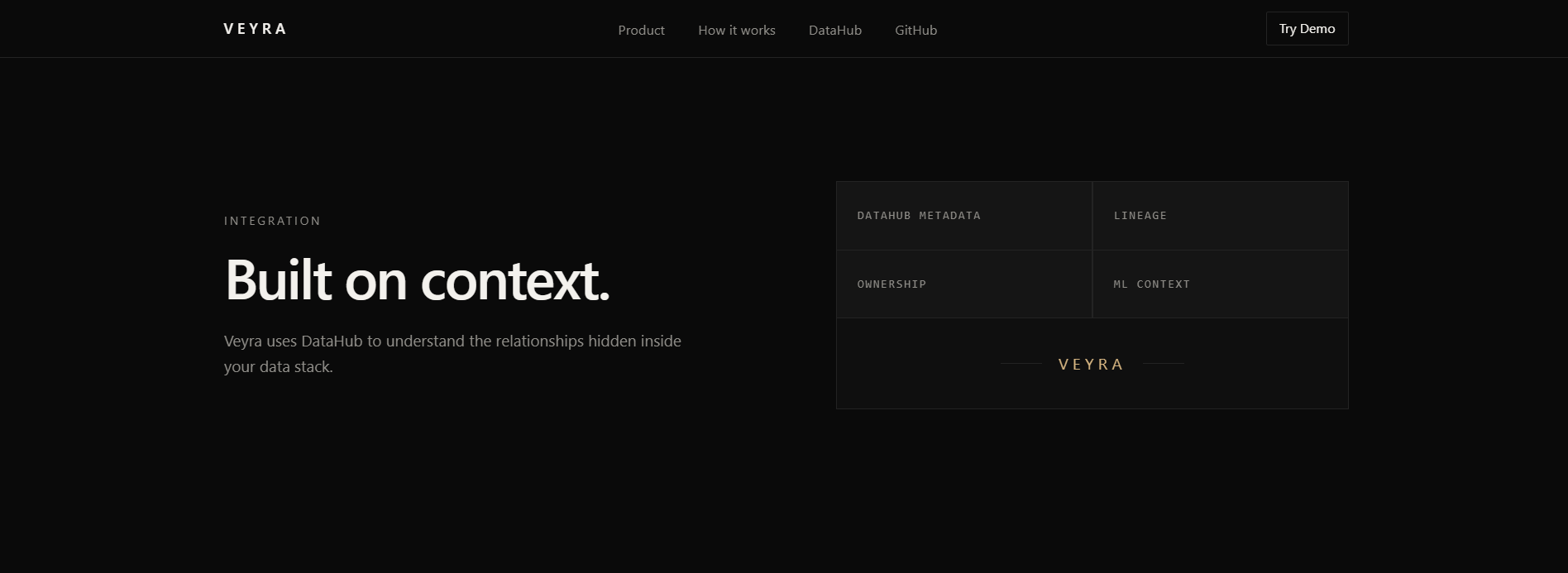
Veyra is built with a Next.js frontend and FastAPI backend, with DataHub providing the metadata and context layer. The agent uses DataHub context to understand schemas, lineage, ownership, and dependencies, while an AI model turns that context into an actionable impact analysis. We also created a realistic Acme Commerce demo dataset so the entire workflow can be demonstrated without requiring judges to configure their own data stack.
Challenges we ran into
The biggest challenge was building something meaningful within a short hackathon timeframe while keeping DataHub central to the experience. We also had to make the demo deterministic and easy for judges to use while still demonstrating how an agent can reason over real data context.
Accomplishments that we're proud of
We're proud that Veyra turns something that normally requires manual lineage investigation into a simple workflow:
Proposed change → DataHub context → Agent analysis → Blast radius → Risk → Action plan
We also built the experience around a polished, judge-friendly demo that can communicate the value of the project within minutes.
What we learned
We learned that AI agents become significantly more useful when they have reliable organizational context. Instead of asking an LLM to guess what a data asset affects, giving it lineage, ownership, schemas, and dependencies allows it to reason about real engineering consequences.
What's next for Veyra
Next, Veyra could move from analyzing changes to actively helping execute them — generating migration code, creating pull requests, notifying affected owners, validating downstream assets, and eventually acting as an autonomous data-change copilot throughout the development and deployment lifecycle.
Built With
- ai
- analytics
- datahub
- fullstack
- generative-ai
- javascript
- ml
- next.js
- prediction
- python
- risk-i/o
- typescript


Log in or sign up for Devpost to join the conversation.