
Inspiration
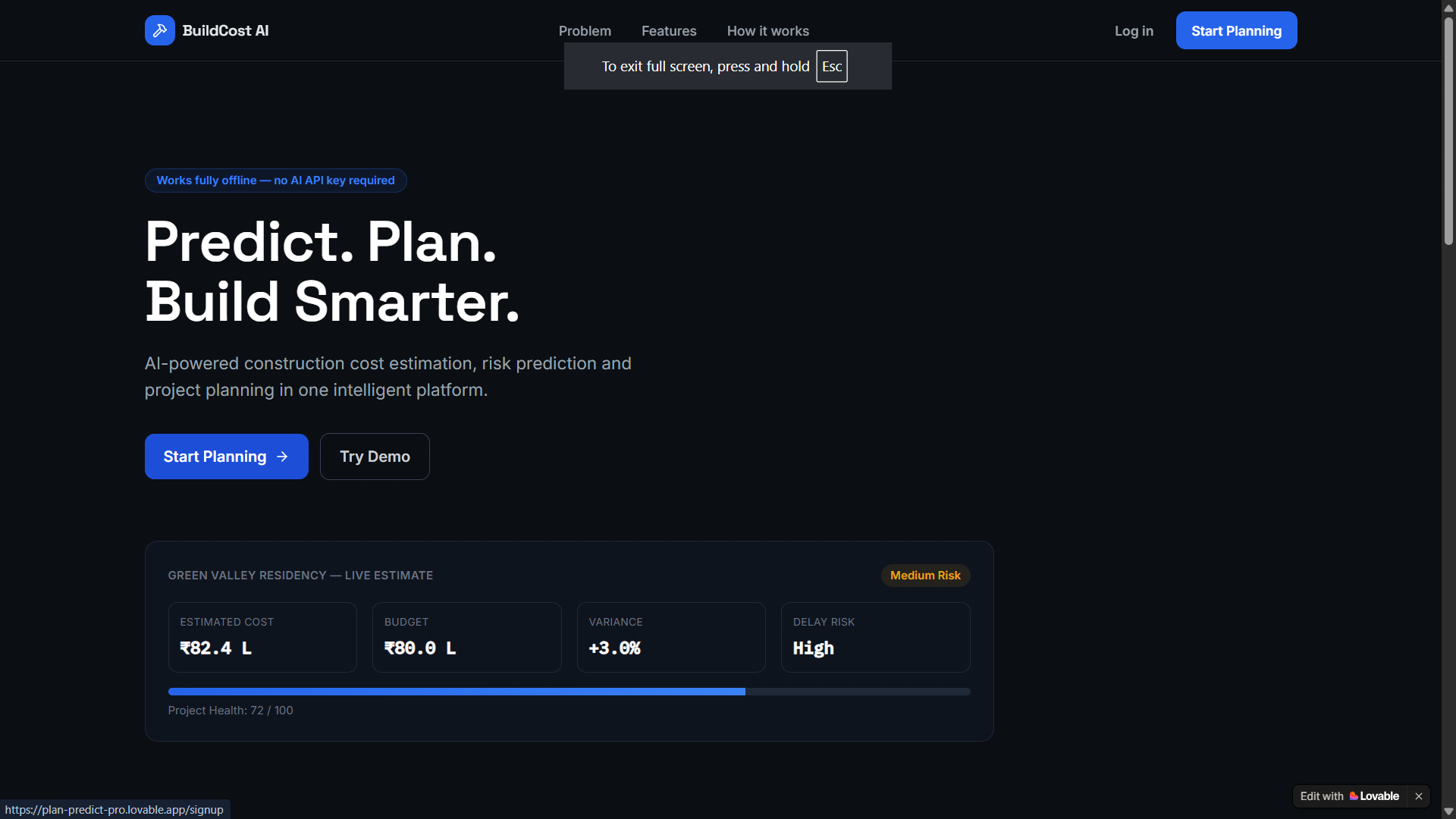
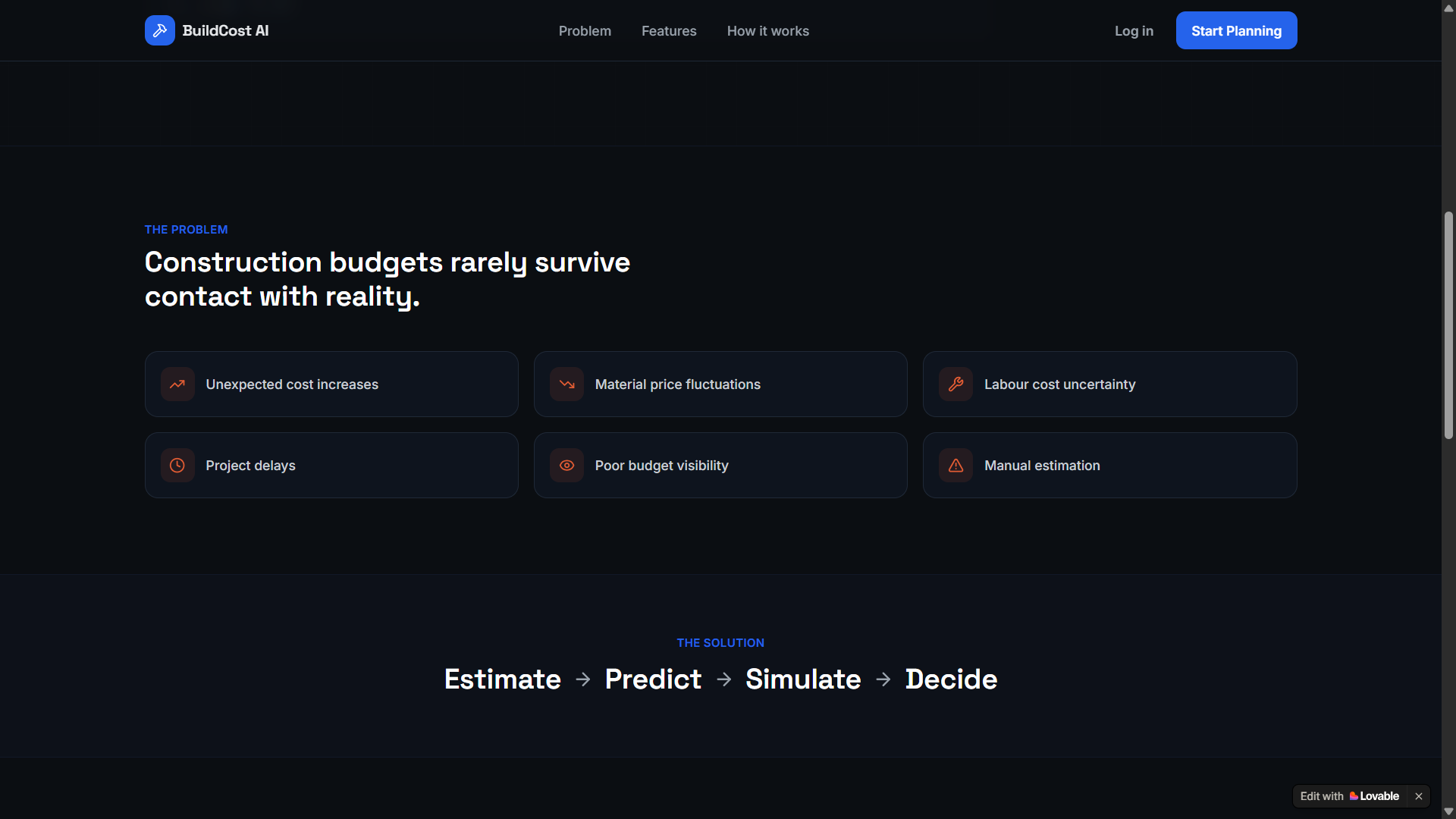
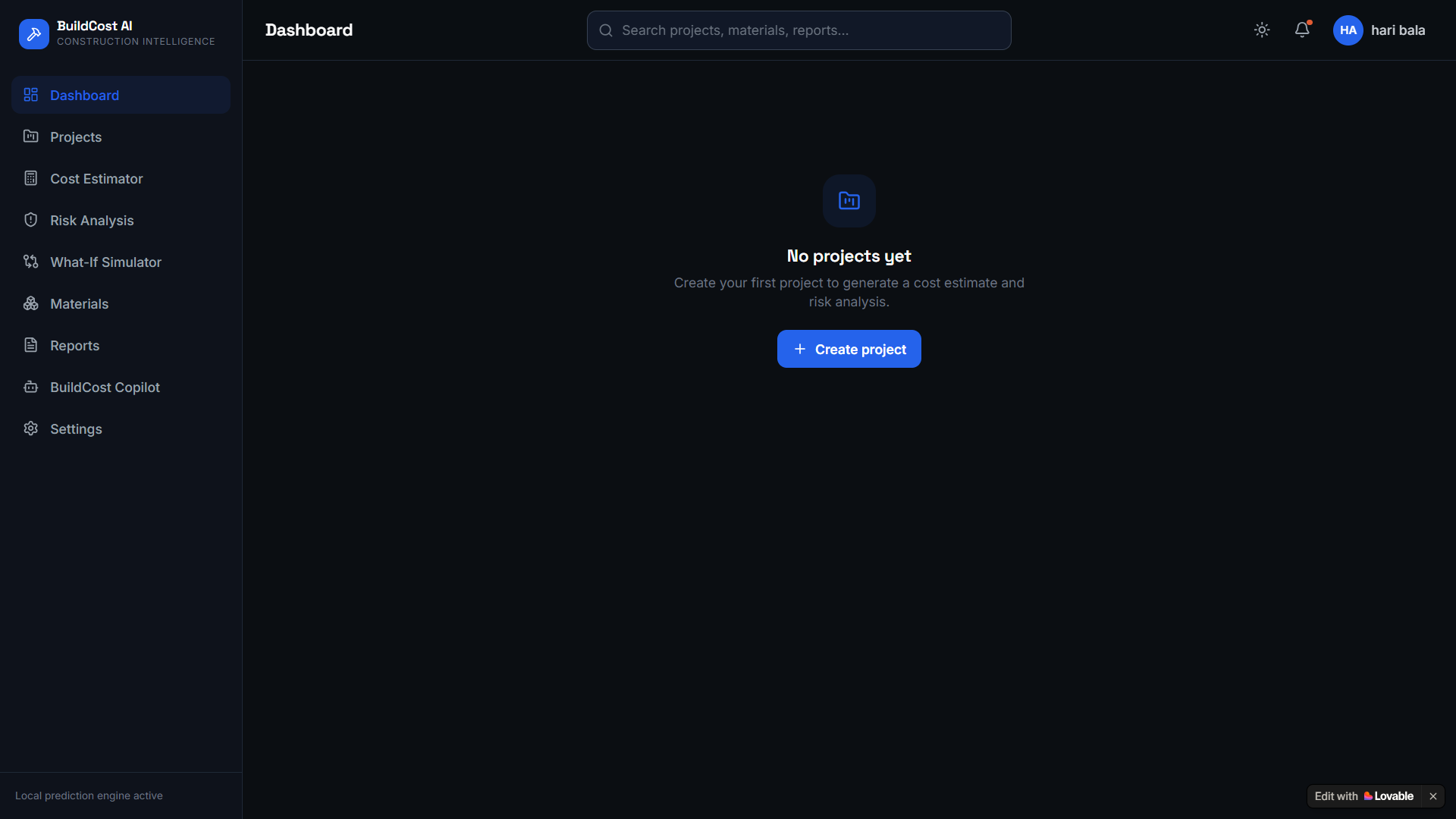
Construction projects often face unexpected cost increases, material price fluctuations, labour issues, and project delays. We wanted to build a solution that helps project owners and builders predict these risks before they become expensive problems. BuildCost AI was inspired by the idea of bringing AI-powered decision-making into construction planning.
What it does
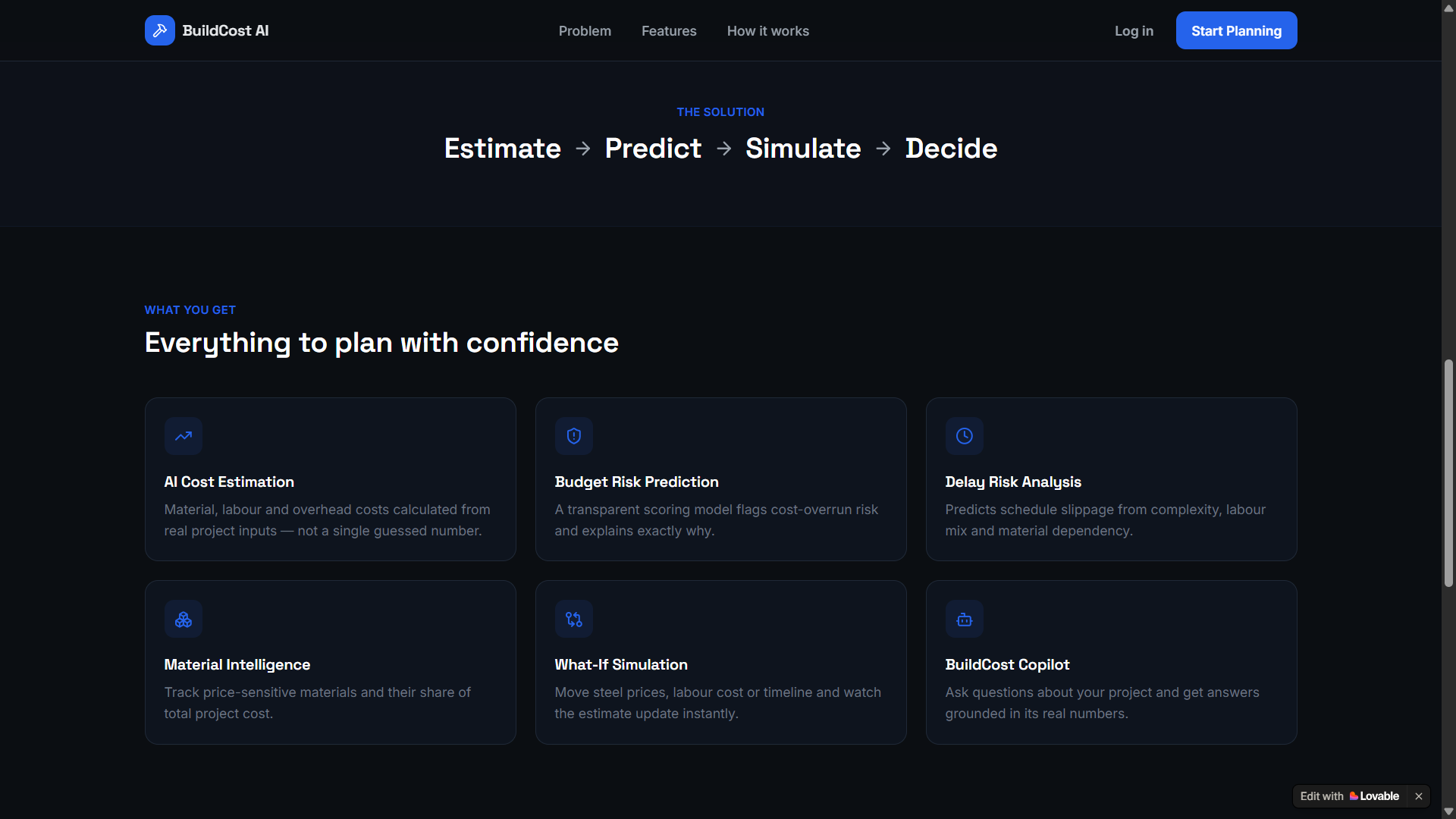
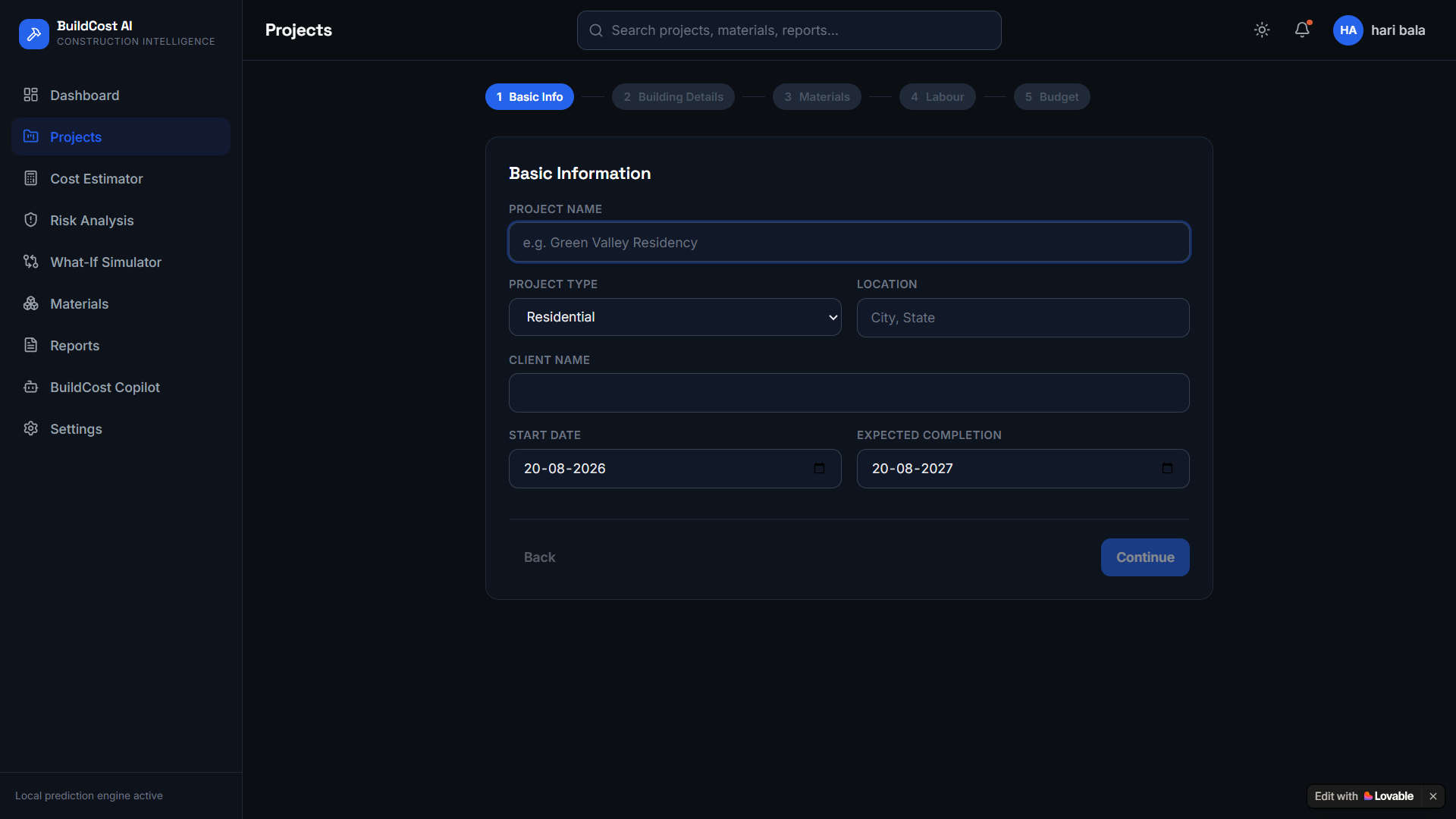
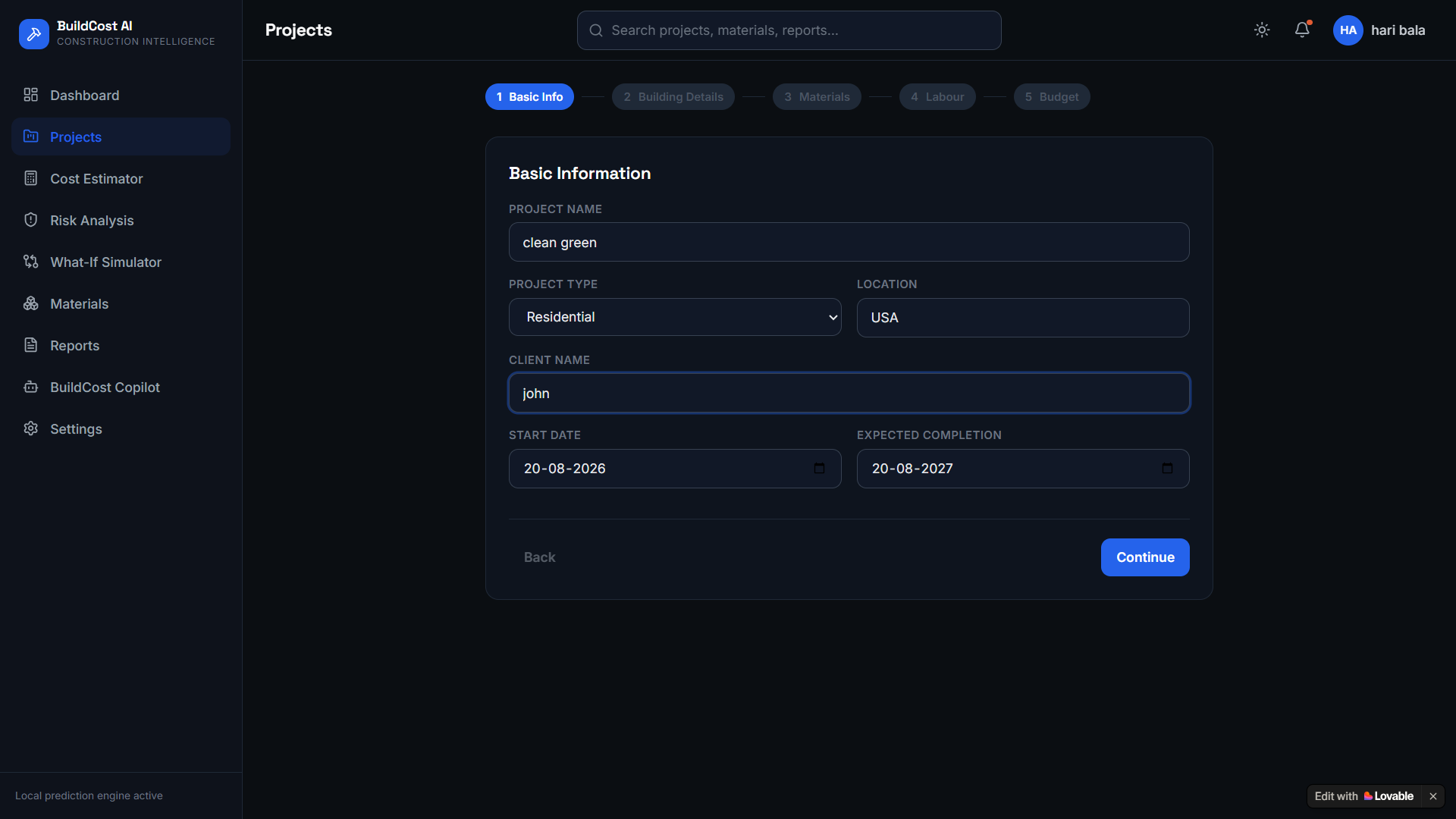
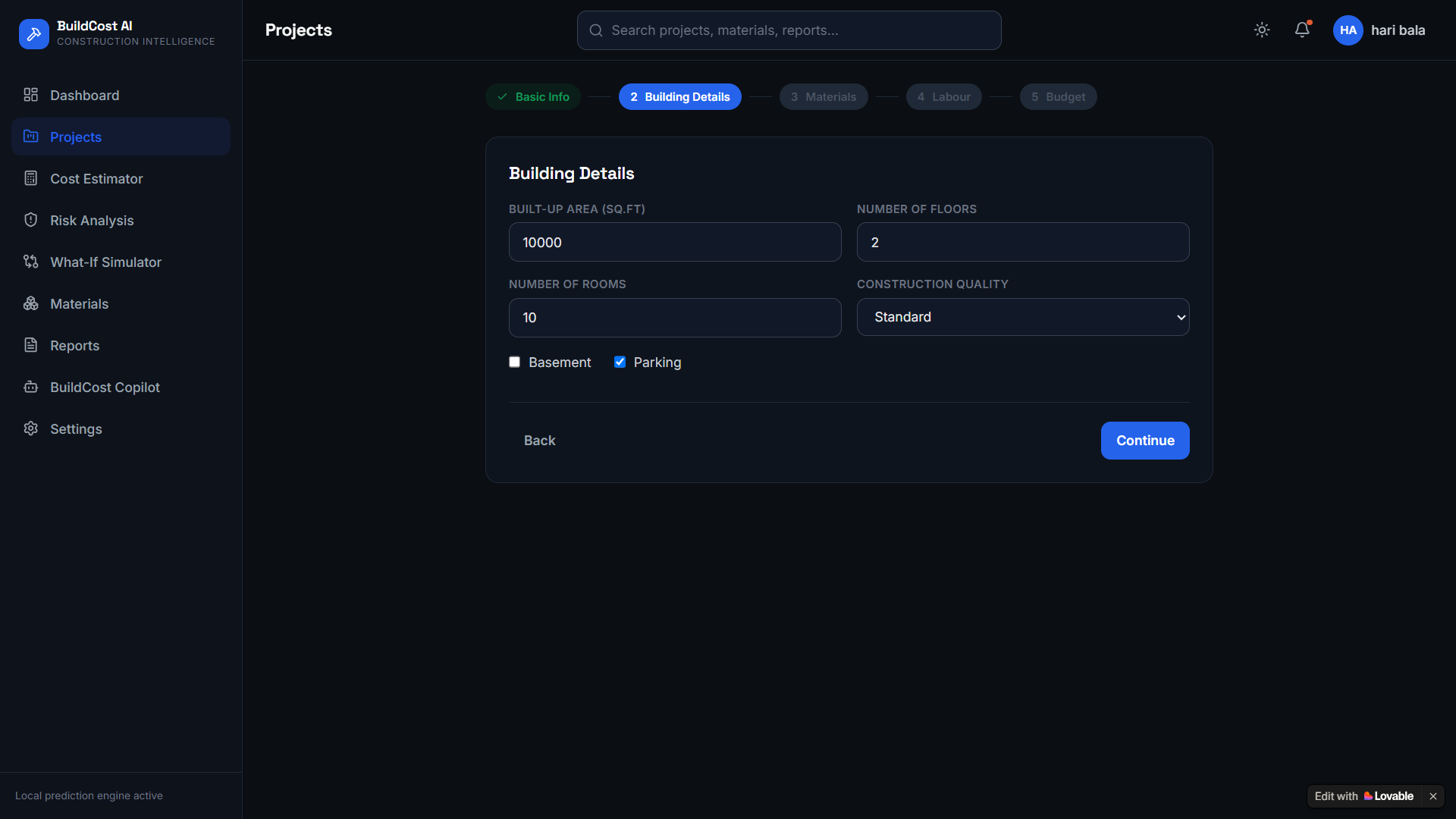
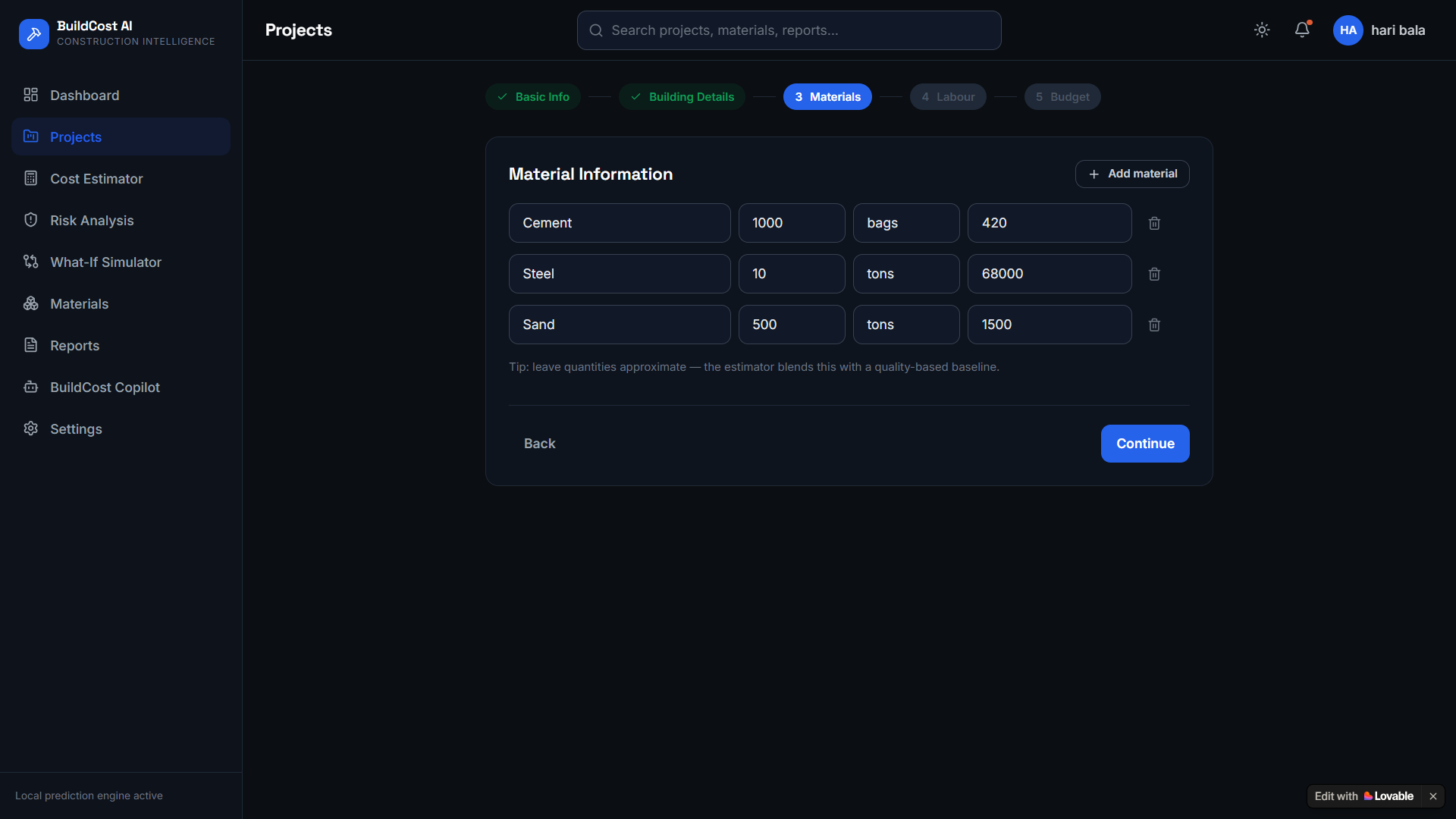
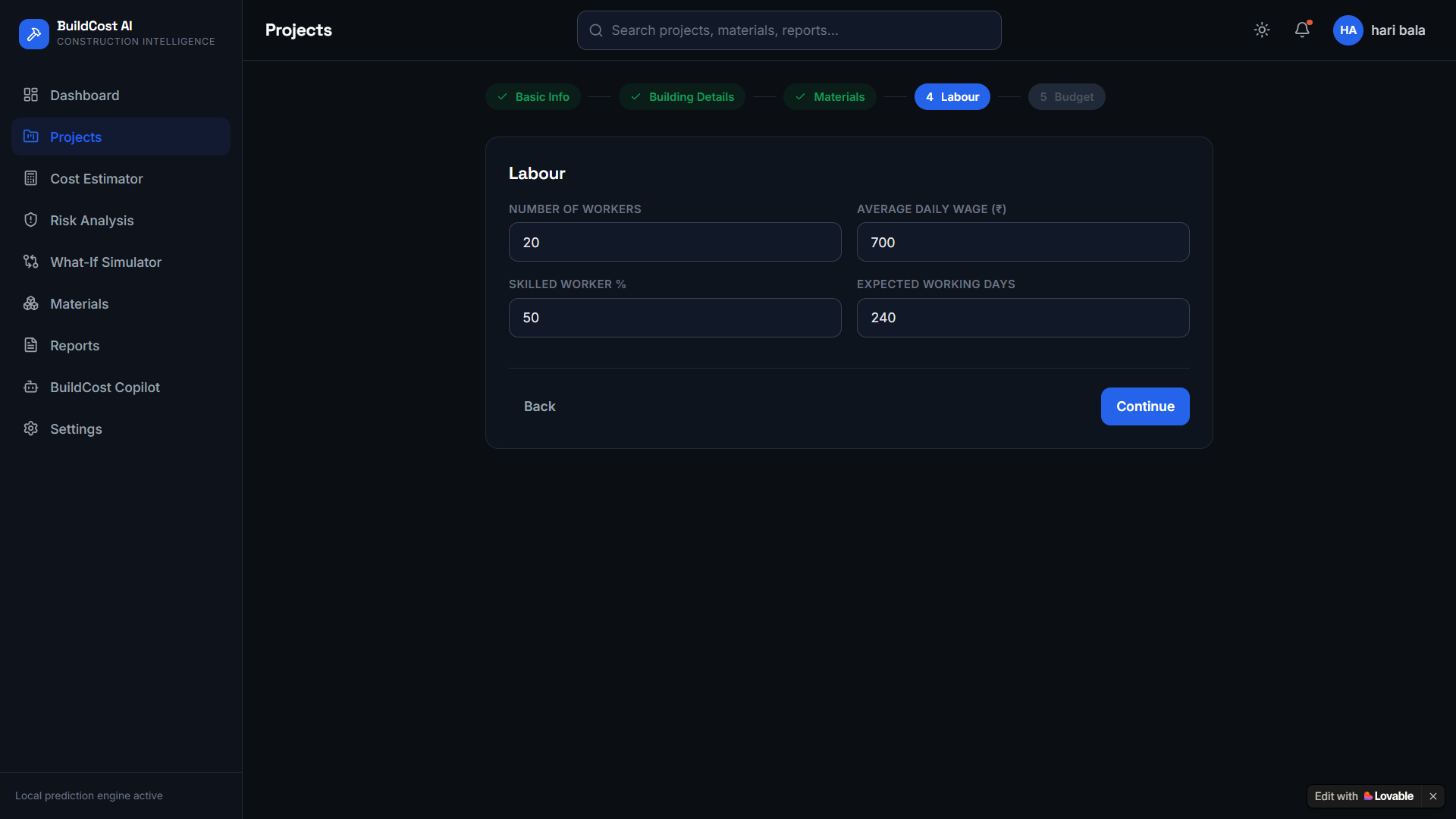
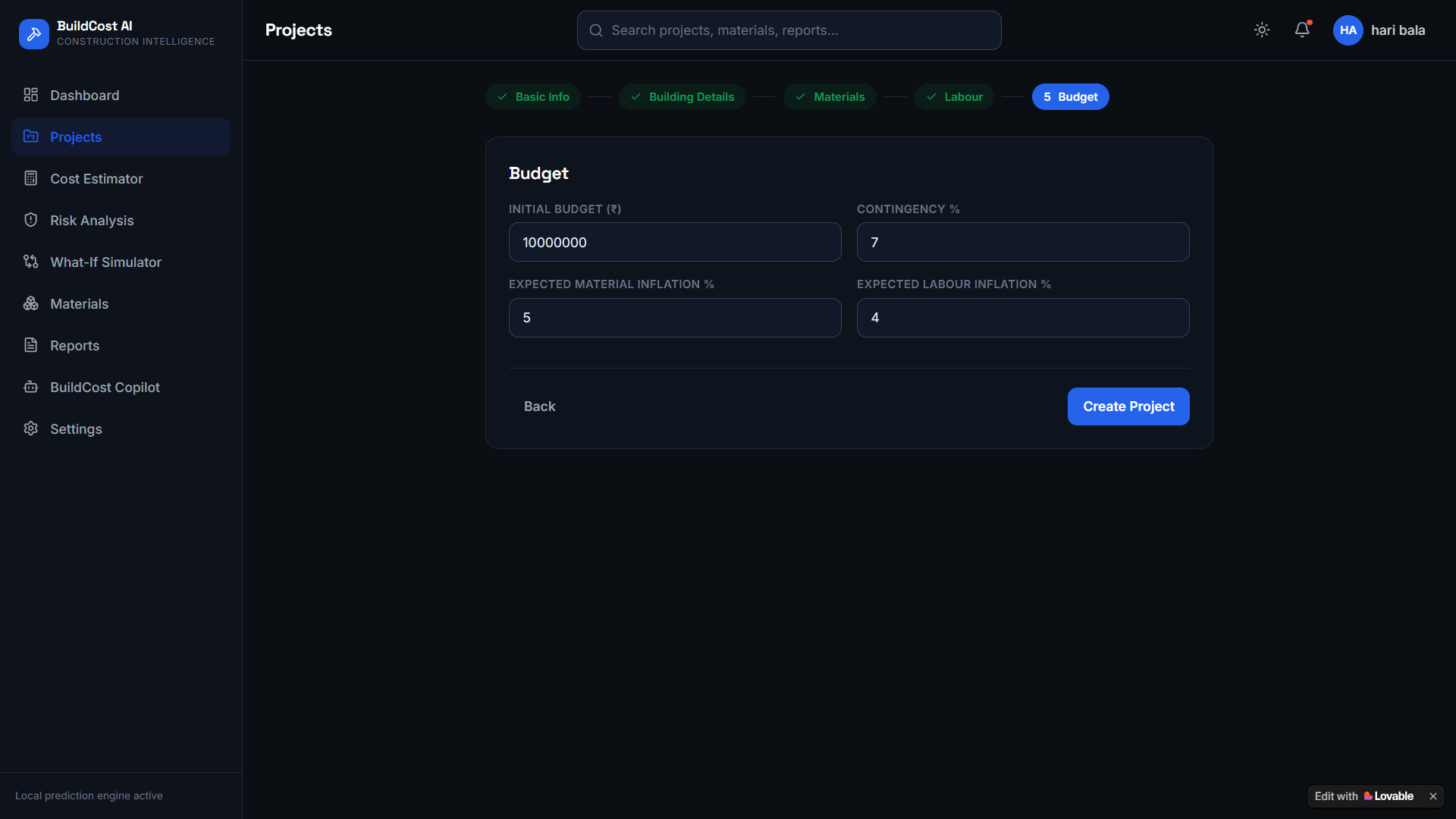
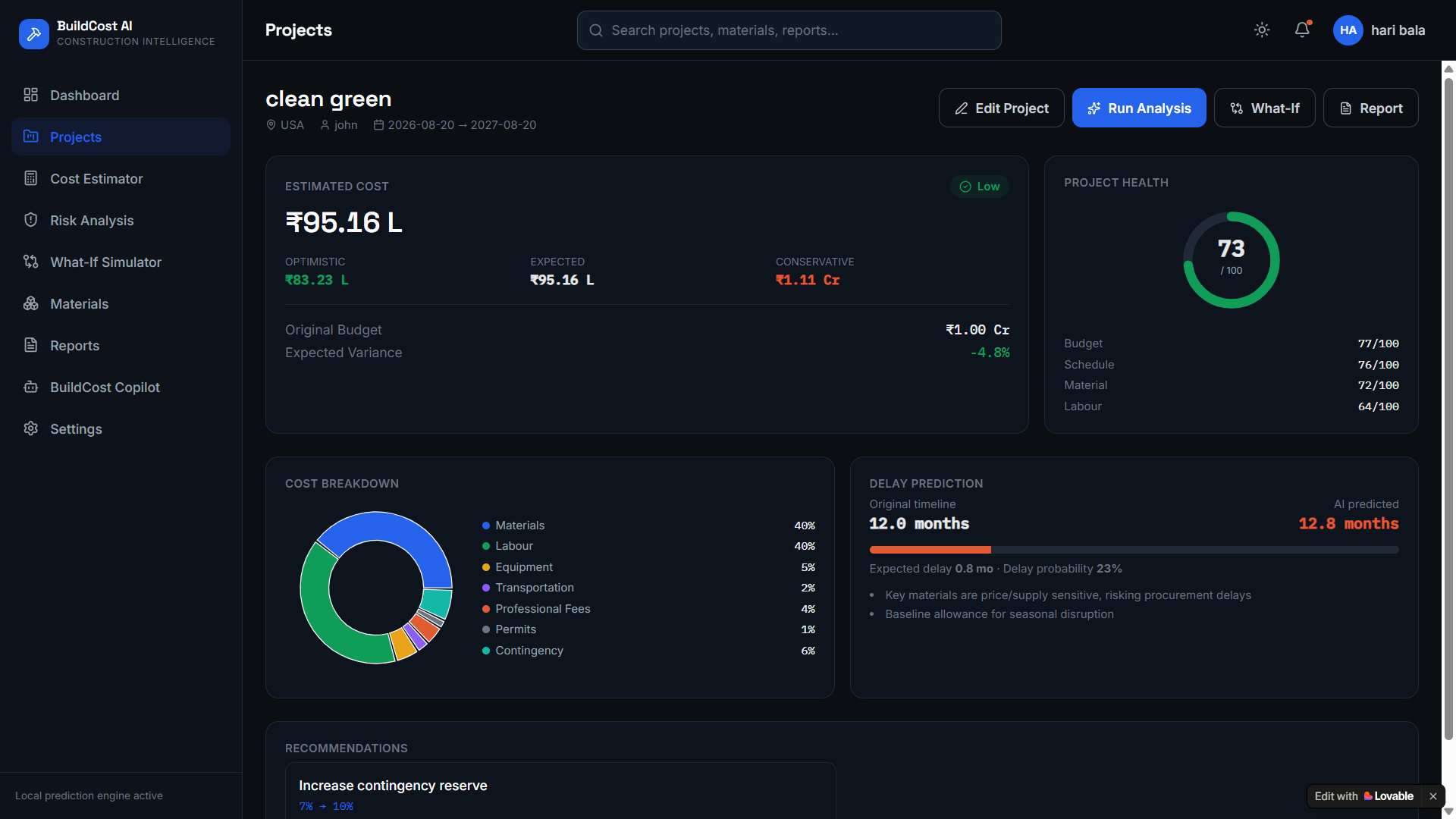
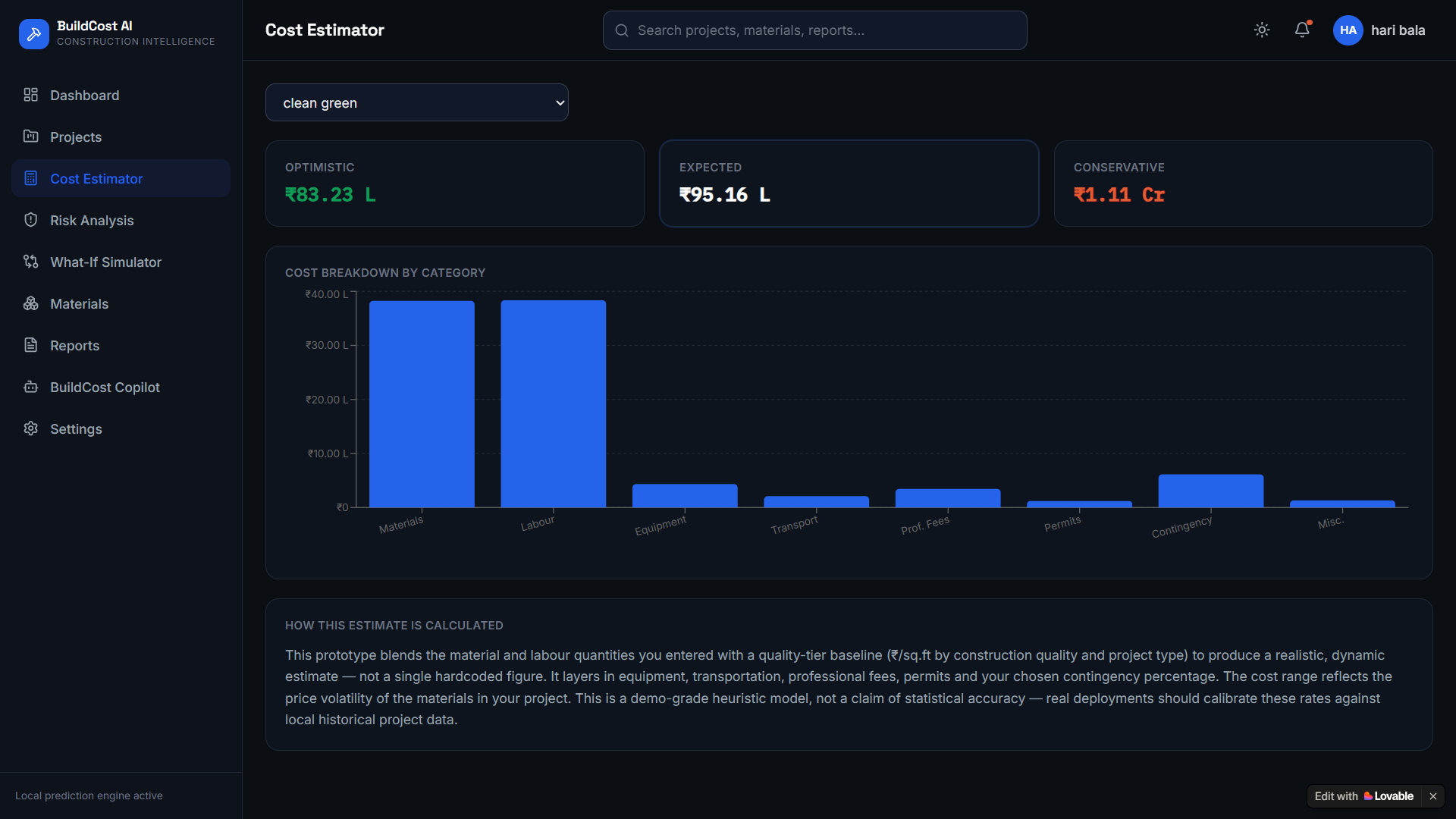
BuildCost AI is an AI-powered construction cost and risk prediction platform. Users can create a construction project, enter details such as area, materials, labour, budget, and timeline, and receive:
- Estimated construction cost
- Optimistic, expected, and conservative cost ranges
- Budget overrun prediction
- Project delay prediction
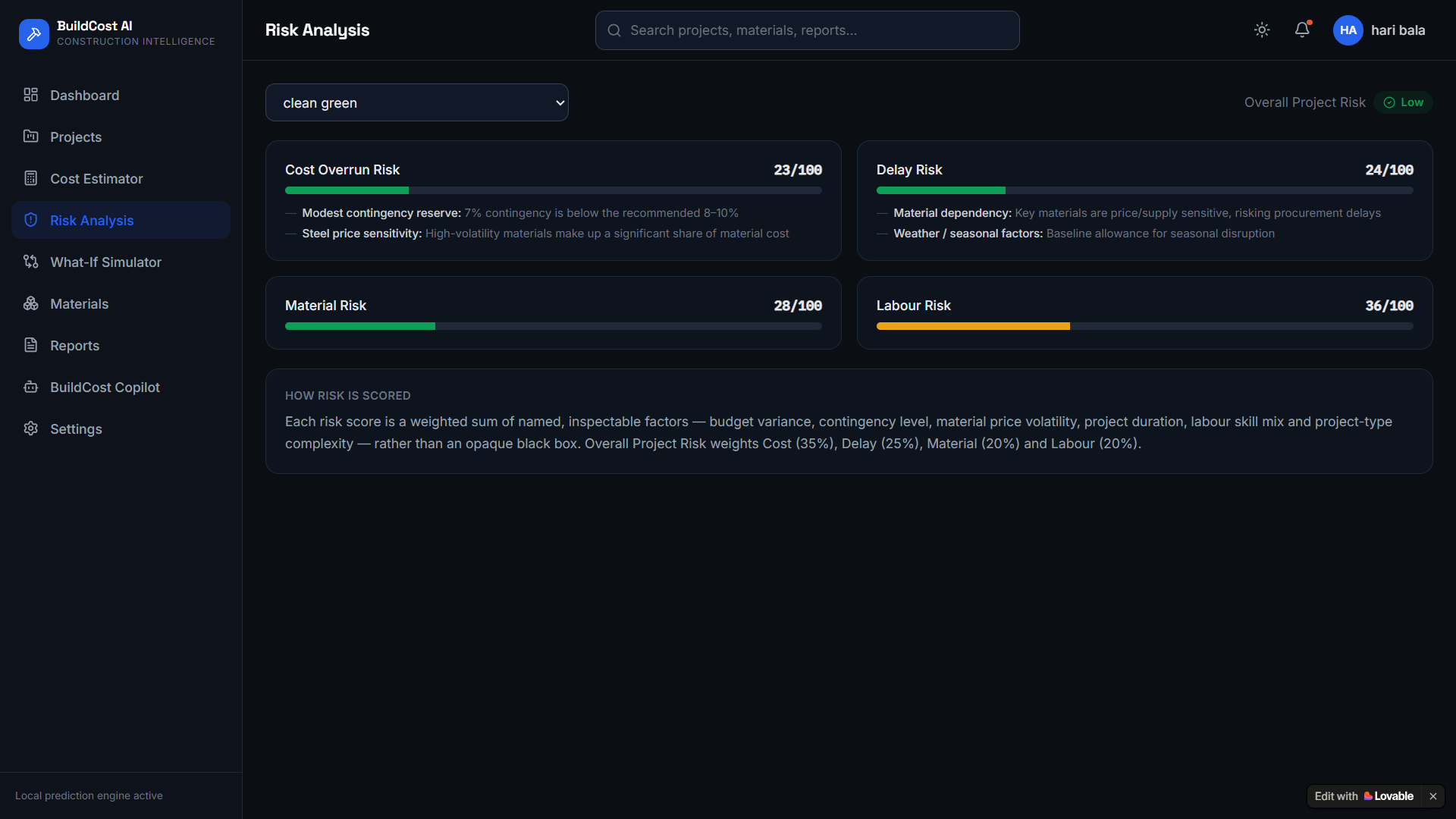
- Material and labour risk analysis
- Overall project health score
- AI-generated recommendations
- What-if scenario simulations
- AI construction assistant
- Project reports
The What-If Simulator allows users to test scenarios such as increasing steel prices or labour costs and immediately see how those changes affect the total project cost and risk.
How we built it
We designed BuildCost AI as a modern full-stack AI/PropTech platform with a responsive dashboard. The system combines construction cost calculations, risk-scoring logic, project data analysis, interactive charts, scenario simulation, and an AI-style construction assistant.
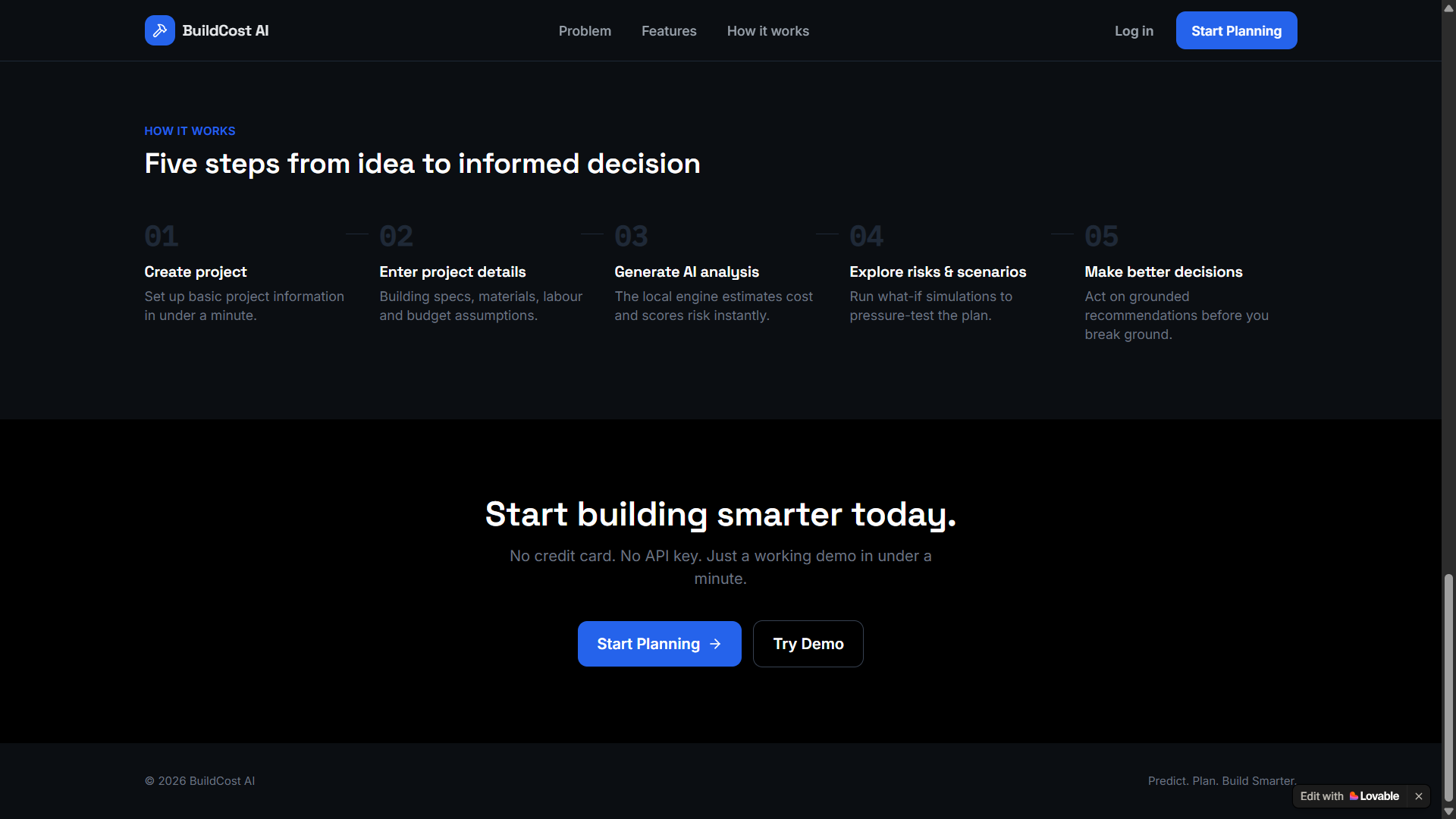
The platform is designed to work with project data and provide actionable insights through a simple workflow:
Project Data → Cost Analysis → Risk Prediction → What-If Simulation → Recommendations
Challenges we ran into
One of the biggest challenges was making construction cost prediction useful without relying entirely on external AI APIs. We needed the system to produce meaningful results from project inputs while keeping the calculations transparent.
Other challenges included:
- Designing realistic construction cost calculations
- Creating meaningful risk scores
- Predicting project delays from multiple factors
- Building a useful What-If simulation
- Presenting complex data in an easy-to-understand dashboard
- Making the platform responsive and demo-ready
Accomplishments that we're proud of
We are proud of creating a complete construction decision-support concept rather than just a basic cost calculator.
Our key accomplishments include:
- AI-powered construction cost estimation
- Dynamic budget and cost-overrun analysis
- Delay and project-risk prediction
- Interactive What-If Simulator
- Material intelligence
- Project Health Score
- AI Construction Assistant
- Interactive analytics dashboard
- Project-specific recommendations
- Demo-ready construction projects and reports
Most importantly, BuildCost AI turns complex construction information into simple, actionable decisions.
What we learned
We learned that building an AI product is not only about adding an AI model. The real value comes from combining data, prediction, visualization, user experience, and actionable recommendations.
We also learned how important it is to make AI predictions understandable. Instead of simply showing a risk score, BuildCost AI explains the factors contributing to that risk so users can make informed decisions.
What's next for BuildCost AI
Our next goal is to make BuildCost AI more accurate and useful for real construction teams.
Future improvements include:
- Integration with real-time material prices
- Real construction project datasets
- Advanced machine-learning forecasting
- Weather and location-based risk prediction
- BIM/CAD integration
- Automated construction schedule optimization
- Supplier comparison and procurement recommendations
- Real-time project monitoring
- Mobile application
- Integration with construction management platforms
- More advanced AI-powered project planning
Our long-term vision is to make BuildCost AI an intelligent construction co-pilot that helps teams plan better, control costs, reduce delays, and build smarter.
Built With
- automation
- fastapi
- postgresql
- proptech
- python
- react
- saas
- typescipt


Log in or sign up for Devpost to join the conversation.