Inspiration
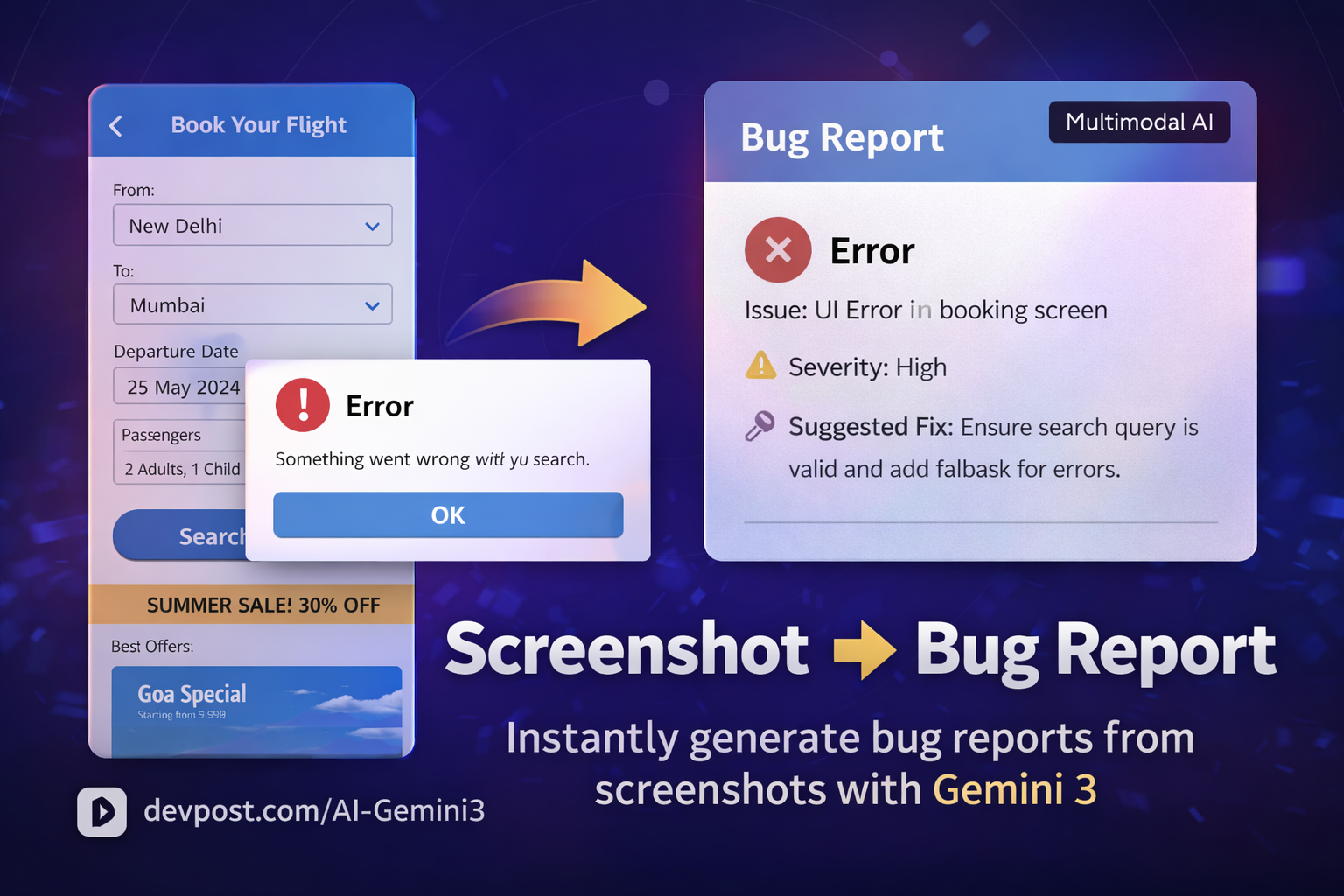
Bug reports are often vague, incomplete, and frustrating. A screenshot with “this looks broken” forces developers to reverse-engineer intent, severity, and reproduction steps. I wanted to eliminate this ambiguity by letting AI act like a human QA engineer—someone who understands interfaces, not just pixels.
What I Built
BugSnap AI transforms a single UI screenshot into a detailed, structured bug report using Gemini 3 Flash. The system analyzes visual layouts, recognizes UI components, detects UX and accessibility issues, and produces actionable outputs like severity, steps to reproduce, expected vs. actual behavior, and suggested fixes.
How It Works
The app sends raw image bytes to Gemini 3 Flash and relies entirely on multimodal vision reasoning—no DOM, HTML, or source code required. A strict JSON response schema ensures consistent, machine-readable output that can be pasted directly into Jira or GitHub issues.
Challenges & Learnings
The biggest challenge was designing prompts and schemas that balance flexibility with reliability. I learned how powerful Gemini’s visual reasoning is when paired with controlled structured outputs, and how AI can meaningfully augment real-world QA workflows rather than just generate text.
Impact
BugSnap AI reduces a 10-minute manual bug reporting process to just a few seconds, making QA faster, clearer, and accessible to both technical and non-technical users.
Built With
- googlegemini3flash
- javascript
- react


Log in or sign up for Devpost to join the conversation.