-
-
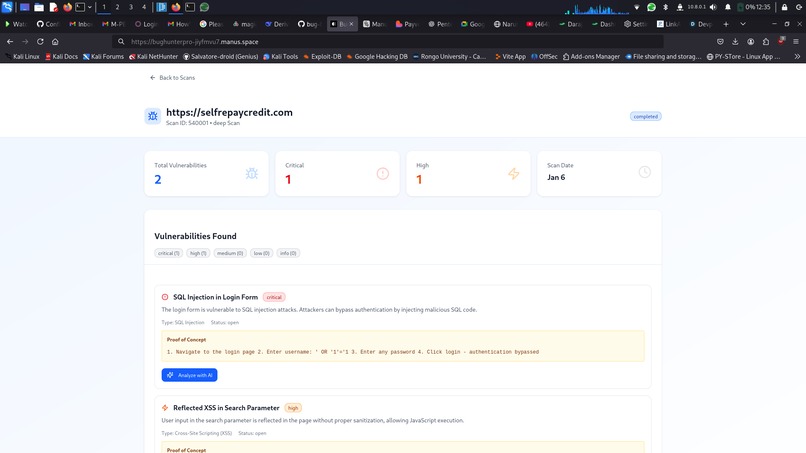
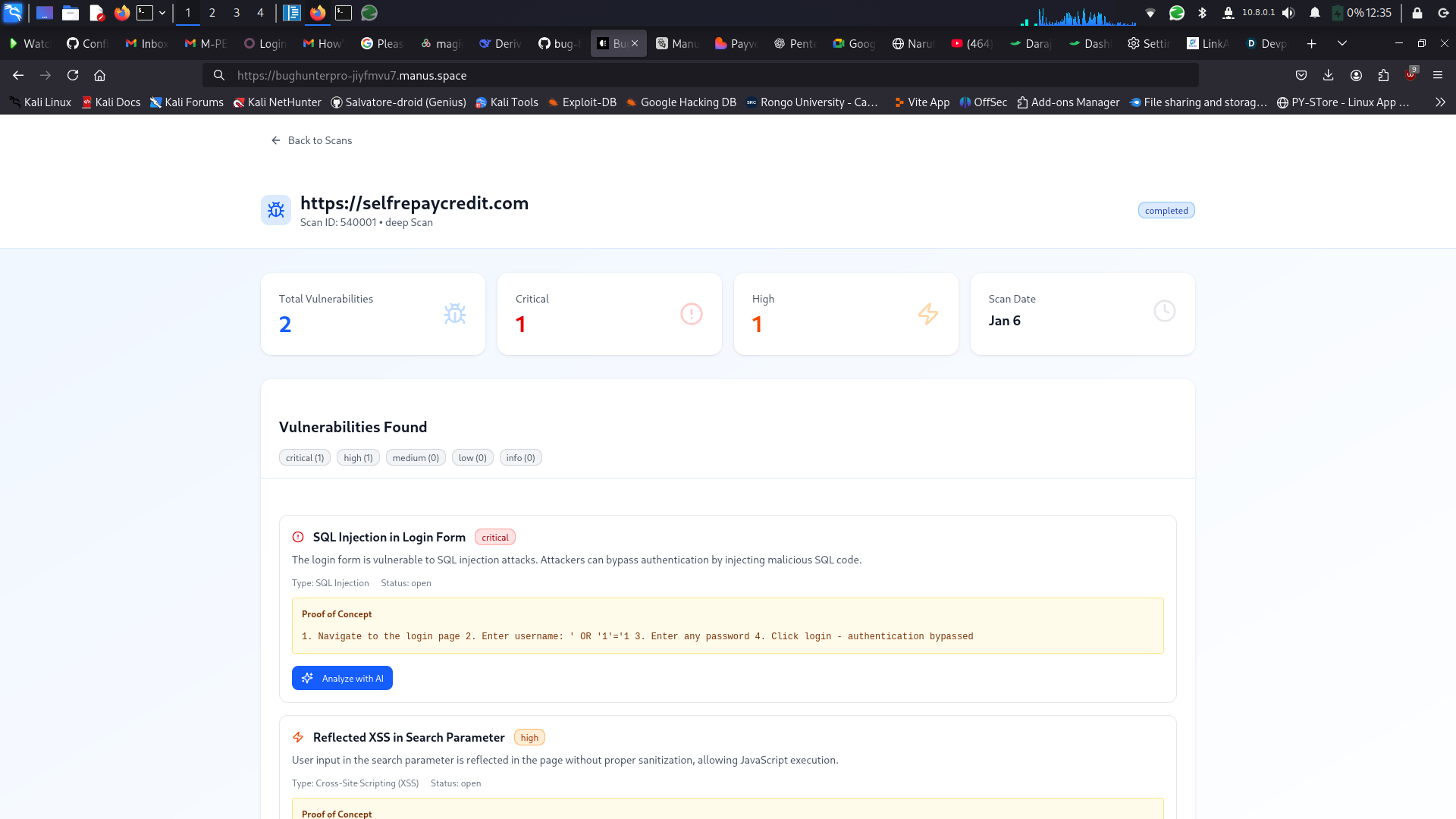
the identified vulnerabilities
-
-
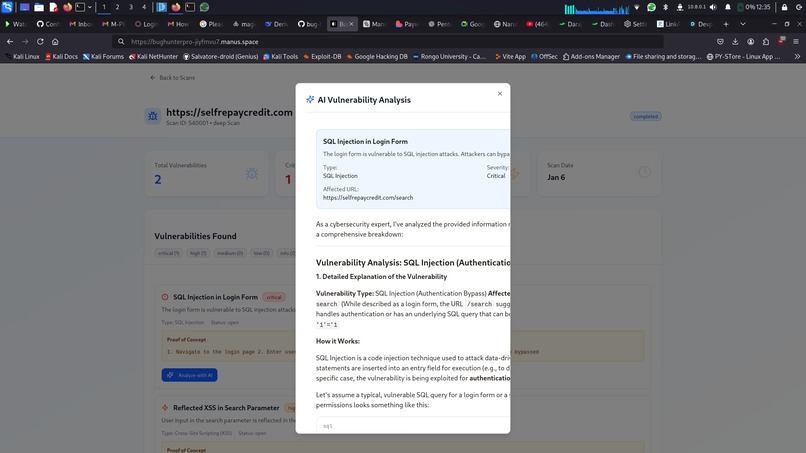
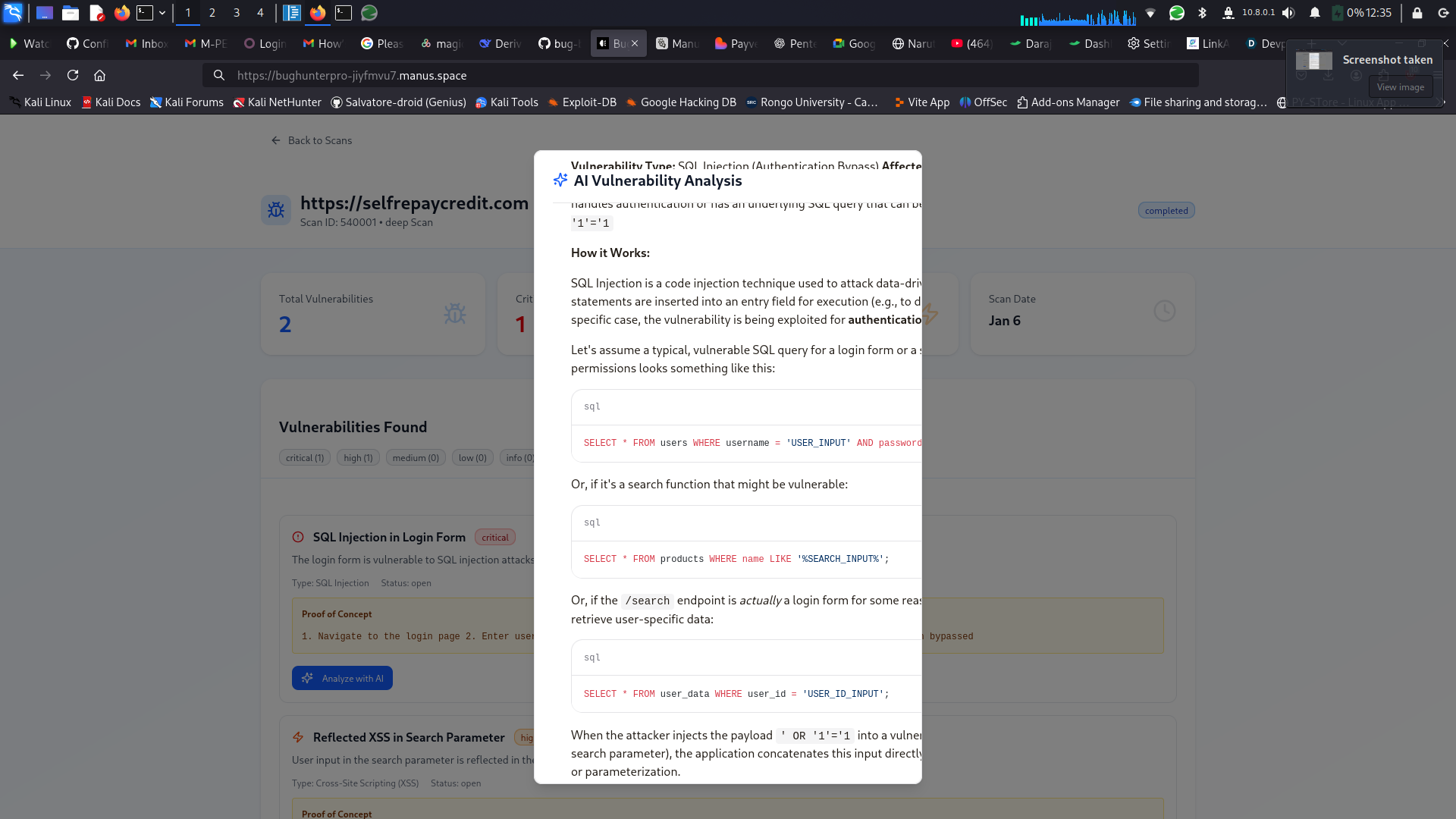
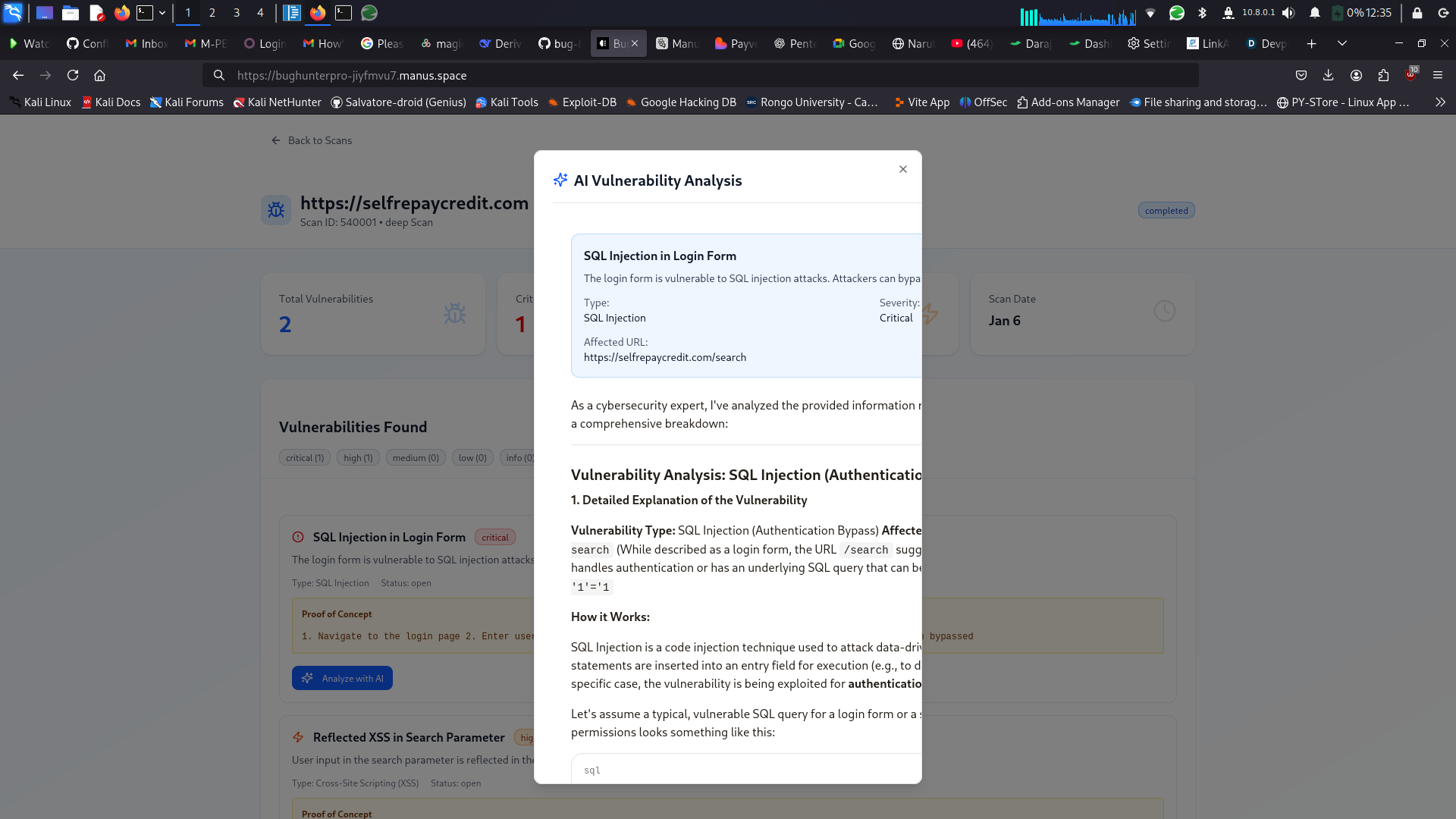
basic explanation on the vulnerability
-
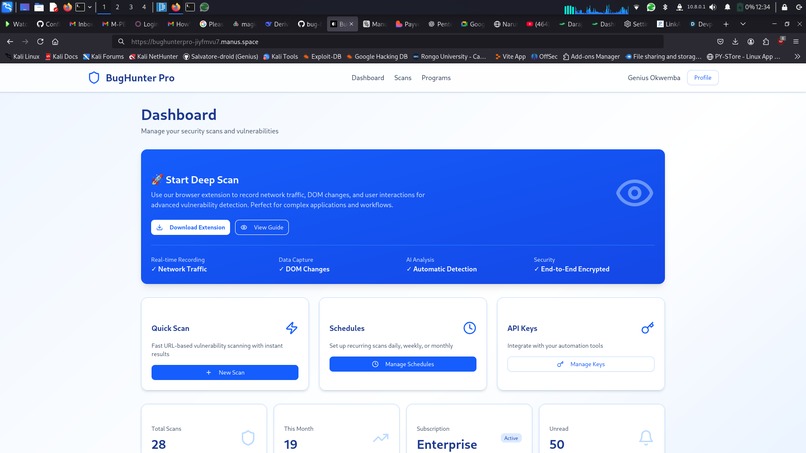
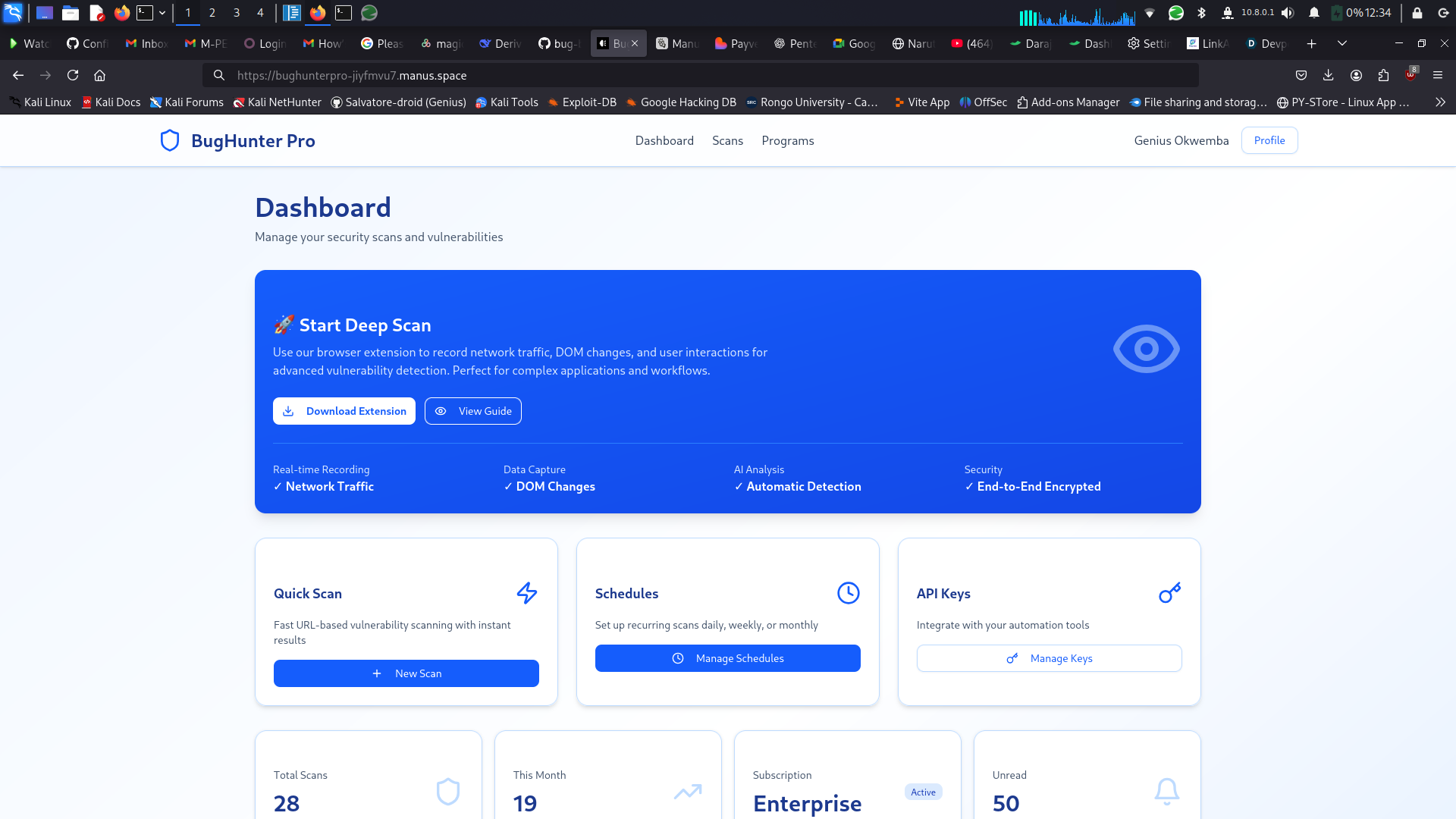
the dashboard page for the logged in user
-
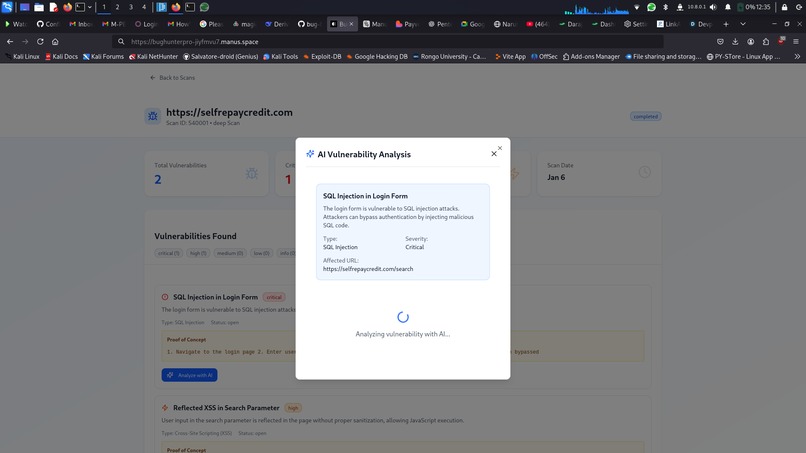
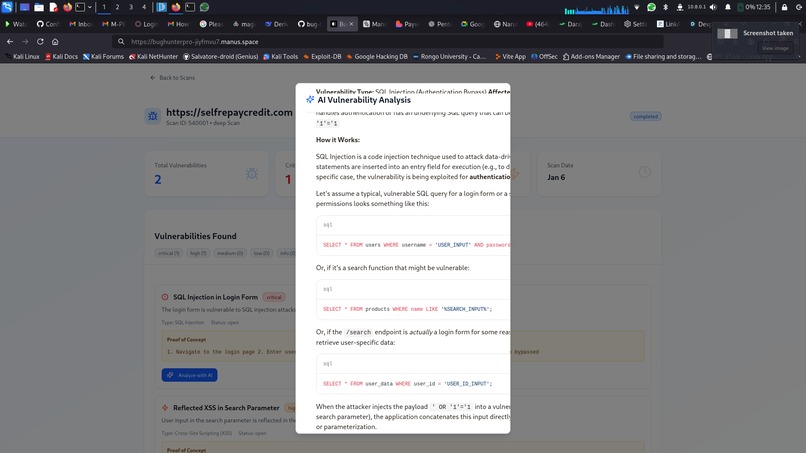
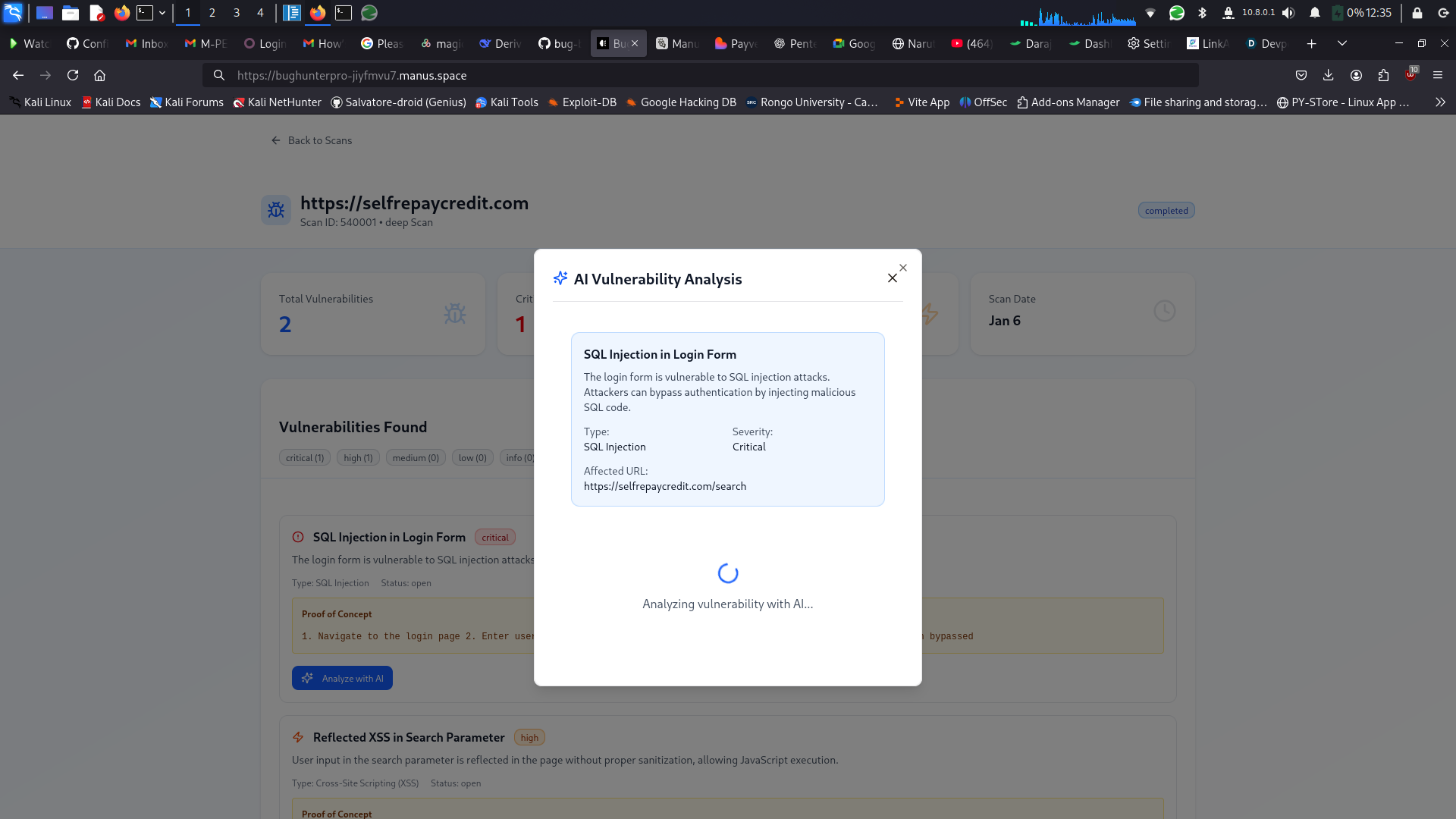
Integrated AI analysis on identified vulnerabilities
-
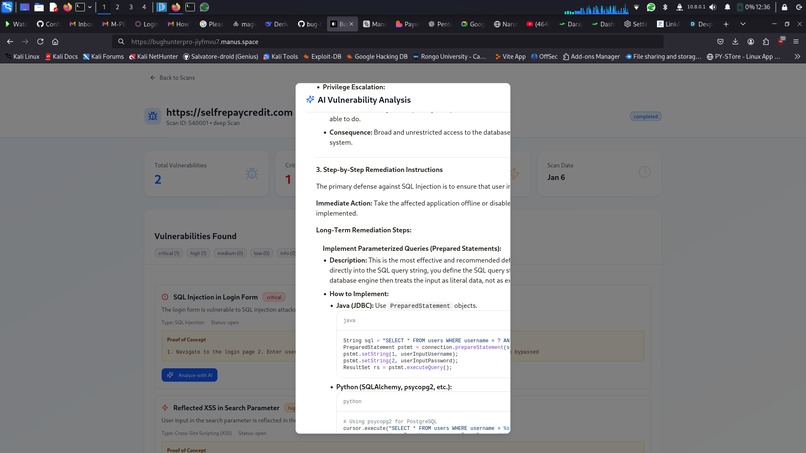
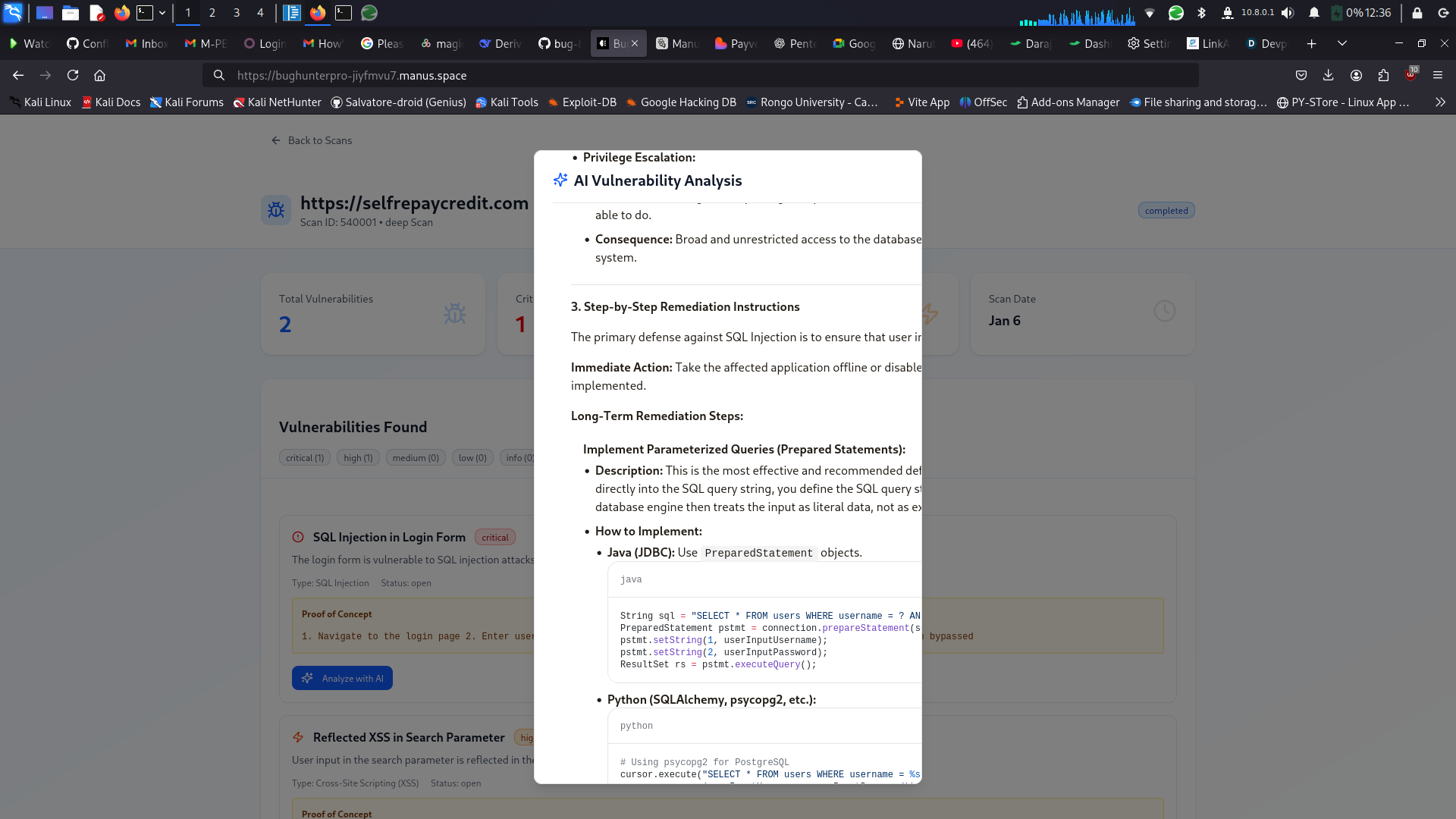
remdiation concerning the vulnerability identified
Inspiration
Cyberattacks continue to cost companies billions, not because security solutions are unavailable, but because pentesting is often slow, manual, and skipped under tight development timelines. Many systems go live with critical vulnerabilities simply because comprehensive testing takes too long. Bughunterpro was inspired by the need to make pentesting fast, automated, and unavoidable in modern software development.
What it does
Bughunterpro automatically scans applications and systems for security vulnerabilities in seconds. It simulates real-world attack vectors, identifies misconfigurations, and highlights critical weaknesses before systems are deployed. This allows teams to detect and fix security issues early, reducing breach risks and post-launch damage.
How we built it
We built Bughunterpro using automated security scanning techniques combined with intelligent attack simulation. The platform orchestrates multiple testing modules to analyze endpoints, configurations, and exposed services, delivering clear, actionable results through a streamlined interface designed for developers and security teams.
Challenges we ran into
One major challenge was balancing speed and accuracy—ensuring scans run quickly without generating false positives. Another challenge was designing the system to be flexible enough to adapt to different application environments while remaining simple to use for non-security experts.
Accomplishments that we're proud of
We successfully created a system capable of performing meaningful pentesting in seconds. Bughunterpro lowers the barrier to security testing and makes continuous pentesting practical even for small teams and startups. Achieving automation without sacrificing reliability was a major milestone.
What we learned
We learned that automation is most powerful when it integrates seamlessly into existing development workflows. We also discovered that developers are more likely to prioritize security when feedback is immediate, clear, and actionable.
What's next for Bughunterpro
Next, we plan to expand test coverage, improve vulnerability prioritization, and integrate AI-driven analysis for smarter attack detection. We also aim to add CI/CD pipeline integrations, enabling continuous pentesting at every stage of development.


Log in or sign up for Devpost to join the conversation.