🌱 Inspiration
As freshmen at NJIT, we noticed the same problem over and over: students build apps and websites for classes, clubs and side projects, but nobody ever tests them. Friends say "looks cool!" and move on. Real, honest feedback is hard to get, and without it, projects stay stuck as rough drafts.
We wanted a place where student developers help each other grow. The GirlHacks theme, Enchanted Grove, fit perfectly: every project starts as a tiny seed, and with care (feedback!) from the community, it grows into something that blooms.
🐛 What it does
Bug & Bloom is a peer user-testing platform for student developers.
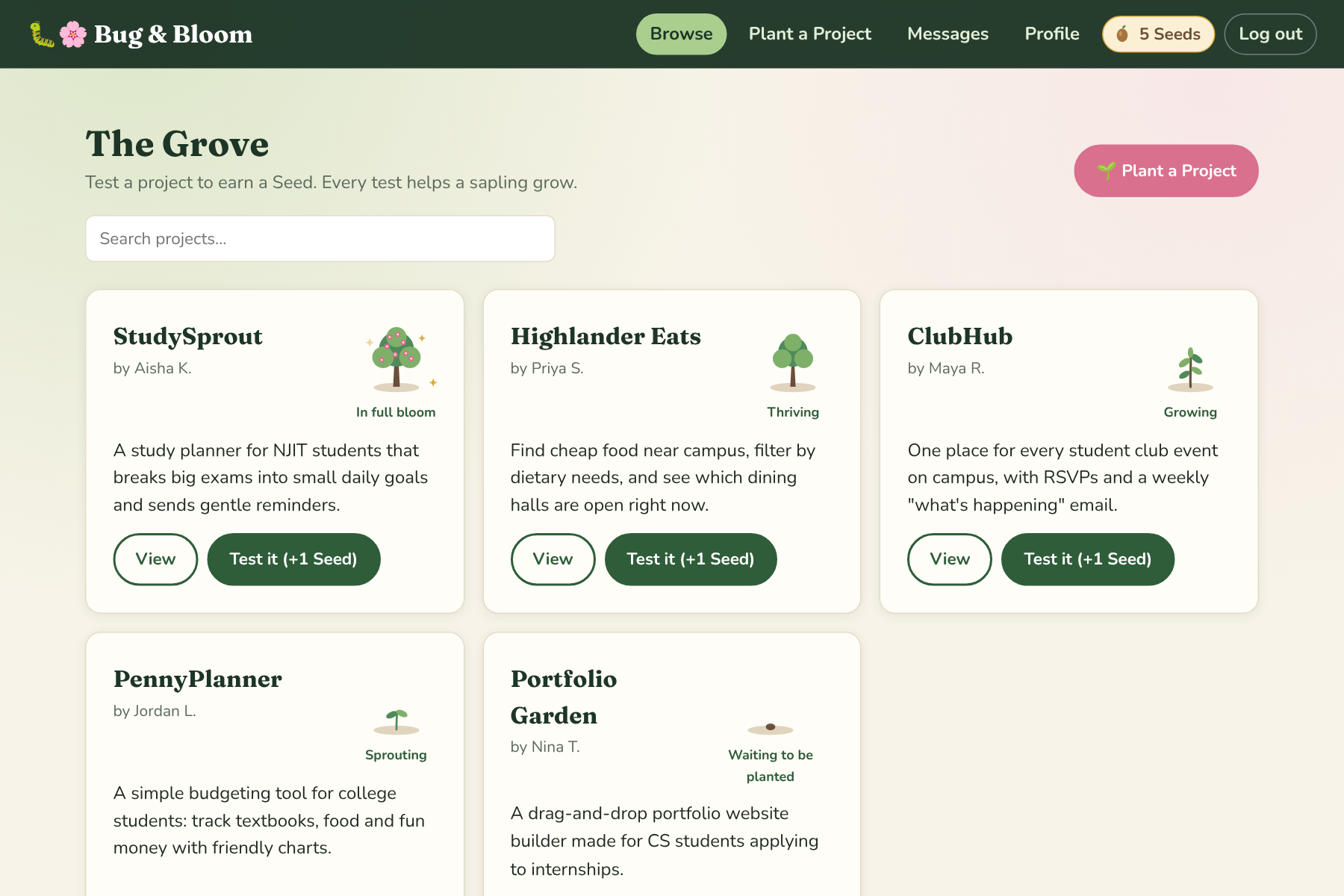
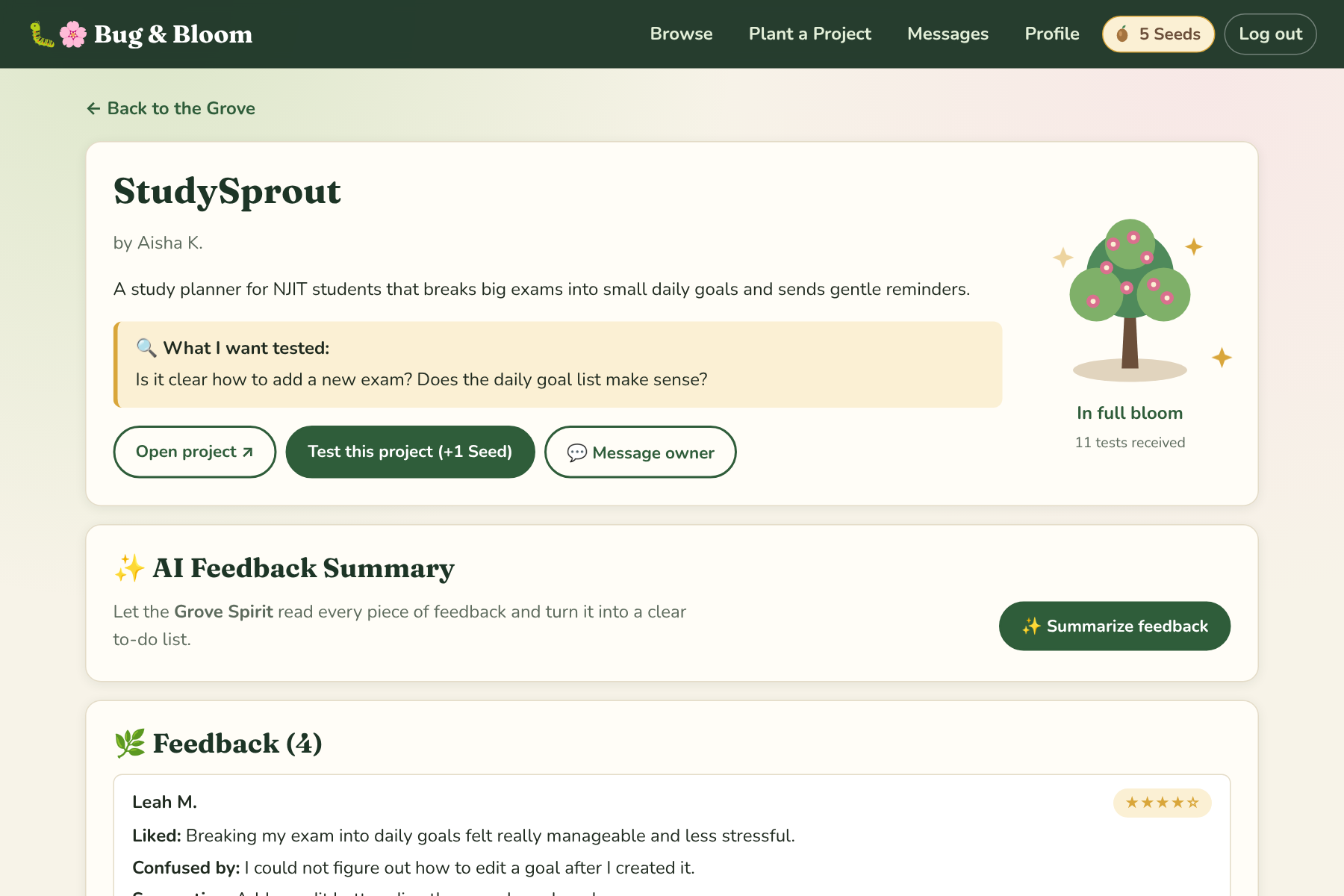
- Plant a project: post your unfinished app or website and say what you want tested.
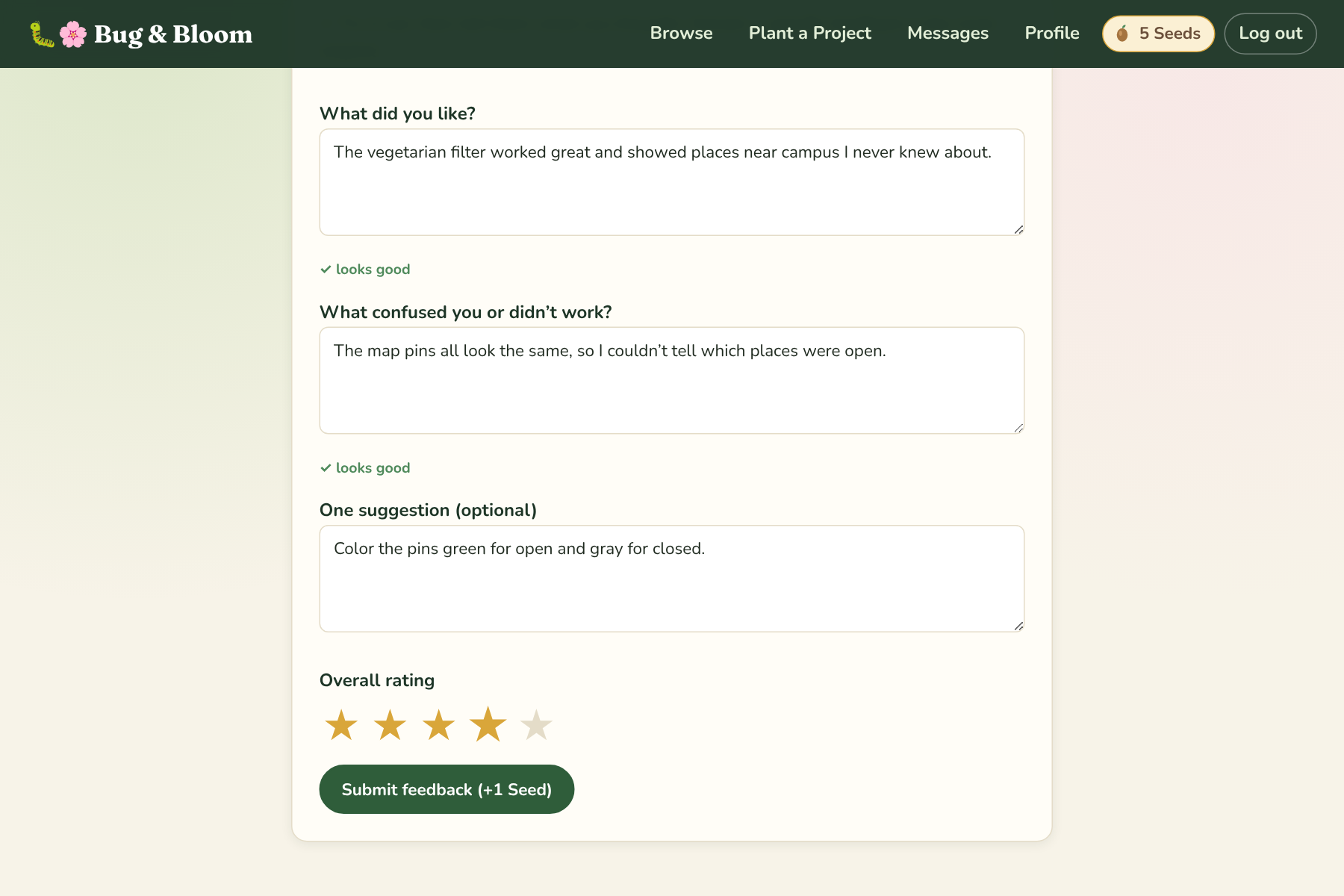
- Test someone else's project: fill out a short feedback form (what you liked, what confused you, one suggestion, and a rating) to earn a Seed.
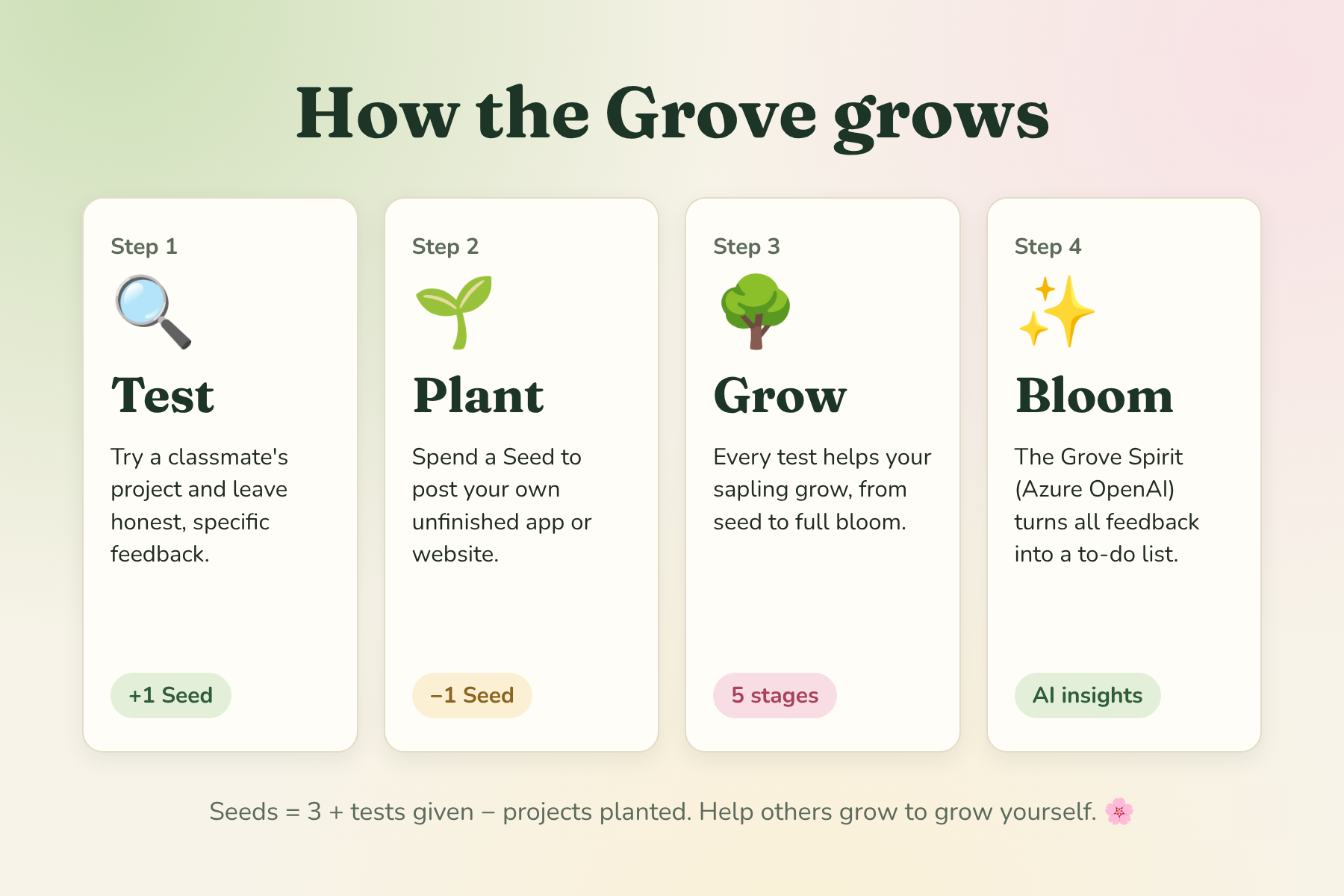
- Spend Seeds to plant your own projects so others will test them.
- Watch it grow: each project has a sapling that grows through five stages, from seed 🌰 to sprout 🌱 to sapling 🌿 to tree 🌳 to full bloom 🌸, as it receives feedback.
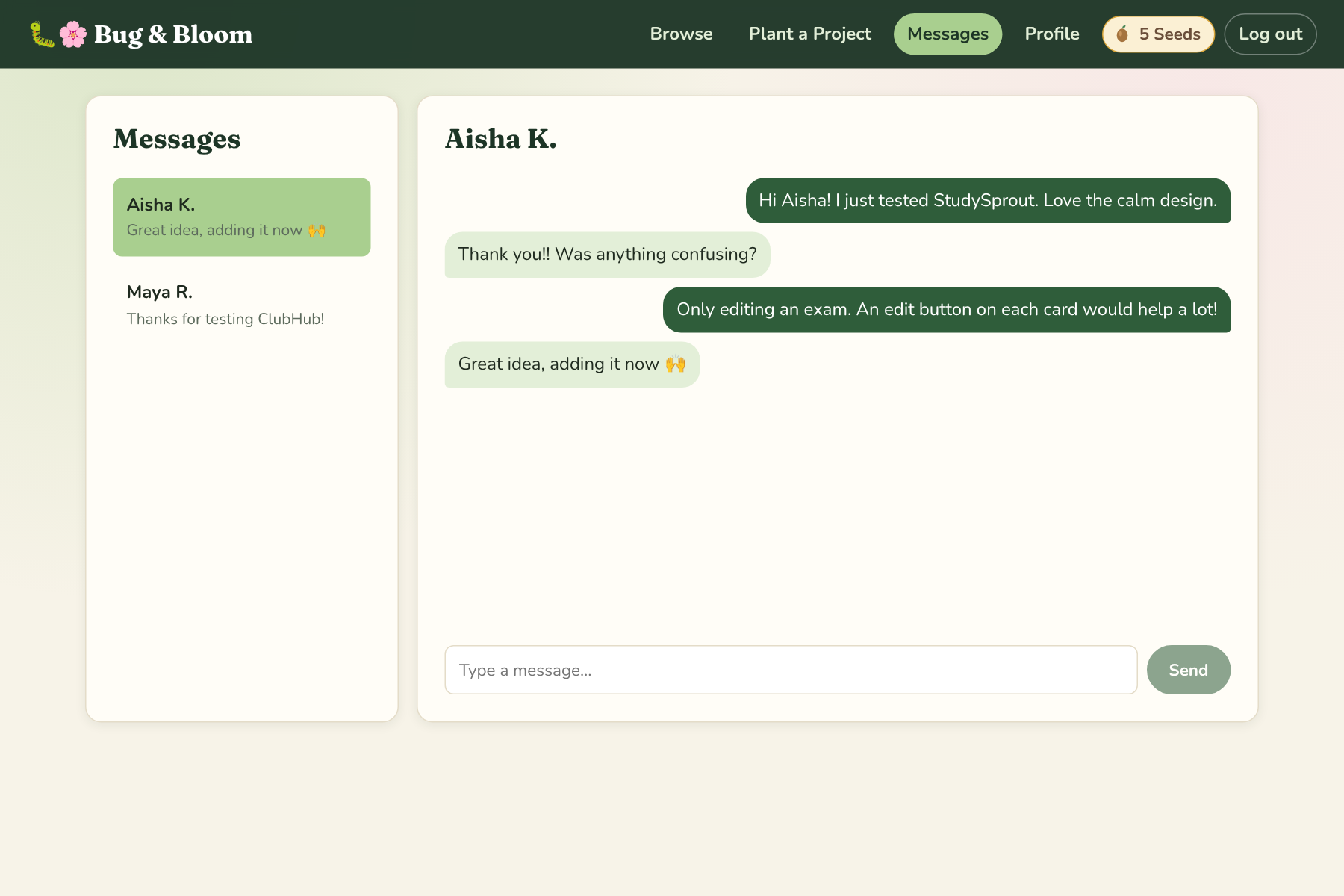
- Comments and DMs let testers and builders talk publicly or privately.
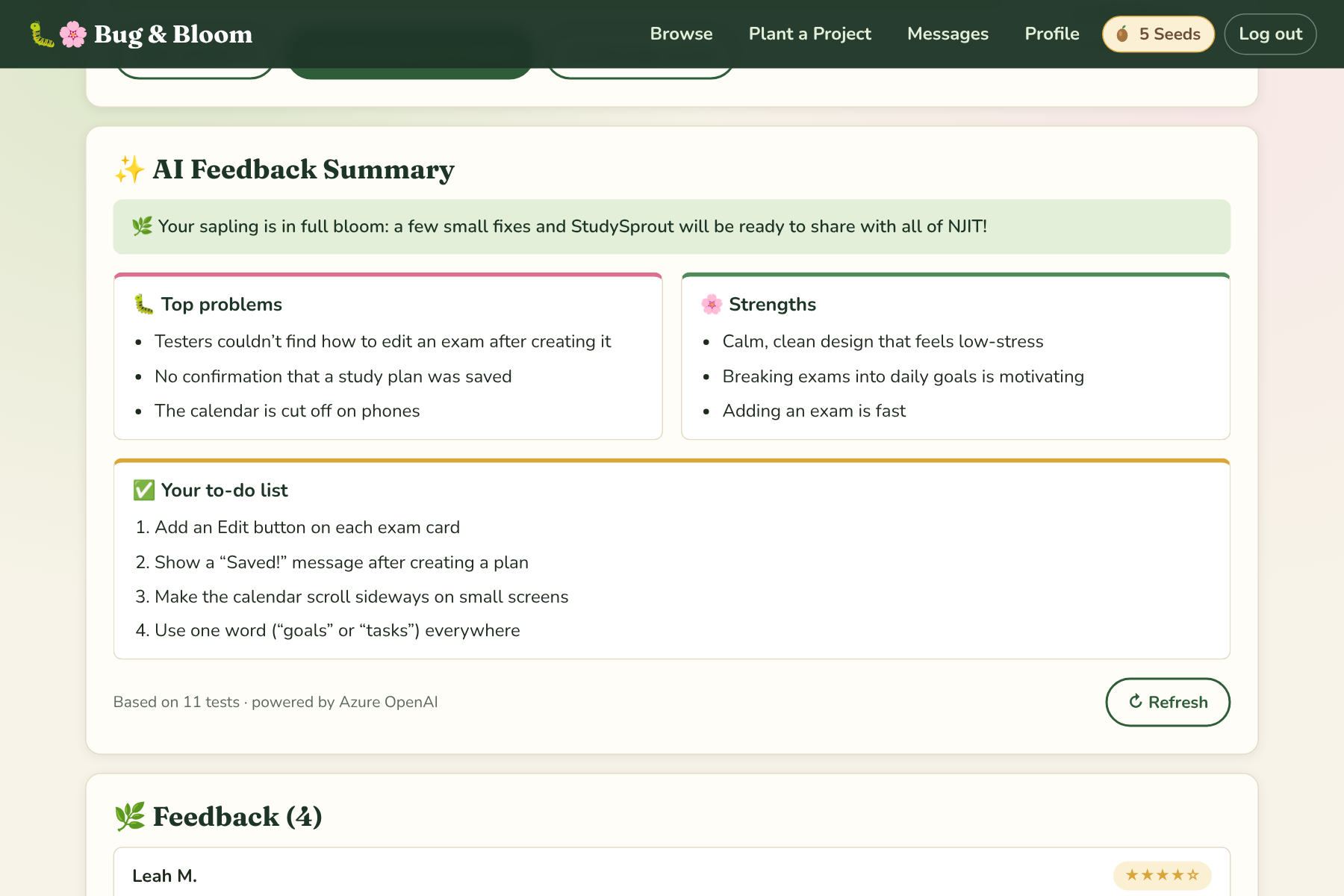
- ✨ AI Feedback Summary: one click and the "Grove Spirit" (Azure OpenAI) reads every piece of feedback and turns it into the top problems, strengths, and a prioritized to-do list.
The Seed economy
The Seed system makes sure people give feedback, not just ask for it. Every user starts with 3 Seeds, and for a user who has run tests and planted projects:
$$\text{Seeds} = 3 + t - p \geq 0$$
You can't plant a project with 0 Seeds, so the only way to keep growing is to help someone else grow first. To stop people from farming Seeds with junk feedback, answers need at least 30 characters, you can't test your own project, and you can only test each project once.
🛠️ How we built it
- Frontend: React + Vite with React Router. We used Lovable for early design ideas, and every page is styled with our own "Enchanted Grove" theme (forest greens, blossom pinks, and hand-drawn SVG saplings).
- Backend & data: Firebase Authentication for sign-up/login and Cloud Firestore for users, projects, feedback, comments and DMs. Comments and chat update live. Seed spending uses Firestore transactions and batched writes, so a Seed is never spent without the project being created (and vice versa).
- AI: an Azure Function calls Azure OpenAI (gpt-4.1-mini) through Microsoft Foundry. It sends the project's feedback with a custom "Grove Spirit" prompt and gets back structured JSON (problems, strengths, to-do list) that we render on the project page. The API key stays on the server, never in the browser.
- Teamwork: 4 teammates working from different locations, each owning their own folders and Git branches (pages, data, AI, theme) and merging through pull requests on GitHub.
🧗 Challenges we ran into
- Azure region restrictions: our Azure for Students subscription only allowed five regions, and our first deployment kept failing with
RequestDisallowedByAzure. We tracked down the policy, found the allowed regions, and redeployed in North Central US. - Newer AI models, newer APIs: the model we deployed needed Azure's newer v1 API, so we updated our code to work with any current model deployment.
- Git as beginners: cloning, authentication tokens, branches and pull requests were all new to us. We set up a "one person per folder" rule so four people could work at once without merge conflicts.
- Working remotely: with teammates in different places, we wrote clear role briefs and shared function contracts (like
submitTest()andcreateProject()) so the frontend could be built before the database was ready.
🏆 Accomplishments that we're proud of
- This was our first hackathon as freshmen, and we shipped a full-stack app with login, live chat, a points economy and AI in 24 hours.
- The sapling growth animation makes feedback feel rewarding instead of scary.
- The AI summary turns a pile of comments into something a student can act on right away.
📚 What we learned
- How to build a real app with React, Firebase and Azure, and how they connect.
- How to use GitHub branches and pull requests to collaborate without overwriting each other's work.
- How to design incentives: a simple rule like "test one to plant one" changes how people behave on a platform.
- How to debug cloud errors by reading them closely instead of guessing.
🌸 What's next for Bug & Bloom
- The Grove: a startup level where the strongest projects attract collaborators and grow into real student startups.
- Helpful-feedback ratings: builders mark feedback as helpful, and great testers earn bonus Seeds.
- Voice summaries with ElevenLabs, so the Grove Spirit can read your to-do list aloud.
- Opening it up to every student developer at NJIT and beyond.

Log in or sign up for Devpost to join the conversation.