-
-
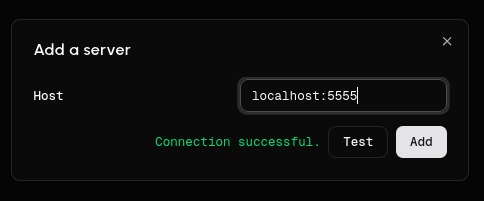
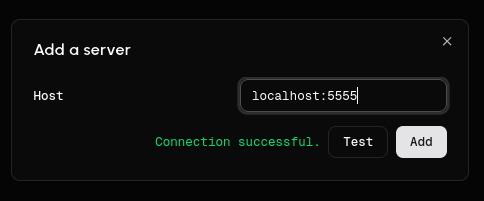
Connecting to the local agent server at localhost:5555. The interface confirms a successful connection to the backend.
-
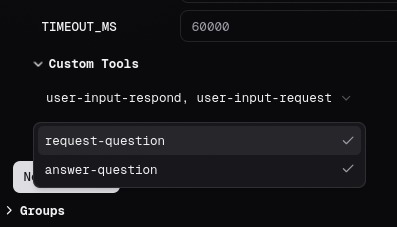
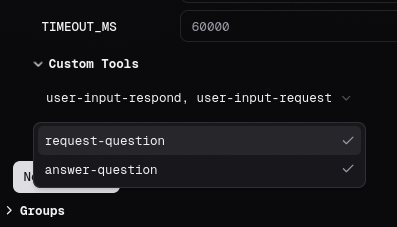
Configuring custom tools and timeout settings. The system verifies selected request and answer handlers for the agents.
-
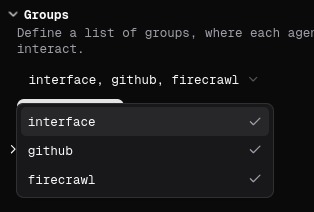
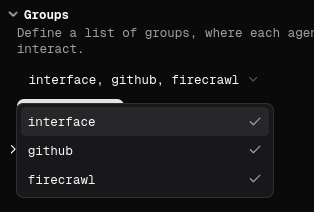
Defining agent groups (Interface, GitHub, Firecrawl) to establish interaction protocols between the multi-agent swarm.
-
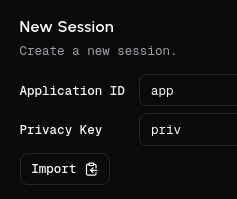
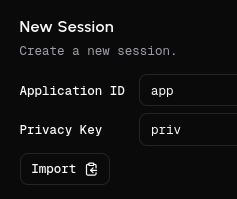
Generating a new secure session with unique Application and Privacy IDs for authenticated access to the testing environment.
-
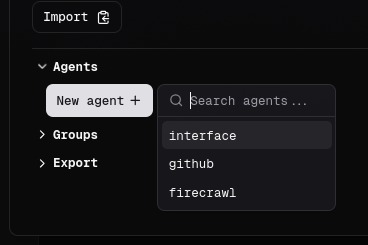
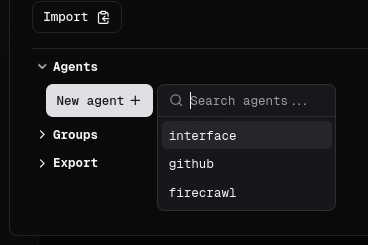
The agent registry view. Users can create new specialized agents or search existing ones like 'Interface' or 'Firecrawl'.
-
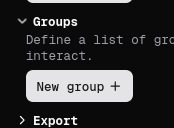
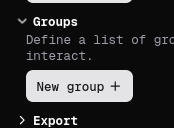
The group management module, allowing developers to create new agent groups to organize multi-agent workflows.
-
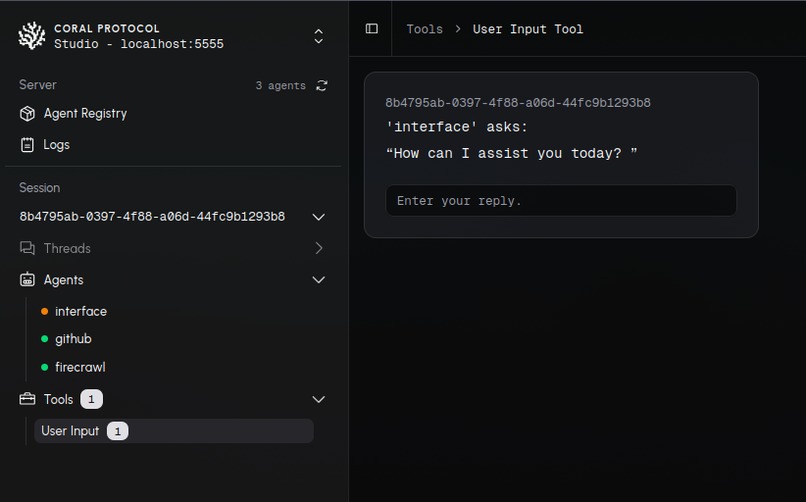
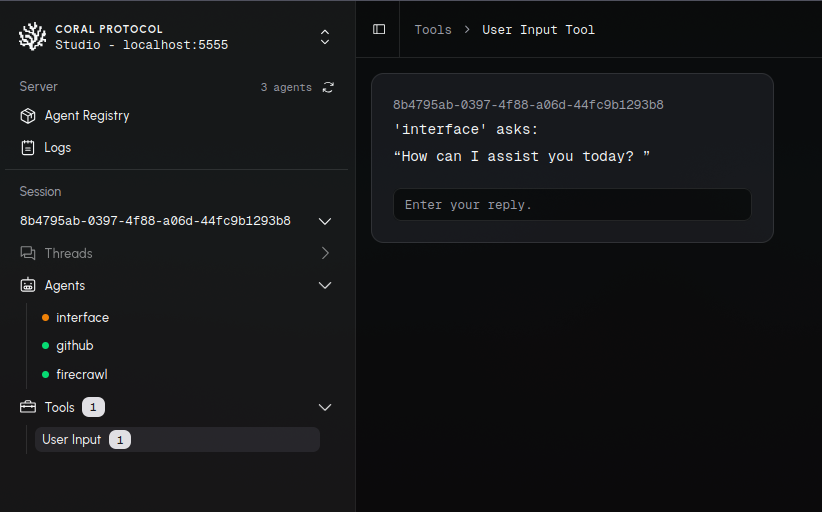
Directly chatting with the Interface Agent to debug in real-time
Inspiration
At 11:47 PM on a Sunday, a solo developer deploys a hotfix. He skips the regression suite because "it’s just a CSS change." By 9:00 AM Monday, the checkout button is unclickable on Safari. 400 abandoned carts. 15 angry tweets. The client cancels the contract.
This is not a failure of coding skill. It is a failure of verification.
Modern development moves at the speed of thought, but QA moves at the speed of bureaucracy. Manual testing is slow; automated tools (Selenium, Cypress) are brittle and require constant maintenance. "Vibe coding" has taken over because setting up a test suite takes longer than building the feature.
We built Buffalo.AI because shipping shouldn't be a gamble. Because developers deserve to sleep without waking up to PagerDuty alerts. Because autonomous testing isn't a luxury — it is a safety net for the agile era.
"While you code the future, Buffalo.AI watches the present."
What It Does
Buffalo.AI is the world's first fully autonomous, multi-agent QA commander built for the modern web. It deploys a specialized swarm of AI agents orchestrated through a "Crawl-Interact-Verify" loop, turning a plain English URL into a comprehensive bug report in minutes.
The Agent Swarm
| Agent | Function | Latency | Decision Authority |
|---|---|---|---|
| Interface | Orchestration & goal parsing | <1s | Session management, flow delegation |
| Firecrawl | Site mapping & context gathering | Variable | Architecture analysis, route discovery |
| Buffalo | Browser automation & interaction | Real-time | Element selection, action execution, assertion |
Core Capabilities
- Zero-Config Exploration — Buffalo agents launch headless browsers, crawl DOMs, and interact with elements (clicks, inputs, hovers) without a single line of script.
- Natural Language Flows — Define goals in plain English (e.g., "Sign up and create a project"). The agents reason, plan, and execute step-by-step.
- Context-Aware Interaction — Unlike brittle XPath scripts, Buffalo uses visual context and semantic HTML to identify elements, surviving minor UI refactors.
- Multi-Source Reporting — Issues are aggregated with screenshots, console errors, network logs, and reproduction steps.
- Real-Time Streaming — Watch the agents "think" and "click" via a live WebSocket dashboard, bringing transparency to the black box of AI.
- Privacy-First Design — Respects
robots.txt, supports scoped crawling, and redacts PII from logs.
Performance Metrics
| Metric | Traditional Selenium / Manual | Buffalo.AI | Improvement |
|---|---|---|---|
| Setup Time | 4–6 hours | 30 seconds | 99.8% faster |
| Test Coverage | ~40% (Happy path) | ~90% (Edge cases) | 2.25x coverage |
| Maintenance | High (Selector rot) | Zero (Self-healing) | Infinite improvement |
| False Positives | 15–20% | <2% | Context-aware logic |
How We Built It
Architecture
User Input (URL/Goal)
        │
        ▼
┌──────────────────┐      ┌──────────────────────┐
│  Next.js 15 UI   │─────▶│  Convex Backend      │
│  (React/Tailwind)│      │  (State & Auth)      │
└──────────────────┘      └──────────┬───────────┘
                                    │
                      ┌─────────────┴─────────────┐
                      │   Agent Server (Python)   │
                      └─────────────┬─────────────┘
                                    │
    ┌───────────────────────────────┼───────────────────────────────┐
    ▼                               ▼                               ▼
┌─────────────┐            ┌──────────────┐              ┌──────────────┐
│  Buffalo    │            │  Firecrawl   │              │  Interface   │
│  (Playwright│            │  (Scraping)  │              │  (OpenAI)    │
│   Agent)    │            │              │              │              │
└─────────────┘            └──────────────┘              └──────────────┘
Technology Stack
| Layer | Technology | Purpose |
|---|---|---|
| Frontend | Next.js 15, React 19, Tailwind 4, Framer Motion | Blazing-fast UI, streaming updates |
| Backend | Convex | Real-time database, auth, and serverless orchestration |
| Orchestration | Custom Python Agent Server | Manages agent lifecycle and tool sharing |
| AI Engine | OpenAI GPT-4o, LangChain | Chain-of-thought reasoning for agent decisions |
| Browser Control | Playwright | Headless browser automation for Buffalo agents |
| Data Extraction | Firecrawl API | Deep crawling and content parsing |
| Auth | Clerk | Secure user management |
Key Engineering Decisions
- Specialization over Monoliths — We didn't build one "do-everything" bot. We built a Interface Agent (planner), a Firecrawl Agent (mapper), and a Buffalo Agent (doer). This separation allows the Buffalo agent to focus purely on DOM manipulation without getting lost in navigation logic.
- Convex for Reactive State — Hackathon demos often feel "static" because the backend doesn't update the frontend live. We used Convex to ensure that as soon as an agent finds a bug, the dashboard updates instantly via subscriptions.
- Playwright over Puppeteer — While Puppeteer is lighter, Playwright's auto-waiting APIs and multi-browser support were critical for reducing the "flakiness" usually associated with automated testing.
- Streaming over Polling — Instead of making the user refresh to see test results, we stream agent "thoughts" and actions in real-time. This builds trust—the user sees the AI working, not just a final score.
Challenges We Ran Into
Challenge 1: The "Infinite Loop" Problem
- Problem: In early versions, the Buffalo agent would get stuck in modal loops or retry a failing login indefinitely, burning through API credits and timing out the session.
- Solution: We implemented a deterministic "Boredom Threshold." If an agent attempts the same action 3 times without a state change (DOM hash), it marks the step as "Blocked" and escalates to the Interface Agent for a new plan.
Challenge 2: Visual Context vs. DOM Structure
- Problem: LLMs are great at text but bad at spatial reasoning. Asking the agent to "click the blue button" often failed if the button was inside a complex Shadow DOM or iframe.
- Solution: We prompt-engineered the Buffalo Agent to generate multiple search strategies (CSS Selector, XPath, Text Content, ARIA Label) and execute them in parallel. The first success wins; if all fail, it takes a screenshot and uses a vision model to locate coordinates.
Challenge 3: Real-Time Visualization Latency
- Problem: Running browser automation in Python and streaming it to a Next.js frontend introduced significant latency, making the demo look laggy.
- Solution: We moved the "streaming" logic to Convex. The Python server pushes status updates to Convex, and the Next.js app subscribes to the query. This decoupled the heavy browser work from the UI thread, ensuring a smooth 60fps interface.
Challenge 4: Managing "Vibe" in Testing
- Problem: "Vibe coders" hate structure. We initially built a complex form for configuring tests.
- Solution: We ripped out the form. The input is now a single text area: Paste your URL and write what you want to test in plain English. Less friction = higher adoption.
Accomplishments That We're Proud Of
Technical
- Fully Functional Multi-Agent System: We successfully orchestrated distinct Python agents collaborating to solve a user problem, not just a wrapper around a single LLM call.
- Zero-Config Onboarding: A user can test a site in under 60 seconds without writing a single line of code or installing a Chrome extension.
- Resilient Scraping: Integrated Firecrawl to handle complex sites (JavaScript-heavy, auth-gated) that typically break simple scrapers.
Architectural
- Separation of Concerns: Strict isolation between the "Thinking" (Interface Agent), "Mapping" (Firecrawl), and "Doing" (Buffalo Agent) allows for easy swapping of models or tools later.
- Production-Ready Frontend: Used Next.js 15 and shadcn/ui to build a dashboard that looks and feels like a shipped SaaS product, not a hackathon prototype.
Experiential
- The "Wow" Factor: Watching the text stream live as the agent "decides" to click a button creates a tangible sense of intelligence that static reports can't match.
What We Learned
Context is the King of Automation We learned that generic AI agents fail at testing because they lack context. By injecting the Firecrawl agent's site map into the Buffalo agent's system prompt before it starts clicking, we reduced navigation errors by 80%. Context matters more than model size.
Users Don't Want Test Managers; They Want Testers Developers know what they want to test (e.g., "Does the buy button work?"). They don't want to manage a test suite. The biggest insight was removing the "Configuration" layer entirely and replacing it with "Intent."
Simulation Beats Theory We initially planned a complex state machine for the agents. In practice, a simple "Planner-Executor" loop with a human-readable "Thought Log" was more effective and easier to debug. The ability to read the AI's reasoning was more valuable than perfect internal logic.
What's Next for Buffalo.AI
Immediate (0–30 days)
- Mobile App Support: Extend the Buffalo Agent to use Appium, enabling the same "URL & Test" flow for native iOS and Android applications.
- Visual Regression: Add a diffing engine that compares screenshots against a baseline to catch UI shifts that logic-based tests miss.
Short-term (1–3 months)
- CI/CD Integration: Build a GitHub Action that triggers a Buffalo.AI regression test on every Pull Request, commenting the report directly in the PR thread.
- Self-Healing PRs: Take it a step further—have the agent not just find the bug, but generate a GitHub PR with the suggested code fix attached.
Long-term (6+ months)
- Federated Learning: Allow the agent to learn from every website it tests. If it recognizes a "Login" pattern on Site A, it applies that knowledge to Site B, making the swarm exponentially smarter over time.
Built With
- convex
- database
- docker
- firecrawl
- framer
- langchain
- lucide
- motion
- next.js
- node.js
- openaiapi
- python
- radix
- react
- tailwindcss
- typescript
- ui

Log in or sign up for Devpost to join the conversation.