-
-
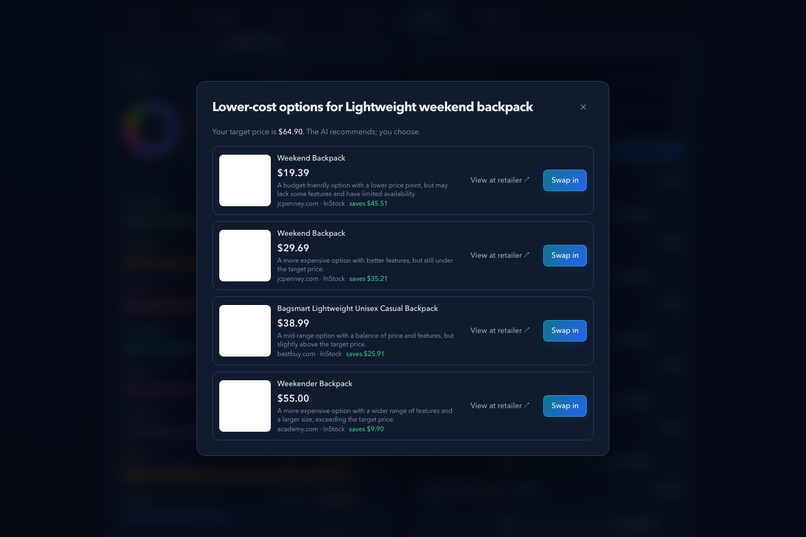
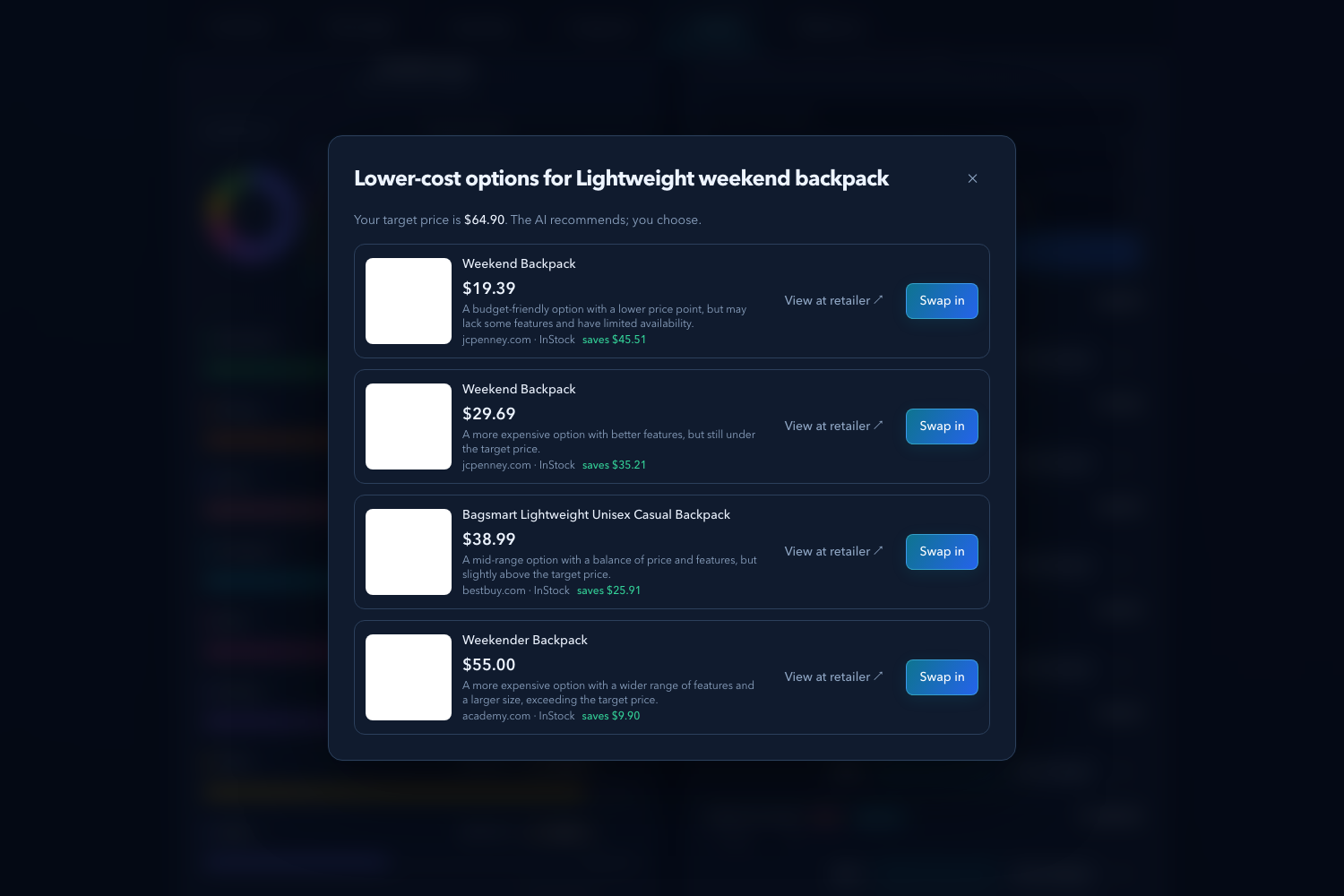
Cheaper Alternative
-
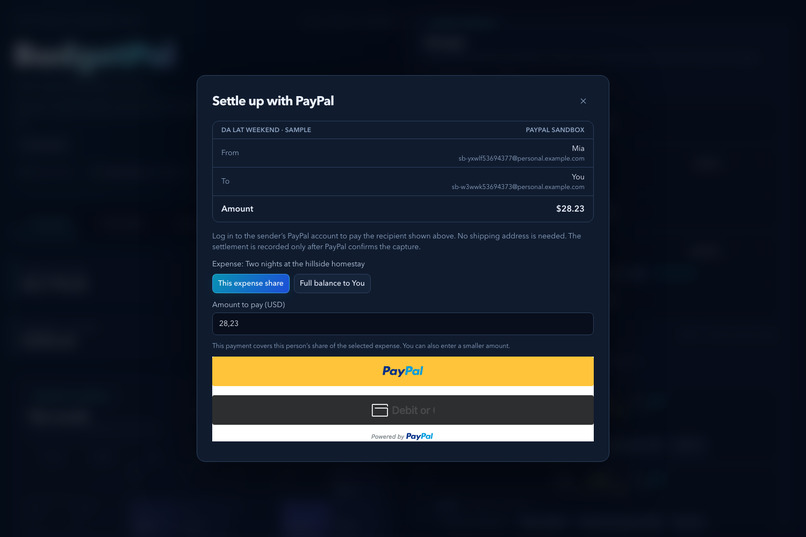
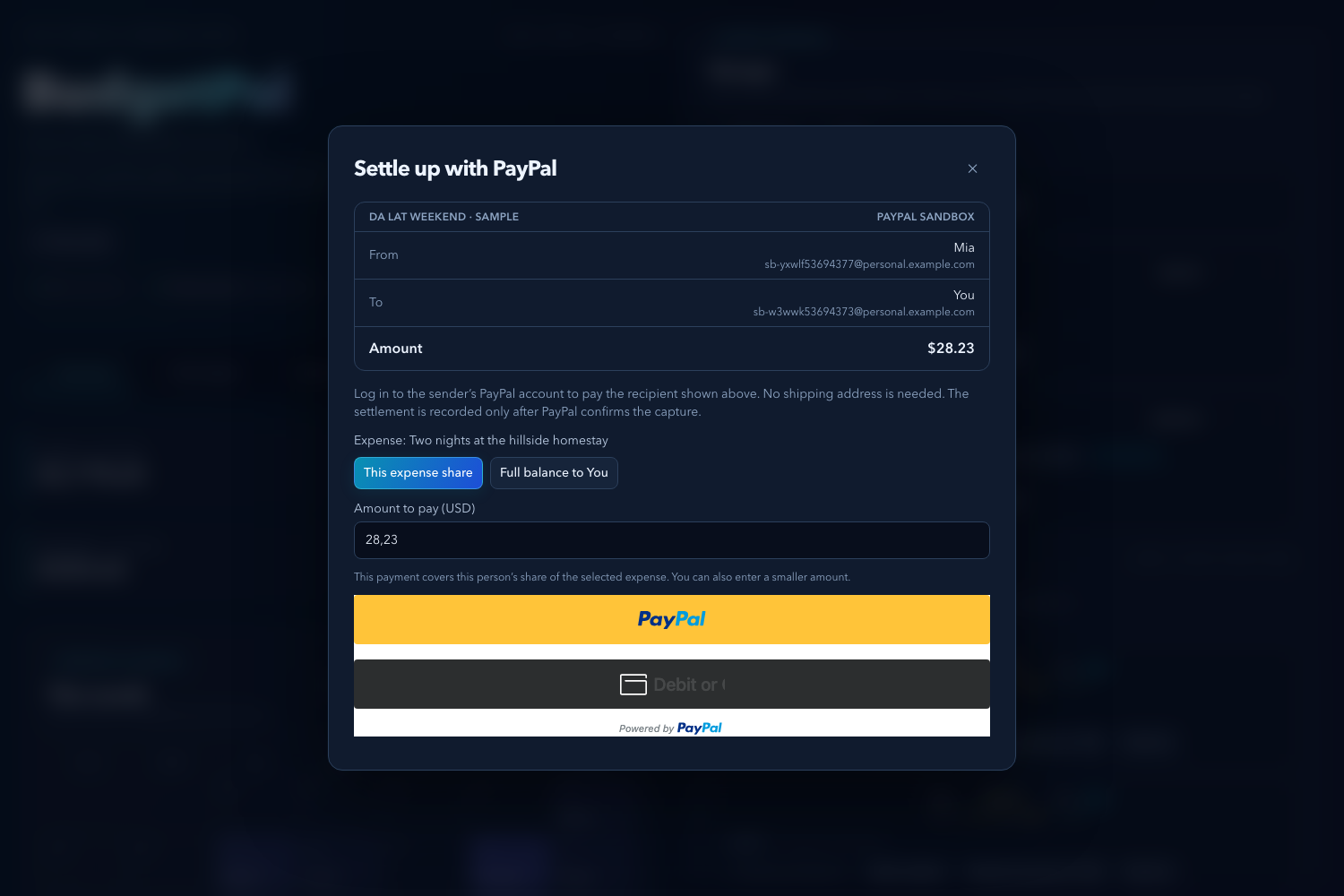
PayPal Checkout
-
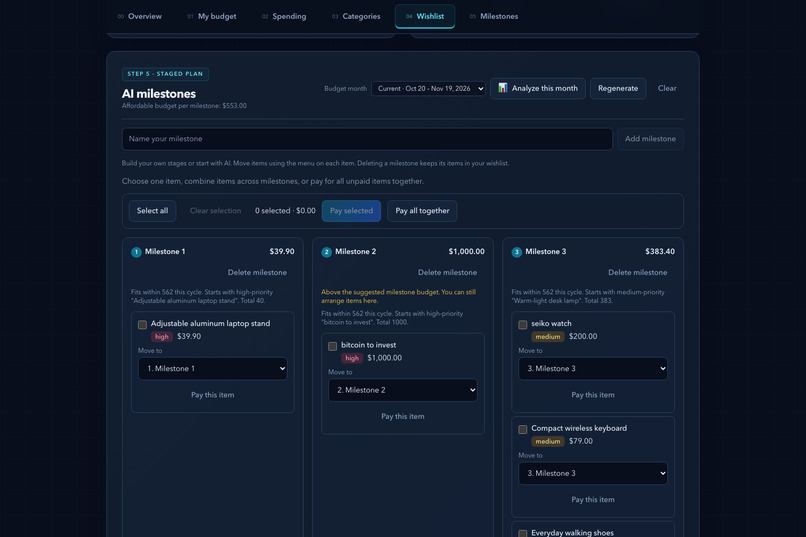
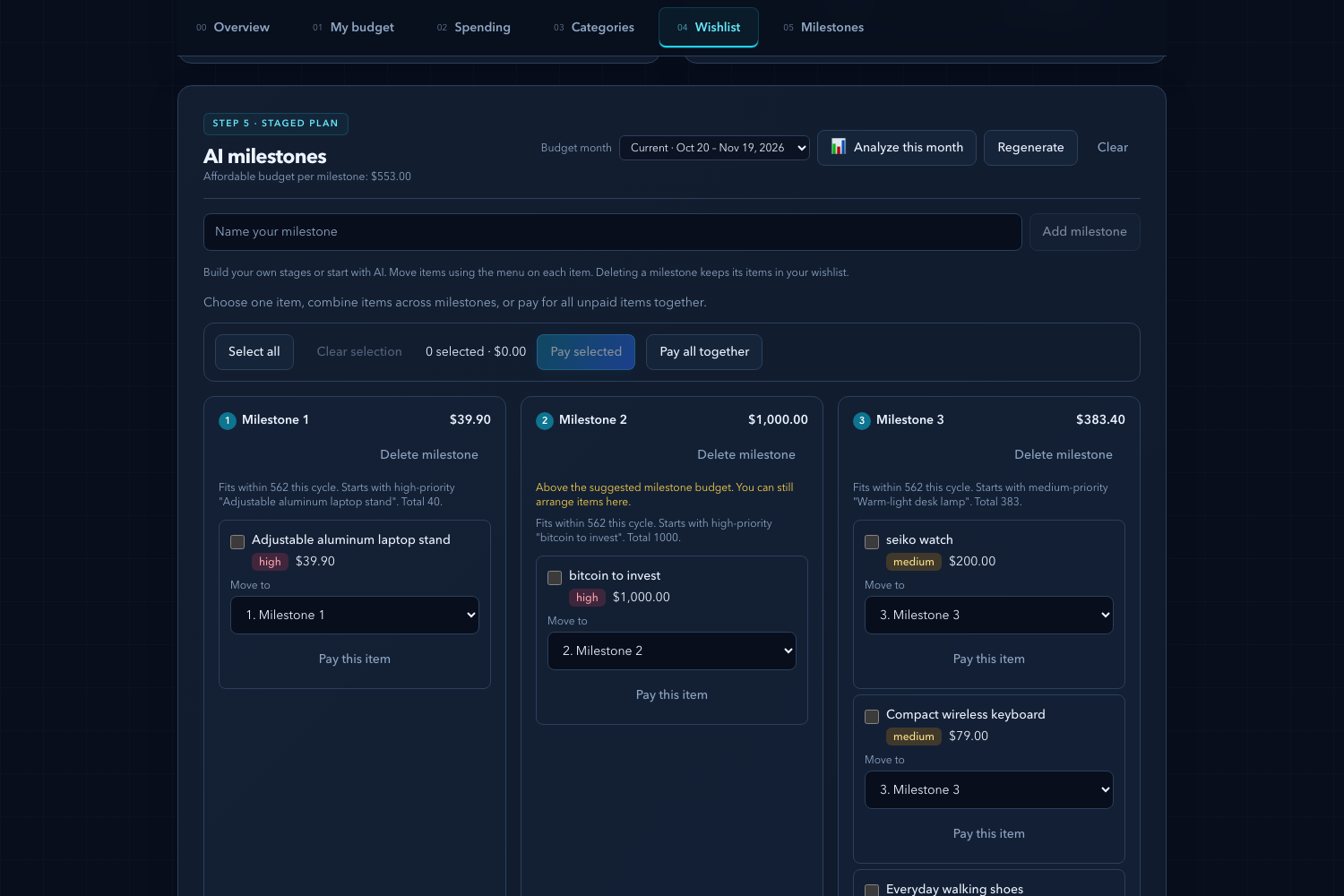
Milestone - Spending Plan
-
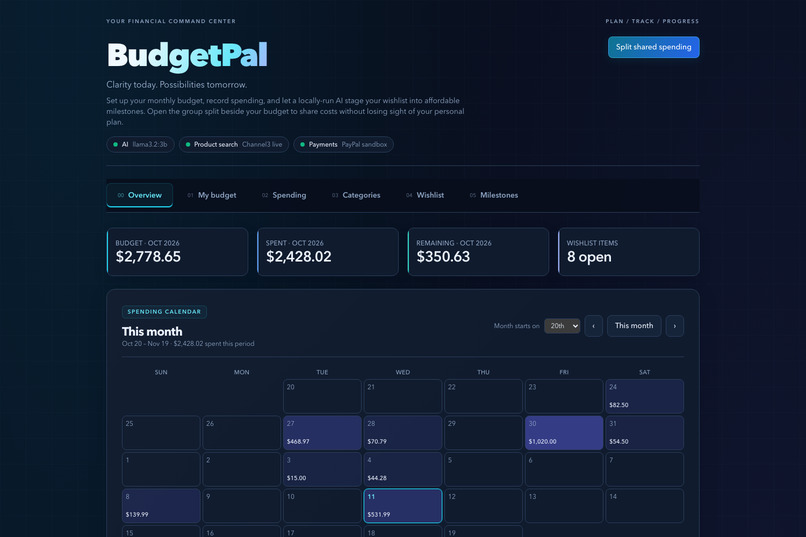
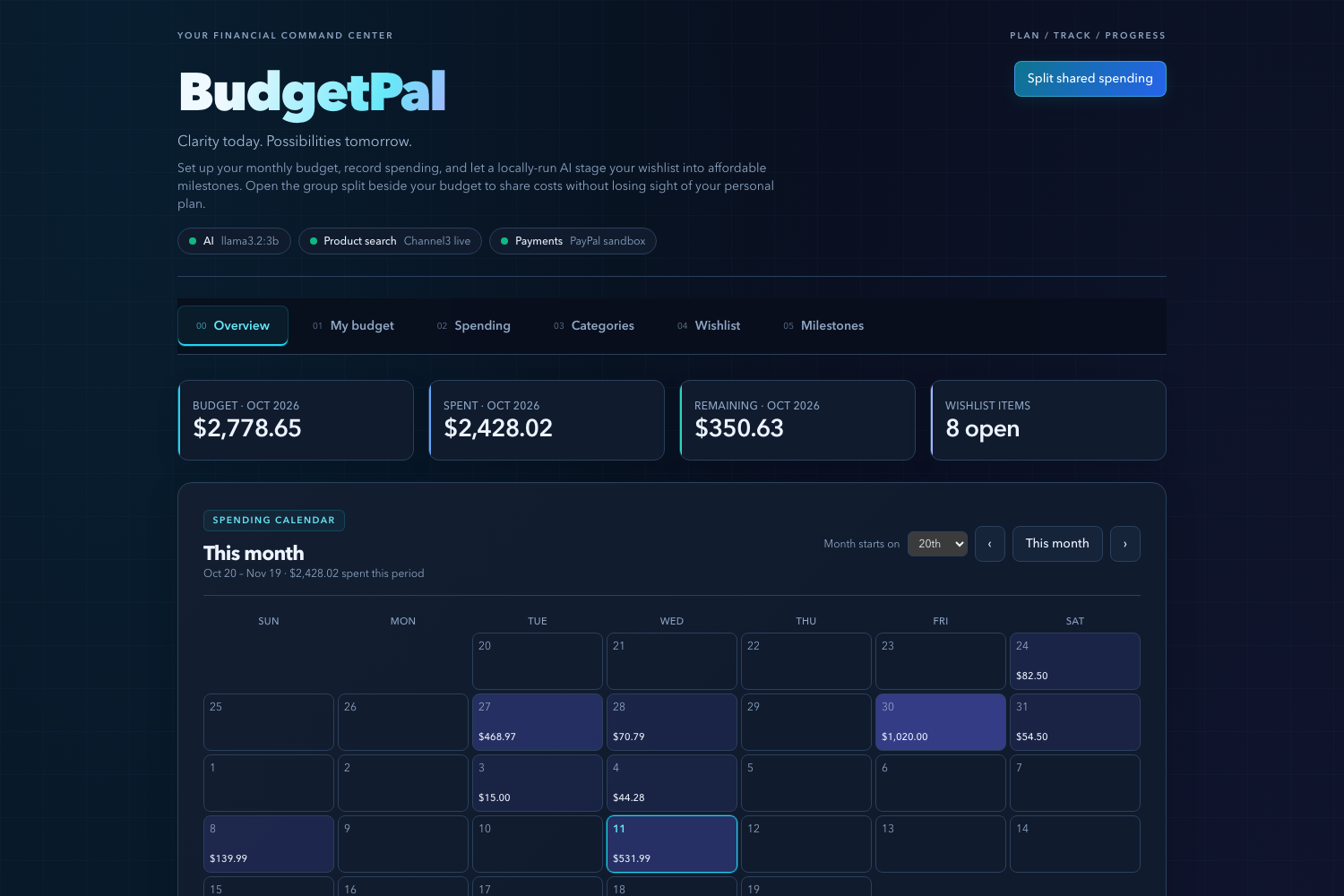
Overview Dashboard
-
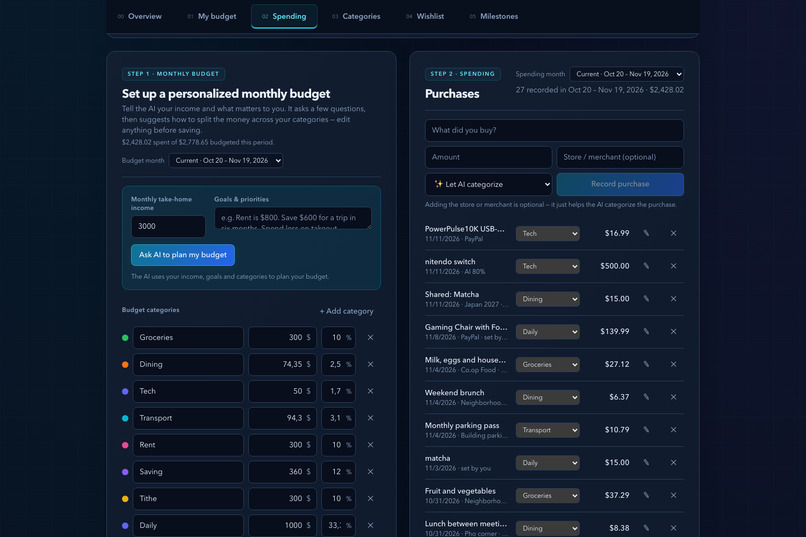
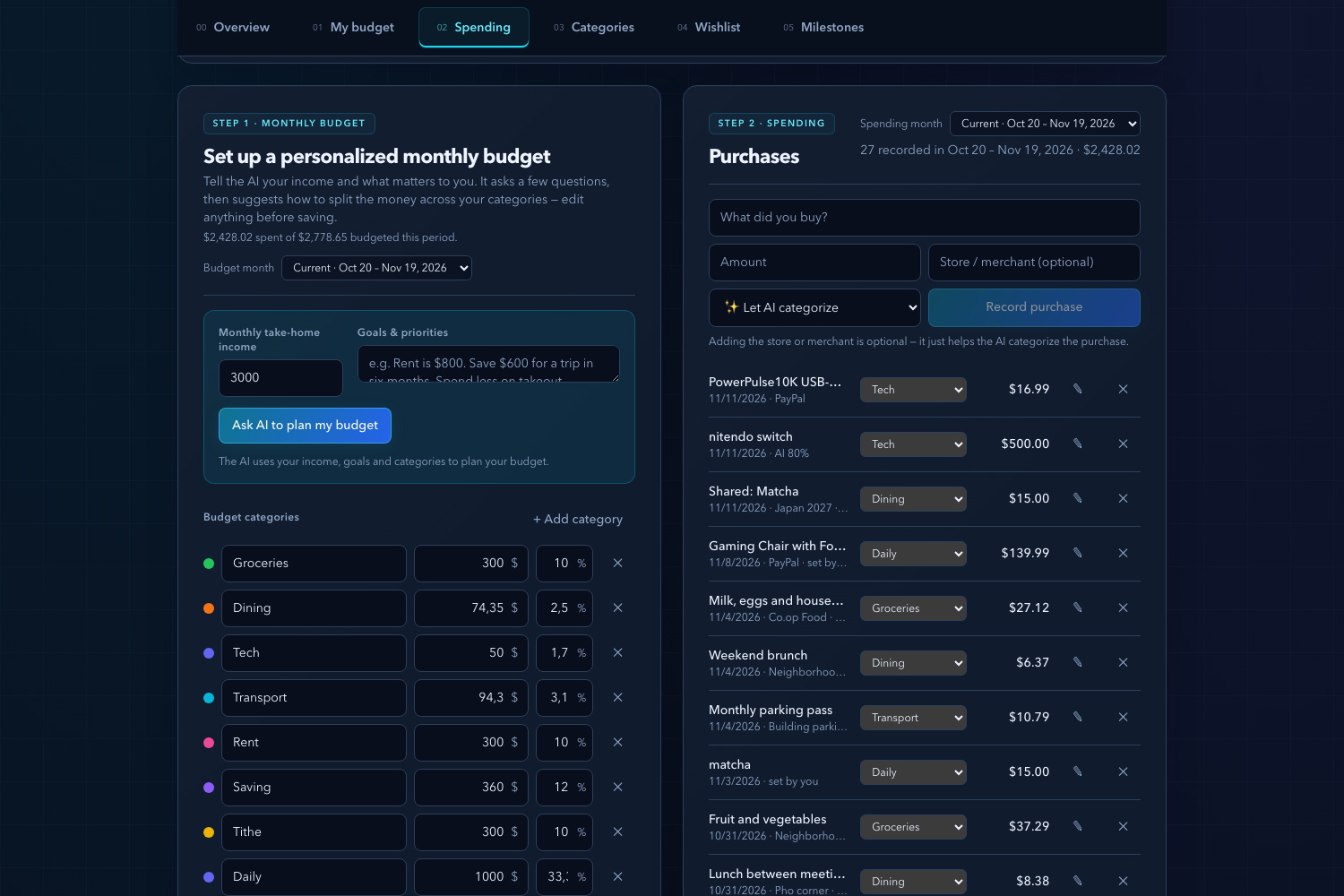
Budget and Spending Log
-
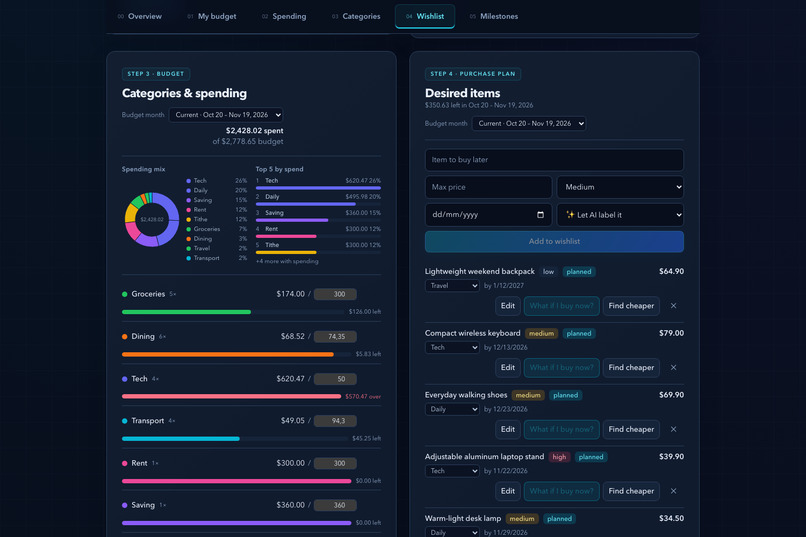
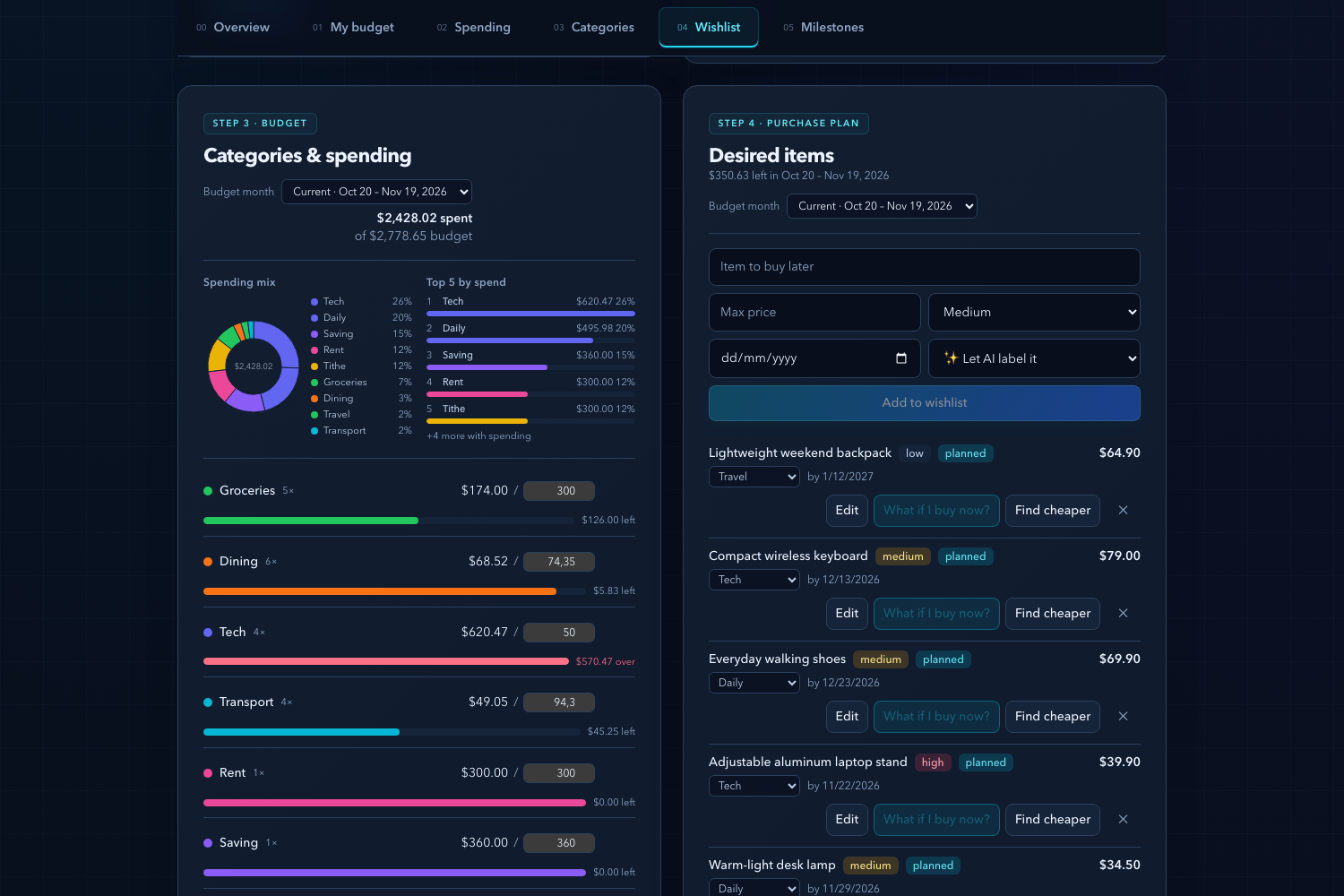
Spending Breakdown and Wishlist
-
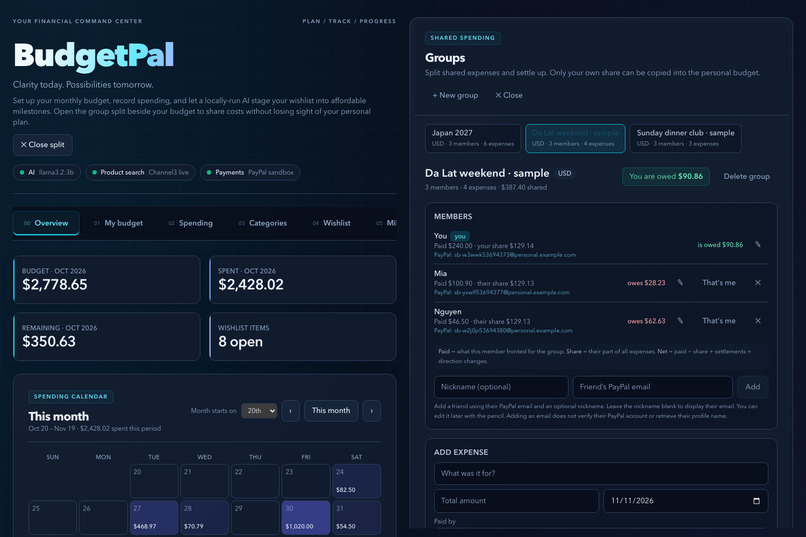
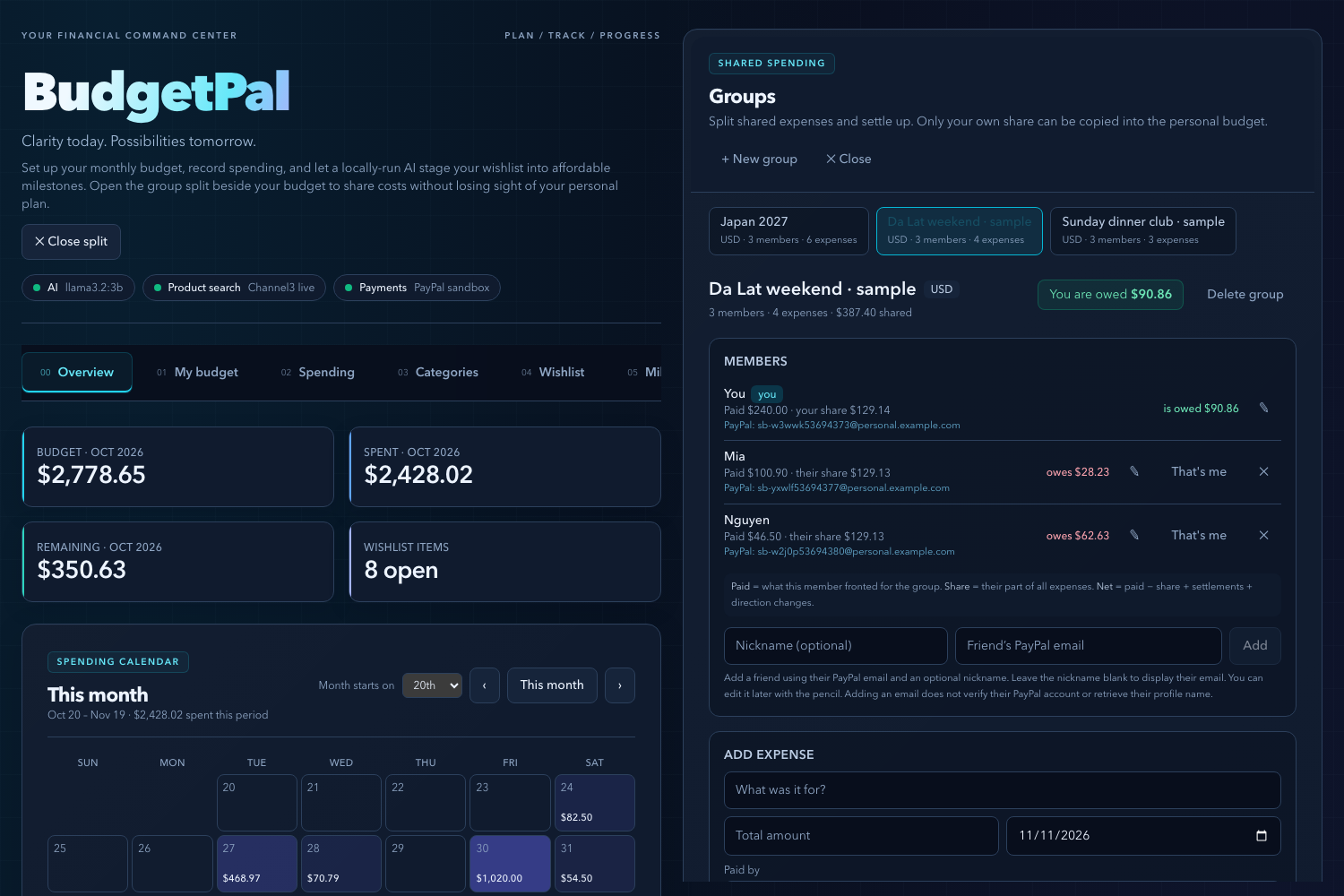
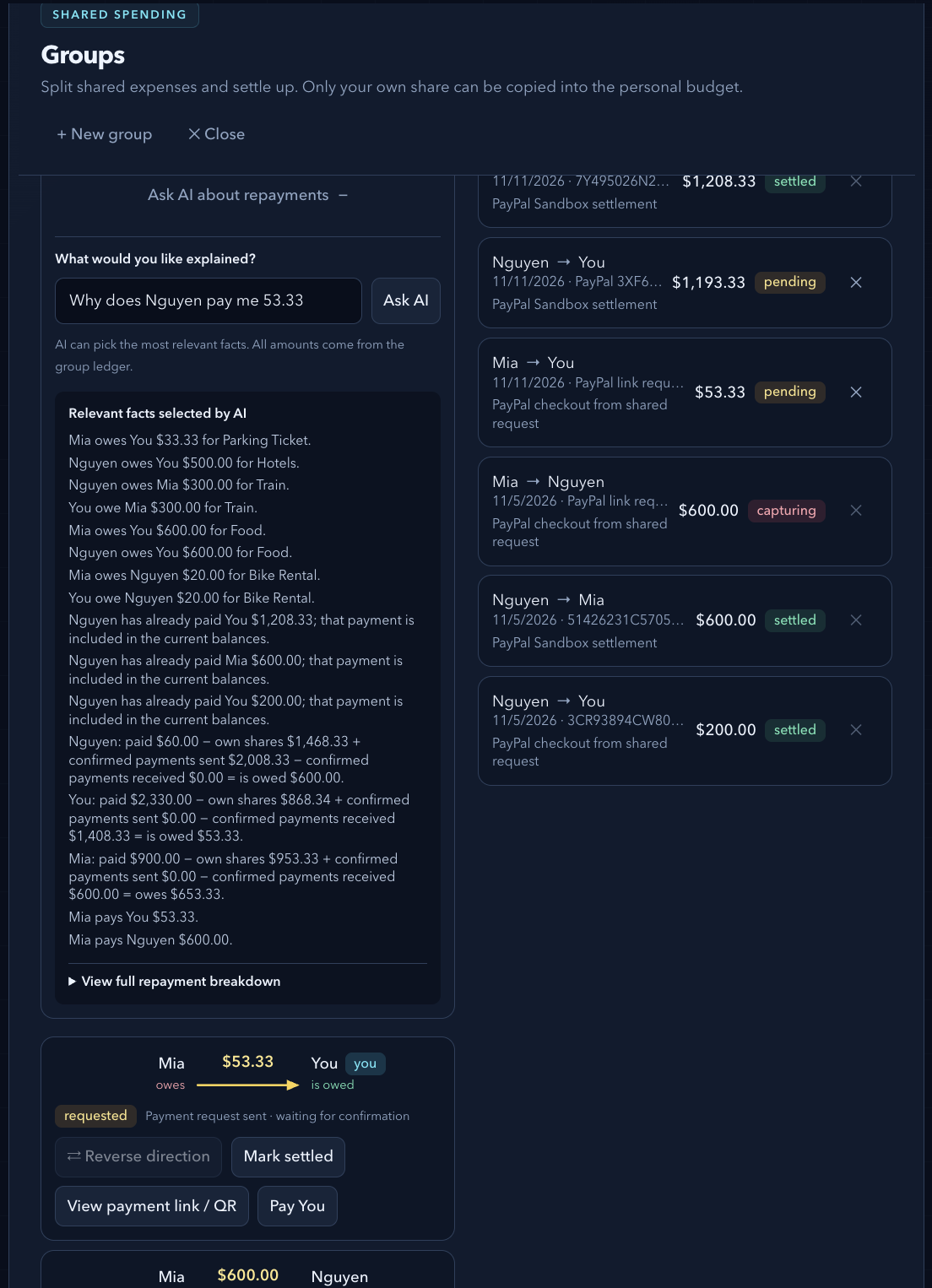
Group Split Spending
-
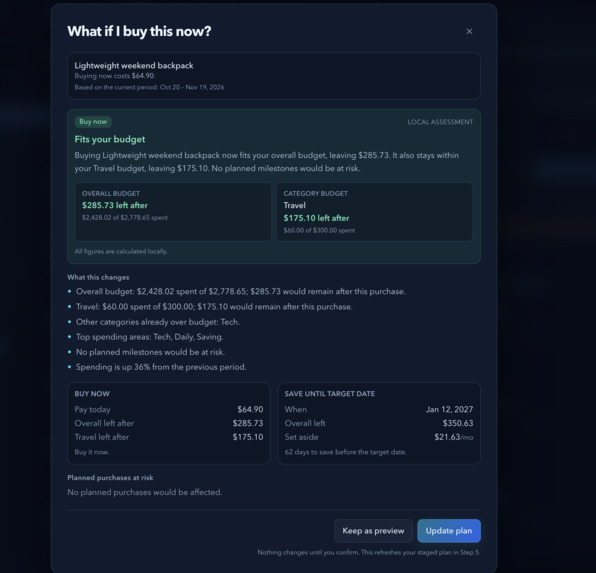
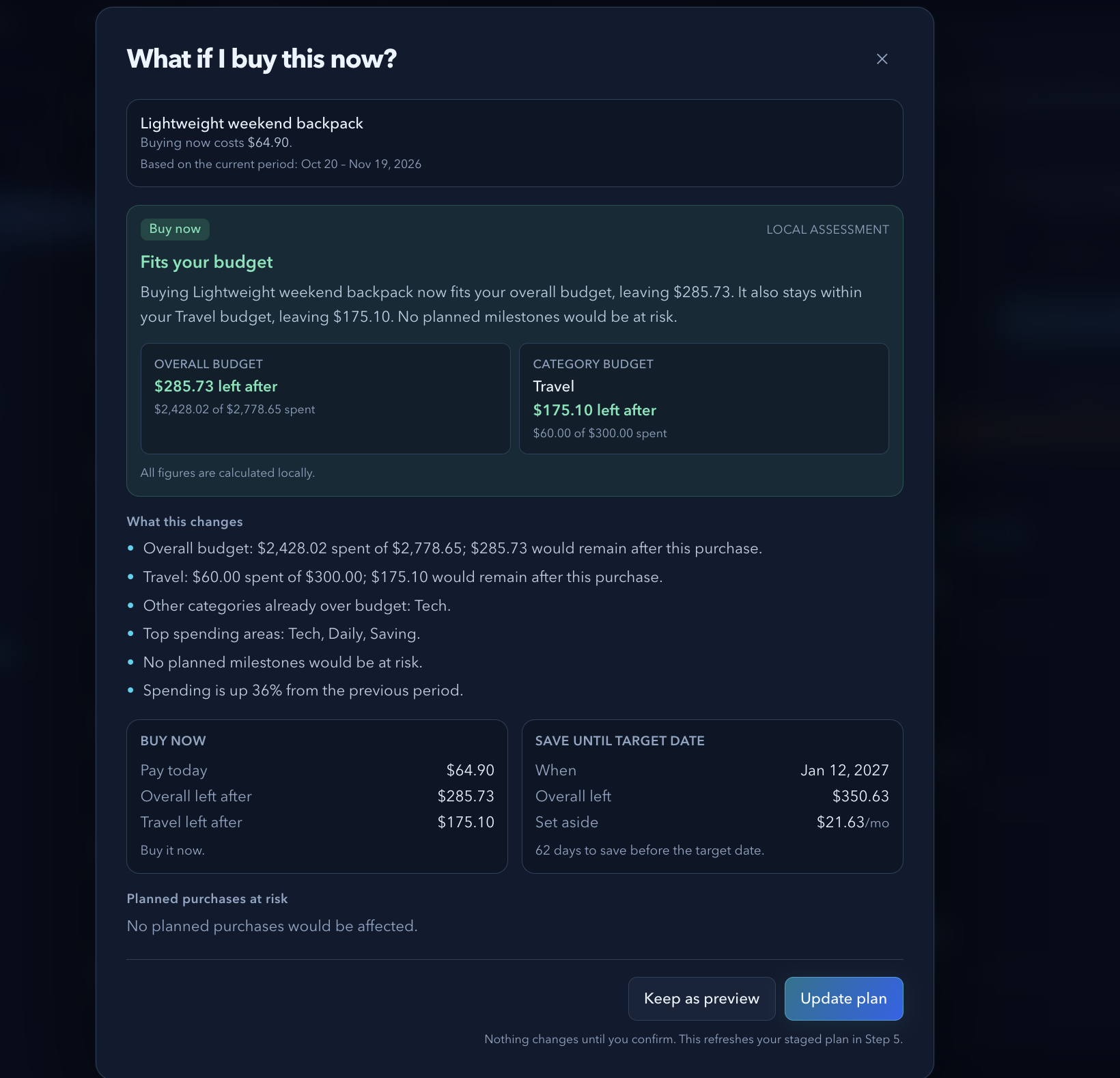
AI Analytics of the Wishlist Item
-
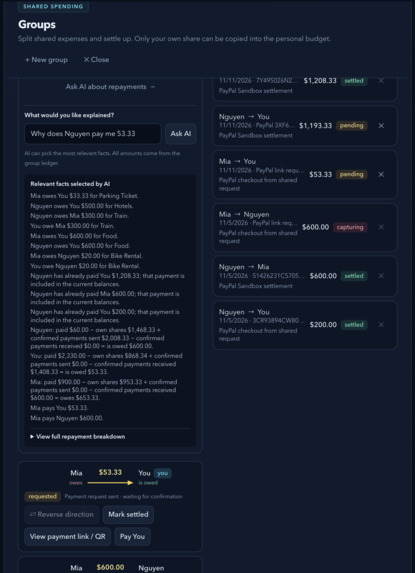
AI Explanation of the Repayment Settlement
Inspiration
I wanted an objective opinion on how I was spending my money, but I wasn’t comfortable sharing the details of my finances with someone else. I wanted to understand where my money was going, which expenses were worth keeping, and how much I could realistically save each month.
For the PayPal Hackathon, I decided to build the tool I wanted for myself. My goal was to turn my spending history into a clearer plan for what to keep, where to cut back, and how to save more consistently with AI suggestion and review on my spending objectively.
What it does
I designed BudgetPal around a monthly spending review. The spending breakdown gives users a place to start, and the demo follows one expense from the monthly overview through to a budgeting decision. People will log in their expenses or after they pay with PayPal, the expense is then automatically logged into the budget. There are also AI review whether user should buy a certain item and that expense fits within the budget set by the user.
How we built it
We built BudgetPal with Next.js, TypeScript, and Tailwind CSS, using Prisma and SQLite to store budgets, purchases, wishlists, and shared expenses.
We integrated Ollama with Llama 3.2 to suggest budget allocations, categorize spending, and turn wishlist items into affordable purchase milestones. Channel3 powers product searches for cheaper alternatives, while clearly labeled fallbacks keep the demo usable when external services are unavailable.
For payments, we connected the PayPal JavaScript SDK and Orders API to create and capture Sandbox transactions. Users review and approve each payment, and purchases or repayments update only after successful capture. Shared expenses use integer cents to keep splits accurate.
Finally, we packaged the app with Docker Compose and seeded sample data so judges can explore the full workflow locally.
Challenges we ran into
One of the biggest challenges was staying motivated while building alone. Switching between design, coding, debugging, and preparing the demo made it easy to feel overwhelmed, especially when progress was slow. Breaking the work into smaller milestones and focusing on one working feature at a time helped me keep moving forward.
What we learned
I learned to keep going even when working alone. Without teammates to share the pressure or celebrate small wins, I learned to recognize my own progress. Persistence didn’t mean feeling motivated every day, it meant taking small steps even when I wasn’t feeling well.
What's next for BudgetPal
I originally imagined BudgetPal as a mobile app, but I started with a web app because that’s where I felt most comfortable building. Next, I hope to bring BudgetPal to phones, making it easier to record spending on the go, check budgets, and manage shared expenses whenever they happen. In addition, I want to improve and simplfy the Group Split Spending feature, as I find it is still hard to understand for new users.
Built With
- channel3-api
- docker
- llama-3.2
- next.js
- node.js
- ollama
- paypal-javascript-sdk
- paypal-orders-api
- prisma
- react
- sqlite
- tailwind-css
- typescript
