-
-
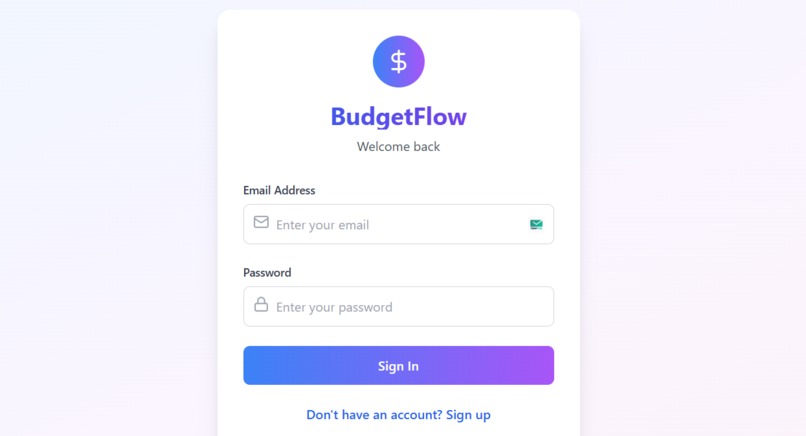
sign up
-
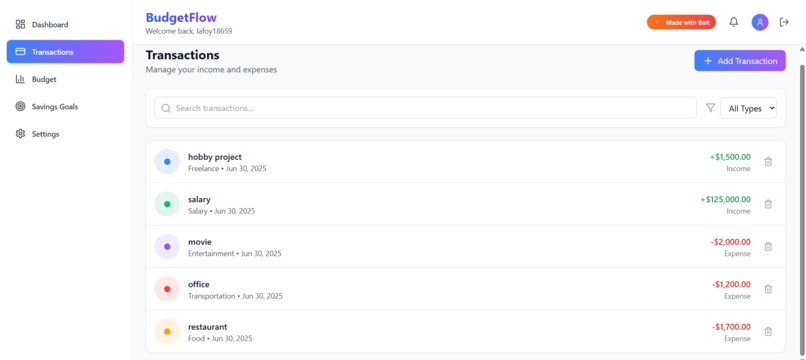
expenses & income
-
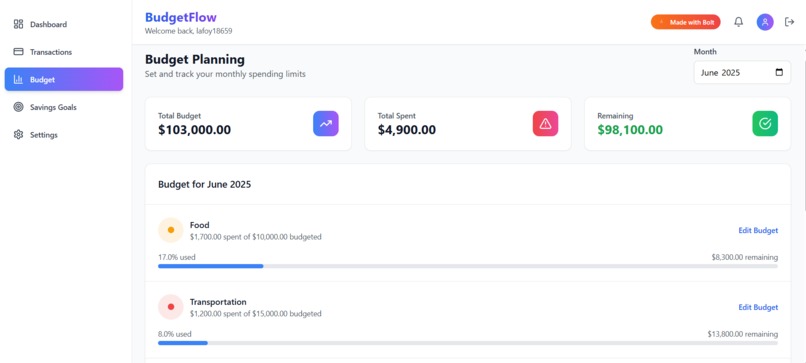
Budget 1
-
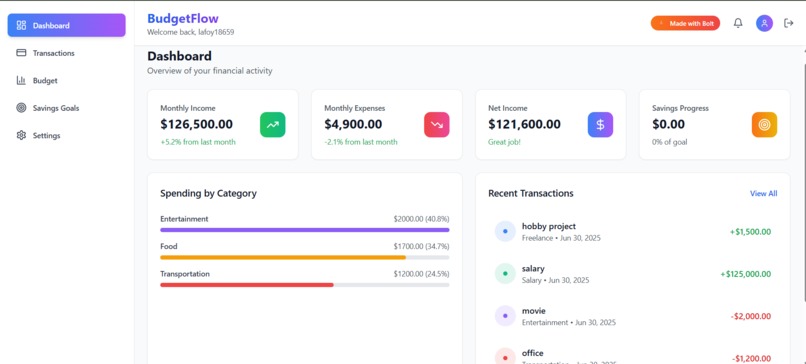
Dashboard
-
Budget 2
Inspiration
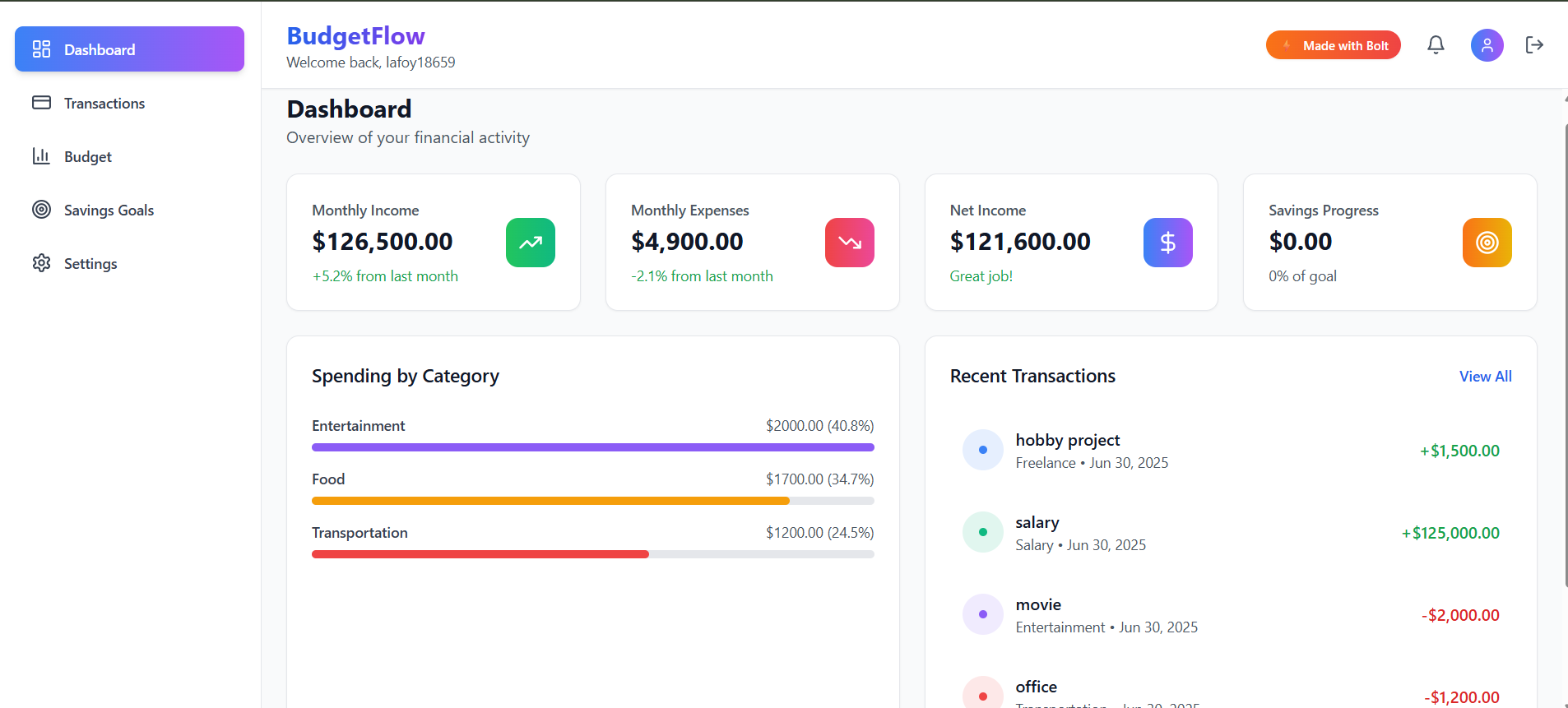
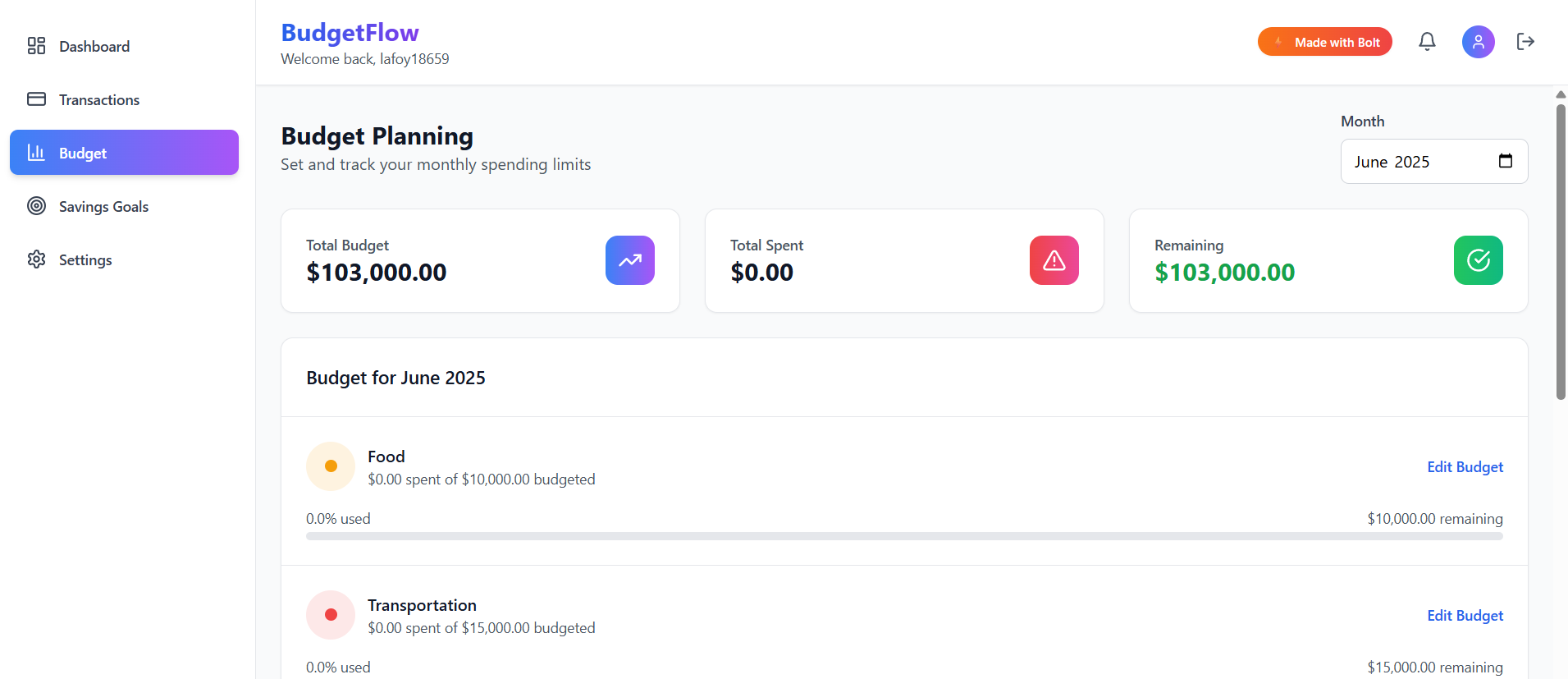
Inspiration The inspiration for BudgetFlow came from a simple but universal problem — personal finance management often feels overwhelming, especially for individuals without a financial background. Many existing apps are either too complex or require account linking and sensitive data sharing. I wanted to create something minimal, modern, and user-centric — a tool that empowers people to take control of their income, expenses, and savings without friction. The idea was to prove that even powerful applications can be built from a single prompt, using Bolt's lightning-fast setup.
What it does
What it does
BudgetFlow is a modern budgeting app designed to help users:
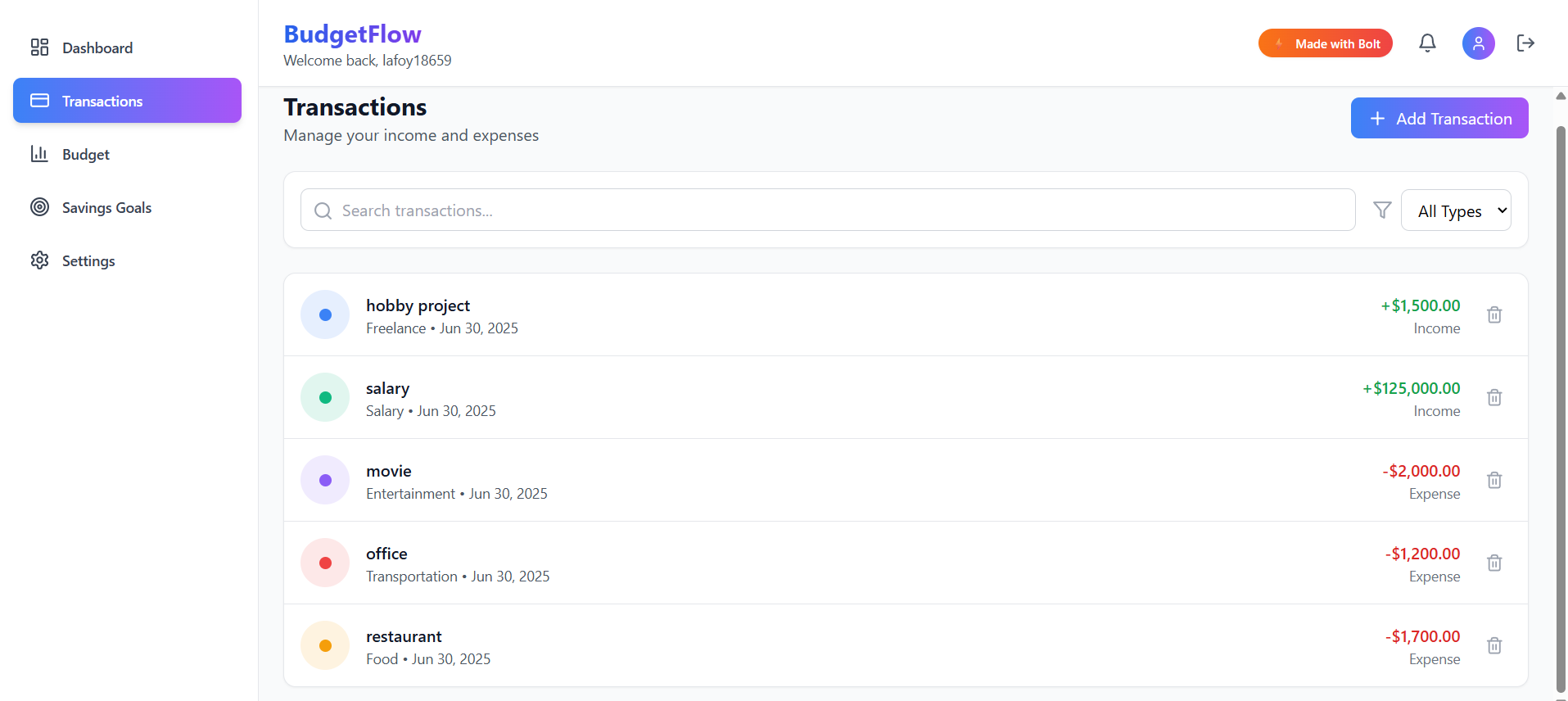
Track income and expenses with ease
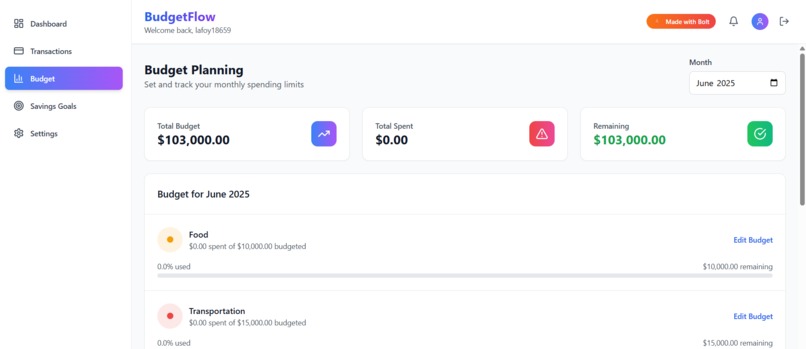
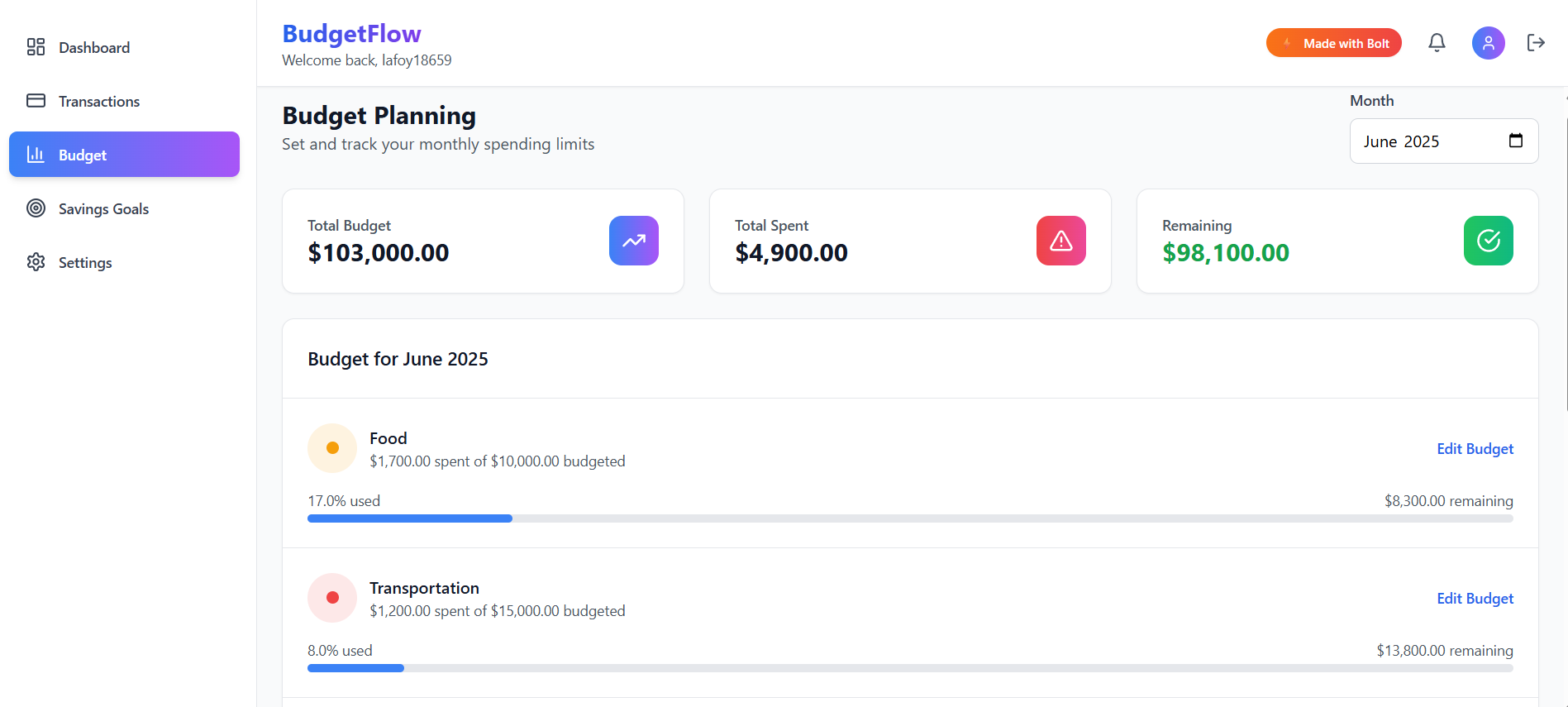
Set and manage monthly budgets
Visualize financial health with intuitive dashboards and charts
Set savings goals and monitor progress
Gain insights into spending behavior
All user data is stored locally, ensuring privacy and speed. The UI is clean, responsive, and optimized for both desktop and mobile use.
How we built it
How we built it
BudgetFlow was built using:
React (TypeScript) for robust component-based architecture and type safety
Tailwind CSS for utility-first, responsive UI styling
Vite as the build tool for fast development and deployment
Lucide React for clean, scalable icons
Context API + useReducer for state management
localStorage for data persistence (transactions, budgets, goals, users)
Netlify for easy and reliable deployment
All of this was initiated from a single prompt using Bolt, showcasing its ability to kickstart serious projects in seconds.
Challenges we ran into
Challenges we ran into
Data Persistence Logic: Managing multiple types of data locally (users, transactions, budgets, savings) while keeping the app fast and bug-free was a challenge.
State Management: Building a scalable state system using Context and Reducer without any third-party libraries required careful structuring.
Mobile Responsiveness: Designing a fluid UI that works seamlessly across all devices needed multiple layout tweaks.
Design Balance: Making the UI visually appealing while keeping it simple and intuitive took several iterations.
Accomplishments that we're proud of
Accomplishments that we're proud of
Built a fully functional, aesthetically pleasing budgeting app from a single prompt
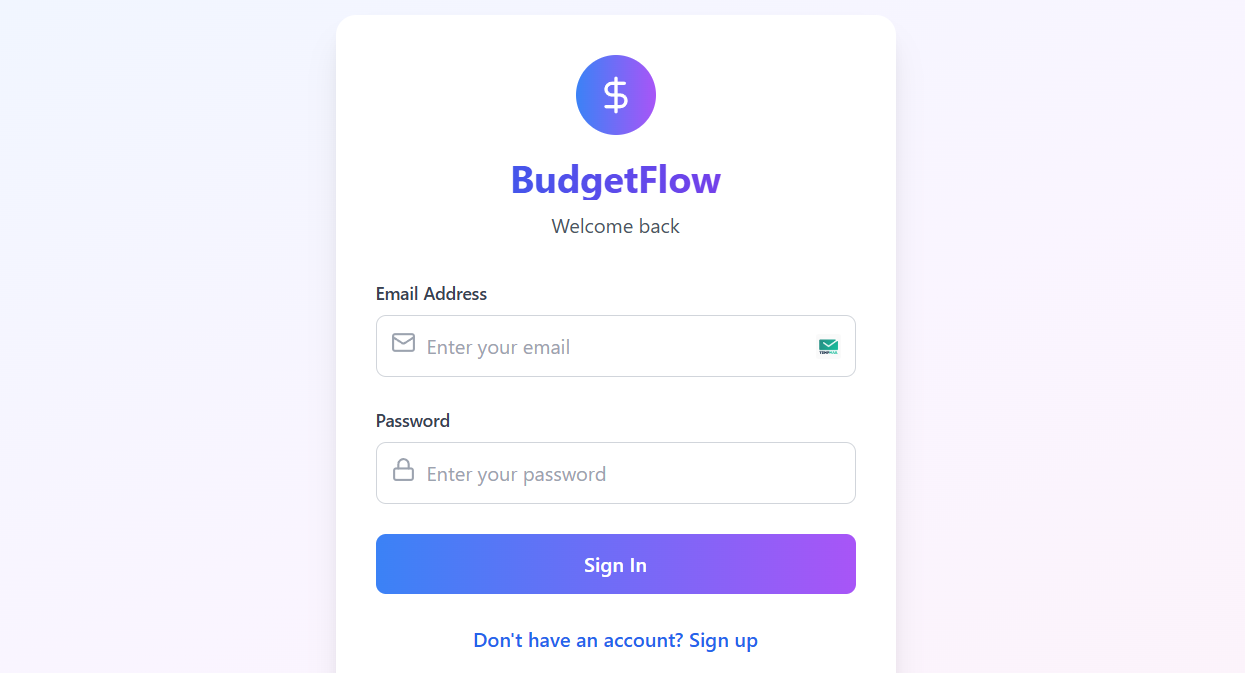
Achieved a feature-rich user experience including authentication, goal tracking, visual dashboards, and budget planning
Delivered a responsive and clean design without compromising performance
Kept all data privacy-respecting by storing it locally without requiring external databases or APIs
What we learned
What we learned
How to structure a complex application using only React’s native tools
Efficient use of localStorage for creating powerful offline-first applications
The importance of thoughtful UI/UX design in financial tools
How a clear vision and the right tools (like Bolt) can accelerate development from idea to launch
What's next for BudgetFlow- Budget tracking app
What's next for BudgetFlow – Budget Tracking App
Export Reports: Allow users to export their financial data as PDFs or Excel sheets
Cloud Sync & Real Authentication: Offer login and data sync using secure backend services
Notifications: Implement alerts for overspending, due dates, and savings goal milestones
Dark Mode: Add a toggle for better visual comfort
Multi-user Profiles: Enable budgeting for families or small teams
AI Insights: Integrate simple AI suggestions to recommend budget improvements
BudgetFlow is just getting started — the foundation is solid, and the roadmap is exciting!

Log in or sign up for Devpost to join the conversation.