-
-
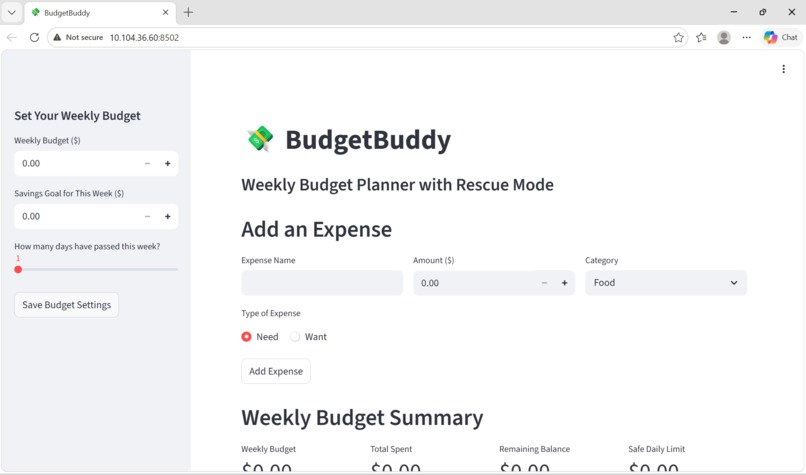
Screen 1
-
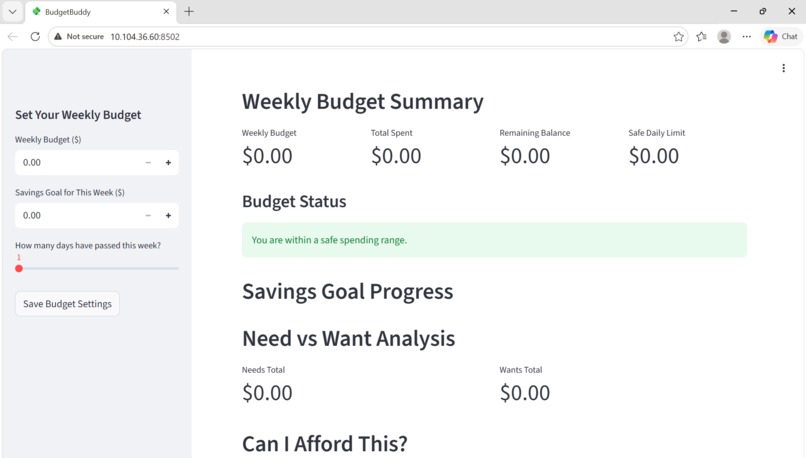
Screen 2
-
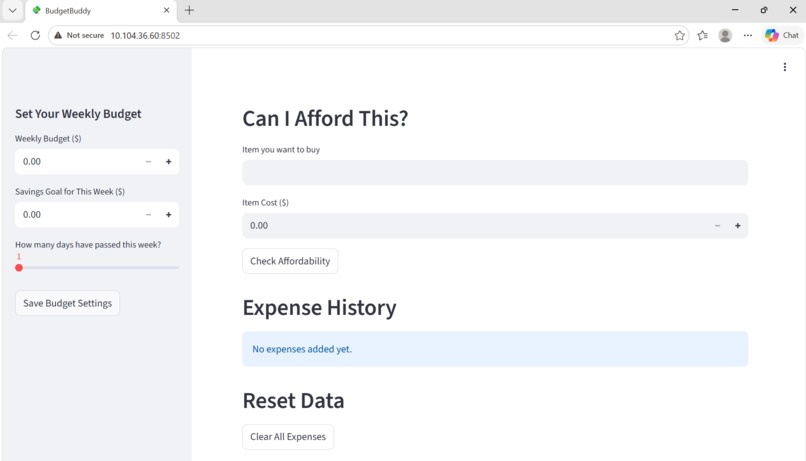
Screen 3
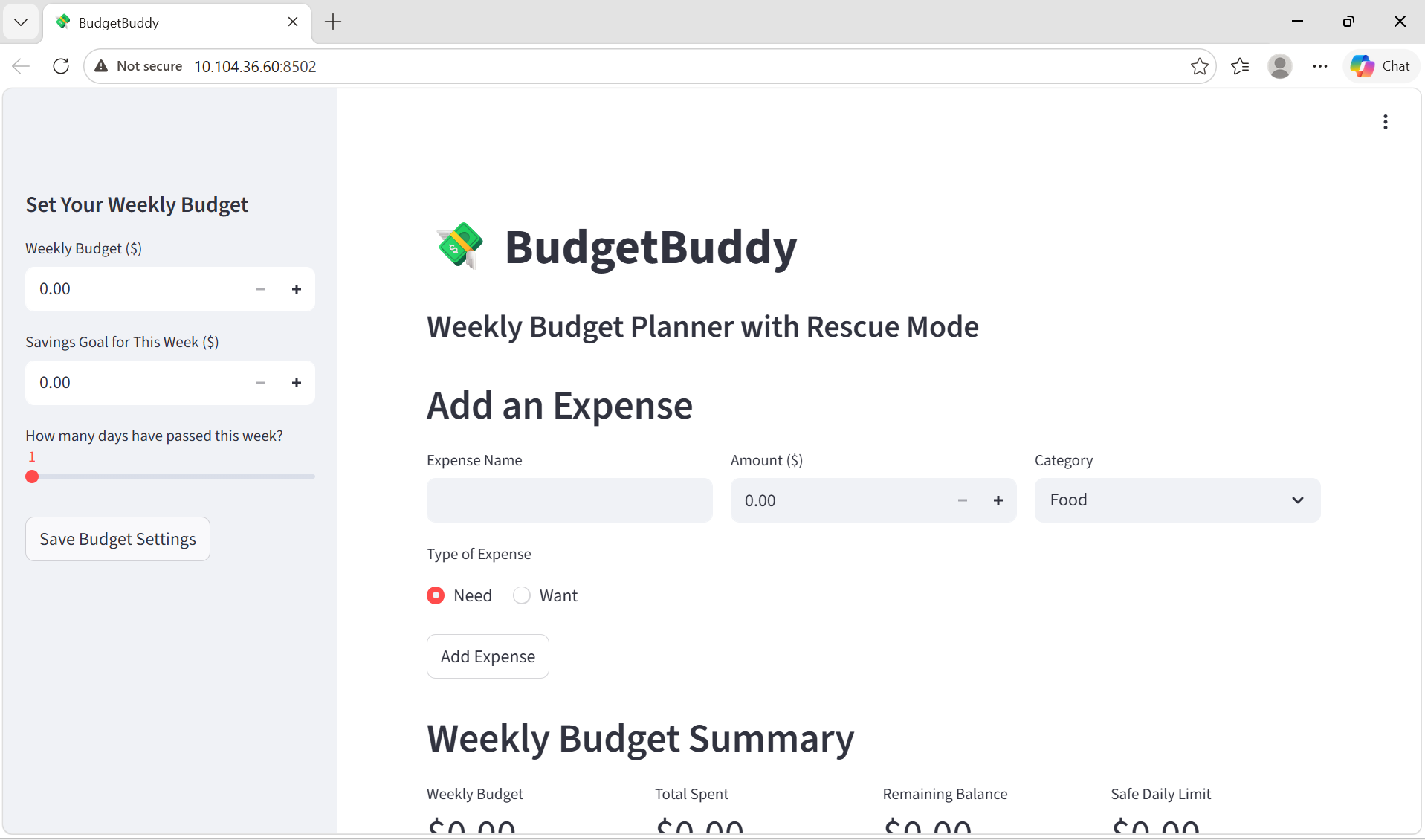
Inspiration
I built "BudgetBuddy" because budgeting can feel stressful, especially when people only realize they are overspending after it is already too late. Most budget trackers simply record expenses, but they do not actively help users recover when their money is running low. We wanted to create something that feels more supportive and practical: a tool that not only tracks spending, but also helps users make better decisions throughout the week.
What it does
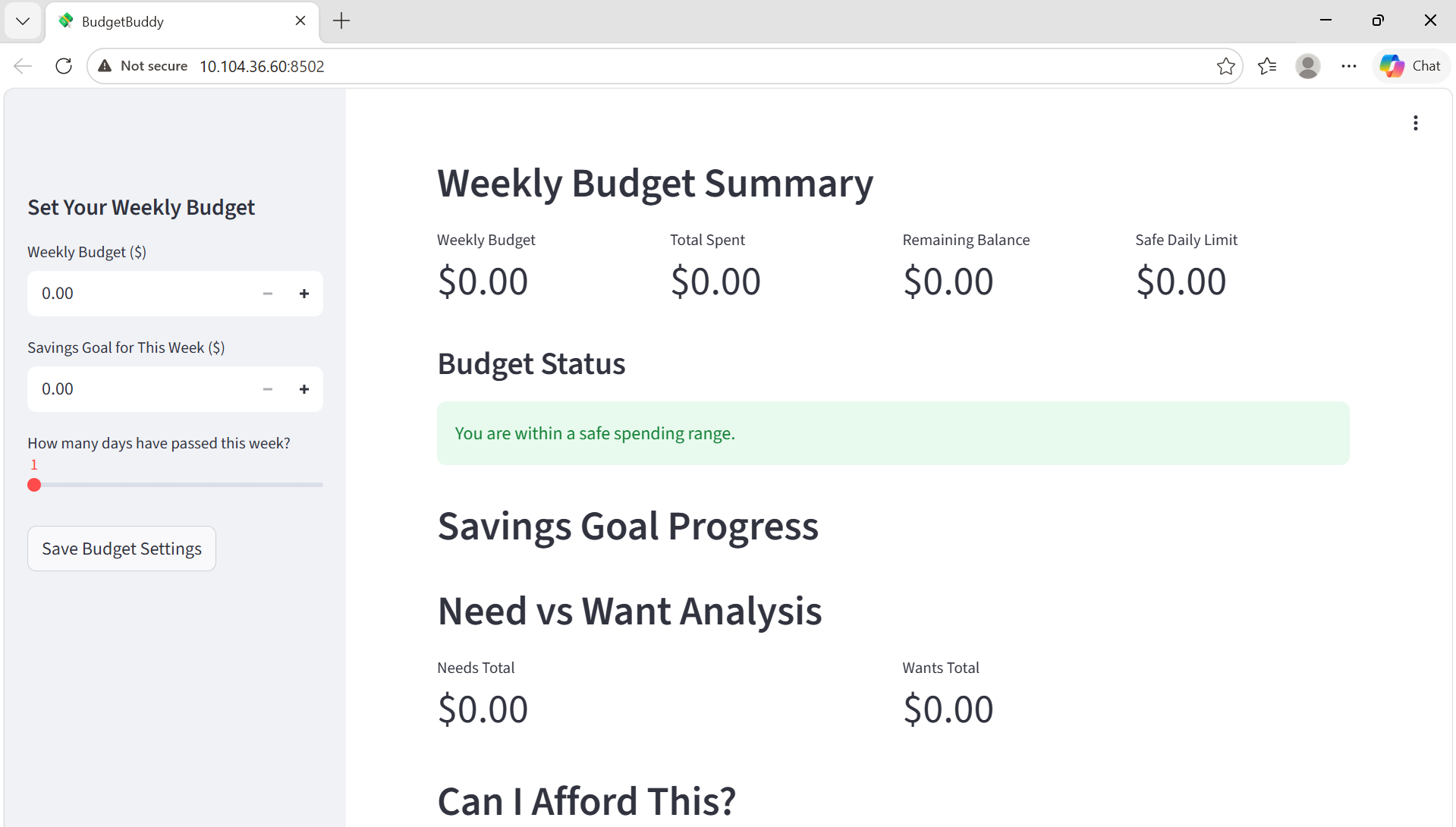
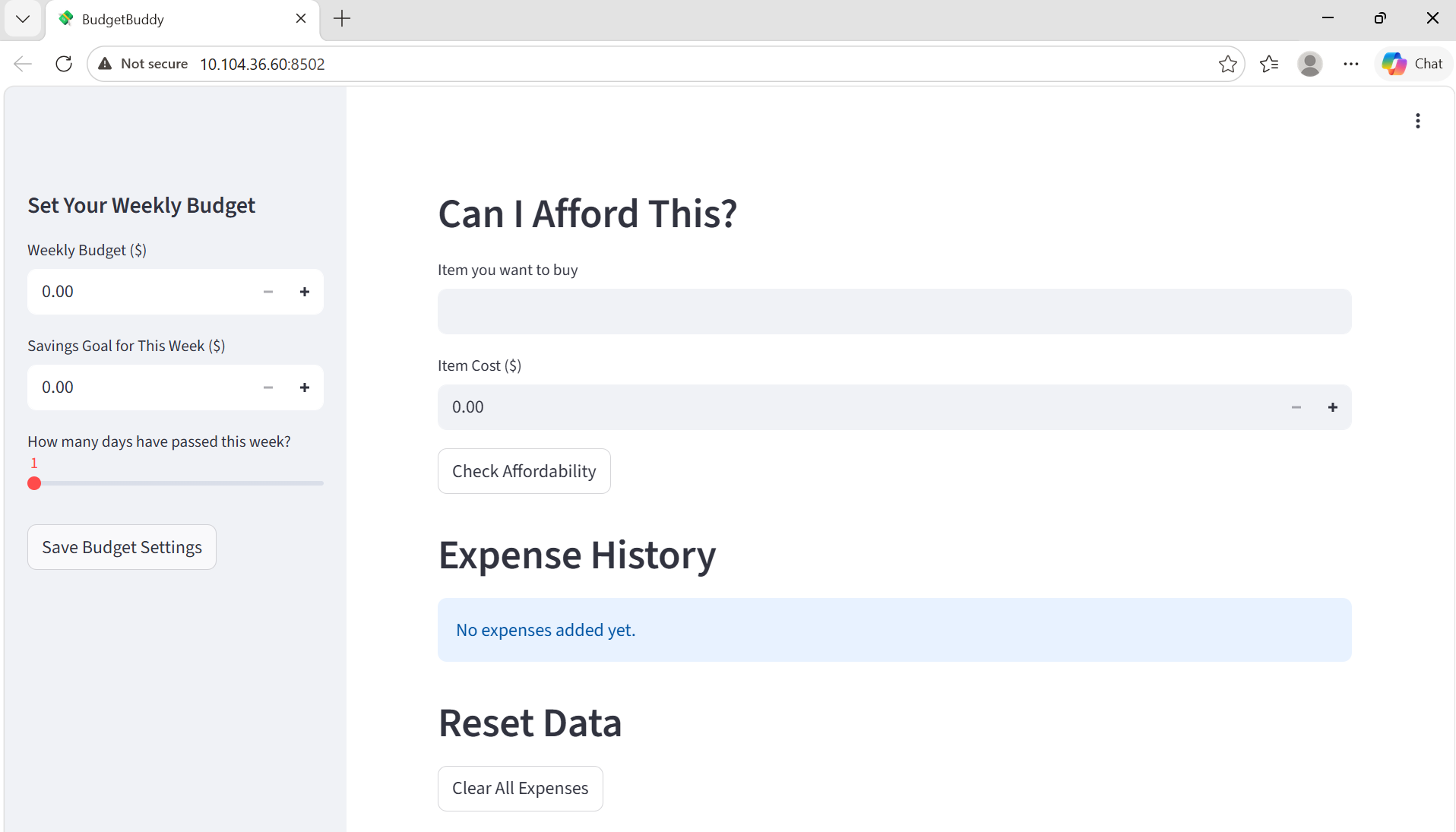
BudgetBuddy is a 'weekly budget planner with a Rescue Mode'. Users can set a weekly budget, enter expenses by category, and instantly view how much they have spent, how much money is left, and how much they can safely spend each day. The unique feature is the "Rescue Mode", which activates when the app detects that the user is close to overspending. It then gives a realistic recovery plan by showing a safe daily spending limit, highlighting high-spending categories, and suggesting where to cut back on non-essential spending.
How I built it
I built BudgetBuddy using Python, Streamlit, and Pandas. Streamlit helped us create a simple and interactive web interface, while Pandas made it easy to organize expense data, calculate totals, and analyze spending patterns. I designed the logic to calculate remaining balance, daily spending limits, overspending risk, and Rescue Mode suggestions in real time.
Challenges I ran into
One challenge was making the project different from a regular budget tracker. At first, the idea felt too common, so I focused on adding a feature that makes the app more useful in real-life situations. That led me to create Rescue Mode. Another challenge was balancing simplicity with usefulness. I wanted the app to stay beginner-friendly while still giving meaningful insights instead of just showing numbers.
Accomplishments that I am proud of
I am proud that BudgetBuddy is simple, practical, and easy to understand while still offering a feature that makes it stand out. Rescue Mode gives the app a more human and helpful touch, which makes budgeting feel less overwhelming.
What I learned
Through this project, I learned how to build a data-driven web app using Python tools, how to manage and display user input effectively, and how to turn a simple idea into a more polished and useful product. I also learned that sometimes the best beginner projects are not the most complex ones, but the ones that solve a real problem clearly and effectively.
What's next for BudgetBuddy
I feel like I can actually put more work into this and make it even better in the future. I would like to add monthly budgeting, savings goal tracking, smarter spending predictions, and personalized recommendations based on a user’s habits.


Log in or sign up for Devpost to join the conversation.