BudgetBuddy - A Spartan Tale
Inspiration
BudgetBuddy emerged from a desire for simplicity in personal finance management. Inspired by the need for a minimalistic tool to track daily expenses without the complexity of comprehensive financial applications, I set out to create a straightforward solution.
What I Learned
This project taught me the power of restraint in design and functionality. By focusing on essential features and aesthetic, I learned that simplicity often leads to better user experiences. Moreover, I gained insights into error handling and the importance of clear feedback for users.
Project Building
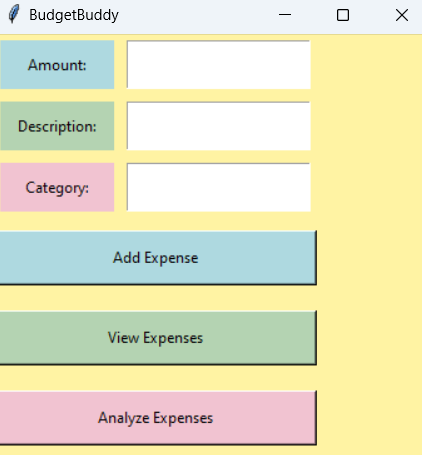
Built with Python's Tkinter library for the graphical interface, BudgetBuddy maintains a codebase, emphasizing efficiency and readability. The choice of pastel colors and a clean layout aims for a visually pleasing yet uncluttered design.
Challenges Faced
Data Handling: Ensuring proper data handling and storage was a challenge. Implementing the correct integration between the GUI and data structures required meticulous attention.
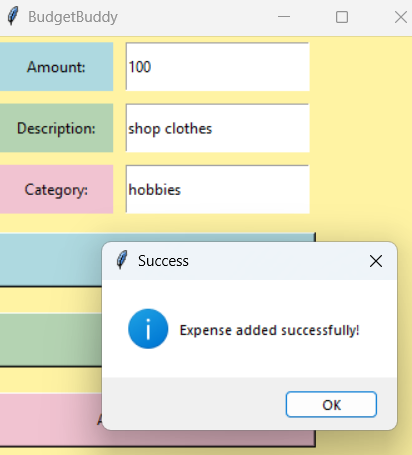
Error Management: Crafting informative error messages without compromising the aesthetic posed a challenge. Balancing simplicity with clarity demanded thoughtful design decisions.
Key Features
Expense Tracking: Simple entry fields allow users to quickly input their daily expenses.
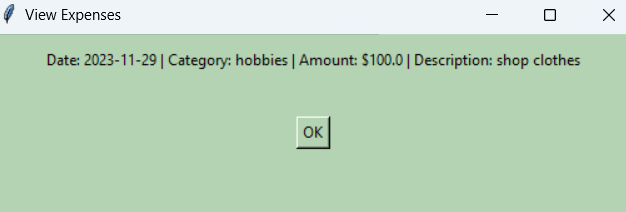
View Expenses: The application displays a clear list of recorded expenses in an interactive pop-up window.
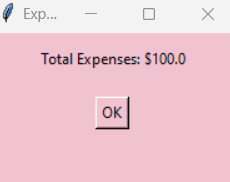
Expense Analysis: Users can analyze their spending with a straightforward total expenses feature.
Conclusion
BudgetBuddy stands as a testament to the Spartan philosophy of simplicity and efficiency. Its unembellished design and focus on essential functionalities make it a tool for those who seek to track their expenses without unnecessary complexity. In the Spartan spirit, BudgetBuddy serves its purpose with precision and clarity.
Built With
- python
- tkinter

Log in or sign up for Devpost to join the conversation.