Inspiration
Many people struggle with budgeting not because they lack discipline, but because existing tools feel complicated, impersonal, or time-consuming. Conversations with students and young adults revealed that financial tracking often feels overwhelming rather than empowering. BudgetBuddy was inspired by the idea that budgeting should be simple, supportive, and adaptive, helping users understand their finances without adding stress.
What it does
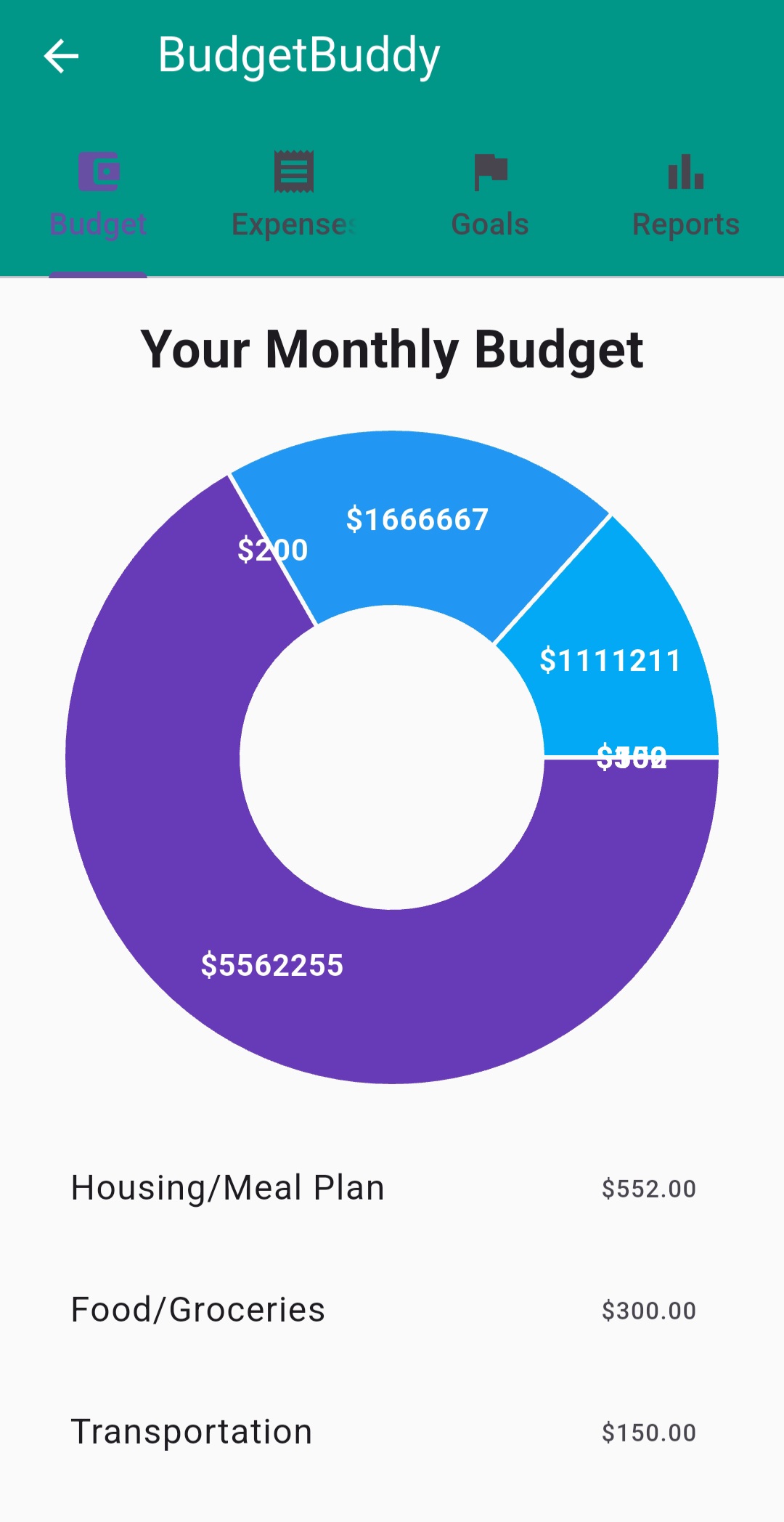
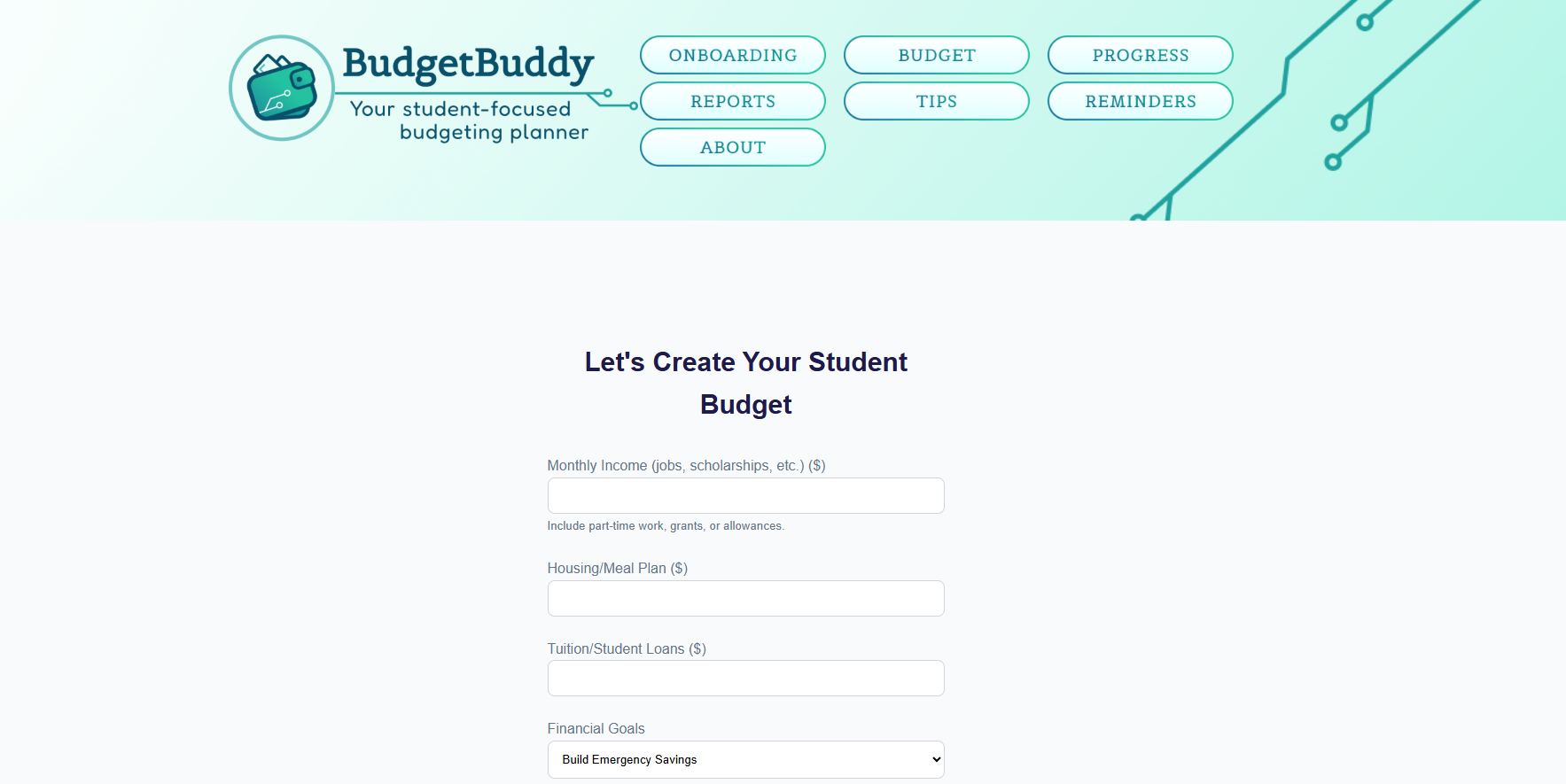
BudgetBuddy is a budgeting application that helps users track income and expenses, calculate balances, and gain clearer insight into their spending habits. By organizing financial data into understandable categories and summaries, the app allows users to quickly see where their money is going and make more informed financial decisions.
At its core, the app follows a simple financial model:
Remaining Balance =∑(Income) − ∑(Expenses) Remaining Balance=∑(Income)−∑(Expenses)
This approach keeps the system transparent and easy to reason about.
How we built it
BudgetBuddy was built as a web-based and mobile application with a focus on backend logic and scalability.
Technologies used:
Node.js for server-side execution
Express.js for routing and API handling
Flutter for cross-platform mobile application
Git & GitHub for version control and collaboration
npm for dependency management
The server processes user requests, manages budgeting calculations, and returns structured responses that can later be connected to a frontend interface or database. The project was developed locally, tested through iterative runs, and structured to support future expansion.
Challenges we ran into
One of the main challenges was dealing with real-world development issues rather than just writing code. These included:
Git push rejections caused by mismatched local and remote repository histories
Server crashes due to port conflicts (EADDRINUSE)
Debugging runtime errors and interpreting Node.js stack traces
Overcoming these challenges required learning proper Git workflows, process management, and defensive server configuration.
Accomplishments that we're proud of
Successfully building and running a functional budgeting backend from scratch
Implementing clean, understandable financial logic
Resolving version control and server deployment issues independently
Creating a project structure that is maintainable and extensible
These accomplishments represent meaningful progress toward real-world software development practices.
What we learned
Through this project, we gained hands-on experience with:
Backend development using Node.js and Express
Managing development environments and system resources
Writing clearer, more maintainable code
Thinking from a user-centered perspective rather than a purely technical one
We also learned that debugging and problem-solving are just as important as writing new features.
What's next for BudgetBuddy
Future plans for BudgetBuddy include:
Adding persistent data storage with a database
Building a user-friendly frontend dashboard
Introducing data visualization for spending trends
Exploring AI-driven insights to provide personalized budgeting suggestions
The goal is to evolve BudgetBuddy into a smart, accessible financial companion that helps users build better financial habits over time.

Log in or sign up for Devpost to join the conversation.