
Inspiration
As university students, we often see the number in our bank account go down every week without knowing where our money went. The small everyday purchases can add up and are often overlooked. That is why we made BudgetAI, an AI powered budgeting tool that makes it easy for students to track their expenses and become more financially responsible.
What it does
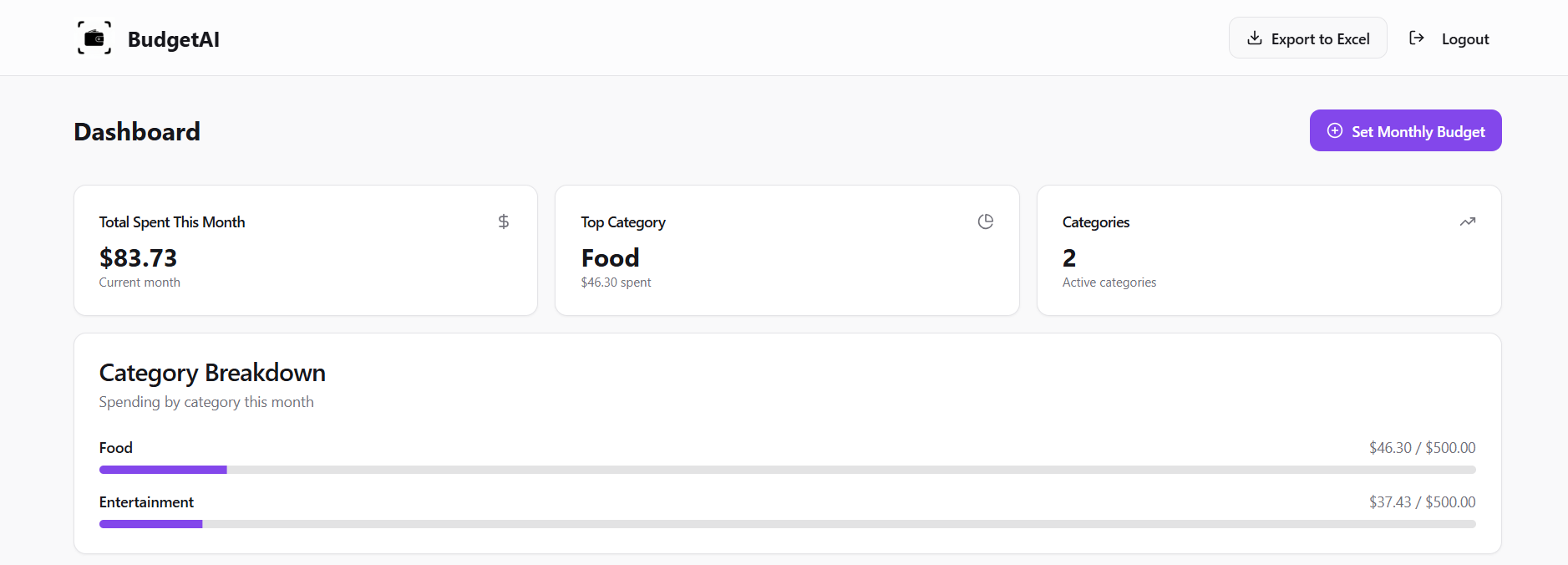
Our product, makes tracking every purchase easy through our receipt scanner which takes a photo of a receipt and automatically organizes the purchase by category and logs your purchase in our app. You can set monthly limits for categories like food, transportation, shopping, and entertainment and also get personalized AI insights into your purchases and shopping patterns.
How we built it
We built our app by creating a full pipeline that starts with scanning receipts and ends with automated expense tracking. Using OCR, we extracted text from both printed and digital receipts and passed that text through the ChatGPT API to structure the data into vendor names, dates, totals, and line items. From there, we categorized expenses using labels tailored specifically to students rather than generic budgeting categories. The processed data is then automatically added to an Excel expense tracker so users don’t have to enter anything manually. On the front end, we designed a simple upload interface that gives immediate results without requiring bank logins or complex setup.
Challenges we ran into
One of the biggest challenges we faced was dealing with messy and inconsistent receipt formats—every store prints things differently, which made it difficult to extract key information like totals, taxes, and dates. OCR errors also affected how cleanly we could process the text. We had to be careful when using AI so it wouldn’t hallucinate data or misinterpret unclear layouts. Another challenge was designing a categorization system that feels natural for students instead of relying on generic adult budgeting categories. Balancing time constraints, testing, and integration between the backend logic and the interface was also a major hurdle.
Accomplishments that we're proud of
One of the biggest challenges we faced was dealing with messy and inconsistent receipt formats—every store prints things differently, which made it difficult to extract key information like totals, taxes, and dates. OCR errors also affected how cleanly we could process the text. We had to be careful when using AI so it wouldn’t hallucinate data or misinterpret unclear layouts. Another challenge was designing a categorization system that feels natural for students instead of relying on generic adult budgeting categories. Balancing time constraints, testing, and integration between the backend logic and the interface was also a major hurdle.
What we learned
Throughout the process, we learned how messy OCR data can be and how careful we needed to be when structuring AI prompts to get accurate results. We also realized that students budget differently from working adults—small purchases like caffeine, takeout, and transit matter more than traditional categories like insurance or mortgages. We discovered that relying on receipts instead of bank data gives students more flexibility and privacy, especially when they use cash, prepaid cards, or split purchases. We also saw how important it is to design features around real student behavior rather than assumptions.
What's next for BudgetAI
Our next steps focus on turning the prototype into a fully polished student-ready product. We plan to build a “Survival Mode” that automatically adapts budgets when a student is low on funds and gives cost-saving suggestions based on their receipts. We also want to introduce personalized budget goals, where the app can help students set weekly or semester-based targets and track their progress without manual input. Improving the UI and overall user experience is another major priority so that scanning, viewing expenses, and managing categories feels seamless and intuitive. Finally, we want to test the app with real university students, starting with UBC, to gather feedback, validate our features, and refine the app based on real spending behavior.
Built With
- chatgpt
- html
- javascript
- python
- tailwind

Log in or sign up for Devpost to join the conversation.