-
-
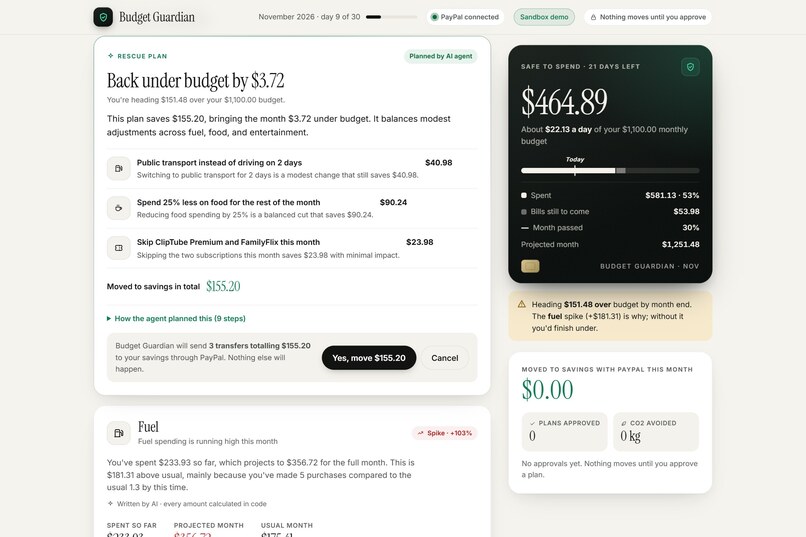
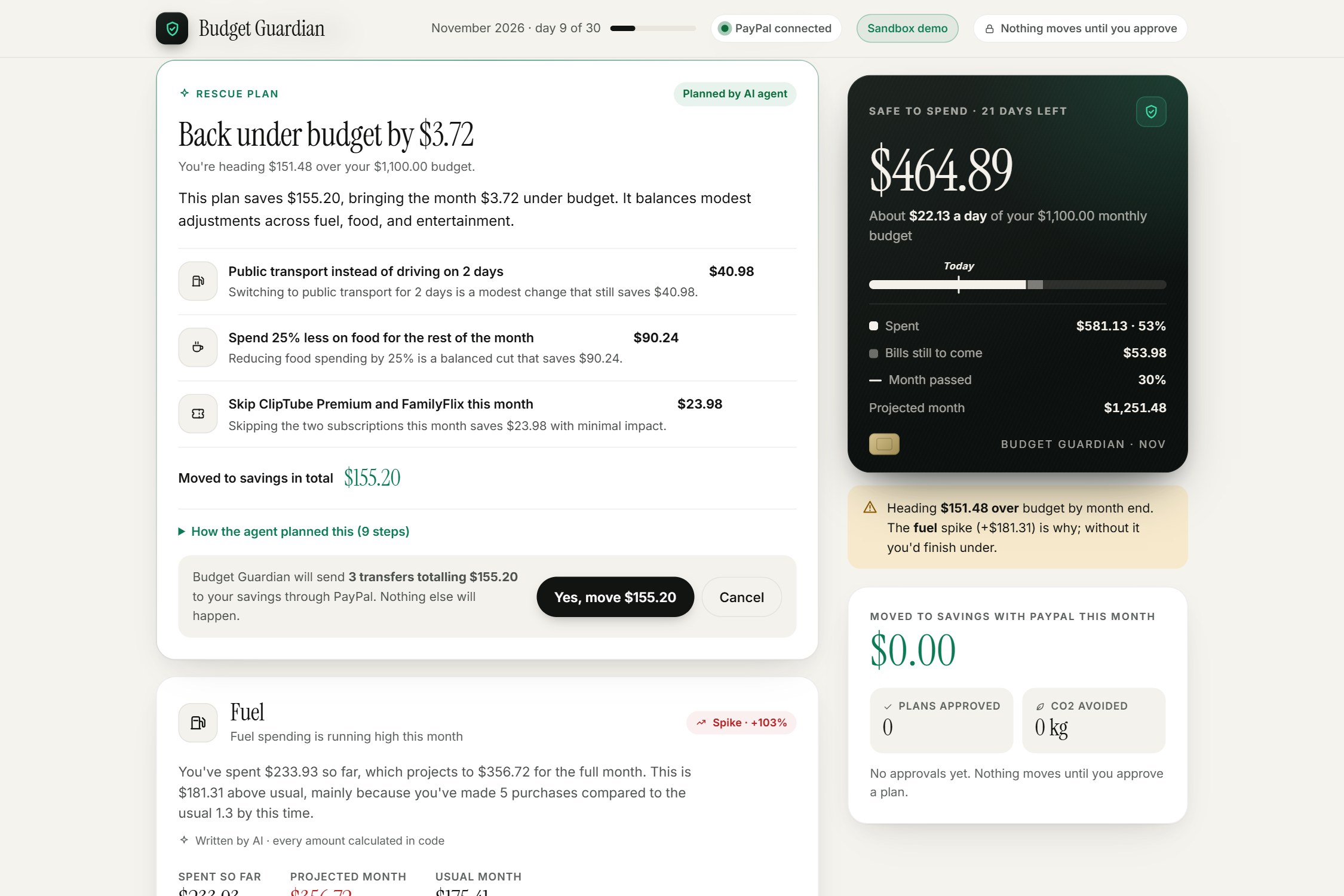
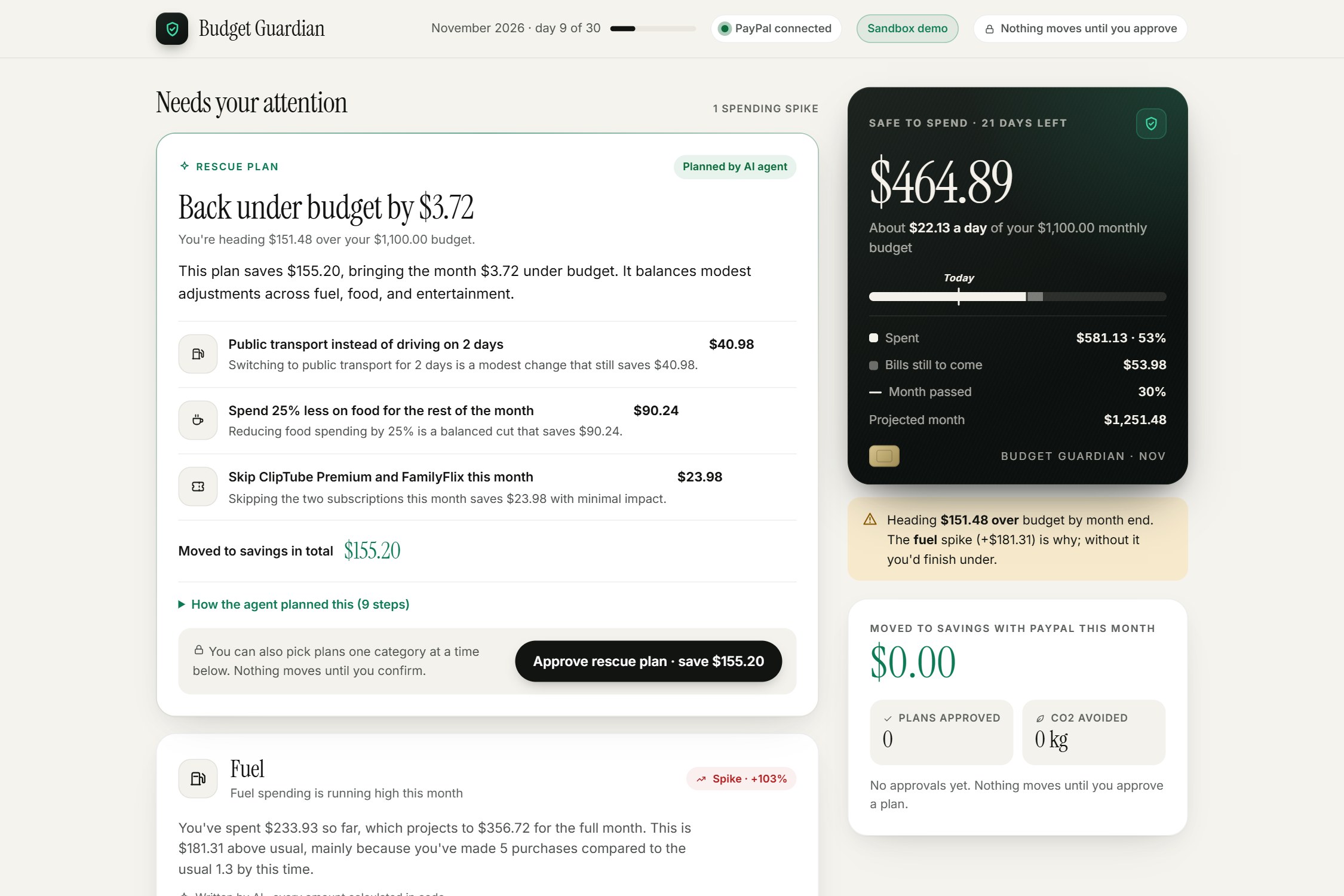
Nothing moves until you confirm. Approving sends the savings to your savings account with PayPal Payouts.
-
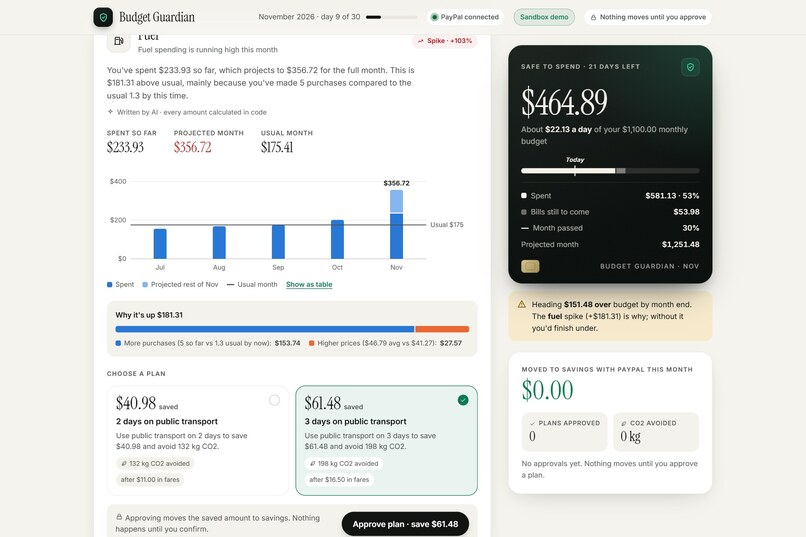
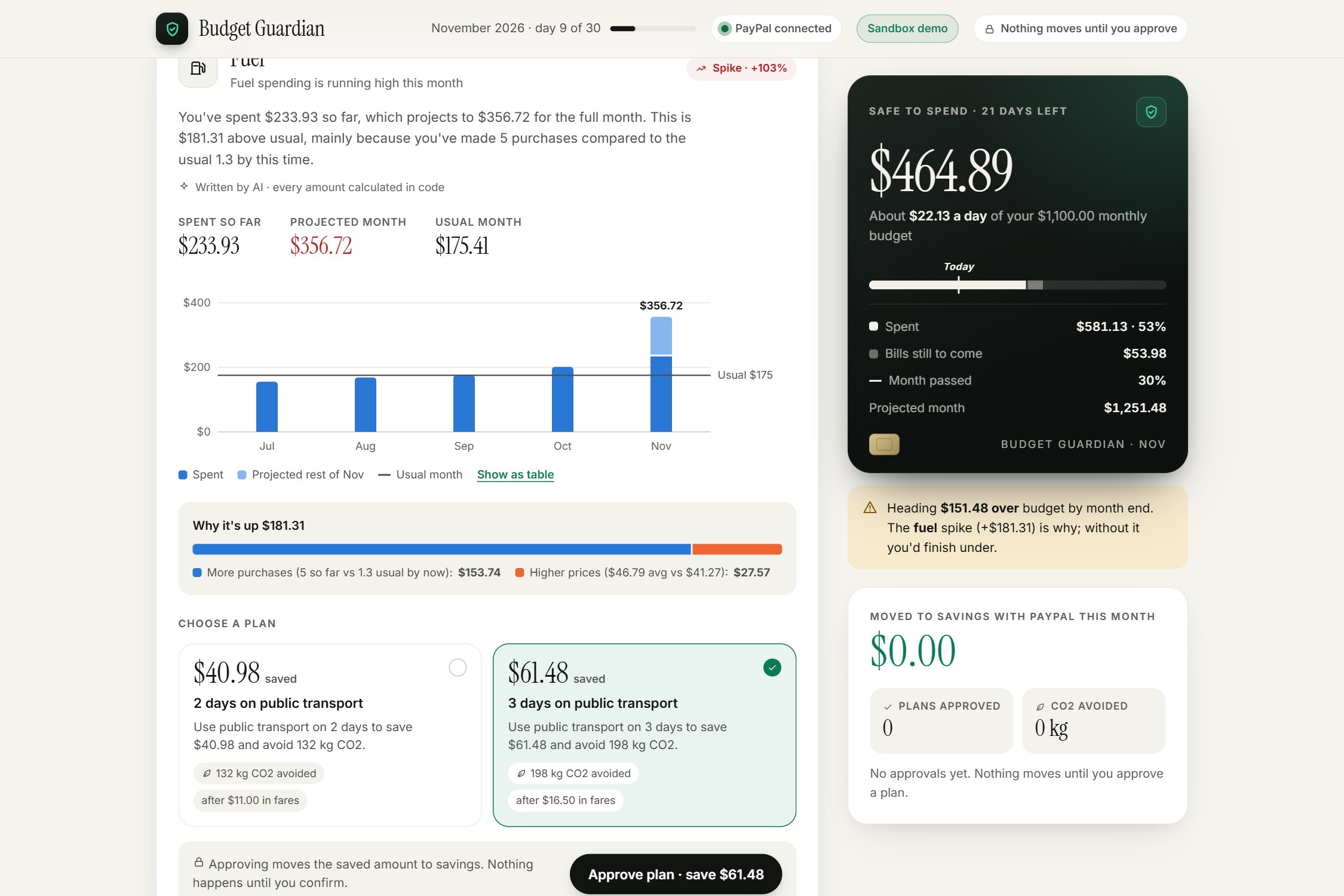
Why fuel spiked: the month projected against a usual month, and the increase split exactly in code into more purchases and higher prices.
-
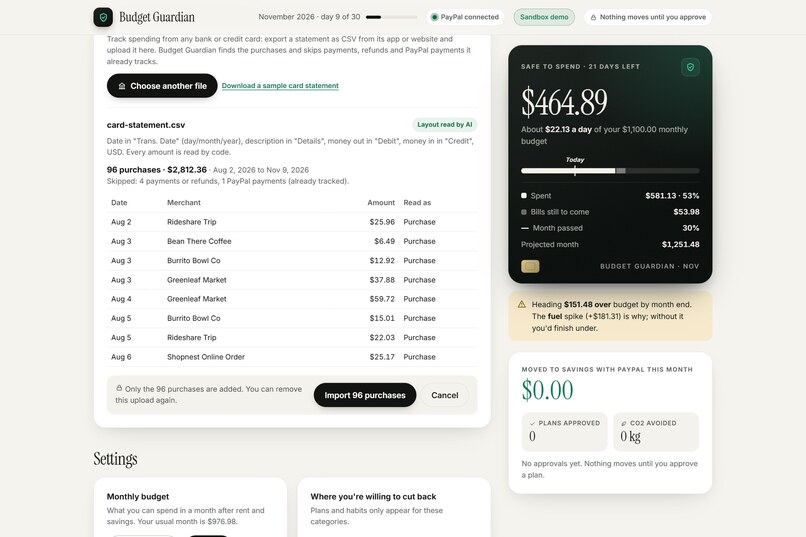
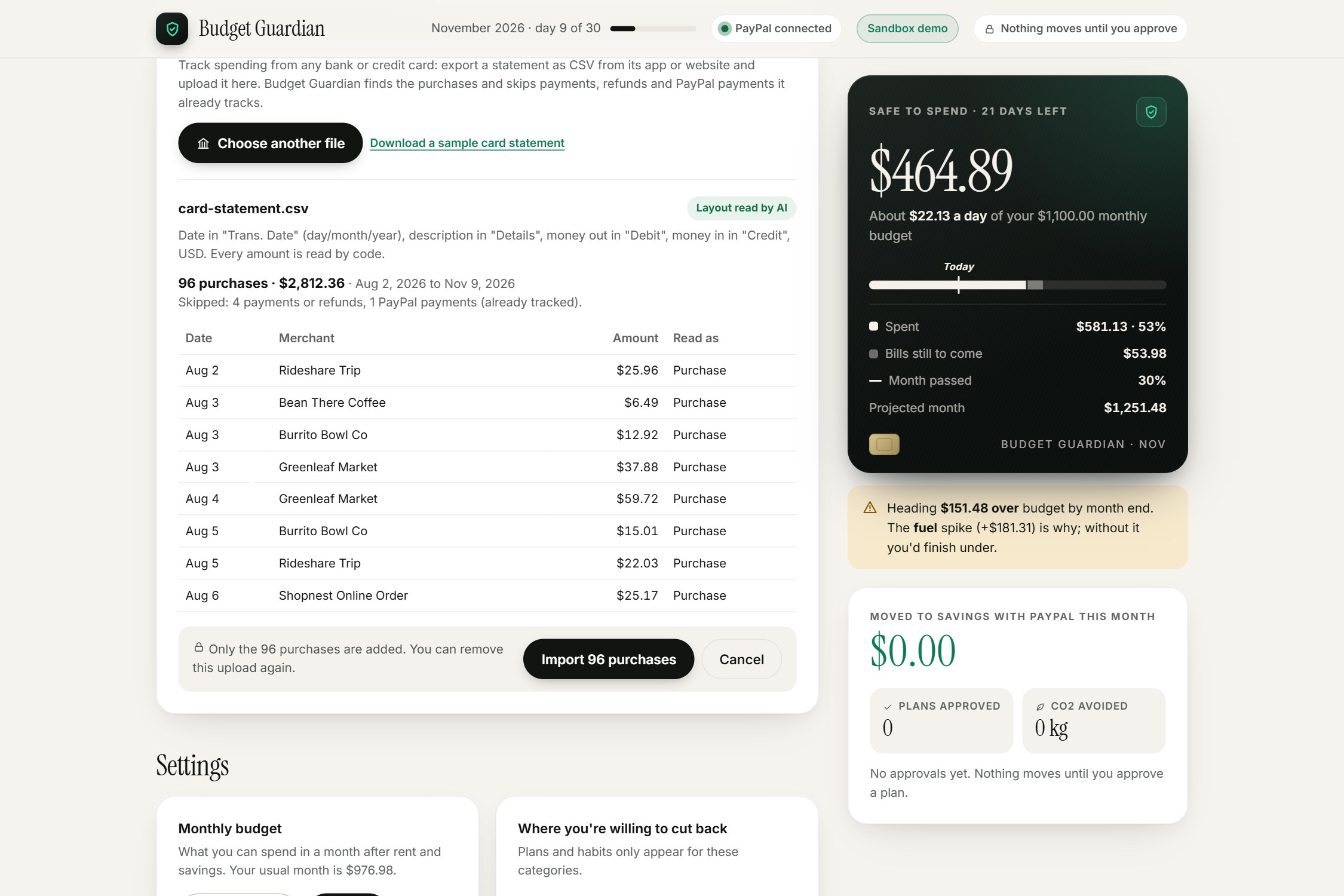
Any bank's CSV statement: the AI reads the layout, code reads every amount, and PayPal payments are skipped as already tracked.
-
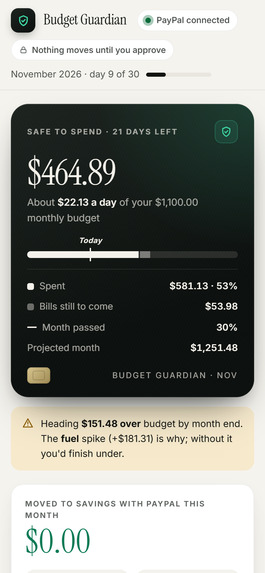
On a phone: an installable web app, with spike alerts delivered as device notifications.
-
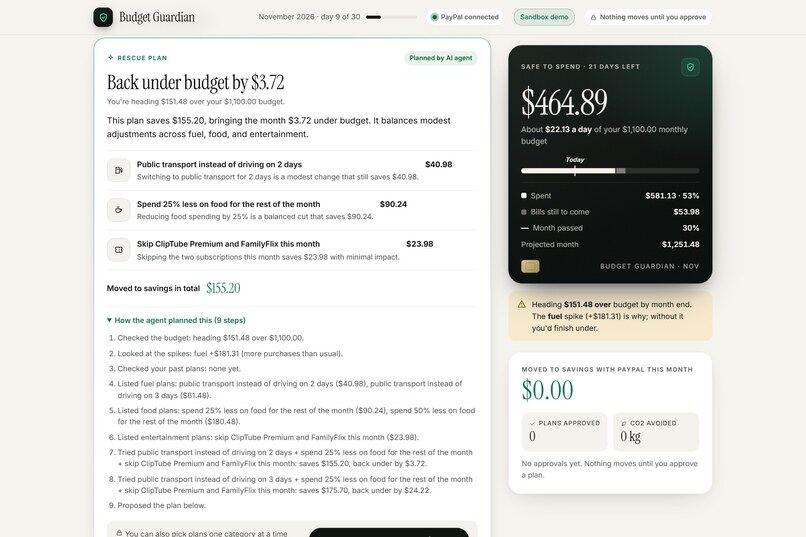
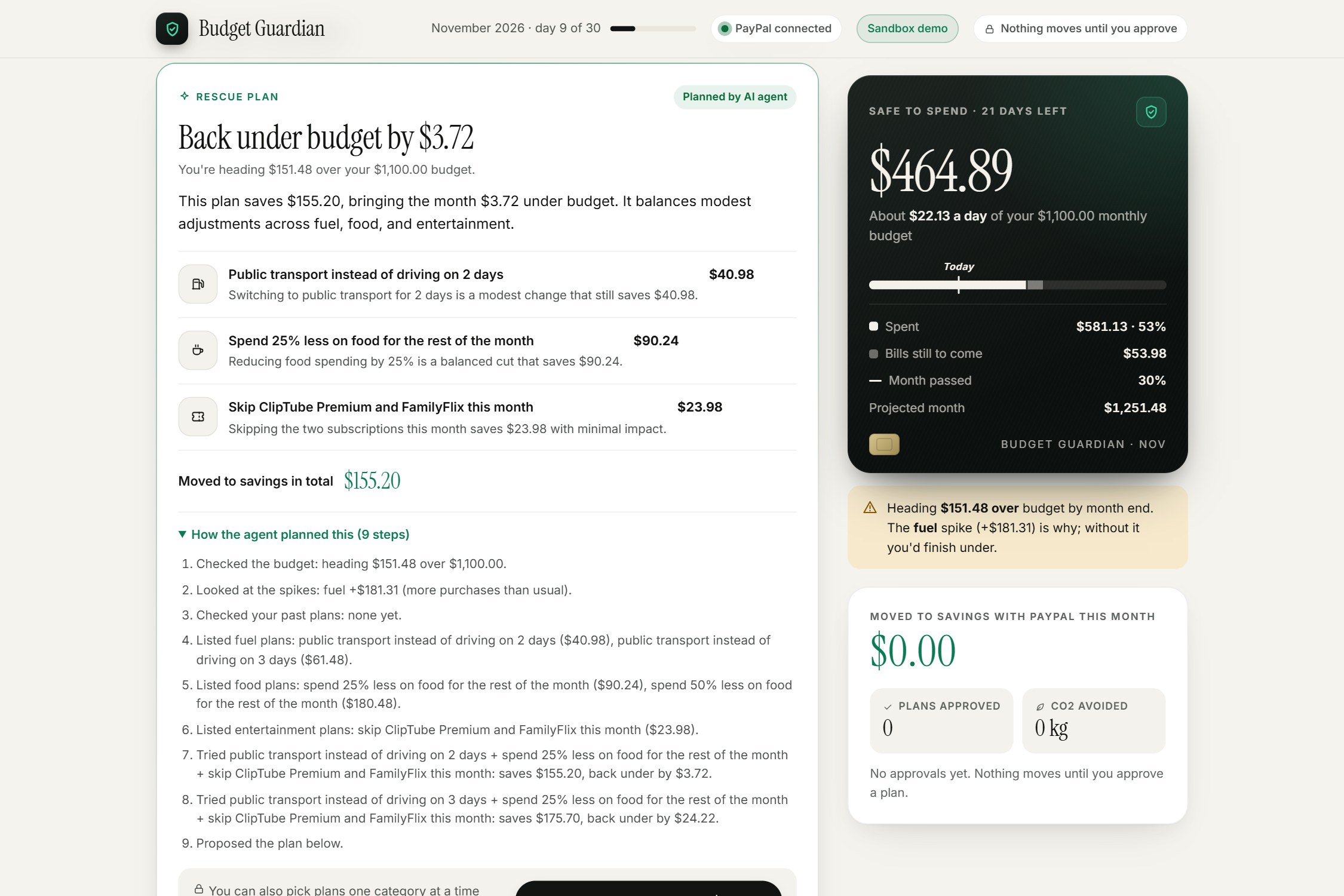
The AI agent's plan, with every step it took. It can only choose options code offered, and code checks every number.
-
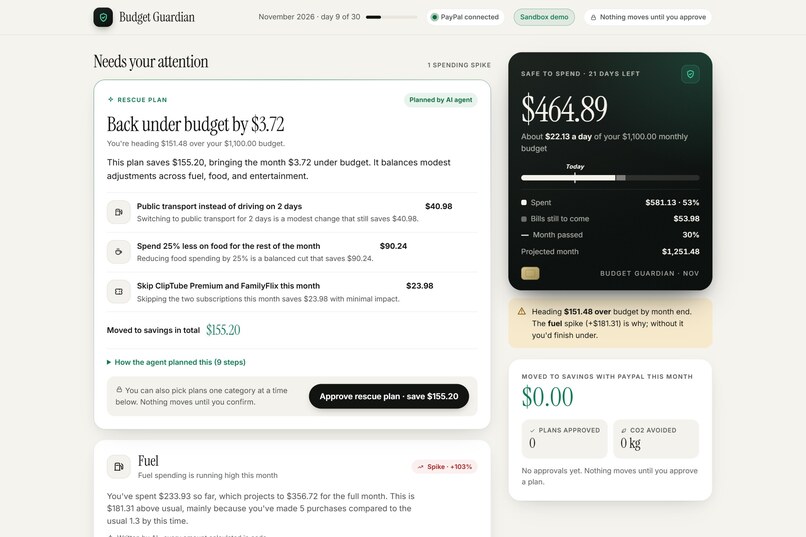
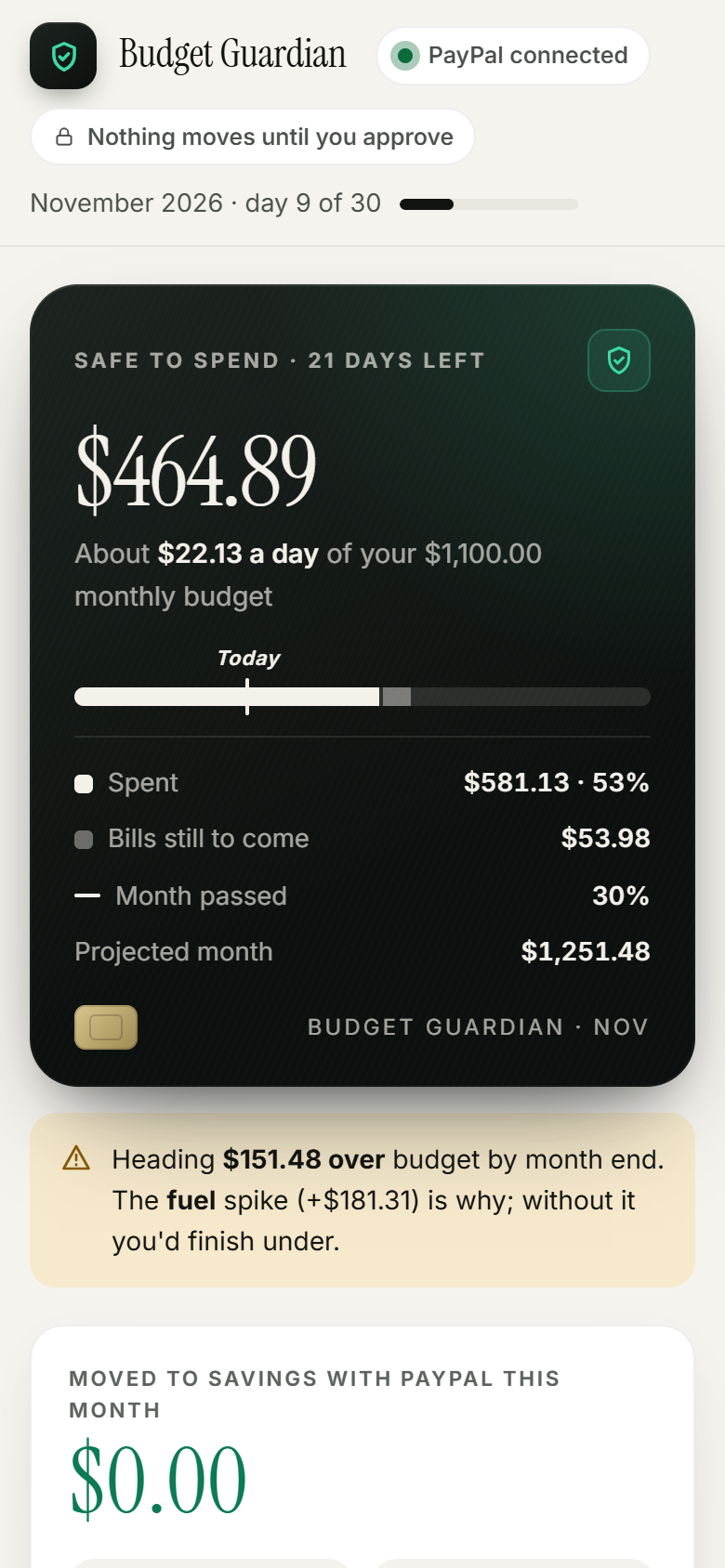
Safe to spend for the rest of the month, and an AI rescue plan that brings the month back under budget.
Inspiration
Most budgeting apps tell you what you spent after the money is gone. By the time a bad month shows up in a chart, it's over. We wanted something that notices mid-month, explains the cause honestly, and helps you act while there's still time, without ever moving money on its own.
What it does
- Detects spikes: projects each category's month (spent so far plus usual spending for the days left) and flags categories heading 30%+ and $25+ above a usual month.
- Explains the cause: splits each increase exactly into more purchases, higher prices and subscription changes. AI writes the words; code supplies every number.
- Plans with an AI agent: a tool-using agent combines savings options across the categories you marked as flexible, uses your record of plans kept and missed, tests combinations with a simulator, and proposes a plan with a reason for each choice. You can open every step it took.
- Acts only with approval: when you approve, the server recomputes the amount, checks your PayPal balance, and moves the savings with a PayPal Payout that can never be paid twice. Then it tracks whether you keep the plan.
- Alerts on your devices: Web Push notifications when a category starts spiking or a plan goes off track. No email, no app install.
- Reads every card: PayPal Transaction Search, banks and cards through Plaid, or a CSV statement from any bank (the AI reads the layout, code reads every amount).
How we built it
- PayPal (sandbox): Transaction Search to read spending, Balances to check before any transfer, Payouts to move approved savings (the approval id is the
sender_batch_id, so retries can't pay twice), and Orders v2 for test checkouts. - AI: open-weight models through Groq: Qwen 3.8 for explanations, labels and statement layouts, and gpt-oss-120b for the planning agent (function calling). Gemini takes over automatically if the open model fails, and code-written text keeps everything working if both are down.
- Server: Node.js 24 and Express 5, with SQLite (
node:sqlite). Money is stored as integer cents. - Client: React 18 and Vite, an installable web app with a service worker for push.
- Hosting: Render Blueprint with a persistent disk. Every visitor gets their own copy of the demo (a small SQLite file attached to a shared database), so judges never see each other's changes.
- 133 automated tests and CI on every pull request.
Challenges we ran into
- Keeping the AI honest with money. Models love to round, invent or re-calculate figures. We made code the only source of numbers: any figure in AI text that code didn't supply is rejected, the agent can only choose options code offered, and failed proposals go back to the agent with the reasons.
- Open models and tool calling. Some models produced malformed tool calls or ran out of turns gathering facts one at a time. We give the agent a briefing up front, retry on rate limits, and restart cleanly on a backup model instead of switching mid-conversation.
- A public demo that moves real sandbox money. Per-visitor workspaces, a daily payout cap and a per-visitor approval limit keep the shared sandbox account healthy through judging.
Accomplishments that we're proud of
- 100% category and recurring-charge accuracy labeling the demo history (165 transactions) with Qwen 3.8.
- The agent plans in about 5 seconds, and every number it shows is verified by code.
- Approving a plan really moves money through PayPal, and the app follows up on whether you kept it.
What we learned
AI is most useful here as a planner and explainer, not a calculator. Splitting the work (AI chooses and explains, code computes and checks, the person decides) made the product both smarter and more trustworthy.
What's next for Budget Guardian
- Real PayPal accounts (moving beyond the sandbox) and more currencies.
- India: Account Aggregator for bank data, and UPI spending.
- Shared budgets for couples and roommates.
Try it
No sign-up needed: https://budget-guardian.onrender.com. Each visitor gets their own copy of the demo; Settings → Reset the demo starts over. Plaid sandbox login: user_transactions_dynamic, any password.
Built With
- express.js
- gemini
- gpt-oss
- groq
- javascript
- node.js
- paypal
- plaid
- qwen
- react
- render
- sqlite
- vite
- web-push
