-
-
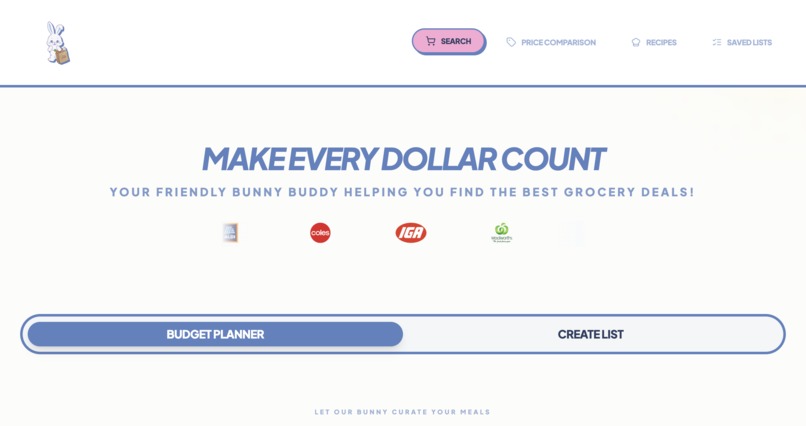
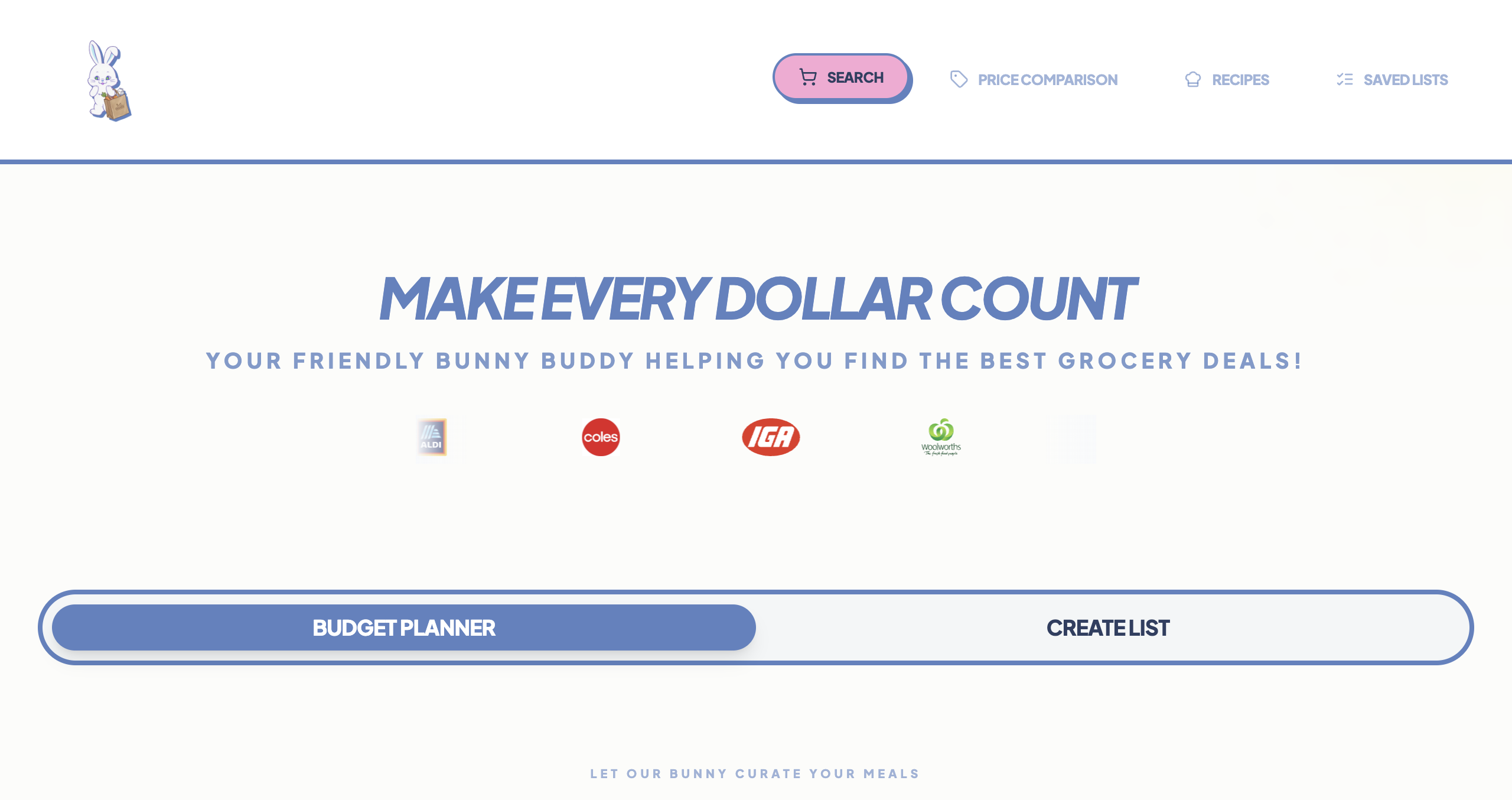
Landing page
-

Our mascot 'Budget Bunny'
-
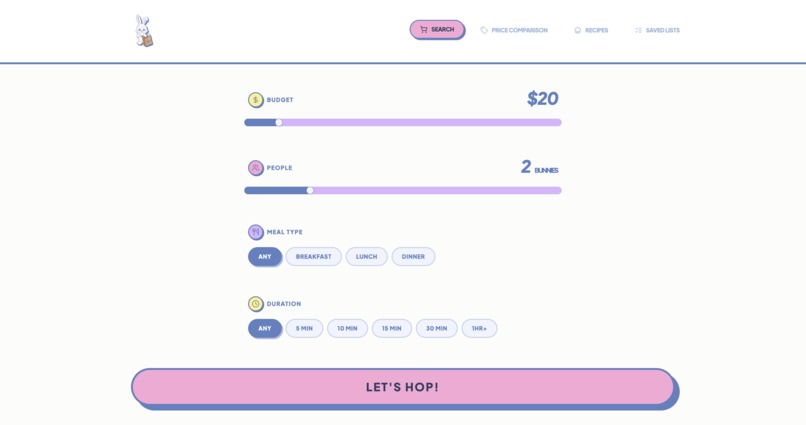
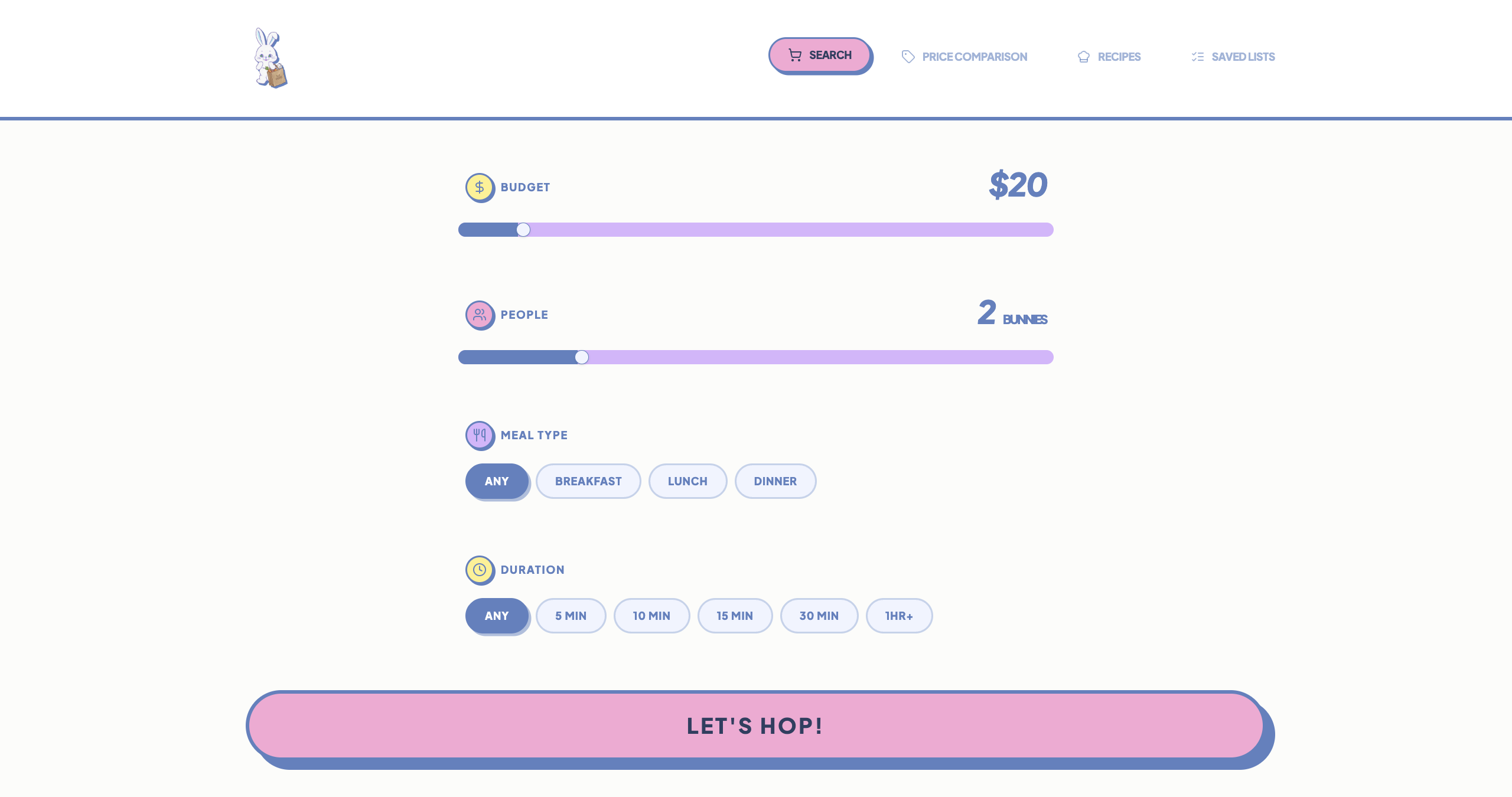
Filter Meals
-
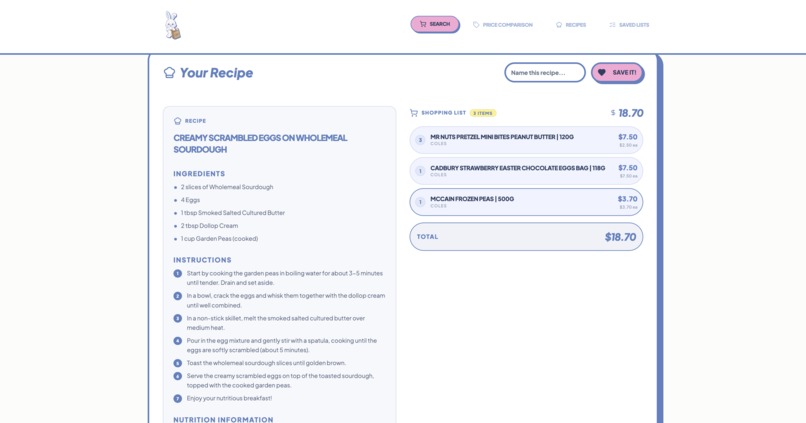
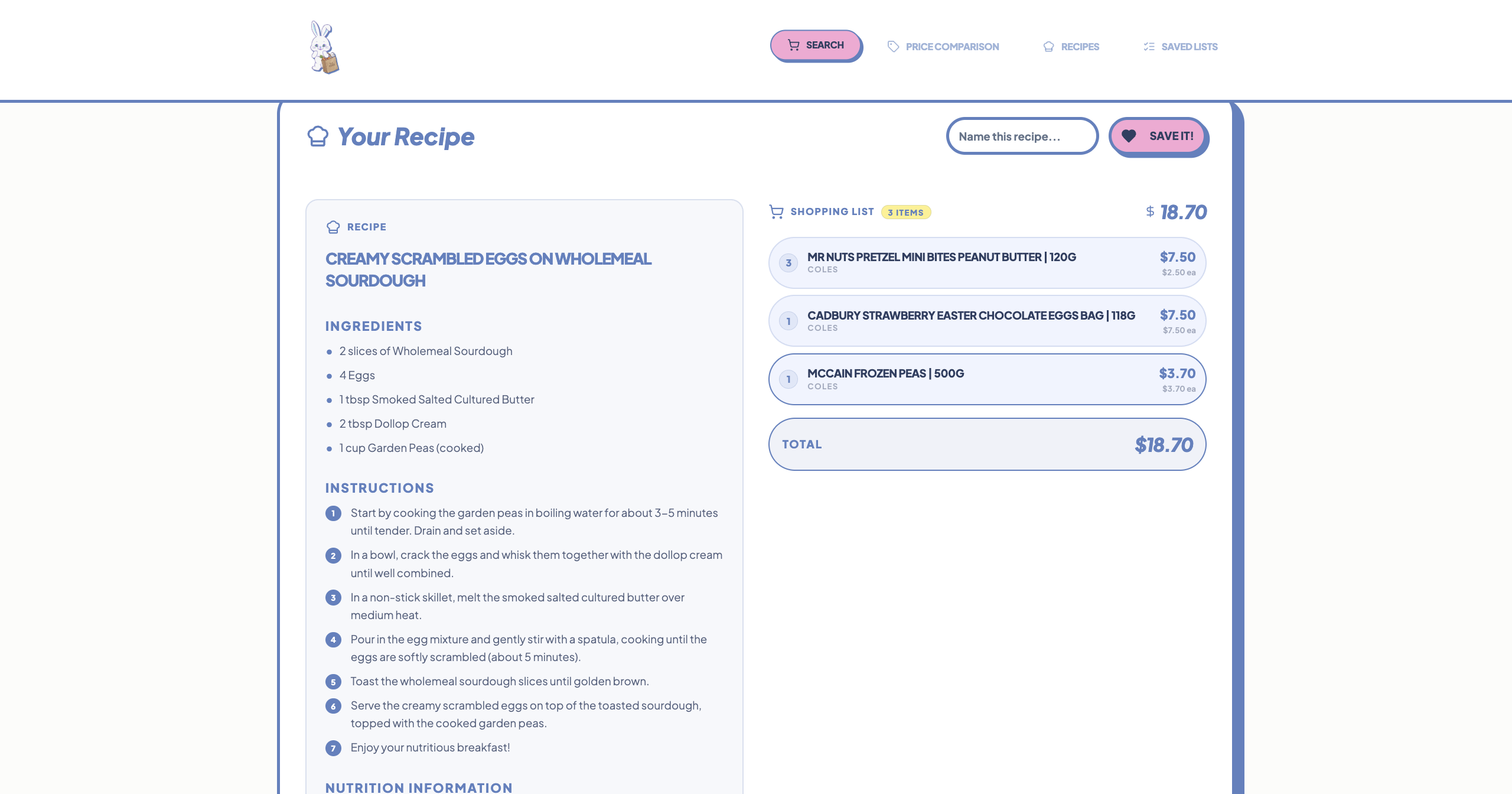
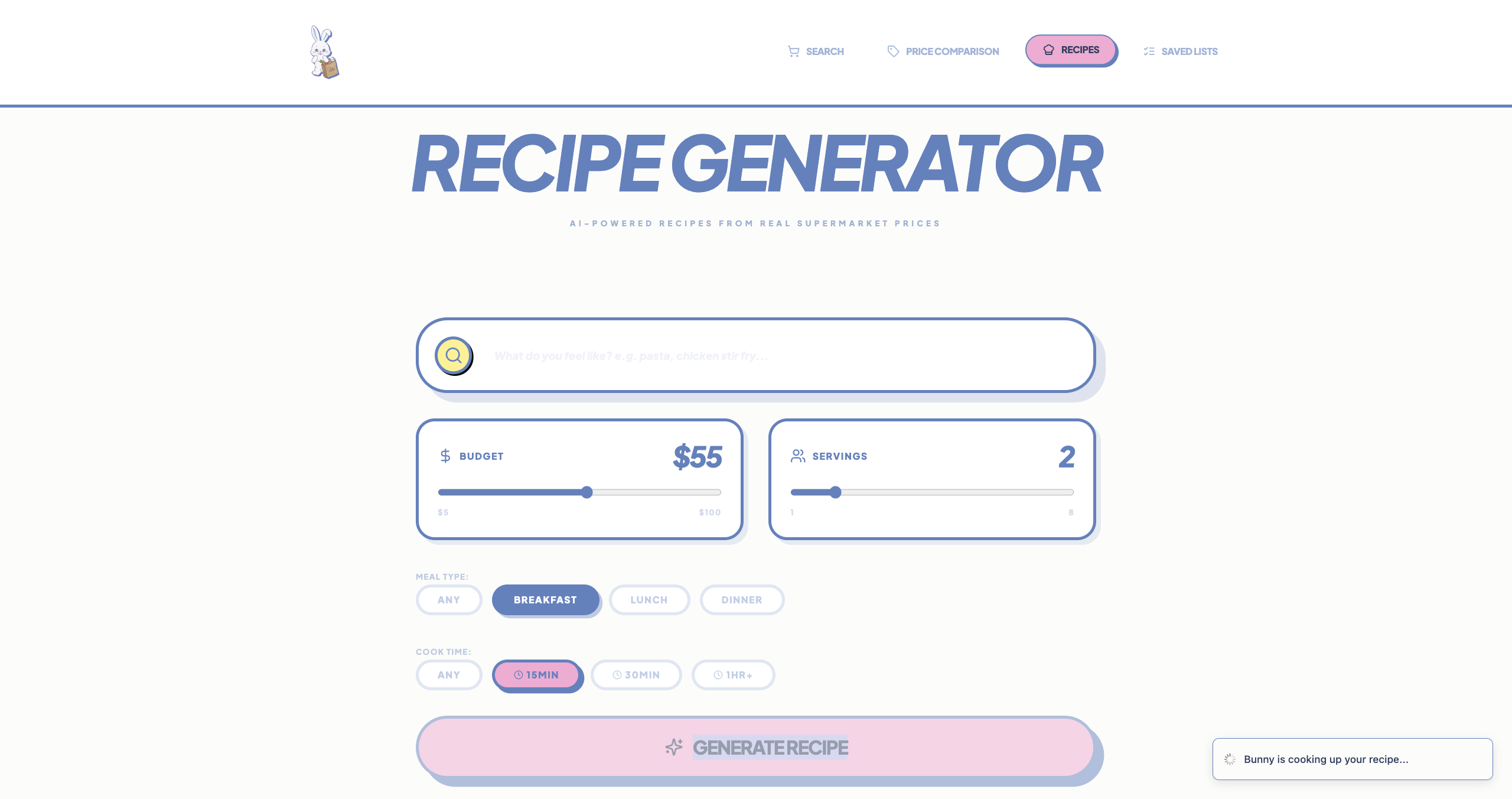
Bunny curates a recipe based off budget and dietary requirements
-
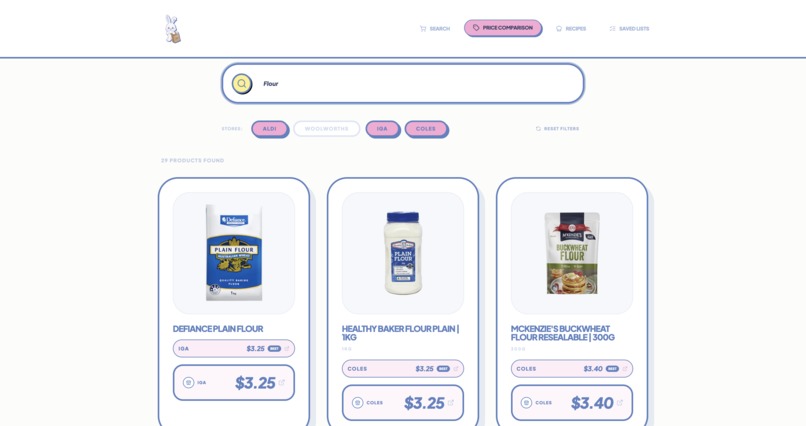
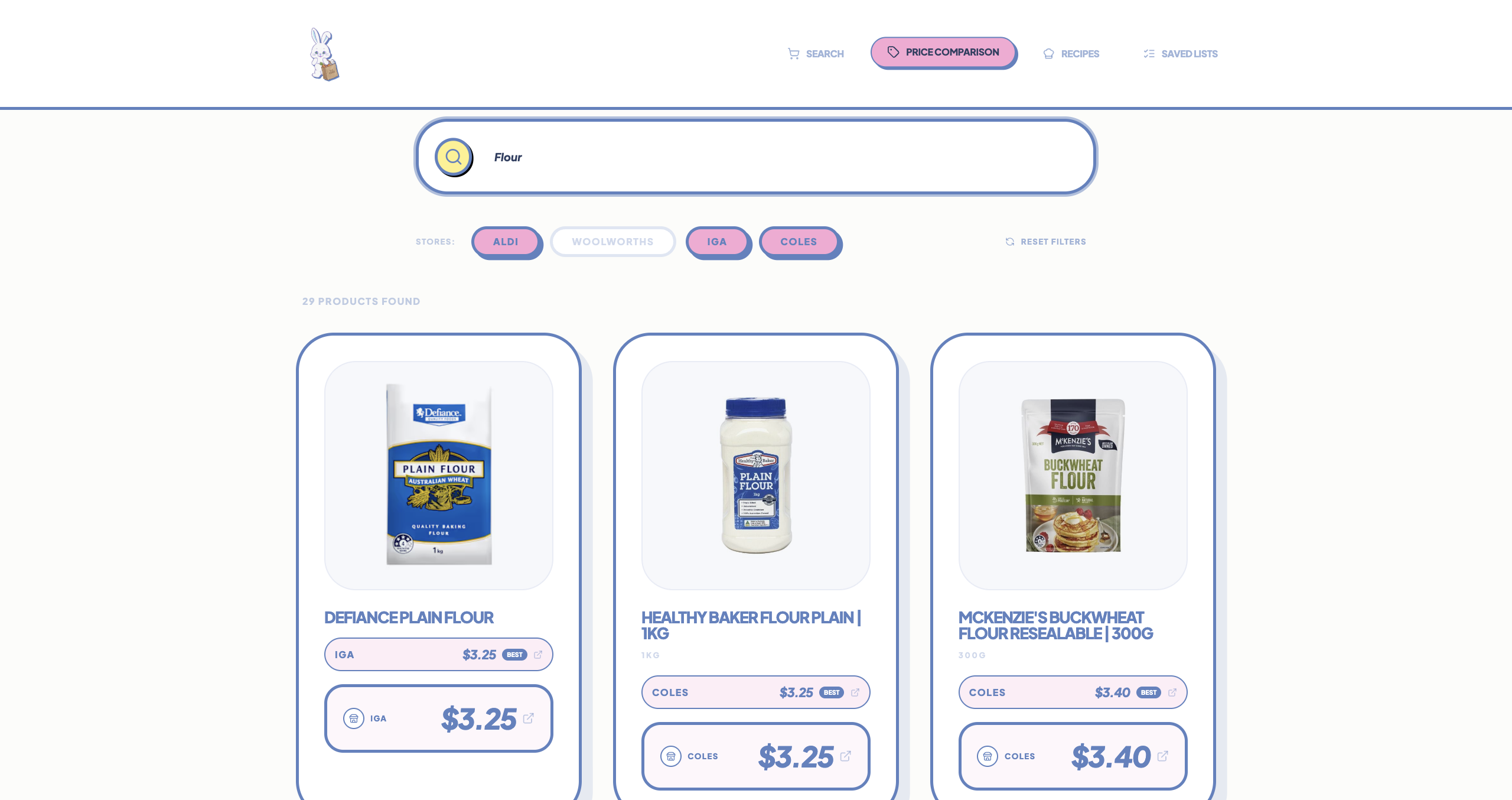
Price comparison for brands and stores
-
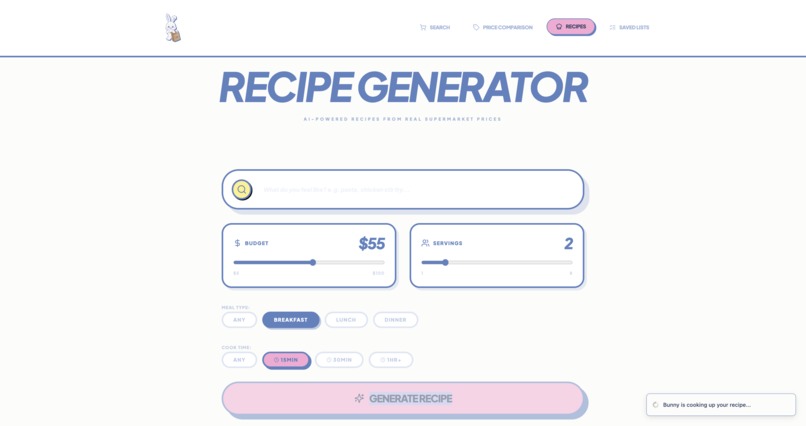
Go straight to to recipe generator

Inspiration
Australians are caught making tough decisions every time they hit the supermarket. Between 2021 and 2023, the cost of a staple shopping basket jumped over 15 percent, but some everyday essentials climbed far higher. Cheese is up nearly 27 percent. Bread is up 24 percent. Milk and dairy are close behind. Even eggs, a budget staple, rose almost 20 percent!
The impact? Foodbank reports that 77 percent of Australian households have experienced food insecurity. That is not a minority, that is most of the country. When the basics become a luxury, something has to change. Introducing Budget Bunny, the grocery planner helping you hop to savings!
What it does
Budget Bunny revolutionises grocery shopping by offering three core intelligent services designed to maximise every dollar. Whether you are using an automated meal plan or a manual list, Budget Bunny ensures you are always hopping toward the most cost-effective checkout to assist you in this food cost crisis.
Our core features include:
- Intelligent Recipe Creation Engine: Users can input specific financial constraints, including total budget, number of mouths to feed, desired meal count, time to cook, and type of meal or cuisine. The engine builds a balanced shopping list tailored to those exact needs and live-searches current prices across local supermarkets to identify the absolute cheapest prices for your basket in real-time.
- Custom Shopping Lists: Users can take full control by searching for specific groceries to build their own lists. Whether looking for a specific type of cheese or a specific cut of steak, the platform queries up-to-the-minute data from major supermarkets, ensuring you find the most affordable options.
- Built-in Meal-Planning Assistant: We offer a vast library of recipes fully loaded with essential data. Users can stay on track with calorie goals, accurate cook times for busy schedules, adjustable servings, and estimated prices to match budgets. Users can seamlessly navigate this library using a variety of filters to discover the perfect dish.
How we built it
Budget Bunny services implement a sophisticated Semantic Search engine using Elasticsearch's Native KNN Vector Search.
When a user types something like 'Italian dinner,' we use OpenAI to convert that search into a vector and query our product semantically. This allows the system to use context to identify ingredients like pasta, garlic, and olive oil, even if they aren't named specifically.
Our technological stack and search flow include:
- Elasticsearch Native KNN Vector Search for semantic querying.
- OpenAI for vector conversion and understanding search context.
- Fuzzy Full-Text Search to instantly handle user typos.
- Nested Aggregations to power our 'Basket Optimiser'.
Our frontend, we wanted to keep it close to what we know for efficiency. We used the renowned React Typescript, CSS with Vite and Vercel. We used other tools to help with deployment such as Google Cloud CDN for images. We of course routed this with server side rendering from Vercel!!
The KNN query has a filter clause applied inline so that semantic relevance and budget constraints are resolved in a single query. Finally, our Basket Optimiser runs min-metric calculations across thousands of SKUs to pinpoint the cheapest store for your basket items. By combining modern vector search with structured filtering, we have built a search experience that is both intelligent and strictly budget-aware.
Challenges we ran into
The most significant hurdle we faced initially was ideation. We wanted to ensure Budget Bunny solved a genuine societal issue while maintaining strict ethical standards and high usability for our target demographic. Once we locked in the vision, time management became our next biggest adversary. Even when we were working at full capacity without taking breaks, the clock always felt like it was slipping away from us.
On the technical side, scraping and aggregating grocery data consumed a massive amount of our time, requiring us to manage and synchronise over four complete databases and APIs. Furthermore, learning how to seamlessly and efficiently integrate Elasticsearch with our OpenAI components was a steep learning curve. Finally, designing the frontend and successfully connecting the entire tech stack pushed the limits of our current skill levels, demanding rapid, on-the-fly learning to bring the architecture together.
Accomplishments that we're proud of
Seeing Budget Bunny successfully deployed and live via Vercel is a massive win for us. We are incredibly proud of how efficiently we collaborated as a cross-university team. Balancing the demanding workload of this hackathon while being in the thick of Term 1 and Semester 1 at UNSW and UTS was no small feat.
The culmination of our efforts made every second worth it. The long, exhausting nights of coding and debugging finally paid off, ending in a lot of well-deserved cheering when our live search and basket optimiser executed perfectly in our production environment.
What we learned
We can break down our most valuable takeaways into a few key areas:
The power of internal deadlines: We quickly learned that setting strict internal milestones is critical for maintaining momentum and ensuring we had a functional product ready for submission.
Resourcefulness and adaptability: We discovered how to efficiently hunt down and implement powerful, free developer tools. We also learned how to architect and design full-stack applications under pressure. While our methods might not perfectly mirror conventional corporate pipelines just yet, we proved to ourselves that we can build robust, complex systems from the ground up.
Team bonding through data: On a lighter note, because we used convenience store items for our initial mock database tests, we all learned exactly what each team member's favorite snacks and foods are, bringing us closer together as a group.
What's next for Budget Bunny
Our immediate plan is to continue developing Budget Bunny and get it into the hands of actual users. We want to refine the user interface, expand our supermarket data sources, and ensure the platform is highly scalable.
Most importantly, we are committed to a strict no-monetisation policy for this platform. Budget Bunny was born out of a desire to help people navigate a severe cost of living crisis. We never plan to charge users or put grocery savings behind a paywall, ensuring it remains a completely free, accessible tool for anyone who is financially struggling or facing uncertain times.
disclaimer[correct link, no changes made after deadline, see github] https://frontend-dwqitu3zr-101viper777s-projects.vercel.app/
Built With
- elastic
- nextjs
- python
- react
- typescript


Log in or sign up for Devpost to join the conversation.