

Inspiration
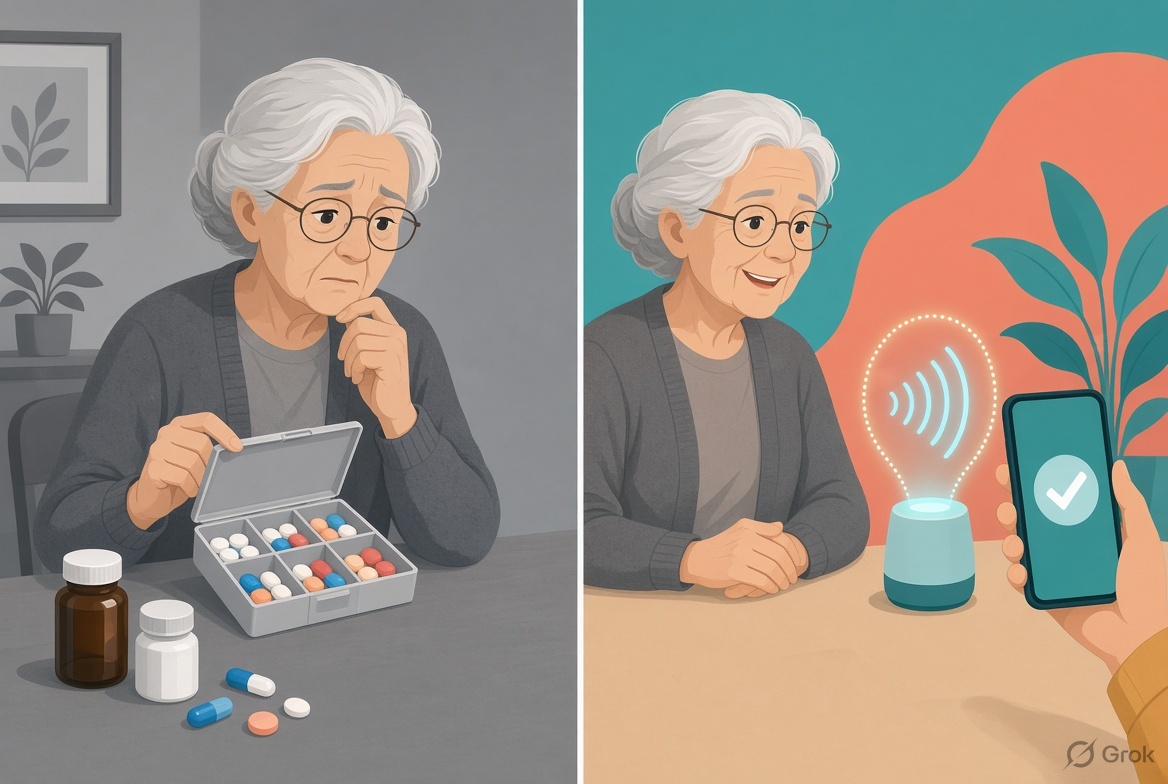
Many older adults take several medicines every day, and one missed dose can lead to a hospital visit. In many families, the children live in another city and only find out about a problem when it's already serious. Existing reminder apps expect seniors to tap through screens and menus, and many of them can't or won't. We asked: what if the reminder was just a friendly voice, and the family always knew what happened?
That question became Buddy Care.
What it does
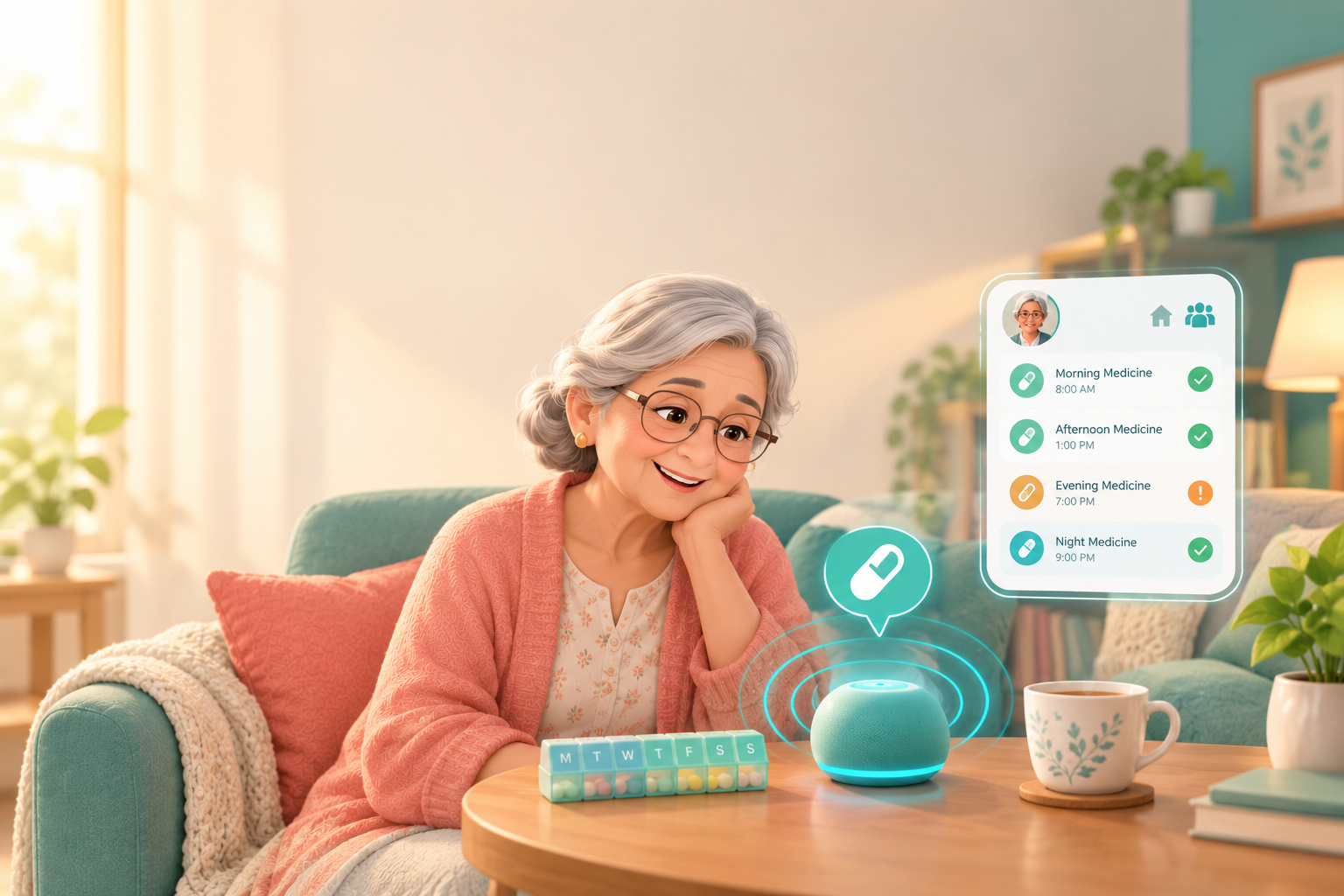
Buddy Care is a voice-first care companion that runs entirely in the browser and simulates the Alexa+ experience.
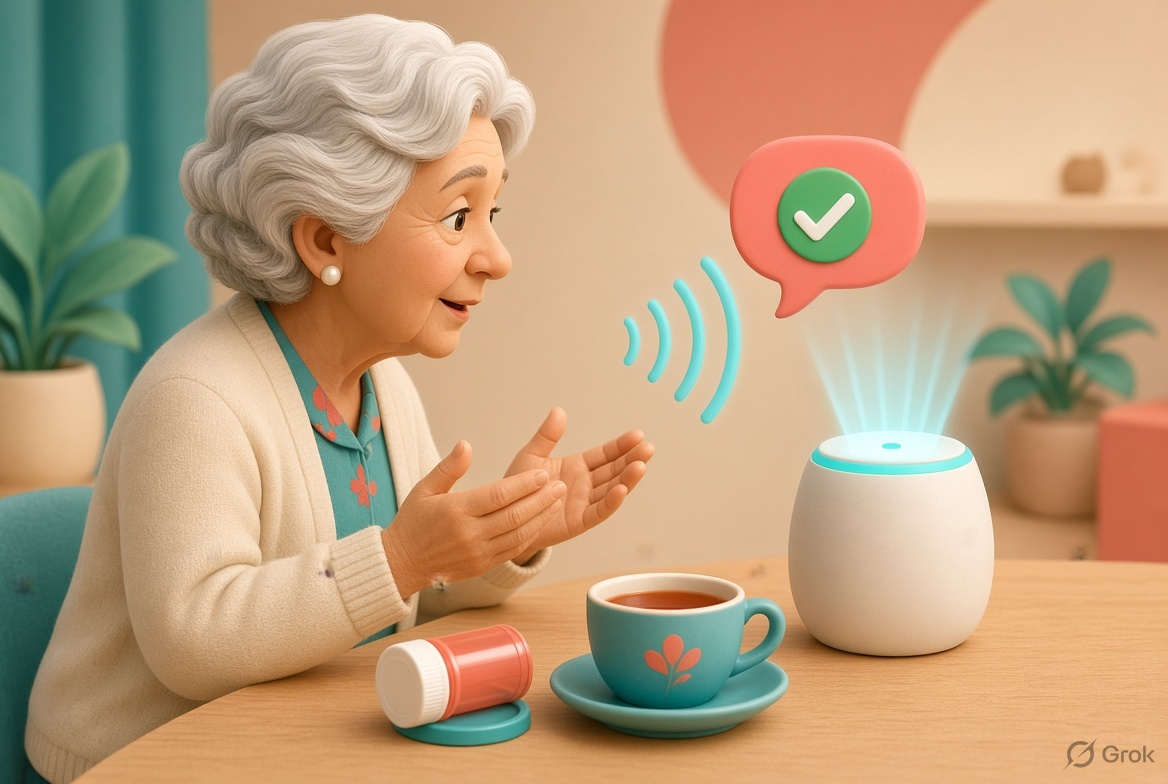
- Speaks reminders at the scheduled time: "Good morning! Time for your blood pressure tablet. Have you taken it?"
- Listens to the reply and confirms the dose by voice (taken, snooze, or skipped).
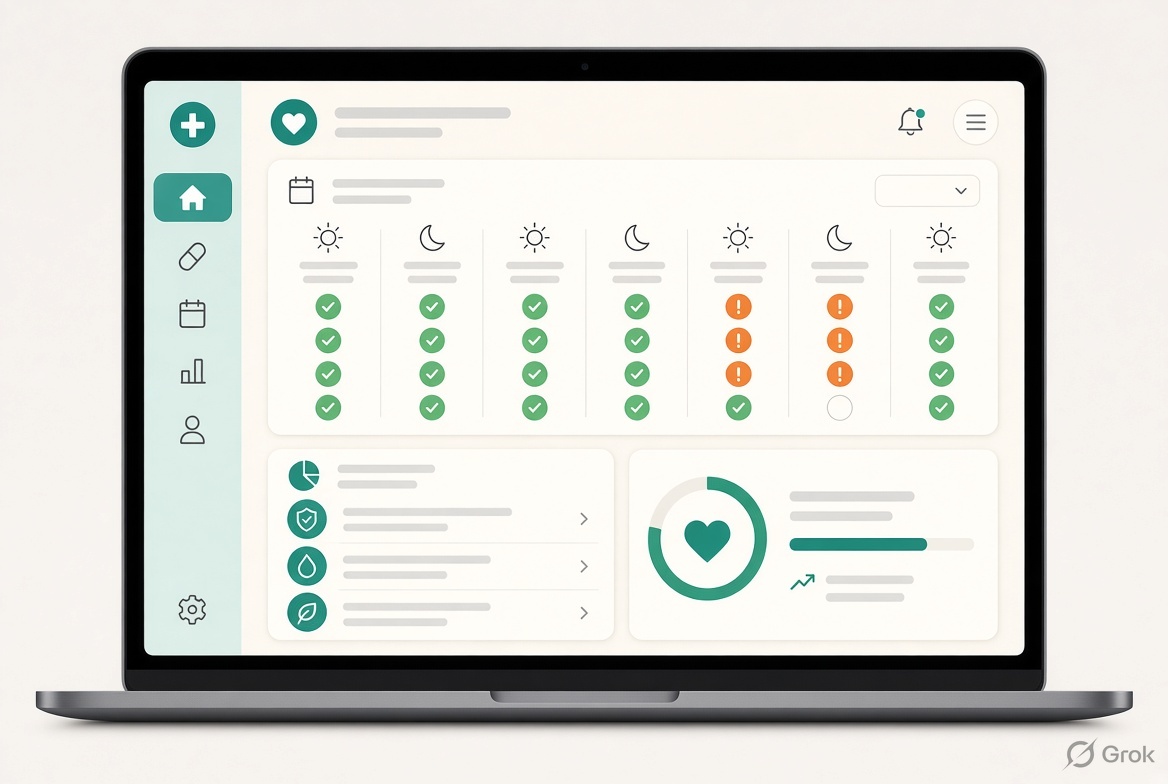
- Updates a live family dashboard showing taken, snoozed and missed doses.
- Sends missed-dose alerts so family can step in early.
We track adherence as:
$$\text{Adherence} = \frac{\text{doses taken on time}}{\text{doses scheduled}} \times 100\%$$
The dashboard uses this to show families a simple weekly trend.
How we built it
- A browser-based Alexa+ simulator handles speech output and voice input, so no hardware is needed.
- A scheduler triggers reminders at the set times and runs the conversation flow (ask, listen, confirm, log).
- A family dashboard reads the dose log in real time and flags missed doses.
- The whole project is 100% website-based, so judges and users can try it instantly.
Challenges we faced
- Making voice feel natural. Early prompts sounded robotic, so we rewrote them to be short, warm and conversational.
- Understanding messy replies. Seniors might say "yes", "I already did", or "later", so we had to handle many phrasings for the same intent.
- Avoiding false alarms. An alert should fire only after a sensible grace period, otherwise families would stop trusting it.
- Designing for two audiences. The senior needs zero screens, while the family needs clear information at a glance.
What we learned
- Good healthcare technology should disappear into the person's routine rather than add another thing to learn.
- Voice interfaces need careful conversation design, not just speech recognition.
- Peace of mind for families is as valuable as the reminder itself.
What's next
- Support for multiple medicines and multiple family members
- Multilingual voice support
- Real Alexa+ and smart speaker integration
- Doctor-shareable adherence reports

Log in or sign up for Devpost to join the conversation.