Inspiration
The idea for bucketMap struck us during our trip from Ohio to KnightHacks. We found ourselves with a few hours to spare before the hackathon but lacked a concrete plan. Despite using Google Maps and TripAdvisor to find places to visit, the recommendations weren't personalized to our preferences. This gap in tailored suggestions led us to envision an app that could address this need for personalized and efficient travel planning.
What it does
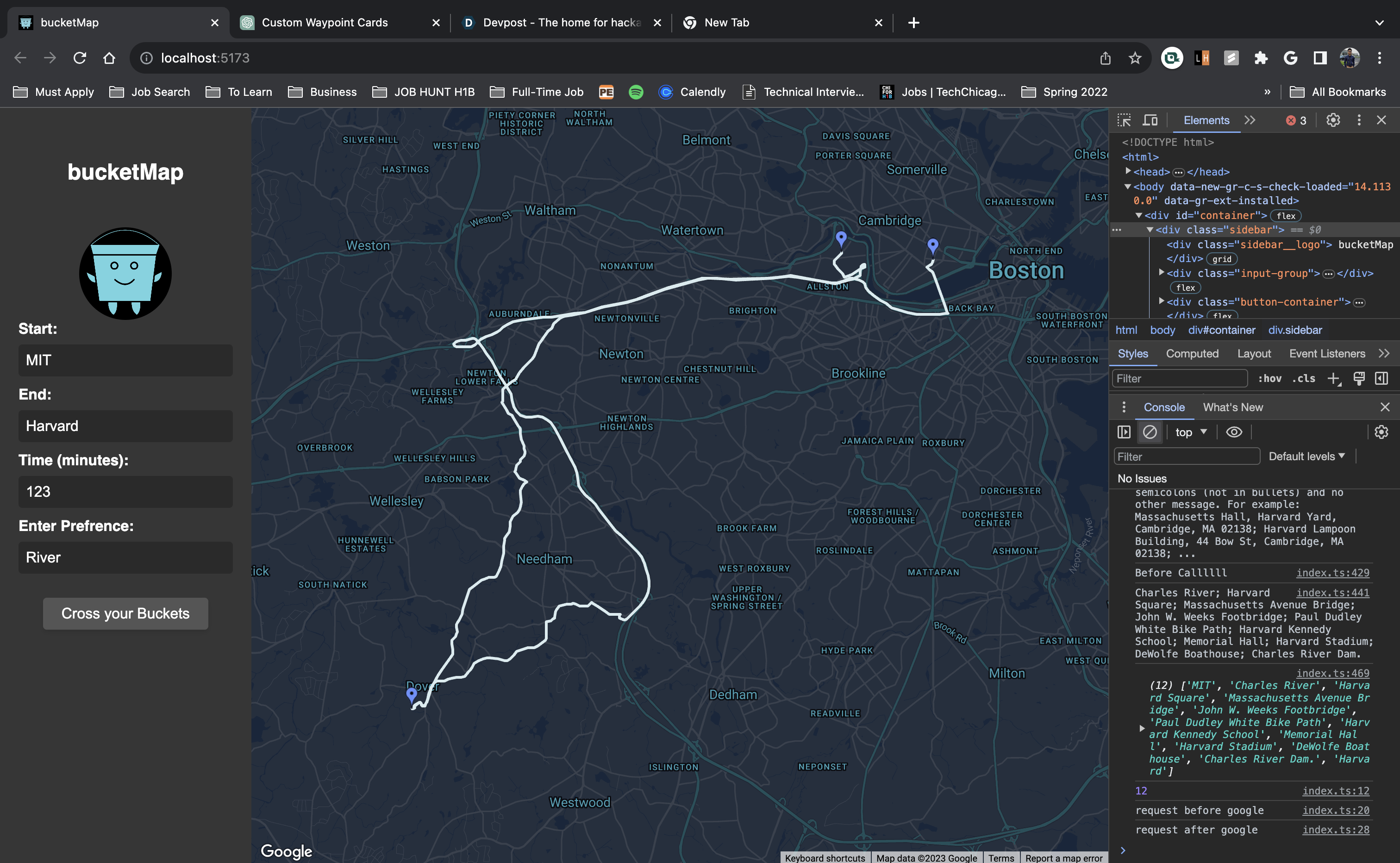
bucketMap is a practical web app for personalized travel planning. Users can input their starting point (e.g., an airport), destination (e.g., a hackathon), and the time they have for travel. They can also mention their preferences like historical sites or landscapes. Using this information, bucketMap employs AI to suggest a realistic number of destinations one can visit in the given timeframe, considering the user's preferences. It's about efficient travel planning, making the most of the available time, and ensuring a travel experience that aligns with the user's interests and constraints.
How we built it
bucketMap was built using a combination of technologies, including Typescript, React, and Python. The development process involved integrating Google Map API and OpenAI API to provide the core functionality of the app. The architecture likely consists of:
- A user-friendly front-end interface developed with React for creating and managing itineraries.
- Server-side logic implemented in Python to handle data processing and API interactions.
- Utilization of Google Map API for location-based services and mapping functionalities.
- Integration of the OpenAI API to assist in generating personalized travel recommendations
Challenges we ran into
In the process of building bucketMap, our team faced a few tough challenges. Coordinating and integrating multiple APIs, like Google Map API and OpenAI API, needed careful coordination and problem-solving. Handling real-time travel data, such as travel times and locations, taught us the importance of precision and responsiveness. We worked hard to ensure accurate route calculations and reliable travel suggestions for our users. Safely managing user data and preferences was a top concern, so we made sure to prioritize security. Designing a user-friendly interface that provides a smooth experience for travelers was challenging but essential. These hurdles pushed us to grow and find effective solutions, contributing to the development of a useful travel app in bucketMap.
Accomplishments that we're proud of
Our team is comprised of mostly beginners with some people never working on a web app before. Despite this, our team learned how to design an build a web app and we learned to implement OpenAI API and Google Maps API into our app. We are proud that our app is working as it should in such a short time frame.
What we learned
While developing our travel app, bucketMap, we learned practical skills and gained insights into working with external APIs to enhance app functionality. Handling complex data, particularly geographical and time-related information, was a significant learning experience. We also grasped the importance of effective user experience (UX) design principles and the iterative improvement process based on user feedback, which was a crucial aspect of our development journey.
What's next for bucketMap
Looking forward, bucketMap aims to expand its coverage, integrate real-time weather updates and user reviews, develop a mobile version, explore partnerships, and refine the recommendation engine for personalized travel suggestions. The goal is to become an essential tool, offering customized itineraries based on users' preferences and available time, enhancing their travel experiences.
Built With
- css3
- html5
- javascript
- mapsapi
- openai
- python
- react
- typescript


Log in or sign up for Devpost to join the conversation.