-
-
Concept BubbleAR
Inspiration
The aviation industry is heavily impacted because of the virus and with the removal of the virus restrictions , such public spaces (i.e airport) need to attract customers while instilling confidence to the passengers with respect to their safety.
Maintaining at least 1.5-meter distance between yourself and anyone will help to fight the COVID-19 pandemic. However, especially for younger citizens (and even most of the older people), it is hard to estimate a distance of 1.5-meter and to keep it throughout the day. Moreover maintaining the distance becomes all the more challenging once the density of crowd increases in public spaces. Hence a training approach would improve users perception of socially acceptable distance and how to react to different density of crowd. To the knowledge of the team , this is the first work trying to address behavioral learning for the virus via technology.The solution is focused along sectors where crowd are encouraged to form in the near futures(eg airports), hence scalability is sector specific need.
What it does
BubbleAR provides an intuitive learning app, teaching social distancing with different crowd densities. Based on an augmented reality application, BubbleAR is designed to foster a lasting change in user behavior. Therefore, BubbleAR uses a gamification approach with intermittent reinforcement.
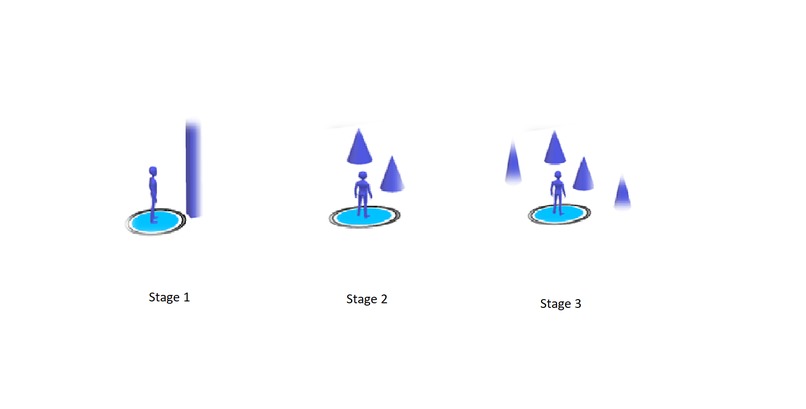
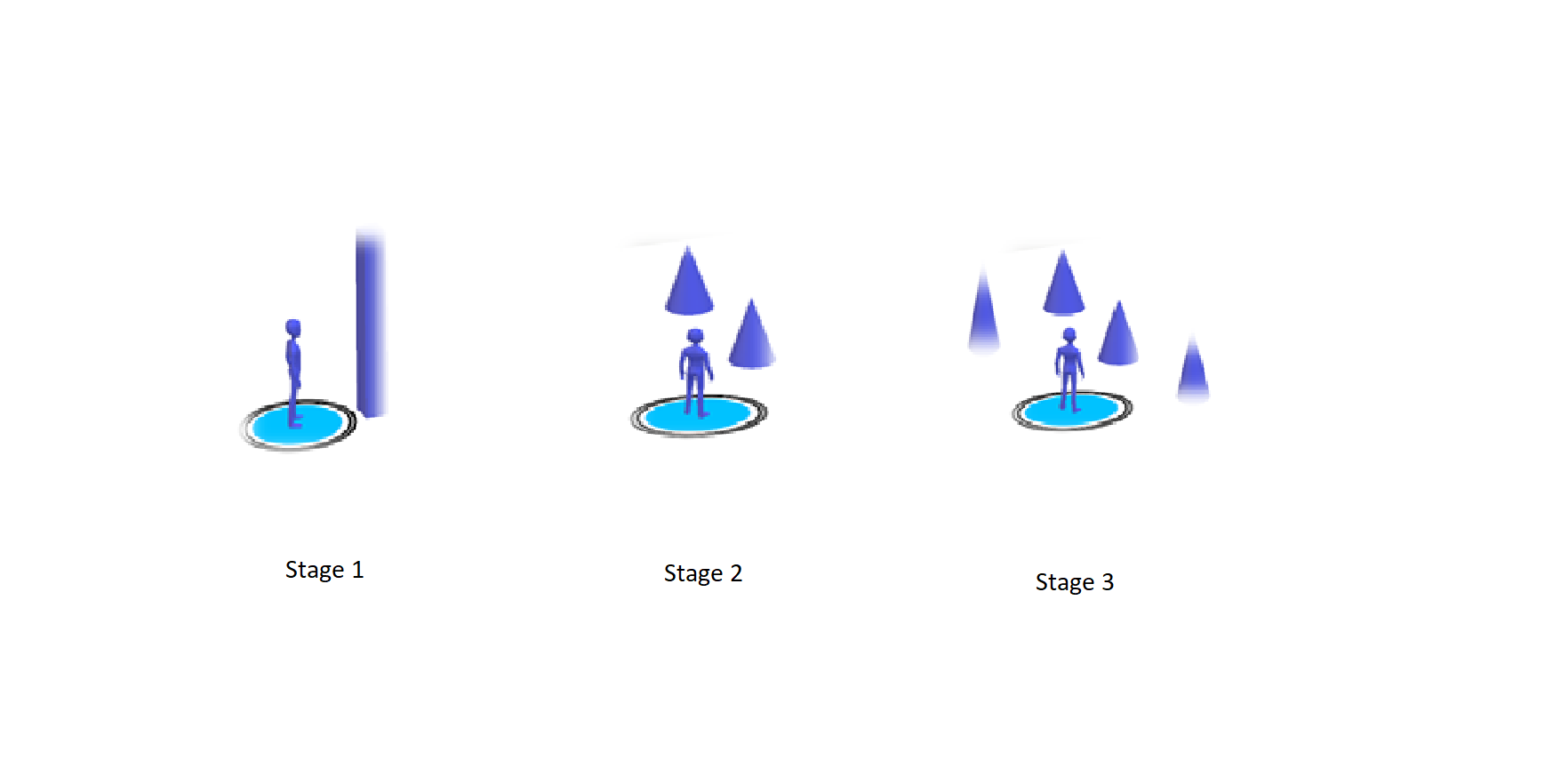
The Game has three levels. In Level 1: The user places virtual avatars and learns what the correct social distance is. In Level 2: The user places multiple static virtual avatars and navigates maintaing social distance to collect reward points. In Level 3 : The user places multiple moving avatars and has to safety navigate maintaining social distance to collect maximum reward points.
How I built it
Two stage gaming app is build. Stage 1 as explained by LEVEL 1 and Stage 2 combining Level 2 and 3 for a simple case. The gaming application is built as an android application. This application can run on devices above Android 7.0. However the application is still in its infancy and would need to be build considering the physical location where th e training would happen.
Challenges I ran into
As AR technology is still at its infancy with respect to stability, It is hard to built applications that would mimic a real world approach for the learning. The virtual avatars still need to be worked to mimic real persons.However , given a time of three months, a better working version can be completed.
Accomplishments that I'm proud of
A smaller version of pedestrian simulation is integrated into the application and this is more a step which i have been trying to achieve.
What I learned
A lot of huddles still are on the way to achieve the true objective including modelling the environment to be trained and the crowd density to be mimicked. The app demonstrates a very simple use case.
What's next for BubbleAR : Social distancing teacher
Drawing a strategy to market the app by providing incentives in terms of coupons/rewards for having completed training. There has been efforts by governments to revive the economy through helicopter money (ie by crediting money to accounts of citizens as currently in US). The gamification of the learning process of social distancing and rewarding the efforts helps to achieve the objective of helicoper money. The motive is to stress on a form of responsible governance though trainings and indirectly promote shopping and spending
Airport Business case: For the use case of airports, passengers are handed over the AR headsets with BubbleAR once they have checked in their baggage. The check-in waiting period can be turned productive with BubleAR learning experience untill they board their flights. The rewards collected for their learning can be encashed in their home currencies on arrival at their destinations , promoting better economic collaborations between the EU. Increasing the footfall at airports while regaining the trust and confidence of passengers on safety is considered equally important in the proposal.


Log in or sign up for Devpost to join the conversation.