-
-
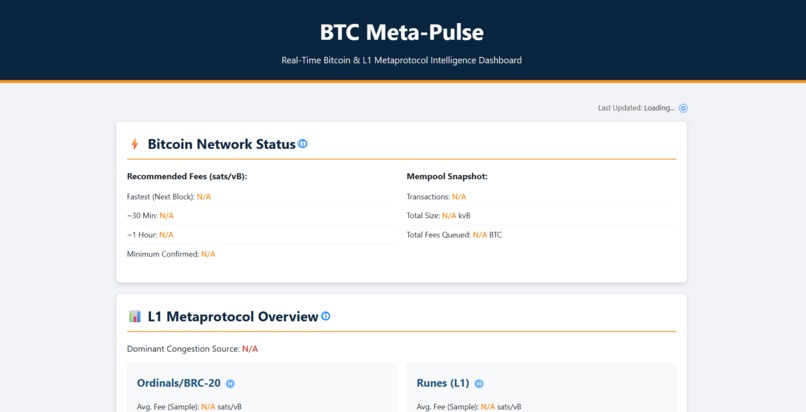
Cover image
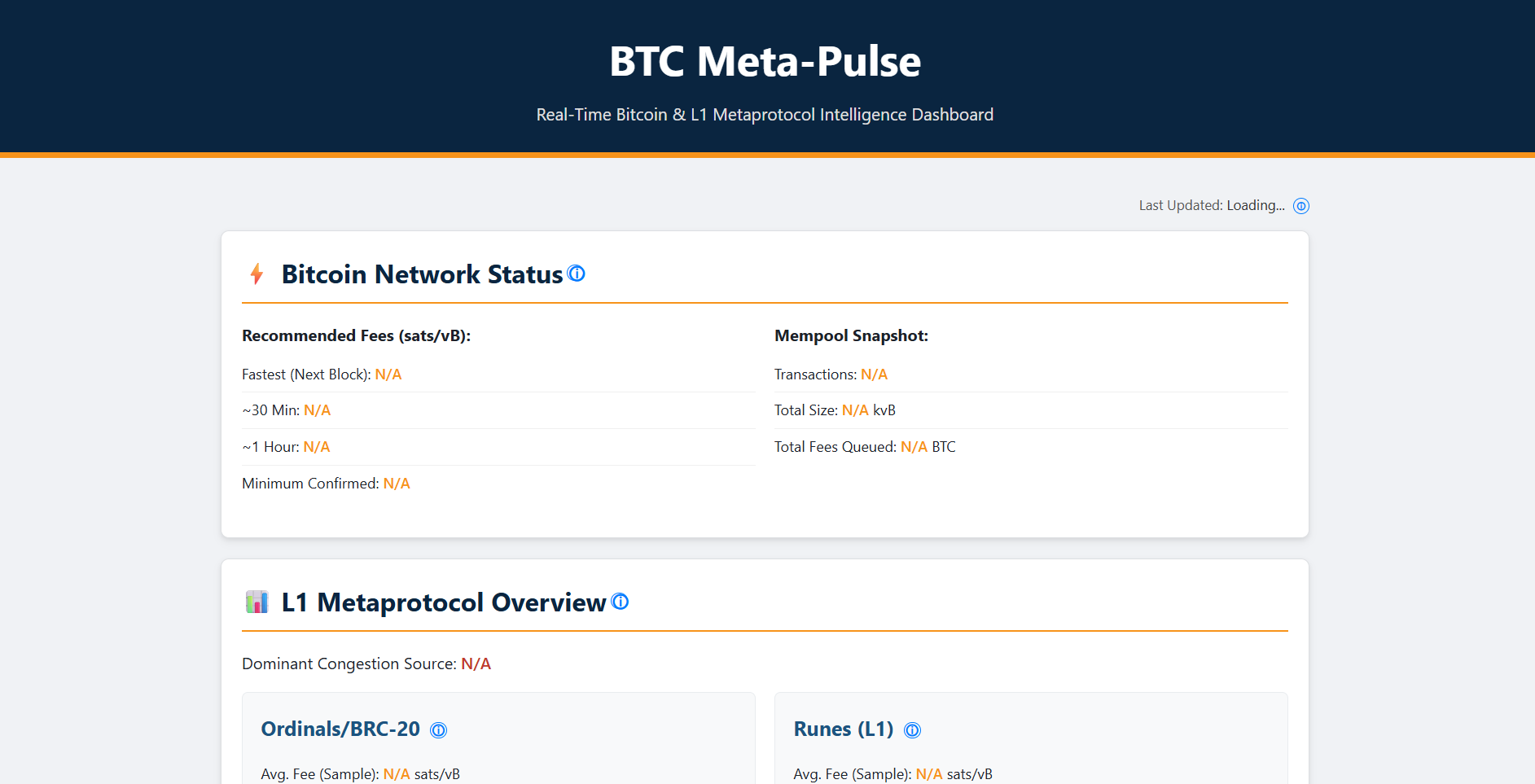
BTC META PULSE
Inspiration
As a Bitcoin developer and enthusiast, I've been fascinated by the evolution of Bitcoin's layer 1 protocol extensions. The explosion of Ordinals and Runes has transformed how people use Bitcoin, but I noticed a significant gap in the ecosystem: no single dashboard provided real-time analytics on these protocol extensions. Market participants were making decisions in the dark, without visibility into fee conditions, transaction volumes, or activity patterns.
I wanted to build a tool that would shine a light on this emerging ecosystem - something that would help both developers and users understand what's happening on-chain, in real-time. Too many projects were being built in isolation, with limited understanding of how protocol activity was affecting the network. BTC META PULSE was born from the need to provide transparency and accessibility to this data.
What it does
BTC META PULSE is a comprehensive monitoring dashboard for Bitcoin protocol extensions, specifically focusing on Ordinals and Runes activity. The tool:
- Tracks and displays live Ordinals inscriptions with detailed content type analysis
- Monitors Runes protocol activity, categorizing operations (minting, transfers, etching)
- Provides real-time fee rate analytics across both protocols
- Integrates with mempool.space to offer fee recommendations and detailed transaction insights
- Visualizes activity trends with timestamp-based sorting and filtering options
- Offers a clean, intuitive interface that makes complex on-chain data accessible
The dashboard serves as a central nervous system for Bitcoin's protocol extension ecosystem, allowing users to make informed decisions about when to transact, what fees to pay, and how protocol activity is evolving over time.
How we built it
I built BTC META PULSE as a modern web application with:
Backend API Integration: I created a Python-based data layer to connect with Hiro's API and mempool.space, implementing intelligent caching to reduce API load while maintaining fresh data.
Data Processing: The system processes and normalizes raw API responses into structured, meaningful datasets that highlight key metrics like transaction fees, content types, and operation categories.
Error Handling: I implemented comprehensive error handling to ensure reliability even when upstream APIs experience issues or rate limitations.
Frontend Visualization: The dashboard presents data in an intuitive format with sortable tables, trend visualizations, and real-time updates.
Authentication System: I added API key management to handle authenticated requests to Hiro's API, with proper header configuration and security measures.
The architecture is designed to be maintainable and scalable, allowing for easy integration of additional protocol extensions as they emerge in the Bitcoin ecosystem.
Challenges we ran into
Building BTC META PULSE came with several significant challenges:
API Documentation Gaps: The Hiro API documentation had some inconsistencies, especially for newer endpoints like Runes. I spent considerable time experimenting with different endpoint formats and parameter combinations to get the correct implementation.
Rate Limiting: Working with public APIs meant dealing with rate limits, which required implementing intelligent caching strategies and fallback mechanisms to ensure the dashboard remained functional even under heavy usage.
Data Normalization: Each API returned data in different formats with varying levels of detail. Creating a unified data model that presented consistent information across protocol extensions required careful planning and transformation logic.
Fee Calculation Complexity: Bitcoin fee calculations have nuances, especially when analyzing different protocol extensions. Implementing accurate fee rate analytics that accounted for these differences was challenging.
Real-time Updates: Balancing the need for fresh data with responsible API usage required developing a sophisticated caching system with tiered TTL values based on data volatility.
Accomplishments that we're proud of
Despite the challenges, I'm particularly proud of several accomplishments:
Unified Dashboard: Creating a single view that brings together disparate data sources into a cohesive, informative dashboard that tells the complete story of Bitcoin protocol extension activity.
Intelligent Error Handling: The system gracefully degrades when APIs are unavailable, providing meaningful fallback information rather than failing completely.
Performance Optimization: The caching system significantly reduces API load while ensuring data remains fresh and relevant.
Accessibility: Making complex on-chain data accessible to users with varying levels of technical understanding through intuitive visualizations and clear metrics.
Future-Proofing: Designing an architecture that can easily incorporate new protocol extensions as they emerge on Bitcoin's base layer.
What we learned
This project has been an incredible learning journey:
API Integration Best Practices: I gained deep insights into working with blockchain APIs, particularly around handling rate limits, authentication, and inconsistent documentation.
Bitcoin Protocol Extensions: Building this tool required developing a nuanced understanding of how Ordinals and Runes work at a technical level, including their transaction structures and on-chain footprints.
Real-time Data Processing: I learned techniques for balancing data freshness with system performance through tiered caching strategies and intelligent polling.
User Experience Design: Creating an interface that makes complex blockchain data accessible to users with varying technical backgrounds taught me valuable lessons about information design and data visualization.
Error Resilience: I developed a deeper appreciation for robust error handling as a core feature, not an afterthought, especially when working with external dependencies.
What's next for BTC META PULSE
BTC META PULSE is just getting started. My roadmap includes:
Expanded Protocol Support: Adding support for emerging Bitcoin protocol extensions beyond Ordinals and Runes.
Advanced Analytics: Implementing predictive fee models and trend analysis to help users optimize their transaction timing.
Historical Data Analysis: Adding the ability to view historical trends and patterns across different time periods.
User Alerting: Creating customizable alerts for fee thresholds, inscription volumes, and other key metrics.
API Access: Developing a public API that allows other developers to build on top of our aggregated and normalized data.
Mobile Application: Bringing the dashboard to mobile devices for on-the-go monitoring of Bitcoin protocol extension activity.
The Bitcoin ecosystem continues to evolve rapidly, and BTC META PULSE will evolve alongside it, providing the transparency and insights needed to navigate this exciting frontier of blockchain innovation.

Log in or sign up for Devpost to join the conversation.