
Inspiration
This project draws significant inspiration from the UK's Sickle Cell Awareness Month, which aims to raise awareness about sickle cell disease (SCD) and the need for improved treatment methods. Blood transfusions are a critical therapy for SCD patients, helping to alleviate painful episodes and support normalized lives. For instance, Tosin (2022), in a personal video on YouTube, describes her battle with SCD and how regular blood transfusions are crucial to her survival. Her story emphasizes the importance of safe and precise transfusion systems for improving patient outcomes.
Research from NHS Blood and Transplant (2024) highlights that the majority of SCD patients are of African descent and often live in rural and underfunded regions, where access to specialized healthcare is limited. We also drew inspiration and guidance from a study by Djimadoum et al. (2023), which investigates the prevention of alloimmunization in SCD patients in Chad. The study emphasizes the importance of tailored transfusion protocols in low-resource settings.
What It Does
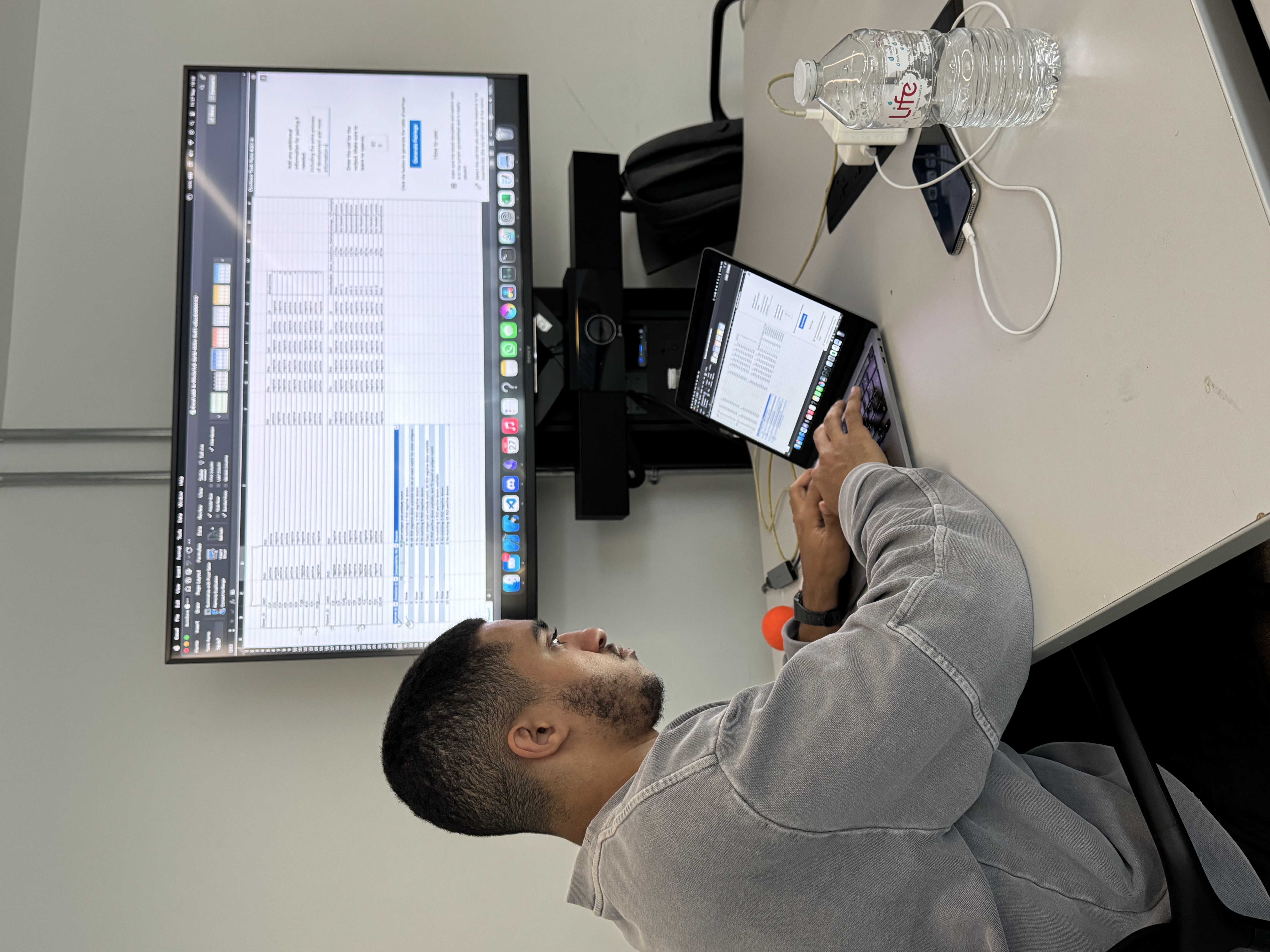
BTAP (Blood Transfusion Automated Pairing) is an Excel add-in that leverages the OpenAI API to streamline matching blood donations with patients. It automates the pairing of donor blood with patients based on antigen matching and additional attributes such as age and condition severity. The tool aims to make transfusion compatibility assessments accessible to hospitals in resource-limited regions, providing safer and more effective transfusions for SCD patients.
How We Built It
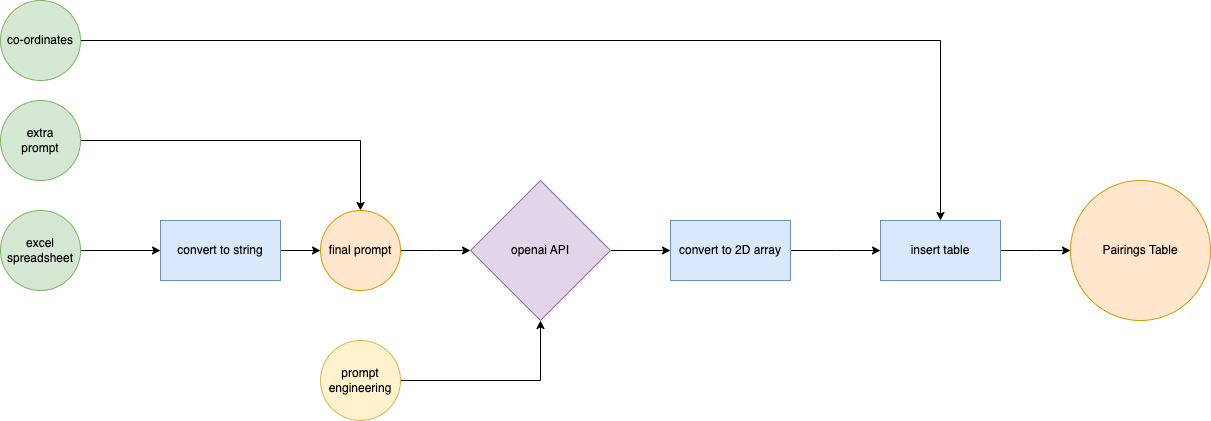
BTAP was developed using React and the Yo Office library. The core functionality leverages the OpenAI API to process data from the active Excel spreadsheet. The selected range in the spreadsheet is first converted into a 2D array. This data is then incorporated into an API prompt, guiding the AI to match patients with suitable blood donations based on specific attributes. The resulting output is converted back into a 2D array and inserted into the Excel sheet.
To simulate real-world conditions, we used Python and Pandas to generate synthetic datasets for both patients and donors. These datasets included various antigen profiles, alloantibodies, blood groups, and demographic information to mimic the complex requirements of blood transfusion matching. Using this generated data, we were able to test the effectiveness of our matching algorithms.
Challenges We Ran Into
One of the main challenges was ensuring that the AI model could accurately match donor blood with patients while accounting for minor antigen differences like Kell, Duffy, and Kidd. SCD patients are particularly susceptible to alloimmunization when transfusions are not well-matched, increasing the complexity of the pairing process. Additionally, accessing real-world transfusion data to train the AI model during the hackathon was challenging, which limited the extent of the model's customization.
Accomplishments That We Are Proud Of
We are proud of developing a solution that addresses a real-world need for extended antigen matching in blood transfusions, particularly for patients in rural and underfunded regions. BTAP offers a scalable solution that integrates seamlessly into existing hospital systems without requiring advanced laboratory equipment. This means our solution can have an impact where it is needed most—helping reduce alloimmunization risks for SCD patients in underserved communities.
What We Learned
Throughout the project, we gained insight into the complexities of transfusion compatibility and the specific challenges that SCD patients face. We learned the importance of extended antigen matching and how AI-driven predictions can significantly improve transfusion safety. Additionally, we understood the critical role that data security and scalability play in building effective healthcare solutions, especially for resource-limited hospitals. On the technical side, we faced many issues with prompt engineering; trying to formulate and segment the prompt wasn't straightforward. However, these challenges helped us discover effective patterns and methods for generating the desired output.
What's Next for BTAP - Blood Transfusion Automated Pairing
In the future, we aim to develop our own AI model explicitly trained on transfusion data provided by hospitals. This will enhance pairing accuracy and allow BTAP to be tailored specifically to the needs of rural and underfunded hospitals. We also plan to create a centralized data bank where hospitals can contribute anonymized data to improve predictive accuracy and continuously evolve the model. As we move forward, we will seek funding and partnerships with healthcare organizations to make BTAP a global solution for transfusion management, helping more African and Black communities, where sickle cell disease is most prevalent.
References
- Blood Advances, 2023. Prevention of alloimmunization using extended antigen matching. [Accessed 18 September 2024].
- Blood Journal, 2021. How to avoid the problem of erythrocyte alloimmunization. [Accessed 18 September 2024].
- Brigham and Women's Hospital, 2022. Sickle Cell and Transfusion. [Accessed 18 September 2024].
- [Djimadoum, M., Nadlaou, B., Kaboro, M., Christian, D., Alio, H.M., & Kimassoum, R., 2023. Prevention of alloimmunization in patients with sickle cell disease in Chad. Journal of Life Science and Biomedicine, 13(2), pp. 35-41. DOI: https://dx.doi.org/10.54203/jlsb.2023.5] [Accessed 18 September 2024].
- Frontiers in Genetics, 2022. Genetic Susceptibility in Transfusion. [Accessed 18 September 2024].
- Haem-Match, 2023. Blood Transfusion Matching. [Accessed 18 September 2024].
- National Center for Biotechnology Information (NCBI), 2021. Transfusion of red cells matched for Rh and K antigens in sickle cell disease. [Accessed 18 September 2024].
- NHS Blood and Transplant, 2024. Sickle Cell Awareness and Data Collection. [Accessed 18 September 2024].
- PubMed, 2021. Data security and AI in transfusion medicine. [Accessed 18 September 2024].
- Tosin, 2022. My Journey with Sickle Cell. [Accessed 18 September 2024].
Built With
- excel
- html
- javascript
- node.js
- openai
- python
- react
- typescript
- yo-office


Log in or sign up for Devpost to join the conversation.