-
-
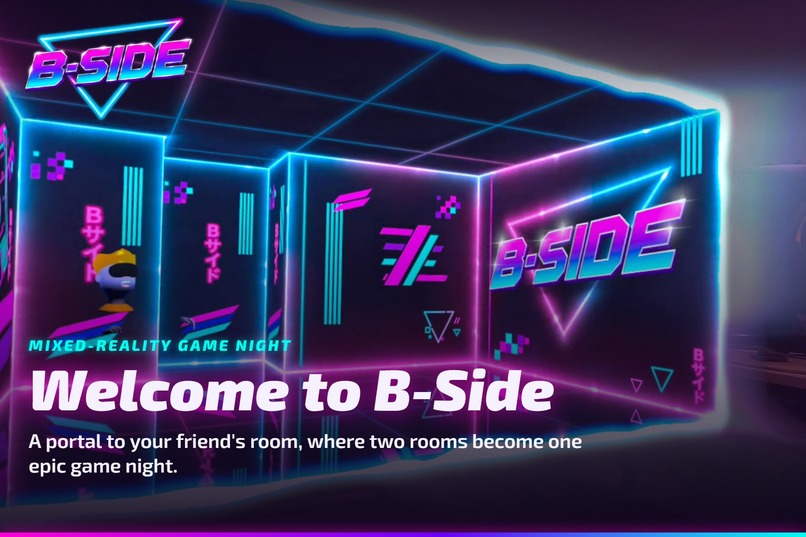
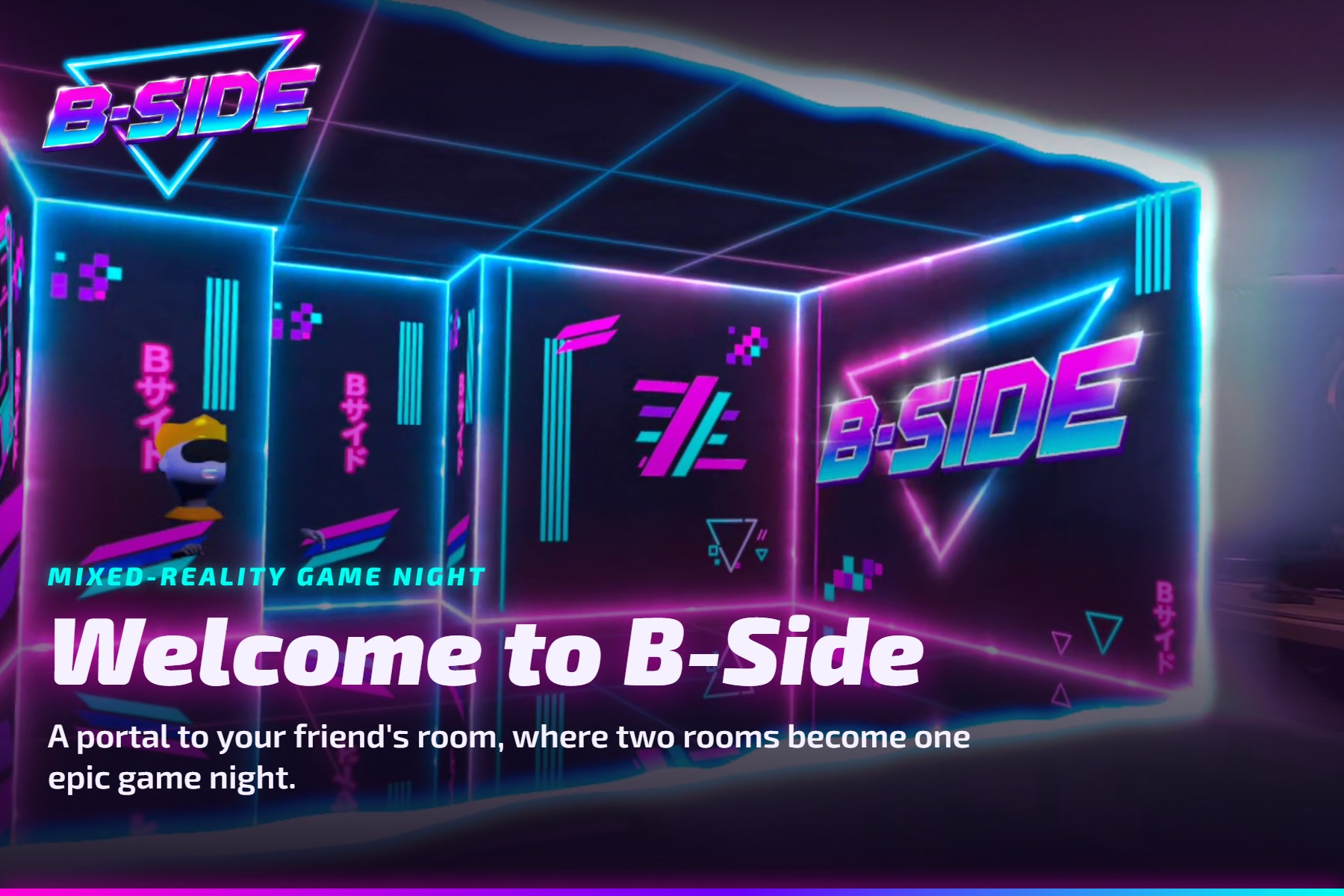
Welcome to B-Side
-
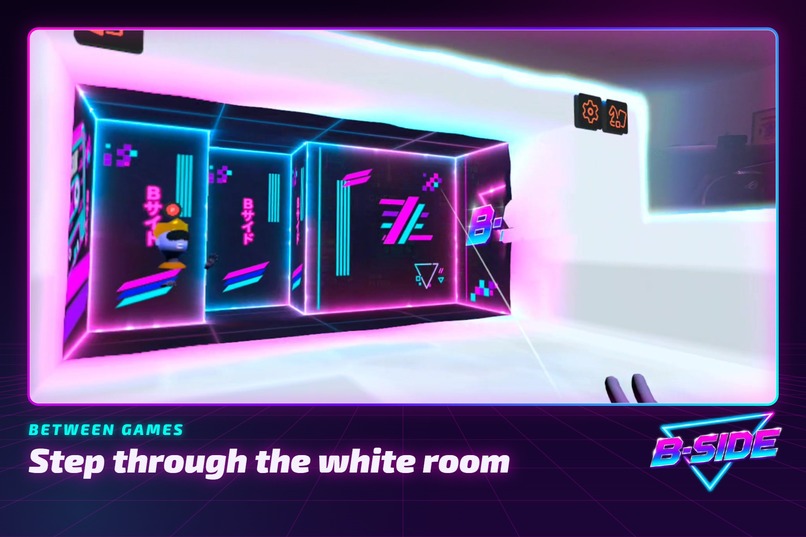
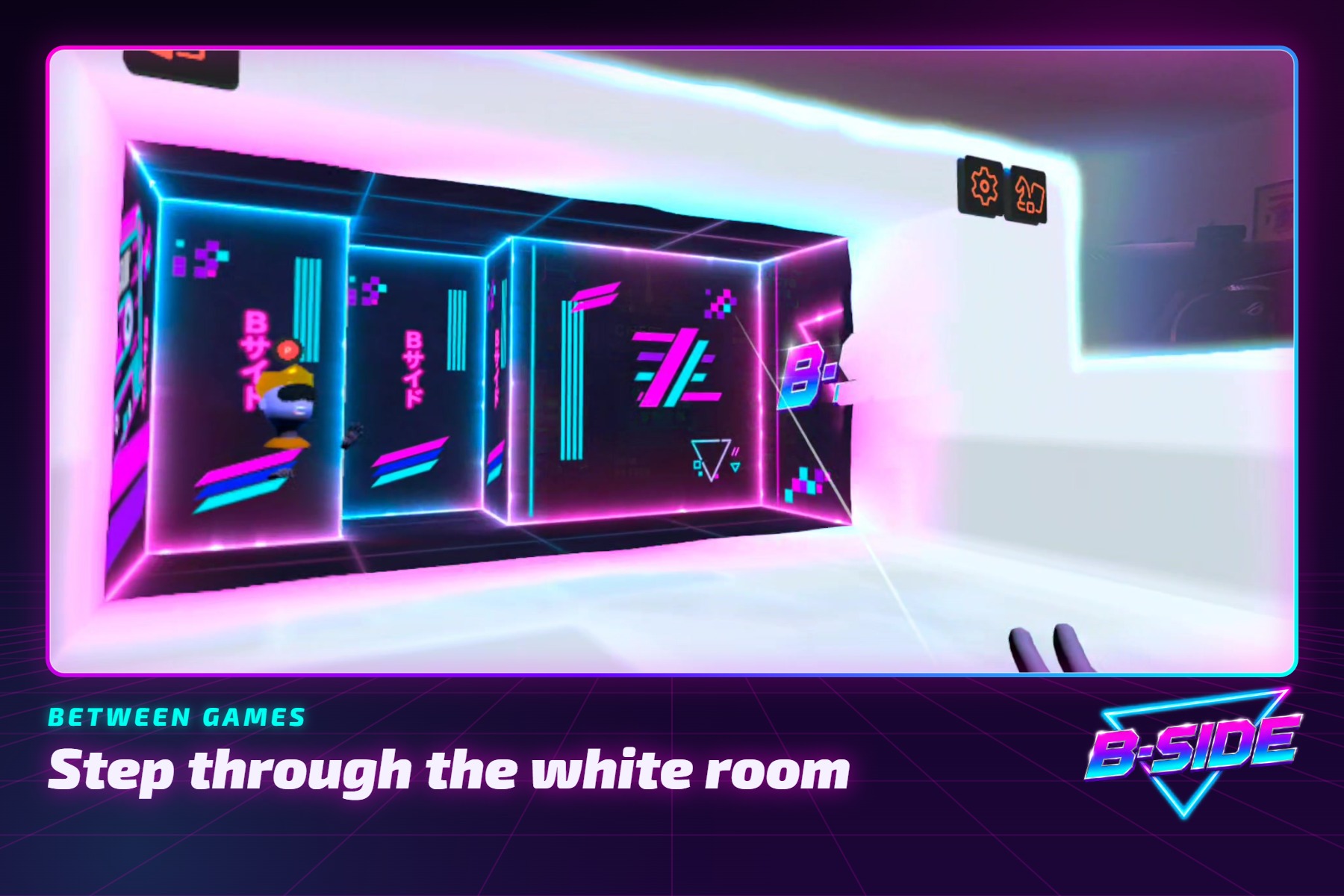
Step through the white room
-
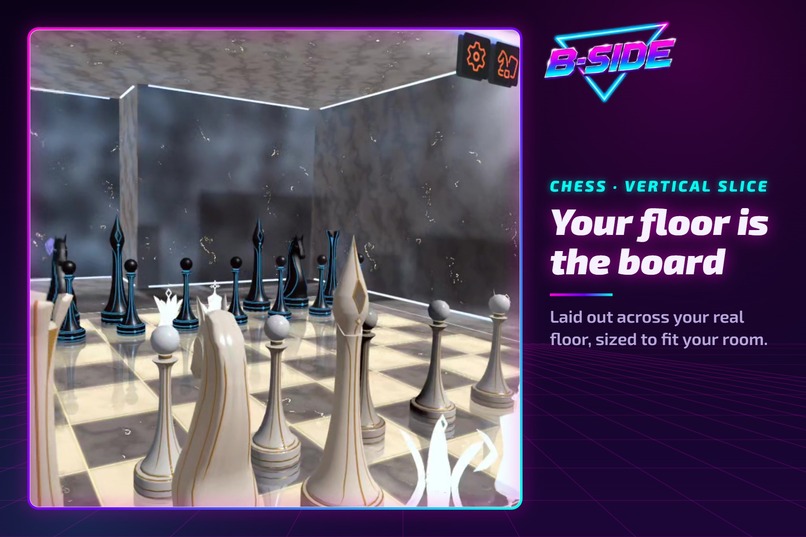
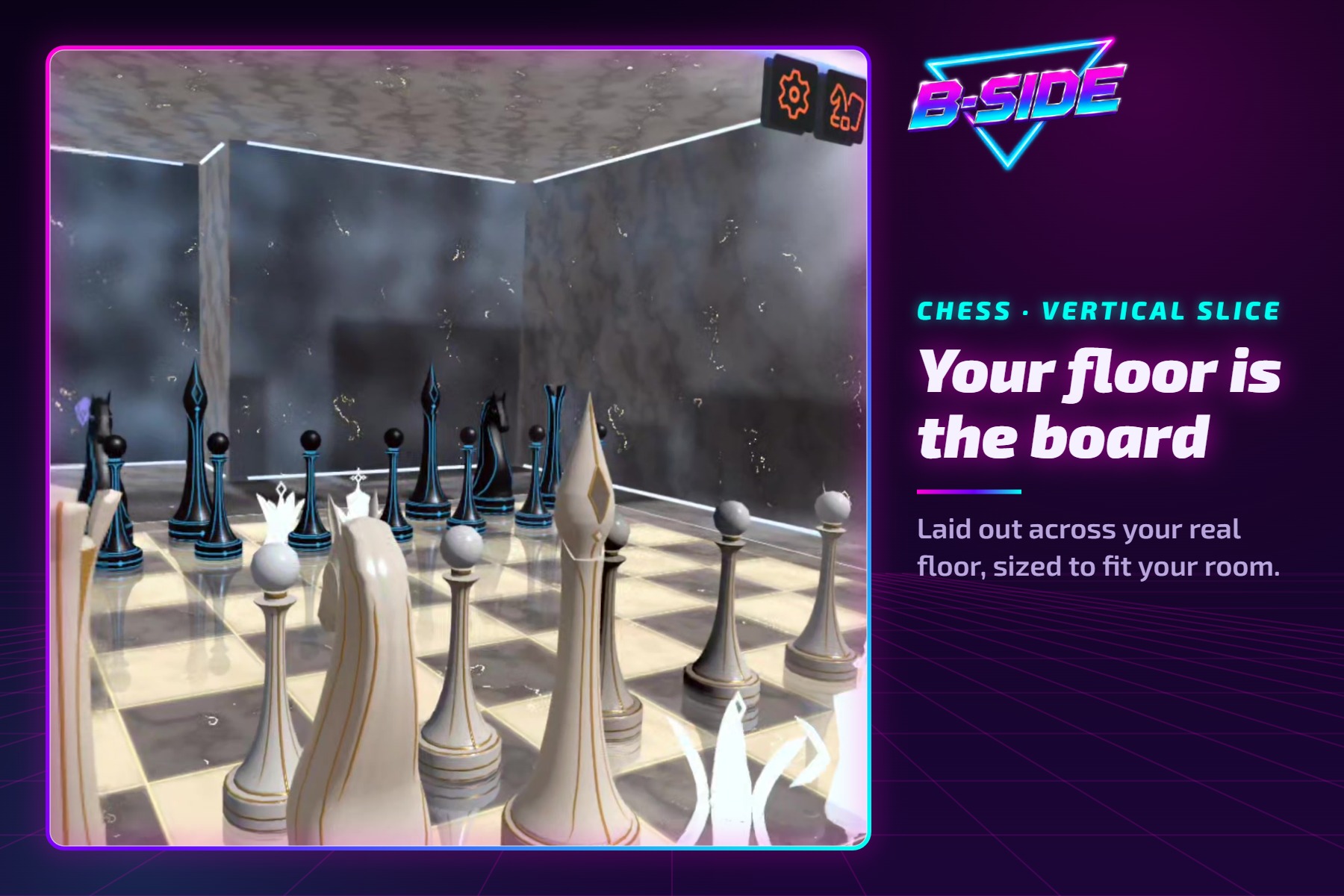
Your floor is the board
-
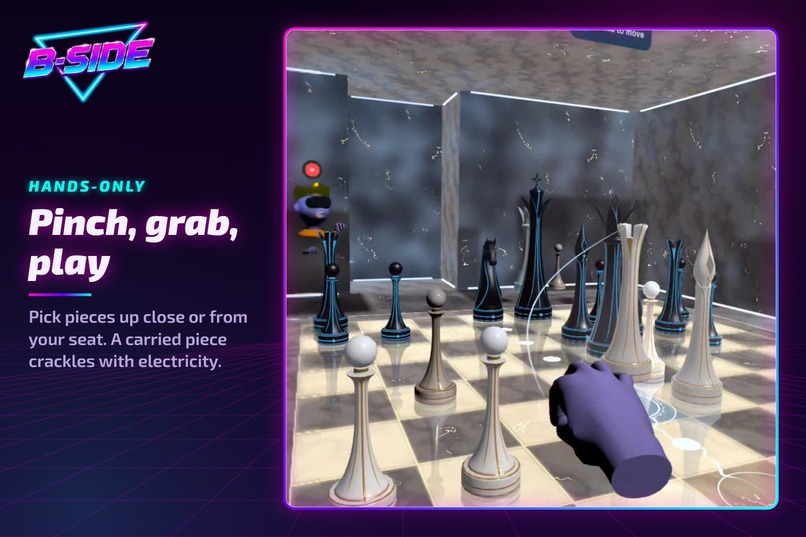
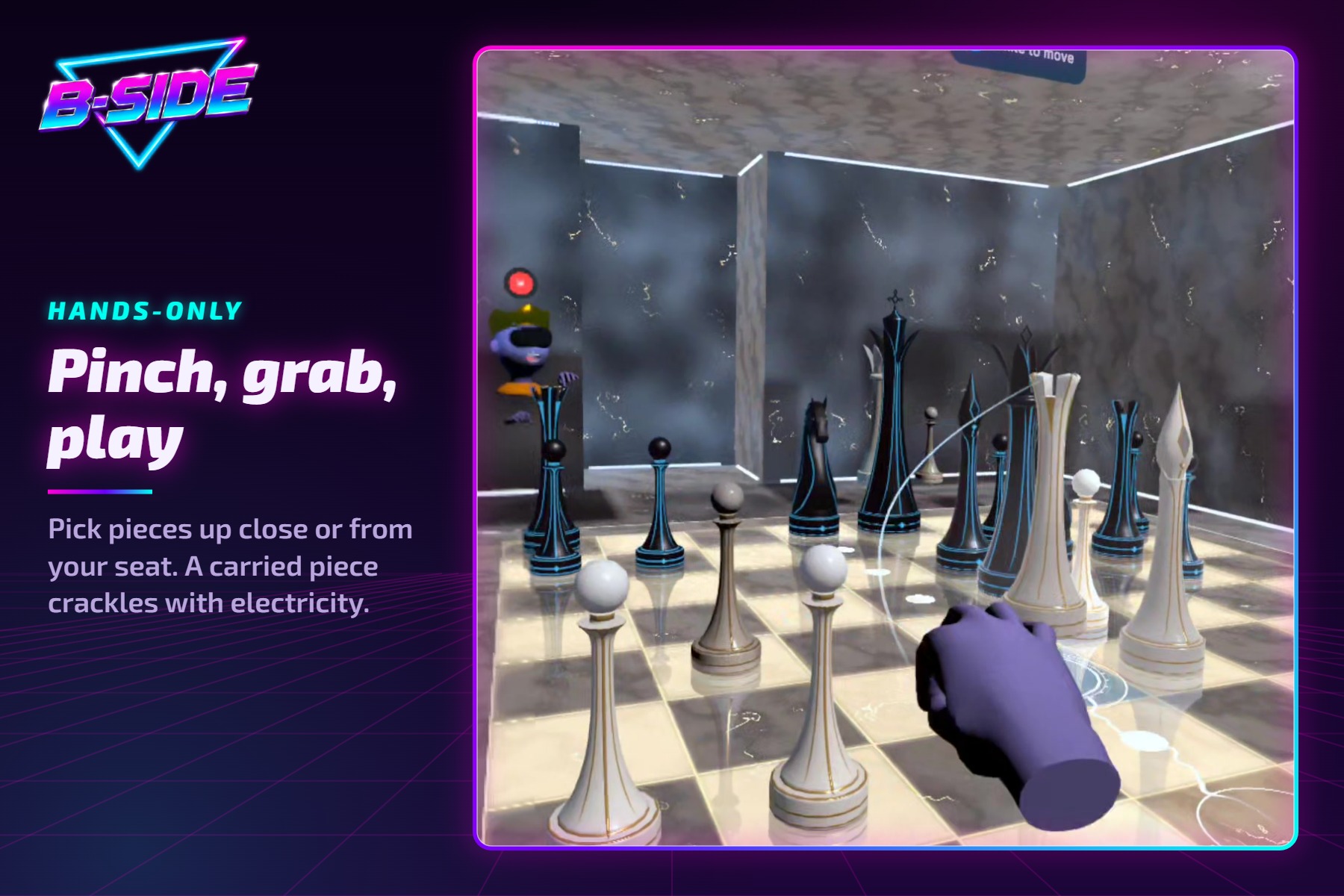
Pick pieces up close or from your seat. A carried piece crackles with electricity.
-
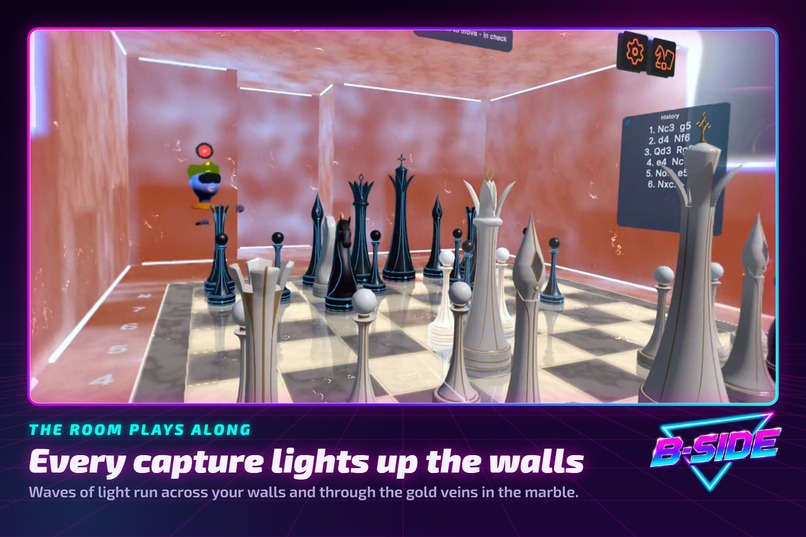
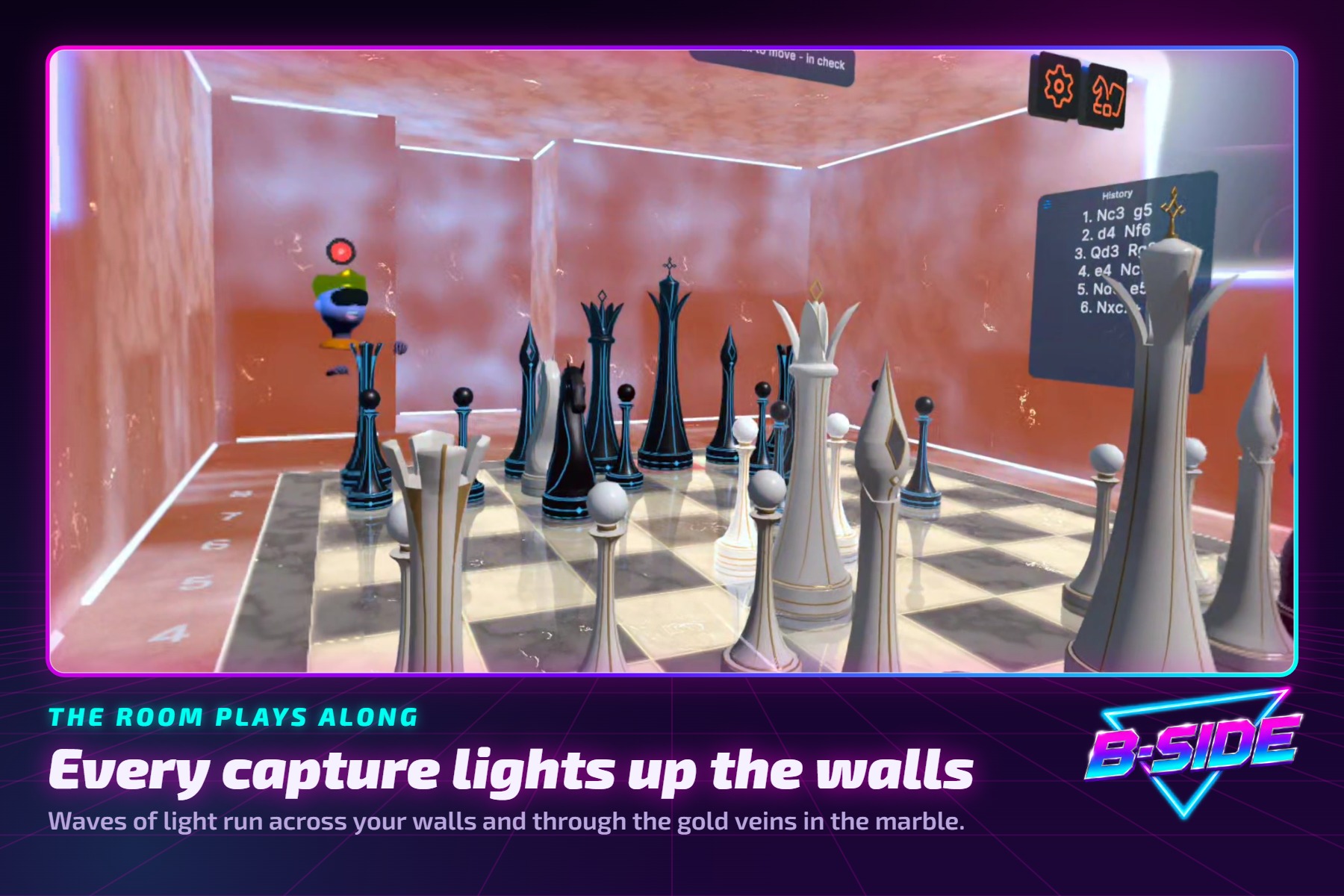
Every capture lights up the walls
-
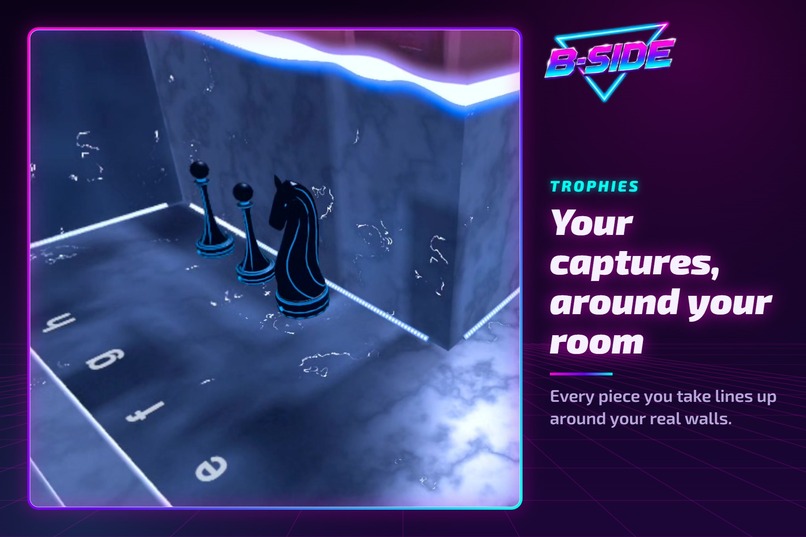
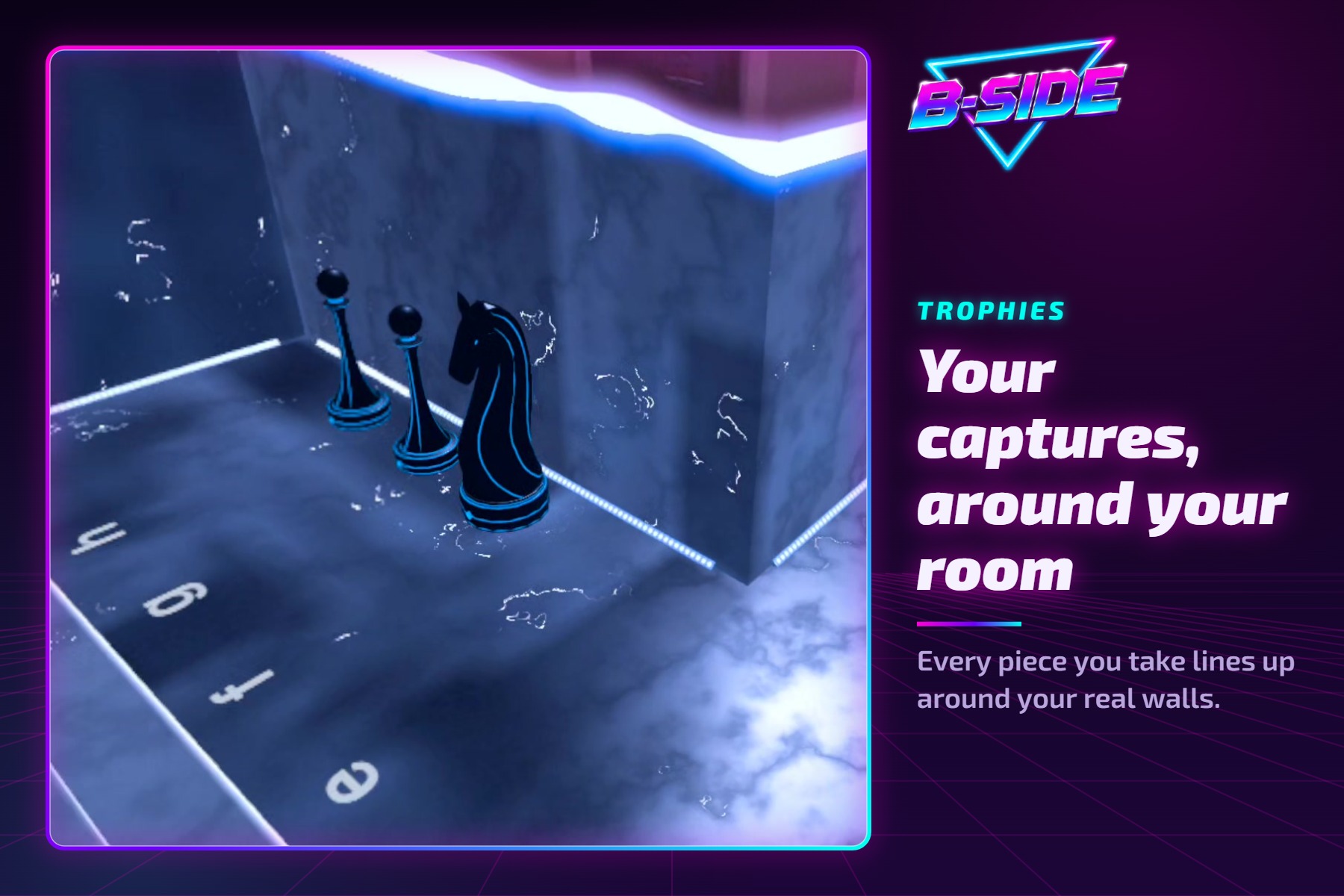
Your captures, around your room
-
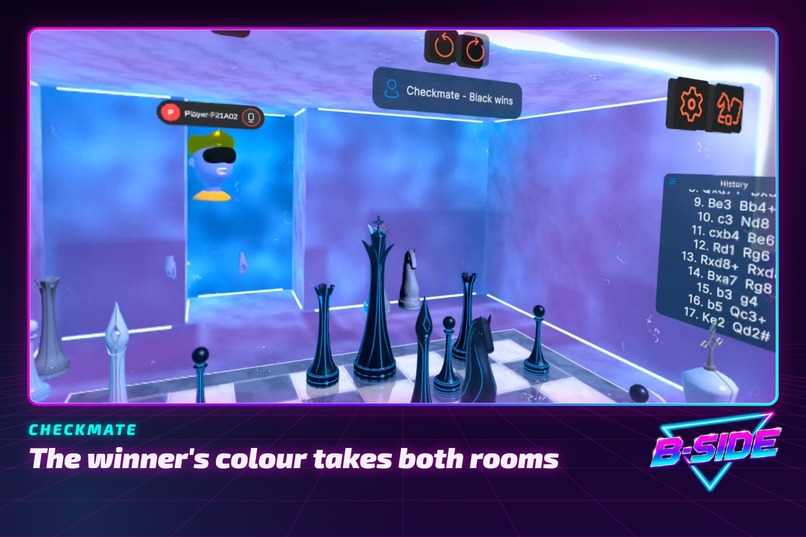
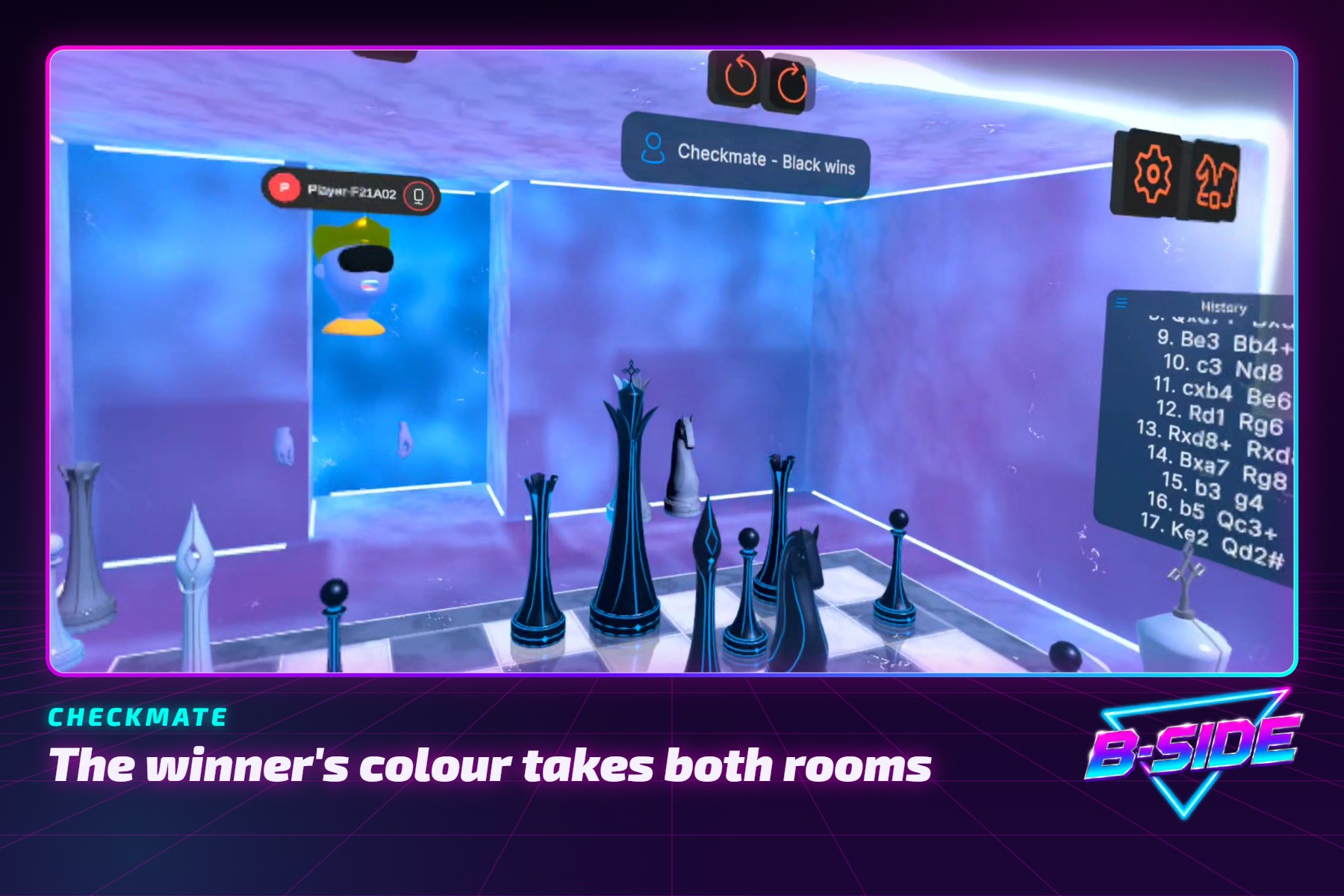
The winner's colour takes both rooms
-
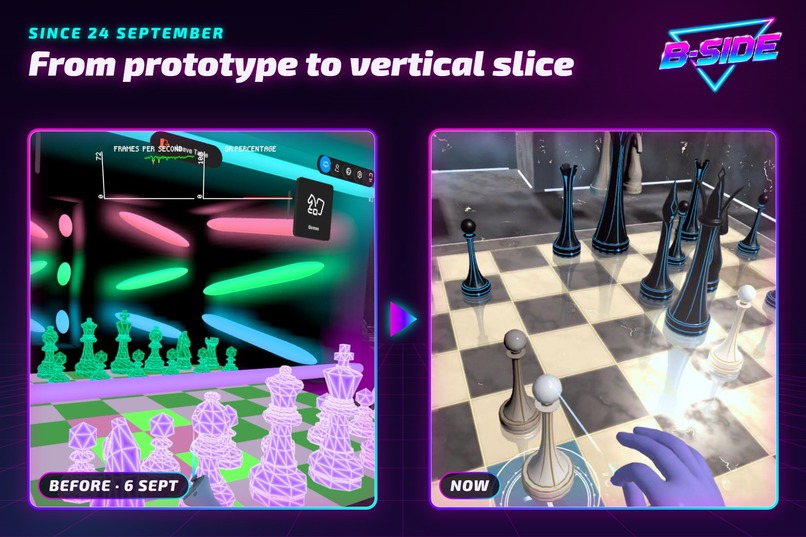
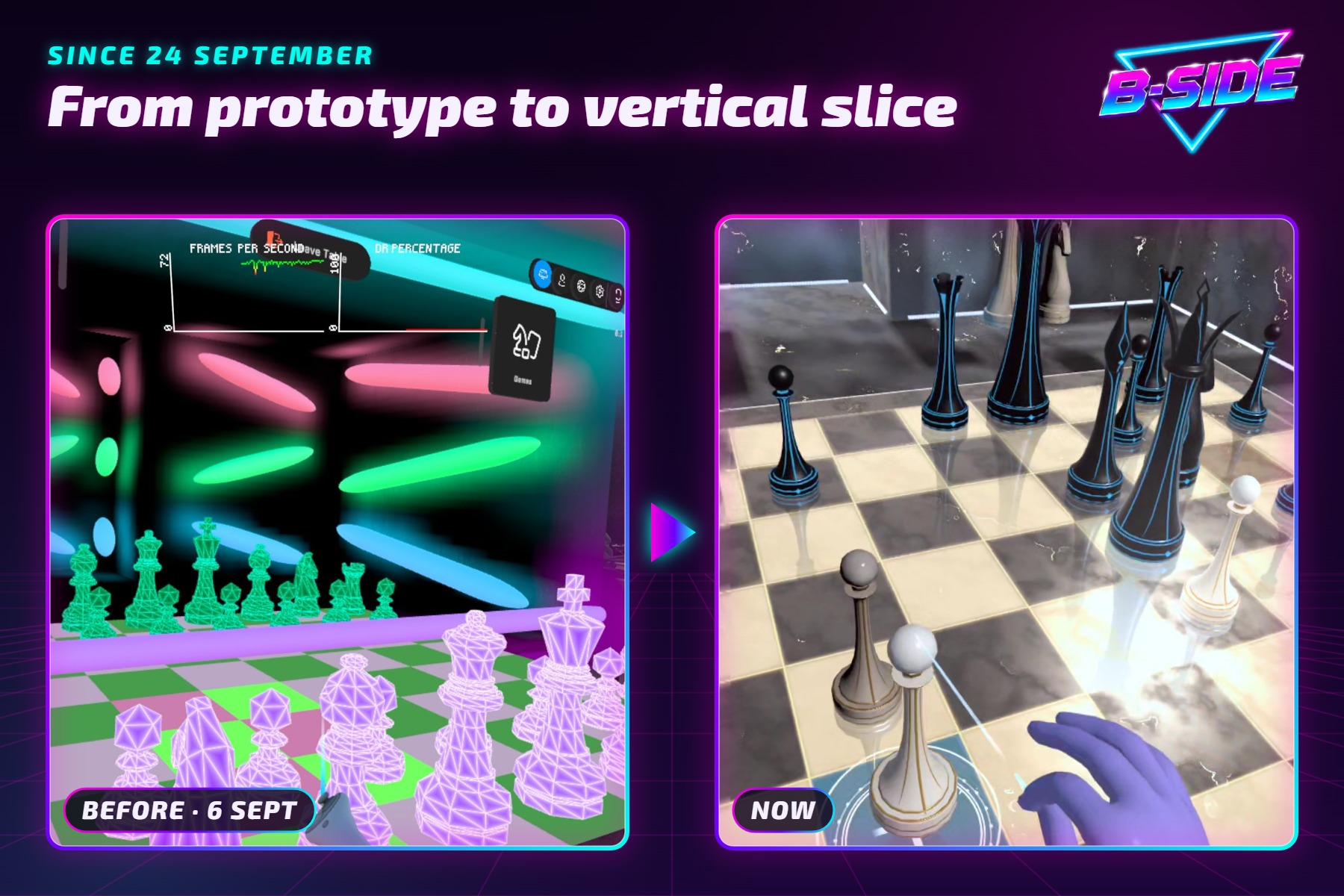
From prototype to vertical slice
-
Title Card
Inspiration
Two players. Two real rooms. One shared playspace.
Video calls let you see someone, and online games let you play with them, but neither feels like being in the same room. I wanted a new way to hang out at a distance, for a family spread across the country, a long-distance couple on date night, or old friends who used to crowd round one screen.
B-Side takes games everyone already knows and loves, then gives them a room-scale twist in a way only mixed reality can. Parents recognise them and kids pick them up instantly, but neither has played them like this before.
What it does
Put on the headset and a glowing portal opens in your wall. On the other side is your friend's room, rebuilt from their scan, with your friend standing in it as a hand-tracked avatar and talking in spatial voice. You see each other react. Meanwhile your own room lights up around you, with real-time shadows cast by its own walls and furniture.
B-Side is built as a platform rather than a single game. The portal, the linked rooms, presence and voice are built once, and every game plugs into them. For this competition I took one game, Chess, all the way to a complete vertical slice. As part of that I made sure it's playable end to end with hands only, so you never need to pick up a controller. I also worked hard on keeping it smooth, and it runs at 72 fps on Quest 3S, the headset's full refresh rate:
- Your floor is the board. It's laid out across your floor, sized to fit your room. You pick pieces up with your bare hands, either up close or from a distance without leaving your seat, and a piece crackles with electricity while you carry it.
- Your walls play along. Your room glows in your side's colour and your opponent's room in theirs, and whoever's turn it is glows brighter. Captures, checks, castling and promotions send waves of light out from the board across the walls and through the gold veins in the marble. At the end, the winner's colour takes over both rooms.
- Captured pieces become trophies. They line up around your real room.
- Play a friend or the AI. Play a friend over the network, or the built-in AI at skill 1 to 10.
How I built it
- Scene understanding: Unity 6, URP, OpenXR and Meta MRUK. Each player's scanned room is serialised and then rebuilt for everyone else in the session.
- Networking: Netcode for GameObjects, running over my own WebRTC transport and signalled through Unity Lobby. Voice rides the same peer connections. If the host drops, host migration keeps the game going.
- Lighting: my own signed-distance-field (SDF) lighting, which computes ambient occlusion and soft shadows over the real room geometry on Quest's GPU.
- Chess: my own engine, in pure C# and verified by perft. It sits under a turn-based netcode layer that arbitrates every move.
- Sound: a procedural synth generates the portal hum, the tension drone and the piece crackle. It ducks under voice chat.
- Art direction: each game has its own colour grade, which takes over from the hub's deep purple while that game is loaded. The grades are built into the shaders instead of applied as a post-processing pass, because post-processing is expensive on mobile VR.
Challenges I ran into
- The frame budget. Every surface and anchor in a scanned room multiplies any per-frame cost, so anything idle had to cost nothing. To avoid spikes when a game loads, anything that can be worked out in the editor is baked into the scene ahead of time, so nothing is built at load.
- First-time hitches. On Quest, the first use of any code path or shader can stall a frame. B-Side now warms these up at startup, so the cost is paid before you play. An automated headset playthrough visits every game and records the shader states to warm up.
- Every room is different. B-Side has to work in rooms I've never seen, so the board, walls, lights and trophies all adapt to whatever shape and size of room MRUK reports.
Accomplishments that I'm proud of
- A complete vertical slice. Chess plays from the portal opening to the final capture, alone or with a friend, with hands only and at 72 fps.
- Two real rooms that feel like one space. Seeing a friend in their own room through a portal in your wall is the moment that sells the idea.
- Solo, with AI tools: a custom WebRTC transport, SDF lighting and chess engine, all within a Quest 3S budget.
What I learned
- AI is excellent at optimisation, but it needs guidance. Mixed reality on Quest is hard to navigate, and AI tools only found the real bottlenecks once I pointed them at the right measurements.
MR can look fantastic. Even within mixed reality's constraints, the right approach and planning can produce a great-looking game.
What's next
Every new game inherits the portal, the linked rooms and presence, so the library can keep growing. Next up are four classic styles of game, each rebuilt for two real rooms:
Slot Cars: tracks that race across your floor and furniture, then on through the portal into your friend's room.
Sea Battle: both rooms fill with water, each fleet hides in its owner's room, and shots are fired through the portal.
Time Bandits: an arcade shooter in the light-gun tradition. Stand side by side with a friend and aim with your hand.
Polygon Panic: a neon arena shooter where swarms of glowing geometric shapes pour across a giant screen hanging in the portal between the two rooms. Each player defends their own side, and every shape you shatter bursts out of the screen in a shower of light that fills the room around you.
Beyond the games themselves, I want to improve matchmaking. You can already find other players through the lobby browser and quick match, but I want it to be easier to find a good game with someone new. B-Side will grow as a hub, with new games sold as in-app purchases or through a subscription, and in time I aim to partner with brands and IP owners to create games built around their worlds.
