Inspiration
Sunday brunches are my favorite way to gather friends, but I’d always end up frazzled—juggling portion sizes, dietary needs, and last-minute cooking chaos. I wanted to create something that turns hosting from stressful to joyful, blending my love for thoughtful hosting and clean, intuitive design. The goal? A one-stop tool that honors the relaxed, stylish vibe of brunch without the overwhelm.
What it does
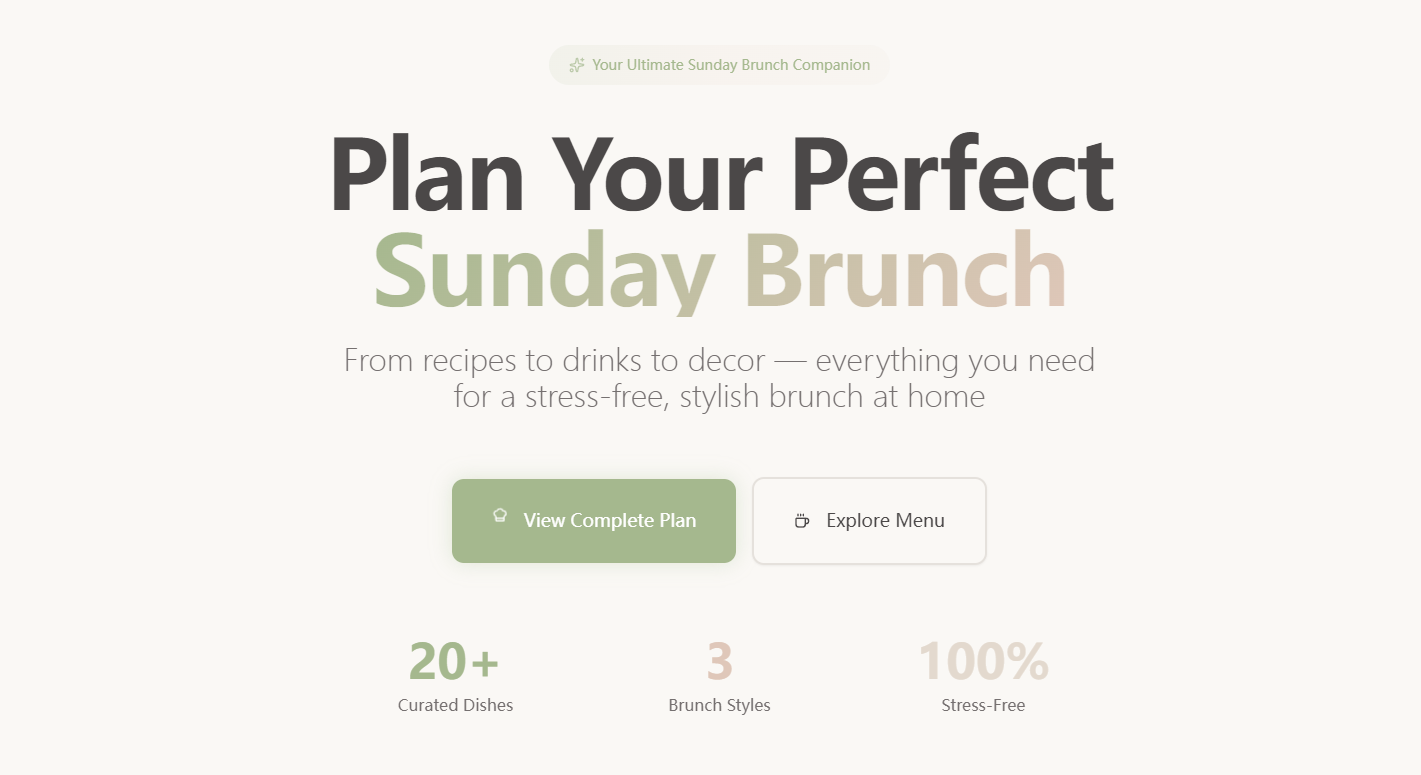
Brunch Planner simplifies at-home brunch hosting: users select guest count and style (casual/fancy/healthy) to get curated menus, step-by-step prep timelines, drink pairings, decor themes, and a dietary manager that flags incompatible items and suggests swaps. A full plan summary pulls everything into one easy view for stress-free hosting.
How we built it
I started by mapping core user needs (timeline structure, dietary tracking, aesthetic flexibility) to the page structure. Using HTML/CSS for the base, React for interactive elements (like the dietary restriction form), and Figma to design the soft, minimalist UI aligned with brunch’s warm vibe. I built logic for menu generation (scaling portions by guest count) and dietary flagging first, then layered in decor theme visuals and drink pairing matching.
Challenges we ran into
The biggest hurdle was balancing flexibility with simplicity—designing dietary swap logic that’s accurate (e.g., vegan vs. gluten-free) but not overwhelming. I also struggled to streamline the timeline section to feel structured but not rigid; iterating on time-sequenced steps to avoid clunky navigation took multiple rounds of testing.
Accomplishments that we're proud of
Creating a tool that feels personal, not generic— the decor themes reflect real brunch aesthetics people actually use, and the dietary manager doesn’t just flag items but offers meaningful swaps (e.g., gluten-free bagels for smoked salmon dishes). Users can go from zero to a complete brunch plan in minutes, no extra work needed.
What we learned
I deepened my understanding of user-centric logic—small choices (like defaulting to 2-4 guests if no selection is made) make the tool far more accessible. I also learned that aesthetic consistency (soft color palettes, rounded corners) isn’t just “design”—it reinforces the calm, joyful vibe of brunch itself.
What's next for this project
First, I want to add recipe details for each dish (a top request from beta users) and a printable/sharable version of the full plan. Long-term, I’d love to include a customizable shopping list tied to the menu, and expand decor themes to include seasonal options (winter cozy, summer coastal) for year-round relevance.

Log in or sign up for Devpost to join the conversation.