-
-
Thumbnail
-
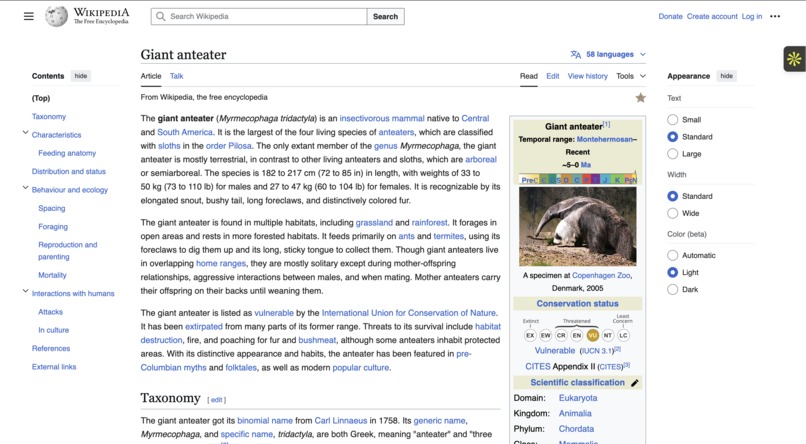
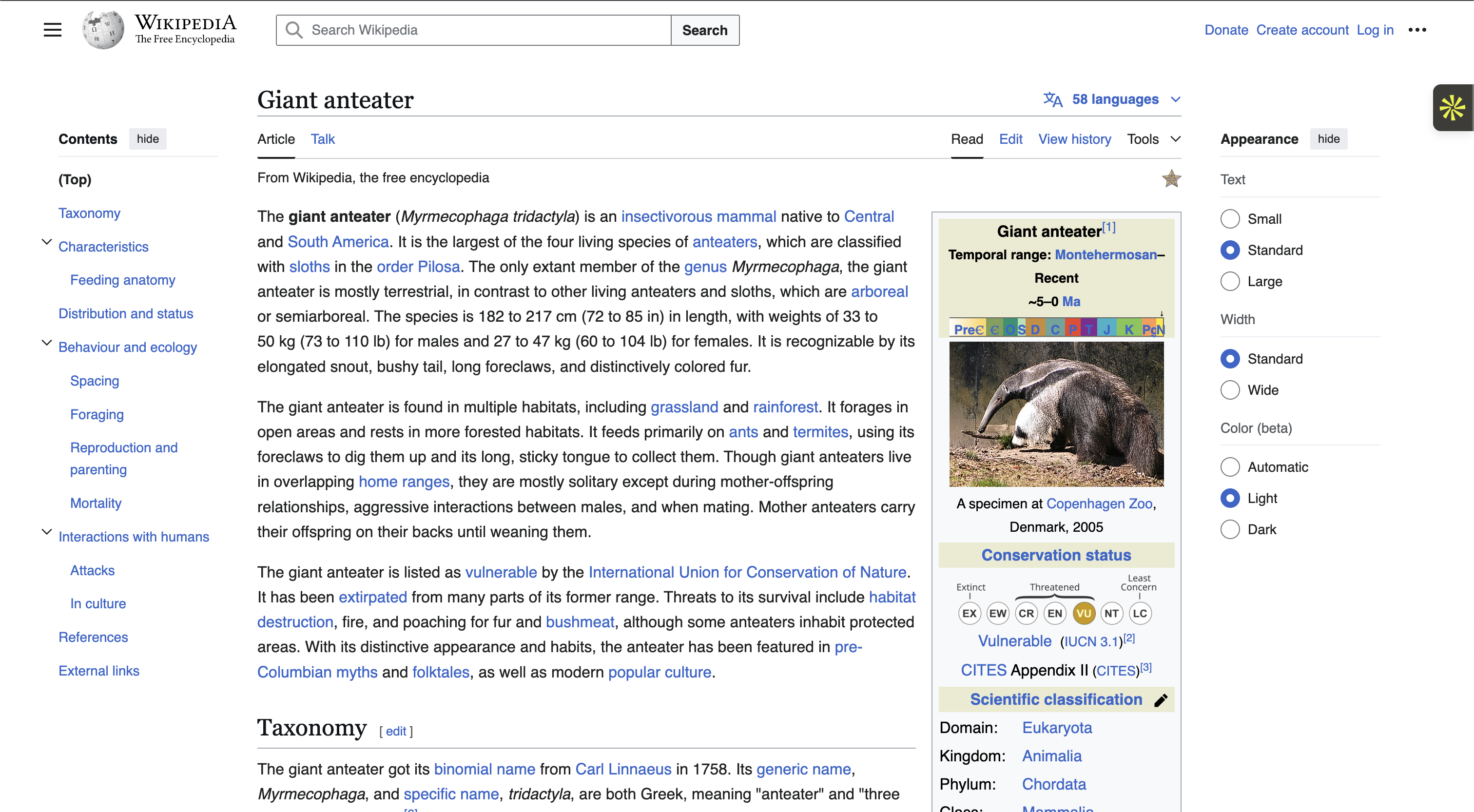
Cluttered Original Webpage - Overwhelming for neurodivergent
-
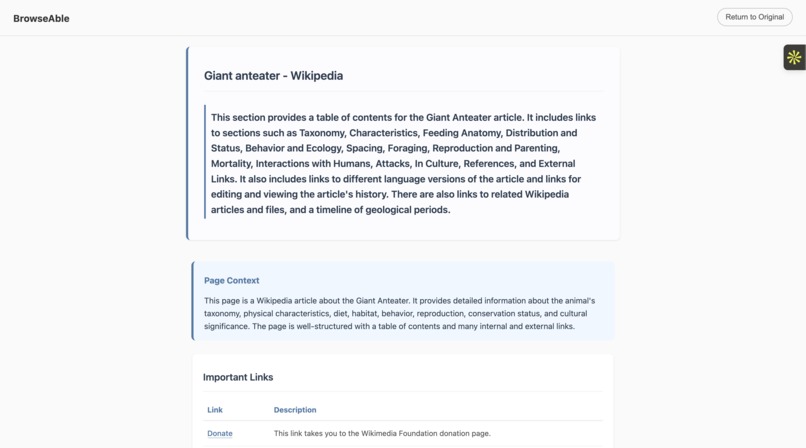
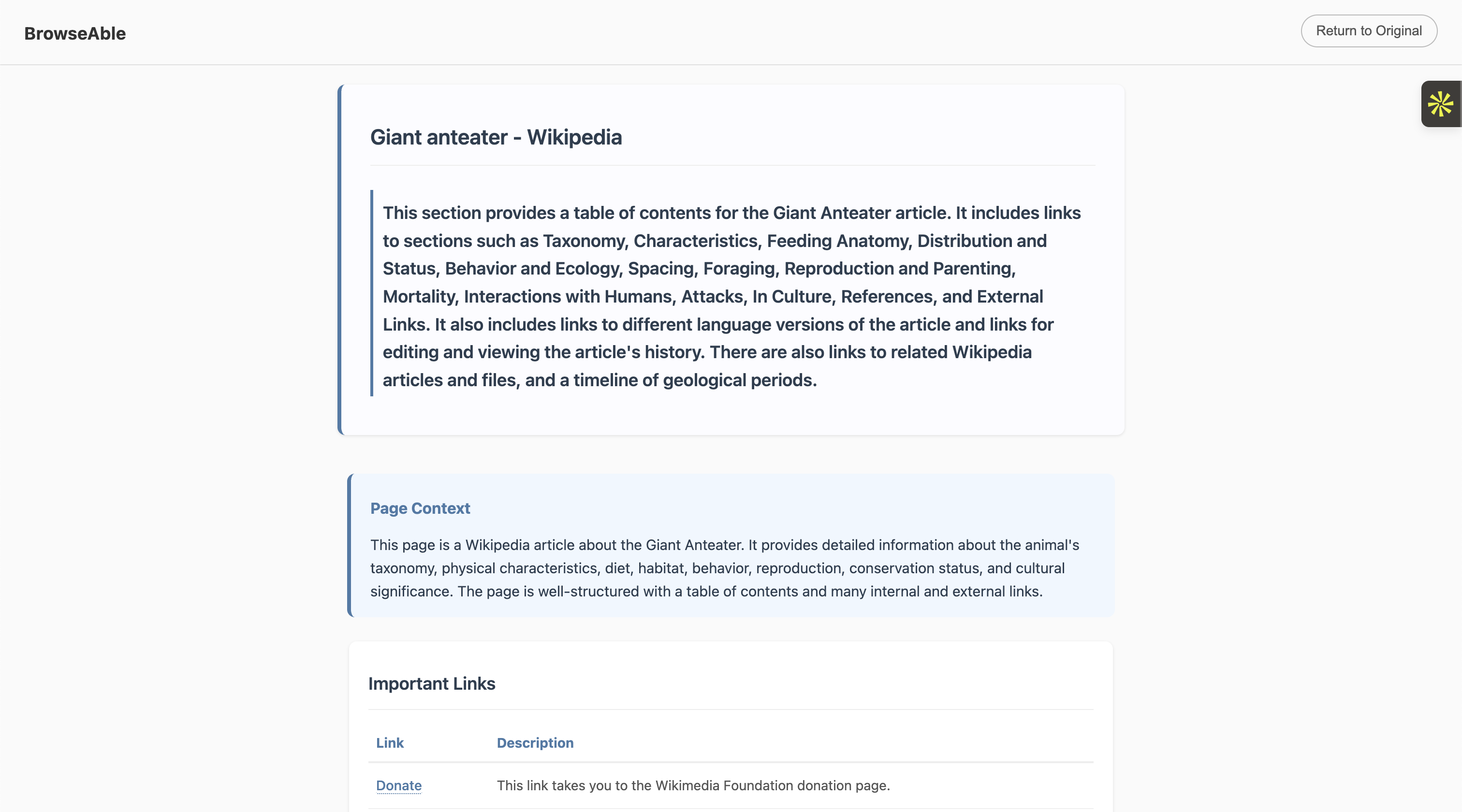
Clean, context friendly page
-
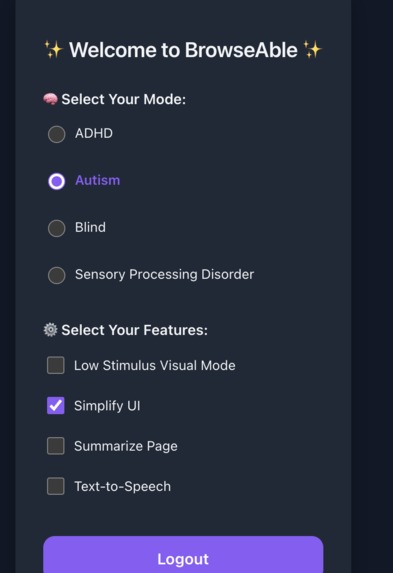
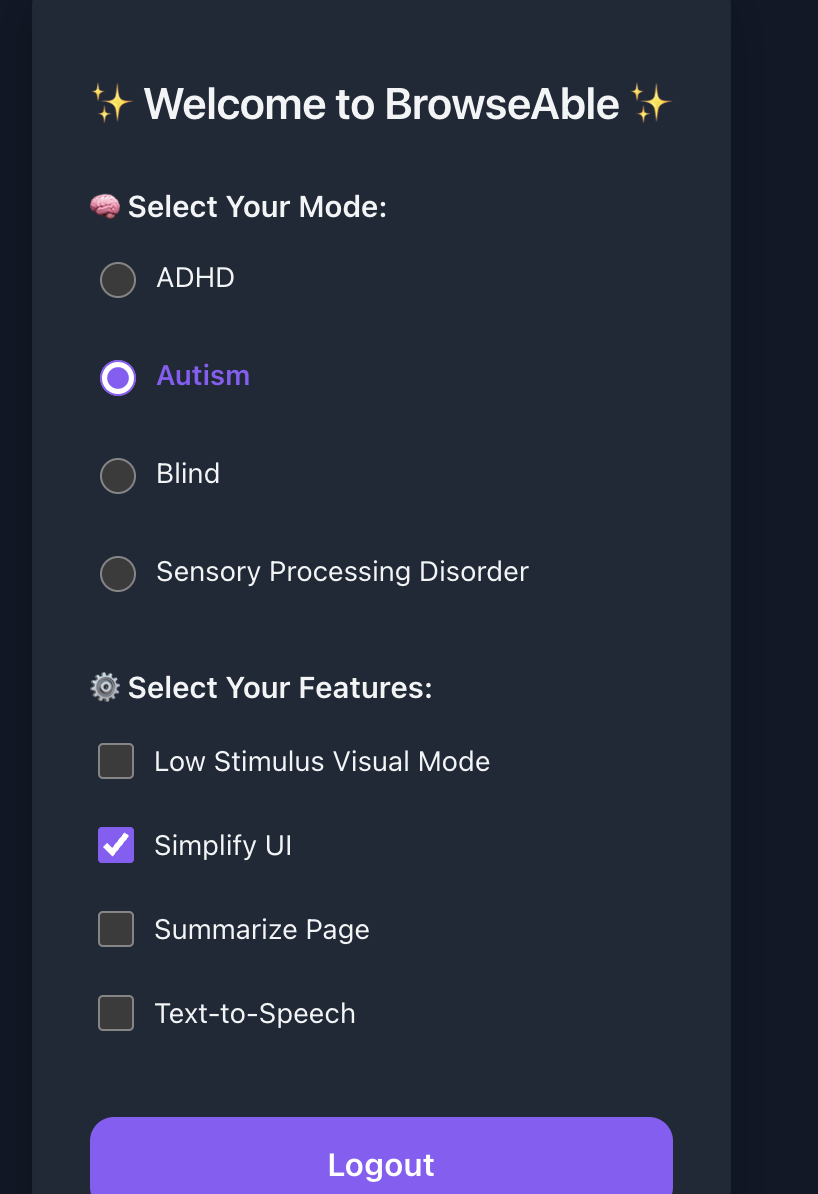
BrowserExtension
-
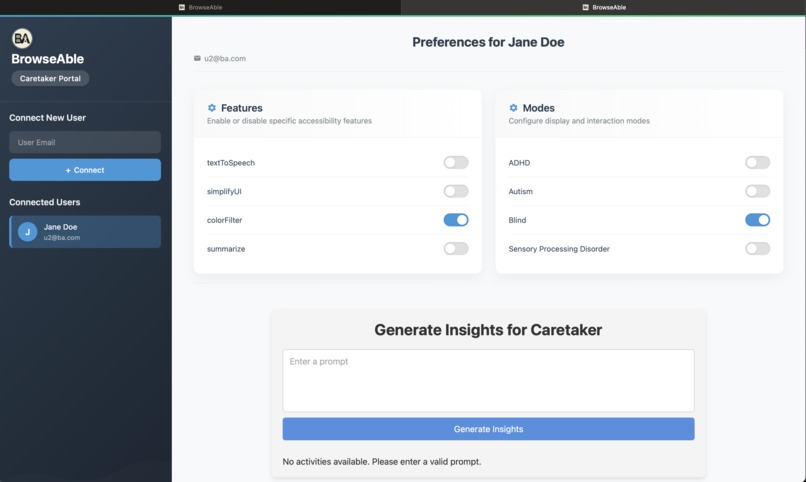
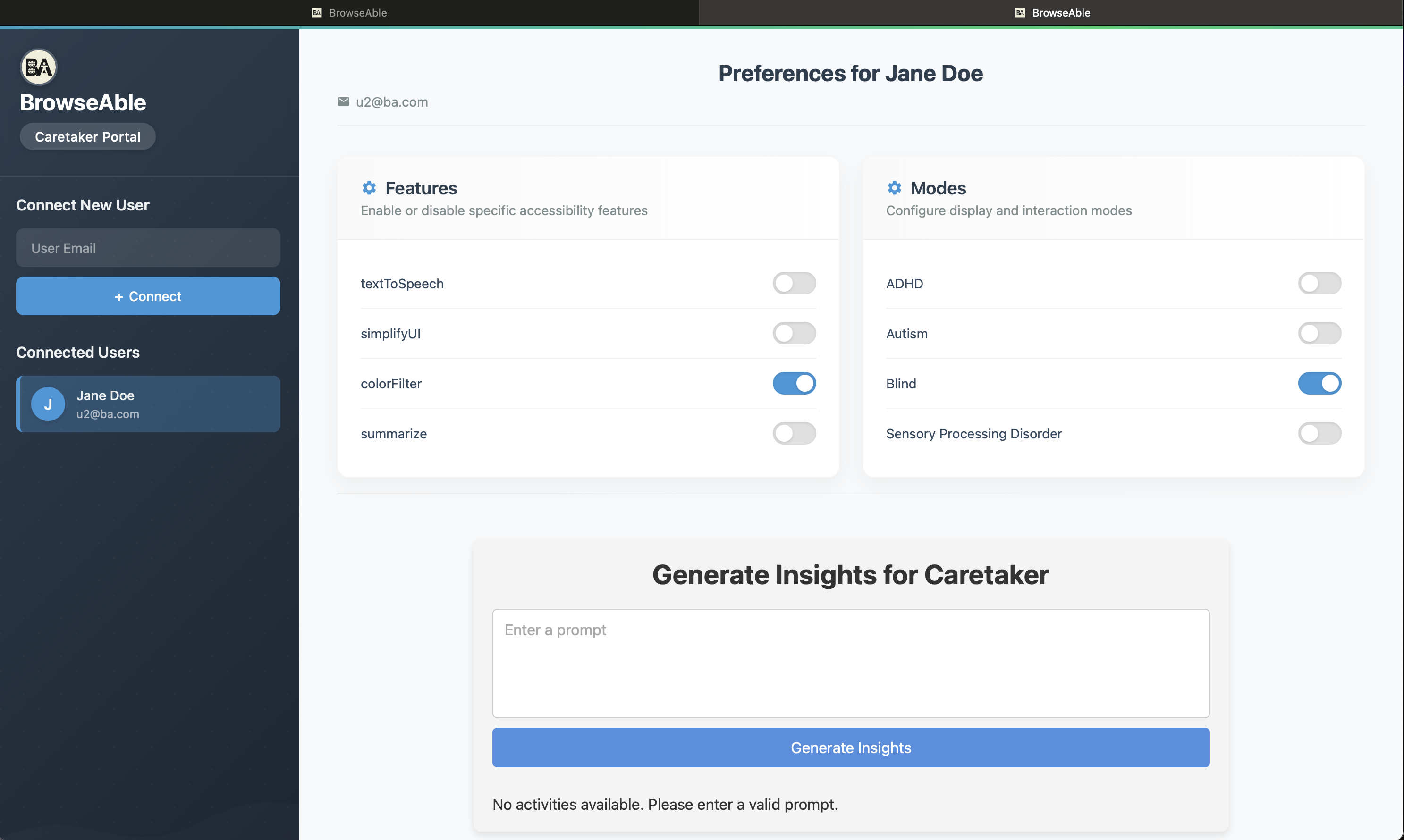
CaregiverPortal
-
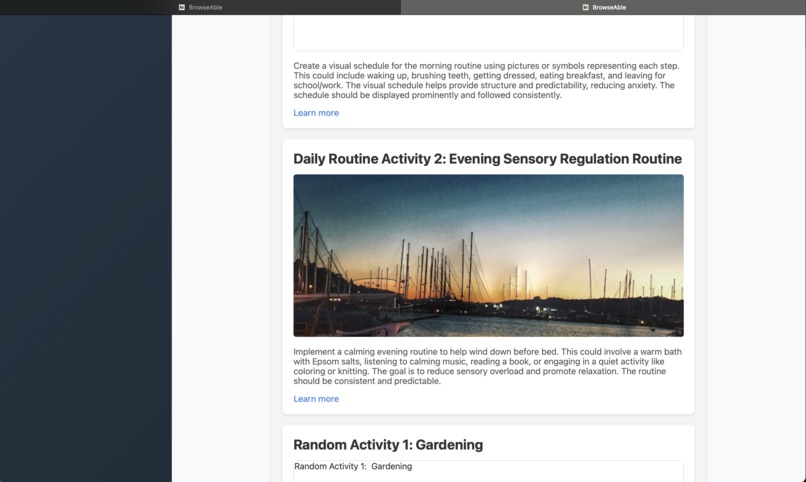
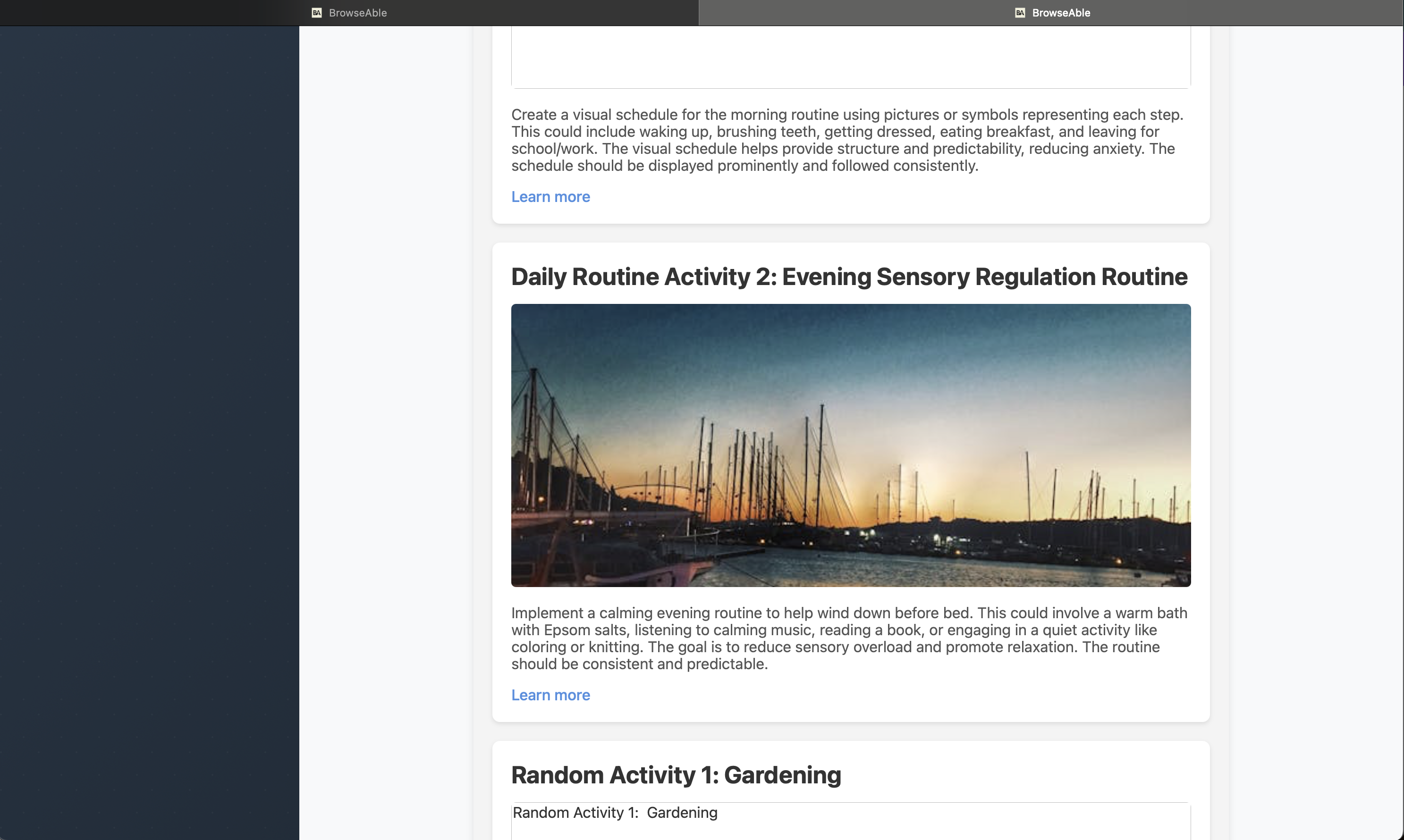
CaregiverPortal-insights
Inspiration
When we encountered the "Tech for Good" theme and the Accessibility track, we asked ourselves: Is AI truly for everyone? For neurodivergent individuals—those with ADHD, Dyslexia, Sensory Processing Disorder, and Blindness—the web can be a maze of challenges. Yet, how often do we see web content that truly addresses their unique needs? The answer: rarely, if ever.
That's where BrowseAble comes in. Our Chrome extension is designed to transform the web into a more inclusive space for people with diverse neurotypes. It’s built on the simple but powerful idea that accessibility should go beyond just being a feature — it should be foundational. With BrowseAble, we're asking: What if AI could empower individuals by making the web truly adaptable to their needs?
Imagine a world where someone with ADHD can engage with web content free of distractions, or where someone blind can instantly hear the heart of a website in a simple, clear spoken format. Picture a dyslexic user reading effortlessly through a layout and font tailored specifically to their style. BrowseAble makes all of this possible.
But we didn’t stop there. BrowseAble also serves the caretakers of neurodivergent individuals. Our caregiver dashboard is a powerful tool designed to manage multiple users and their preferences—particularly for those who may struggle to operate technology independently. This feature enables caretakers to easily track users' activities, preferences, and interactions with the web.
The dashboard doesn’t just stop at management; it also offers AI-driven suggestions for activities and tasks that would benefit each user based on their unique needs. Moreover, it provides helpful resources that can assist caregivers in carrying out those activities more effectively. By offering real-time insights into user behavior, BrowseAble ensures that both users and caretakers are empowered with the information they need to foster better engagement and support. This additional layer of functionality creates a more informed and seamless experience for everyone involved.
Inspired by the belief that technology should be designed for everyone, not just the majority, BrowseAble is our answer to the question: Can AI create a more universally accessible web? Our mission is to make the internet a place where all users—regardless of neurotype—can feel seen, heard, and empowered.
What it does
BrowseAble is a Chrome extension that adapts web content based on users’ neurotypes. It transforms cluttered, overwhelming web pages into focused, digestible layouts tailored to ADHD, Dyslexia, and Blind users.
- For ADHD: Distraction-free layout, bulleted breakdowns, and visual anchors.
- For Dyslexia: Font and spacing adjustments with simplified sentence structures.
- For Blind: Clear narrations using Chrome TTS and simplified text summaries.
It also includes a caregiver dashboard that lets caretakers:
- Manage multiple users.
- Set preferences and instructions per user.
- Use AI for personalized insights and activity suggestions based on each user’s neurotype.
How we built it
BrowseAble is a Chrome extension that adapts web content based on users’ neurotypes. Once the user selects their preferred neurotype (ADHD, Dyslexia, or Blind), the background script sends the page’s content to Gemini API, which analyzes it and generates a custom DOM structure. The content script then injects this personalized layout into the webpage as a dynamic overlay. For Blind users, we use Chrome’s TTS API to read the content aloud, making it more accessible. This approach ensures that each neurotype gets the most suitable web experience, enhancing engagement and accessibility.
The Caregiver Dashboard allows caretakers to manage multiple users, set preferences (e.g., simplify UI, declutter), and choose modes like ADHD or Autism. It provides AI-driven insights into user activities, recommending helpful tasks and resources. The dashboard uses the same technologies to monitor and support neurodivergent users, ensuring both users and caretakers have the tools needed for a more inclusive web experience.
Challenges we ran into
Understanding the unique needs of neurodivergent users was a key challenge. To create a solution that truly benefits individuals with ADHD, Dyslexia, and Blindness, we first conducted research and testing to understand how these conditions impact web navigation. Using the Google Gemini API, we analyzed web content and identified the most effective ways to adapt it for each neurotype, applying JavaScript to dynamically adjust the user interface in our extension.
Once the requirements were clear, we focused on crafting the right prompts to guide Gemini in generating accurate content modifications. The key here was precision—ensuring Gemini would provide relevant layout adjustments and simplifications that aligned with each neurotype’s needs. The content script passed these tailored modifications into the page, creating an adaptive browsing experience for each user.
Another significant challenge was ensuring we could reliably extract the right content from various websites. Using web scraping and DOM manipulation, we filtered out irrelevant elements, such as ads and footers, ensuring only the most important content was passed to Gemini. This allowed us to generate personalized, accessible, and distraction-free layouts for users across diverse websites.
Accomplishments that we're proud of
- Created a fully functional, neurotype-aware Chrome extension in under 48 hours.
- Built a caregiver dashboard that supports multiple users and personalized accessibility settings.
- Used Google Gemini to dynamically rewrite web content based on cognitive profiles.
- Delivered adaptive overlays and voice narration for Blind users using Chrome’s TTS API.
- Proved that AI can create real-time, tailored accessibility experiences without hardcoding every page.
What we learned
Building BrowseAble has been a transformative experience that redefined how we approach accessibility and AI. When we started, we didn’t just want to build a tool — we wanted to create something that could genuinely make a difference, especially for neurodivergent individuals. It was this mission that led us to leverage cutting-edge technologies like Gemini, a generative AI tool, to reshape the way we think about accessible web browsing.
What we learned early on was that accessibility isn’t just a set of features — it’s a mindset. And technology, like Gemini, is key to making that mindset a reality. Gemini allowed us to adapt web content in ways that address the unique needs of people with ADHD, dyslexia, and visual impairments, helping us break away from the traditional tech solutions that don’t always cater to these diverse needs. The experience taught us that AI isn’t just for traditional problem-solving; it’s a powerful tool for reshaping user experiences based on specific needs, and it's especially useful in making the web truly adaptable. This approach also pushed us to think about AI for all, as technology should empower everyone, regardless of neurotype.
An important lesson came when we created dynamic layouts using AI. It wasn’t just about throwing technology at the problem — it was about understanding the specific challenges each user faces. By crafting the right prompts for Gemini, we learned the importance of user-centric design in AI. It’s a delicate balance: while AI can generate amazing solutions, it’s the human understanding of the user that makes the results truly impactful. This underscored the idea that accessibility is not a one-size-fits-all solution.
We also took a step further with the creation of the caregiver dashboard, which allows caretakers to manage and track multiple users. This taught us that accessibility can extend beyond just the individual — it can support the people who help care for them too. By providing AI-driven insights and personalized suggestions, we were able to improve both the users' experience and their caretakers' ability to provide better support.
Ultimately, BrowseAble was an exercise in pushing the boundaries of what technology can do. The use of Gemini in such a dynamic way is an example of how emerging tech can drive real-world change, showing that AI can be used to solve accessibility challenges in ways we never thought possible before. We realized that tech for good isn’t just about solving problems—it’s about rethinking how technology can be inclusive and work for all. This project reinforced our belief that AI, when paired with empathy and user understanding, can lead to groundbreaking solutions.
What's next for BrowseAble
- Add more neurotypes and expand to motor/learning disabilities.
- Integrate with learning platforms (Google Classroom, Coursera) for accessible education, schools, caregivers, and accessibility-focused orgs.
- Build real-time caregiver dashboards with co-browsing and guidance tools
Built With
- Gemini API (Google Generative AI) — DOM generation based on neurotype
- Chrome Extensions APIs (manifest v3)
- JavaScript (ES6)
- HTML5 + CSS3
- Chrome TTS API — for speech output in Blind mode
- Firebase (for storing user preferences and onboarding content)
Try it Out
- GitHub Repository: https://github.com/aprajita27/BrowseAble
- Caregiver Portal: https://browseable-586fa.web.app/
- Youtube Demo: https://youtu.be/lRPK5BmfzVA


Log in or sign up for Devpost to join the conversation.