Inspiration
The sound of guitar strings, drums, or any sorts of dimensional membranes you can think of is never going to be obviously influenced by temperature-dependent surface fluctuations. But what if it could be? We were intrigued, and set off on a brute-force mission to generate some sonorous flair to vibrations with temperature fluctuations.
What it does
Let's go brute-force peeps!
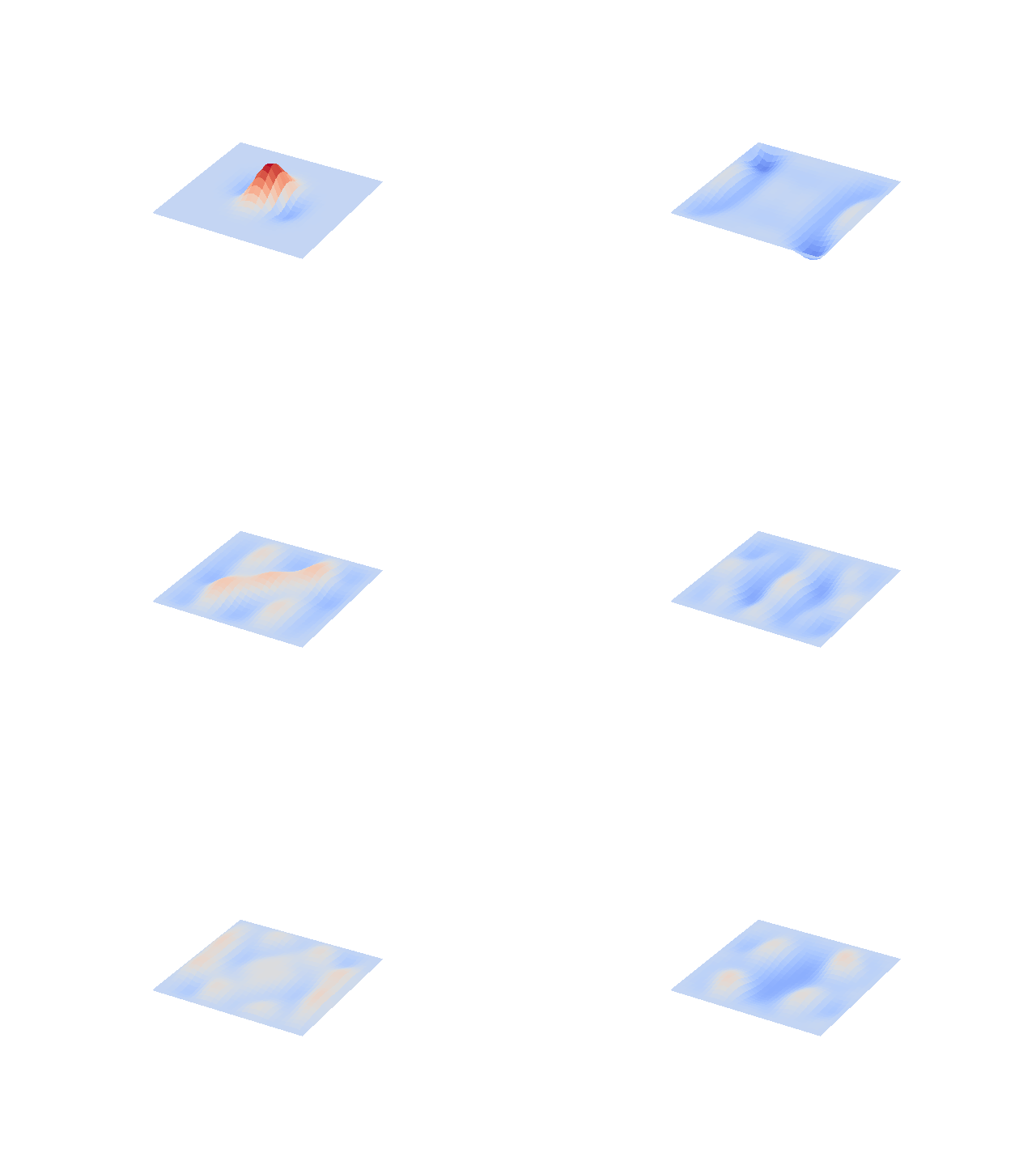
In this model we simulate in a very inefficient and overly complicated way the vibration of a membrane under thermal fluctuations and (try) to hear it! In a nutshell, we take a membrane that obeys the classic stretchy-bouncy-Hooke law and we add to it thermal fluctuations flooding the membrane with noise.
How we built it
We coded our project in Python, combining our script fluc_sim.py, within which our membrane became susceptible to random fluctuation, with our script smh.py, which uses the perturbation generated in fluc_sim.py to represent the noise which occurs in a vibration membrane.
To deploy our solution, we use two aws ec2 instances. On the first, we have deployed a bokeh dashboard, which interactively generates and display the material simulations. The second ec2 instance runs an apache webserver that hosts a Python flask application.
Challenges we ran into
Putting the sound together with the harmonic motion of the membrane was a challenge. Earlier in the development, there were some issues trying to understand how to use the O.D.E solver with the input from random fluctuations - these random fluctuations were introducing discontinuities that made the code freak out! Setting up the servers proved to be difficult as well. With a clear conceptual frame of the problem, most of the challenges were just in finding how to present the vision.
Accomplishments that we're proud of
Initially we were unsure that we would be able to create a 2D simulation, so this was a great achievement. Also the integration of the simulations into the server was gnarly, and so having something that is functioning is something to be proud of. It seems that this idea hasn't been simulated before, so we are very happy to produce something new!
What we learned
That you can get very decent surface waves simulation with a step by step numerical method. And that a membrane with these surface movements sounds like an airy tin whistle gun. Lovely.
What's next for Brosons: Sound and Surface Simulation
Add the sound into the interactive website! Maybe try to make a real time usable instrument that generates notes from MIDI signals based on our physical modelling system.


Log in or sign up for Devpost to join the conversation.