-
-
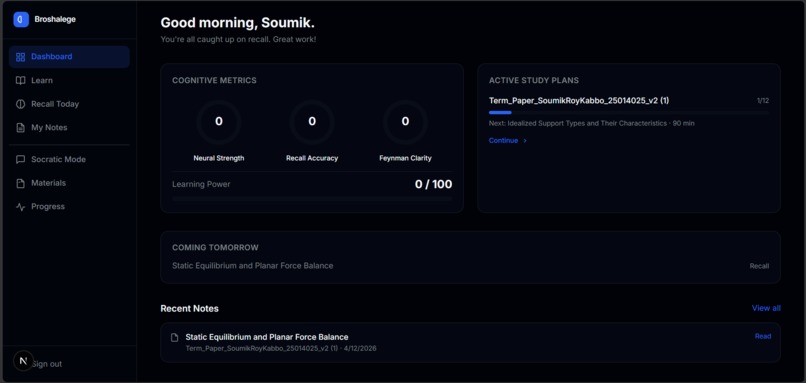
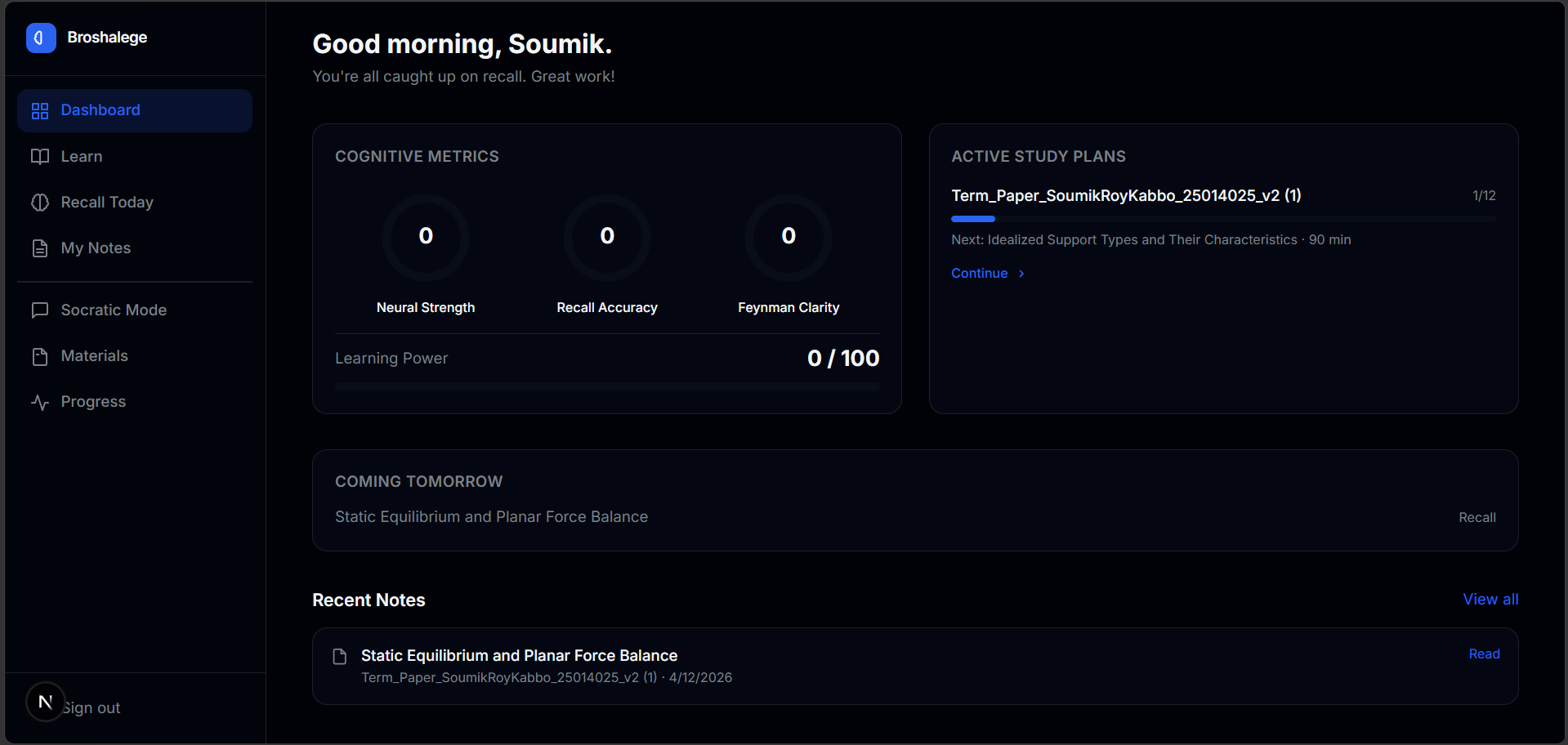
This is Dashboard. Currently there are three cognitive scores
-
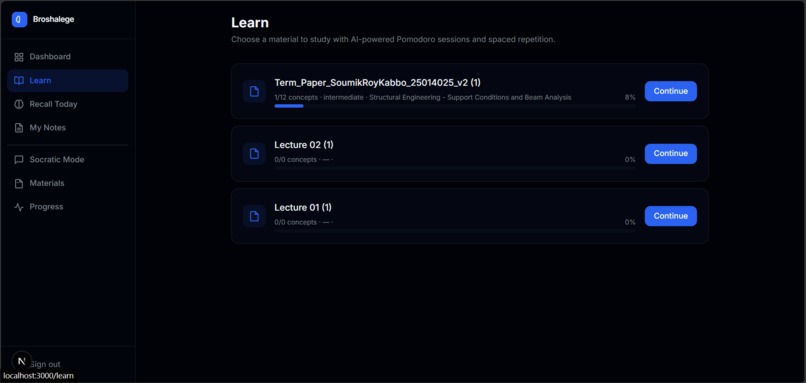
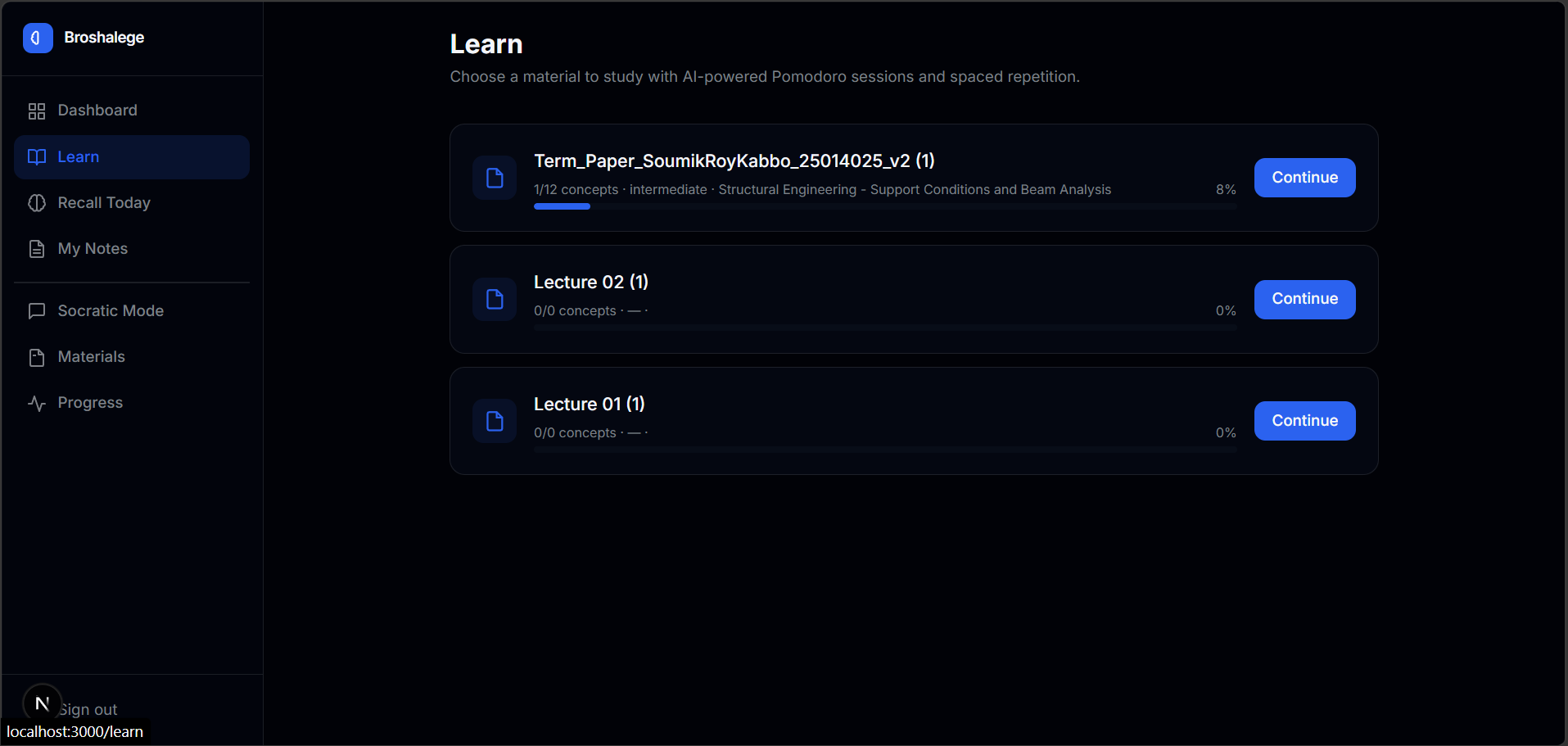
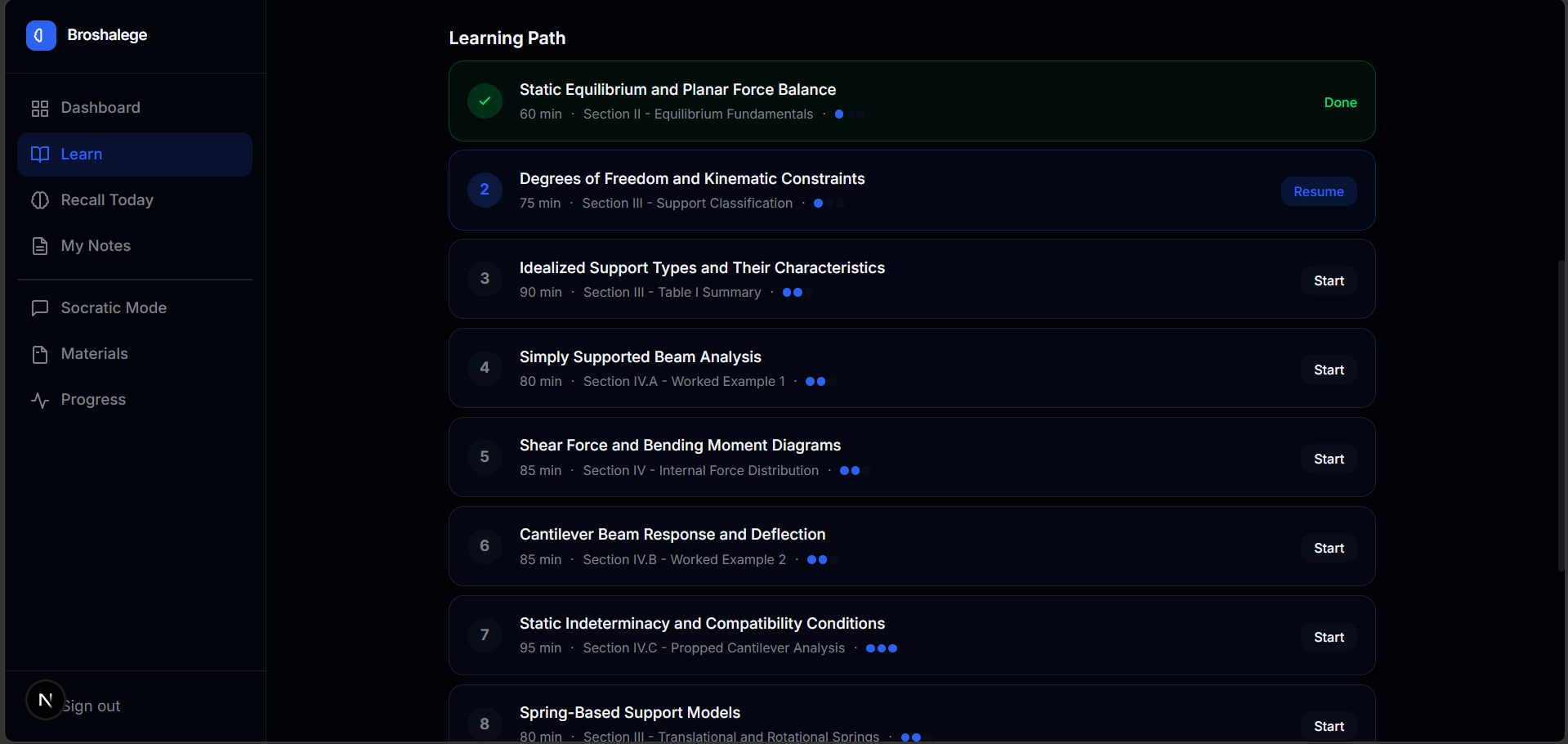
Learning Sessions - all the sessions will be here.
-
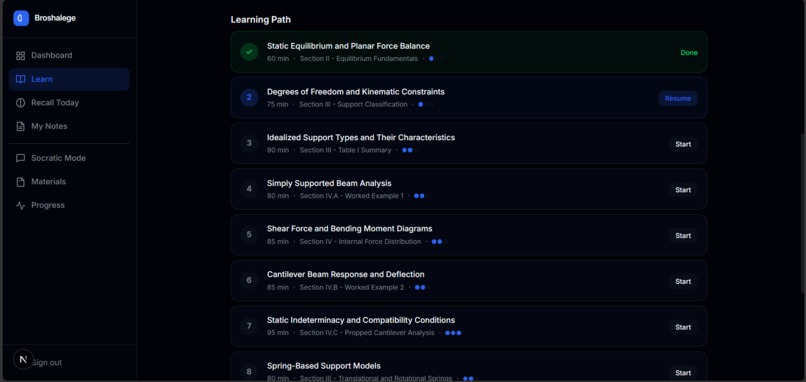
After analyzing the material, It will automatically tell pre-requisites and make a study plan conceptually.
-
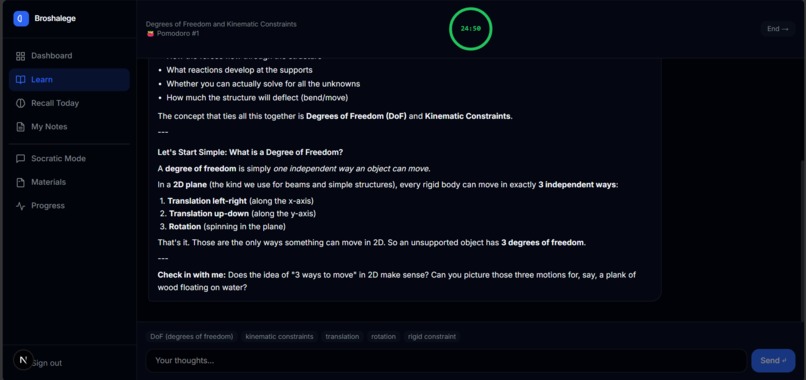
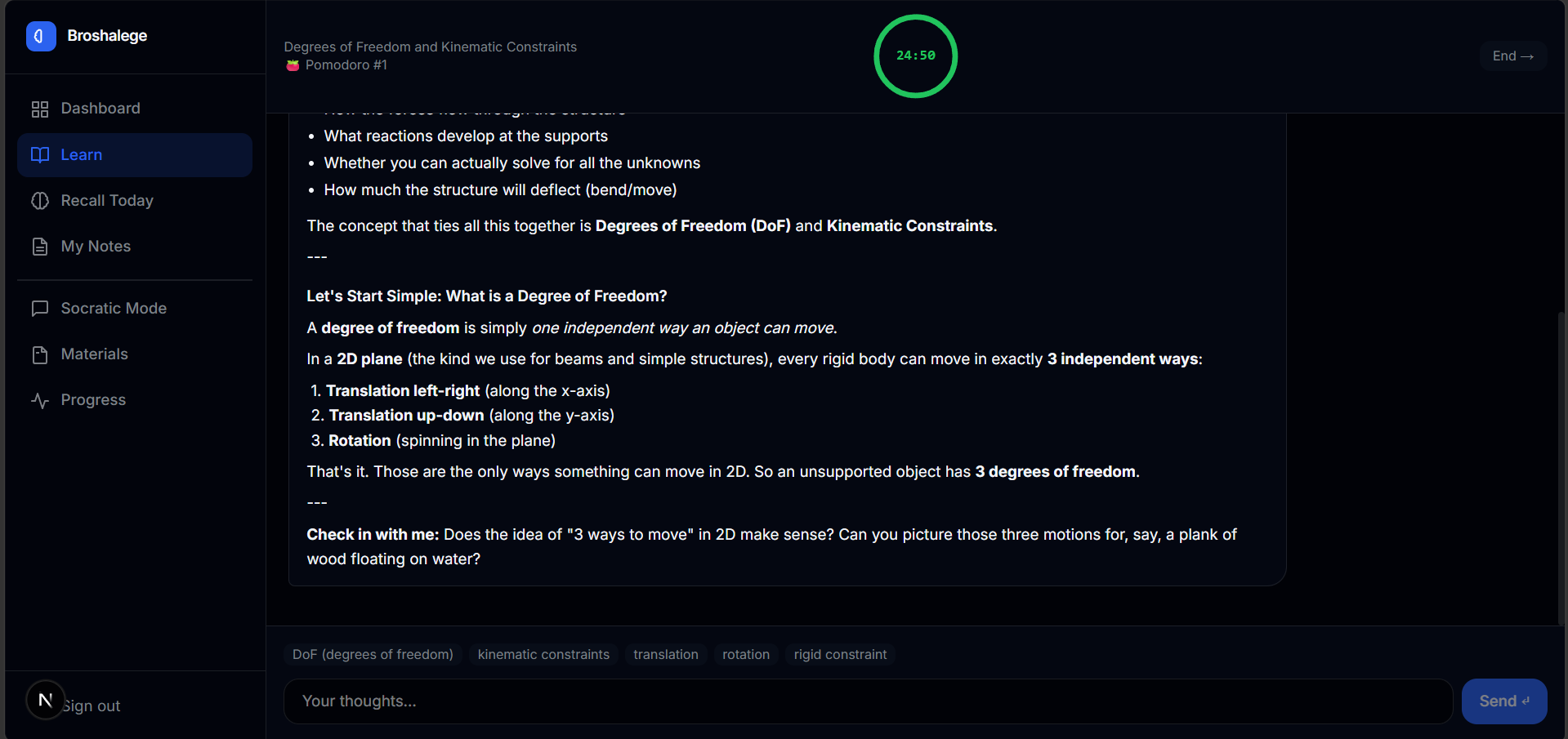
For each concept there is a particular time which is set automatically and there is a countdown
-
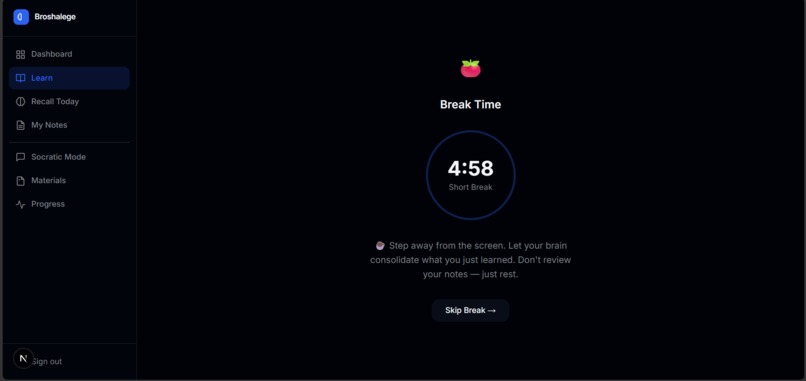
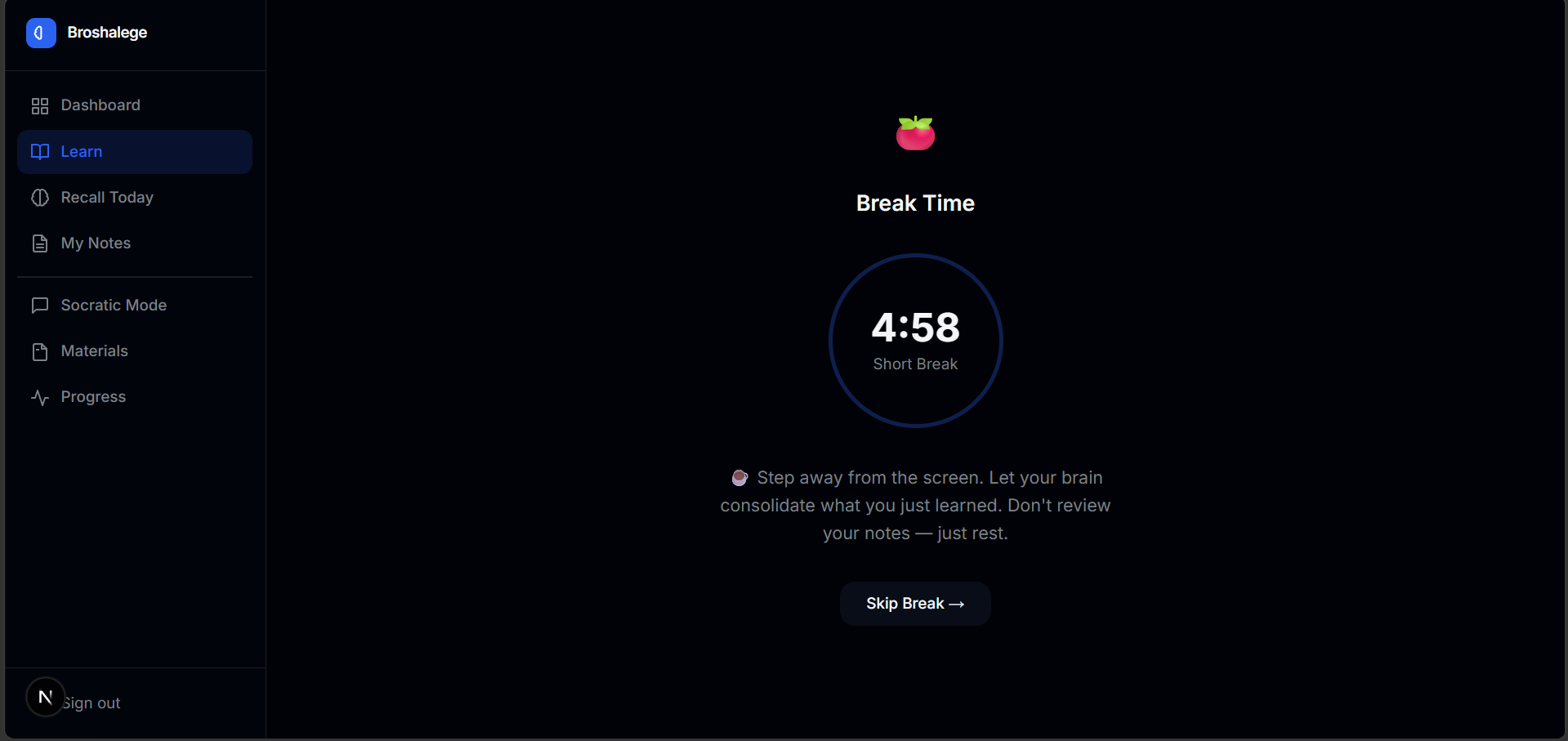
After the countdown is finished, there will be a pomodoro break
-
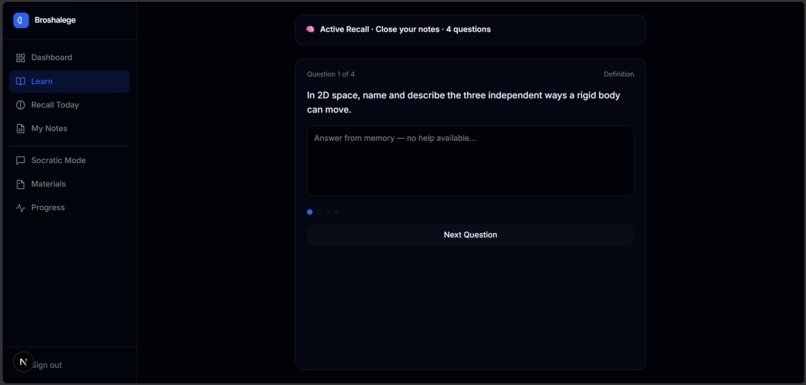
Feynman Approach. This is how you can understand your understanding
Inspiration
I was struggling to study for my exams.
I would read a whole chapter. Then close the book. And forget everything in like 20 minutes. It was so frustrating.
I tried YouTube videos. I tried making notes. Nothing really worked.
Then my teacher gave me some advice. He told me about something called the Forgetting Curve. He said our brain forgets things really fast unless we practice remembering them at the right times.
That hit me hard.
I thought, why isn't there an app that actually teaches you the right way to study? Not just flashcards. A full system. So I decided to build BroShaLege.
What It Does
BroShaLege is an AI powered learning system that turns any PDF into a full study experience.
You upload a book or any study material. The AI reads the whole thing and figures out the best order to learn the topics. Sometimes the book teaches things in a confusing order. BroShaLege reorganizes it so your brain can actually follow along.
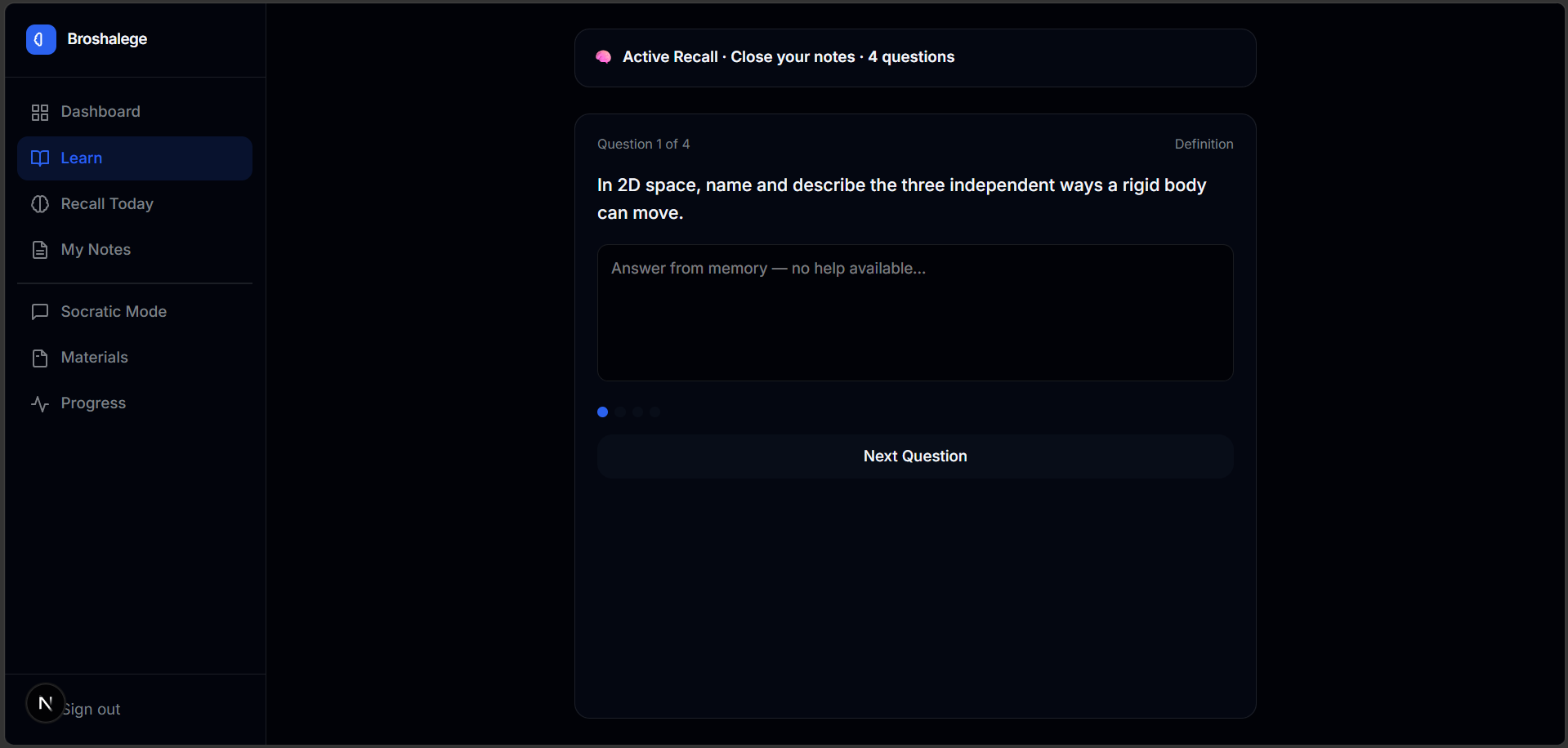
Then it runs you through smart study sessions. The AI explains each concept like a real teacher. After that you take a short break. Then you have to recall everything from memory. No peeking.
There is also a Feynman check. The AI asks you to explain what you just learned in simple words like you are teaching a child. If you use jargon without understanding it the AI catches it and shows you exactly where your understanding breaks down.
Everything you learn gets scheduled for review using spaced repetition. The timing is based on how well you remembered it. The better you did the longer it waits. If you struggled it comes back sooner.
The dashboard shows three scores. Neural Strength, Recall Accuracy, and Feynman Clarity. Together they show you how well your brain is actually holding onto knowledge.
And there is a Socratic Mode too. In that mode the AI never gives you answers directly. It only asks you questions until you figure it out yourself.
How We Built It
I built the backend with Next.js API routes and TypeScript. The database is PostgreSQL and I used Prisma ORM to manage everything. The AI features run on the OpenAI API.
For the study engine I had to write a custom prompt that makes the AI analyze an entire book and return a structured learning plan in JSON. That was tricky to get right.
The spaced repetition system uses a modified version of the SM2 algorithm. It calculates the next review date based on how the student performed.
The Socratic Mode has a lockdown filter. Every AI response gets checked before it reaches the user. If the AI accidentally tries to give away an answer the filter catches it and makes the AI try again.
The teacher notes are generated automatically after each concept session. The AI writes clean structured notes like a good teacher would. Not a transcript of the session. Proper notes you would actually want to read before an exam.
Challenges We Ran Into
Making the Socratic Mode actually work was the hardest part.
The AI really wants to be helpful and just answer things. Teaching it to hold back and only ask questions without leaking the answer took a lot of prompt engineering and a custom filter layer.
The spaced repetition math was also confusing at first. The SM2 algorithm has a lot of edge cases. What happens when someone scores really low? When do you reset the interval? Getting that right took many iterations.
The Feynman evaluator was tough too. The AI had to learn what counts as jargon in different subjects. Physics jargon is different from economics jargon. Getting the AI to recognize that across different topics required careful prompting.
And honestly building everything alone was the biggest challenge. Design, backend, AI prompts, database, deployment. All at the same time. There were days when nothing worked and I just had to push through.
Accomplishments That We Are Proud Of
The Feynman evaluation actually works really well. It catches gaps in understanding that the student did not even know they had. That feels like real teaching happening inside an app.
The book sequencer is also something I am proud of. The AI does not just follow the book. It thinks about what you need to know first and builds a learning path that makes sense for your brain. That is not a simple thing to build.
And the whole system is connected. Studying feeds into recall. Recall feeds into the metrics. The metrics tell you what to work on next. Everything talks to each other. Building that flow end to end as one person feels like a real accomplishment.
What We Learned
I learned about spaced repetition and how the Ebbinghaus Forgetting Curve actually works. Before this I had no idea memory followed such a predictable pattern.
I learned the Feynman Technique is not just a study tip. It is a genuine way to find out if you understand something or just think you do. Building it into software made me understand it on a much deeper level.
I learned a lot about prompt engineering. Writing prompts for an AI that behaves like a strict Socratic teacher versus a warm explaining teacher are completely different problems. The words you use matter so much.
And I learned that building something you personally need makes you work harder. Every feature I built I wanted to use myself. That kept me going on the hard days.
What's Next for BroShaLege
I will make mobile app for the Broshalege. This will allow broshalege to push notification as a reminder of what to recall.
I want to add voice explanations. Instead of typing your Feynman answer you could just speak it. The AI would evaluate your spoken explanation.
I also want to add collaborative study rooms. Two or three students studying the same material could go through sessions together and compare their Feynman explanations.
Better analytics are on the roadmap too. Right now you see your three cognitive scores. Next I want to show you which specific concepts are your weakest and build a personalized review plan around that.
And I want to bring BroShaLege to mobile as a native app so students can study anywhere without needing a laptop.
The goal is simple. Make studying feel less like suffering and more like actually getting smarter.
Built With
- anthropic-sdk
- nextauth.js-v5
- openai-api-(gpt-4o)
- pdf-lib
- pdf-parse
- playwright
- postgresql
- prisma-7
- radix-ui
- react-19
- react-query-v5
- shadcn/ui
- tailwind-css-v4
- typescript
- vitest-v4
- zod-v4
- zustand-v5

Log in or sign up for Devpost to join the conversation.