-
-
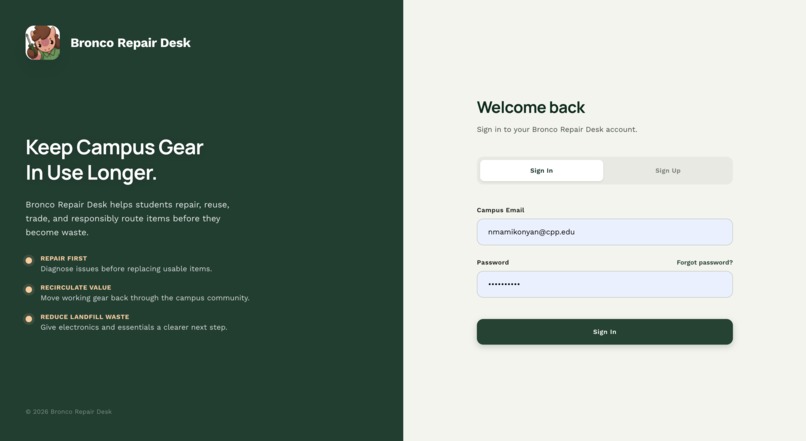
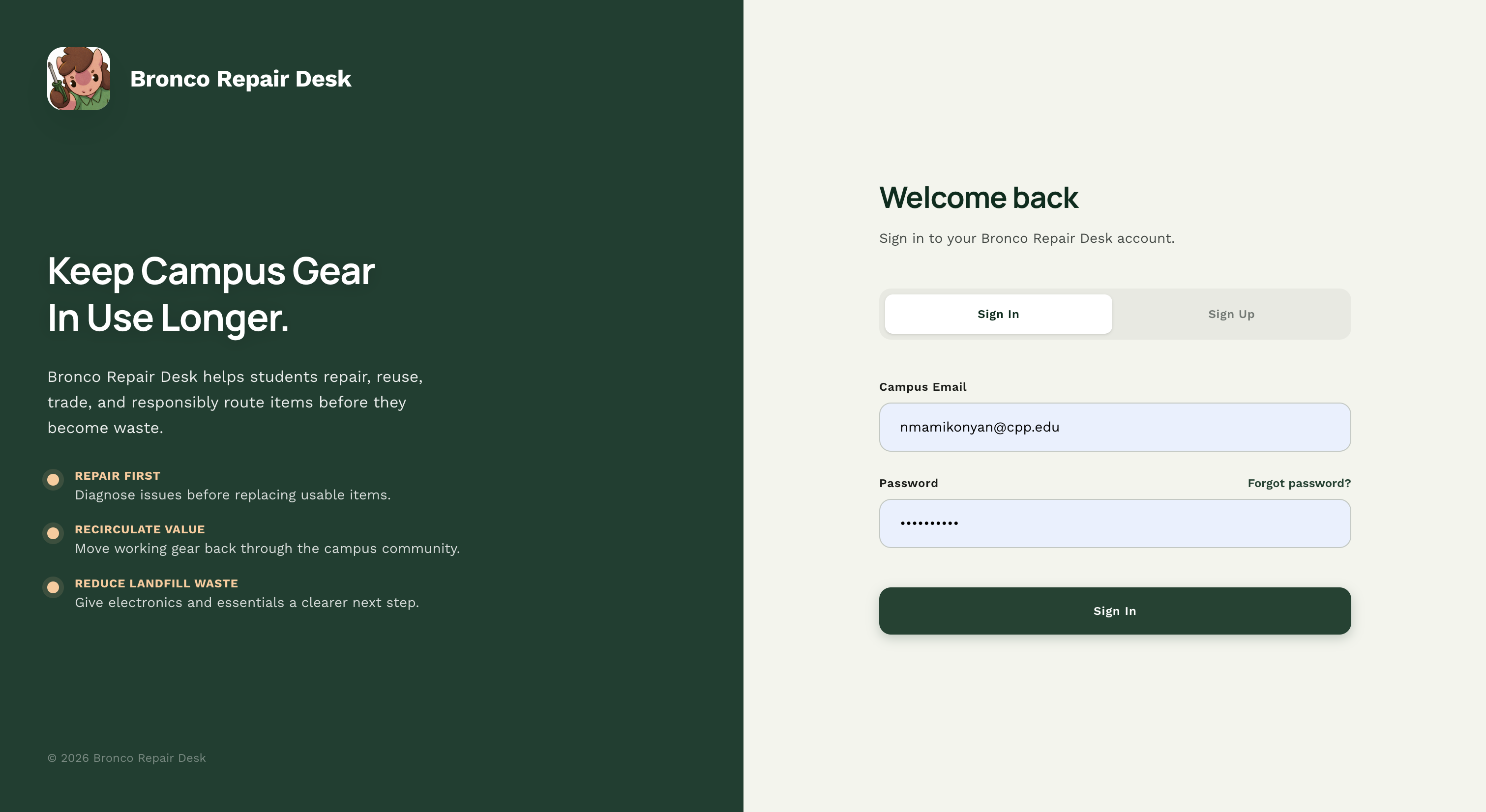
Sign in/ log in page
-
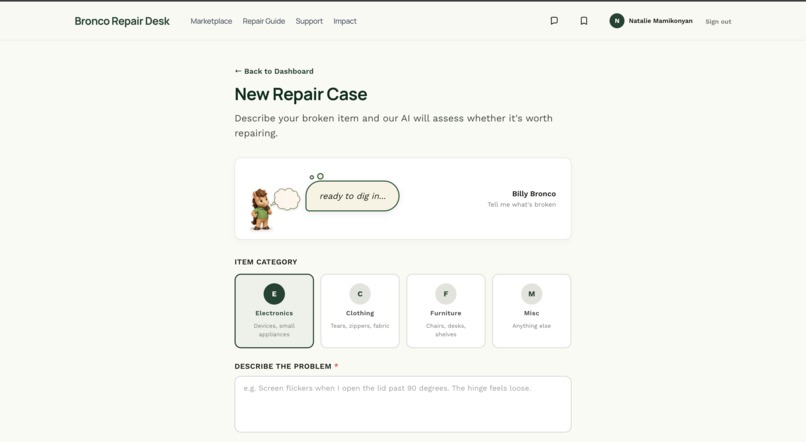
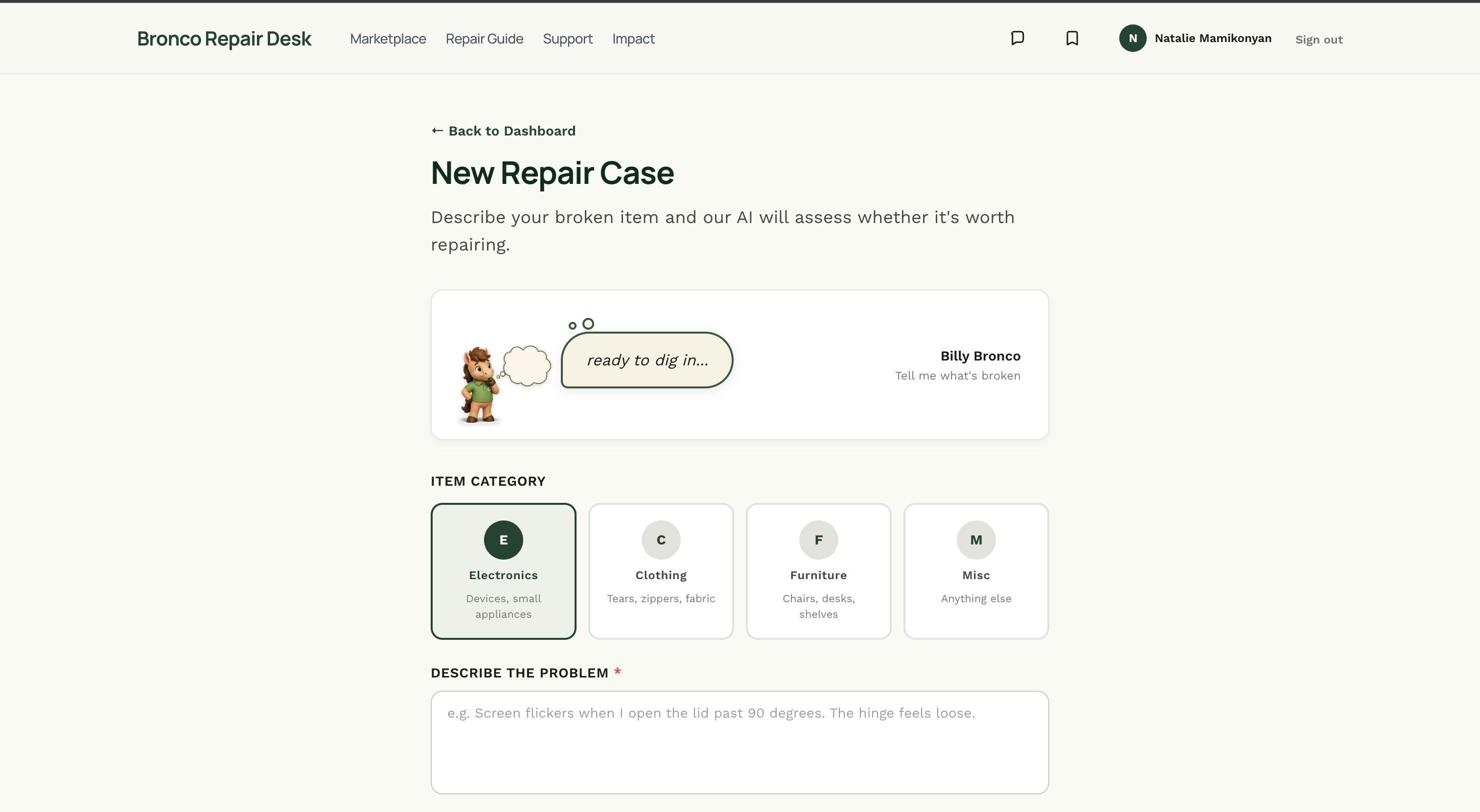
Form to generte a case
-
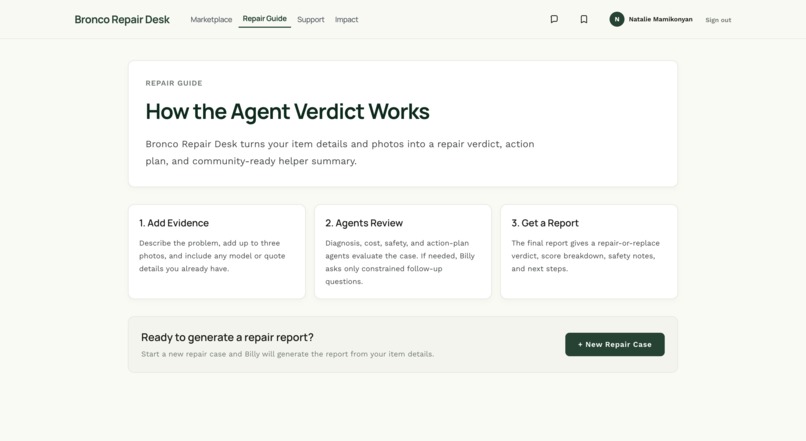
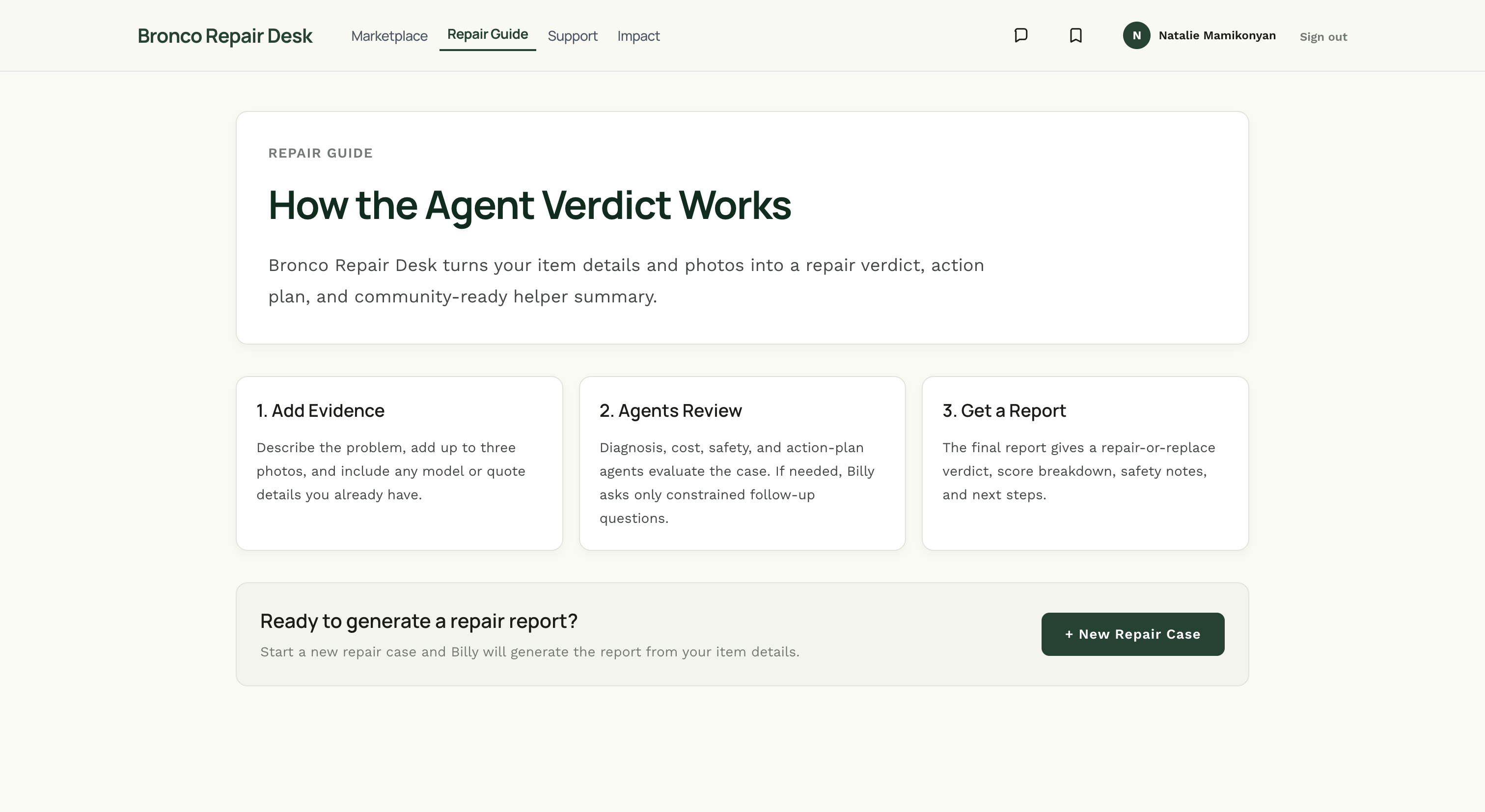
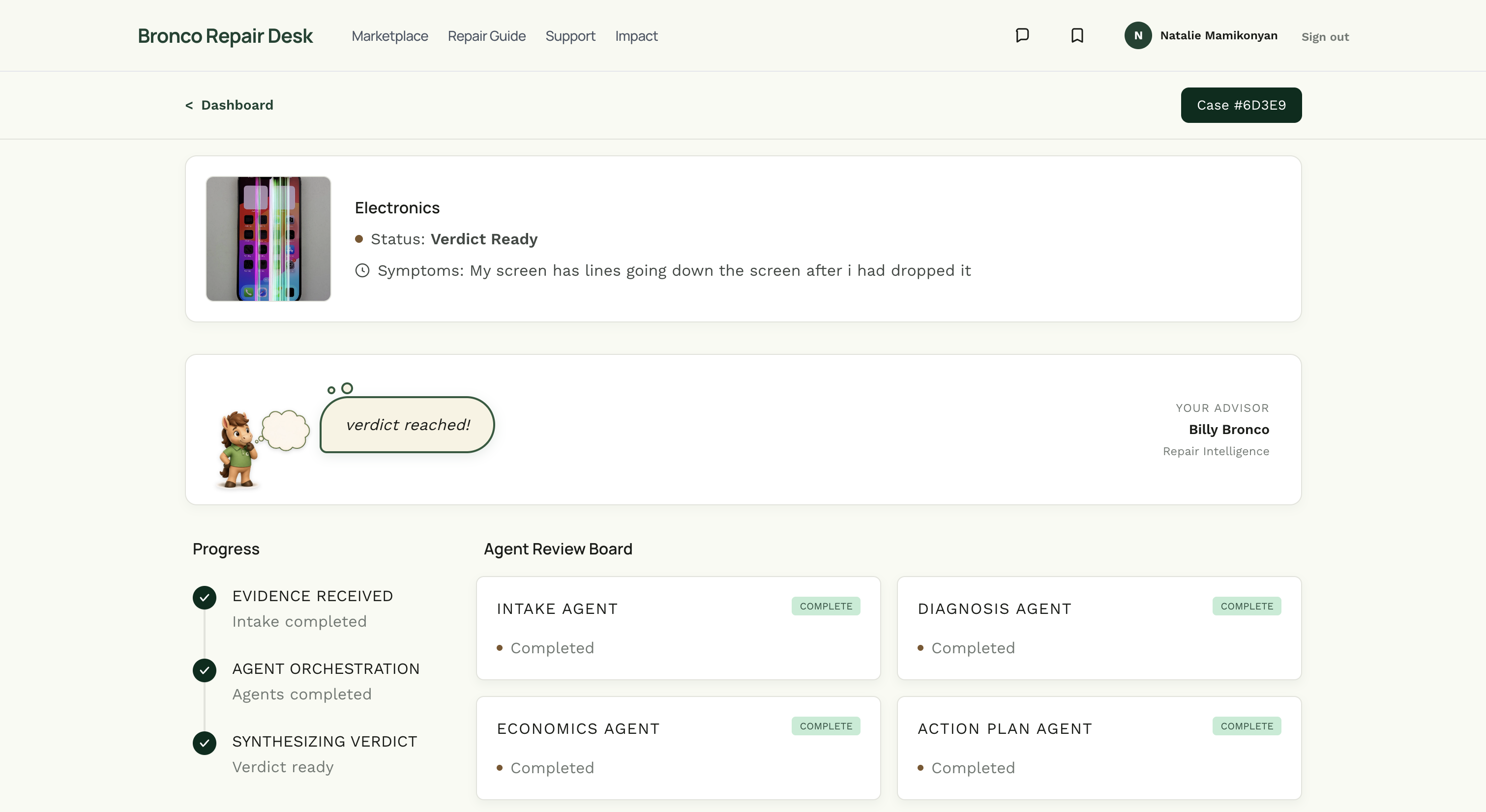
How the repair diagnosis will work
-
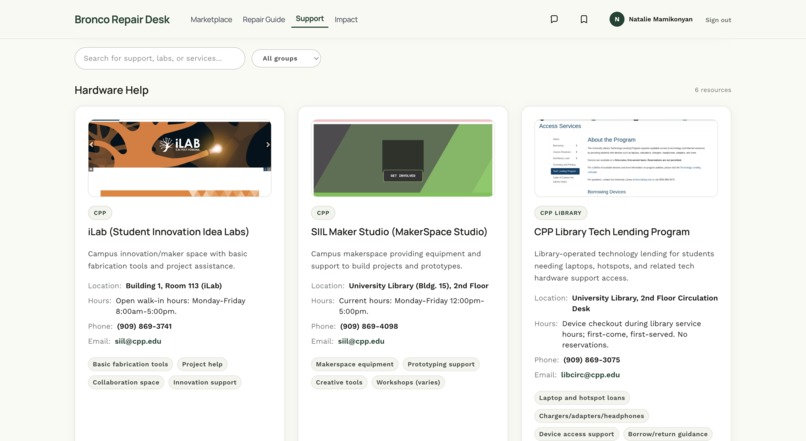
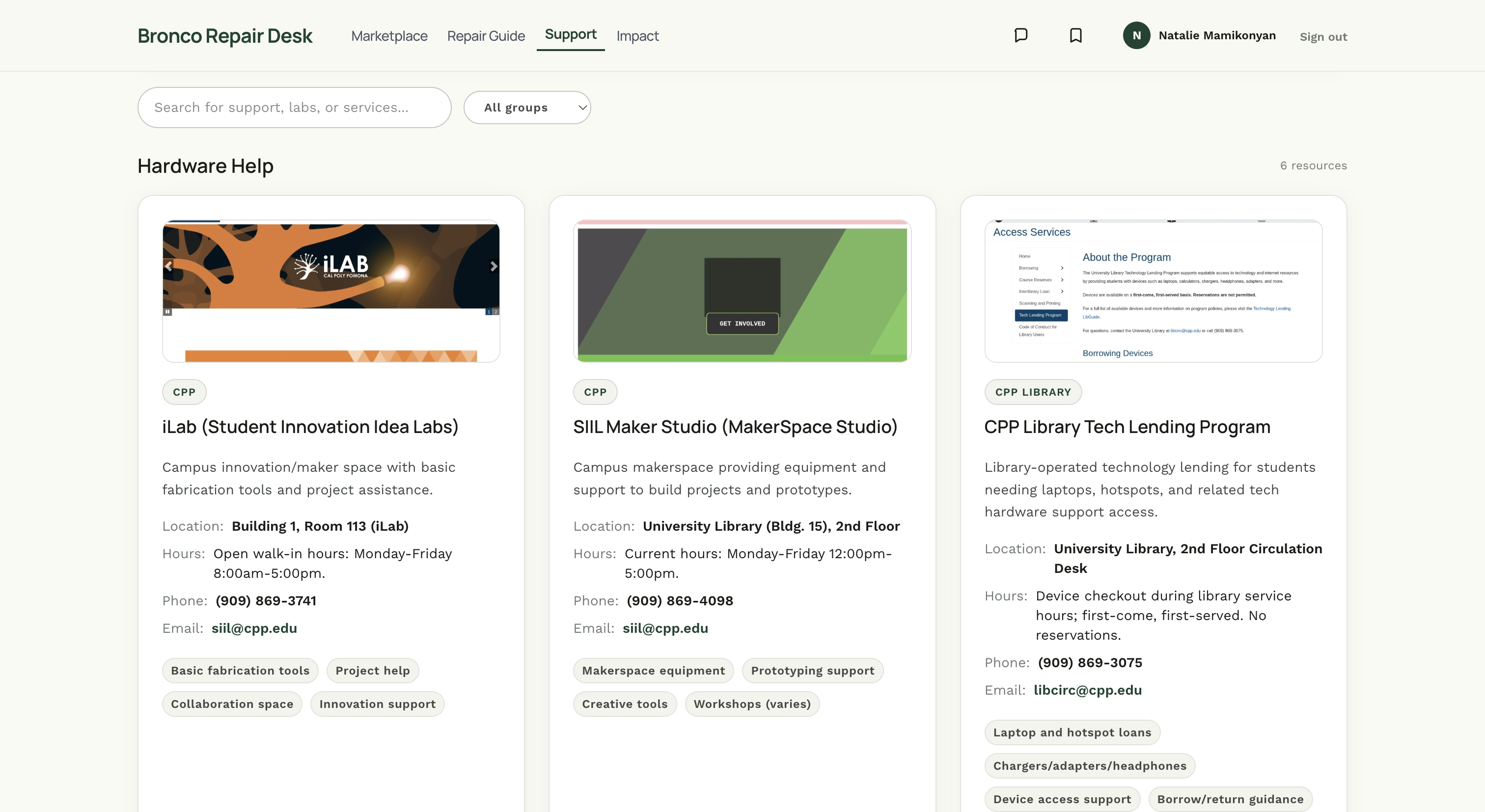
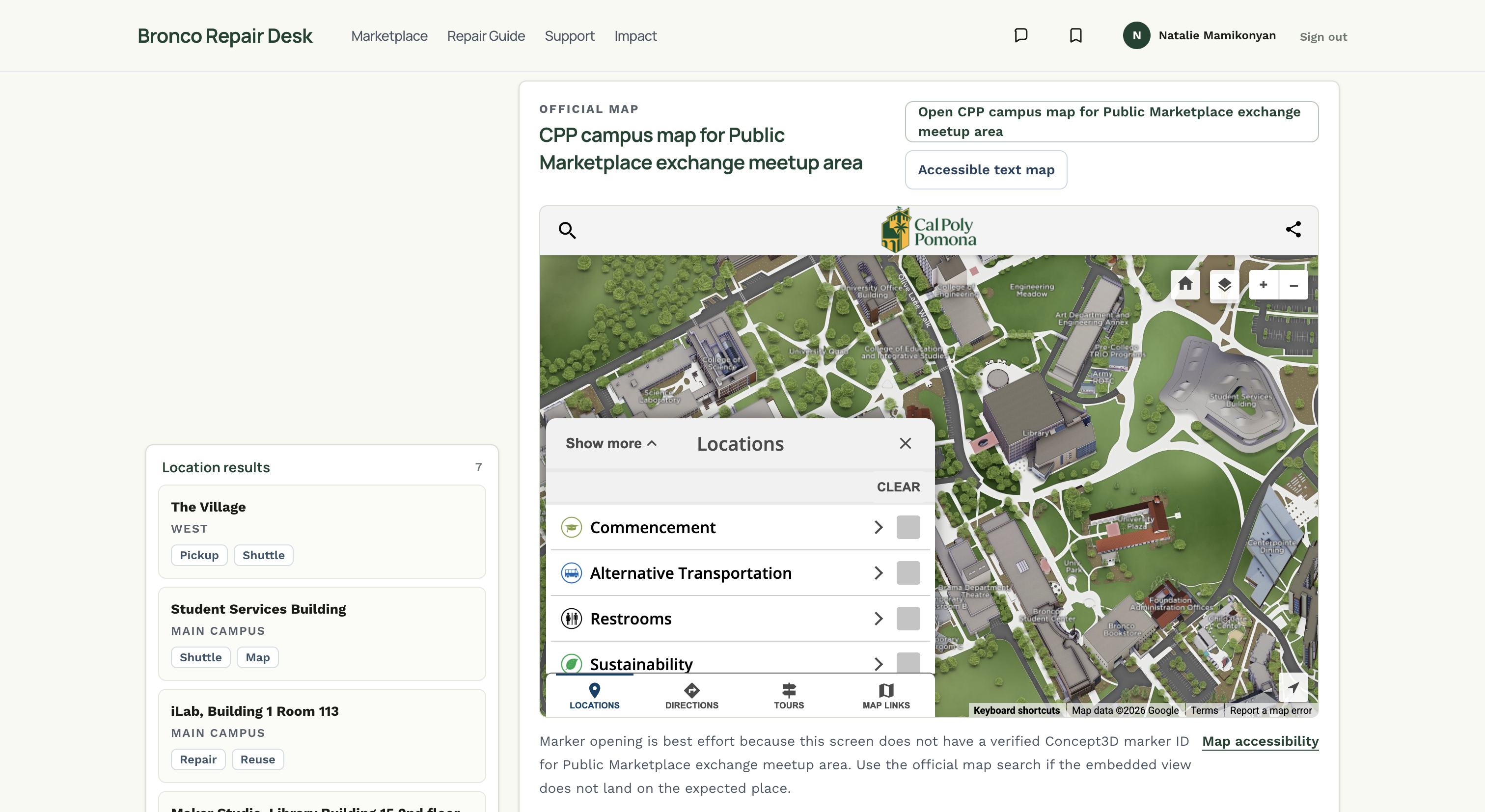
Support through CPP
-
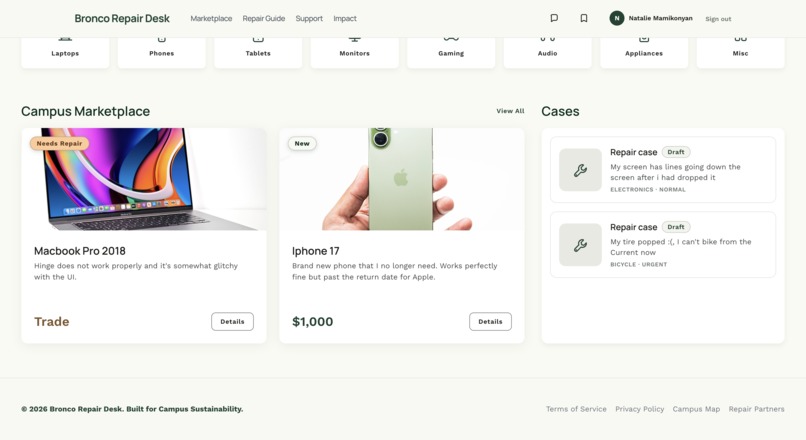
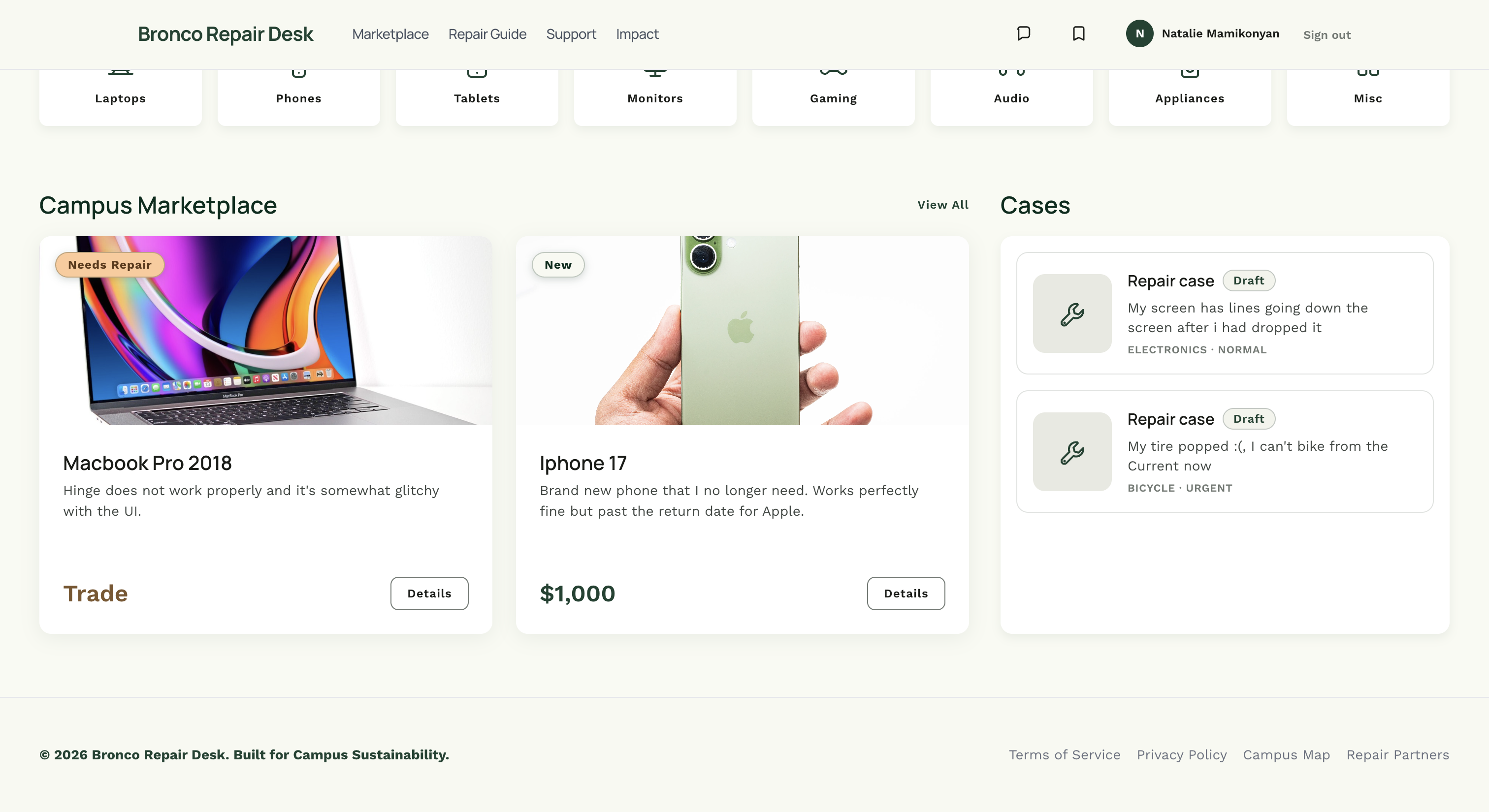
2nd part of home
-
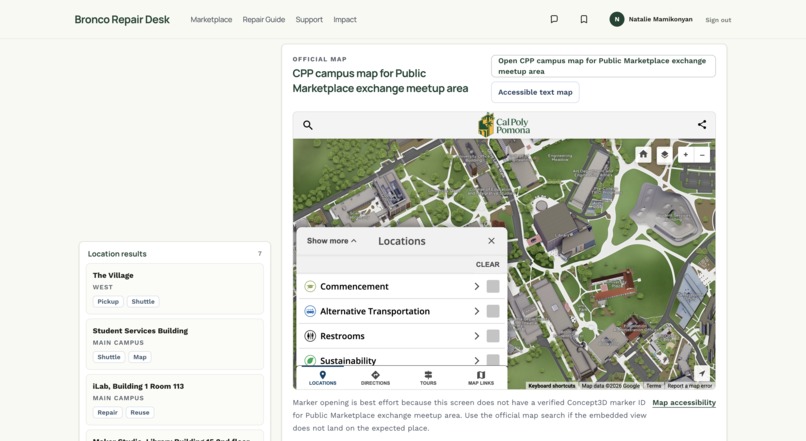
imbedded campus map
-
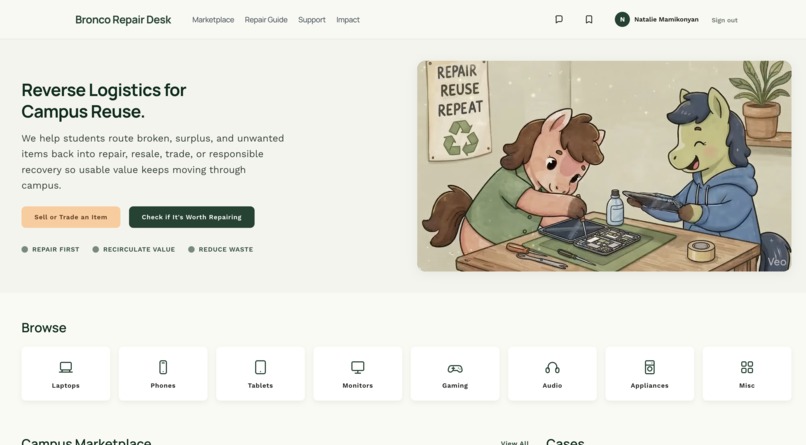
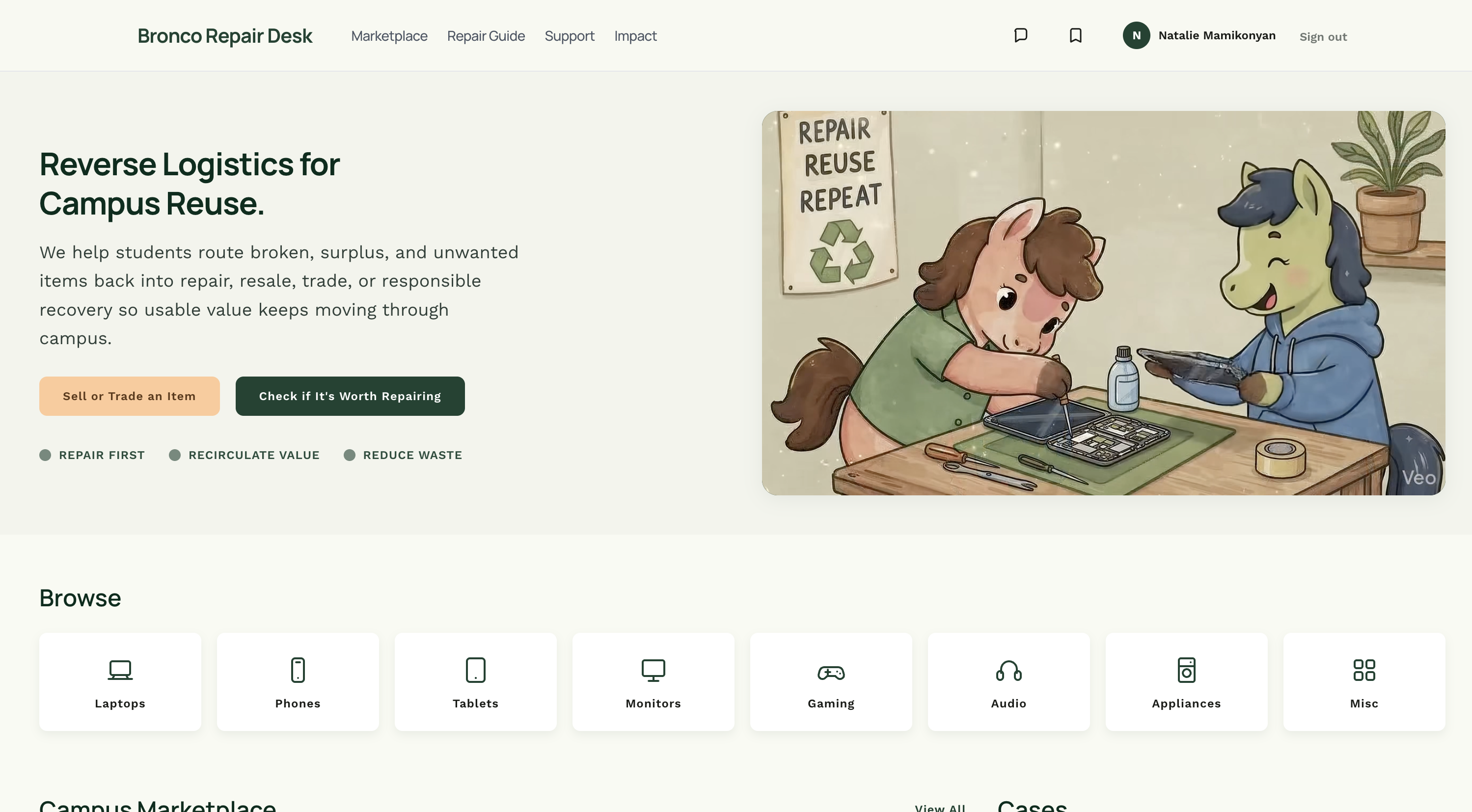
1st part of home page
-
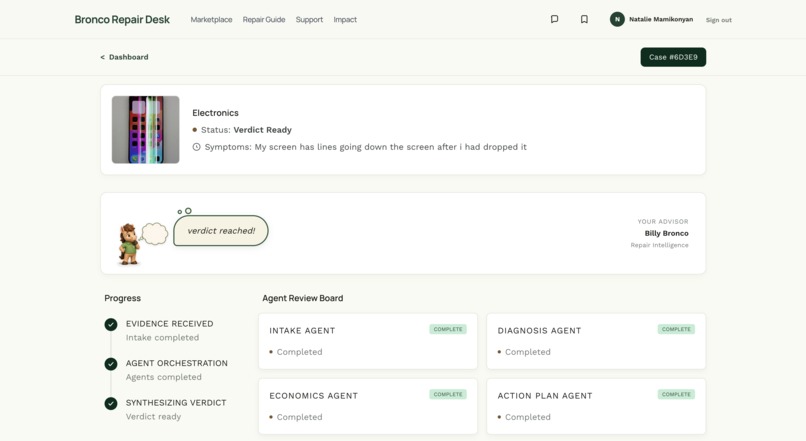
Generated Case
Inspiration
We saw how often students throw away items that could be repaired, reused, traded, or properly recycled. We wanted to make sustainable choices easier, faster, and more practical on campus.
What it does
Bronco Repair Desk helps students upload a broken item, get AI-powered diagnosis and repair advice, and decide whether to repair, keep, trade, donate, or replace it. If an item still has life, students can post it in the campus marketplace. If it does not, the app suggests from them to recycle it.
How we built it
We built a Next.js + TypeScript web app with Supabase for authentication and data storage. The platform includes a repair flow, marketplace listings, messaging, and rewards/impact tracking. We integrated AI-assisted diagnosis and recommendation logic to provide practical next steps.
Challenges we ran into
We ran into integration issues between frontend flows and backend data models, route/page mismatches during development, and balancing feature scope with hackathon time constraints. We also had to make the UX simple enough for quick student use.
Accomplishments that we're proud of
We delivered a working end-to-end prototype that combines repair guidance, recirculation through a marketplace, and campus recycling direction in one experience. We’re also proud of creating a clear sustainability narrative with measurable student impact.
What we learned
We learned how important it is to align data schemas early, build reusable components for speed, and design for real behavior, not just ideal behavior. We also learned to keep AI outputs actionable and easy to trust.
What's next for Bronco Repair Desk
Next, we plan to improve repair recommendation accuracy, expand campus recycling/drop-off coverage, add stronger impact analytics, and pilot with real students to validate usage and outcomes.

Log in or sign up for Devpost to join the conversation.