-
-
Broca’s Aphasia Help Breakthrough

Inspiration
Socio-linguists emphasise the importance of communication in establishing and maintaining social relationships, in sharing feelings, and in expressing the identity of an individual. If identity is a product of relationships, it follows that it may be harmed by having aphasia. People with Broca's aphasia may understand speech and know what they want to say, but they frequently speak in short phrases that are produced with great effort. The goal of the solution proposed is to help people deliver their ideas effectively.
What it does
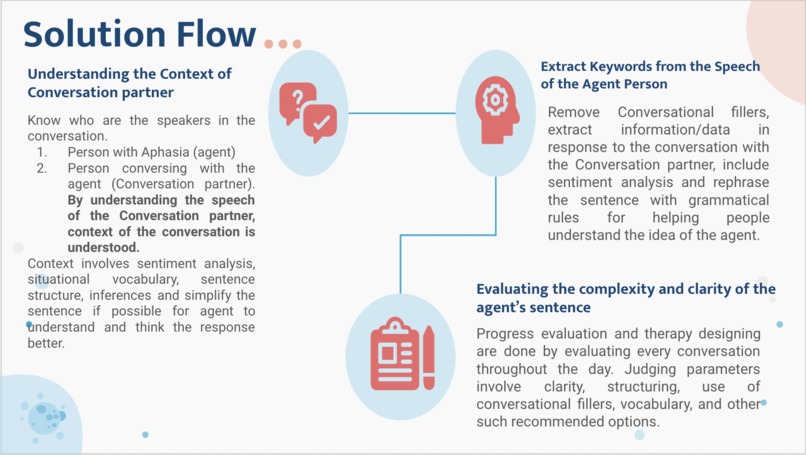
- Understand the Context of the Conversation partner.
- Extract Keywords from the Speech of the Person with Aphasia and Generate Proper Speech for People to Understand the Meaning.
- Evaluating the Complexity and Clarity of the Agent’s Sentence to Help Identify the Unique Speech Therapy Needs of the Patient.
How we built it
The solution is based on Natural Language Processing features. Context understanding involves sentiment analysis, situational vocabulary, sentence structure, inferences and simplifying the sentence.
Challenges we ran into
- Understanding the challenges faced by people having Broca's Aphasia.
- Use of NLP for sentence formation with the input of keywords of the speaker and contextual background of the conversation.
What's next for Broca’s Aphasia Help Breakthrough
- Include gesture and visual communication suggestions to help people with aphasia express themselves better.
- The conversation pace can be increased by retaining information from the user’s day to day conversation and using it for suggestion in the proper contextual frame.

Log in or sign up for Devpost to join the conversation.