Inspiration
We wondered why internet providers only notice a hacked home router after it’s already attacking people, and whether AI could help catch it earlier without ever seeing customers’ private data.
What it does
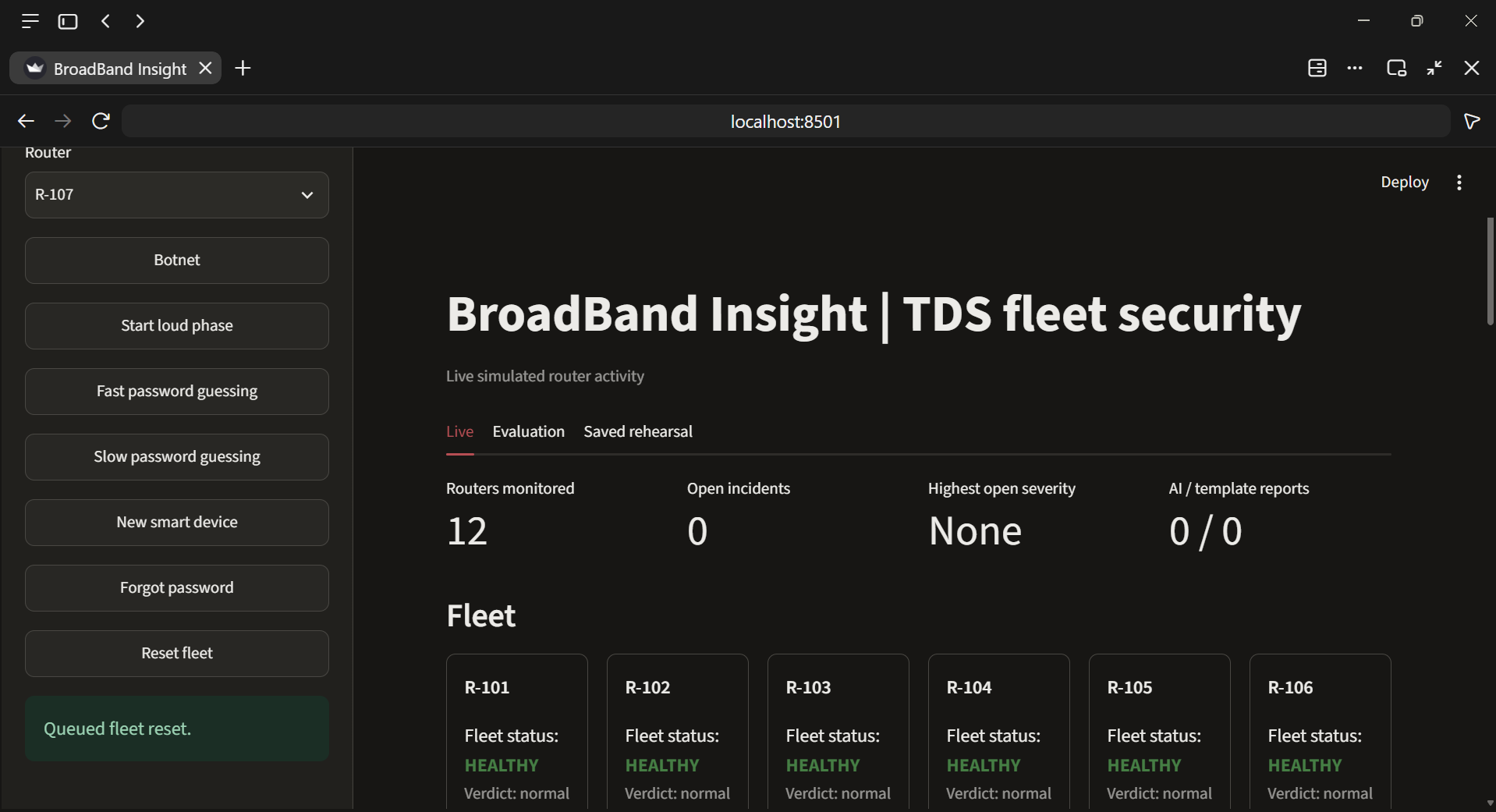
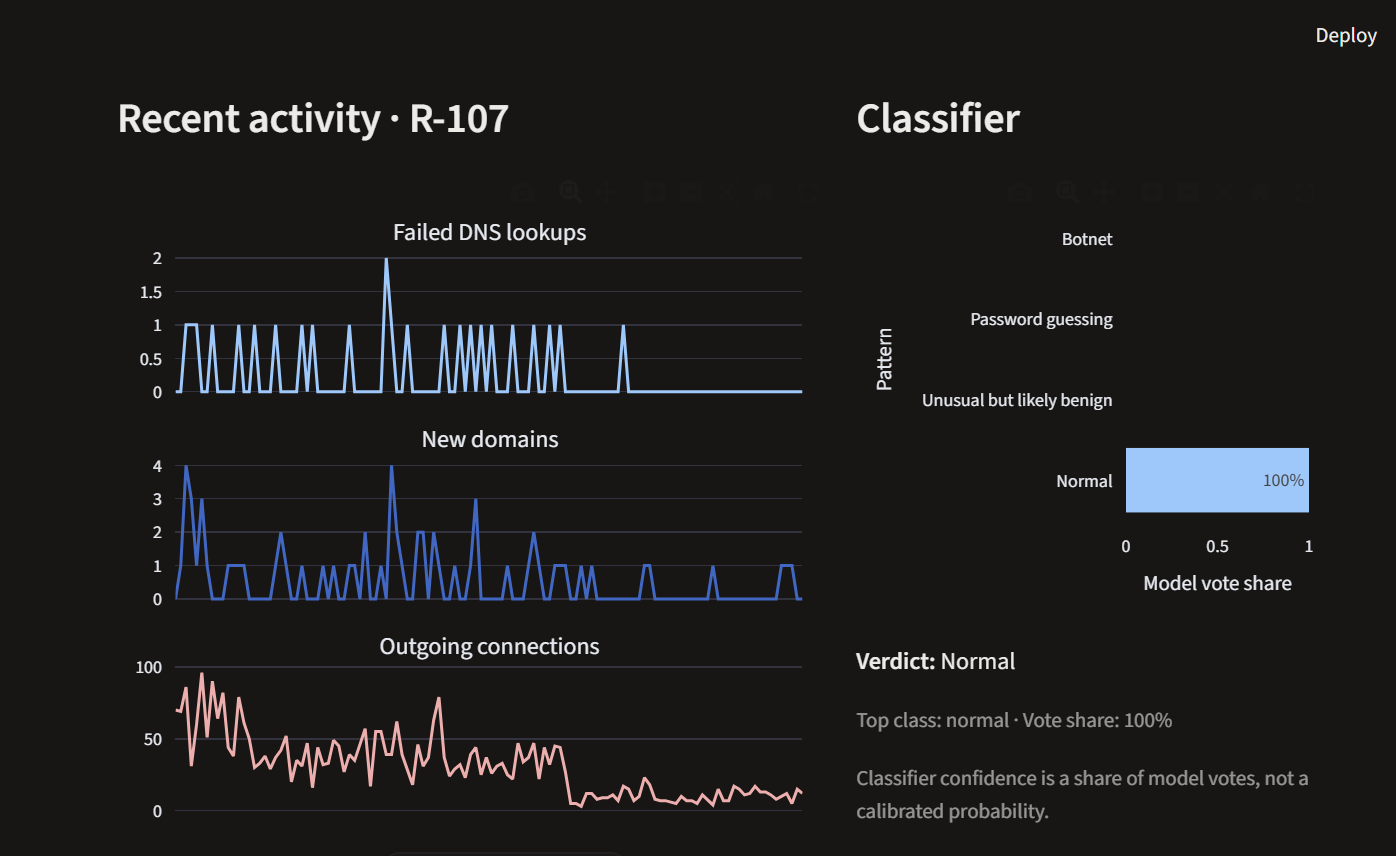
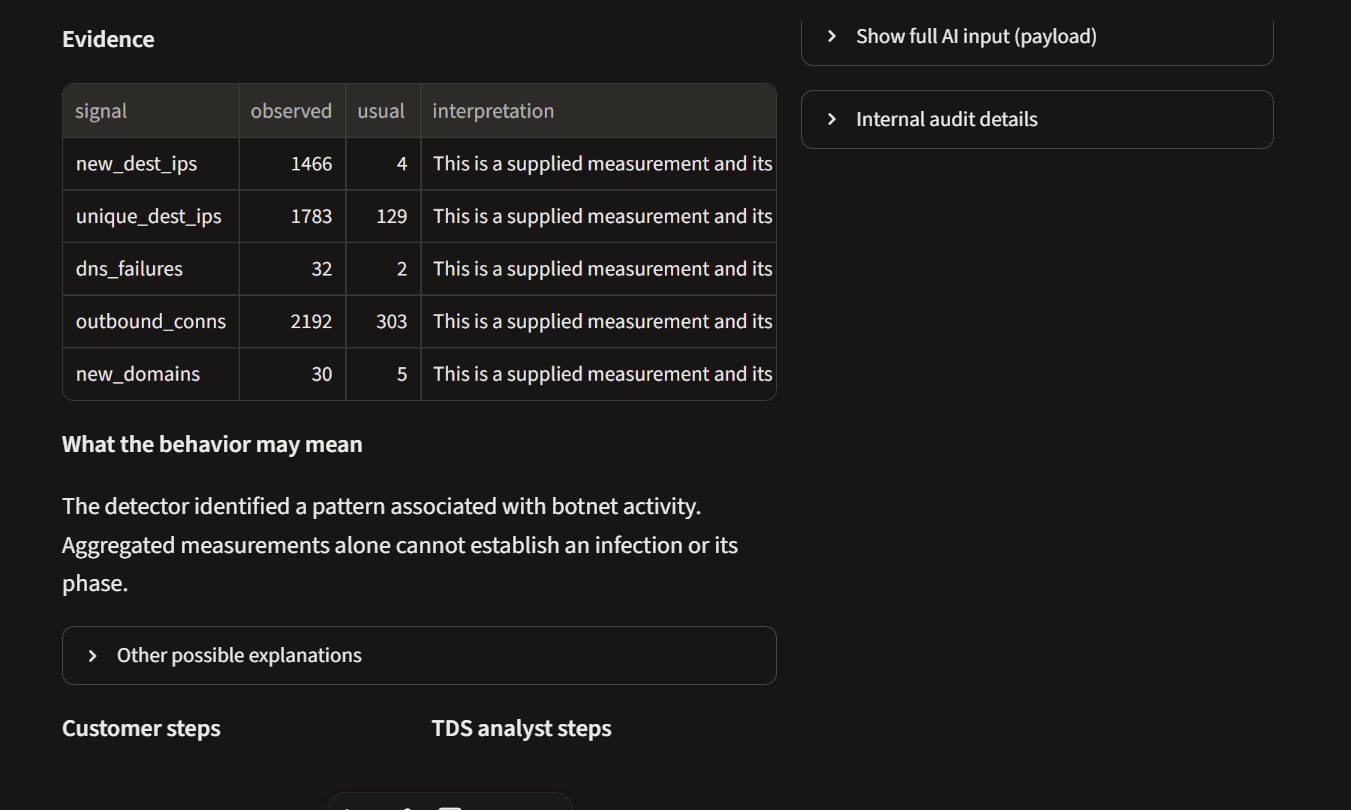
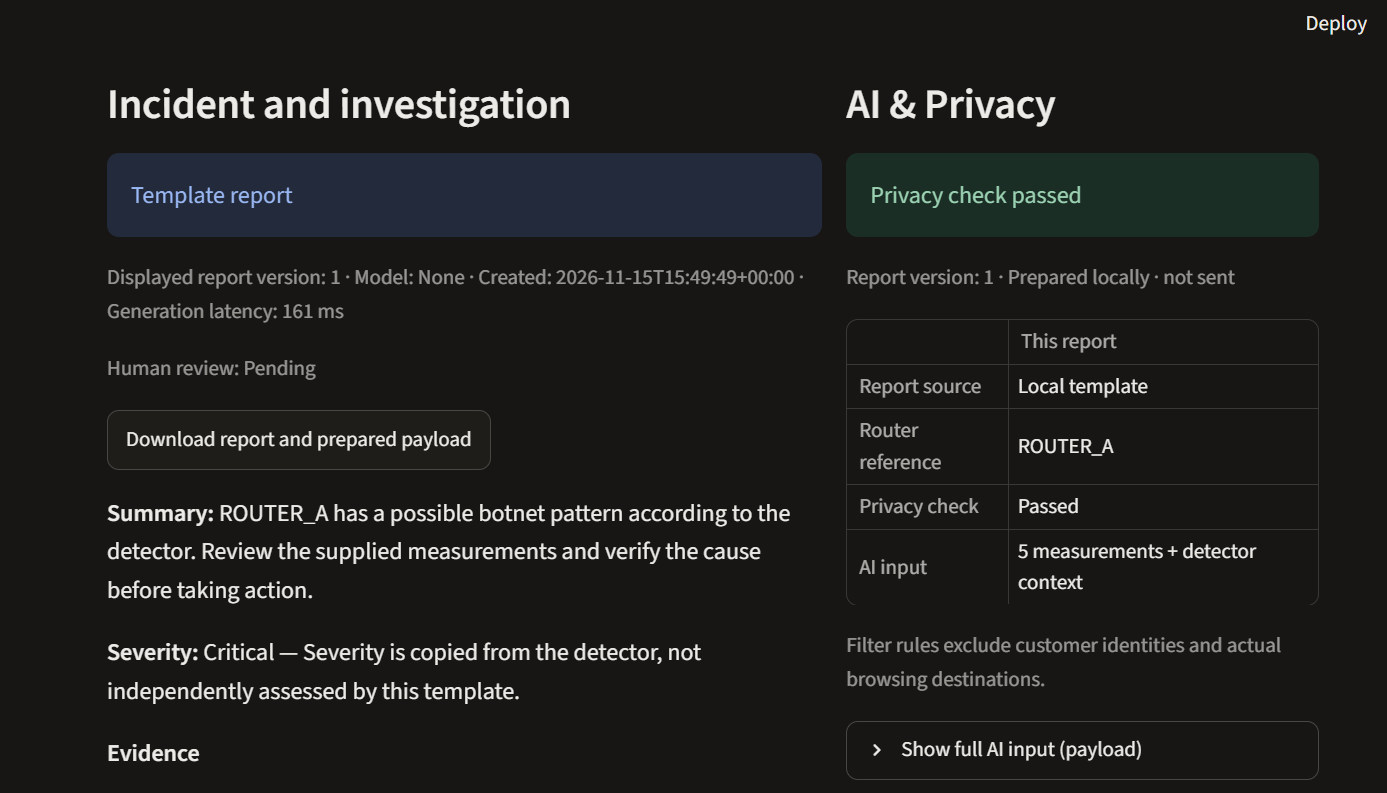
BroadBand Insight watches a fleet of home routers and spots a hacked one early, while it’s still quietly calling home and before it attacks anyone. Each router is compared with its own normal behavior; two models decide whether something is unusual and what it looks like, and an AI writes an investigation report for a security analyst. The AI only ever sees counts and codes, never who the customer is or what they browse.
How we built it
We built a Python simulator that generates realistic traffic for households with different habits, daily rhythms, attacks, and harmless look-alikes. Detection uses pandas and scikit-learn (an Isolation Forest plus a Random Forest), and reports go through a privacy filter and leak check before reaching OpenAI. A Streamlit dashboard shows everything live, Databricks and MLflow handle training and history, and four teammates built their parts against shared data contracts.
Challenges we ran into
Our hardest problem was telling harmless events, like a new smart camera, apart from a botnet’s quiet phase, since both look similar at first. We also had to keep four laptops and Databricks in sync on the same library versions, and caught a timing bug that would have triggered the attack too early during our live demo.
Accomplishments that we're proud of
On households the model had never seen, it caught 98% of attacks and 94% of botnets before they started attacking, with about one-ninth of the false alarms of simple rules (on synthetic data). We’re also proud that a planted prompt-injection device name never reaches the AI, because the privacy layer blocks it by design.
What we learned
We learned that “is this unusual?” and “what is it?” are different questions that work best together, and that comparing each router with its own normal beats fixed thresholds. We also learned that building privacy in from the start is safer than cleaning data afterwards, and that honest evaluation on unseen data matters more than impressive-looking numbers.
What's next for BroadBand Insight
Next, we’d like to test it on real, consented router data with an internet provider, add more attack types, and let analysts mark alerts as correct or false so the system keeps improving.
Built With
- joblib
- matplotlib
- mlflow
- numpy
- openai
- pandas
- plotly
- pyarrow
- pydantic
- pyspark
- scikit-learn
- streamlit


