BRIX Atlas
Private AI for Healthcare, Built for Constrained Hardware
Healthcare knowledge should not depend on a fast internet connection, a cloud API, or expensive infrastructure.
That idea inspired BRIX Atlas, an offline-first AI healthcare knowledge assistant designed to run locally on resource-constrained computers. We built Atlas around a simple question:
Can a useful, grounded healthcare AI assistant run entirely on a laptop, without sending sensitive queries to the cloud?
The answer we set out to prove was yes.
What inspired us
Healthcare workers, students, researchers, and communities often work in environments where connectivity, computing resources, privacy, or access to reliable medical information can be limited.
At the same time, modern AI assistants increasingly depend on remote APIs and large cloud models.
We wanted to explore a different architecture: a local AI system that combines a compact language model with retrieval from a controlled medical knowledge corpus, while remaining usable on modest hardware.
That became BRIX Atlas.
What we built
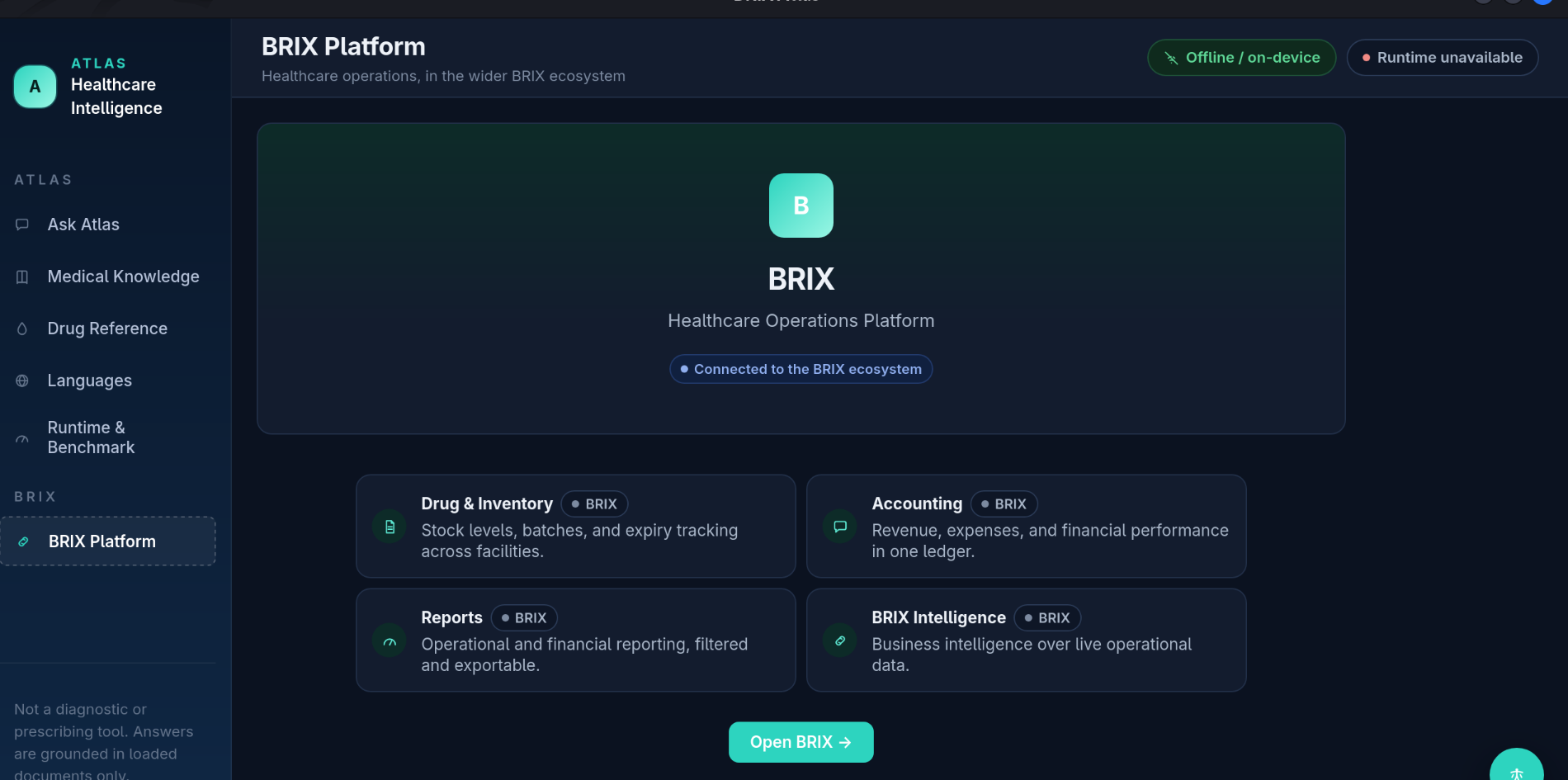
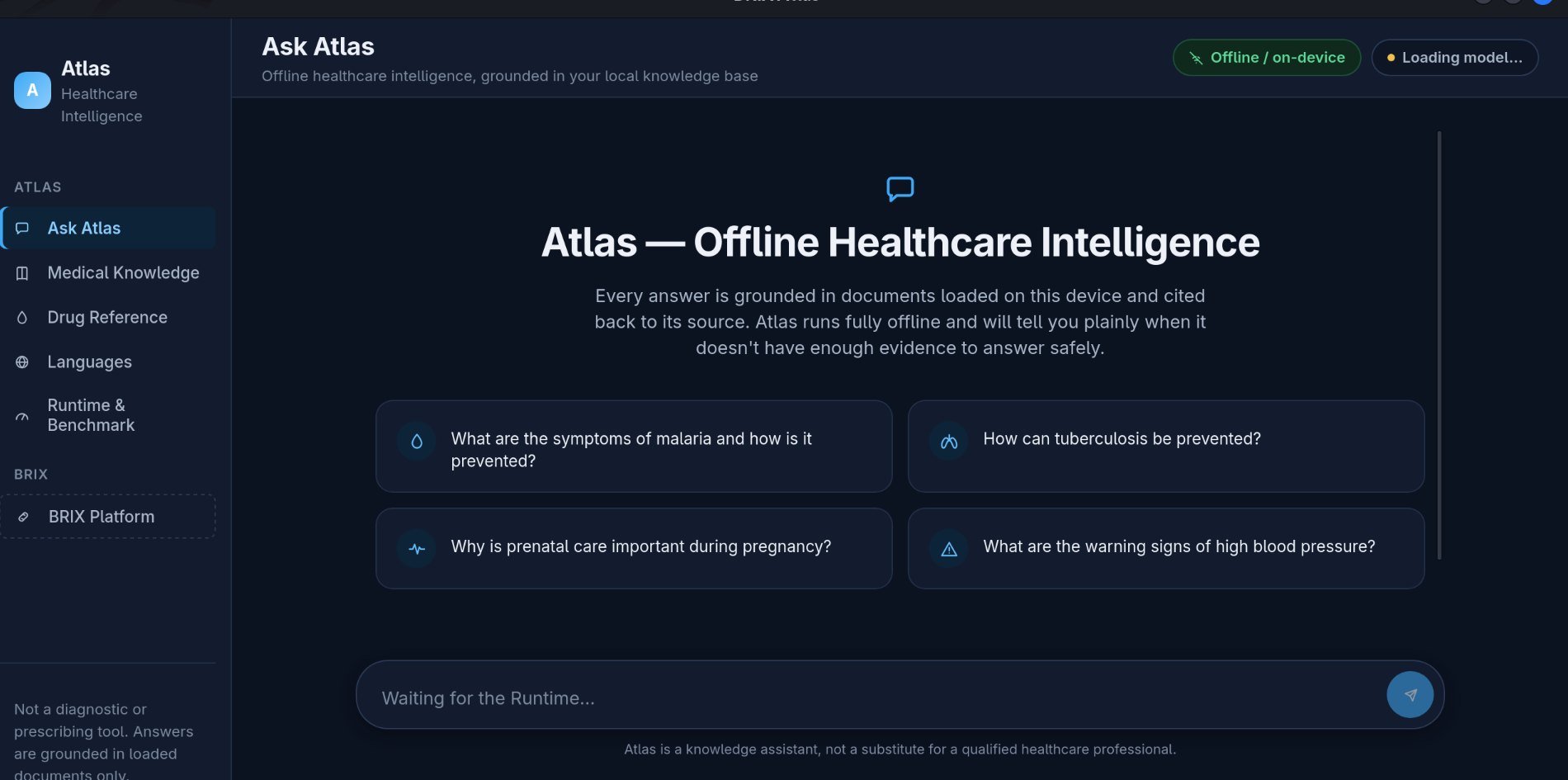
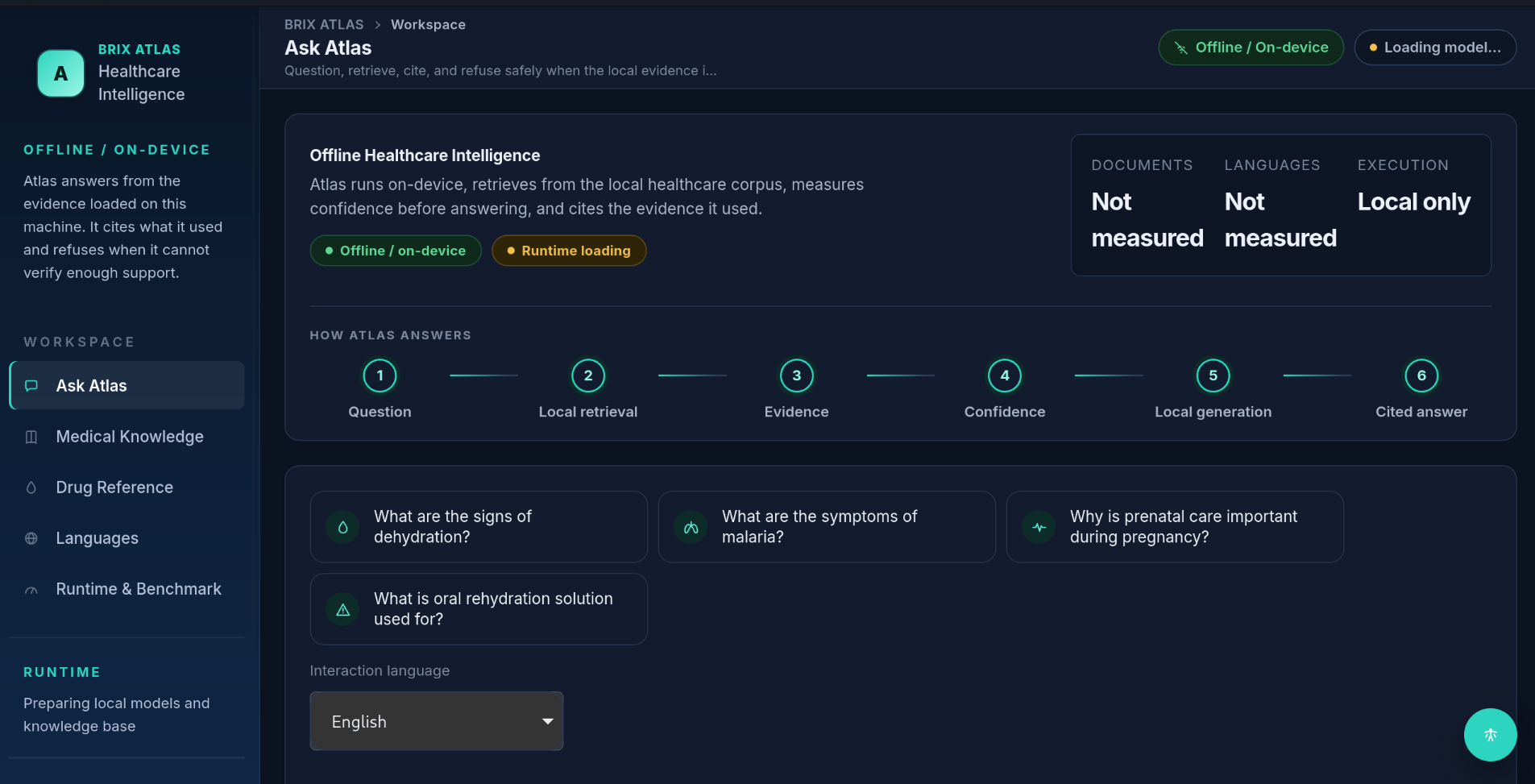
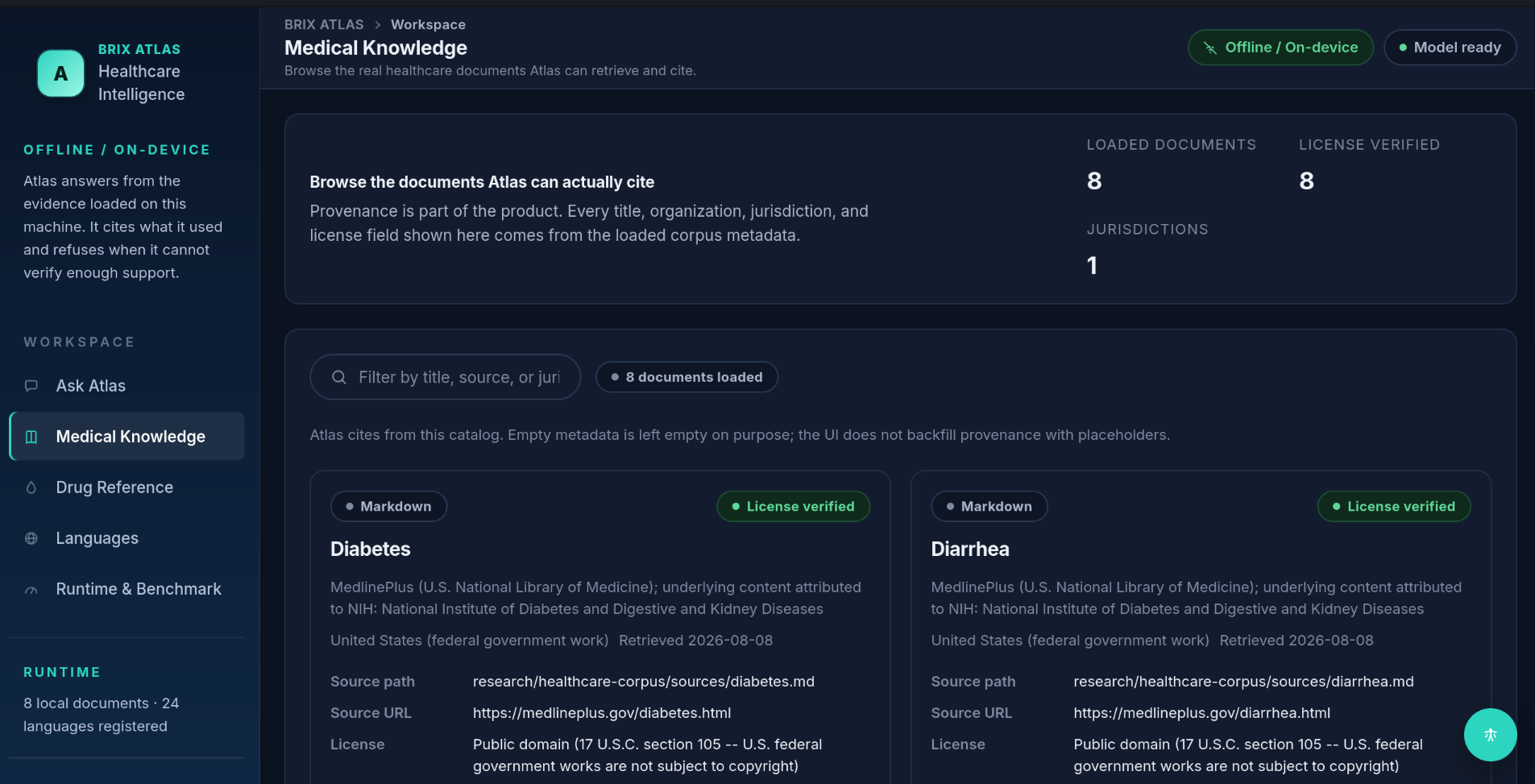
Atlas is a native desktop application built around an offline RAG architecture.
The application runs:
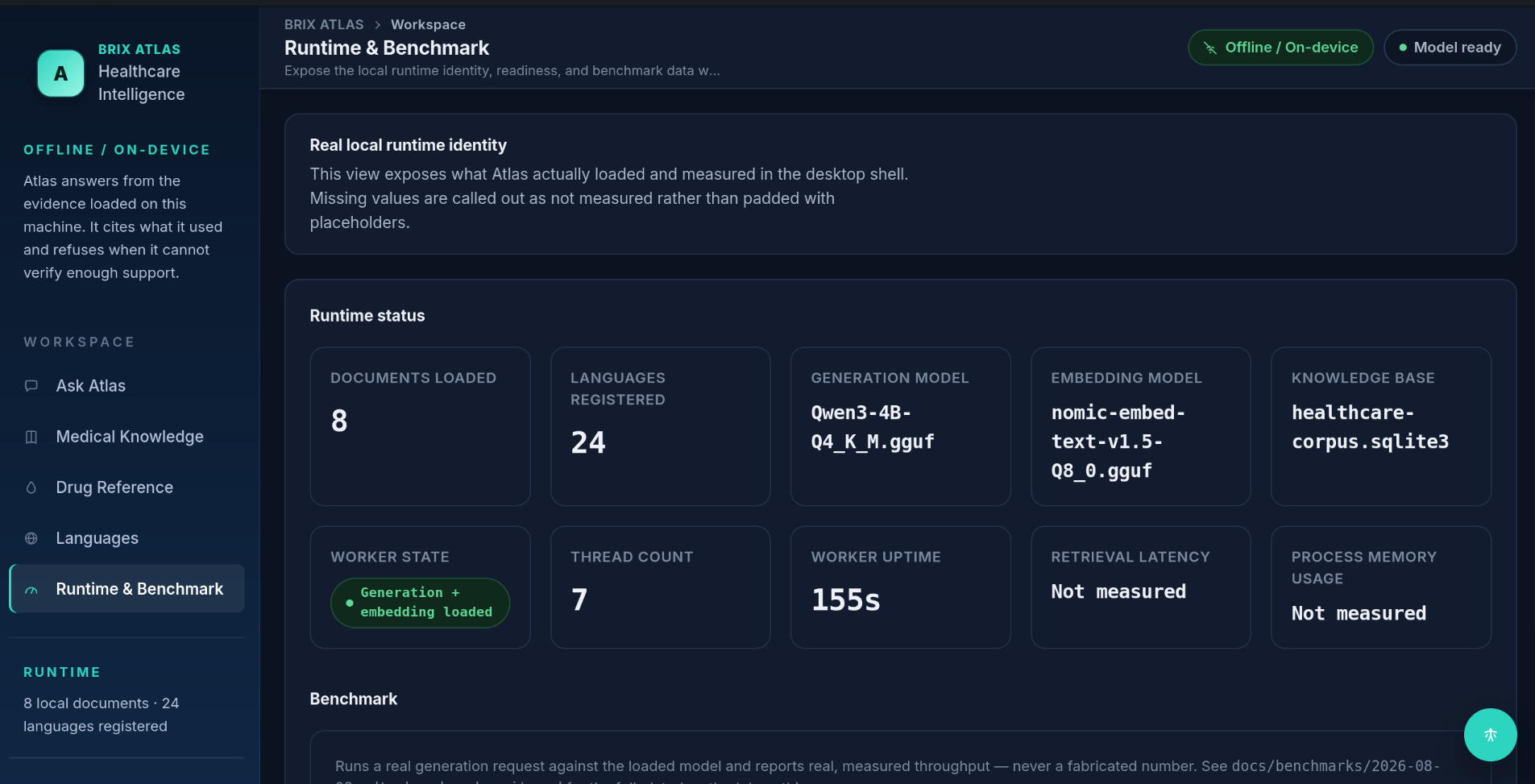
- Qwen3-4B, quantized in GGUF format, for local generation
- Nomic Embed Text, also running locally, for semantic retrieval
- A local healthcare knowledge corpus
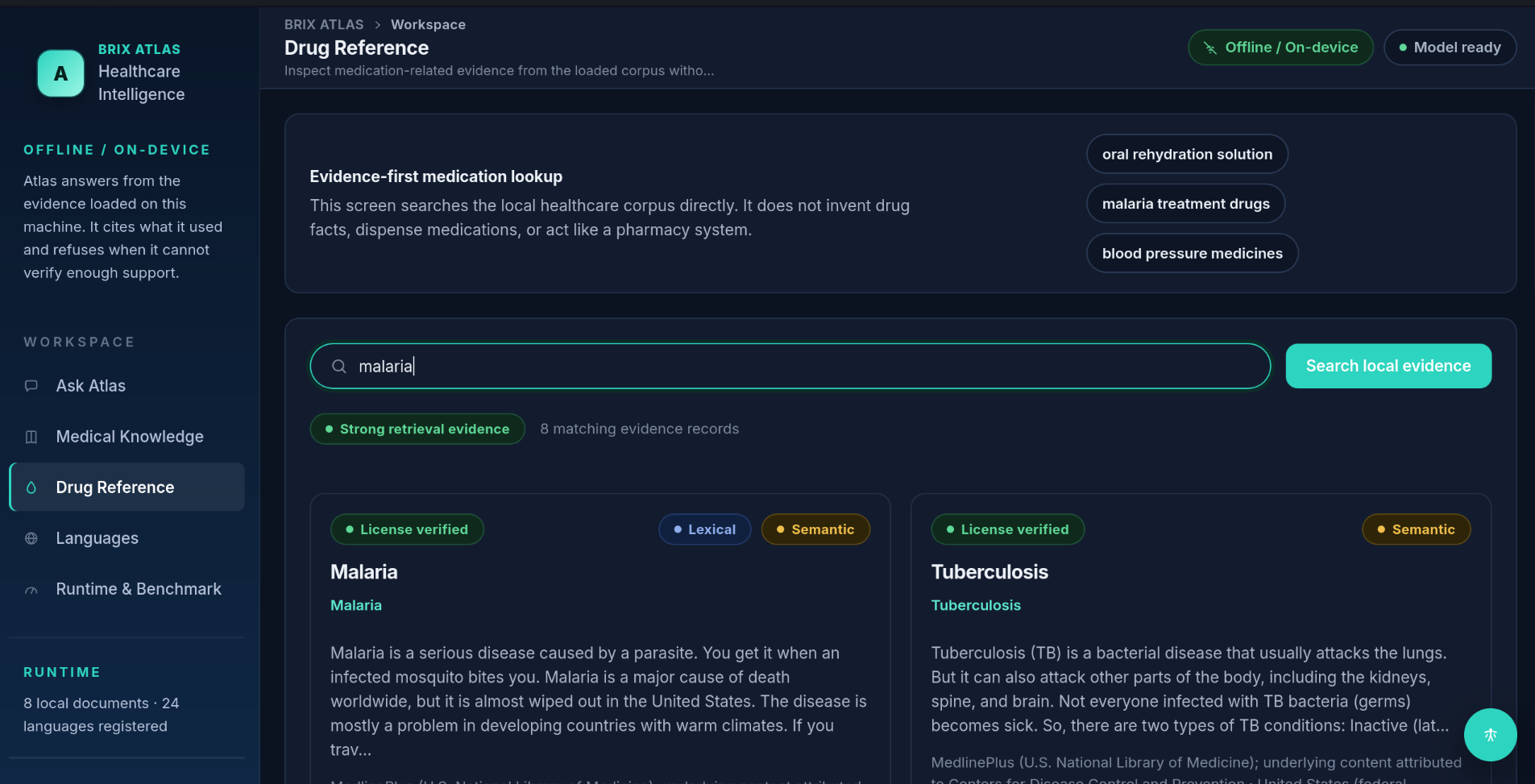
- Lexical + semantic retrieval
- Evidence and citation grounding
- Confidence-aware responses and refusal when sufficient evidence is unavailable
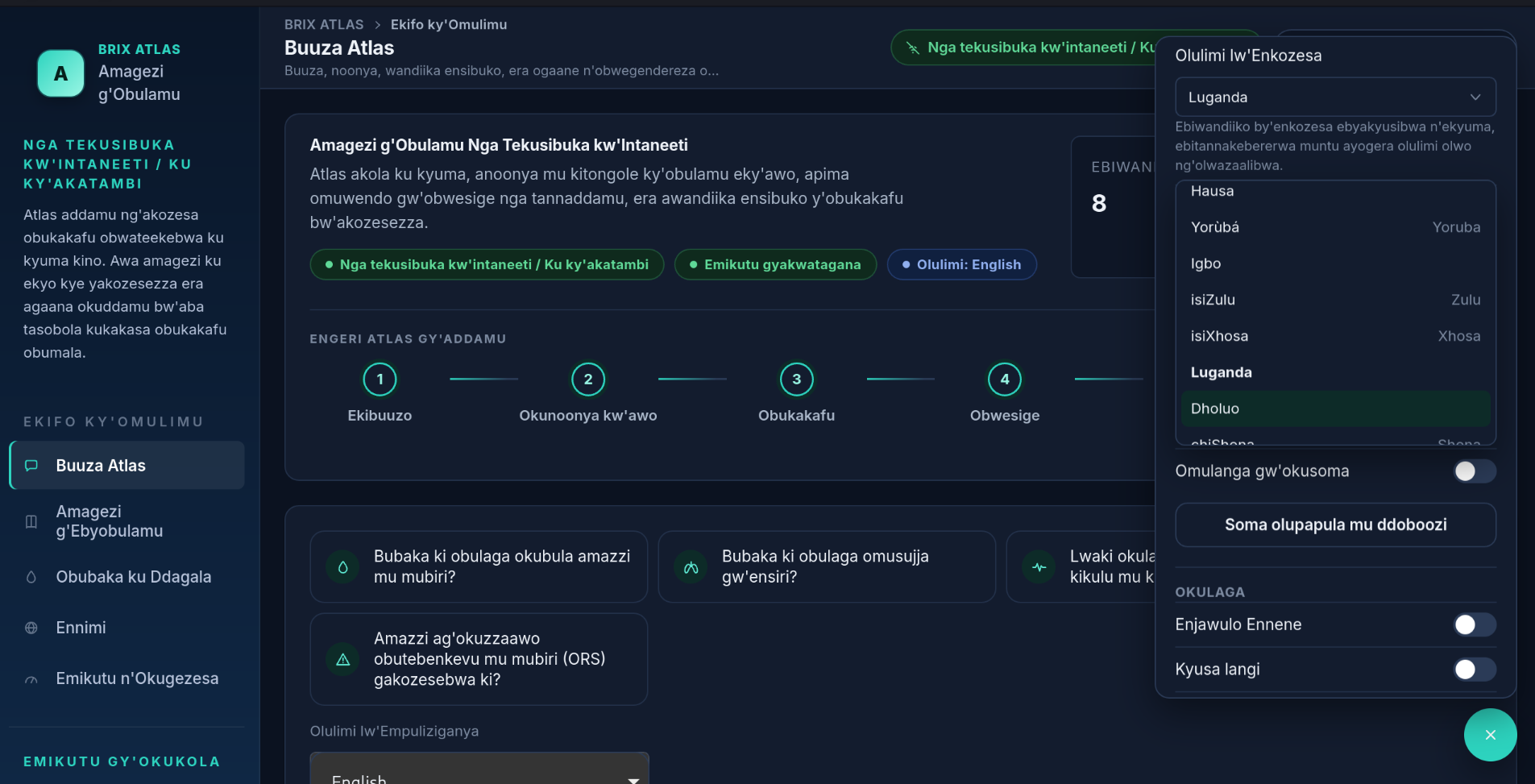
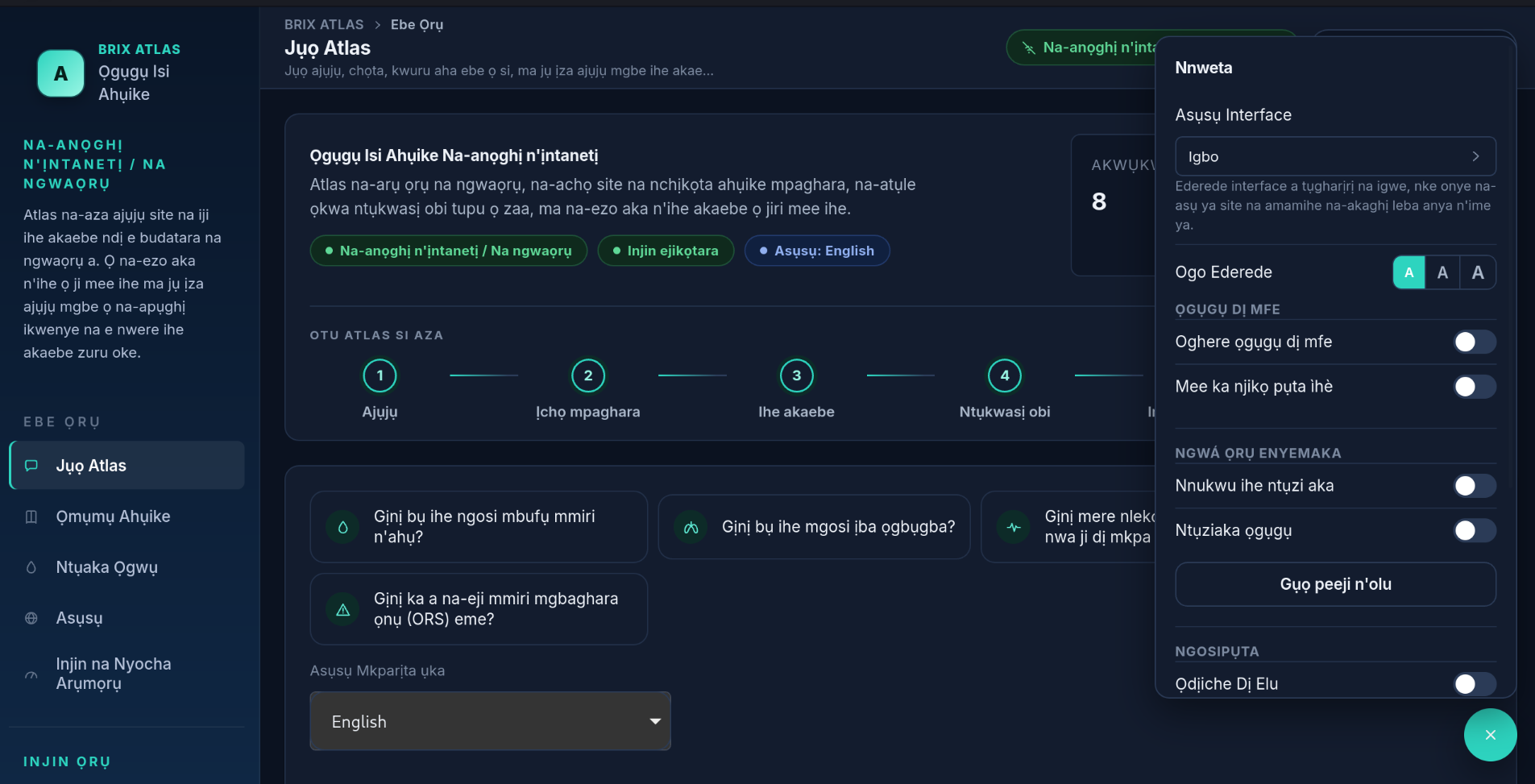
- Multilingual query and response capabilities
- A native desktop interface built with Tauri and React
The inference pipeline is implemented in Rust and uses llama.cpp-compatible GGUF models. Local IPC connects the desktop application to the inference worker, keeping the architecture modular while maintaining the offline constraint.
There is no dependency on a cloud AI API for inference.
Grounded answers instead of confident guesses
A central design principle of Atlas is that the model should not simply generate an answer because it can.
For healthcare questions, Atlas first retrieves relevant evidence from its local corpus. The system evaluates retrieval confidence and uses the available evidence to construct the generation context.
When sufficient evidence is not available, Atlas can refuse instead of presenting unsupported medical information as fact.
This makes the system fundamentally different from a generic chatbot: the knowledge source and evidence trail are part of the product.
Building for constrained hardware
The Africa Deep Tech Challenge's laptop constraints strongly influenced our engineering decisions.
Instead of assuming access to a GPU cluster or cloud inference, we optimized around local CPU inference and quantized models.
This forced us to think carefully about:
- model size
- memory usage
- inference latency
- retrieval efficiency
- startup time
- IPC architecture
- offline operation
- dependency footprint
The result is a system designed around the realities of constrained computing rather than around an idealized cloud environment.
What we learned
One of our biggest lessons was that retrieval quality and generation quality are separate engineering problems.
During validation, we found that multilingual retrieval could appear strong while generation quality remained inconsistent for some languages. That led us to separate language instructions from retrieval queries rather than contaminating the retrieval query with language directives.
We also discovered an important production issue in the Tauri configuration: the development frontend configuration could cause a production application to expect a localhost development server. We corrected the Tauri custom-protocol configuration and verified that the production bundle embeds the frontend assets.
These failures were valuable. They forced us to validate the actual runtime instead of relying on source-code inspection alone.
How it was built
Frontend
- React
- TypeScript
- Vite
- Tauri
Core
- Rust
- Local IPC
- llama.cpp-compatible inference
- GGUF models
Knowledge / RAG
- Local medical corpus
- Embeddings
- Semantic + lexical retrieval
- Evidence/citation grounding
- Confidence gating
Design principles
- Offline-first
- Privacy-preserving
- Evidence-grounded
- Resource-conscious
- Modular
- Reproducible
The challenge
The hardest part was not getting a model to generate text.
The hard part was making the entire system work together reliably on constrained hardware while preserving the properties that matter for healthcare: grounding, traceability, offline operation, and responsible refusal.
BRIX Atlas is our exploration of what practical, private, locally-running healthcare AI can look like in Africa and other connectivity-constrained environments.
We built it not to replace healthcare professionals, but to demonstrate that useful AI-assisted access to trusted healthcare knowledge can move closer to the edge — and closer to the people who need it.
Built With
- desktop-app
- edge-ai
- embeddings
- gguf
- healthcare-ai
- linux
- llama.cpp
- local-ai
- medical-knowledge
- multilingual-ai
- natural-language-processing
- offline-ai
- open-source
- privacy-preserving-ai
- rag
- react
- retrieval-augmented-generation
- rust
- semantic-search
- sqlite
- sqlite-vec
- tauri
- typescript
- vector-search
- vite


Log in or sign up for Devpost to join the conversation.