-
-
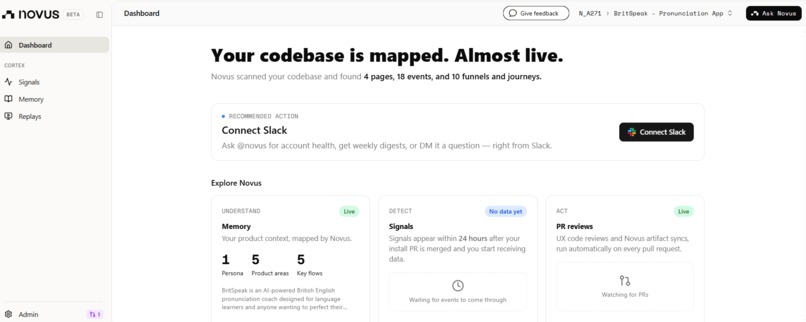
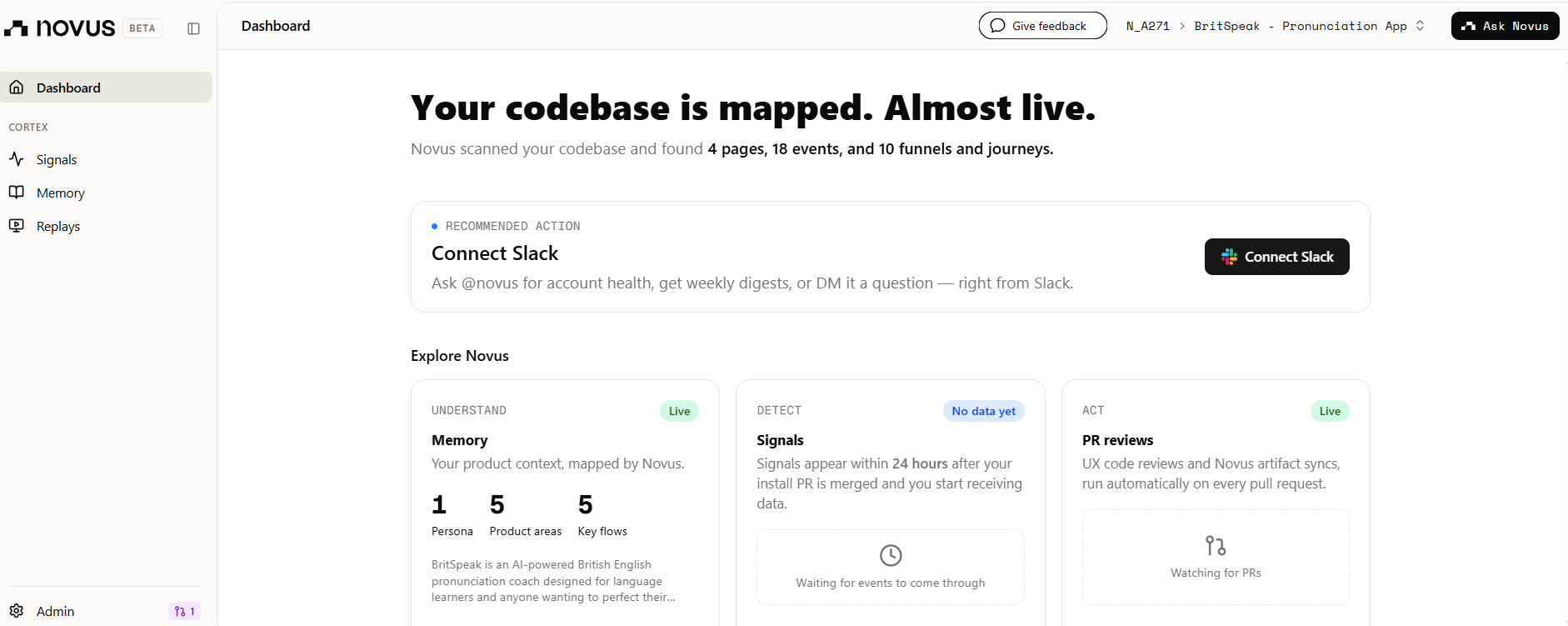
Novus dashboard
-
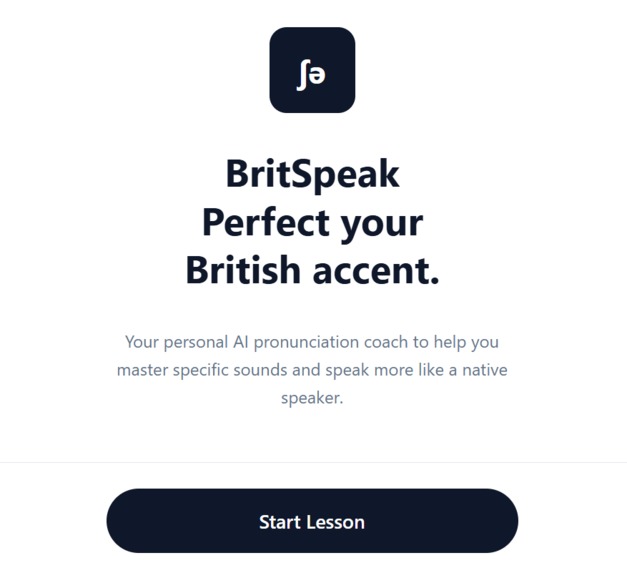
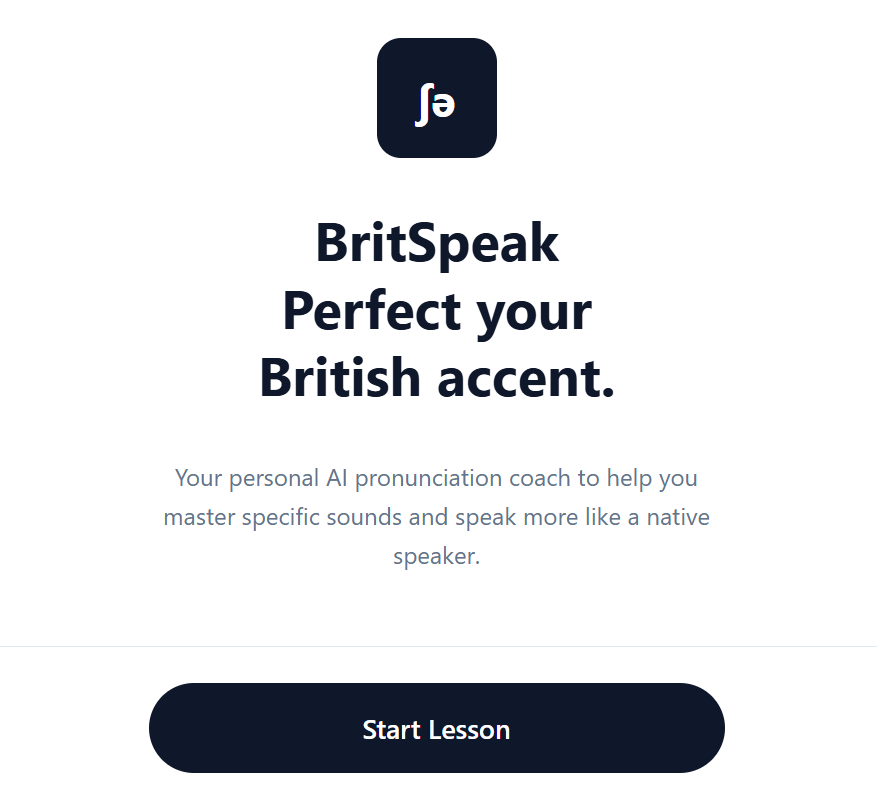
Start screen
-
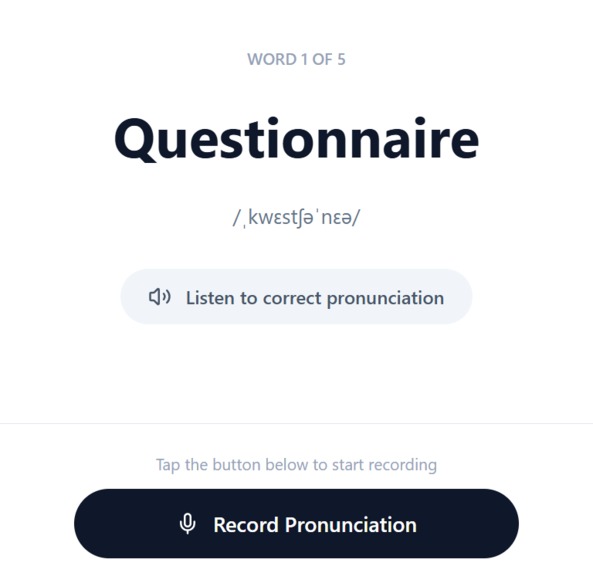
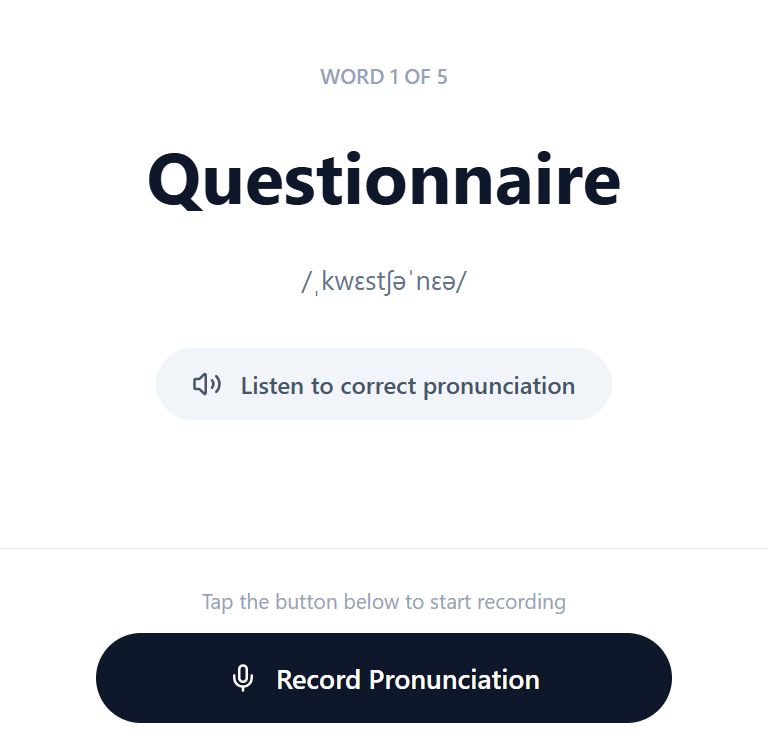
Word card landing screen
-
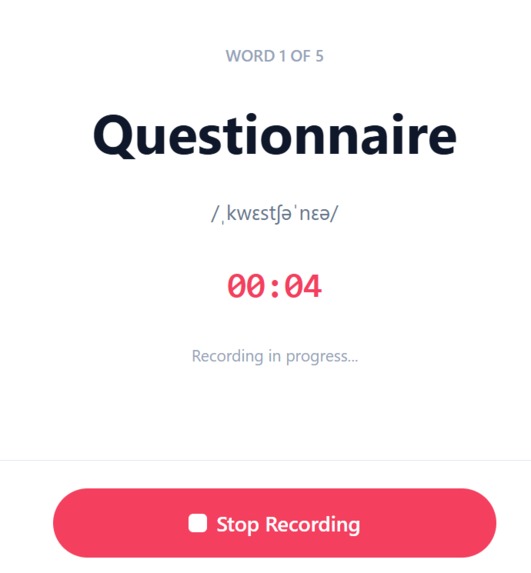
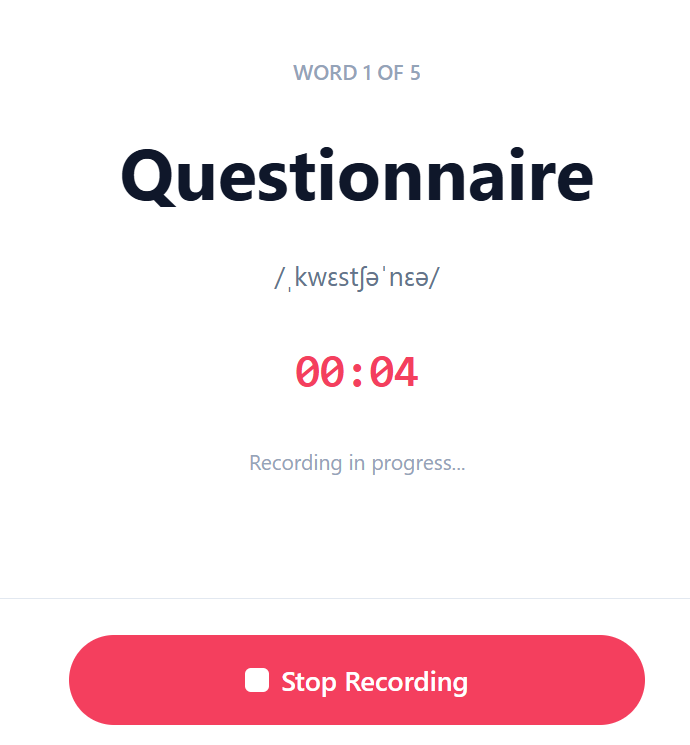
Practice screen
-
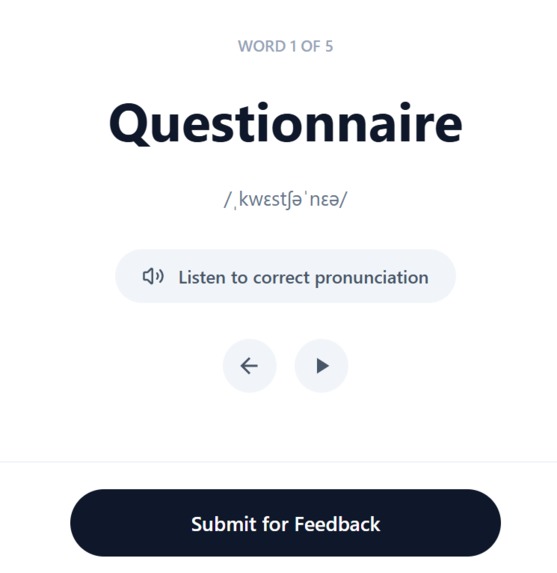
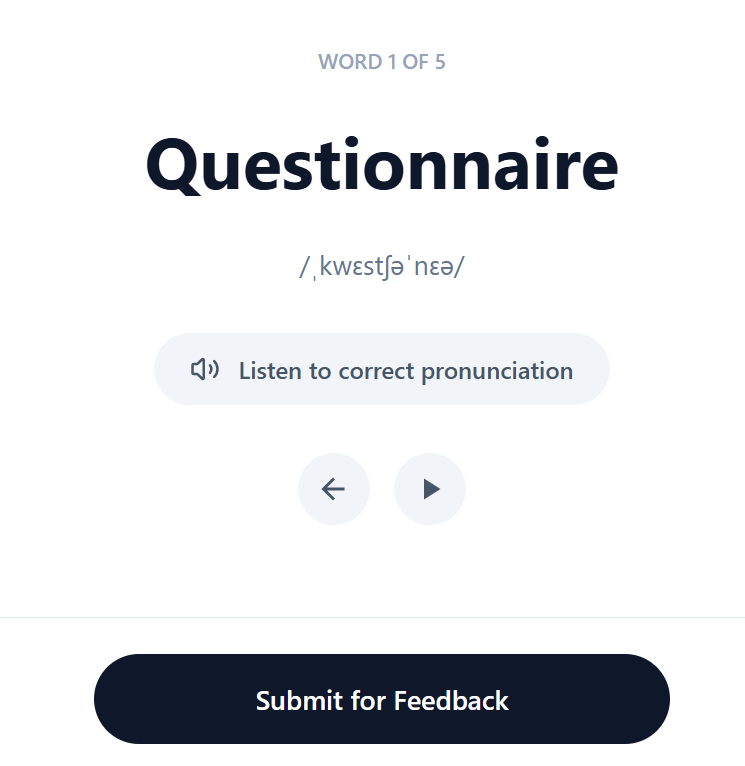
Review before feedback screen
-
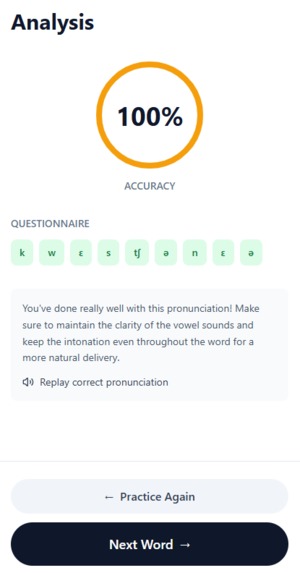
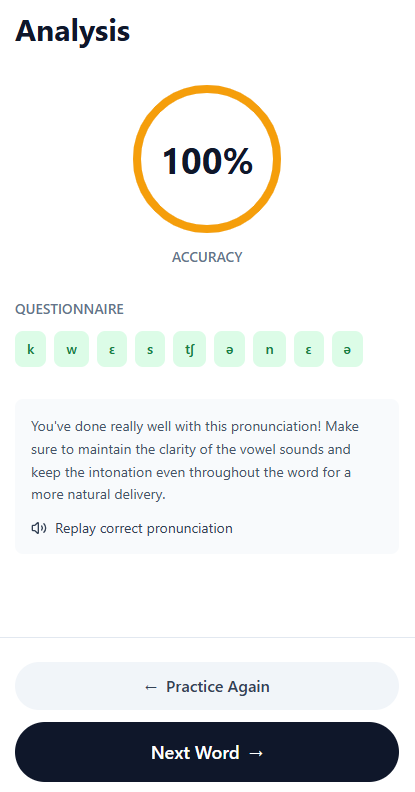
Feedback screen
-
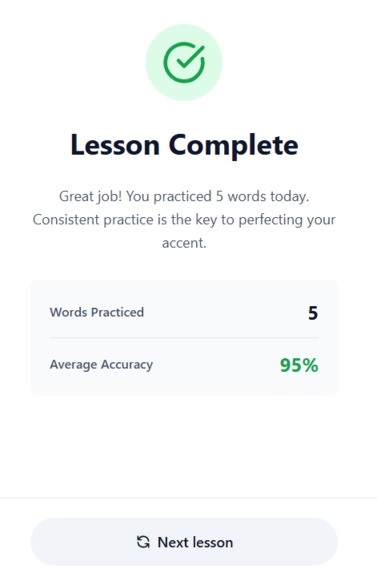
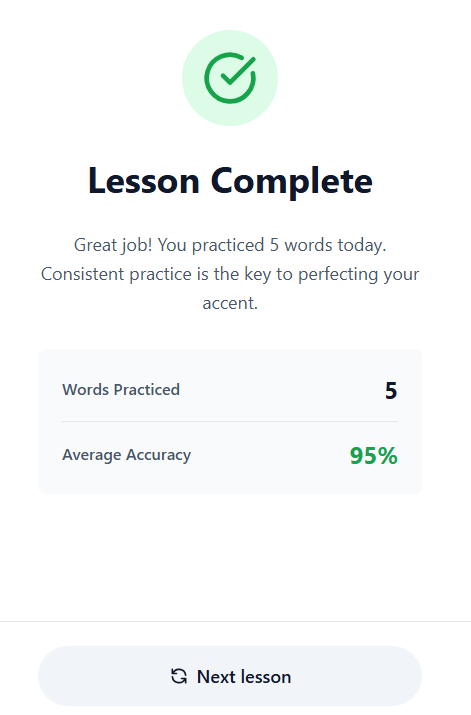
Lesson complete screen
Inspiration
My inspiration in building this app is the difficulty for me to find an application to improve my pronunciation. I couldn't find anything that met my own needs as a fluent non-native British English speaker. Every app I found was either aimed at beginners — covering grammar and vocabulary I didn't need — or allowed you to hear correct pronunciation without any way to record yourself or get feedback. One of my neighbours also had the same issue. There was a clear gap, so I decided to build the solution myself for this hackathon.
What it does
BritSpeak helps fluent and bilingual non-native British English speakers refine their pronunciation of specific sounds — no grammar, no vocabulary, just pronunciation. Each session presents five words. For each word, the user sees the IPA transcription, listens to the correct pronunciation, records themselves, plays back their own recording, and receives AI-powered feedback — including an accuracy percentage, colour-coded IPA sound highlighting (green for correct, red for incorrect), and a short explanation to help them improve.
How I built it
I built the app using Builder.io, Vercel, GitHub, OpenAI's GPT-4o-mini and Whisper for AI pronunciation analysis, and Novus for product analytics. As a non-technical person, I also relied heavily on LLMs to understand the steps needed to set up the backend and to troubleshoot issues along the way.
Challenges I ran into
This was my very first time vibe coding as a Product Business Analyst with no technical background, so the challenges were steep.
- Context loss with LLMs: I relied on AI assistants throughout the build. On several occasions, they lost context mid-session, skipped steps, or asked me to repeat something I'd already done. Managing that inconsistency was a constant challenge.
- Web app vs. mobile app: My very first prompt on Builer.io was "Build a mobile-first MVP for a pronunciation coaching app." I assumed this meant a native mobile app — but it produced a web app. By the time I realised, it was too late to start over, so I adapted and continued with the web app.
- Backend architecture confusion: I followed LLM instructions to set up the backend without fully understanding why each step was taken. This led me to create a backend in GitHub and Vercel that was out of sync with what existed in Builder.io. I spent a significant amount of time troubleshooting before identifying the root cause.
Accomplishments that I am proud of
I'm proud that the app works. I built something functional from scratch, entirely on my own, with no prior experience of app development. Given how many obstacles I hit along the way, getting to a working, deployed product feels like a real achievement.
What I learned
I entered this hackathon on my own, specifically to learn how to build an app from start to finish with AI assistance — and I learned an enormous amount, mostly through making mistakes. The key lessons: understanding how to set up a backend properly; the importance of maintaining context when working with AI tools across a long build; and the need to be explicit and precise in prompts rather than assuming the AI will interpret intent correctly. I should have specified "native mobile app" from the start, and I should have verified each step of the build rather than trusting the output.
What's next for BritSpeak
Convert it into an actual native mobile app. Add guided lessons explaining how each sound is produced, followed by practice across multiple words targeting that sound. User accounts with saved progress, session history, and streaks to keep users motivated
Built With
- builder.io
- claude
- github
- gpt-4o-mini
- llms
- novus
- react
- typescript
- vercel
- whisper


Log in or sign up for Devpost to join the conversation.