-
-
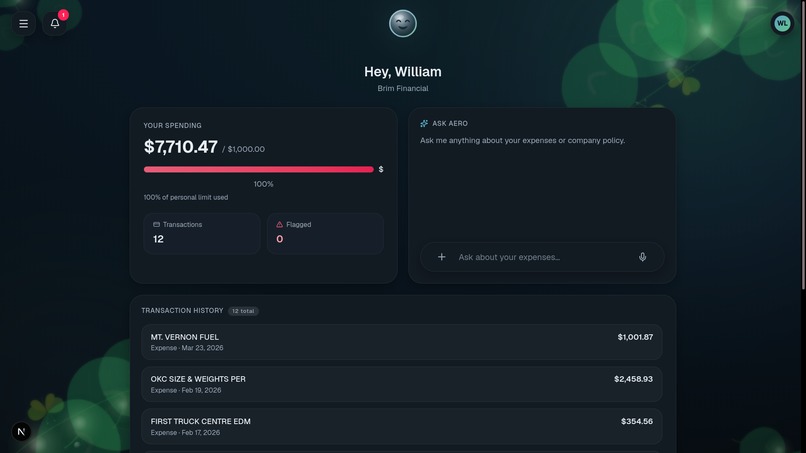
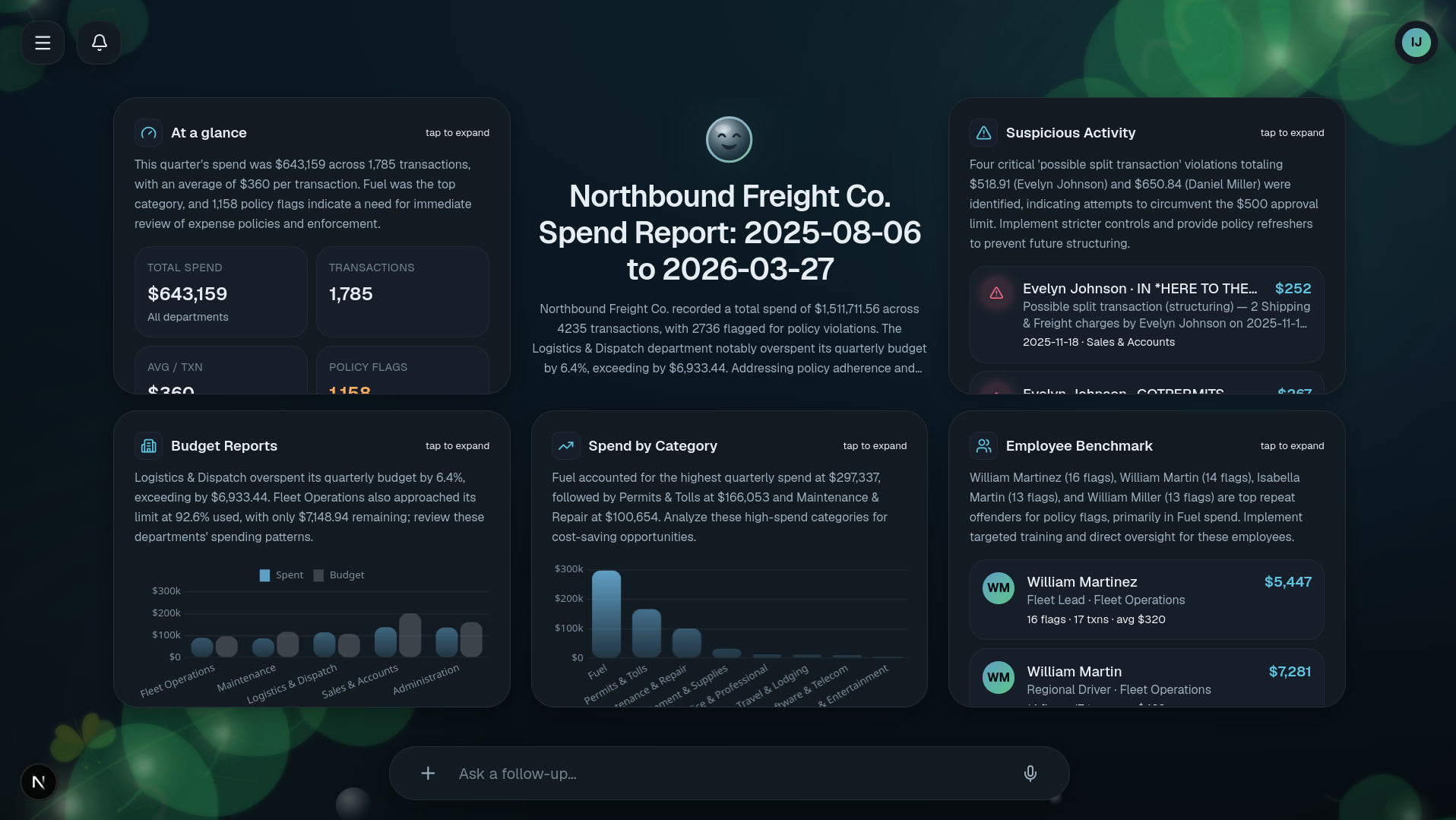
Expenses report on the employees
-
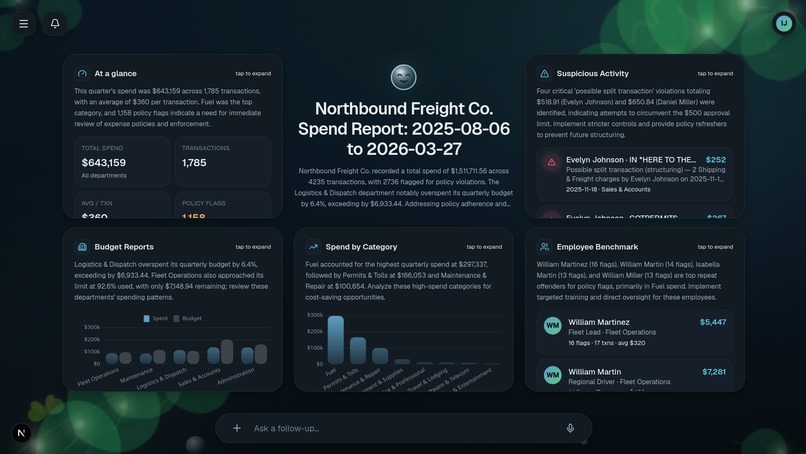
Report generated on the data
-
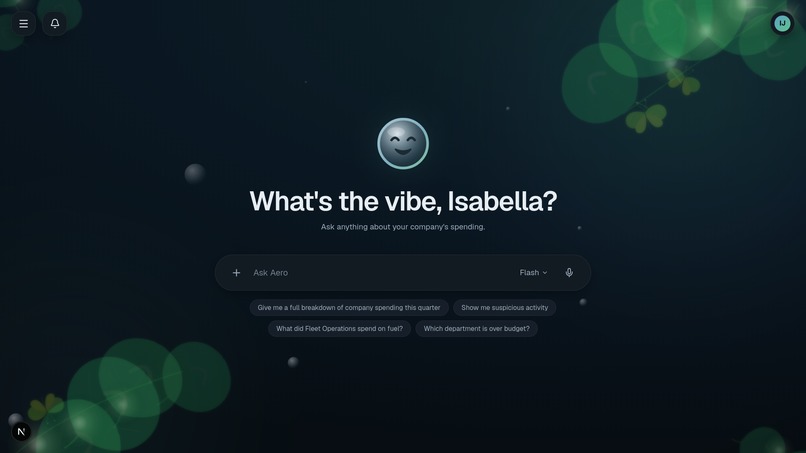
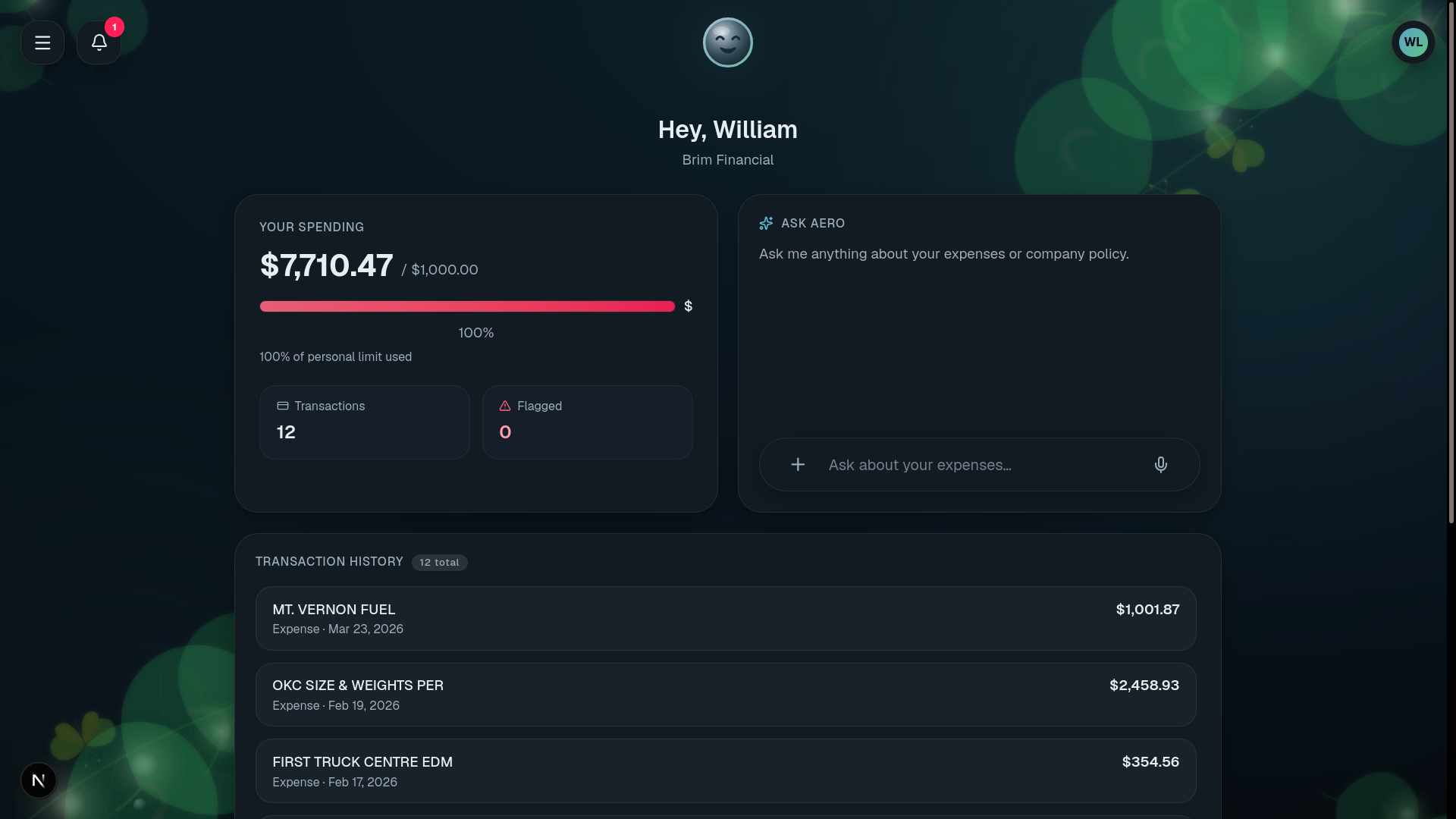
Home-screen
-
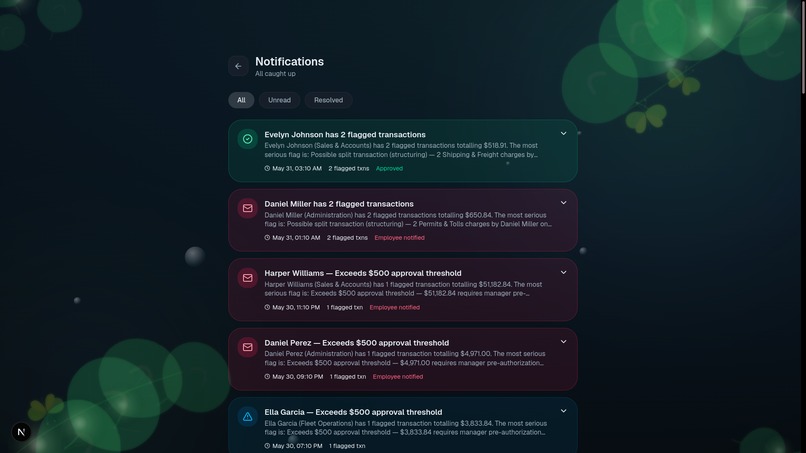
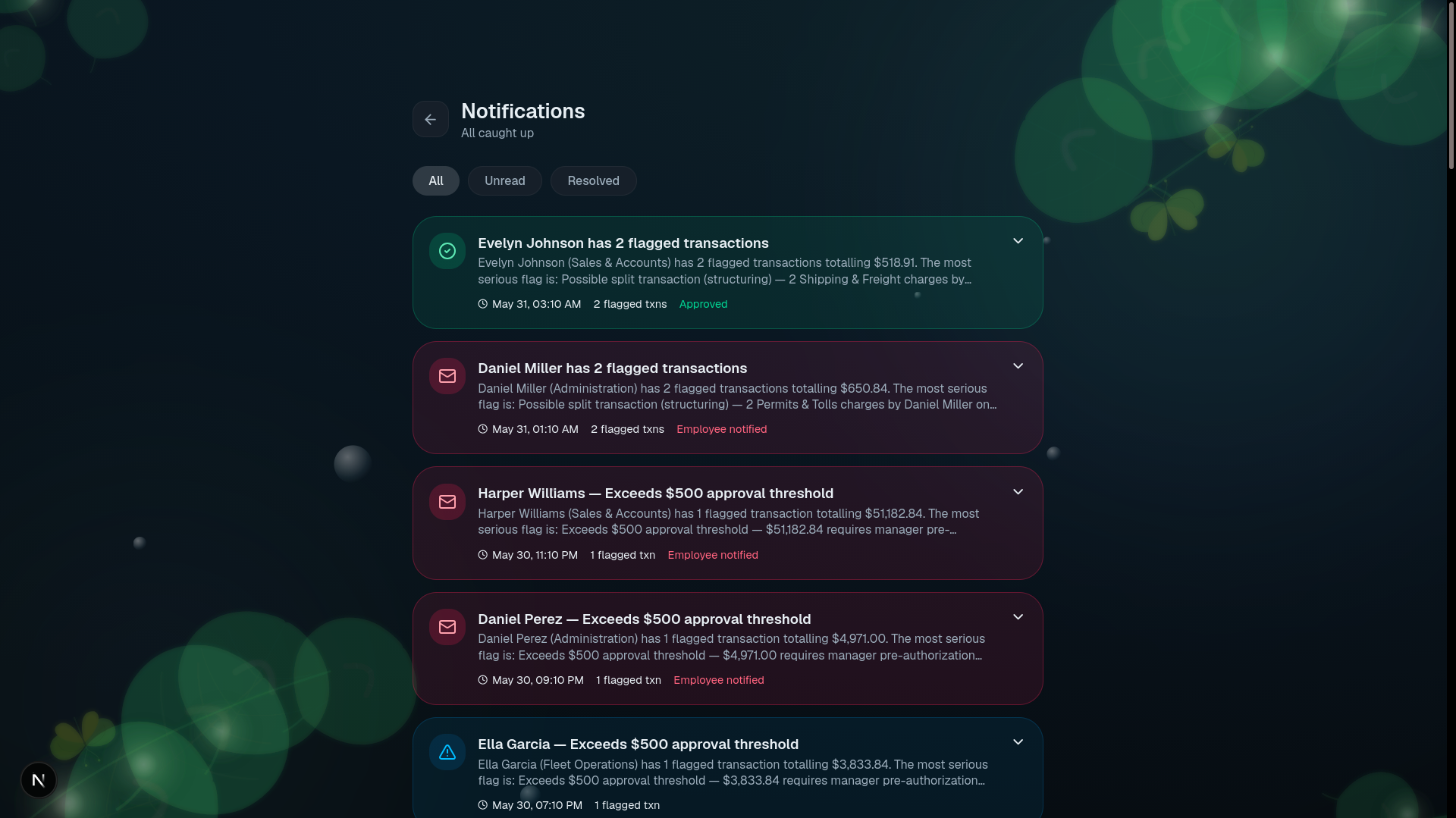
Notifications system for communication between managers and employees
Inspiration
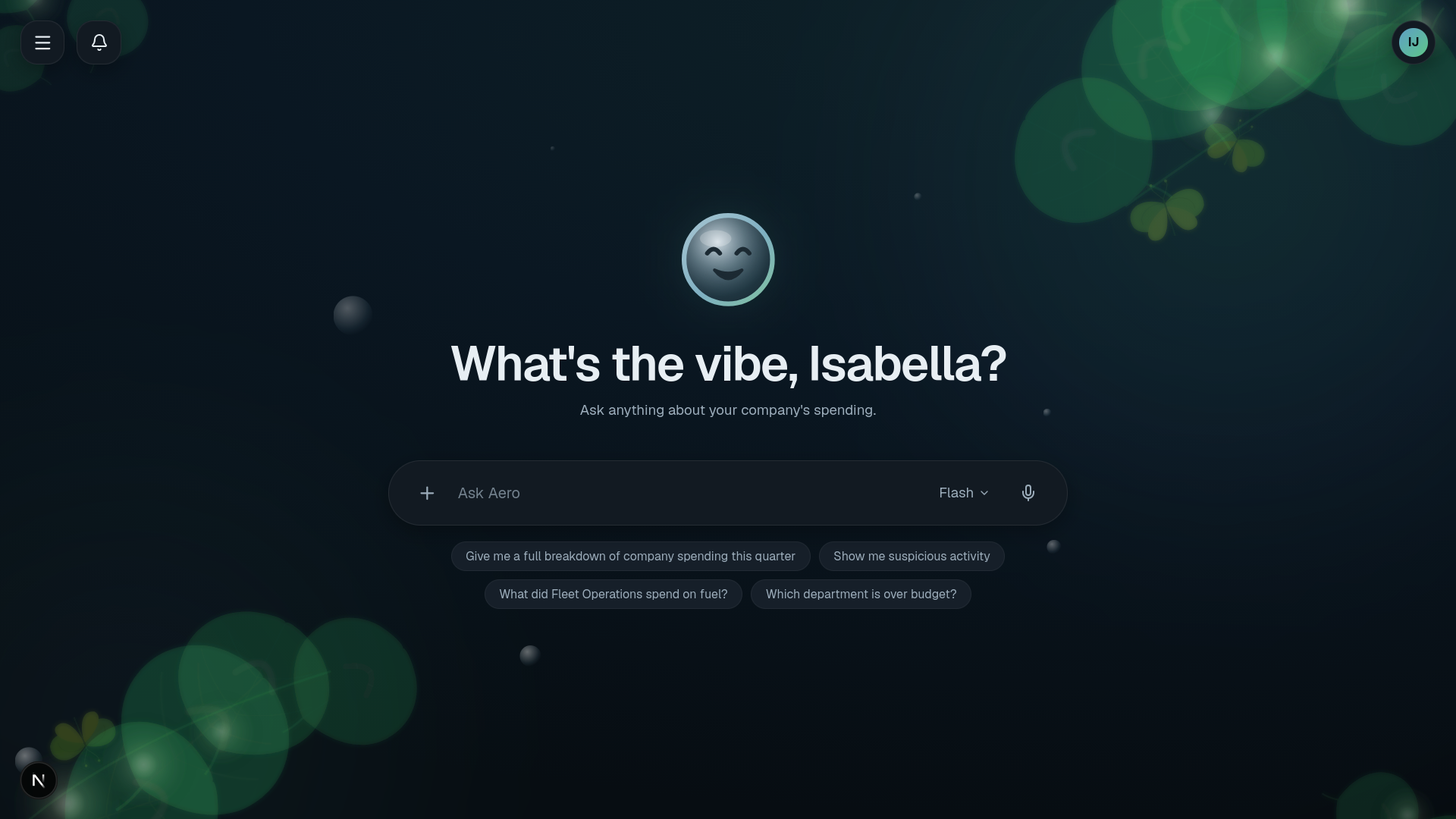
Our main inspiration in terms of the design of the website was the Frutiger Aero 2010 movement that included UI elements such as glossy textures.
What it does
The project answers the 4 main criteria + anomaly detection and expenses tracking. In essence, its an AI assistant that looks at your company's credit card expenses employing the Gemini API with which you can prompt for summaries, fraud detection, etc. Its built as a web app using Next.js + React + Typescript with the Gemini Verbose.
How we built it
We divided the main features across the team after setting up a boilerplate for the website's frontend and backend and setting up a pipeline (highly gotten from prompting) for our specific webapp. Styling came later and was contributed more in a case-by-case basis.
Challenges we ran into
It was our first time setting up a backend with Mongodb and the process to do so ended up being more complicated than expected, or than it really needs to be, however we ended up making it work at the end.
Accomplishments that we're proud of
We are proud on the whole UI design which we decided to start with before writing a single line of code as to be proactive given that we knew we could end up going back and forth on it. We were also very happy with the team compenetration given that it was our first time working with each other!
What we learned
Lots! We got better at setting up the whole backend routing (and at debugging it!). We dived into the setting up and the different features of Mongodb as well as the usage of multiple API's in the same project while trying to not lose on the loading speed of the website.
What's next for Brim AERO
Working more on the different opportunities where an API to an LLM is most useful and ways in which to integrate it more natively on the project. In addition, we want to optimize the website more (being strict with the image loading -- lazy load -- , changing more to asynchronous loading whenever possible, etc)
Built With
- css
- gemini
- javascript
- mongodb
- next
- tailwind

Log in or sign up for Devpost to join the conversation.