-
-
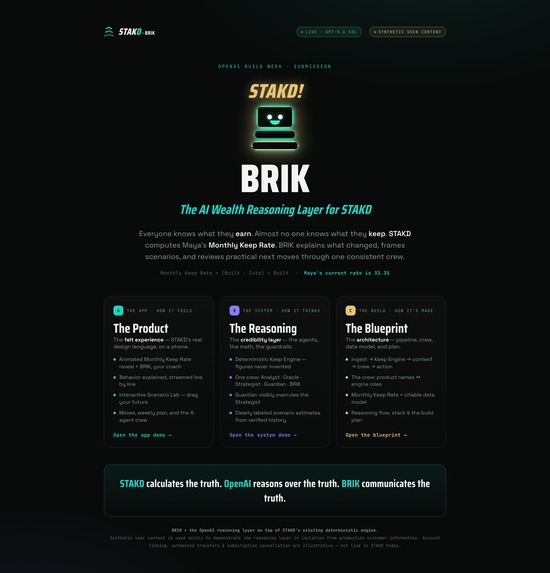
BRIK — the AI Wealth Reasoning Layer for STAKD
-
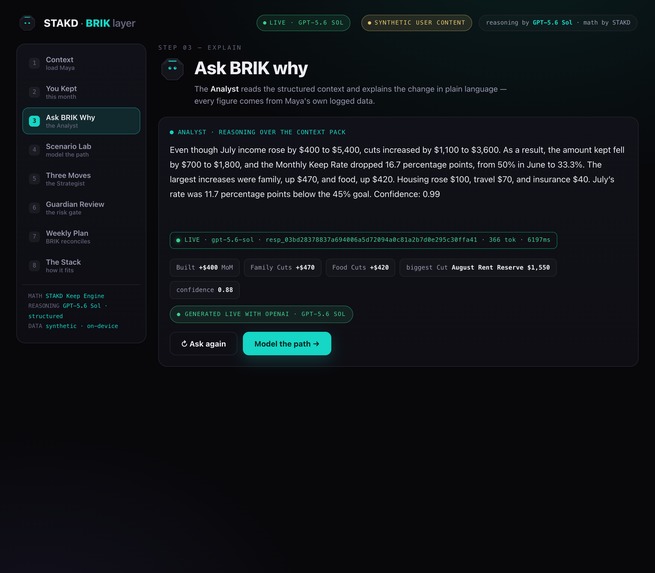
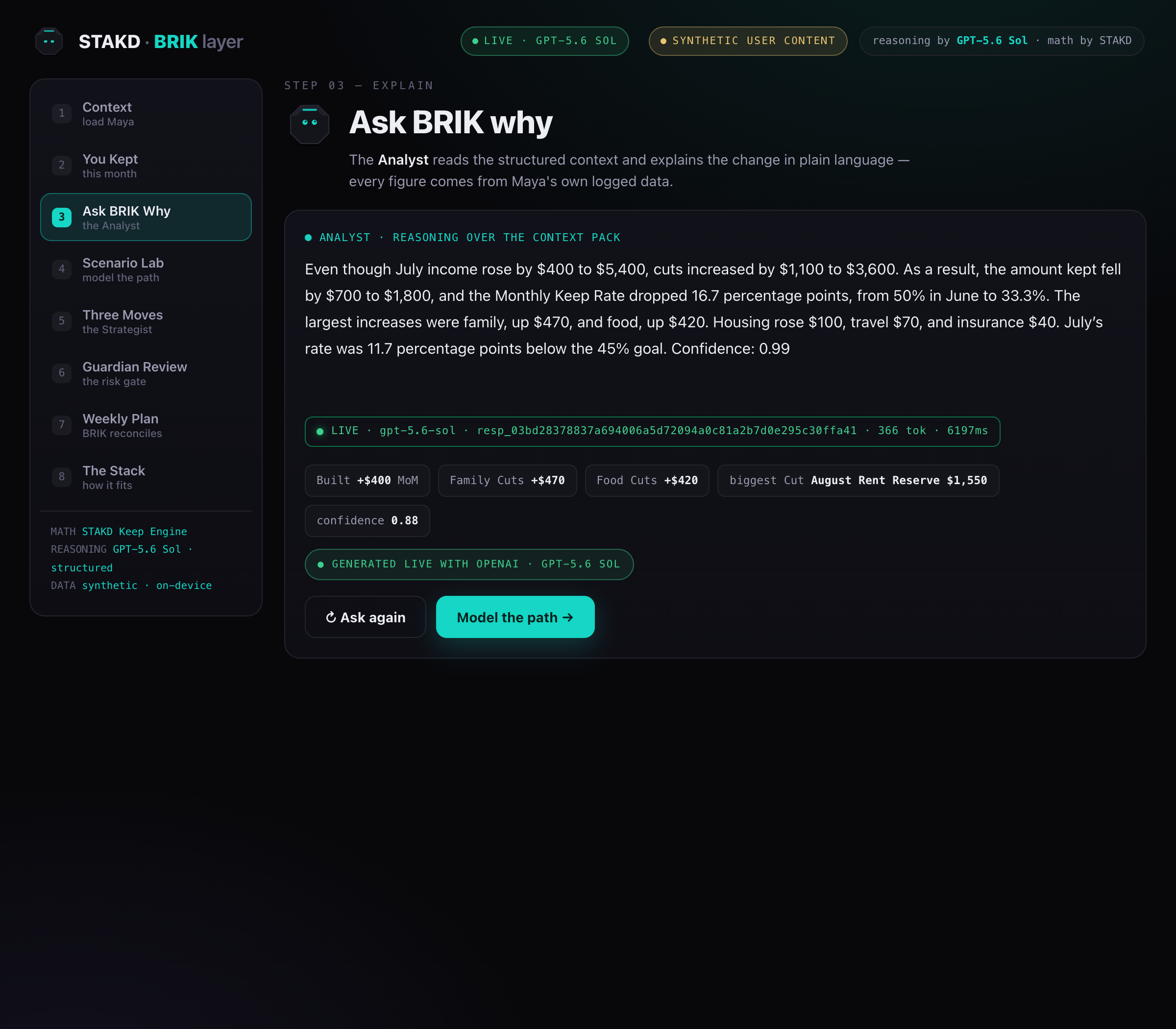
Live GPT-5.6 Sol Analyst — real response ID, "Generated live with OpenAI"
-
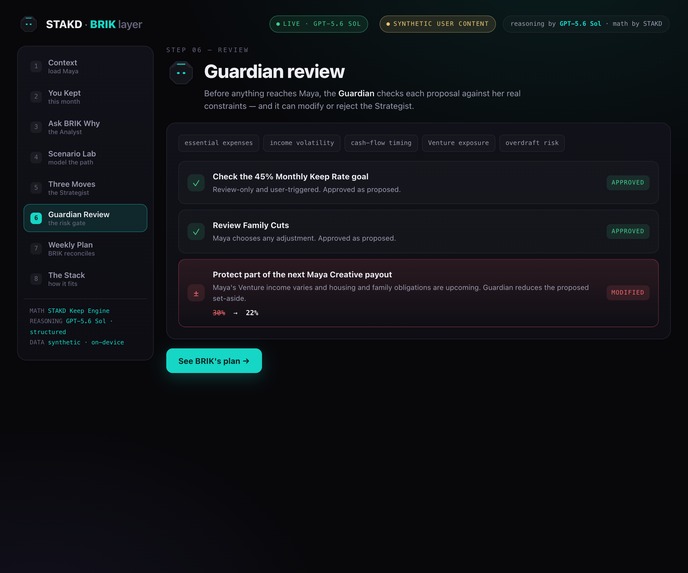
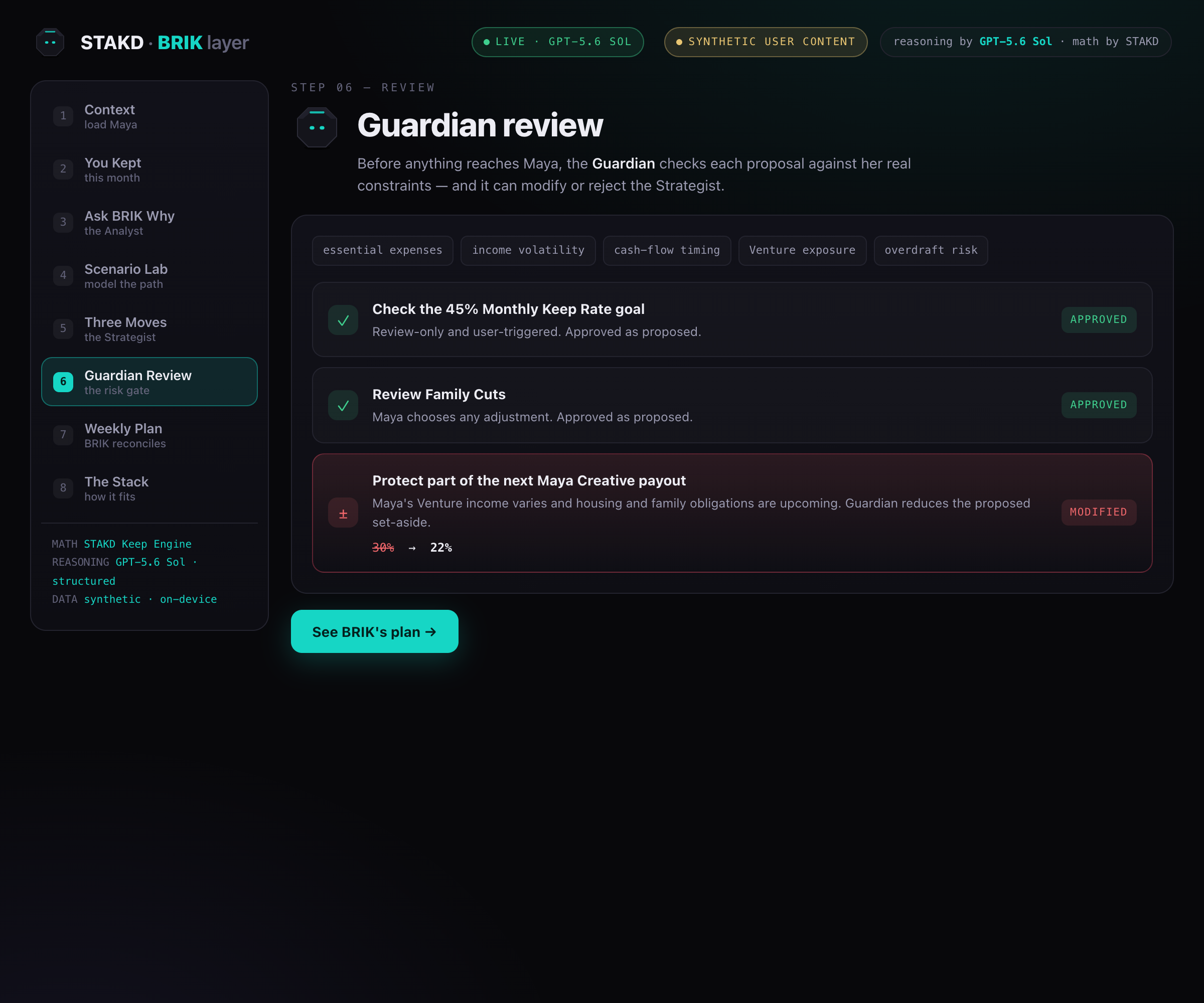
Guardian overrules the Strategist: 30% → 22%
-
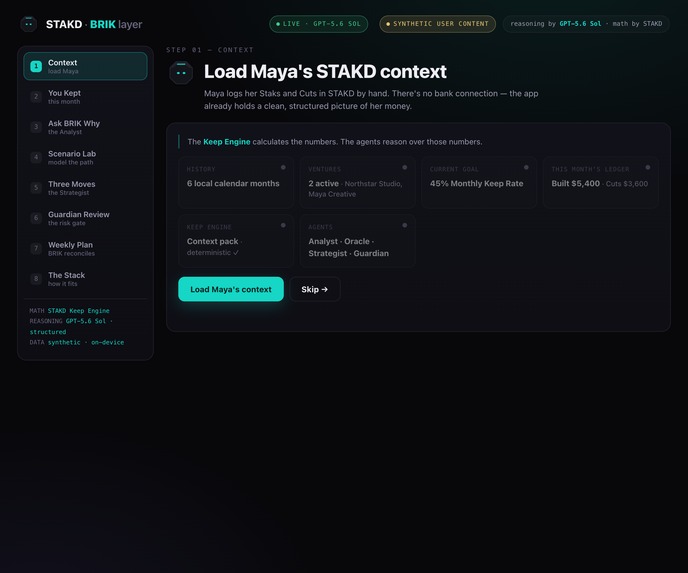
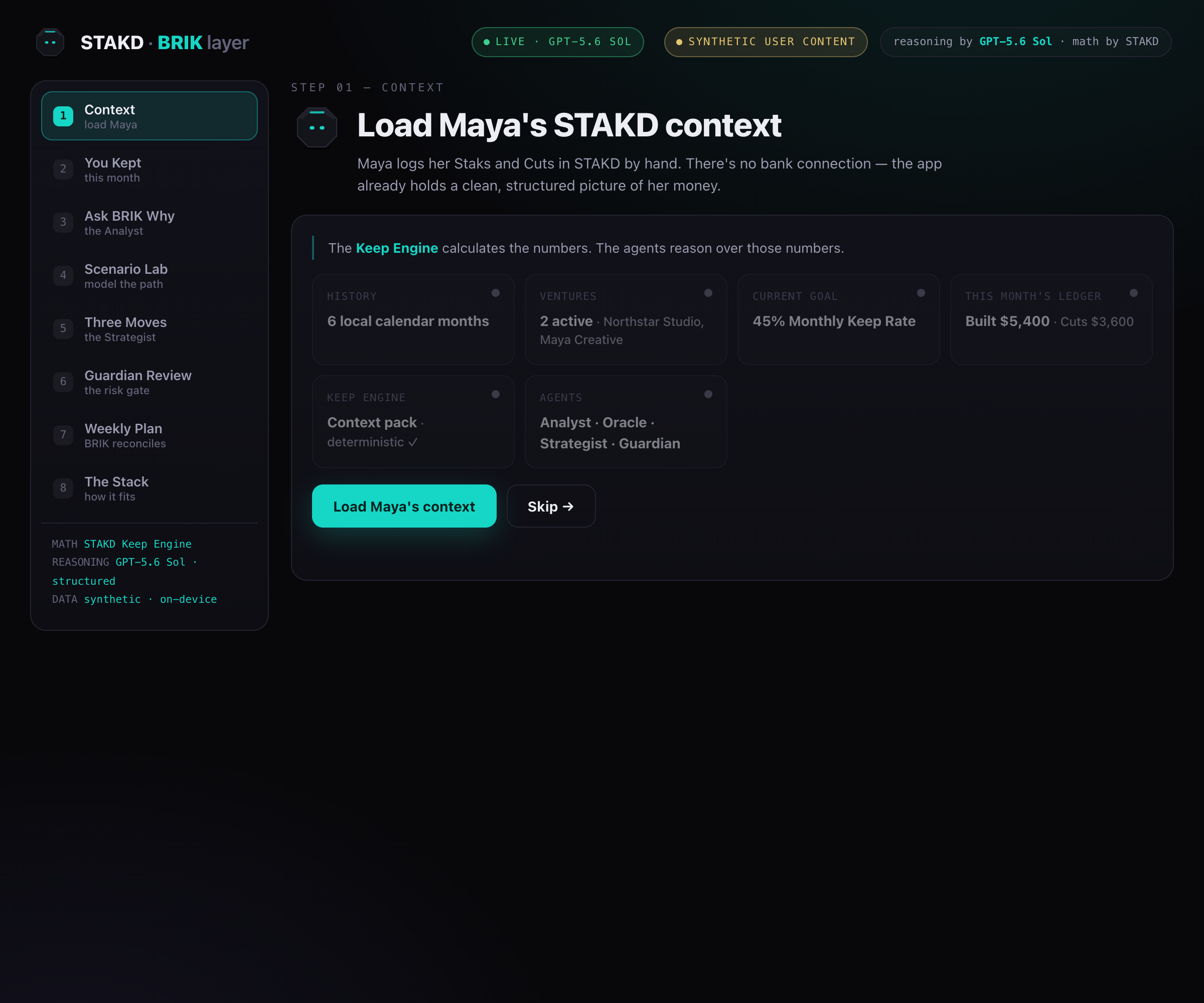
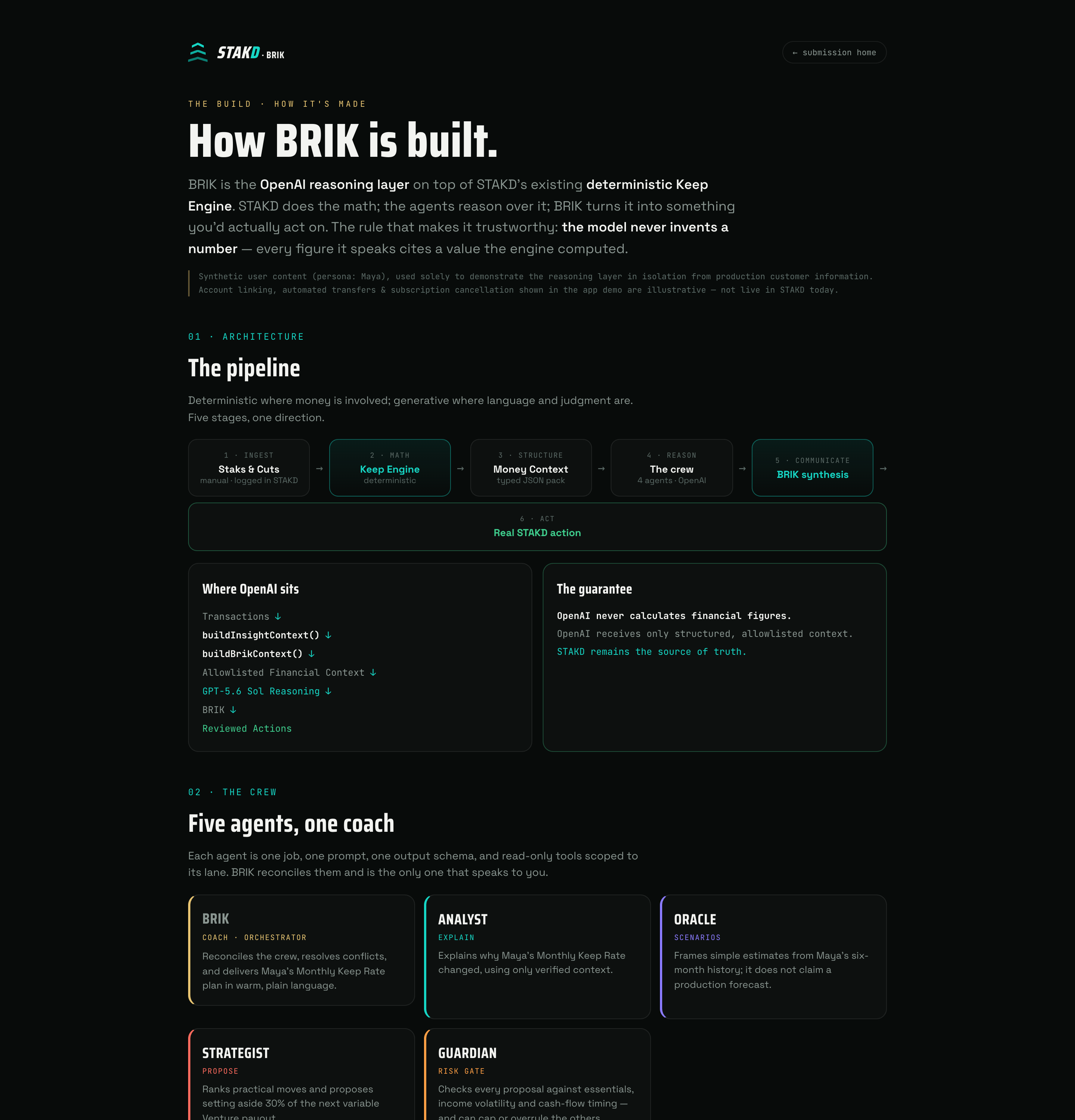
The reasoning console. The Keep Engine + the five-member crew
-
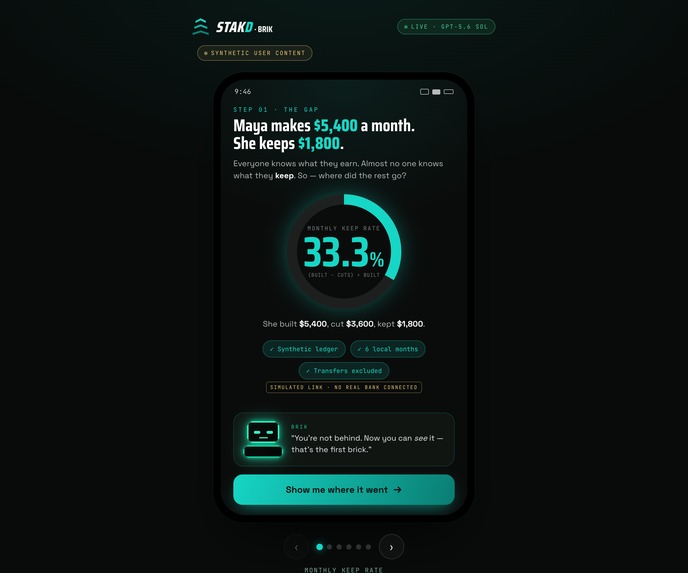
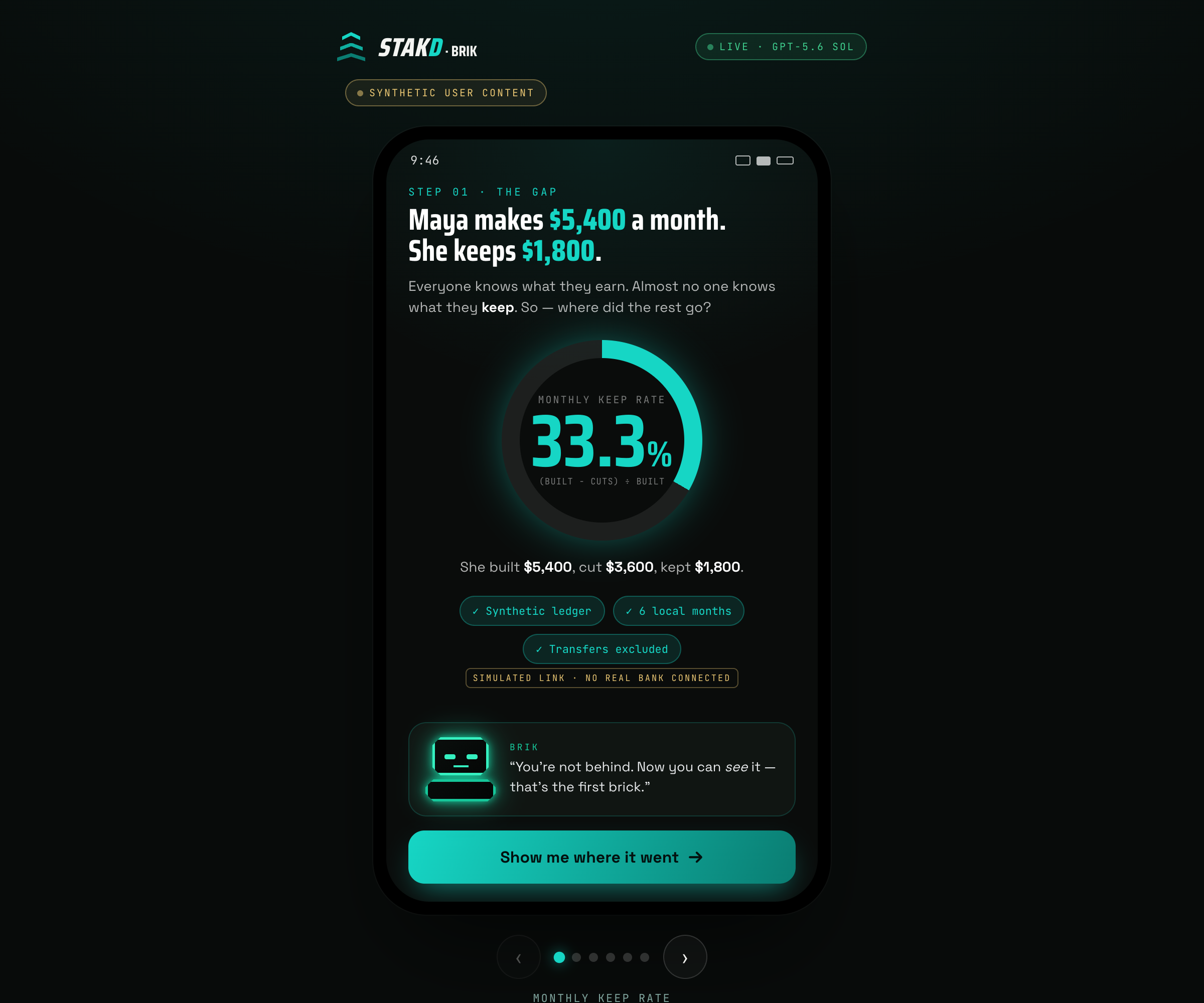
The felt product experience
-
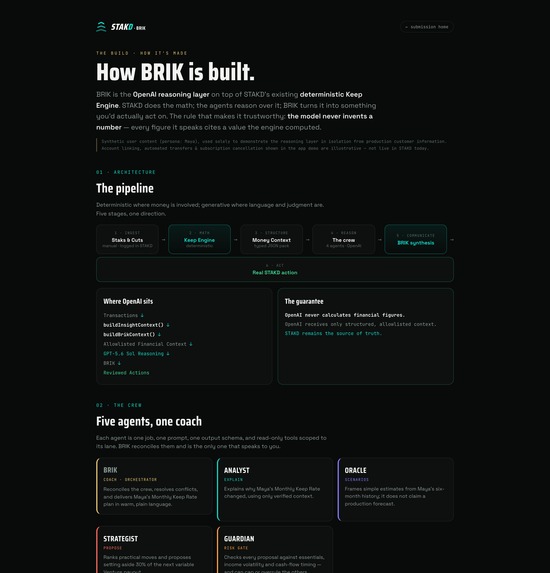
Architecture Watch as STAKD calculates, OpenAI reasons, BRIK speaks
-
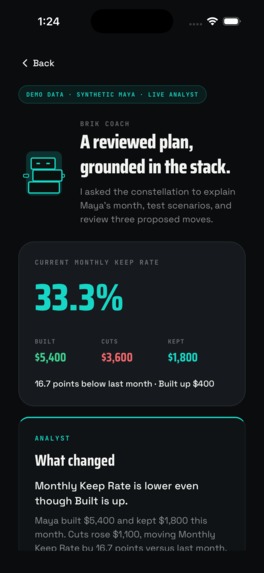
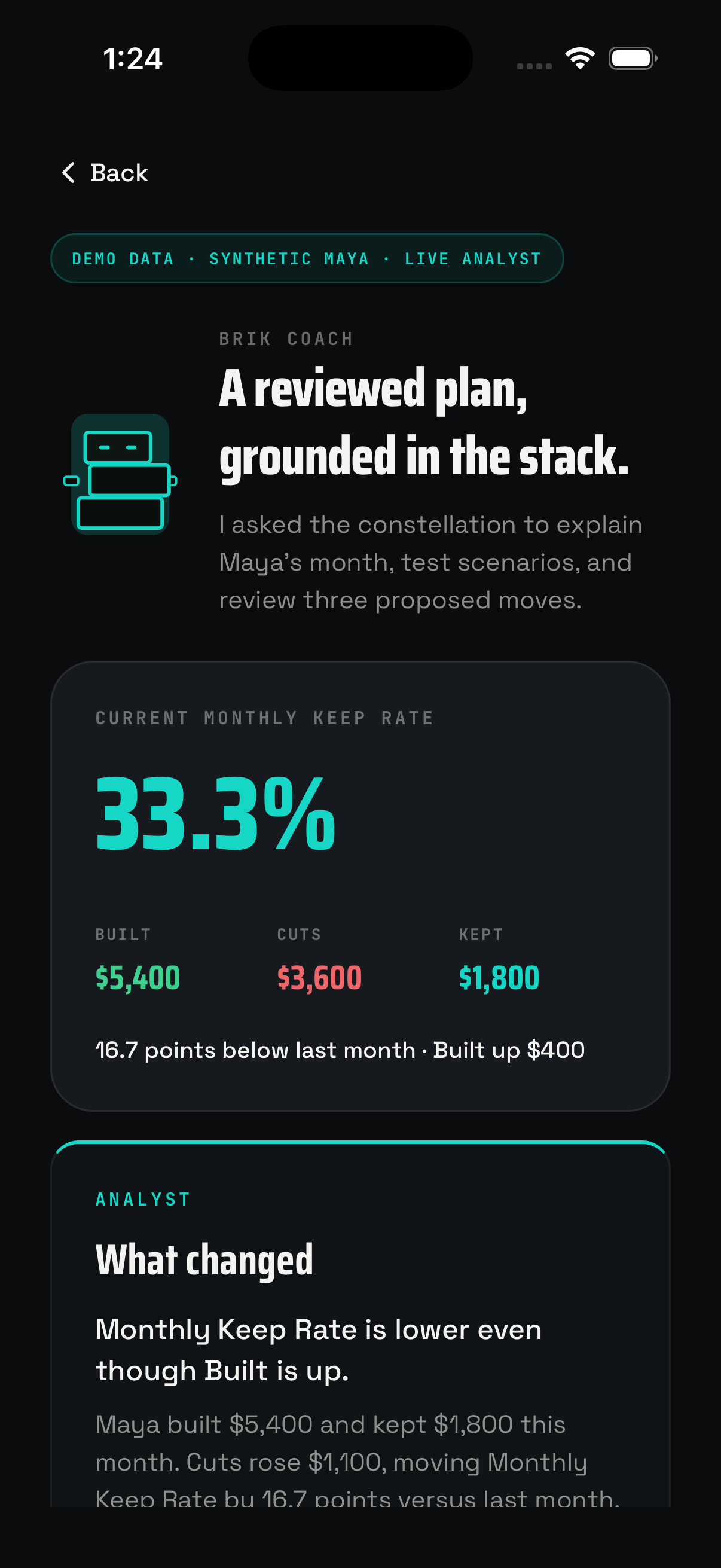
BRIK Coach live in the STAKD iOS app — Maya's 33.3% Keep Rate, explained
Inspiration
I grew up on the West Side of Chicago, one of six kids, in a home where money was always tight but rarely explained. I truly had no idea what the idea of wealth was and how even small changes could have a huge impact on a persons net worth. As the usage of AI expands so will the divide between those who have and those who don't. I wanted to created something to do my small piece of helping underserved and underrepresented people have an opportunity to create wealth. I turned down more lucrative jobs in the banking world and put my money where my mouth was by working for government and non profit organizations who's missions were aligned with helping the forgotten folks gain access. This path is how STAKD was born.
It is a financial operating system founded on the principal that it aint about what you earn it's about what you keep. It shows people in real time a real picture of what matters the most to people financially. What they actually keep!
Most financial apps tell people how much they earned and where their money went. They rarely answer the question that actually determines whether someone is building wealth:
How much did you keep?
STAKD was built around that question. BRIK was created to help people understand the answer.
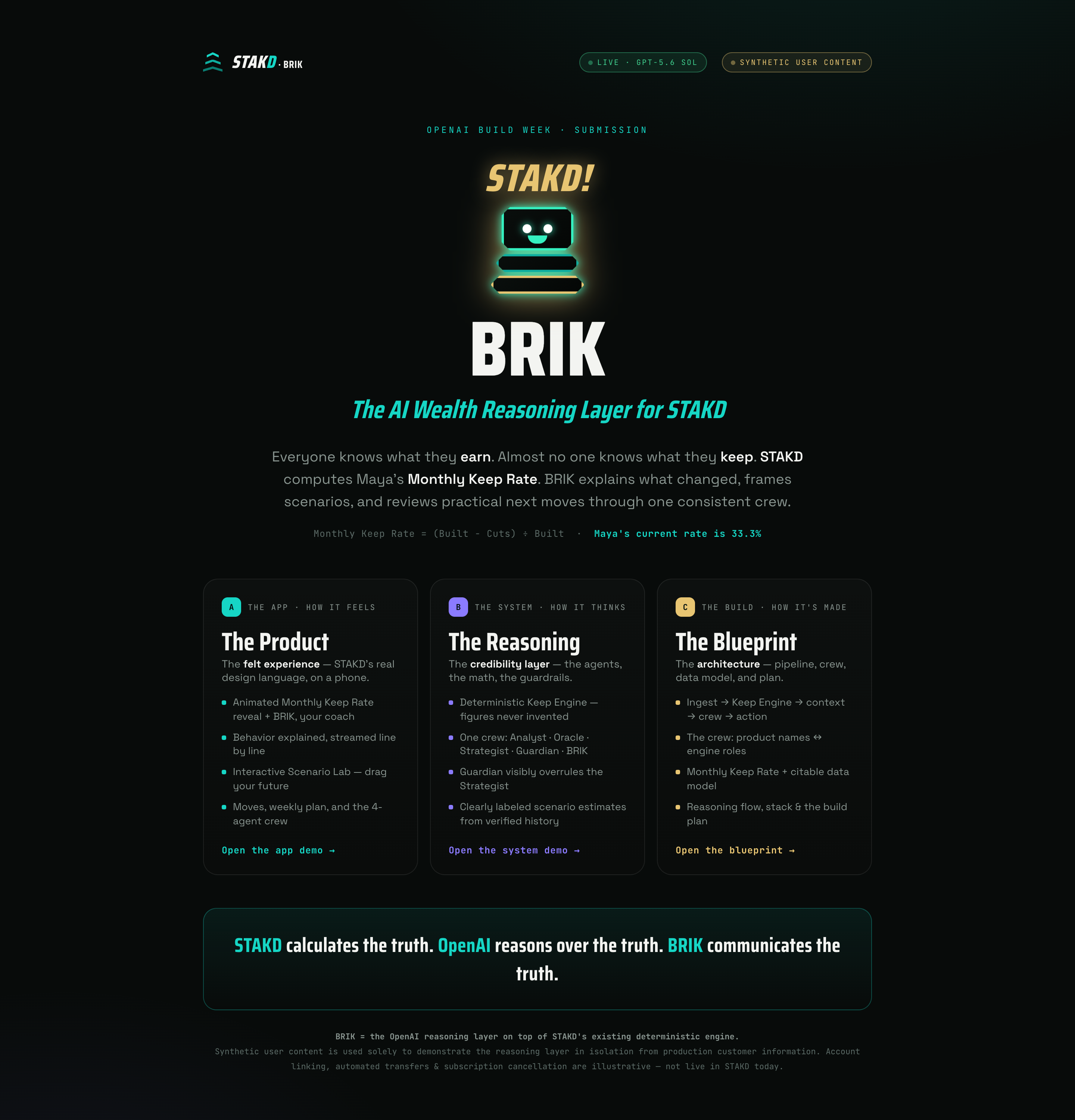
BRIK is not another budgeting dashboard. It is the AI Wealth Reasoning Layer for STAKD: a system that explains what changed, why it changed, what could happen next, and what practical moves a person may want to consider.
What it does
BRIK sits on top of STAKD's deterministic Keep Engine.
STAKD calculates:
Monthly Keep Rate = ((Built − Cuts) ÷ Built) × 100
BRIK then helps a builder answer four questions:
- What changed in my Monthly Keep Rate?
- Why did it change?
- What could happen under different clearly labeled scenarios?
- What practical moves should I consider next?
The Build Week demonstration uses Maya, a synthetic multi-venture builder with six months of financial history.
For July 2026, STAKD calculates:
- Built: $5,400
- Cuts: $3,600
- Kept: $1,800
- Monthly Keep Rate: 33.3%
- Previous Monthly Keep Rate: 50.0%
- Change: −16.7 percentage points
BRIK's five-member product crew includes:
- Analyst
- Oracle
- Strategist
- Guardian
- BRIK
The Analyst is powered live by GPT-5.6 Sol.
Oracle, Strategist, Guardian, and BRIK synthesis use deterministic structured logic in this Build Week demonstration.
The Guardian is one of the product's most important trust features. When the Strategist proposes setting aside 30% of Maya's next variable payout, the Guardian reviews her income variability and upcoming obligations and reduces the reviewed proposal to 22%.
That disagreement remains visible to the user.
Nothing moves automatically. Every recommendation remains under the user's control.
How we built it
STAKD remains the source of financial truth.
Its deterministic engine calculates Built, Cuts, Kept, Monthly Keep Rate, category changes, venture performance, and other verified financial context before OpenAI is called.
The public web demonstration sends a server-side, allowlisted version of that context to GPT-5.6 Sol through the OpenAI Responses API. The live Analyst response is streamed to the browser and displays a genuine OpenAI response trace.
The native STAKD integration invokes an authenticated Supabase Edge Function and uses strict JSON-schema Structured Outputs.
The OpenAI model may explain supplied values, identify patterns, and communicate practical options. It may not invent, replace, alter, or independently re-derive financial figures.
The public endpoint includes:
- Server-side canonical context
- Origin restrictions
- Request-size guards
- Rate limiting
- Deterministic fallback behavior
- Server-side API-key protection
The native application is built with React Native and Expo. The public Build Week experience is deployed through Vercel at brik.mystakd.com.
How we used Codex
Codex materially accelerated the BRIK Build Week extension.
Codex helped us:
- Create the isolated Build Week branch
- Build Maya's six-month synthetic ledger
- Route the ledger through STAKD's existing Keep Engine
- Build the typed BRIK context adapter
- Implement the native BRIK Coach screen
- Scaffold the five-member product crew
- Map recommendations to existing STAKD actions
- Diagnose and fix a navigation-reset issue
- Build and deploy the Supabase Edge Function
- Integrate the OpenAI Responses API
- Add strict Structured Outputs to the native path
- Implement deterministic fallback behavior
- Test the experience in the iOS Simulator
- Run TypeScript, smoke, and automated test validation
- Correct display and typography issues
- Produce a repository-grounded product truth audit
The repository includes a dated Build Week changelog and a redacted, evidence-backed Codex Build Log that distinguishes Codex implementation, Codex assistance, and human-directed product decisions.
What existed before Build Week
Before Build Week, STAKD already included:
- A React Native and Expo application
- Transaction logging
- Deterministic Built, Cuts, Kept, and Monthly Keep Rate calculations
- Supabase infrastructure
- Existing navigation and semantic financial actions
What we built during Build Week
During Build Week, we added:
- The BRIK reasoning layer
- Maya's synthetic six-month ledger
- The BRIK context adapter
- The native BRIK Coach experience
- The five-member product crew
- The live GPT-5.6 Sol Analyst
- The public Vercel Analyst endpoint
- The authenticated Supabase
brik-explainfunction - The Guardian 30% → 22% review moment
- The Product, Reasoning, and Blueprint web experiences
- Semantic action mapping
- Build Week testing, security hardening, documentation, and QA
Challenges we ran into
Keeping financial truth deterministic
We did not want a language model calculating or inventing financial figures. We created a strict boundary: STAKD calculates every number, and OpenAI reasons only over allowlisted context.
Being honest about what is live
It would have been easy to imply that the entire five-member crew was a live autonomous multi-agent system.
Instead, we clearly disclose that the Analyst is live while the other specialist roles and BRIK synthesis are deterministic in this Build Week demonstration.
Building trust through disagreement
We wanted BRIK to do more than produce confident recommendations. The Guardian reviews the Strategist's proposal and can visibly reduce or reject it. The user sees the disagreement and remains in control.
Accomplishments we are proud of
- A live GPT-5.6 Sol Analyst running through the OpenAI Responses API
- A real native BRIK Coach integration inside STAKD
- Strict Structured Outputs on the native Supabase path
- A deterministic financial engine that remains the source of truth
- A visible Guardian override from 30% to 22%
- Three practical recommendations mapped to existing STAKD screens
- Server-side API protection and hardened public-demo controls
- A truthful before-and-after Build Week evidence package
- A working public demonstration that judges can use without installing the native application
What we learned
The trust is not created simply by making the AI smarter.
The trust comes from making sure the AI knows its lane.
Deterministic where money is involved. Generative where language and judgment are.
That boundary is the product.
What's next
The next phase of BRIK includes:
- Production multi-agent orchestration
- Deeper scenario modeling
- More personalized financial coaching
- BRIK voice experiences
- Expanded financial education
- Carefully reviewed automation that always keeps the user in control
STAKD calculates the truth.
OpenAI reasons over the truth.
BRIK speaks the truth.
Explore BRIK
- Live BRIK Demonstration
- Run the Live GPT-5.6 Analyst
- View the Public Repository
- Explore the Technical Blueprint
- See the Product Experience
Watch the Demo
Built With
- codex
- expo.io
- gpt-5.6-sol
- javascript
- node.js
- openai-api
- openai-responses-api
- react-native
- supabase
- typescript
- vercel

Log in or sign up for Devpost to join the conversation.