-
-
-
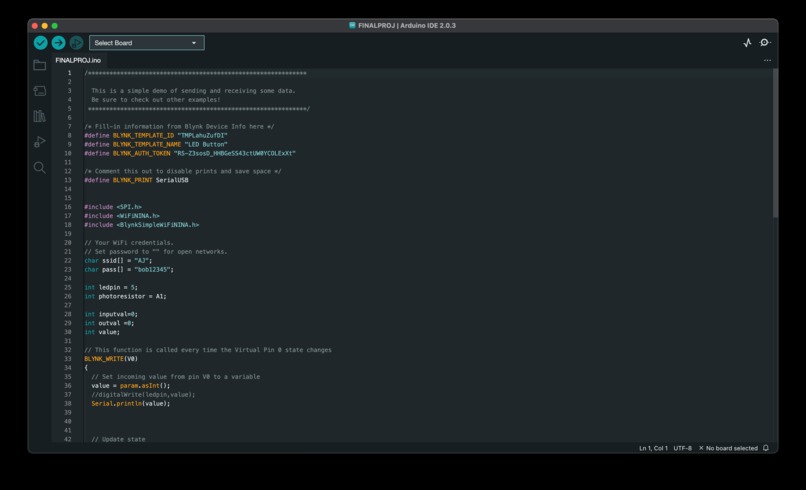
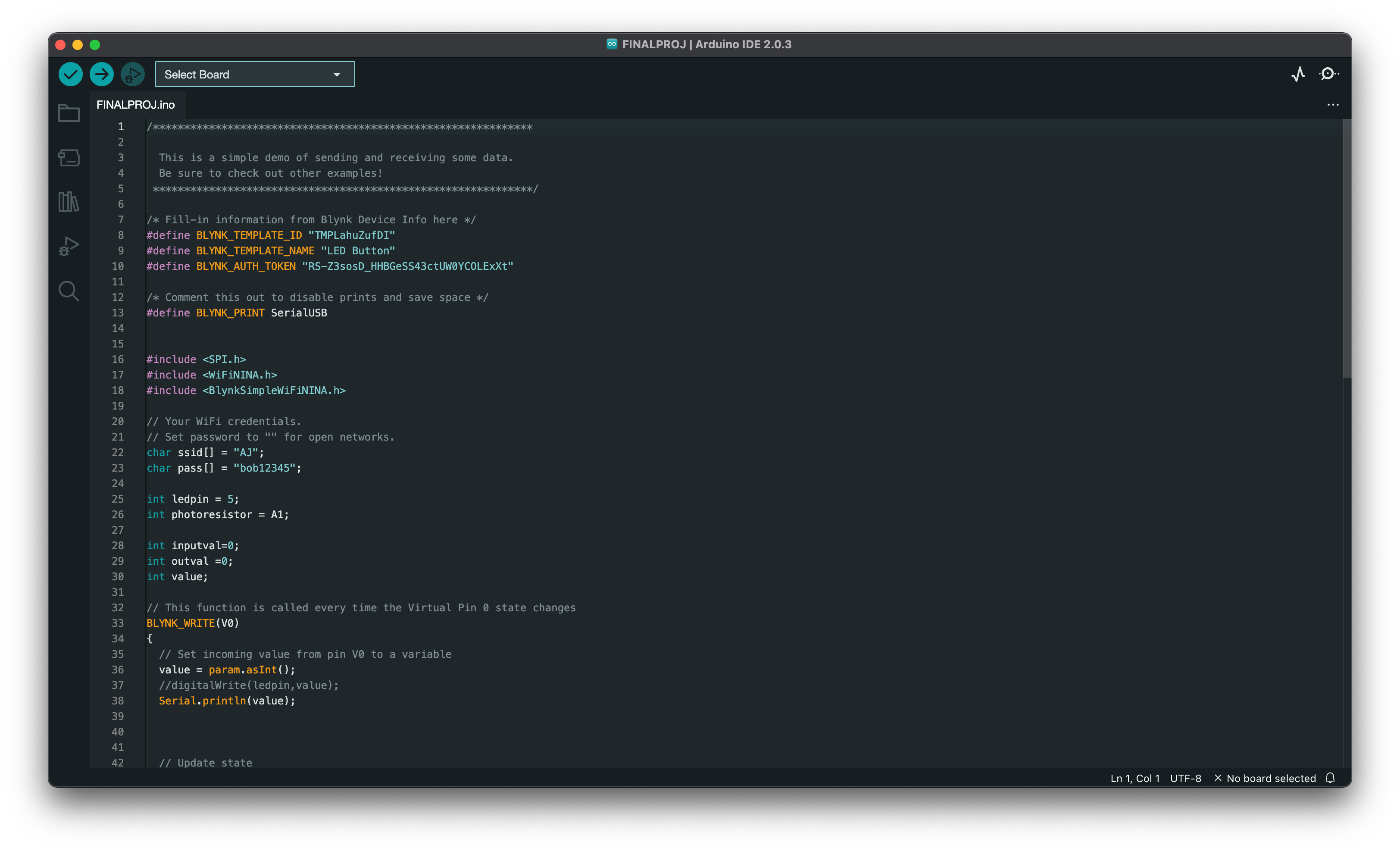
Code utilized for the program (I)
-
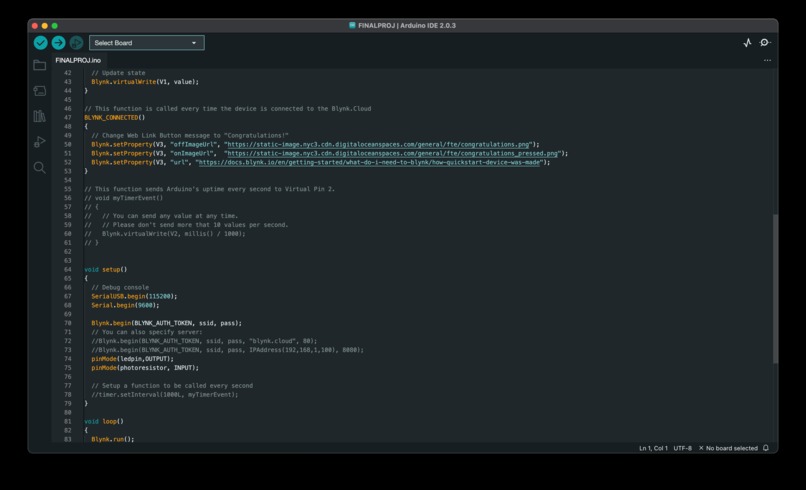
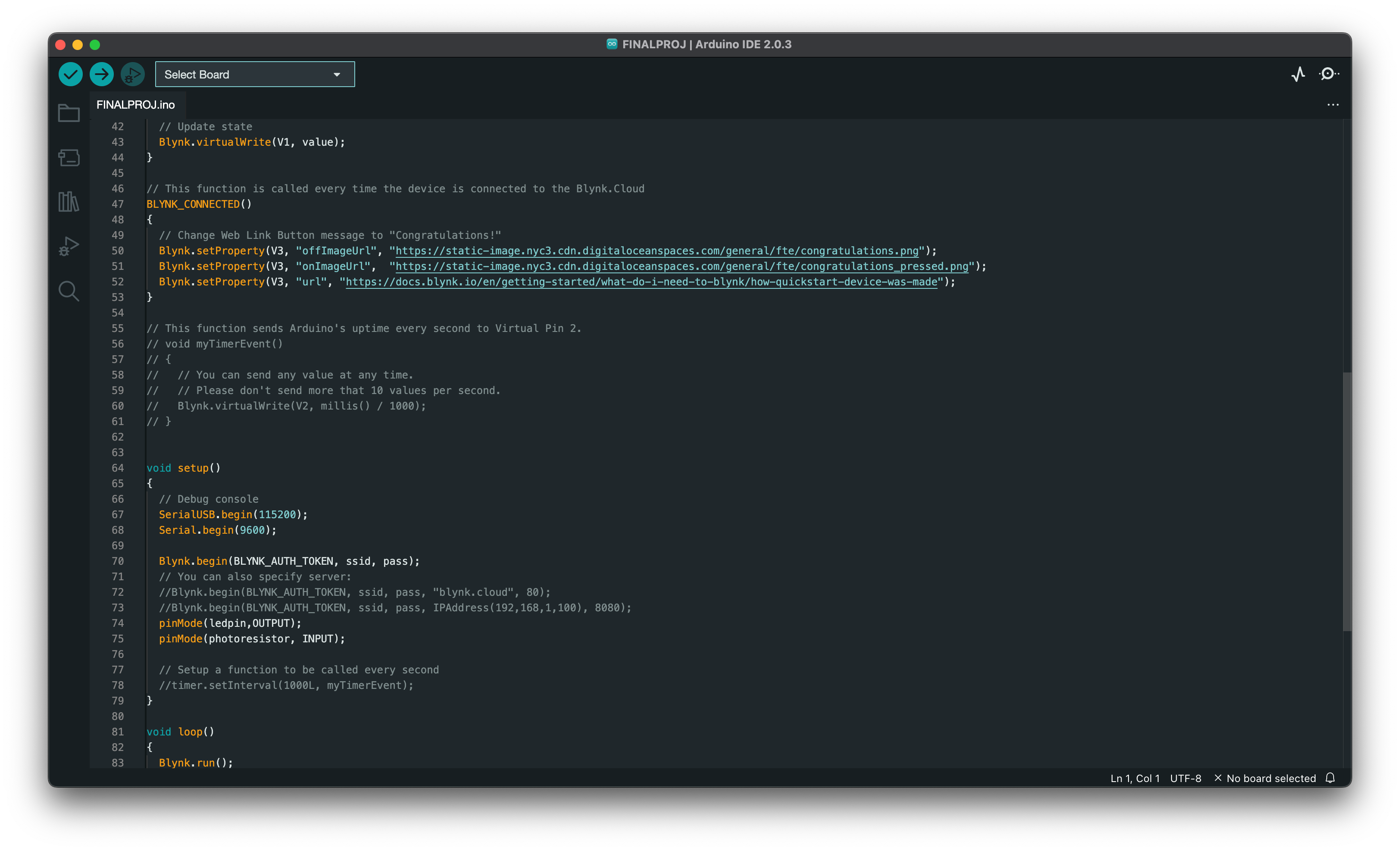
Code utilized for the program (II)
-
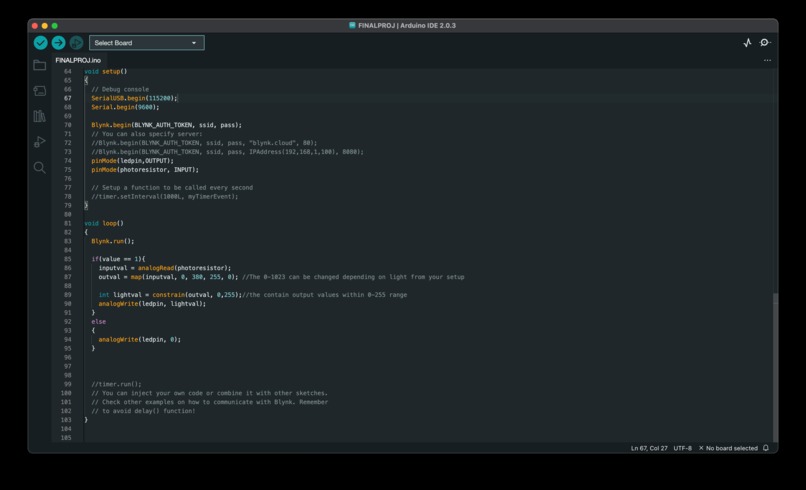
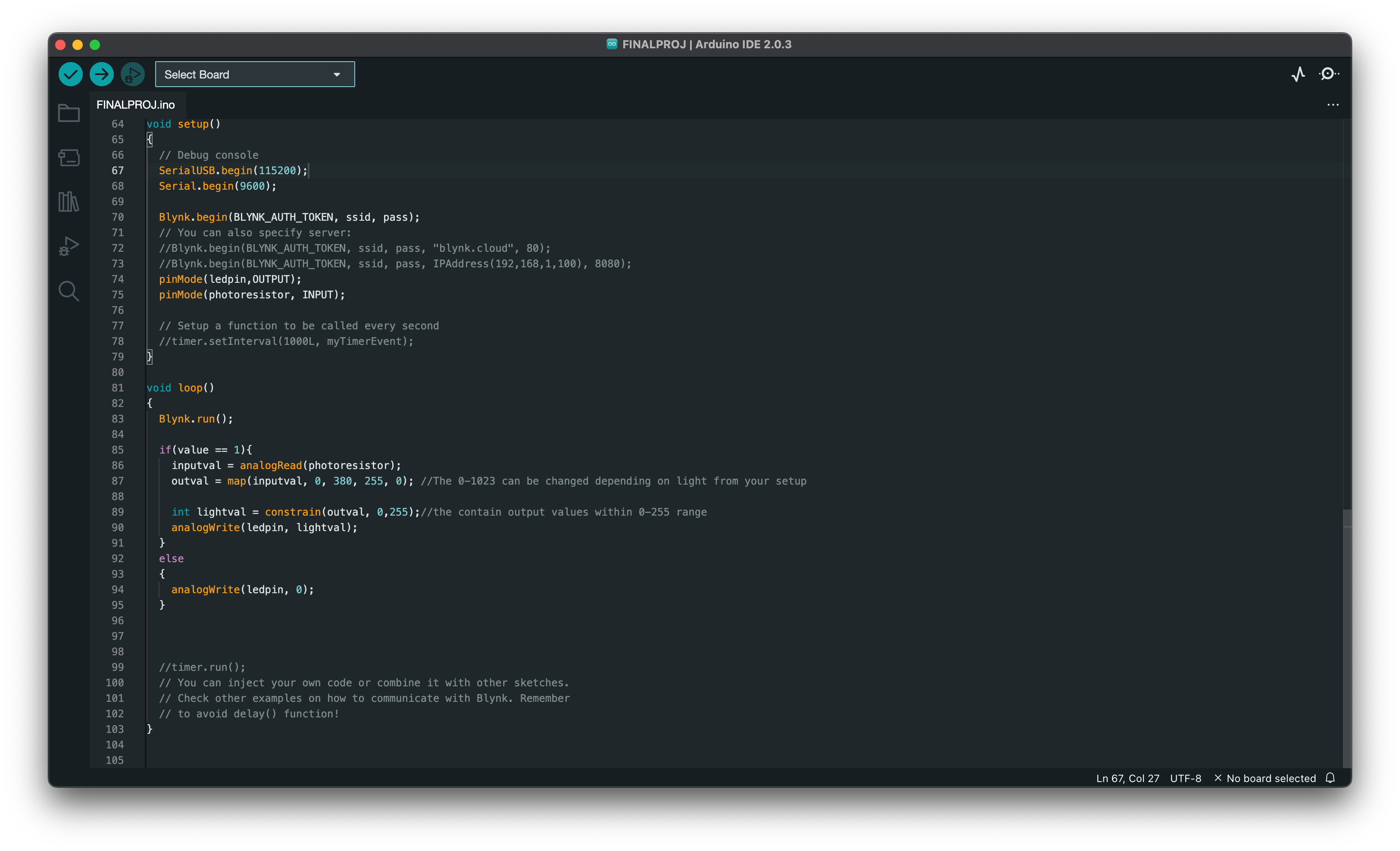
Code utilized for the program (III)
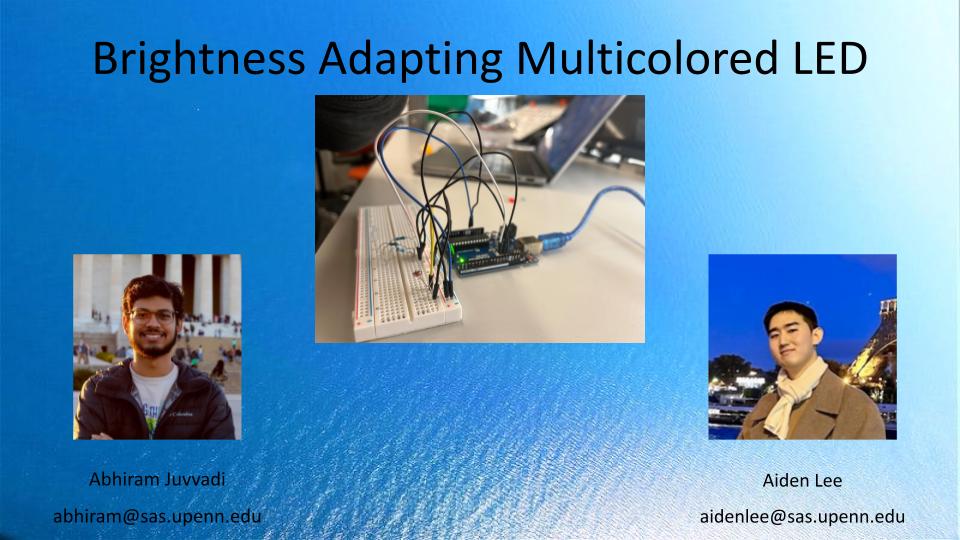
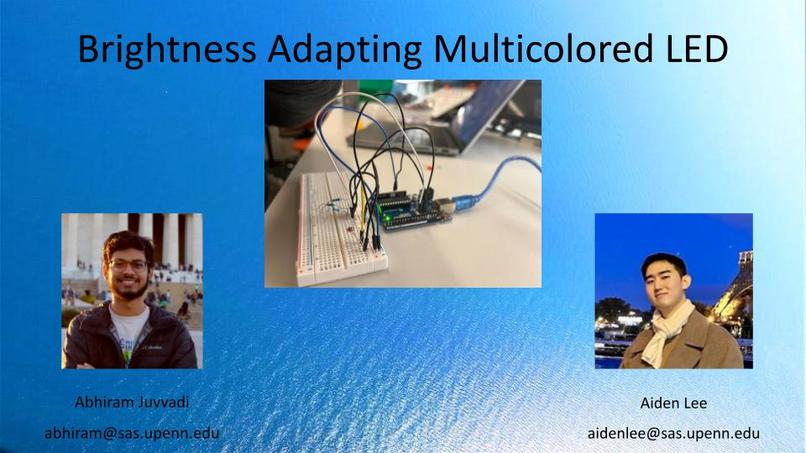
The inspiration for this project was the ability to make lights automatically adapt to the surrounding environment. If there is a room that is naturally well-lit, the artificial light should be off, saving energy and reducing unnecessary waste. However, many individuals forget to turn off lights in a space or simply don't feel the need to, resulting in the creation of an automated LED light system that adapts to changes in lighting.
This system was created utilizing an Arduino along with the Arduino IDE interface. To detect the amount of light that is present, a photoresistor was utilized. The data collected by the photoresistor about lighting is then transmitted to the Arduino, which then adapts the brightness of the LED accordingly. As such, less detected light would result in more LED brightness, while more detected light would result in a diminishing LED brightness.
Challenges of creating this system included integrating the LED and the bluetooth component to the light system. These challenges mostly resulted from programming, and were able to be fixed by utilizing the Blynk application system along with the newer Arduino MKR WiFi 1010 board.
This project is based on an environmental goal, to reduce necessary energy and power waste. We are satisfied with how the photoresistor was efficiently incorporated into the LED system, so that the main functionality of the LED worked as expected. Additionally, the link between the data of the photoresistor and LED worked as desired.
We learned how to incorporate code to link two hardware components using the Arduino IDE system. Additionally, the bluetooth component allowed for us to gain more insight into multiple functionality for a single component.
This base version of this project works as intended, but in order to have more efficiency, a complex string of code must be implemented with more levels of light output corresponding with more levels of photoresistor data input. Moreover, the bluetooth system can be more efficient by reducing the time it takes between pressing the button and the desired action to take place. To achieve a more quality product, an LED strip along with a more reliant photoresistor will allow for this project to have significant real-world application in room decor, lighting, and practicality.
Some samples of the code are attached to this devpost.
Built With
- arduino
- ide

Log in or sign up for Devpost to join the conversation.