-
-
-

This is for you dad
-
-
-
-
-
-
-
-
-
-
-
-
-
-
-
-
Inspiration
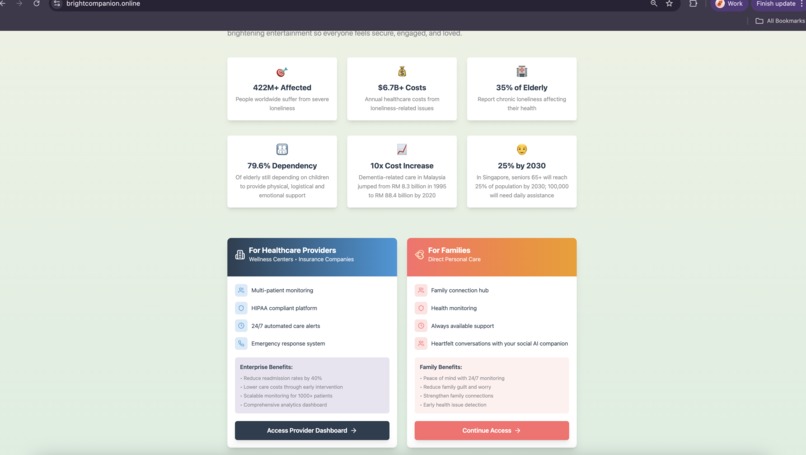
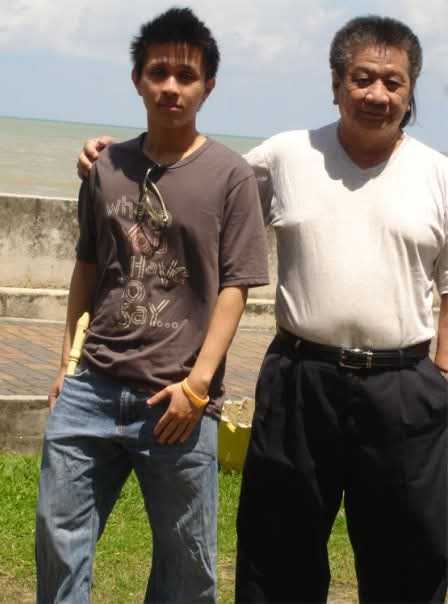
Eight years ago, I was a caregiver to my elderly father who was battling a terminal brain tumor. After brain surgery, he experienced significant memory loss, similar to Alzheimer's, and struggled to cope with and adapt to his new environment. He often felt lonely when I couldn't be there. As his primary caretaker, I found it challenging to fulfill both his logistical needs and emotional well-being due to my work and other commitments. This often meant spending many early mornings in the hospital, simply to be his companion.
I became his "bright companion," constantly conversing with him, reminding him to take his medications and attend appointments, and helping him remember his family. I also managed his logistical needs like food, meals, transport, and ensured his safety through regular check-ins and monitoring. At that time, I desperately wished I could outsource even 15% of these tasks or find a software solution to manage it all for me.
Today, with advancements in AI, LLMs, and modern platforms like Bolt, 11Labs, Tavus, and Groq, I can finally realize this dream and build the platform I once envisioned. My aspiration is for this platform to provide much-needed support to others facing similar caregiving challenges.
What it does
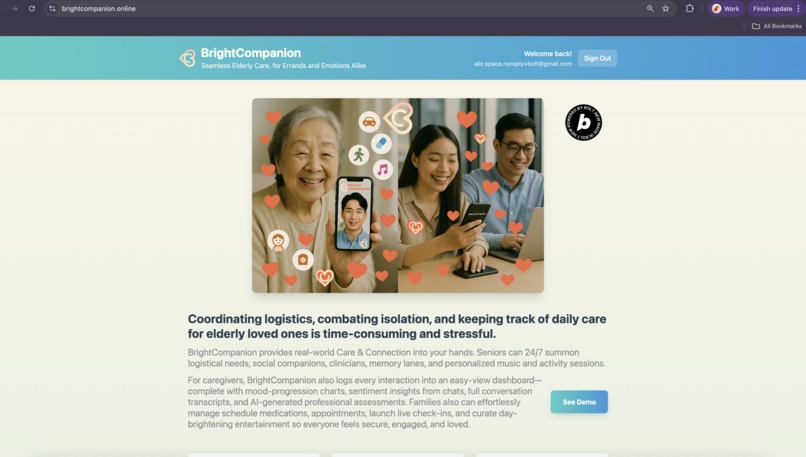
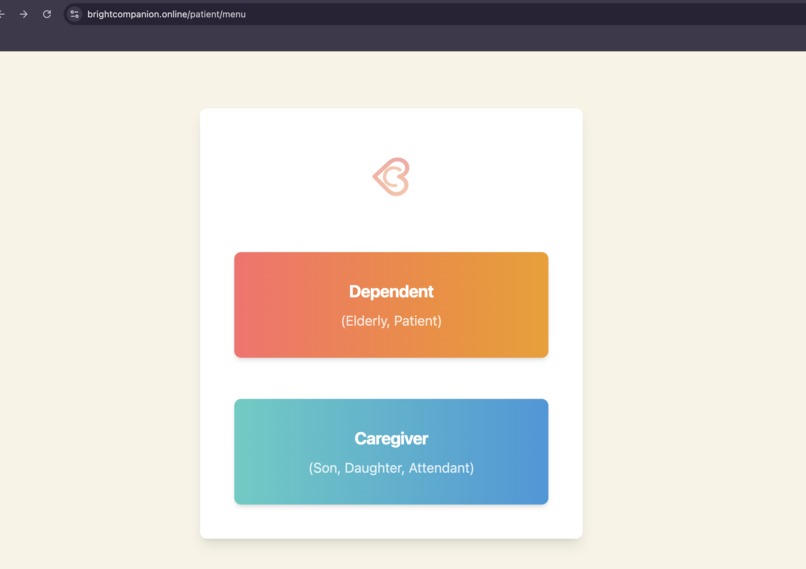
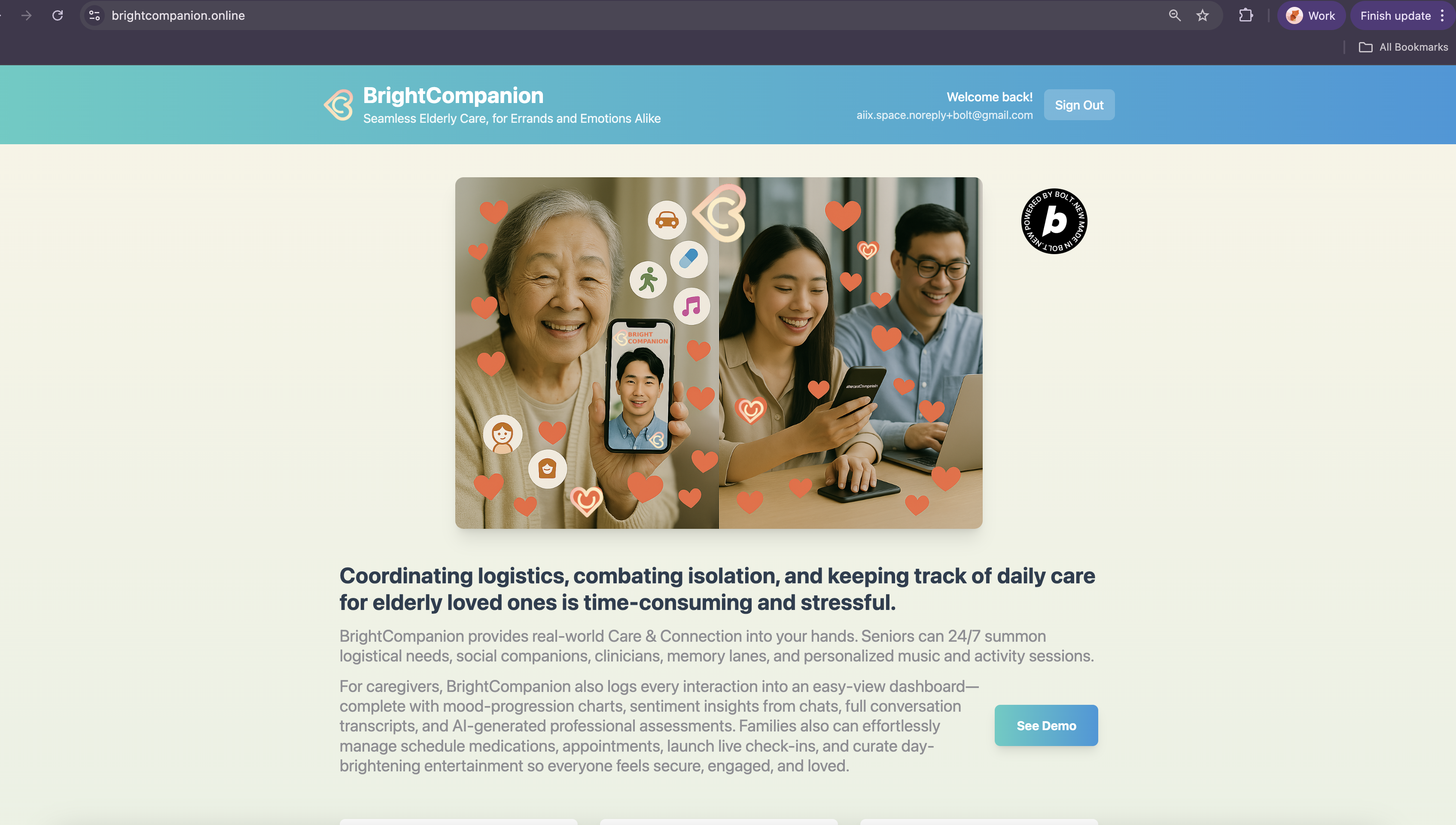
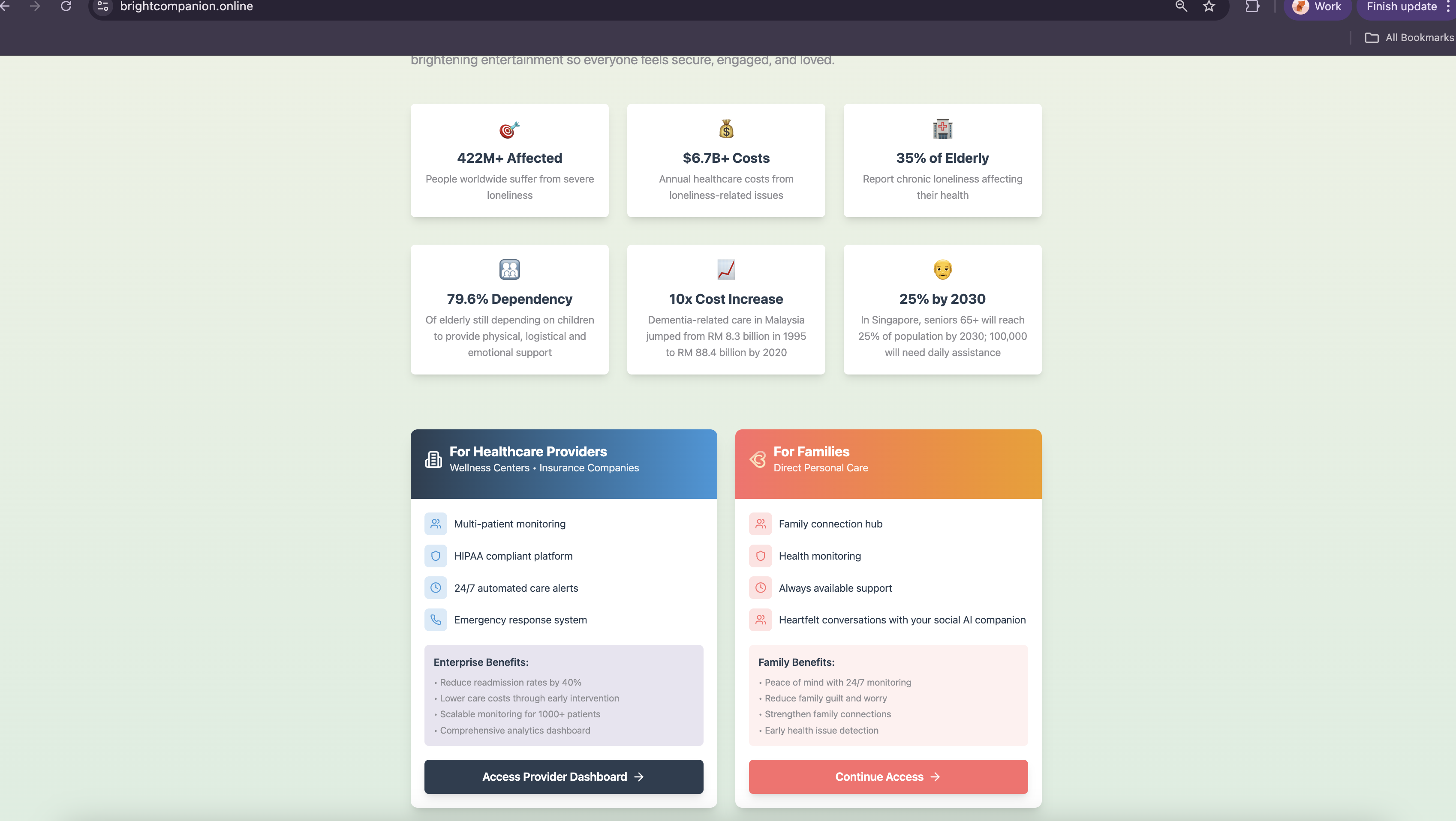
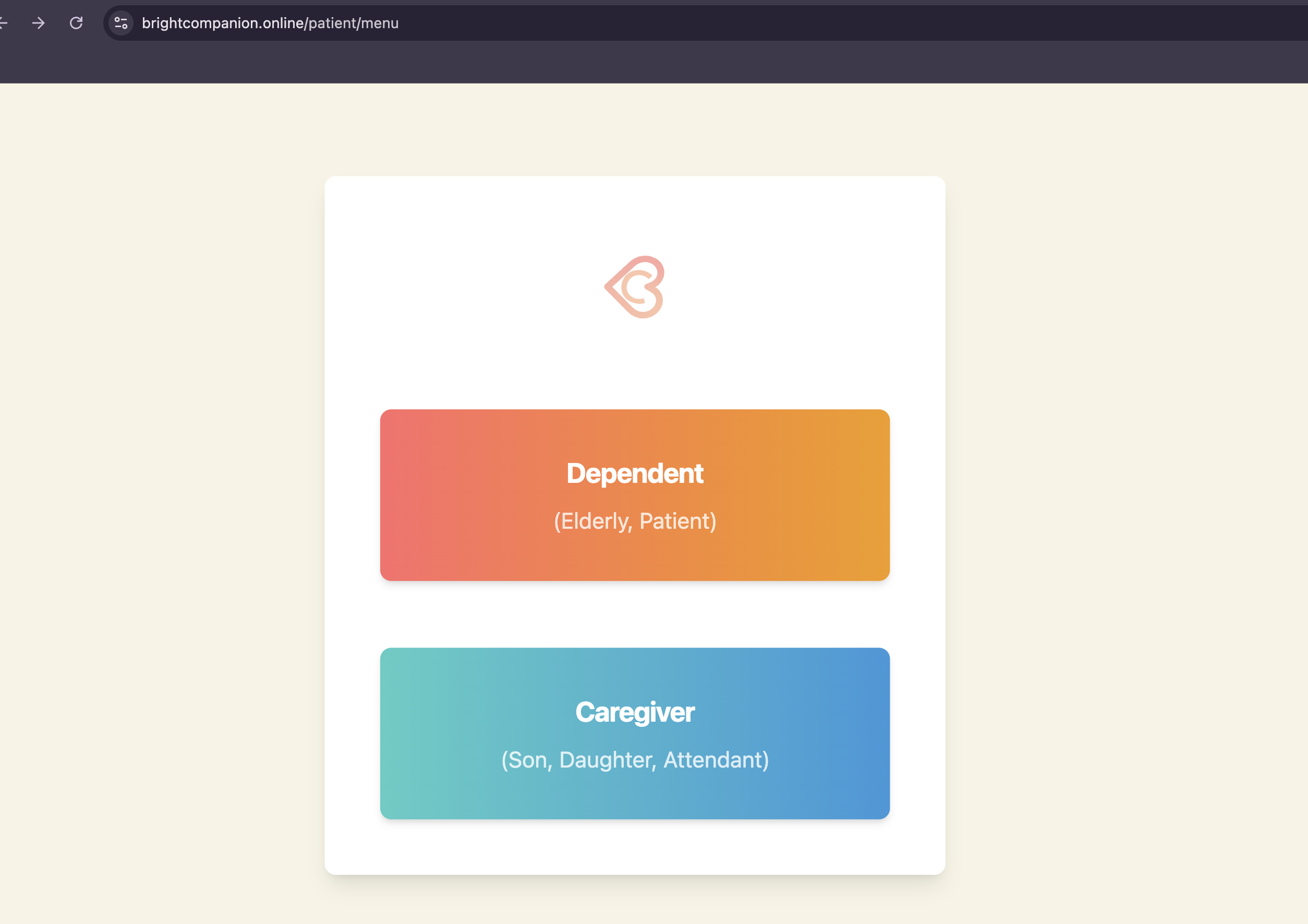
BrightCompanion is an app that helps caretaker(child/daughter/etc) and elderly(dependent).
Elderly panel
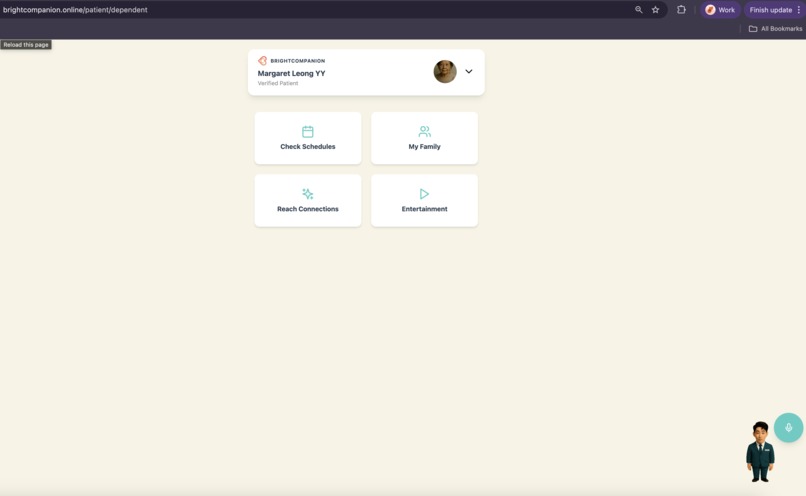
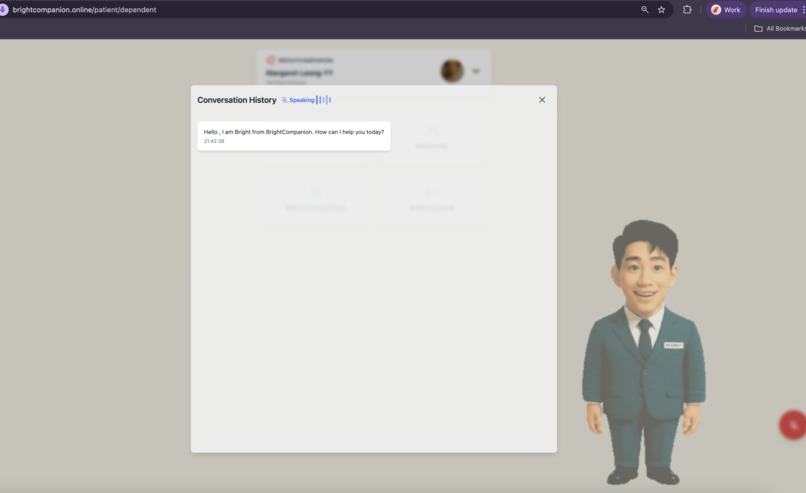
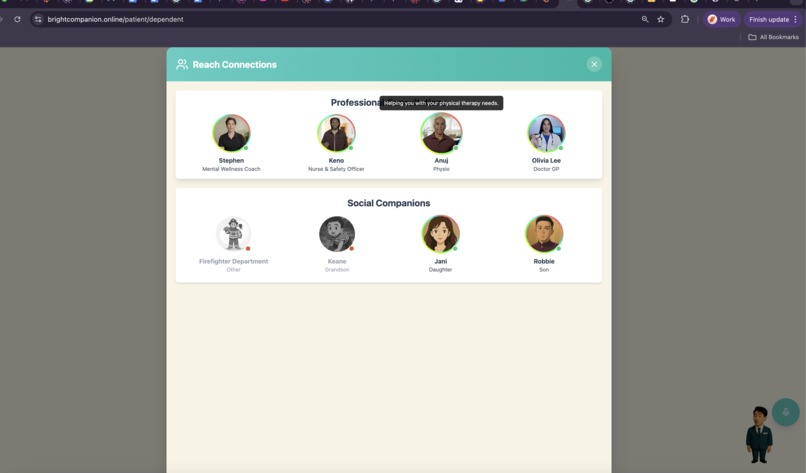
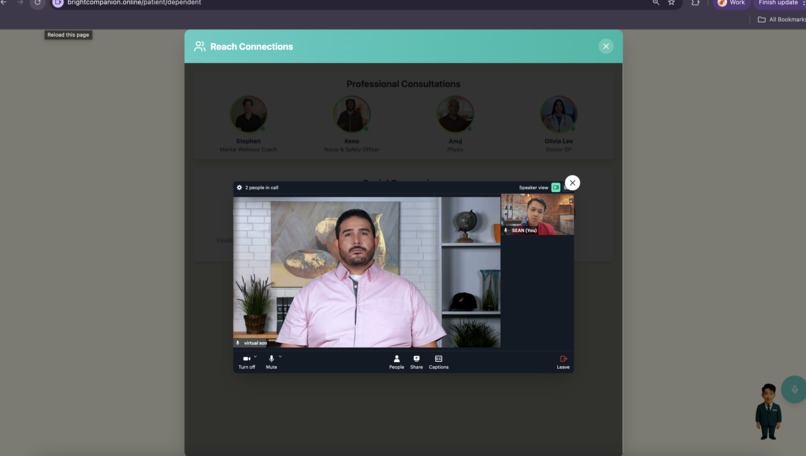
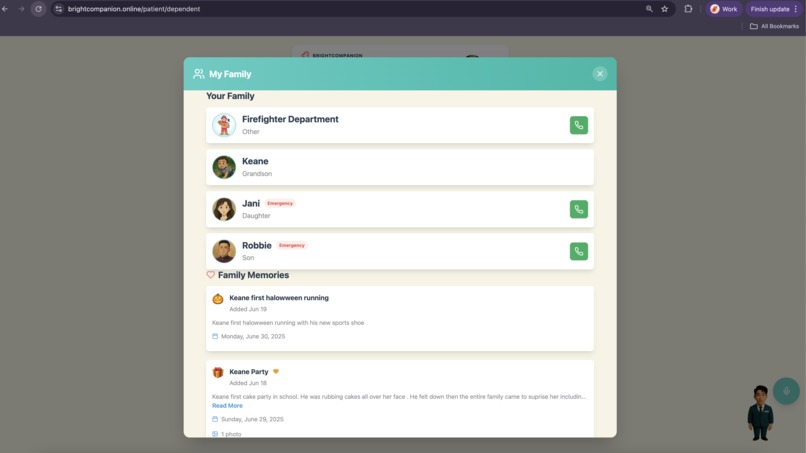
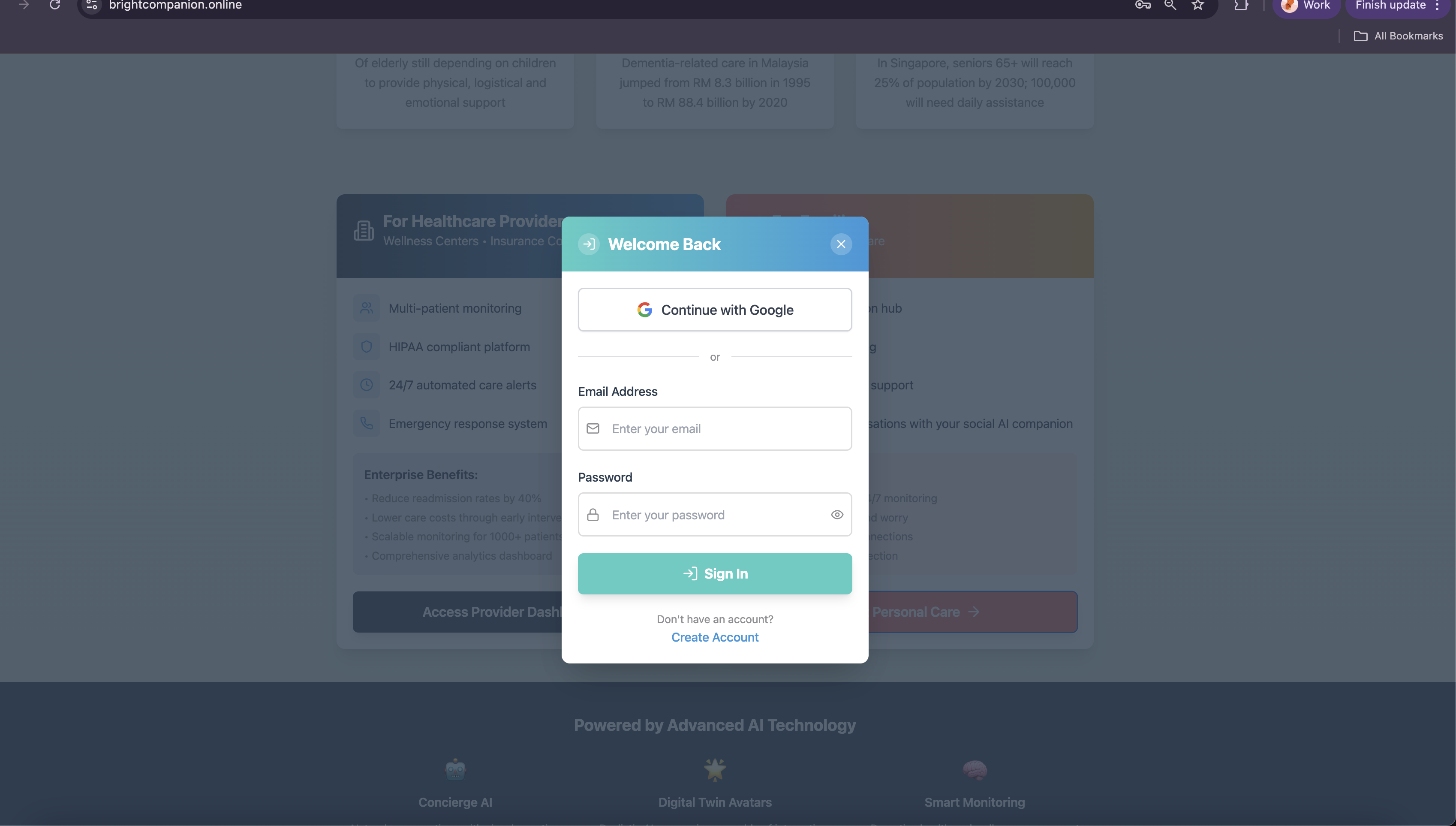
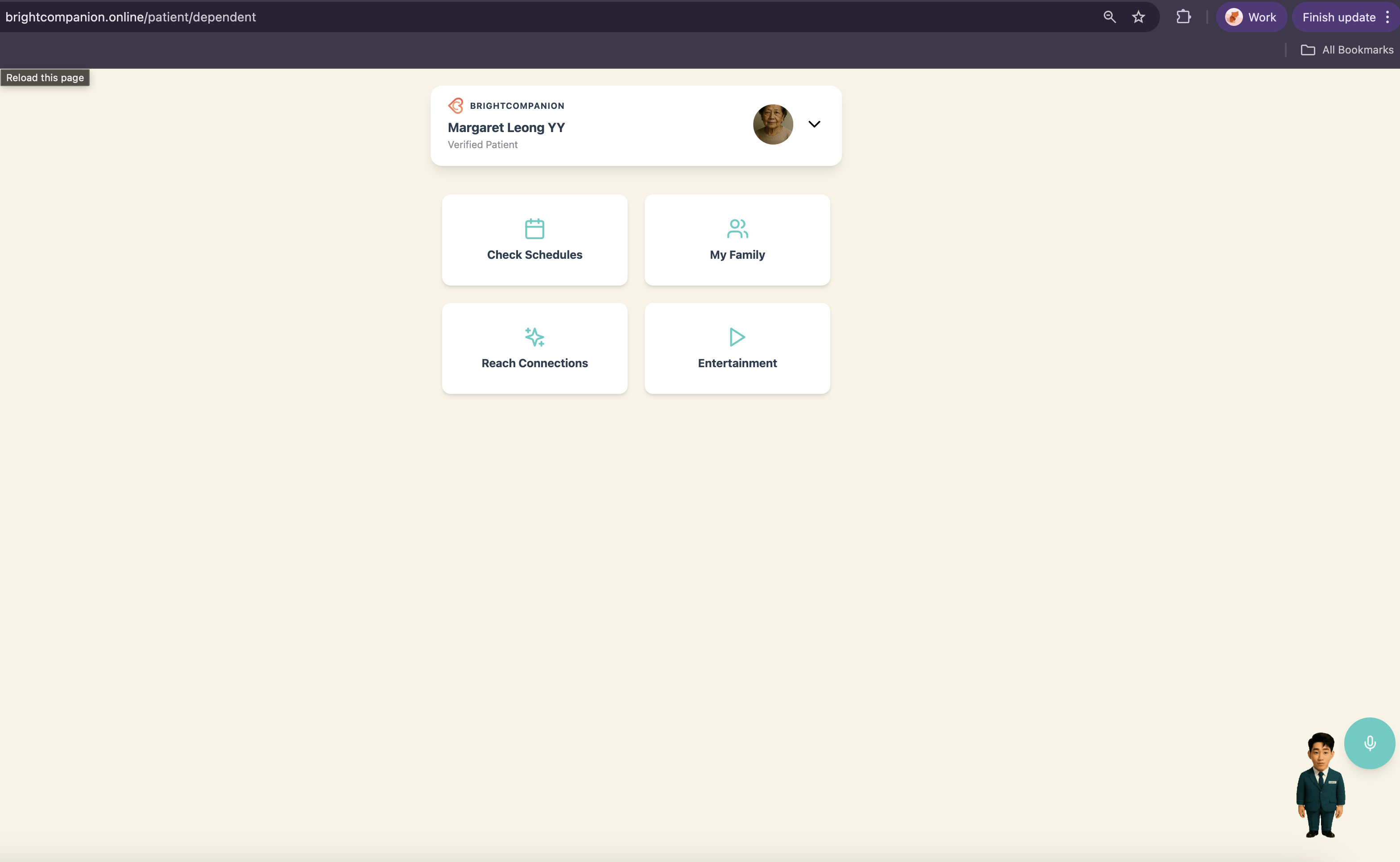
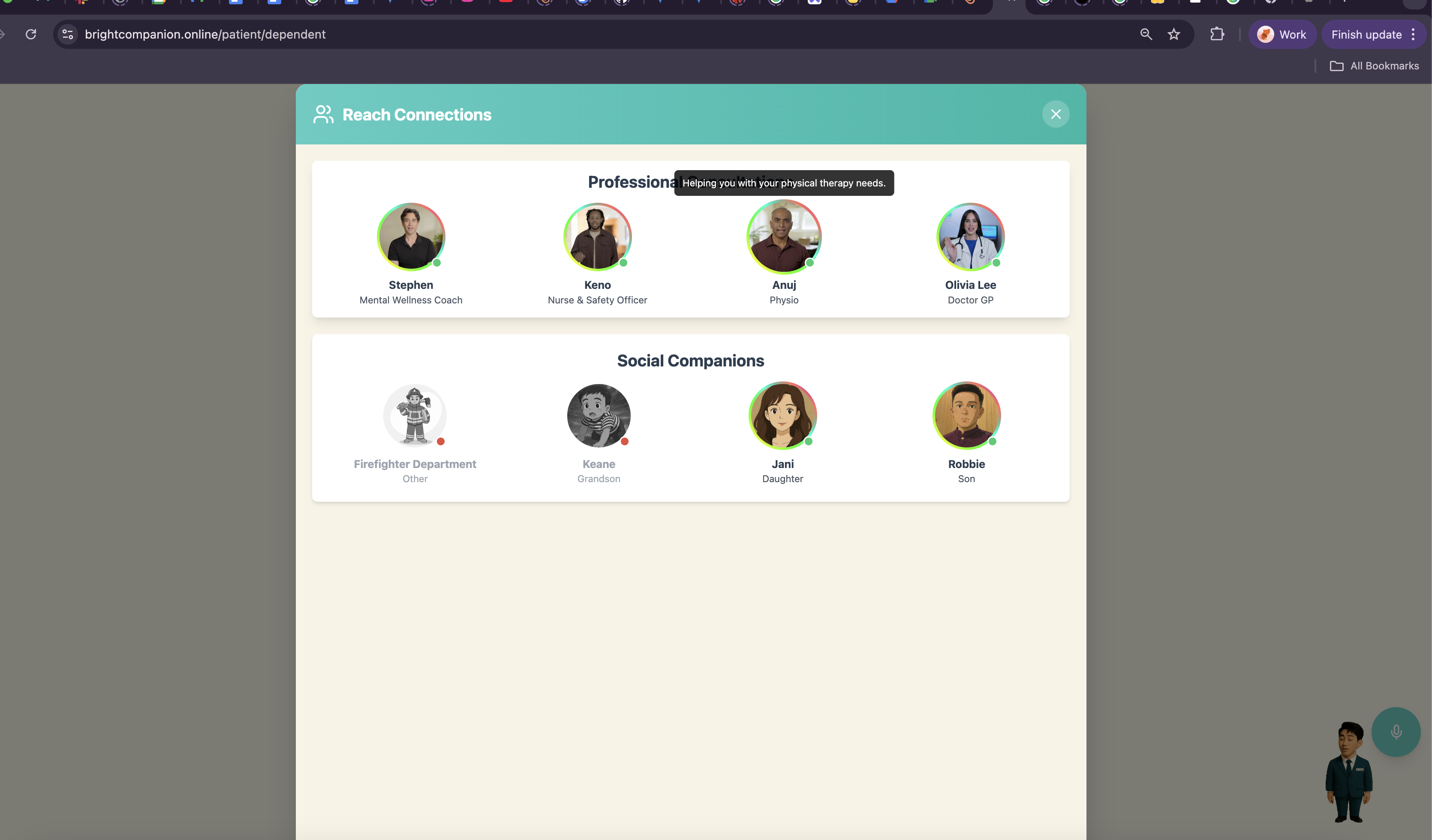
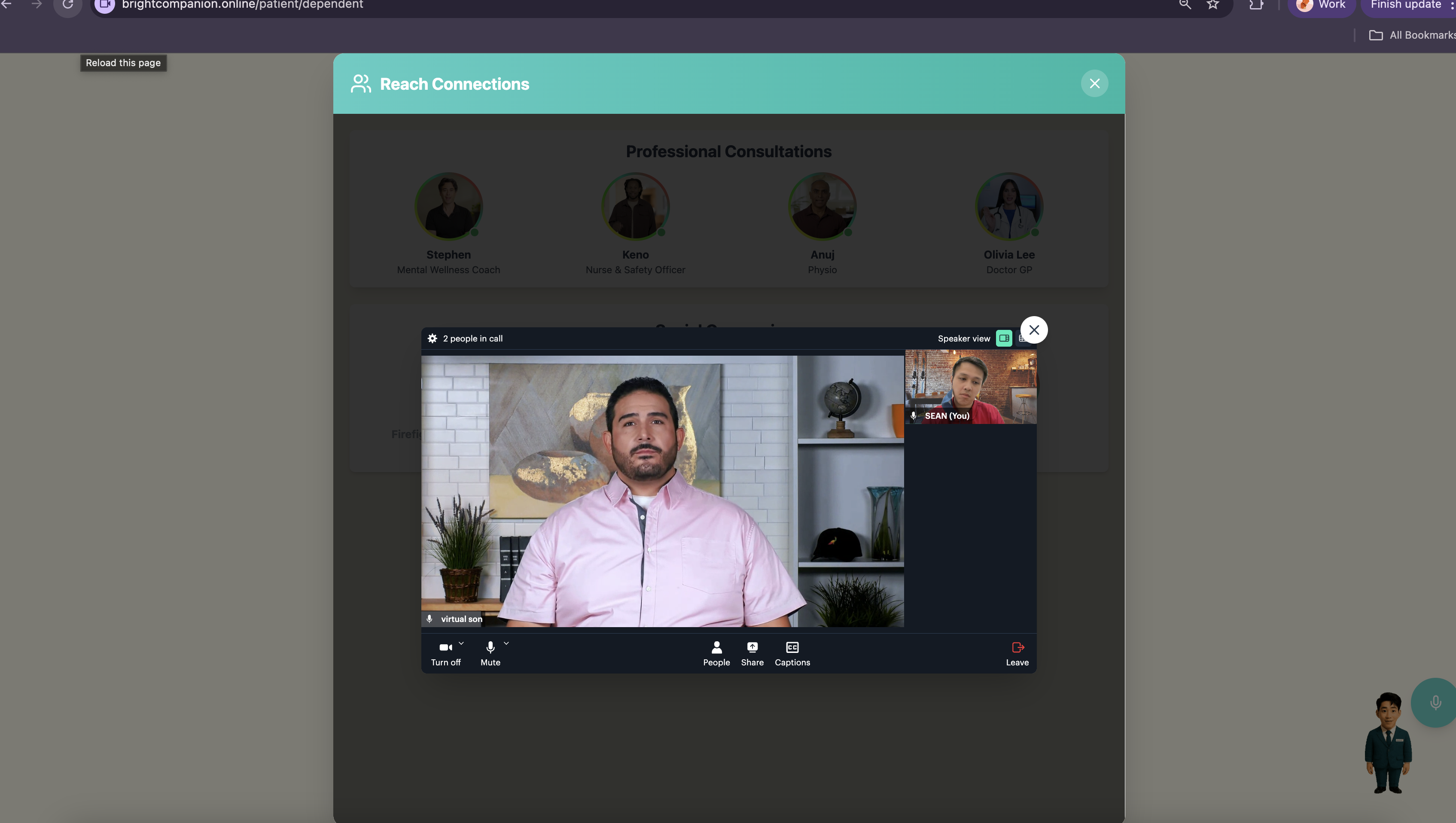
BrightCompanion provides seniors with a simple, accessible interface panel designed for ease of use. Through this panel, they can connect with professional agentic AI companions that offer continuous support. These AI companions help visualy monitor safety, perform basic wellness checks, and engage in conversations to support both physical and mental well-being. They have different specialized roles from formal to informal support roles.
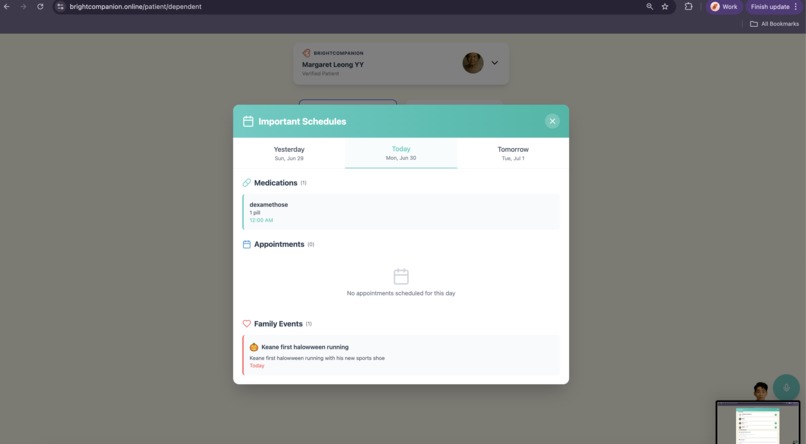
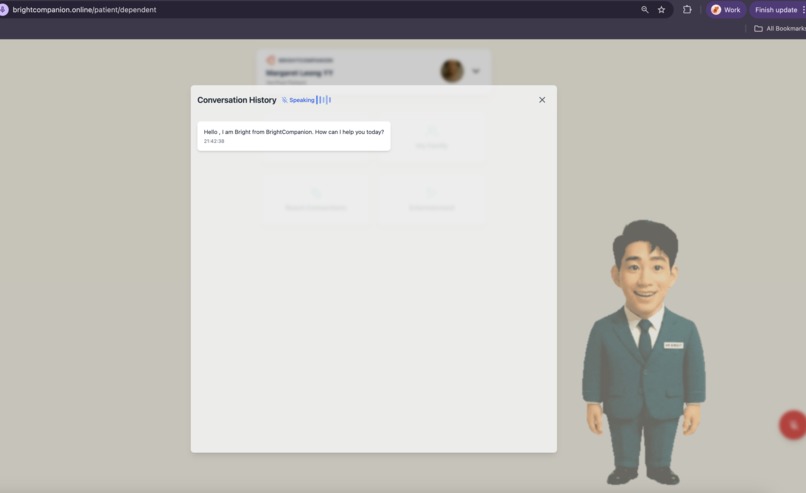
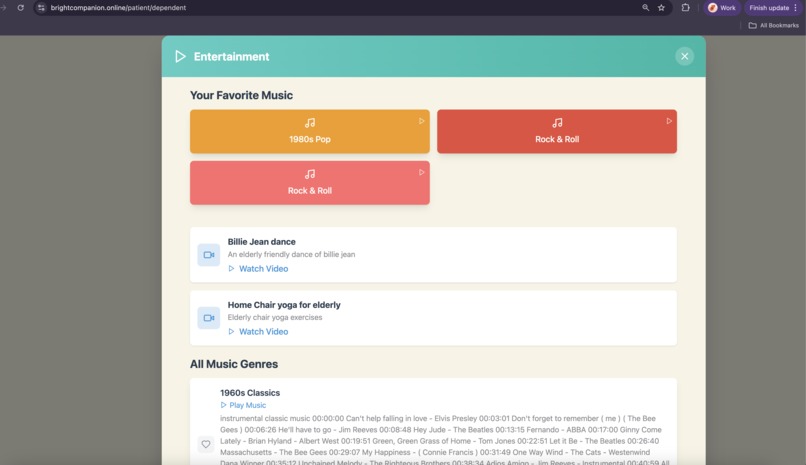
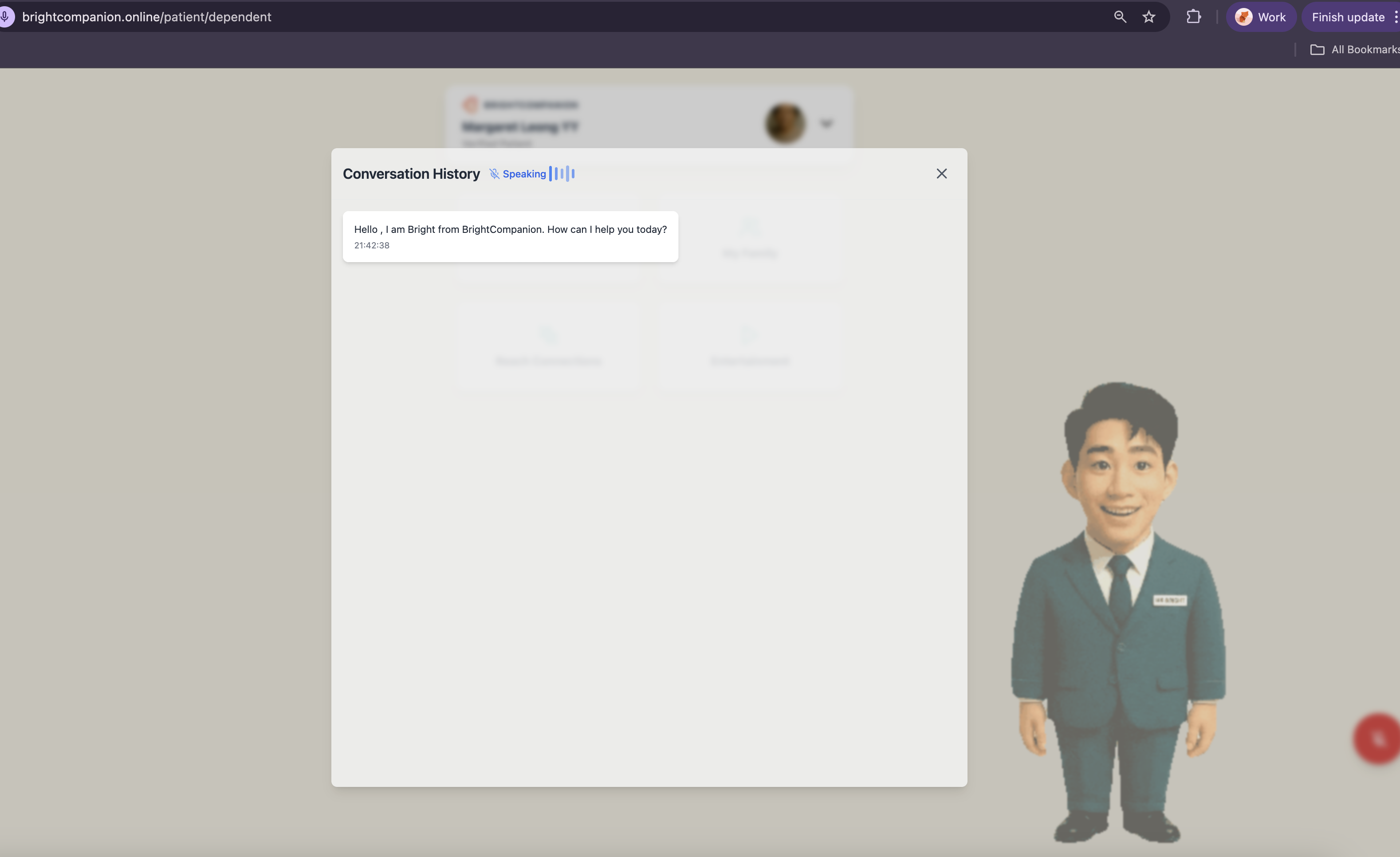
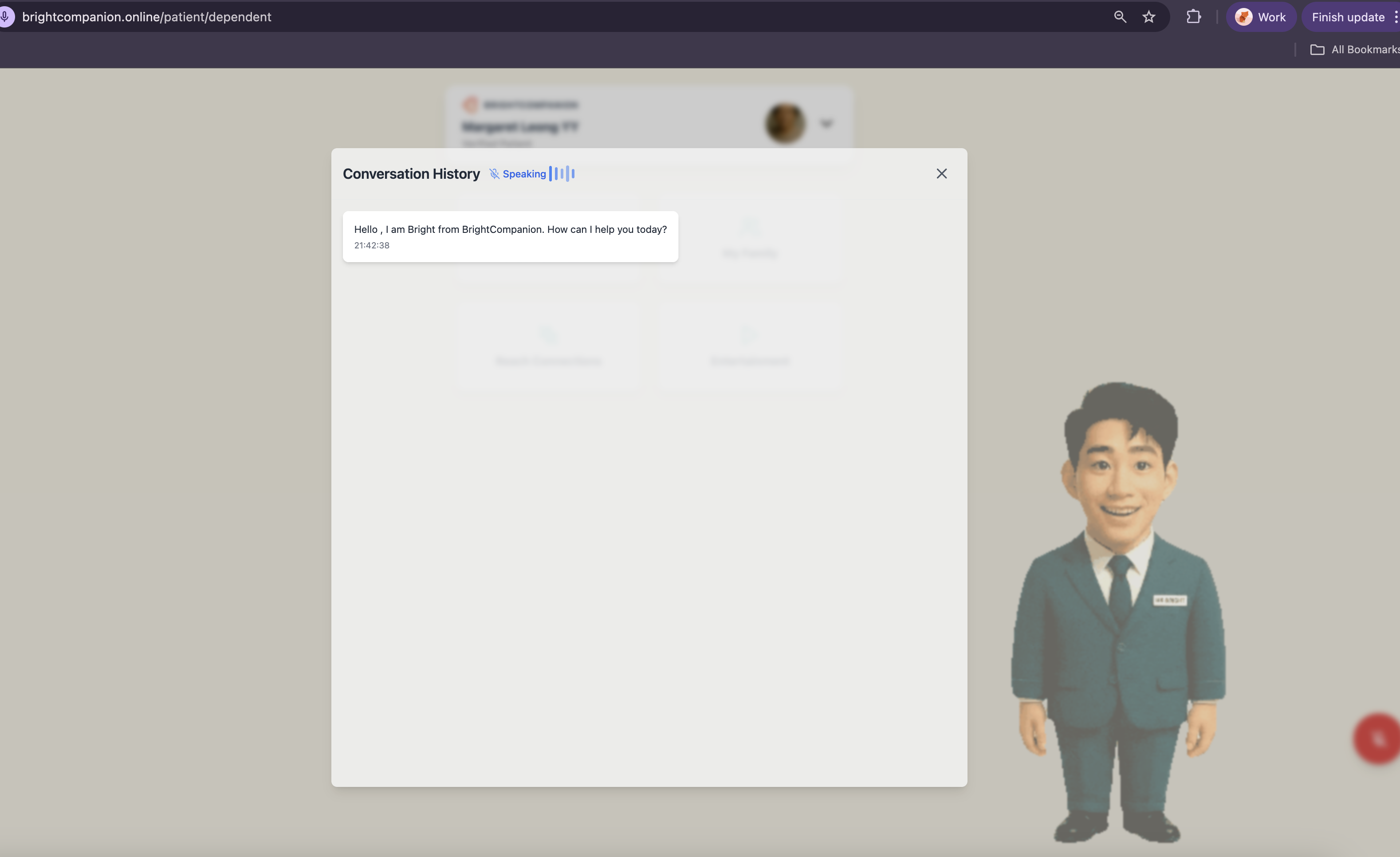
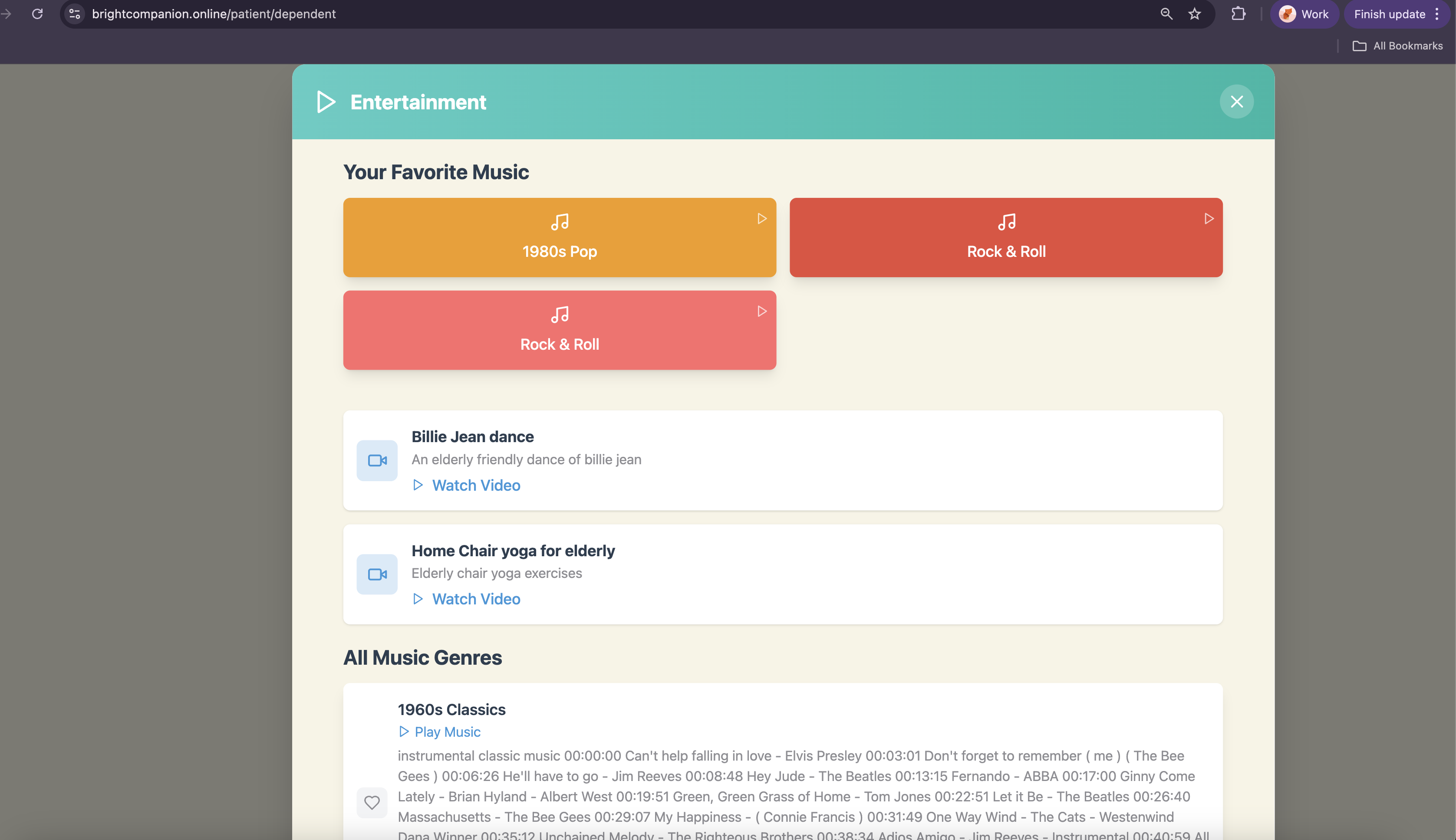
Seniors also have access to a voice-activated AI concierge. This intelligent assistant can help them recall personal details, remember appointments and medications, and summon emergency help instantly. It can also play entertainment and engage in natural conversations, acting as a friendly and helpful presence. Crucially, these agentic AIs are equipped to call upon various tools and functions to provide comprehensive and responsive assistance, making the experience truly seamless and supportive.
Caretaker panel
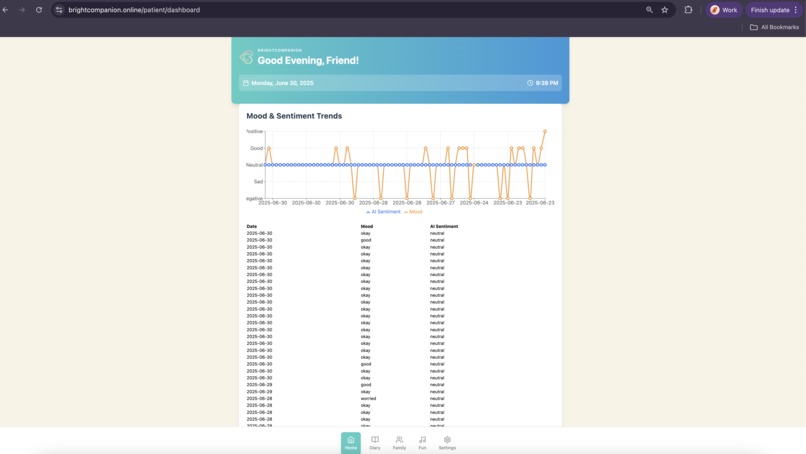
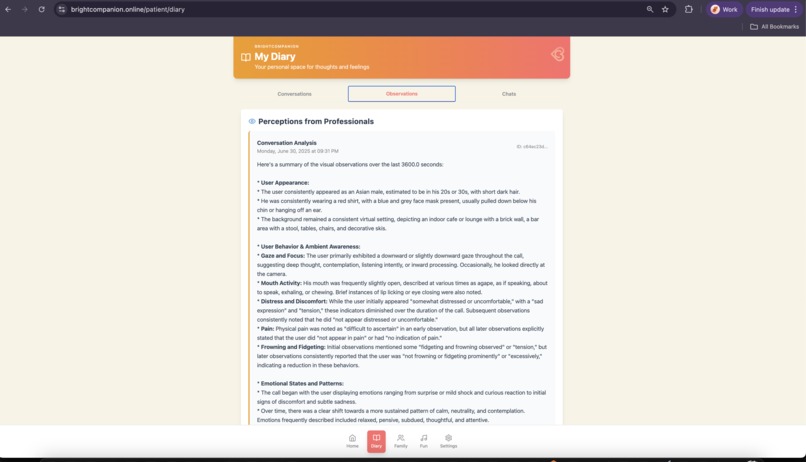
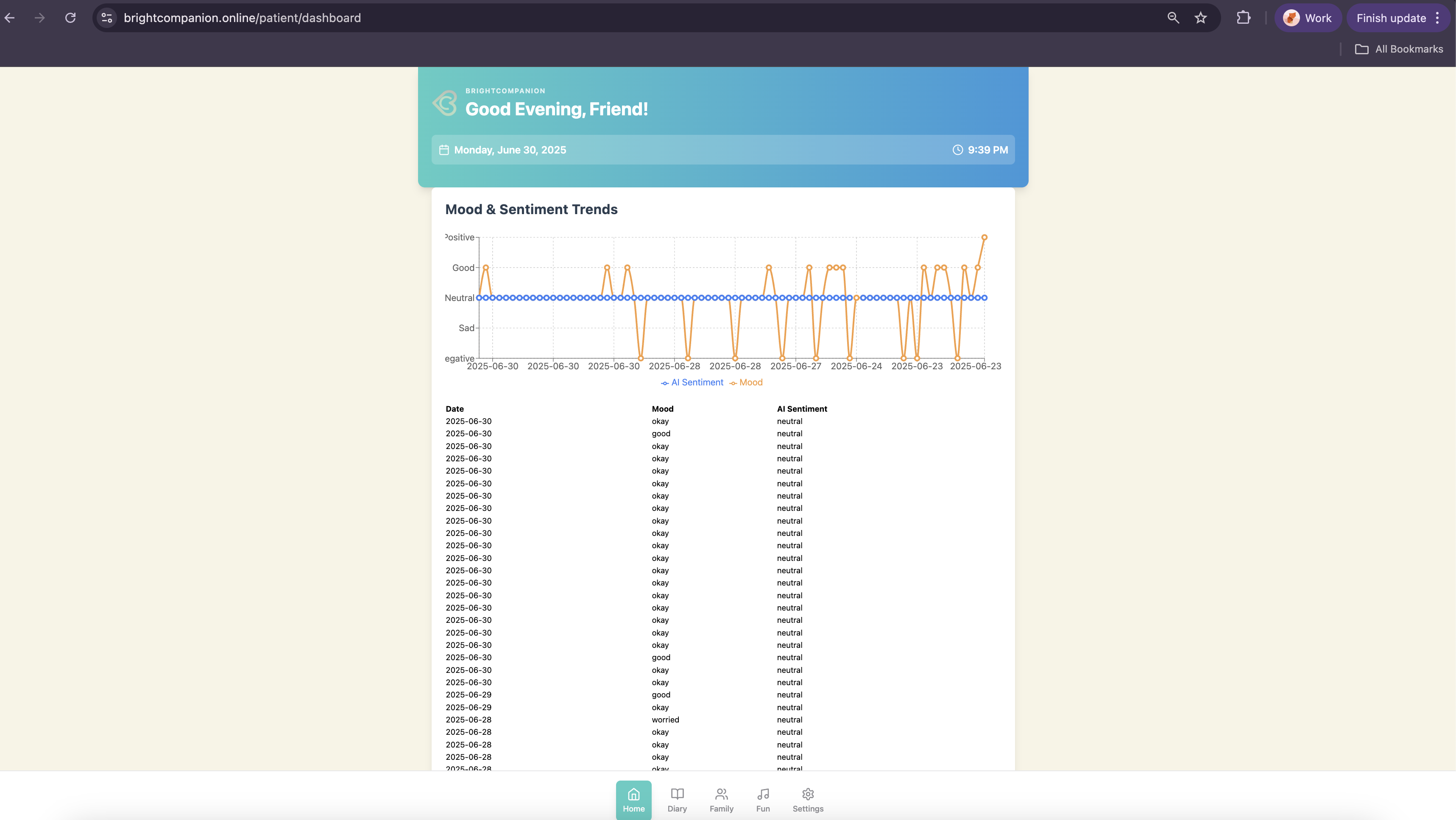
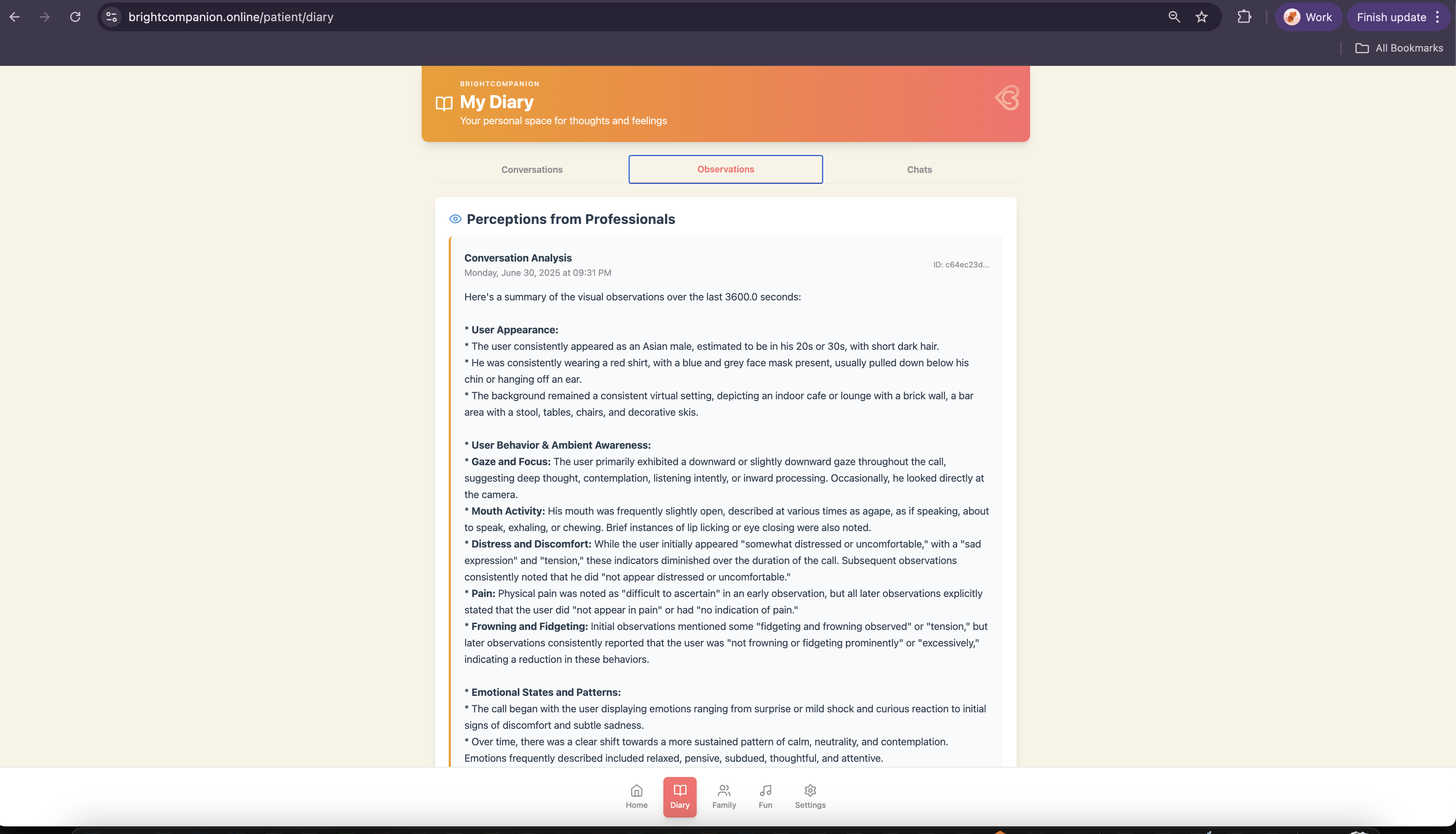
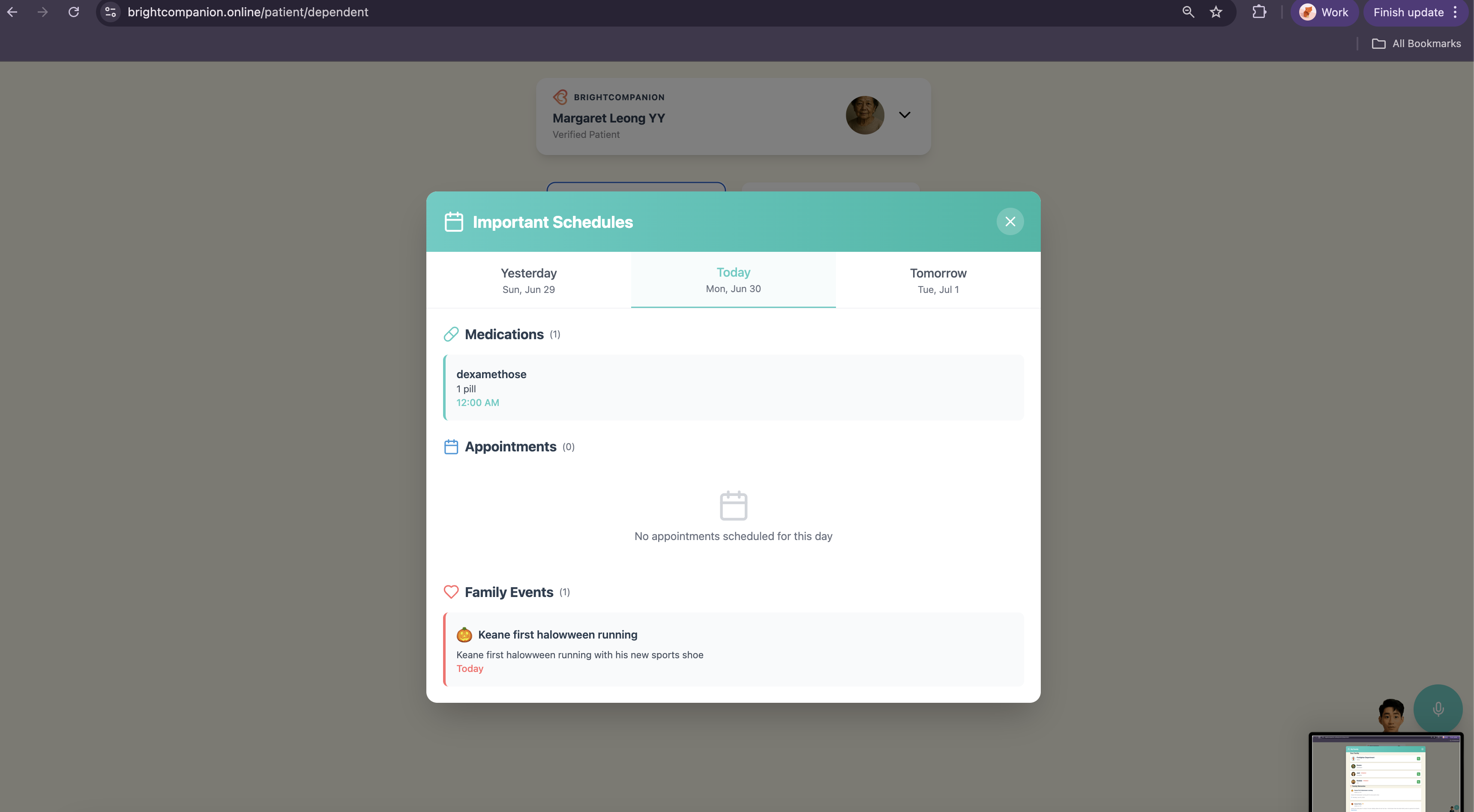
BrightCompanion empowers caretakers with a comprehensive suite of tools to manage and enhance elderly care. Caretakers can review conversation history and observations from the AI, gaining insights into the senior's daily interactions and well-being. The platform also identifies and highlights sentiment patterns, offering a deeper understanding of emotional states over time.
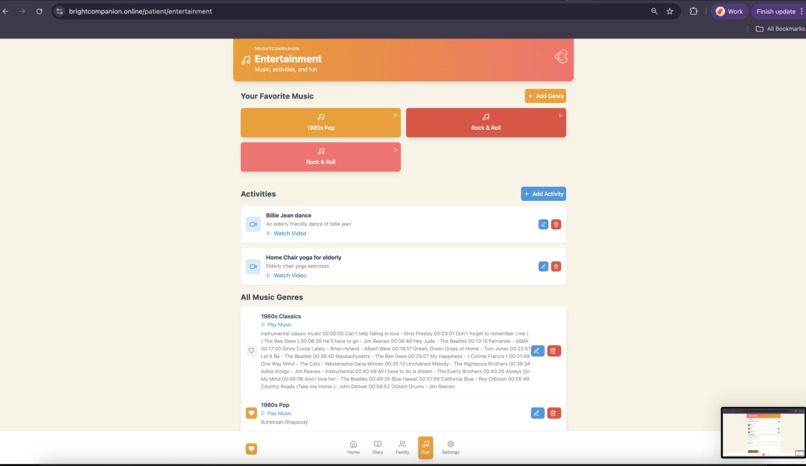
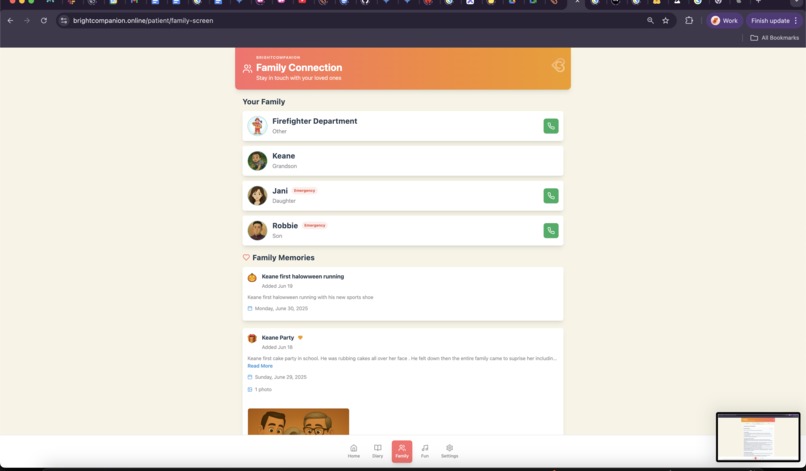
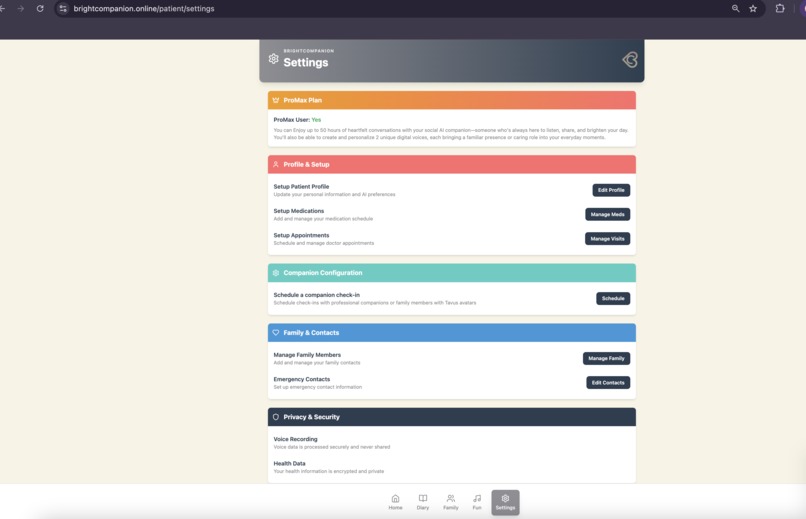
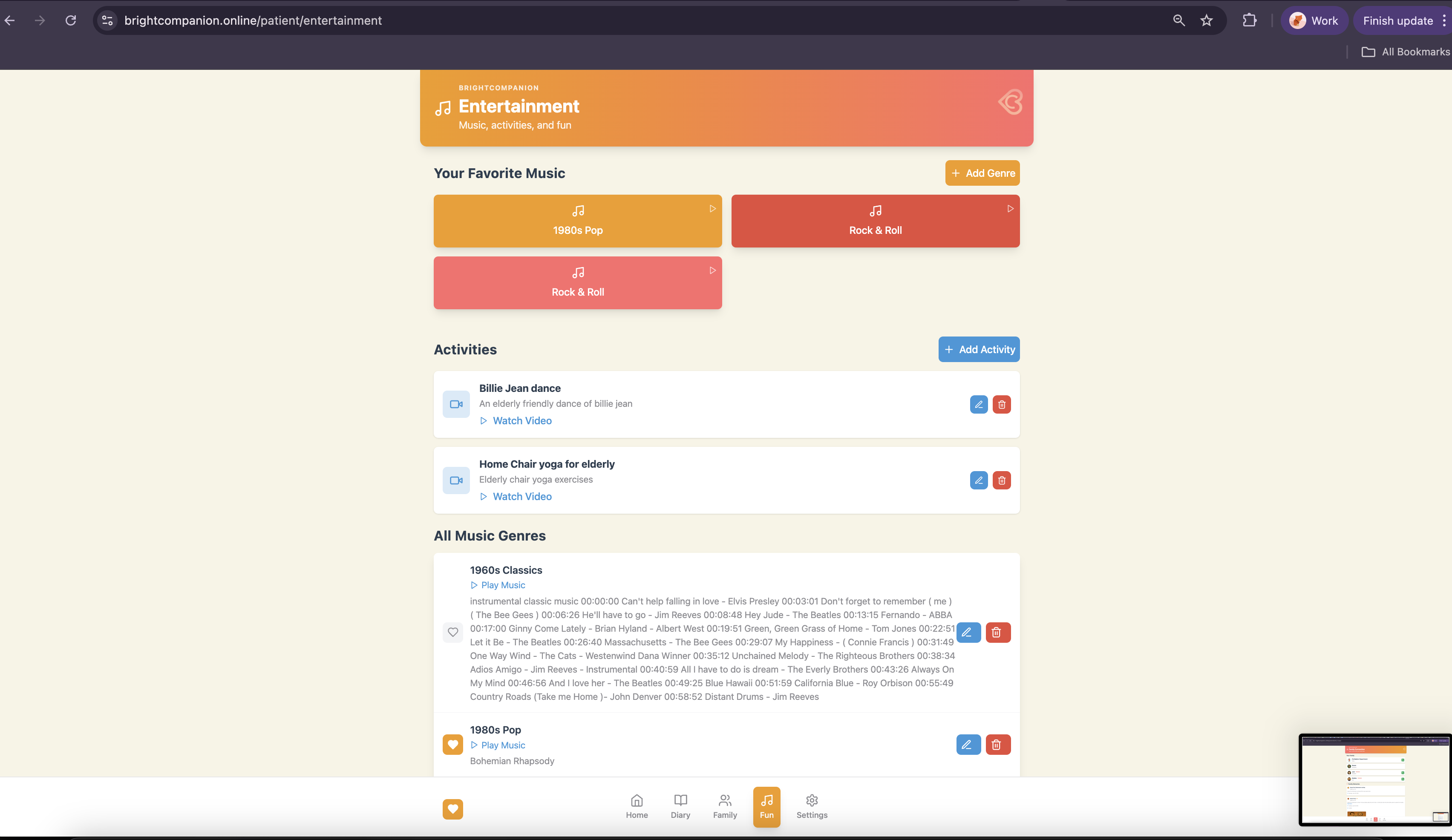
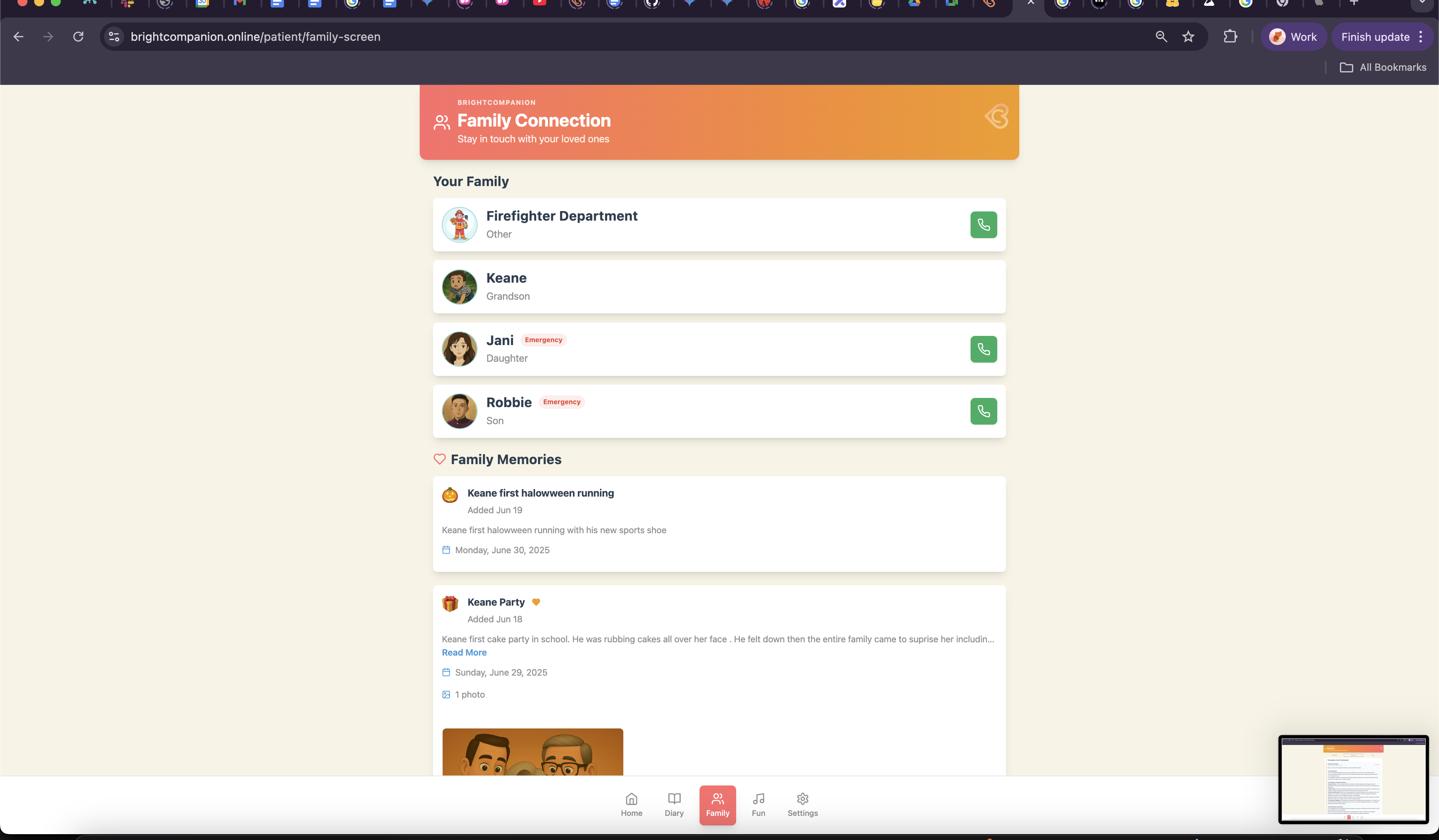
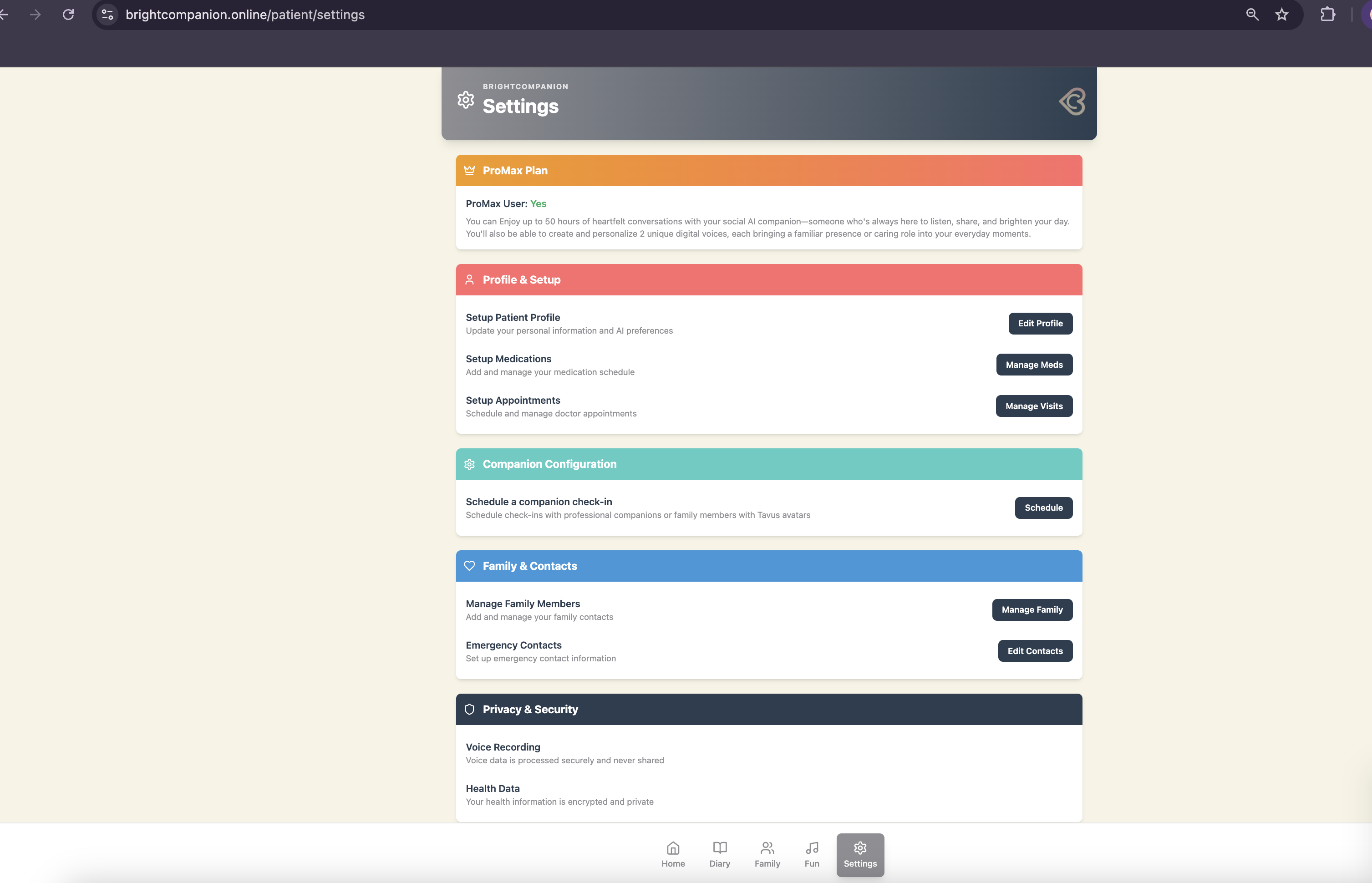
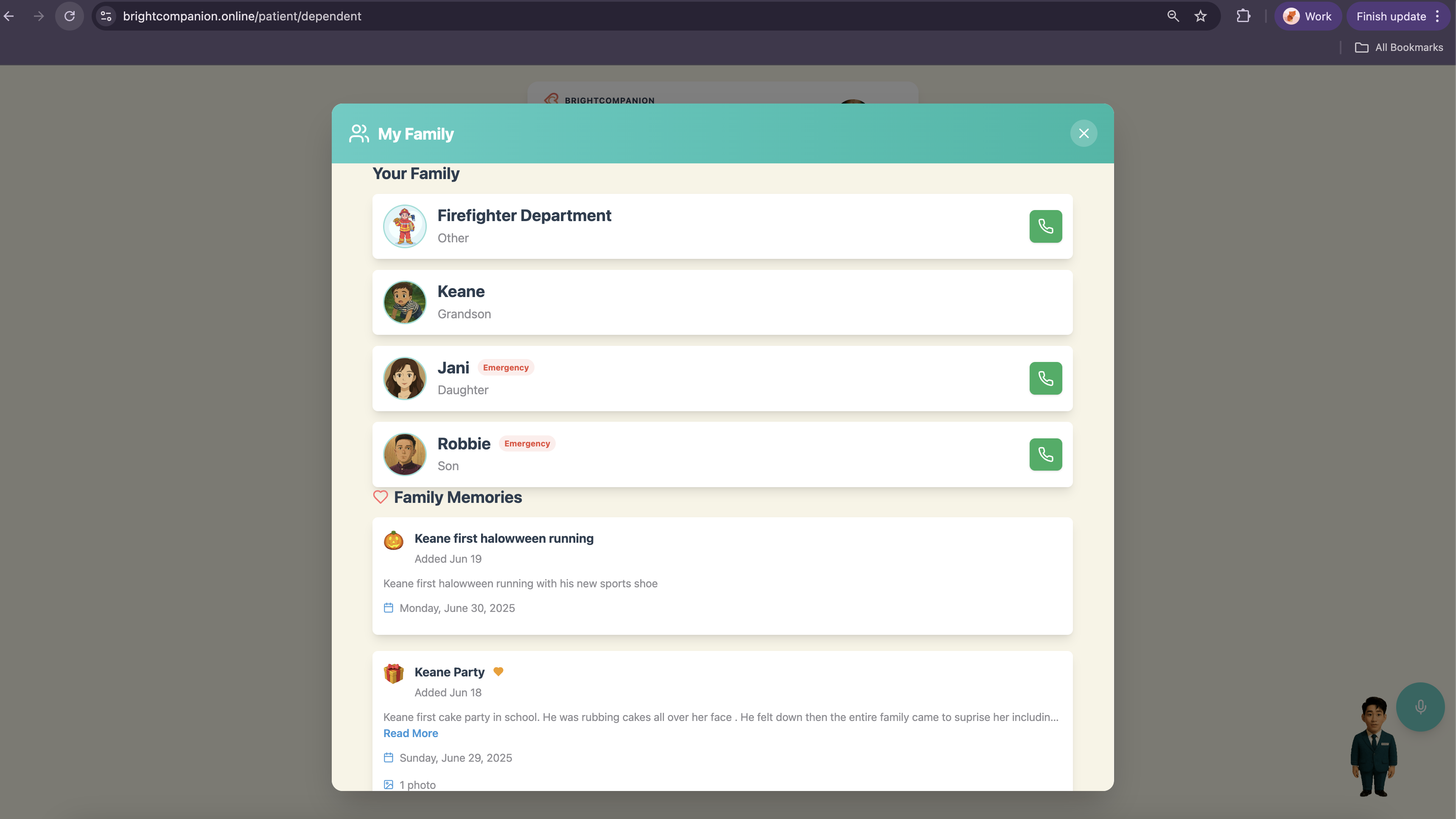
Beyond insights, BrightCompanion provides robust management features. Caretakers can manage scheduled appointments, medication reminders, and family events, ensuring critical dates are never missed. They can also curate entertainment options tailored to the senior's preferences. Furthermore, the platform allows for easy updates to family information and emergency contacts, ensuring all crucial details are current and accessible.
How we built it
The development ecosystem for BrightCompanion is centered around Bolt, which serves as my primary application development platform, specifically utilizing its "vibedcoding" capabilities. Bolt allows me to rapidly prototype and build the core functionalities of our application, providing a highly efficient environment for iterative development.
While Bolt handles the foundational application logic and front-end generation, I augment its capabilities by working with ChatGPT for ideation, code generation snippets, and problem-solving, and VS Code offline for fine-tuning the codebase, managing version control, and handling any complex custom logic that requires a traditional coding environment. This hybrid approach allows me to leverage the speed and AI-driven assistance of Bolt, while retaining the granular control and robust features of a professional IDE.
To power BrightCompanion's diverse functionalities, I integrate a suite of powerful third-party tools:
Stripe manages all payment processing, ensuring secure and seamless transactions for subscriptions or premium features.
Twilio provides the backbone for real-time communication, enabling features like SMS notifications for caregivers and potential emergency calling functionalities.
ElevenLabs is crucial for generating the highly natural and empathetic voice for AI companions and concierge, enhancing the user experience with realistic voice interactions.
Tavus empowers me to create personalized video messages, potentially for onboarding, important announcements, or even custom messages from caregivers to seniors, adding a deeply human touch.
Supabase acts as my robust backend-as-a-service, handling database management, authentication, and real-time data synchronization, streamlining our infrastructure development.
Claude (and other LLMs like GPT from OpenAI, as mentioned previously) is used for complex natural language understanding, conversational AI logic, and for driving the "agentic AI" capabilities that allow our virtual companions to perform various tasks and interact intelligently.
Challenges we ran into
Developing BrightCompanion as a solo founder presented significant hurdles, particularly in time management. Juggling all aspects of the project, from ideation and development to integration and testing, while being the sole individual responsible, demanded meticulous planning and prioritization.
Beyond the logistical challenges, I also faced a distinct technical challenge related to AI prompting. Early in the development process, inefficient or poorly crafted prompts led to a substantial waste of API tokens. This not only impacted progress due to depleted resources but also forced me to pivot and work offline on traditional code while waiting for token access to refresh. This experience underscored the critical importance of mastering effective prompting techniques to optimize AI resource utilization.
Accomplishments that we're proud of
I'm incredibly proud to have realized this end-to-end vision for BrightCompanion entirely on my own, with a full suite of functional features. This project marks a significant personal milestone as it's the first time I've completed a solo project with such comprehensive functionality.
I dedicate this achievement to my late father, whose journey inspired every aspect of BrightCompanion.
What we learned
Developing BrightCompanion taught me crucial lessons in optimizing my workflow, particularly regarding LLM token usage during "vibecoding" sessions. I quickly realized the importance of strategic planning for token consumption to avoid resource depletion and maintain development momentum.
Beyond efficiency, the project also highlighted the power of experimentation in uncovering new possibilities. Through exploring features like ElevenLabs' custom conversational AI, replica creation, and perception models, as well as Tavus's custom TTS and LLM integrations, I discovered powerful functionalities that significantly enhanced BrightCompanion's capabilities. These discoveries weren't part of the initial plan but emerged directly from a willingness to experiment, proving that sometimes the best innovations arise from curious exploration.
What's next for BrightCompanion - Elderly Care
My primary goal for BrightCompanion is to commercialize it to cover development costs and achieve a break-even point. However, more importantly, my aspiration is to make BrightCompanion accessible to other individuals and families who are struggling with similar caregiving journeys or supporting elderly loved ones facing similar challenges. I want this platform to be a beacon of support, bringing the "bright companion" experience to those who need it most.


Log in or sign up for Devpost to join the conversation.