-
-
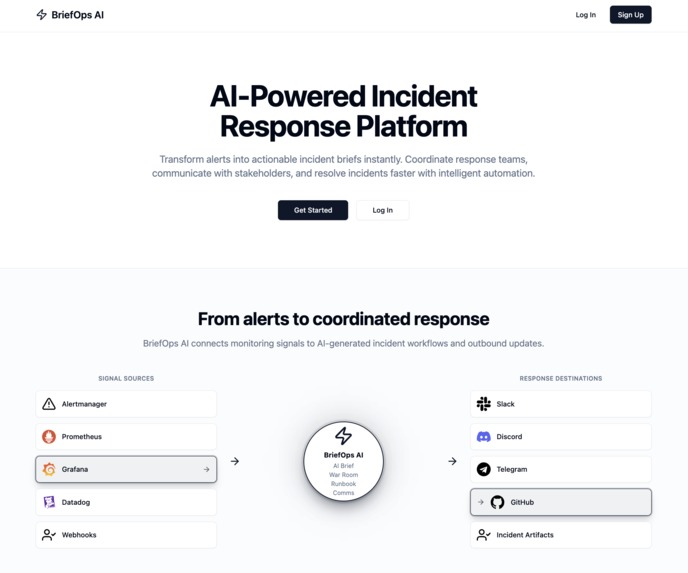
Landing Page
-
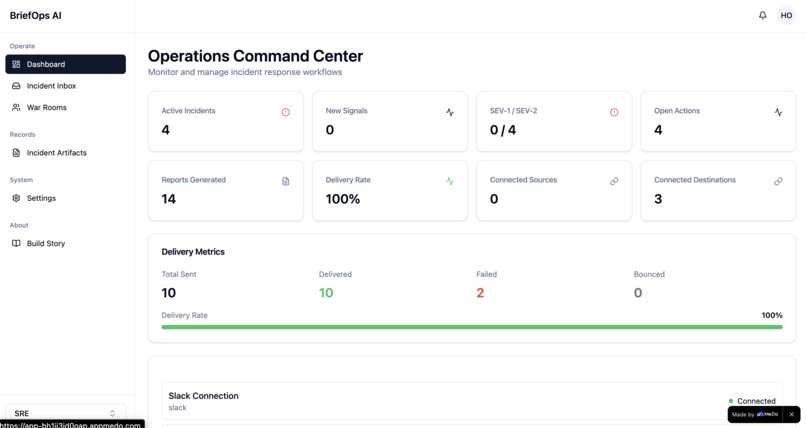
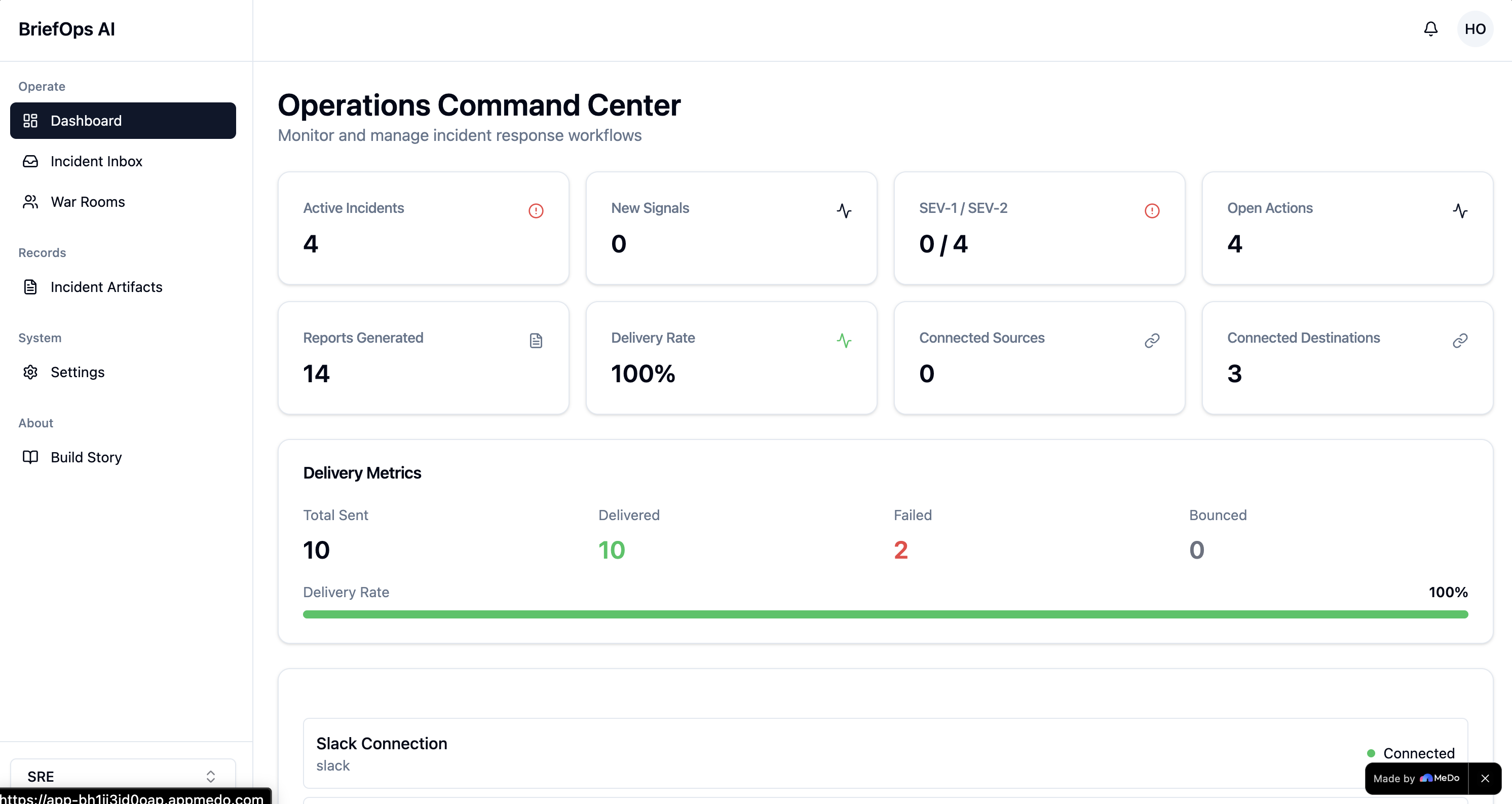
Dashboard
-
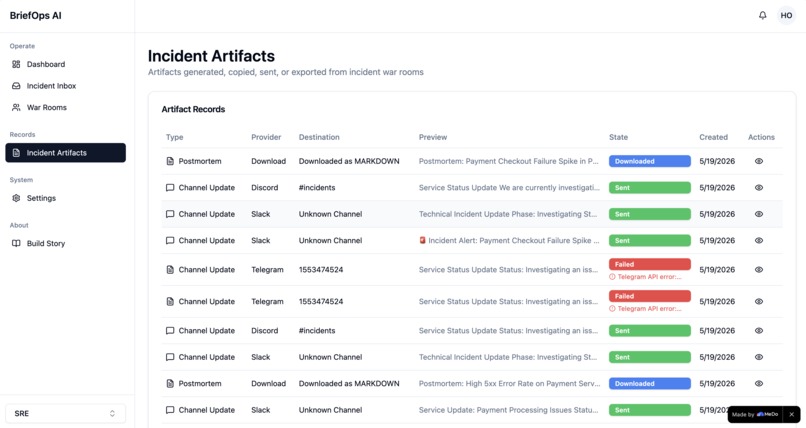
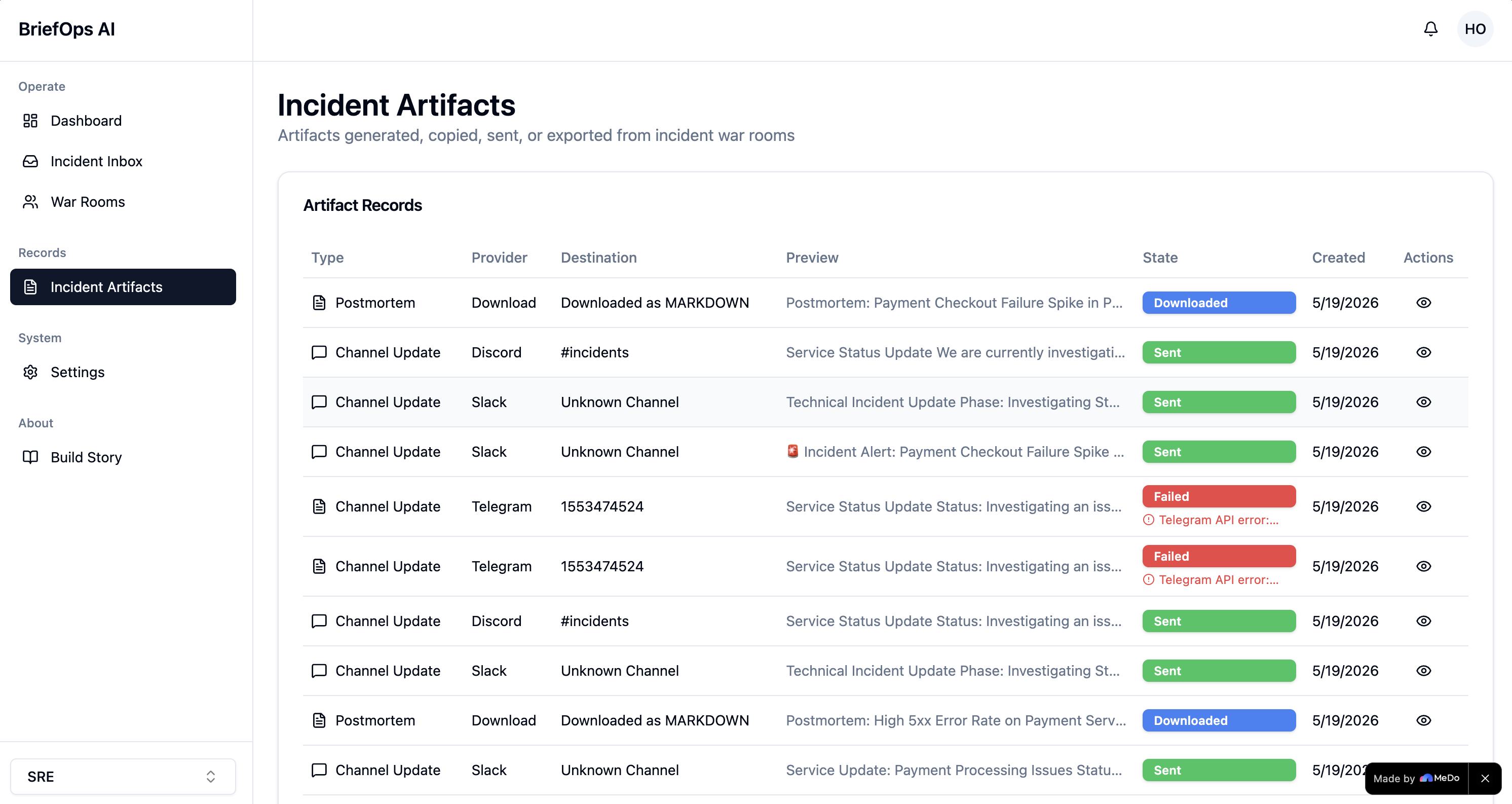
Incident Artifacts
-
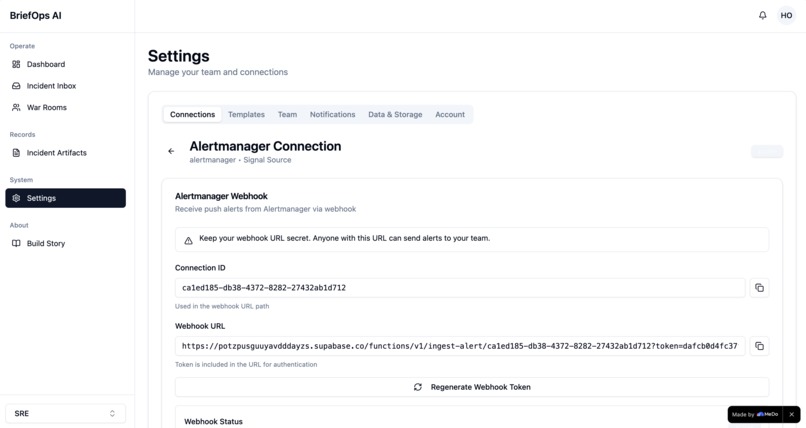
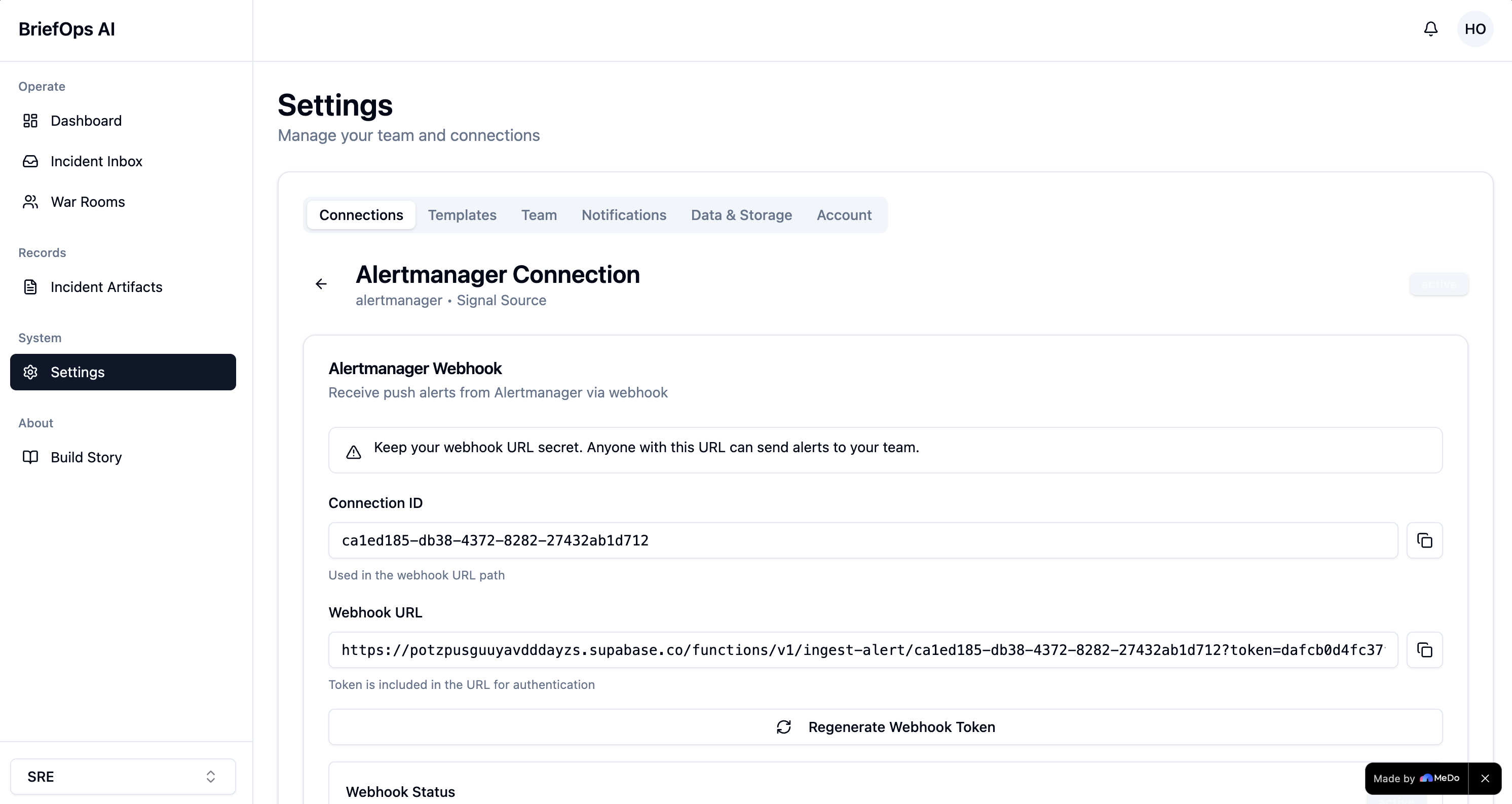
Alertmanager Connection
-
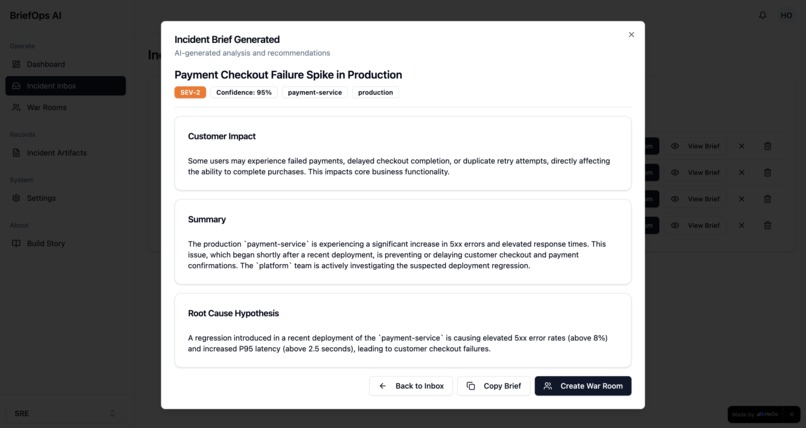
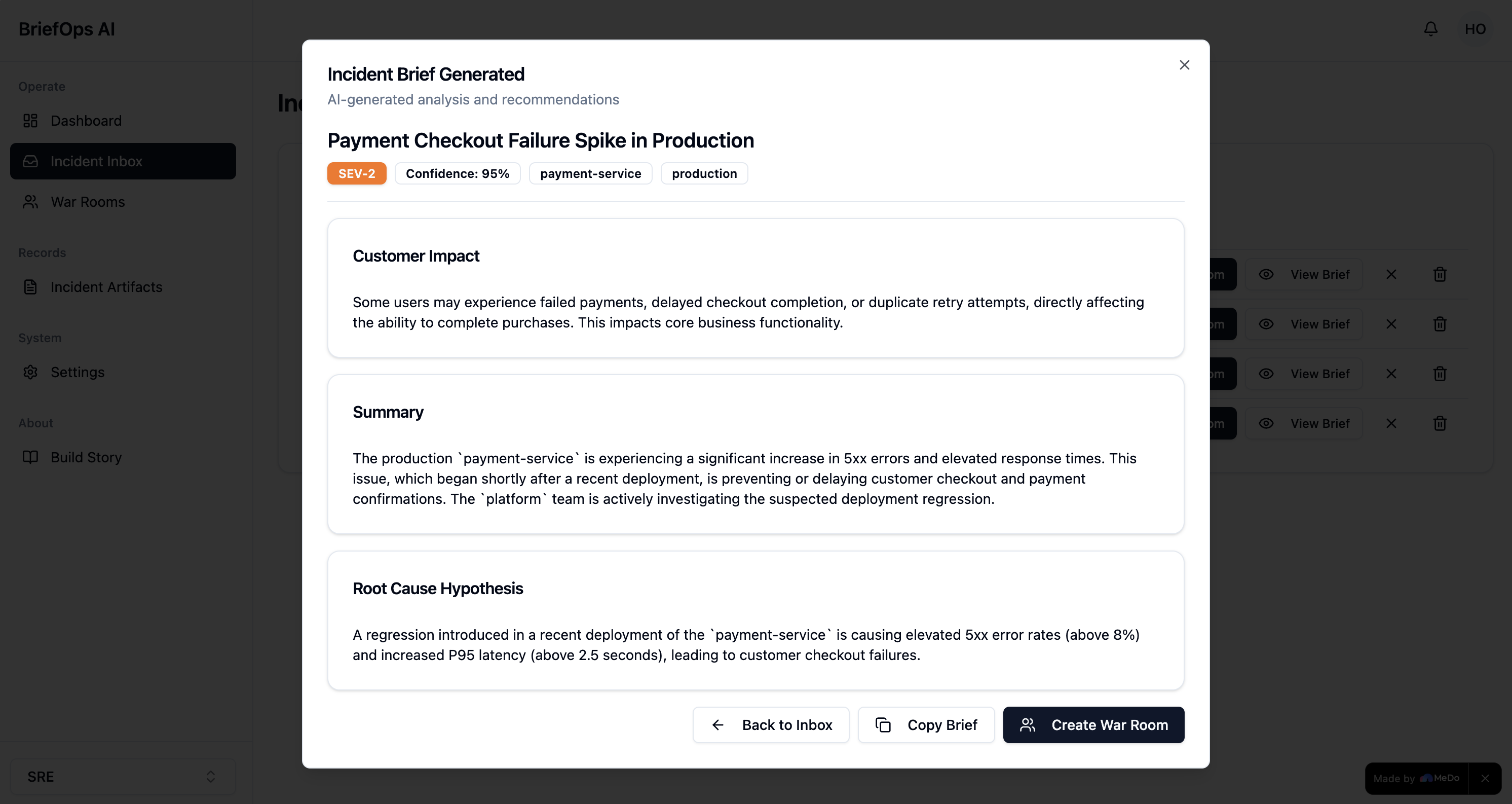
Incident Brief Generated
-
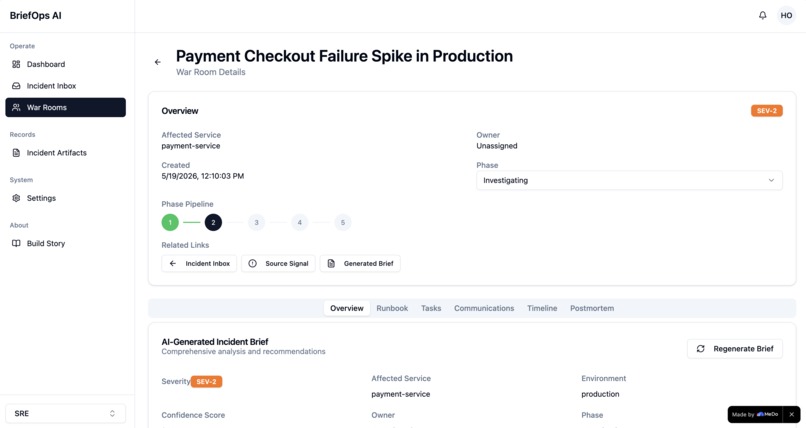
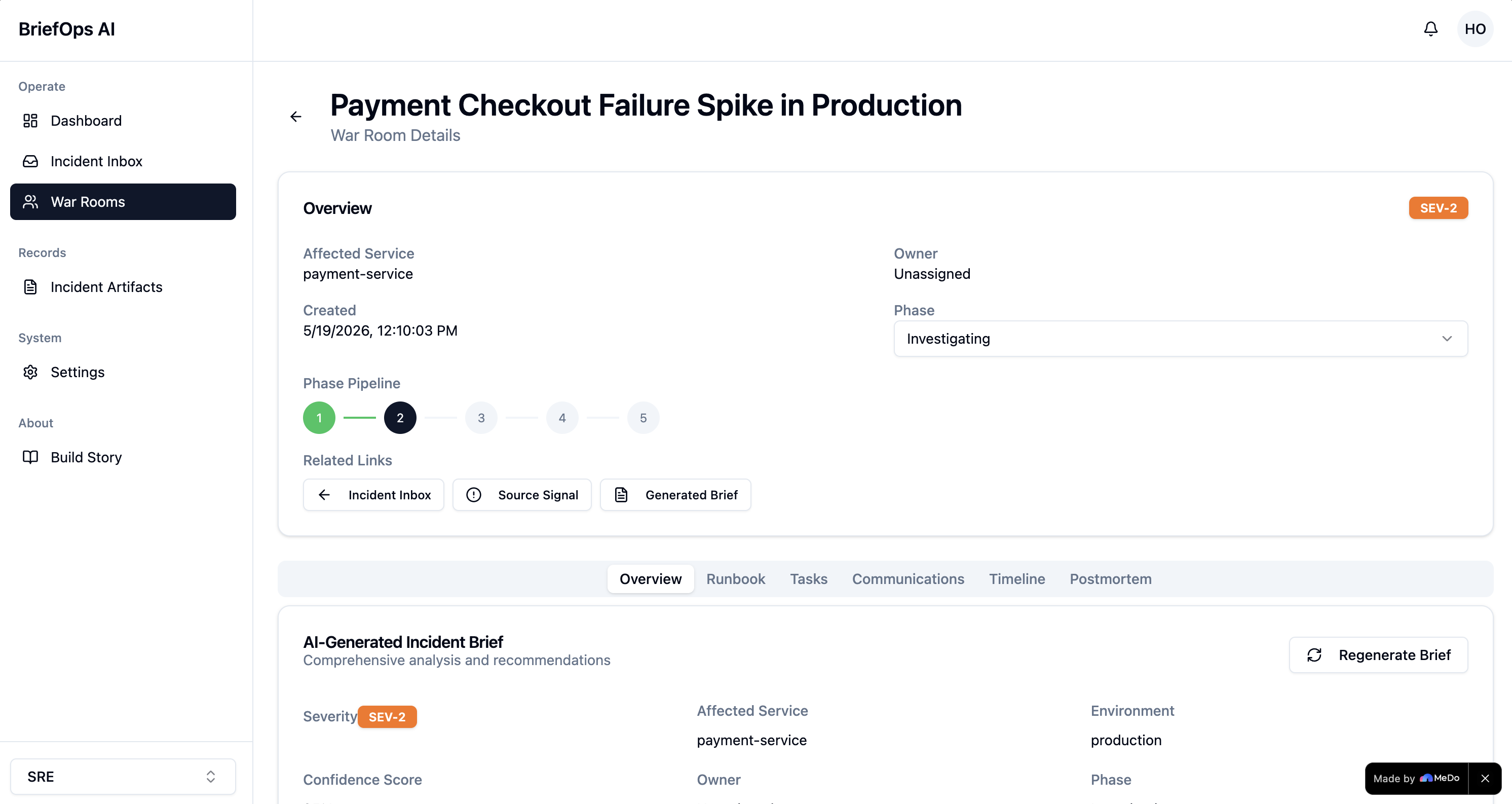
War Room Details
-
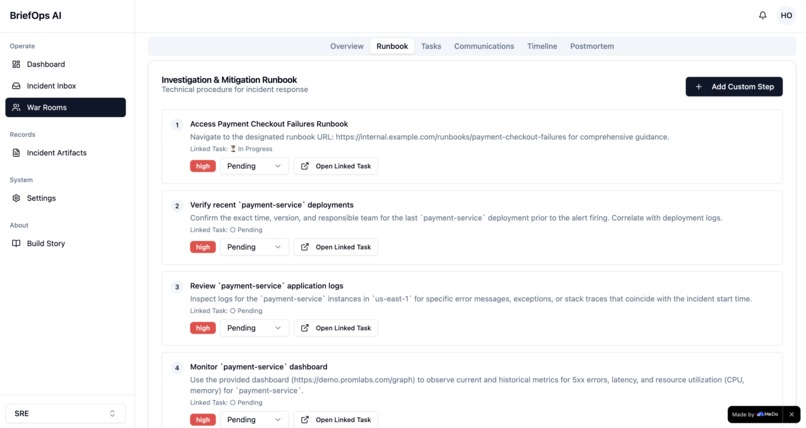
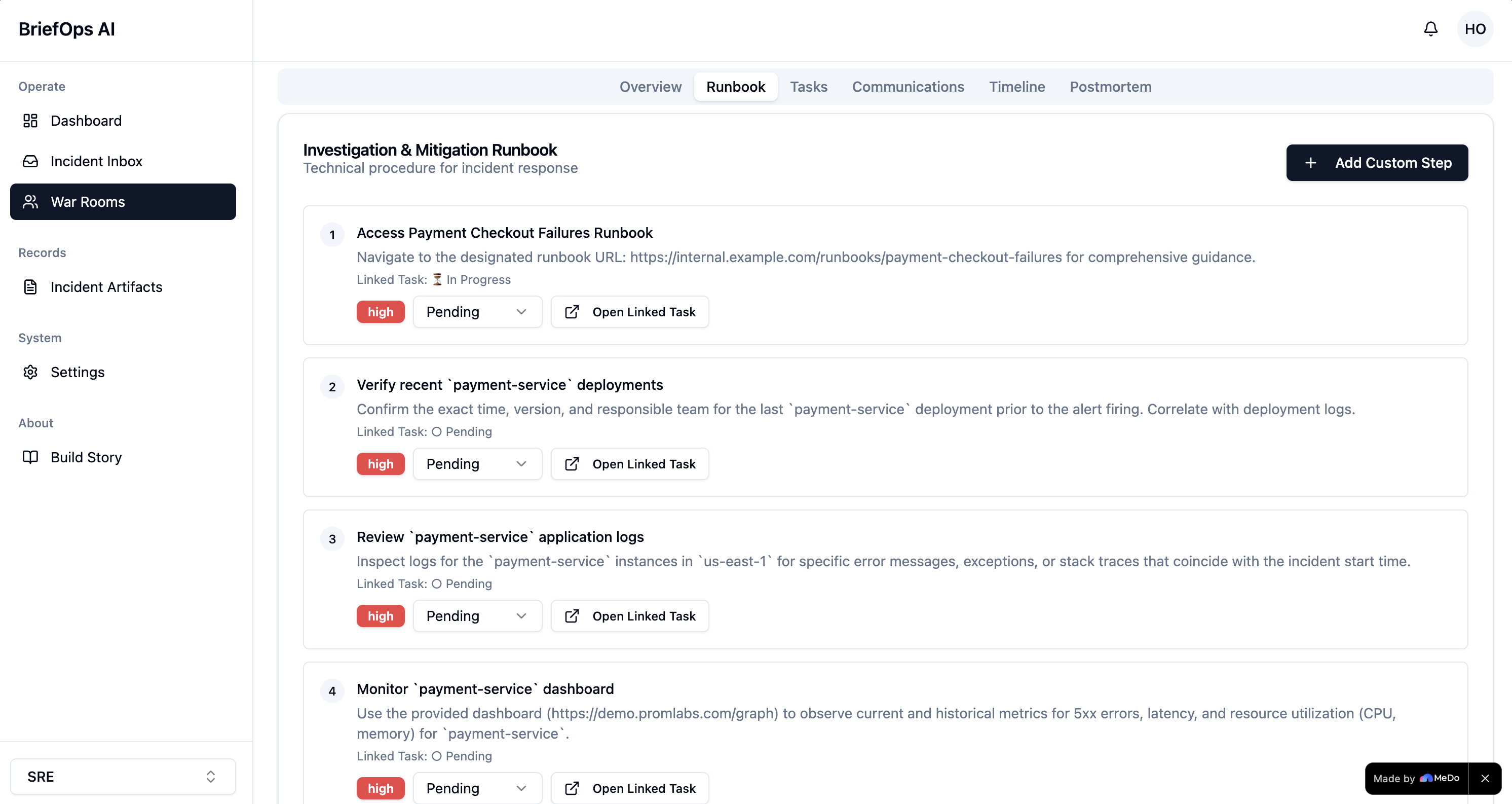
Runbooks
-
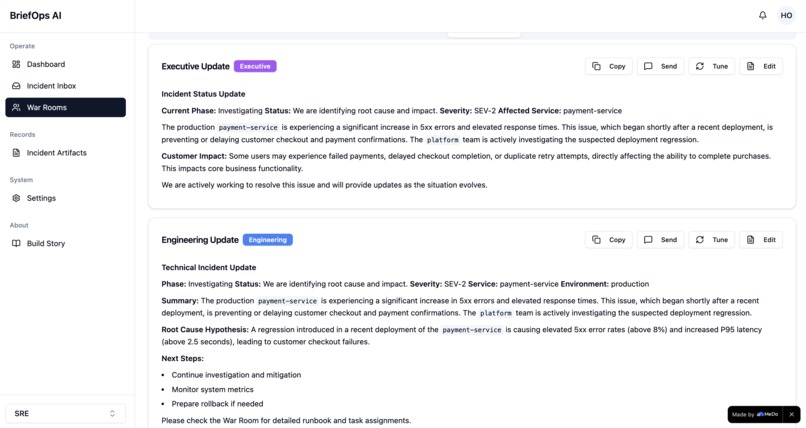
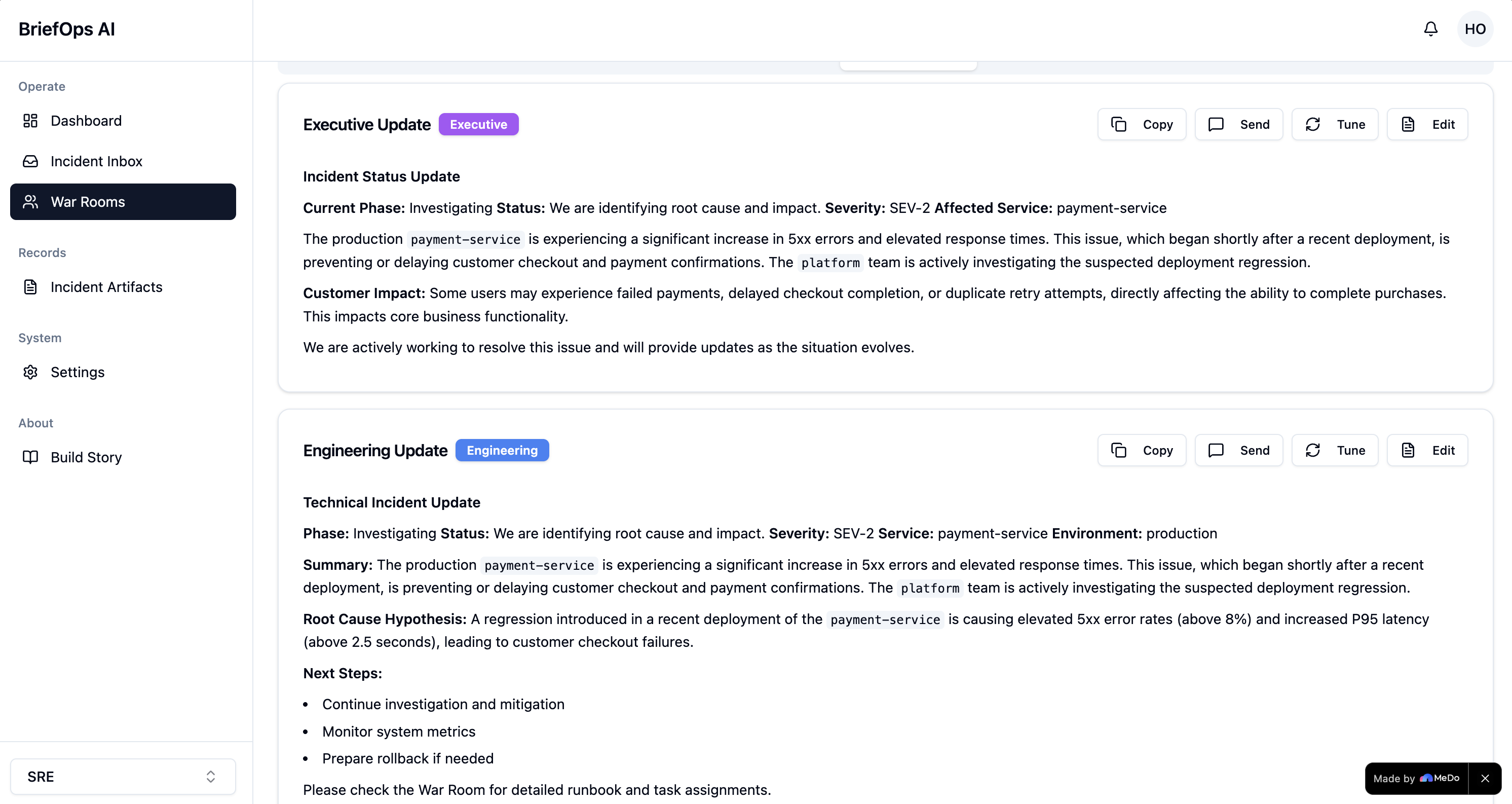
Communications
-
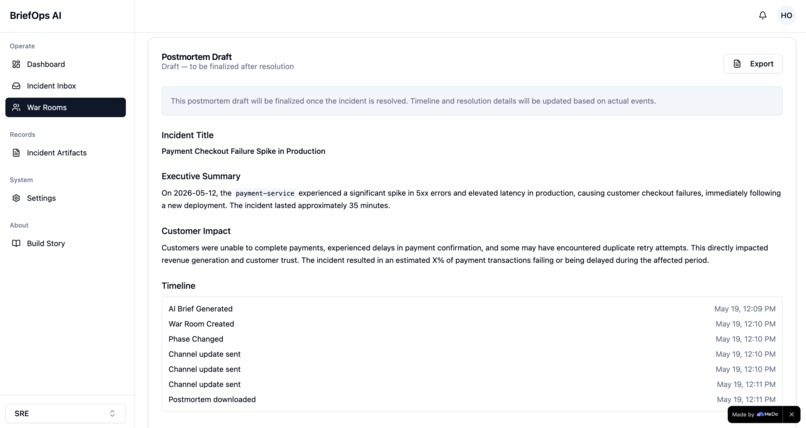
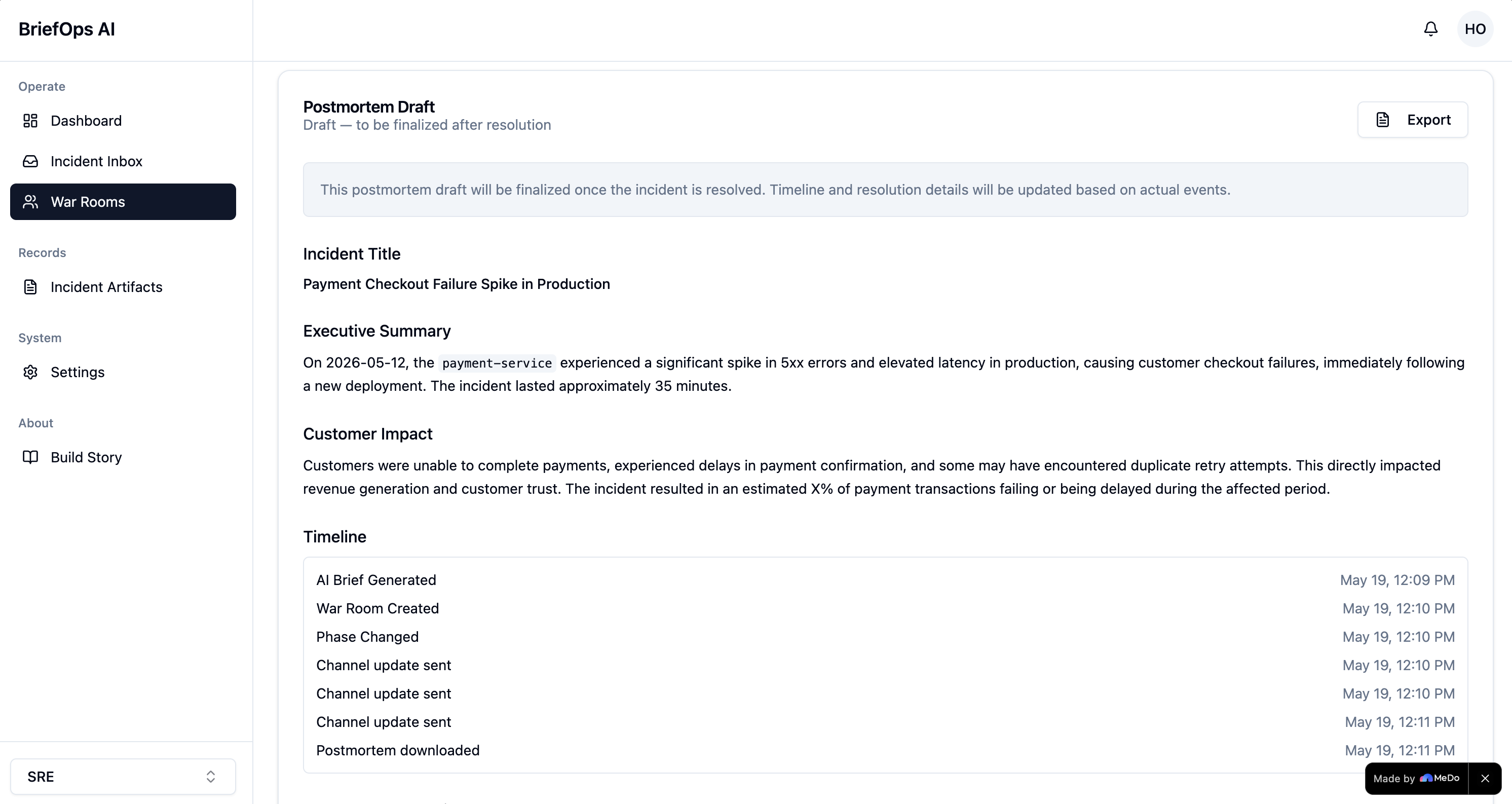
Postmortem Draft
-
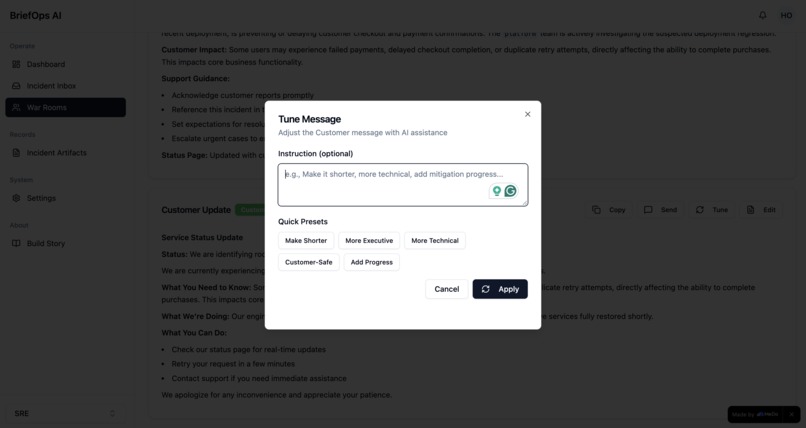
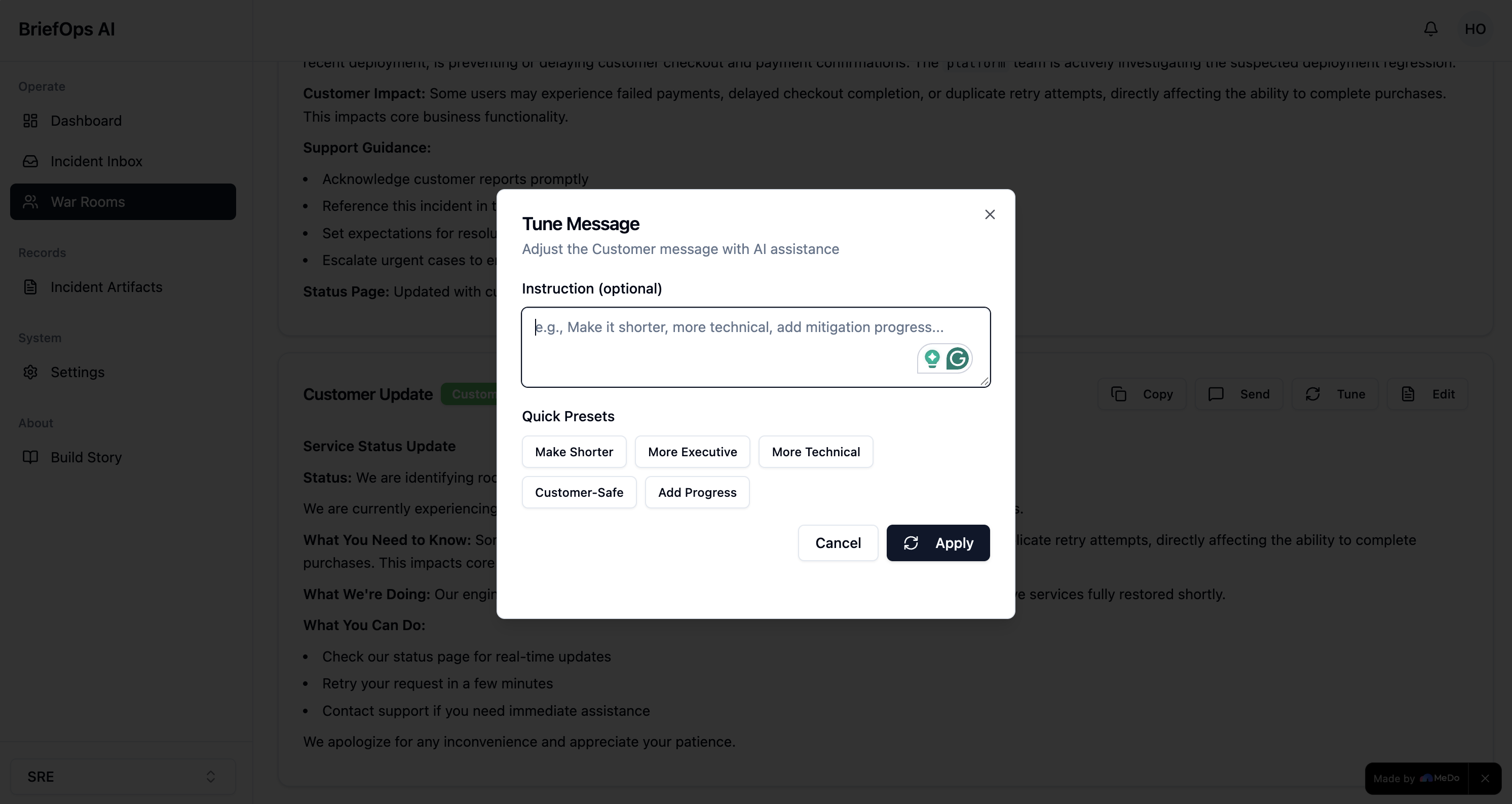
Tune Message
-
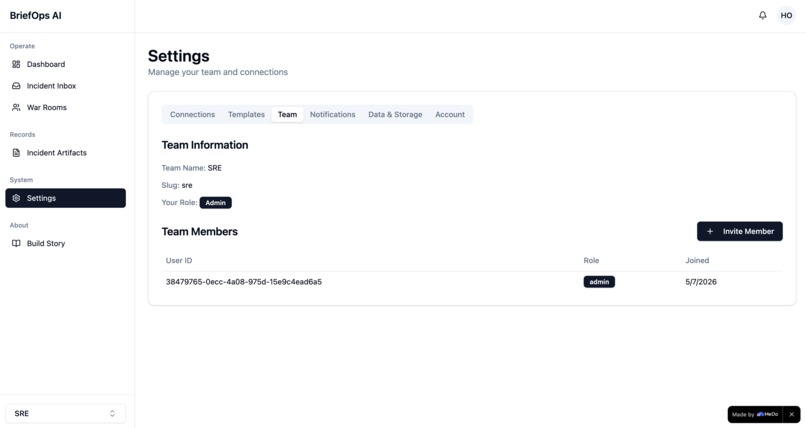
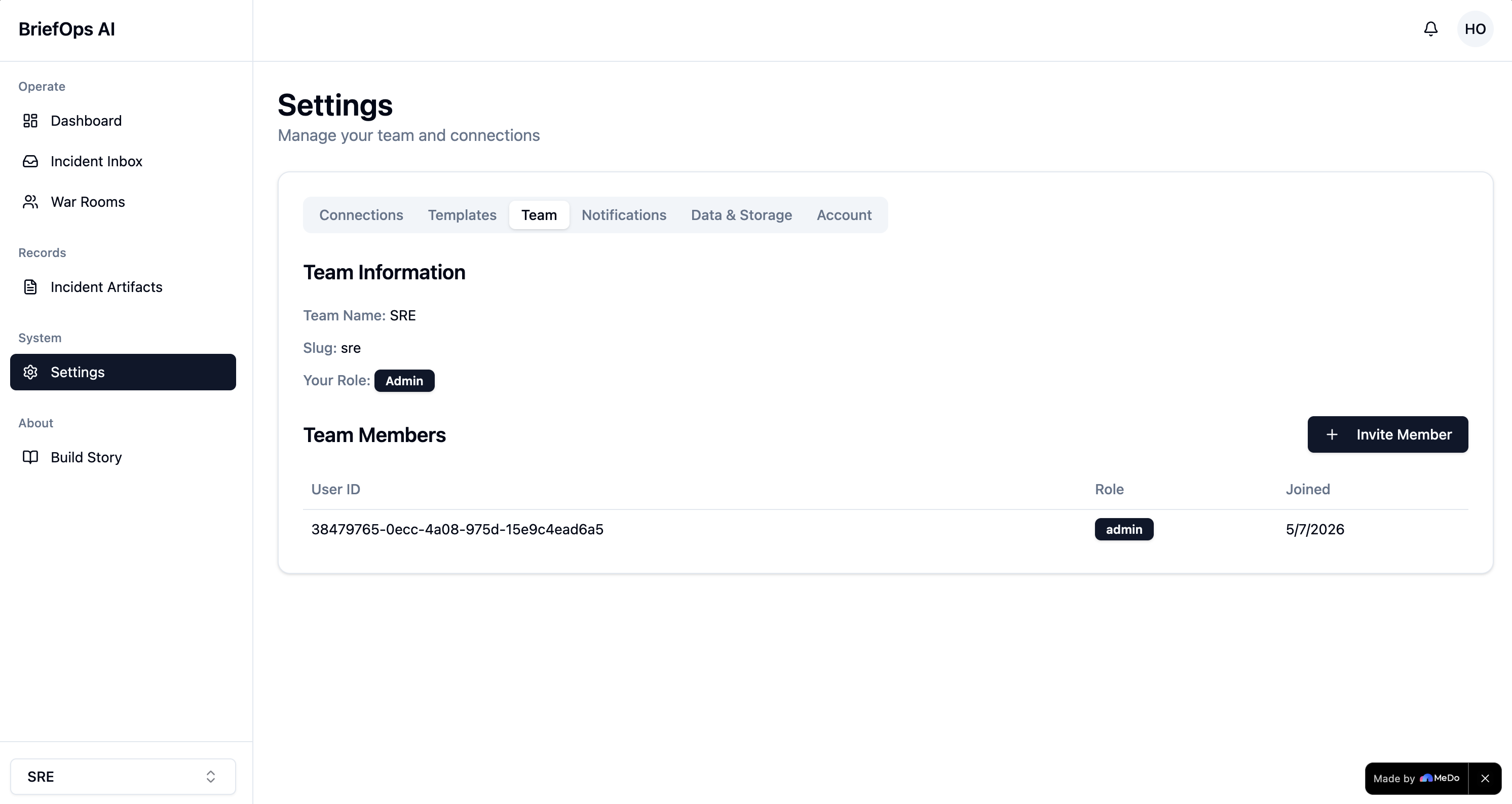
Manage your team and connections
Inspiration
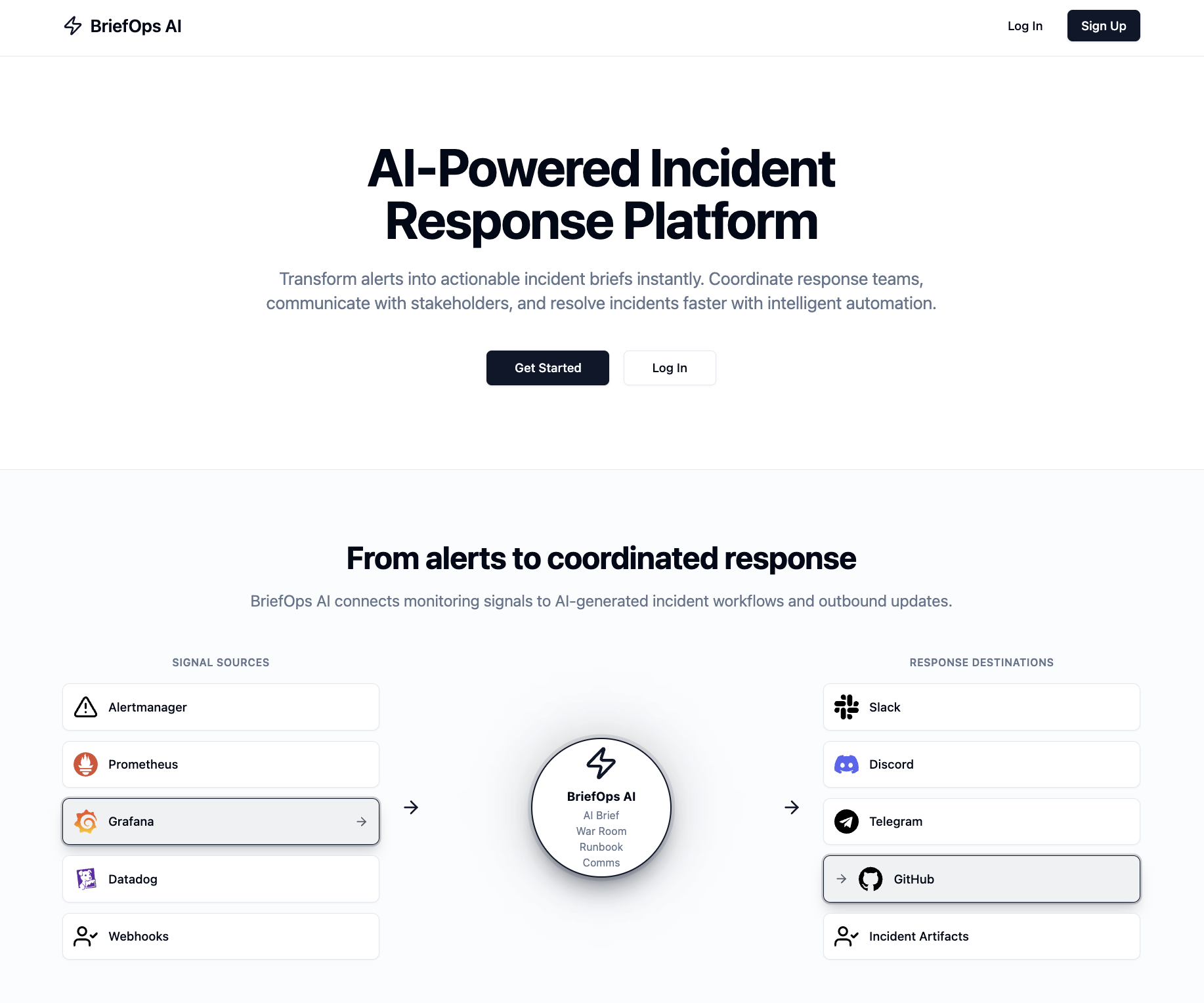
Production incidents are chaotic. Alerts arrive from tools like Alertmanager, Prometheus, Grafana, Datadog, logs, and webhooks, but responders still have to manually triage the alert, understand customer impact, write incident summaries, create a war room, draft stakeholder updates, open issue reports, and prepare postmortems.
I built BriefOps AI to turn that messy alert-to-response process into a structured workflow. The goal is simple: when a production alert fires, the team should immediately get an AI-generated incident brief, a response workspace, a runbook, tasks, communication drafts, timeline events, and auditable artifacts.
What it does
BriefOps AI is an AI-powered incident response workspace for DevOps, SRE, and platform teams.
The core workflow is:
- A production alert is received from Alertmanager or another monitoring source.
- BriefOps AI stores it as an Incoming Signal.
- AI analyzes the signal and generates a structured incident brief.
- The user creates a War Room from the brief.
- The War Room provides:
- Overview
- Runbook
- Tasks
- Communications
- Timeline
- Postmortem
- The team can send or copy updates to Slack, Discord, Telegram, or GitHub Issues.
- Every copied, sent, downloaded, or exported output becomes an Incident Artifact for auditability.
BriefOps AI helps teams move from alert noise to coordinated incident response.
How I built it
I built BriefOps AI with MeDo as a full-stack production-style SaaS application.
I structured the build as a series of vertical slices instead of one large prompt:
- Authentication and team onboarding
- Connection management
- Alertmanager webhook ingestion
- AI-powered incident analysis
- Incident Inbox workflow
- War Room workspace
- Runbook and task synchronization
- Stakeholder communications
- Timeline and incident events
- Incident Artifacts
- Outbound delivery to Slack, Discord, Telegram, and GitHub
- Landing page and product polish
The backend uses Supabase Auth, Supabase Database, Row Level Security, and Supabase Edge Functions. Webhook ingestion is handled through Edge Functions, while AI analysis generates structured incident packages that power the War Room experience.
The most impressive feature
The most impressive feature is the end-to-end incident workflow:
Alertmanager → Incoming Signal → AI Incident Brief → War Room → Communications → Incident Artifacts
A real Alertmanager-compatible webhook can create a signal inside BriefOps AI. From there, the AI analysis creates a structured incident brief with severity, confidence, customer impact, root cause hypothesis, recommended runbook, action items, stakeholder messages, and postmortem draft.
The War Room then turns that analysis into execution: responders can follow runbook steps, create linked tasks, track timeline events, tune communications, send updates, create issue reports, and preserve all outbound outputs as Incident Artifacts.
Challenges I faced
One major challenge was making the system feel like a real production workflow instead of a static AI demo. I had to carefully separate:
- Incoming Signals as raw alert data
- Incidents as AI-generated analysis
- War Rooms as operational response state
- Incident Events as timeline/audit history
- Incident Artifacts as copied, sent, downloaded, or exported outputs
Another challenge was synchronization. When a responder changes the incident phase, completes a runbook step, creates a task, or sends a message, the War Room needs to update the timeline and related views without overwriting manually edited communication drafts.
I also had to handle real-world integration problems such as webhook token validation, connection status, failed outbound delivery, retry behavior, and preventing AI analysis jobs from getting stuck.
What I learned
I learned how to use MeDo more effectively by prompting in smaller production-focused slices. Instead of asking for a full app at once, I got better results by describing one workflow at a time, defining the data model, the expected UI behavior, and acceptance tests.
I also learned that AI apps need strong state models. A good AI-generated summary is useful, but a production system also needs persistence, event history, retries, permissions, and clear user workflows.
What's next
Next, I would improve BriefOps AI with:
- More production monitoring integrations
- Better alert grouping and correlation
- Team-specific AI analysis templates
- Real-time collaboration inside War Rooms
- Automated incident severity scoring
- Postmortem export to Markdown, GitHub, and documentation tools
- More advanced delivery retries and audit controls
BriefOps AI is designed to become an incident response operating system for production teams.
Built With
- alertmanager-webhooks
- discord-webhooks
- github
- issues
- large-language-model-capability
- medo
- prometheus
- react
- row-level-security
- slack-webhooks
- supabase-auth
- supabase-database
- supabase-edge-functions
- tailwind-css
- telegram-bot-api
- typescript


Log in or sign up for Devpost to join the conversation.