Building Briefly: Our Journey from Idea to Innovation
What Inspired Us
As international grad students, we found ourselves constantly juggling academics, work, and life in general. One thing we all agreed on was that staying updated with the news felt more like a chore than a quick catch-up. There just wasn’t enough time in the day to sift through long articles, and often, it was hard to gauge how trustworthy or biased the information was.
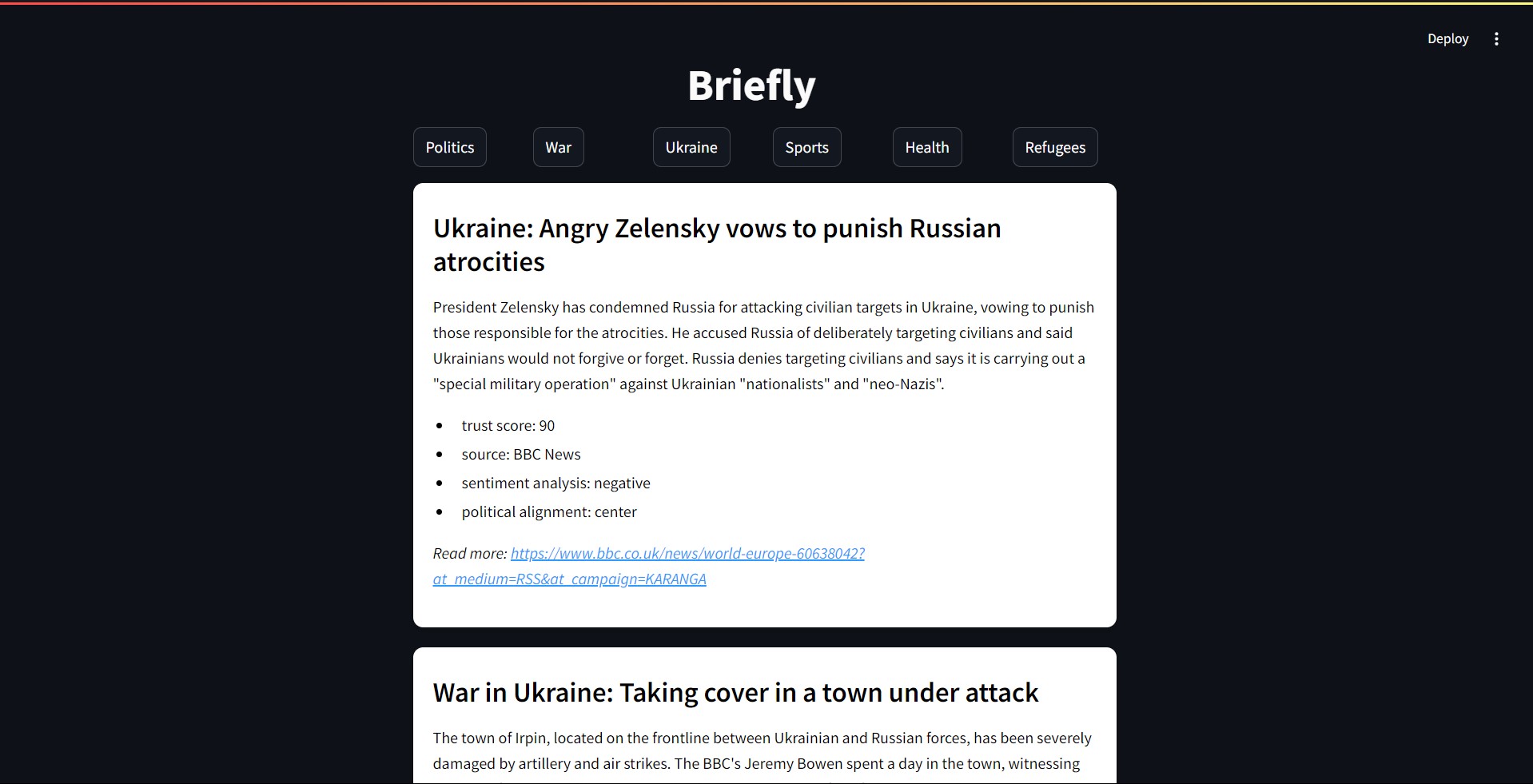
That’s when we realized something: if we’re struggling to stay informed, there’s probably a lot of other people out there feeling the same way. So, we set out to create a solution—something that would help us stay updated without taking up too much time. That’s how Briefly came to life: a news app that delivers the essentials in just 60 seconds, with added insights like trust scores, sentiment analysis, and political alignment indicators.
What We Learned Along the Way
Developing Briefly taught us a lot about balancing simplicity with depth. Our main goal was to create something quick and easy to use, but we didn’t want to lose the importance of context and credibility. We learned that it’s possible to summarize complex news stories without making them feel shallow, and that’s where features like trust scores and sentiment analysis became key.
We also realized how important it is to help users understand not just what the news is saying, but how it’s being presented. By integrating political alignment indicators, we were able to give users a clearer sense of where stories might fall on the political spectrum, helping them make more informed judgments.
How We Built It
Creating Briefly was a blend of both tech and user-centered design. We started by gathering a wide range of news articles and built the app to automatically summarize them into short, digestible bites. The AI-driven tools we implemented allowed us to add extra layers of insight, like trust scores (based on the credibility of sources) and sentiment analysis, which helps users gauge the emotional tone of the article.
We also included political alignment indicators, showing users how different outlets might report the same story with different biases. All of this is packaged in a simple, user-friendly interface that prioritizes clarity and ease of use.
The Challenges We Faced
One of the biggest hurdles we faced was getting the AI models to work accurately and consistently. Fine-tuning the sentiment analysis and political alignment models to reflect real-world nuances was tough, especially with the varied tone and content across news sources.
We also had to tackle the challenge of missing or conflicting data in news articles, which could trip up our app’s smooth delivery of summaries. After several iterations, we implemented fallback systems to handle incomplete information gracefully, without breaking the user experience.
Another challenge was finding the sweet spot between delivering enough information to be informative without overwhelming the user. We went through several rounds of testing to get the balance just right, ensuring the app could handle hundreds of articles while still feeling fast and responsive.
The Outcome
Briefly is the product of our desire to stay informed without feeling bogged down. We’ve built a tool that not only delivers quick, 60-second news summaries but also offers trust scores, transparency, and a sense of the broader context behind each story.
Our hope is that Briefly will make it easier for people like us—busy but curious—to stay engaged with the world, without the stress of long reads or biased narratives. We’re excited to share it with the world and look forward to seeing how it helps others stay informed, aware, and confident in their understanding of the news.
Join us in changing how we consume news—quicker, smarter, and more transparent.

Log in or sign up for Devpost to join the conversation.