-
-
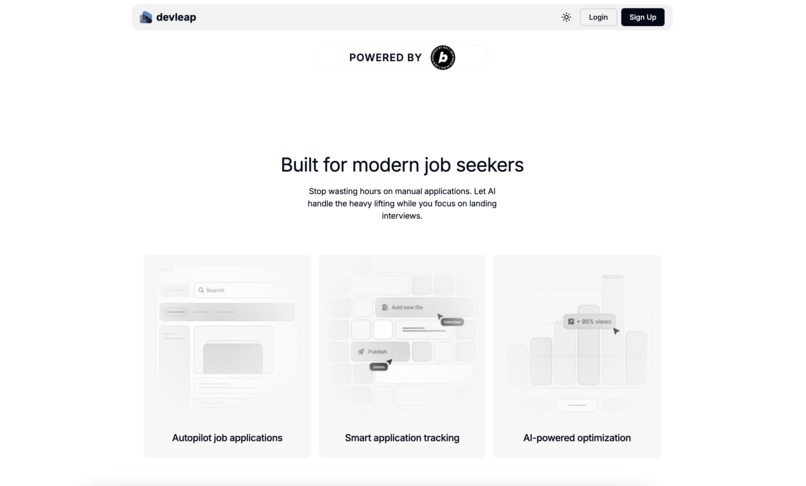
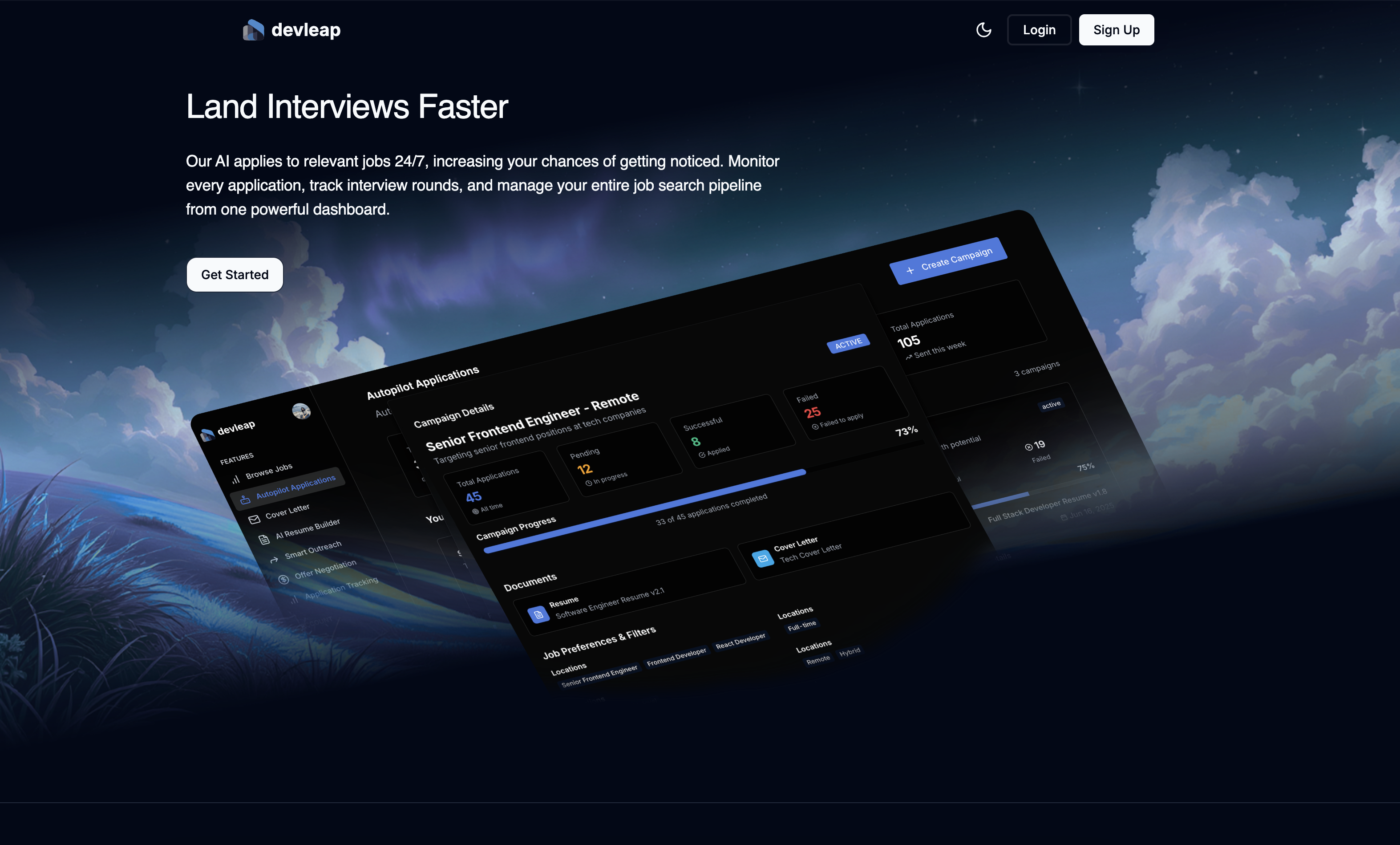
Landing Page - 2
-
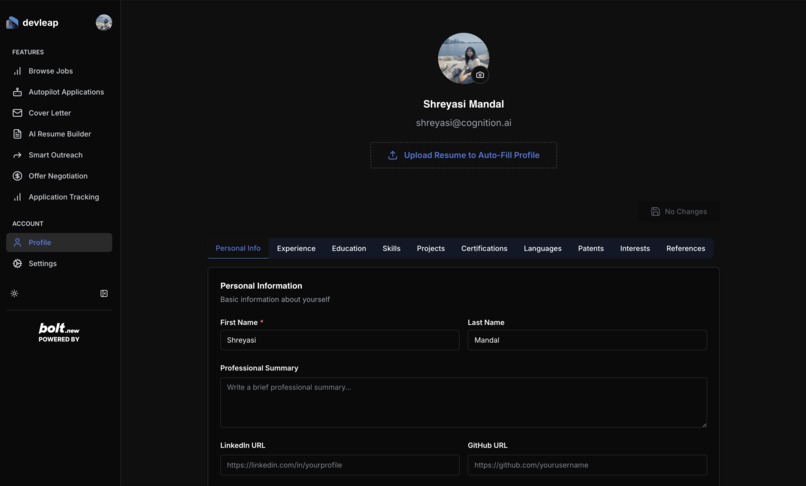
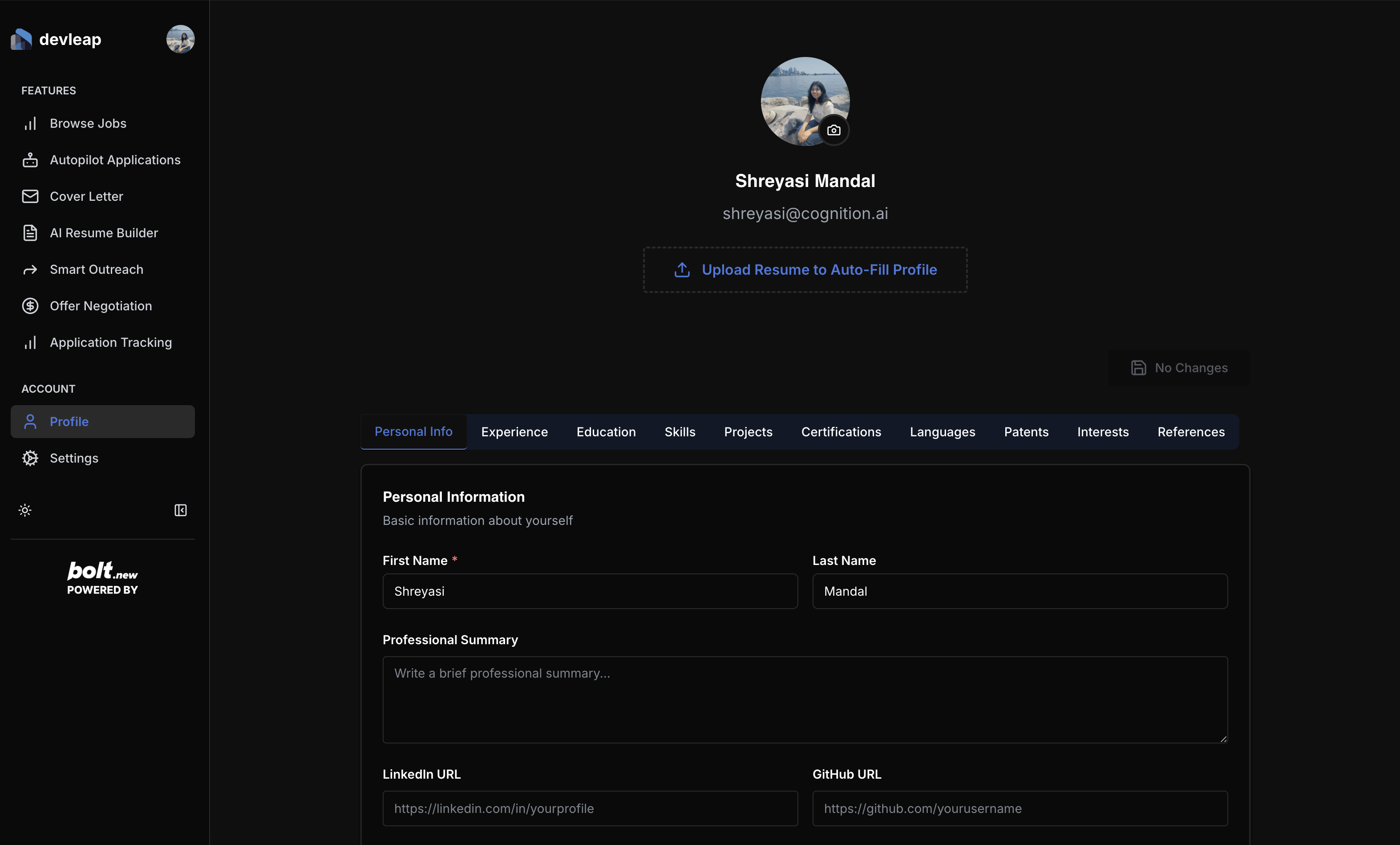
Profile
-
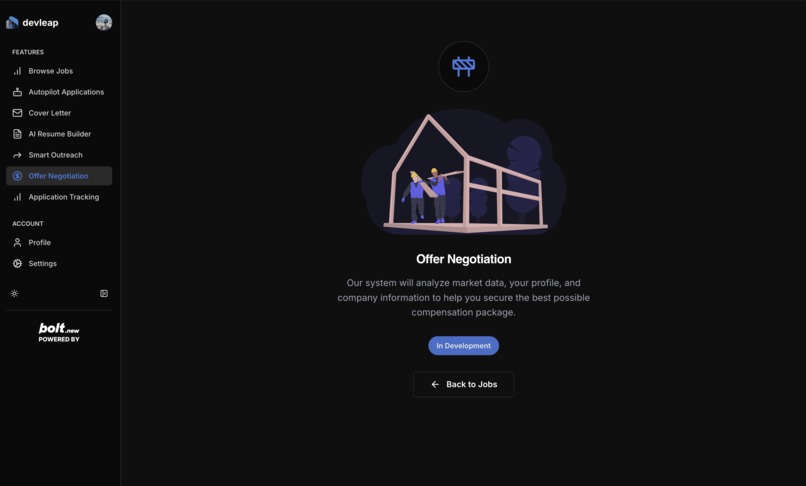
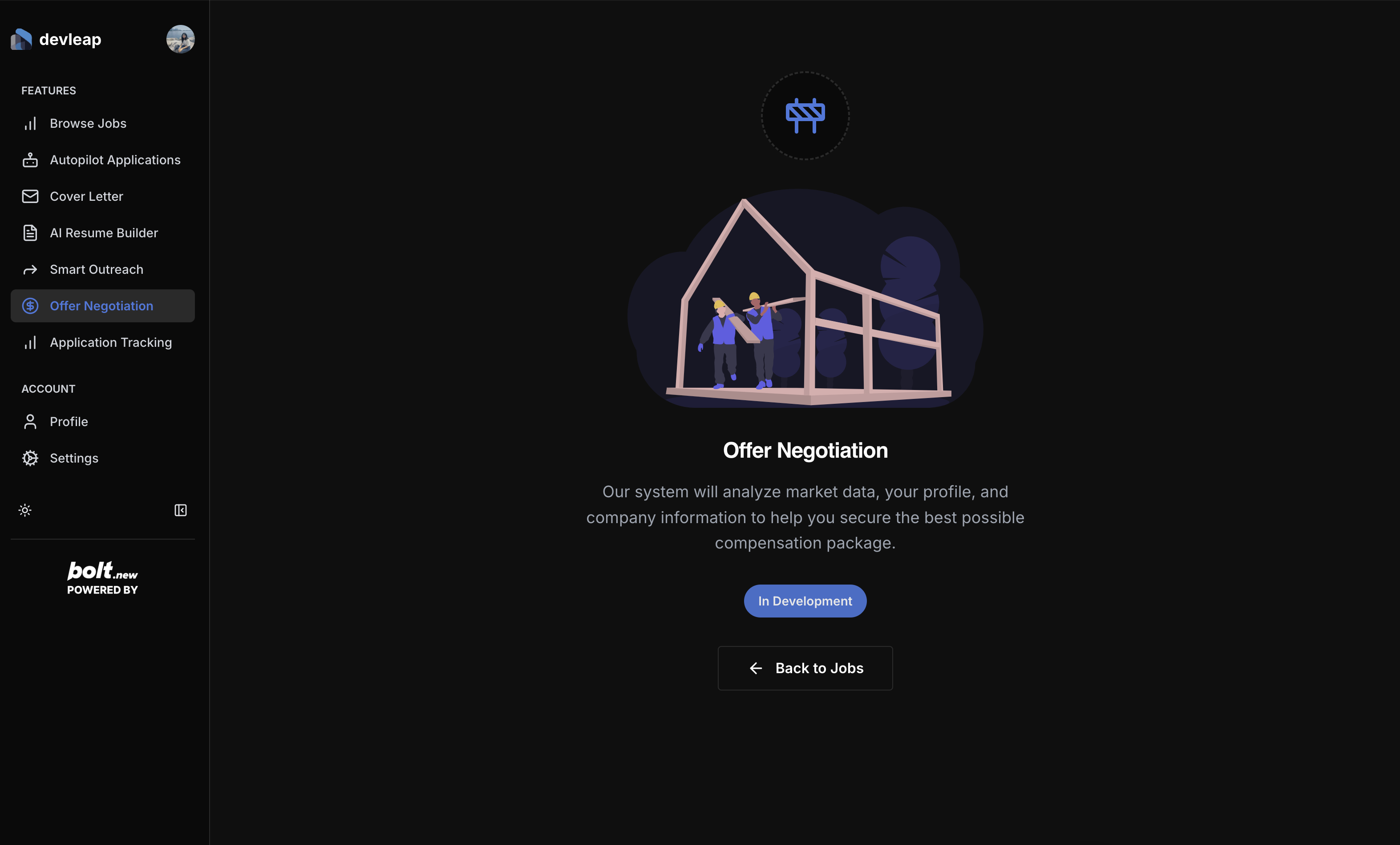
In Development
-
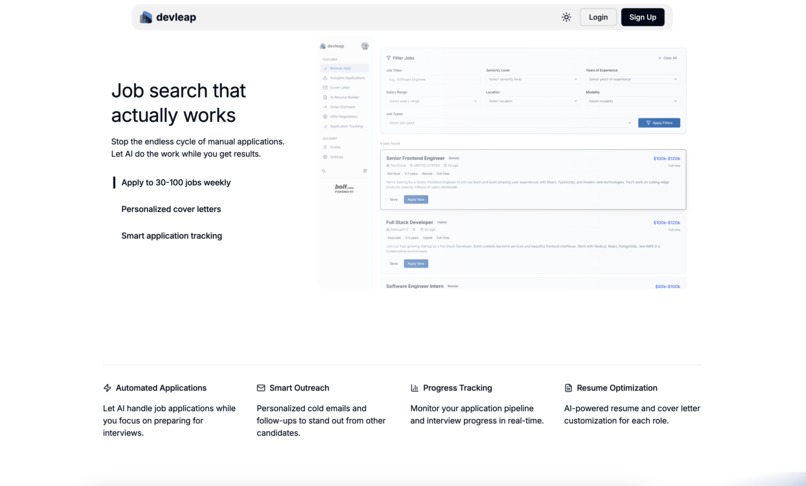
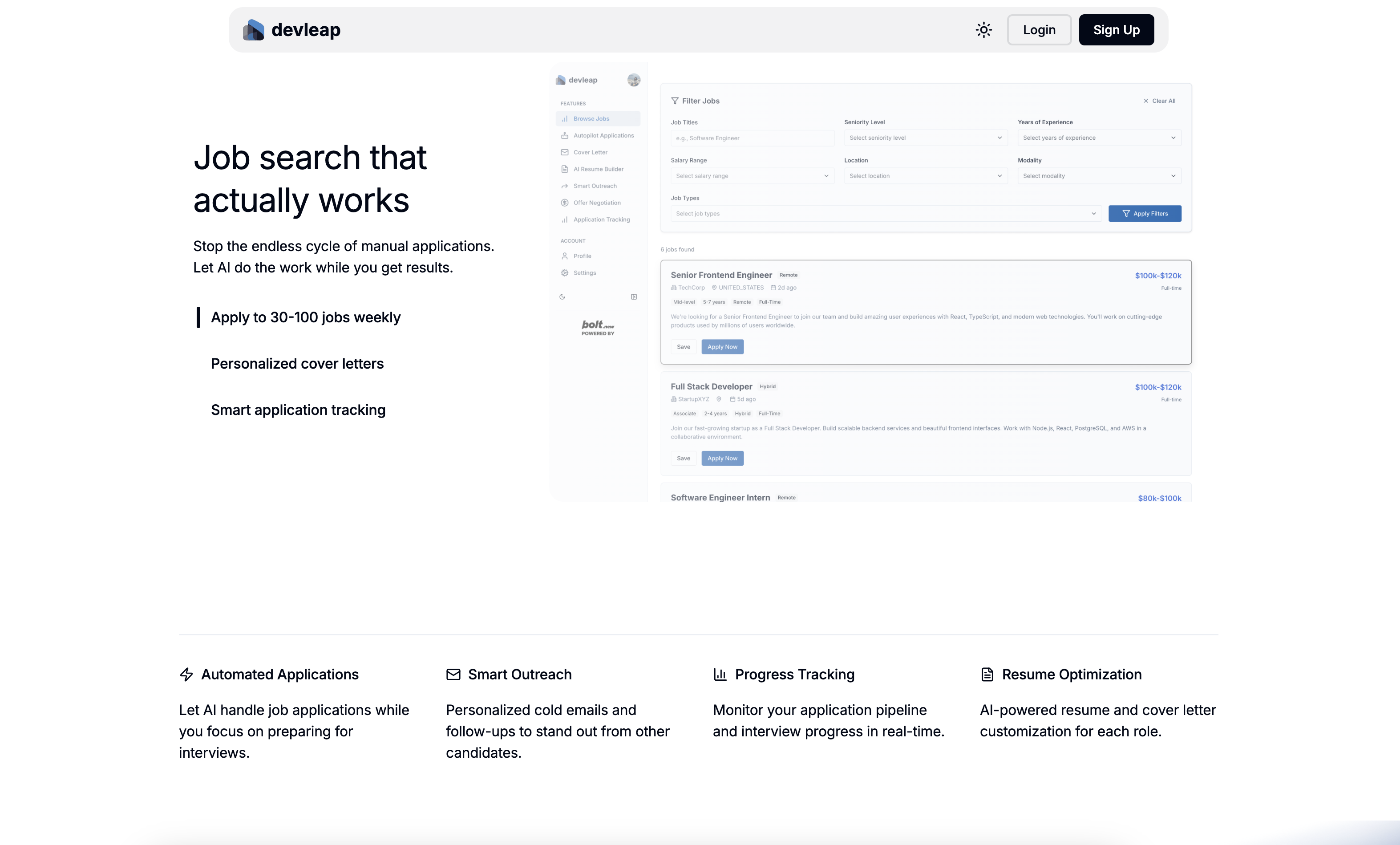
Landing Page - 3
-
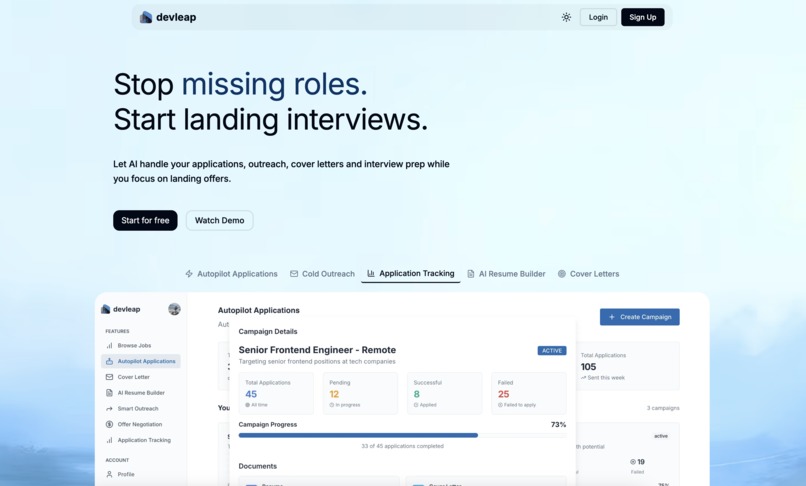
Landing Page - 1 (Light)
-
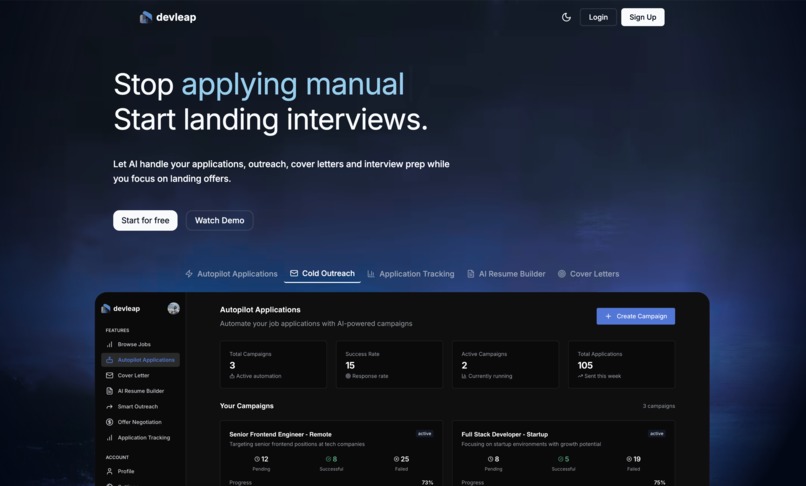
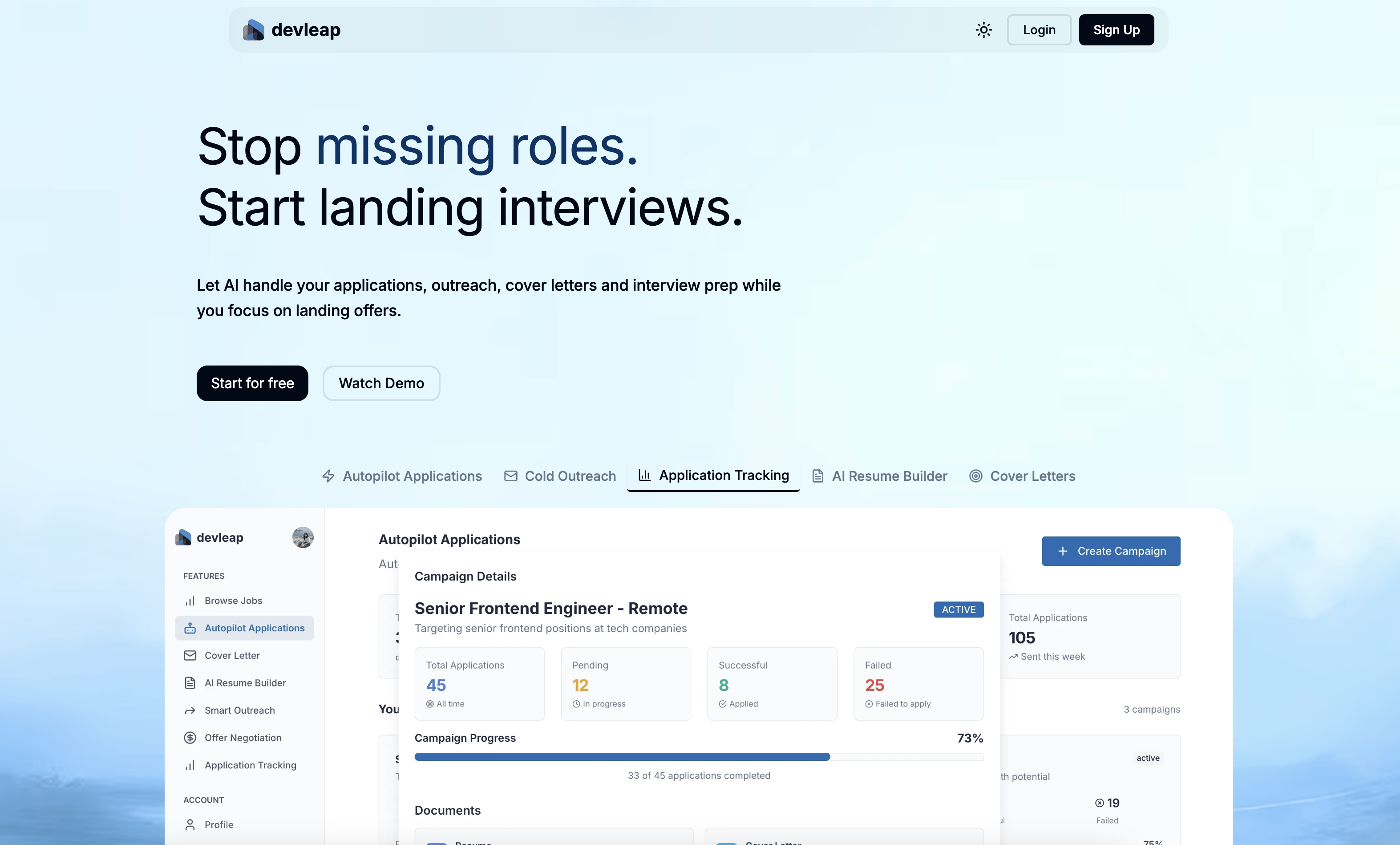
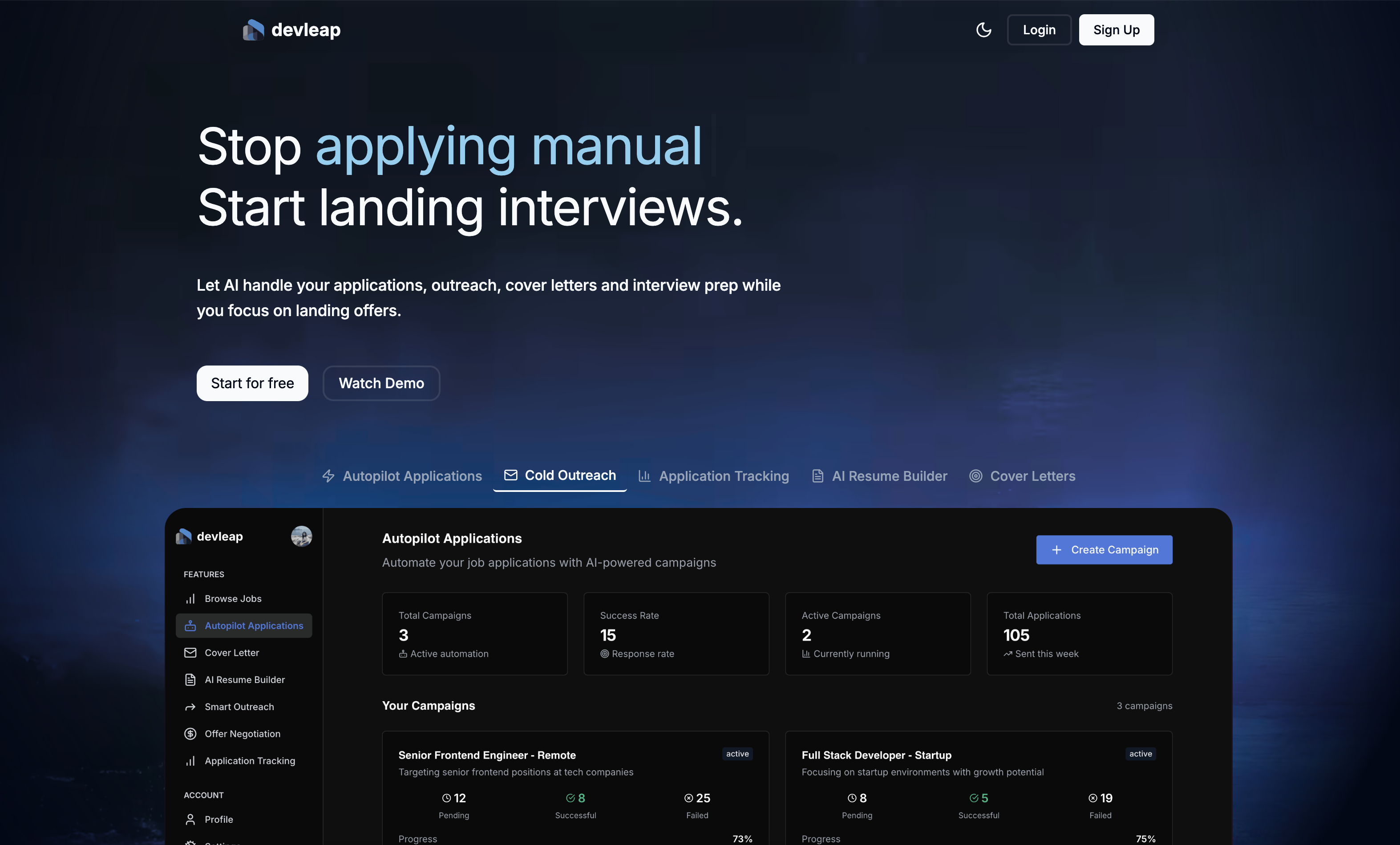
Landing Page - 1 (Dark)
-
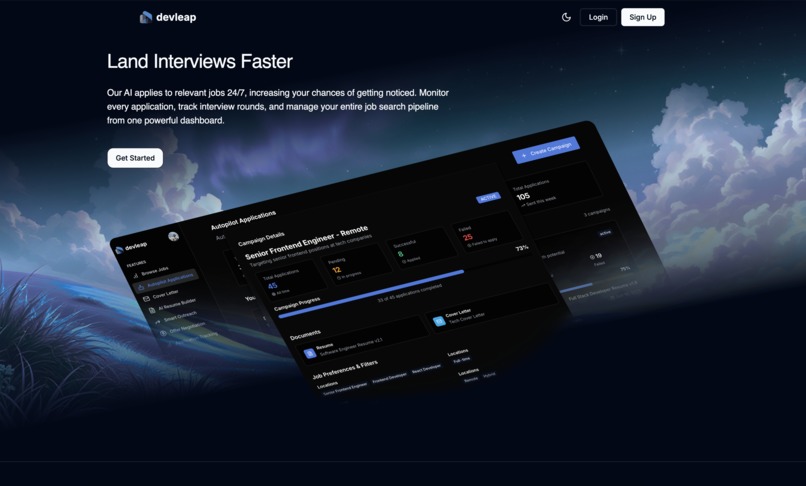
Landing Page - 4
-
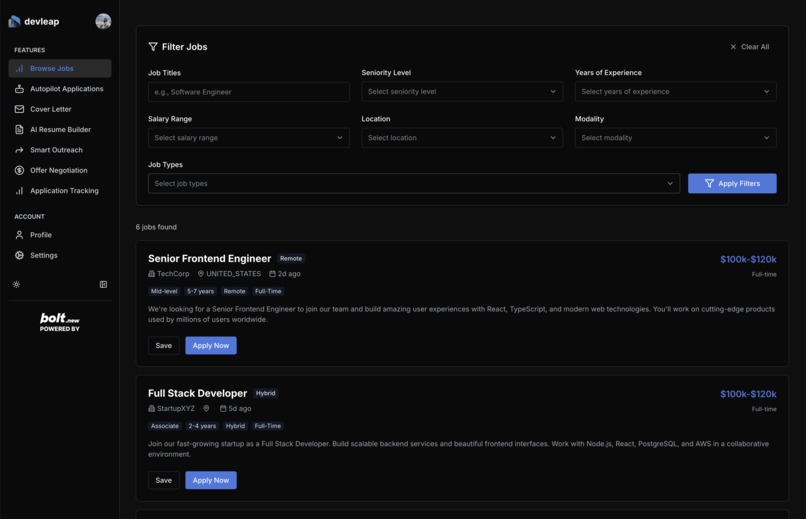
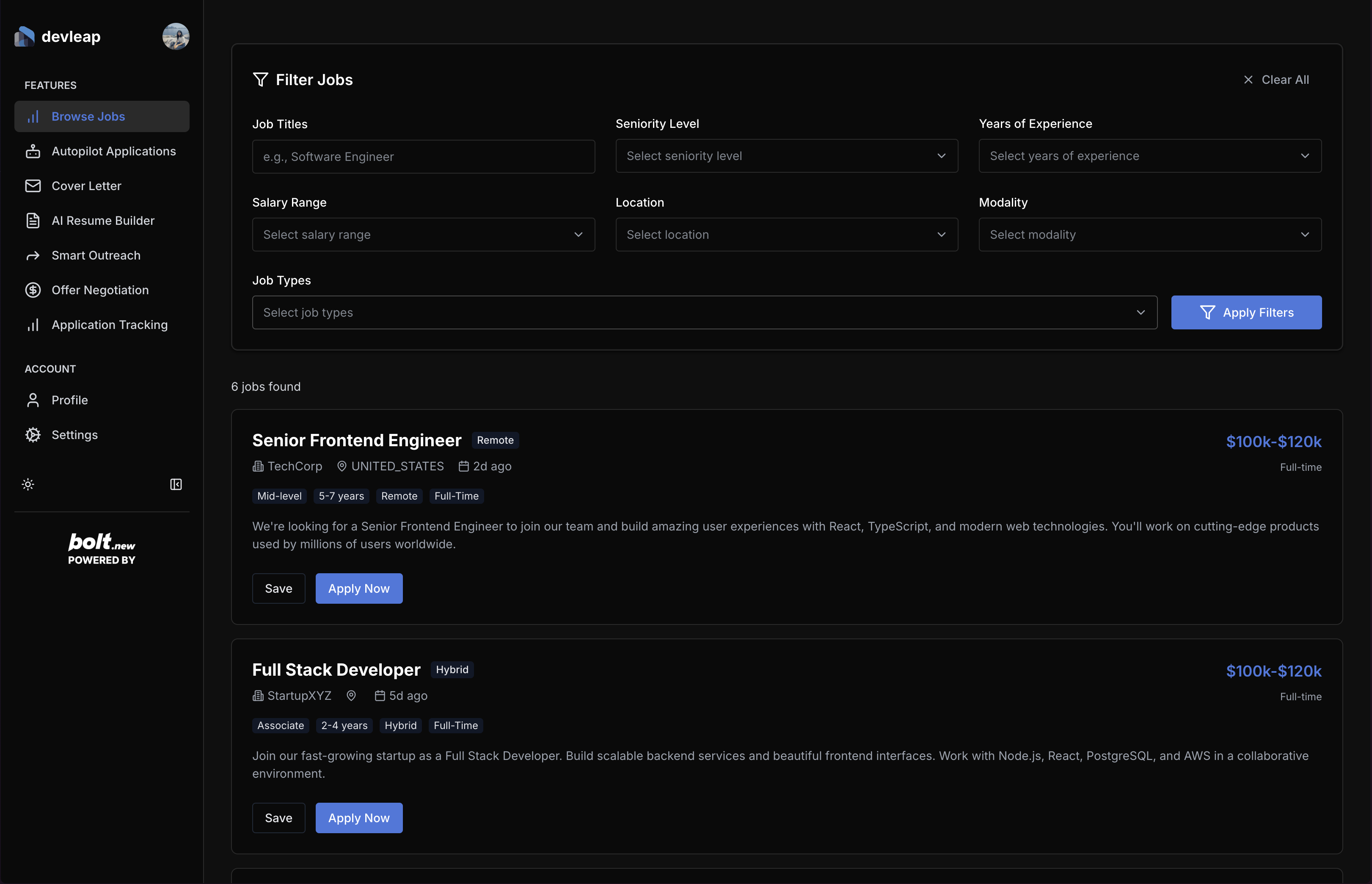
Browse Jobs
-
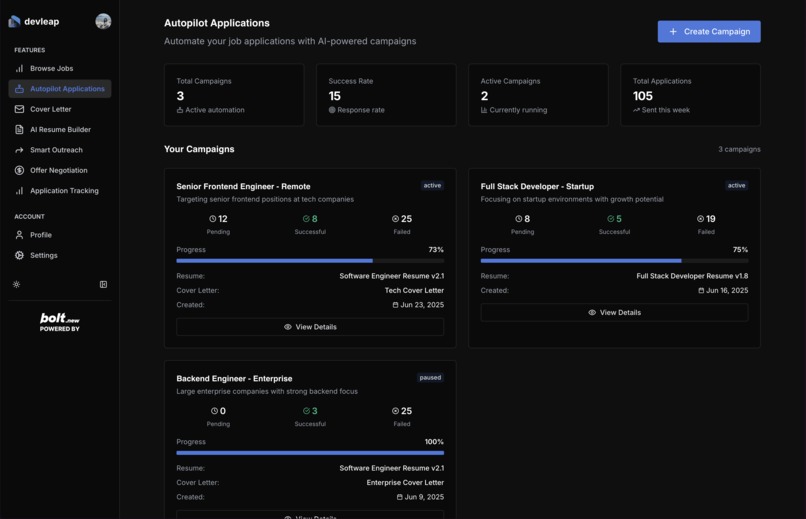
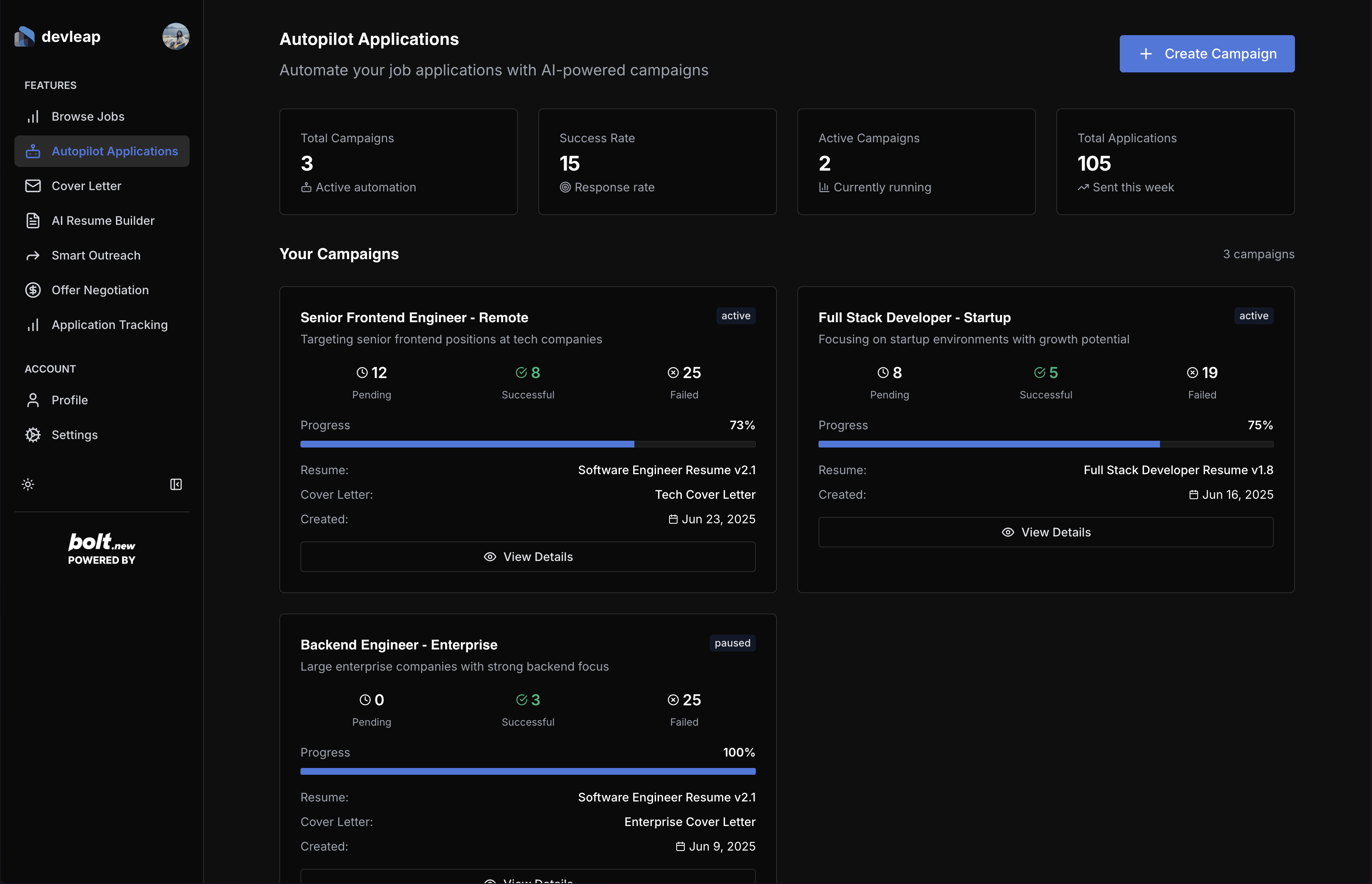
Autopilot Campaigns
-
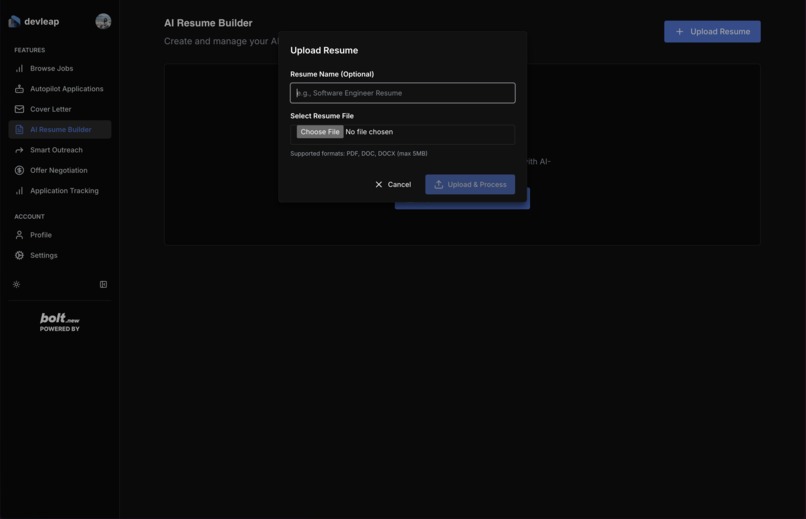
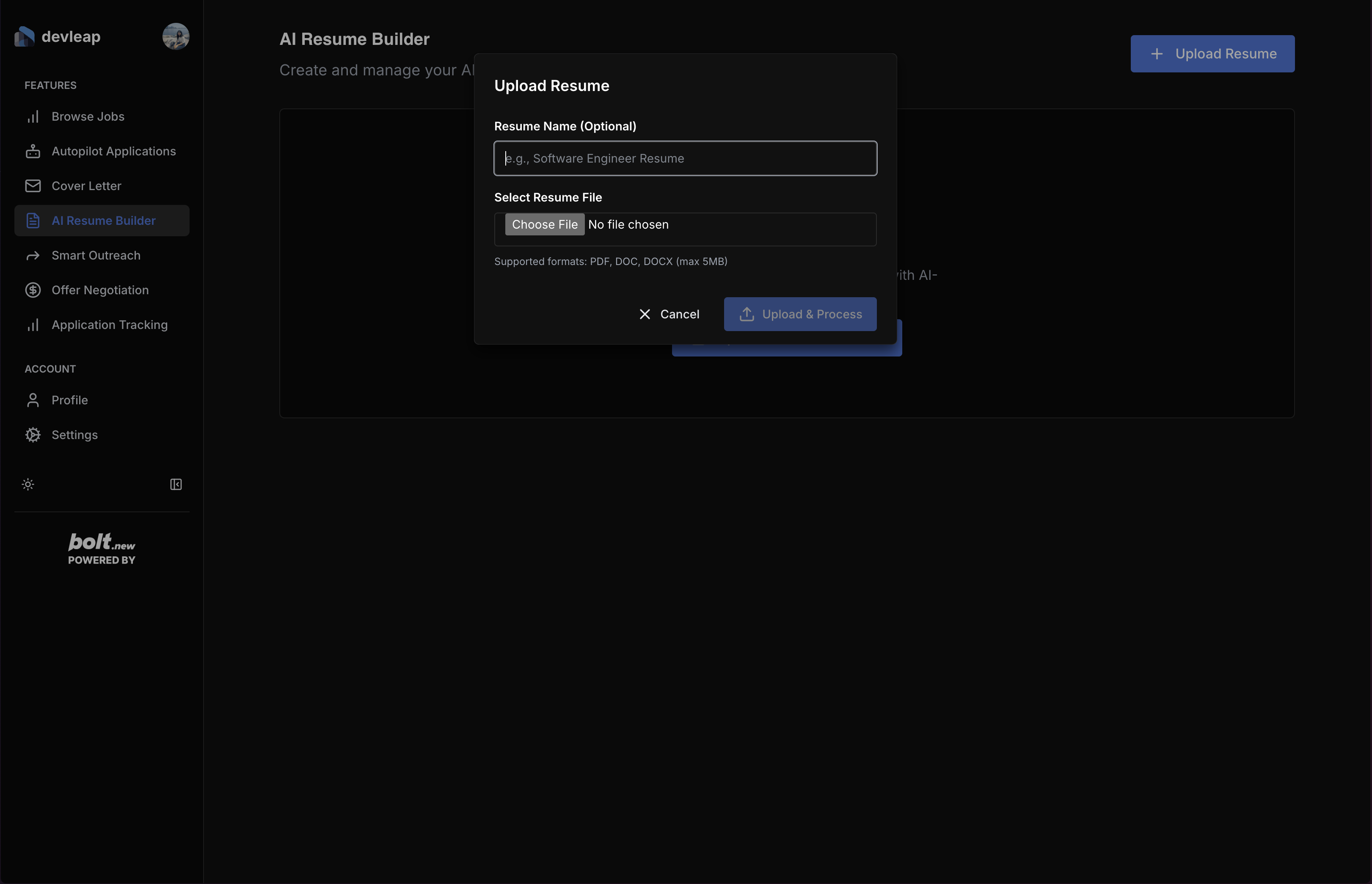
Resume Upload
-
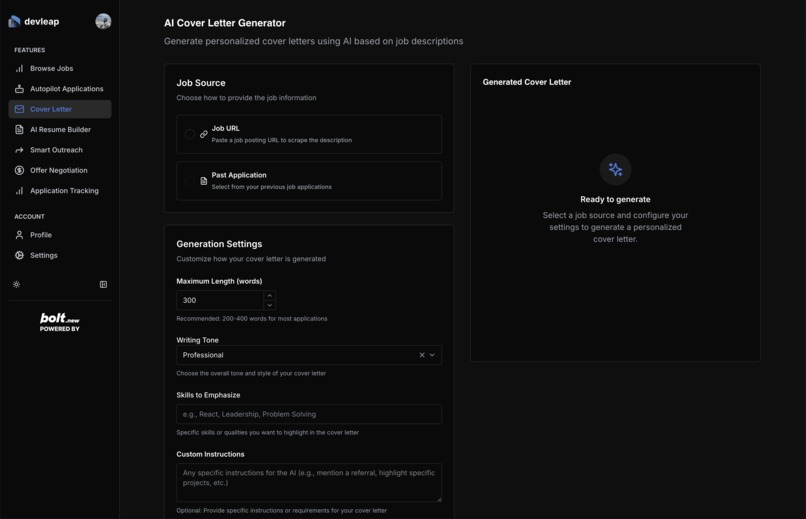
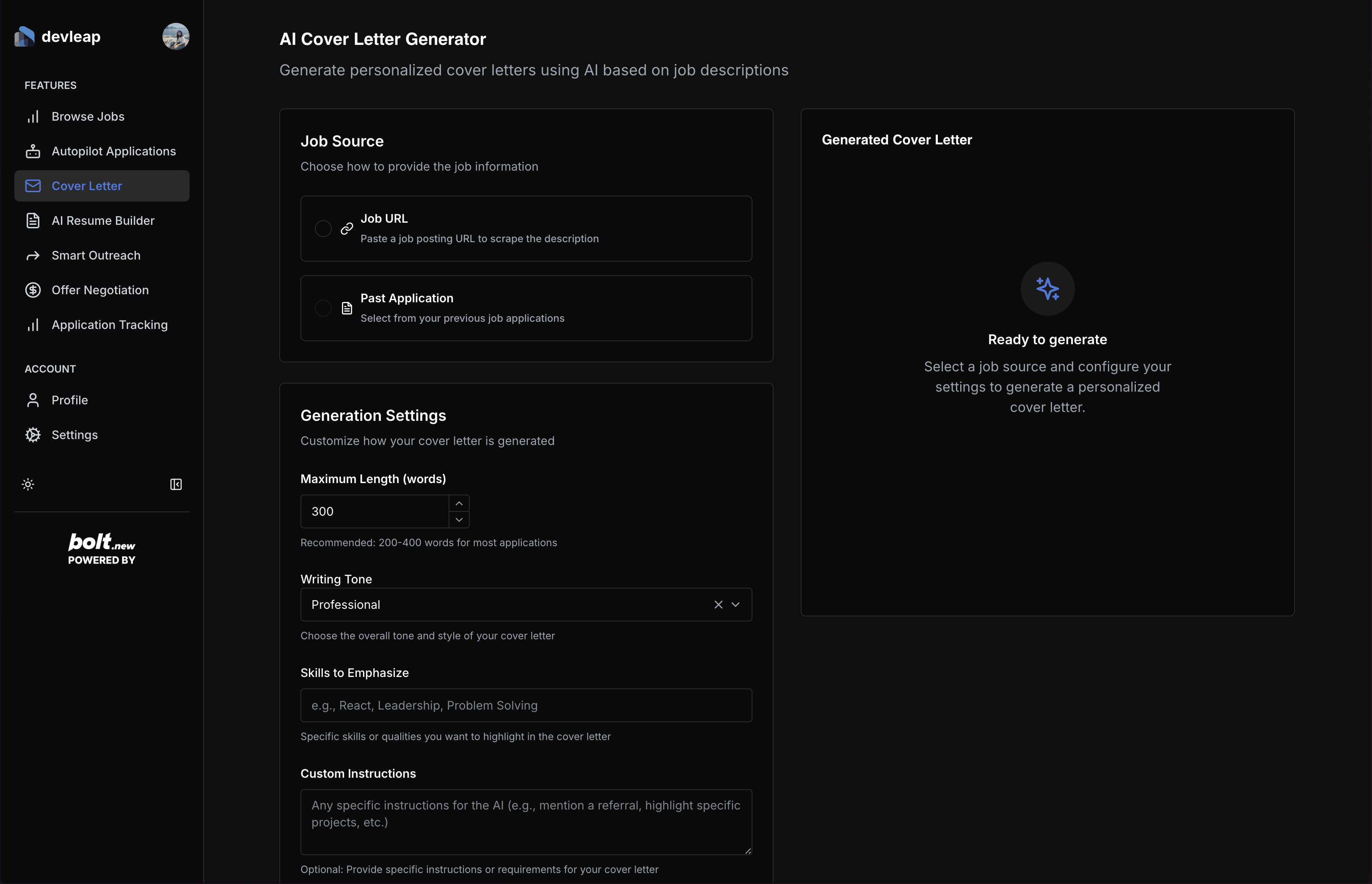
Cover Letter Generation
Inspiration
Job hunting today is overwhelming, time-consuming, and often emotionally draining. We’ve faced this firsthand — manually applying to dozens of jobs, getting ghosted, and being told to tailor each resume and cover letter to every role, which is practically impossible.
That’s why we created this tool.
We envisioned an AI-powered co-pilot that handles the tedious parts of job applications — from intelligently tailoring resumes and cover letters to tracking every opportunity — so people can focus on what really matters: presenting their best selves and landing the right opportunity.
What it does
- Job browsing from multiple platforms like LinkedIn and Indeed — all in one place
- Automatically applies to jobs on your behalf with customized applications
- Generates tailored resumes and cover letters for each role using AI
- Tracks all applications in a clean, organized dashboard
- Eliminates repetitive tasks, saving you hours every week
How we built it
We built this platform completely in Bolt. It handled the majority of the codebase, from backend logic to frontend components. To ensure stability, we broke tasks into small, focused chunks, reducing the risk of cascading issues.
Here’s how the process worked:
- For each feature, I wrote a detailed prompt describing what I wanted.
- Bolt would generate a solid initial implementation.
- I reviewed the output, identified missing elements or improvements, and updated the .bolt rules with clearer context and constraints. We repeated this loop — fixing bugs and refining logic — until the feature was ready.
While Bolt handled most of the development, there were moments that needed manual intervention:
- When Bolt hit complex bugs and couldn’t be resolved in multiple attempts.
- During the setup and configuration of Clerk (auth), Supabase (DB/storage), Netlify (deployment), and custom domains.
Challenges we ran into
Chakra UI Migration Issues When I asked Bolt to use Chakra UI, it unknowingly used Chakra v2. After significant development, I realized this and asked it to migrate to v3, which proved to be very challenging.
Bolt Hallucinations Occasionally, Bolt generated non-existent components or functions. We addressed this by progressively refining our Bolt rules to reduce such hallucinations.
SWC Binary Errors The landing page project faced issues loading SWC binaries, blocking rendering entirely. It took a full day of debugging to resolve this. Related Bolt project: sb1-wqemvnsr
Inconsistent Bolt Behavior Very rarely, Bolt failed to modify files, push changes, or fail altogether. Refreshing the browser typically resolved these hiccups.
Azure Resume Parsing Integration Integrating Azure’s resume parser API was tricky, as it didn’t support file inputs—unlike OpenAI’s API—forcing us to work around this limitation.
Accomplishments that we're proud of
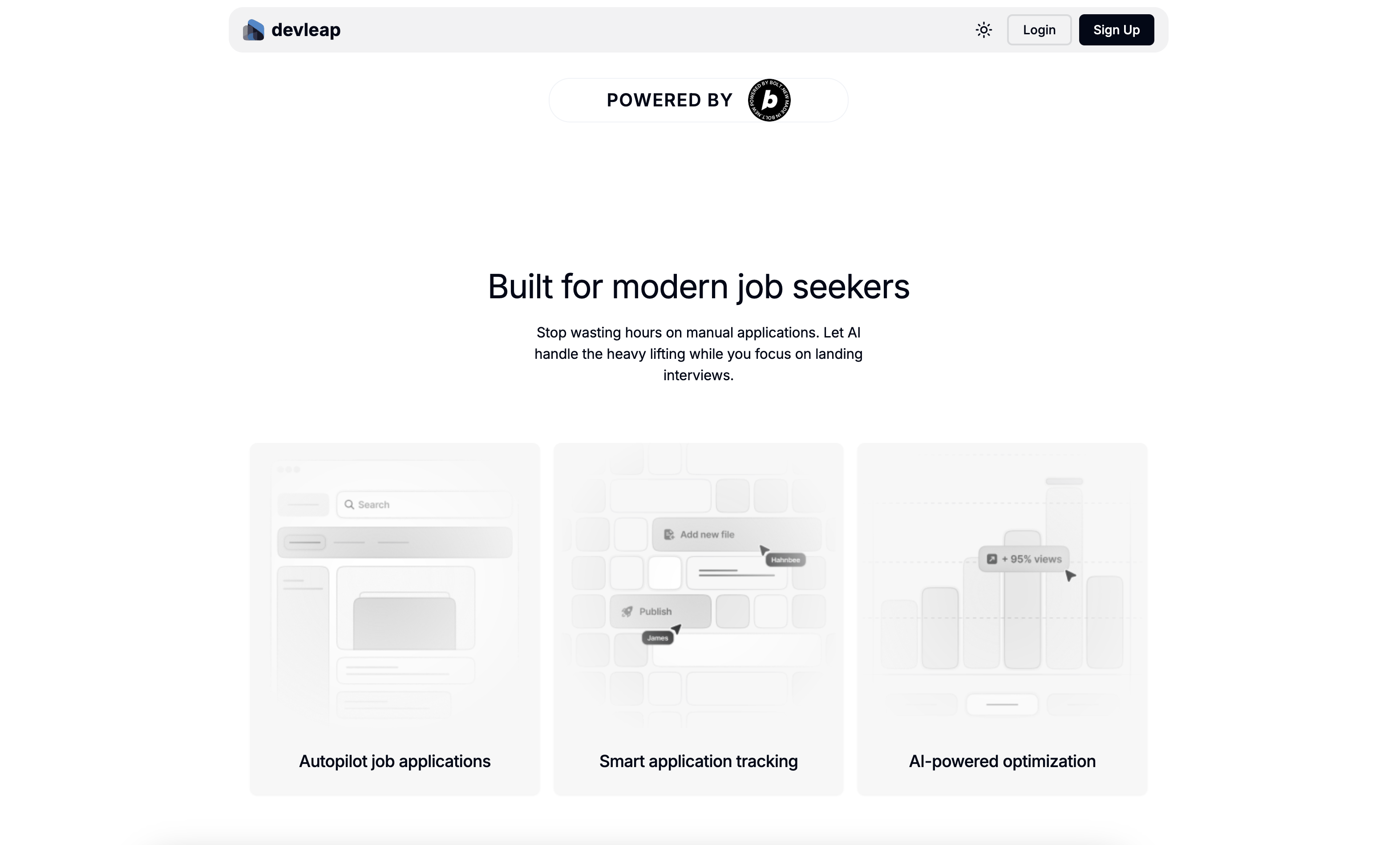
- Successfully created a clean and modern landing page (Note: This was built in a separate Bolt project: sb1-wqemvnsr because we created a different Git repo to ensure fast performance of landing page. Though Bolt’s preview fails due to SWC binary issues, the page is deployed successfully.)
- Successfully created a very intelligent resume parser
- Built a sophisticated resume builder and autopilot job application system
What we learned
- OpenAI API integration
- Supabase and Clerk integration
- Prompt engineering
- Managing and fixing bugs through Bolt
What's next for Devleap AI
We aim to make this a full-fledged SASS application and roll it out to thousands of users. These are the features that are currently in development.
- Customizable resume builder with modern templates
- Offer negotiation tracker to compare and manage job offers
- Auto email outreach to recruiters after applying
- Uses your profile data to power AI job matching, ensuring better-fit opportunities
- Creates a unique custom email for each user to track job application statuses
Built With
- azure
- chakra-ui
- clerk
- netlify
- nextjs
- openai
- prisma
- supabase
- tailwind
- typescript


Log in or sign up for Devpost to join the conversation.