-
System Architecture
-
Accepted Research - ICECET 2025 (Paris, France).
Inspiration
After developing high-accuracy predictive models for supply chains, I noticed a recurring problem: procurement managers were often hesitant to act on an AI’s "High Risk" flag if they didn't understand the logic behind it. In a high-stakes ERP environment, a "black box" is a liability. I was inspired to research how we could make these complex machine learning models transparent, ensuring that every automated prediction is backed by a human-readable justification.
What it does
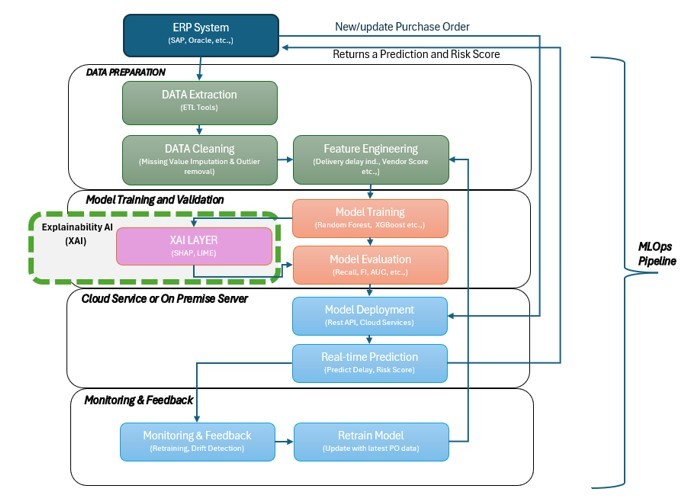
This project introduces an Explainable AI (XAI) Layer that sits on top of predictive ERP models. Instead of just giving a percentage chance of a delay, the system uses advanced mathematical frameworks to show exactly which factors—like a specific vendor’s historical volatility or a sudden shift in lead times—are driving the risk score. This transforms a technical prediction into a transparent business insight.
How I built it
I focused on integrating two primary XAI methodologies into the existing MLOps pipeline:
SHAP (SHapley Additive exPlanations): I used this for "Global Interpretability," allowing system administrators to see which features (like order quantity vs. vendor location) generally impact the entire supply chain.
LIME (Local Interpretable Model-agnostic Explanations): I implemented this for "Local Interpretability." This provides a real-time explanation for a single specific purchase order, showing a procurement officer exactly why that specific shipment is at risk.
Integration: These explanations were served via REST APIs, allowing the ERP dashboard to visualize risk drivers directly alongside the data.
Challenges I ran into
The biggest challenge was balancing mathematical accuracy with user simplicity. XAI frameworks like SHAP are computationally expensive and produce complex data. I had to design a way to translate these "Shapley values" into simple, intuitive visualizations that a procurement manager, who might not be a data scientist—could understand and trust within seconds.
Accomplishments that I'm proud of
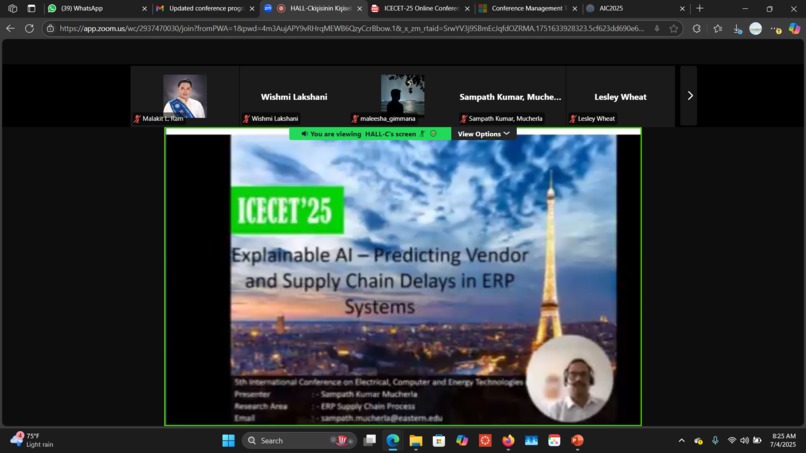
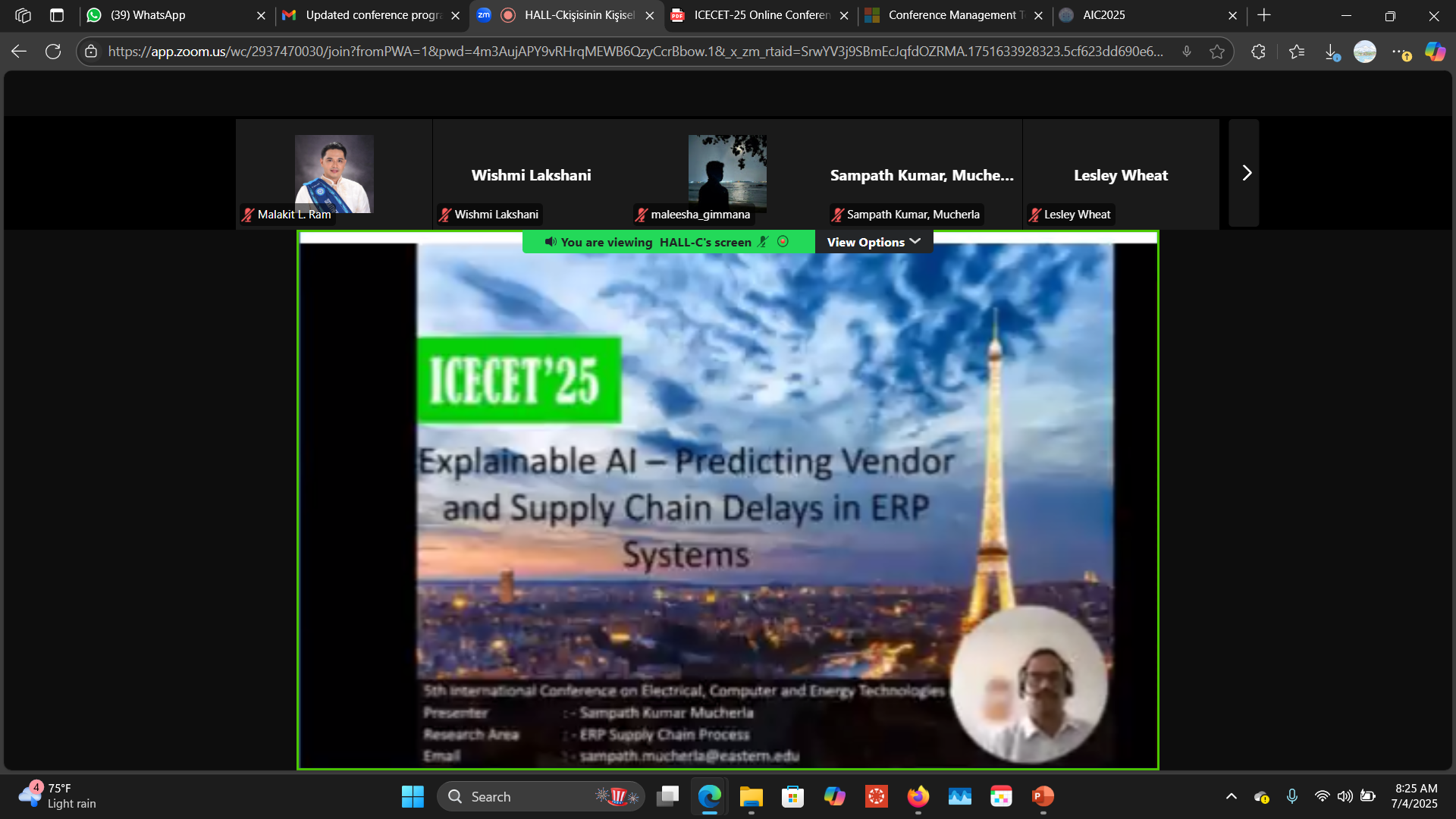
I am particularly proud of the comparative analysis I conducted between SHAP and LIME. Proving that these models could maintain high predictive performance while providing 100% transparency was a major milestone. This research was accepted for the ICECET 2025 conference in Paris, validating the importance of explainability in the future of enterprise AI.
What I learned
This project taught me that in the enterprise world, trust is just as important as accuracy. An 80% accurate model that people understand is often more valuable than a 99% accurate model that no one trusts. I learned how to bridge the gap between high-level data science and practical, everyday business operations.
What's next for Bridging Trust Gap:Explainable AI(XAI) for ERP Supply Chains
Building this XAI framework was a major step, but it also pointed toward the next logical challenge: moving from transparency to action. My future work is focused on:
Closing the "Decision-to-Action" Gap: I am researching ways to move from a system that simply explains a risk to one that can actually evaluate and suggest the best response—like identifying a backup supplier in real-time.
Human-Centric Feedback: I want to create a two-way street where the model can learn from a procurement manager’s intuition. If a human disagrees with an AI explanation, the model should learn from that expertise.
Global Context Integration: I plan to bring in external signals (like weather or port strikes) so the XAI layer can show exactly how much a global event is impacting a specific delivery date.

Log in or sign up for Devpost to join the conversation.