-
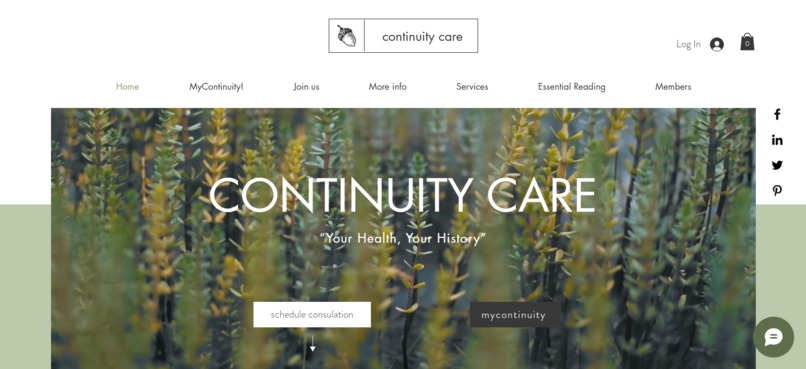
Starting page

Inspiration
The inspiration for ContinuityCare comes from both research and lived experience. As an immigrant, I have seen how difficult it can be to access consistent healthcare when medical records do not transfer across borders or healthcare systems. This challenge is deeply personal to me because my father lives with a chronic illness and regularly sees multiple healthcare providers. Each new appointment often requires him to re explain his condition, medications, and test history because no single provider has access to a complete and accurate medical record.
Watching him manage not only his illness but also the responsibility of tracking his own medical information revealed how much burden is placed on patients rather than on healthcare systems. Research shows that this experience is common. Immigrants often begin care without documented histories of illnesses, treatments, vaccinations, allergies, or medications, leading to delays and reduced quality of care (Migration Policy Institute, 2022). Patients with chronic illnesses who receive care from multiple specialists are more likely to experience fragmented treatment and duplicate testing, with studies indicating up to a thirty percent increase in unnecessary tests or delayed diagnoses (National Library of Medicine, 2018). With over two hundred million people migrating globally each year (United Nations), the impact of fragmented healthcare systems continues to grow.
What it does
ContinuityCare is a proposed patient controlled system designed to help immigrants and patients with chronic illnesses maintain and share a portable Core Health File. The concept allows patients to store essential medical information, including diagnoses, medications, allergies, vaccinations, and recent laboratory or imaging results, in one secure place.
The system is designed to organize this information in a clear chronological timeline, support multiple languages, and allow patients to share their health summary through a QR code or temporary access link. Clinicians would be able to quickly view the most critical information without logging into multiple hospital portals, while patients would retain full control over who can access their data and for how long. In emergency situations, first responders could immediately see key details such as allergies and medications, improving safety and decision making.
How we built it
ContinuityCare was designed as a theoretical solution through research, analysis, and user centered thinking. I studied existing electronic health record systems and identified their limitations, particularly their reliance on institution specific portals and assumptions of long term care within a single system. I also reviewed research on interoperability, patient access to health records, and digital health equity (HealthIT.gov; World Health Organization).
Based on this research, I designed the concept of a lightweight, patient owned Core Health File that prioritizes essential data rather than complete medical records. The minimum viable product is proposed as a simple web or app based tool with encrypted local storage, optional cloud backup, multilingual export, and offline access. The design assumes mobility and fragmented care as the norm rather than the exception.
Challenges we ran into
One major challenge was determining how much medical information to include without overwhelming patients or clinicians. Healthcare data can be complex, and including too much information could reduce usability. This was addressed by focusing on essential data fields and allowing partial entry when complete records are unavailable.
Privacy and data security were also key challenges. Many digital health tools collect more data than necessary, increasing the risk of misuse. ContinuityCare addresses this by minimizing data collection, using encryption, and ensuring that all sharing is controlled by the patient. Designing for accessibility across language barriers and varying levels of health literacy was another challenge, which informed the inclusion of multilingual support, low literacy design, and offline functionality.
Accomplishments that we're proud of
One of the main accomplishments of this project is proposing a healthcare solution that centers patient ownership and mobility. ContinuityCare reframes healthcare continuity as something that should travel with the patient rather than remain locked within institutions.
Another accomplishment is grounding the concept in both research and lived experience. By combining evidence from public health literature with personal insight as an immigrant and as the child of a parent with a chronic illness, the project addresses a real and documented gap in healthcare systems. The design also prioritizes ethics and inclusion by emphasizing privacy, accessibility, and patient control from the start.
What we learned
Through this project, I learned that fragmented healthcare records are not just an inconvenience but a patient safety issue. I also learned that interoperability alone is not enough if patients do not control their data. True patient centered care requires systems that respect mobility, language diversity, and varying levels of access to technology.
This project reinforced the importance of empathy in innovation. Understanding the lived experiences of immigrants and chronic patients helped shape a solution that responds to real needs rather than theoretical ones.
What's next for Bridging gaps in healthcare.
The next steps for ContinuityCare would involve validating the concept through interviews with immigrants, chronic patients, and clinicians to refine the Core Health File fields. Additional steps include creating wireframes for the timeline and sharing interface, building a secure prototype with encrypted storage, and piloting the concept with a small clinic or immigrant support organization.
Success would be measured by whether at least seventy percent of users can create and share their health file with a clinician in under two minutes. Future iterations could include reminders, document upload, and potential integration with existing healthcare systems. ContinuityCare ultimately aims to support a future where moving does not mean losing access to healthcare history and where continuity of care is accessible to everyone.
Built With
- abstracted-for-no-code)-frontend:-wix-editor-elements-(text
- css
- html
- input-fields
- javascript
- javascript-(underlying-wix-framework
- local-storage
- multilingual
- qr-code-generator
- visual-editor)-languages:-html
- wix

Log in or sign up for Devpost to join the conversation.